iPhone Frozen? Start with the Right Fix for Your Screen
If your iPhone is frozen and won't turn off, start with a model-specific force restart. It does not erase your content. If only touch has stopped working, check the screen and accessories; if the phone will not start, charge it before moving to recovery or repair.
-
 Fix iPhone frozen in 3 steps
-
Know which options can erase data
-
Choose the buttons for your iPhone model
-
Compare Apple and desktop repair options
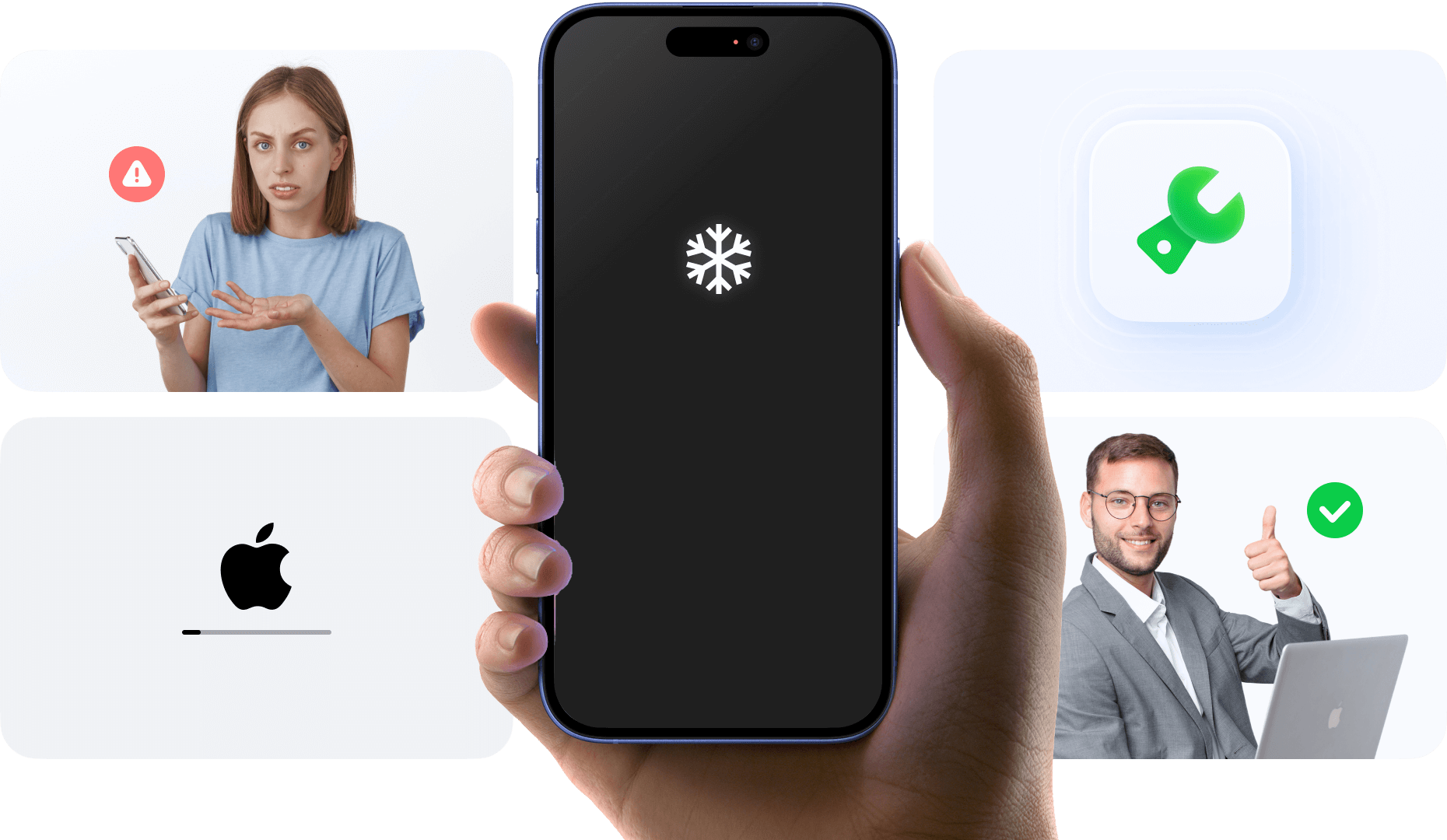
What to try first when your iPhone is frozen
- Frozen and won't turn off: use the force-restart buttons for your model. Stop holding when the Apple logo appears; you will need the passcode after restarting.
- Black screen or no power: charge and retry before recovery; a damaged button or persistent no-power problem needs service.
- Phone rings but touch fails: try the screen and accessory checks. Ringing alone does not prove a software fault.
- Only one app is stuck: if the Home Screen still works, troubleshoot that app, not the whole phone.
- Still frozen after restarting: compare free recovery Update, paid Standard Repair, and erasing Restore before deciding.
Common Reasons Why Your iPhone Screen Freezes
Understanding what causes your iPhone frozen screen can help prevent future issues. Here are the most common culprits behind frozen iPhone problems.

Insufficient Storage
With insufficient storage, iPhone faces difficulty in functioning and usually freezes or slows down. When your iPhone is frozen, it's often because the device's performance and stability deteriorate when storage space is critically low.

Outdated Installation
Apple regularly updates iOS to prevent iPhone frozen issues. When your iPhone frozen on Apple logo occurs, outdated software that hasn't been updated in time can make the device difficult to run properly.

Software Bugs
Your iPhone might be facing software bugs that cause frequent restarting or getting stuck on Apple logo. If this software bug prevails, such reboots can freeze the screen of the iPhone at any instant.

Low Battery
When your iPhone is frozen and won't turn off or reset, a discharged battery can be the culprit. Low battery levels can cause the iPhone to behave erratically, making it difficult to know how to turn off iPhone when frozen.

Buggy Apps
Some apps still have undetected bugs that can cause iPhone phone screen frozen issues. When you operate problematic applications, the iPhone usually freezes due to device incompatibility, especially on older models like iPhone 11 screen frozen can't turn off scenarios.

Malware & Viruses
Users who download third-party software from unofficial sources may encounter malware. These malicious apps can crash the entire iPhone system and cause frozen iPhone screen issues repeatedly, requiring you to learn how to reset frozen iPhone properly.
How to Fix a Frozen iPhone - Complete Step-by-Step Guide
Restart iPhone When Frozen: Use the Buttons for Your Model
A force restart is a button-only reboot, not a factory reset: it does not erase your content. Use the matching sequence below and release at the Apple logo; this can take longer than 10 seconds. Do not use a fixed countdown as the stop signal.
iPhone 8 and Later
Includes iPhone SE (2nd and 3rd generation); not SE (1st generation)


iPhone 7 and 7 Plus

iPhone 6s and Earlier
Includes iPhone SE (1st generation): hold Home and the Top or Side button.


Force restart not working, or the screen stays black?
- Check the model sequence: on iPhone 8 or later, Volume Up and Volume Down are quick separate presses, followed by a continuous Side-button hold until the Apple logo. Do not hold all three buttons together.
- If it will not turn on, charge it for one hour, then try the correct sequence again. If the low-battery icon appears, charge for 30 minutes or until it starts. Check the charger, cable and power source.
- If it still will not start, try computer recovery Update. If a required button is broken or stuck, or recovery cannot complete, arrange service rather than forcing buttons or buying software to fix hardware.
Apple's restart and charging instructions apply to current button-based iPhones, including an iPhone 17 Pro Max with no power. A restart does not prove the cause was software.
Frozen after an update? An Apple-logo progress bar can move slowly or look stationary. Keep the phone connected to power and allow it to finish. If the update never completes or the phone remains unresponsive, follow Apple's progress-bar troubleshooting; do not treat a single short pause as a failed update.
The iPhone rings, but the screen will not respond to touch
Restart first. Then clean and dry the display, disconnect Lightning or USB-C accessories, and remove the case or screen protector. If touch works after unplugging an accessory, try a different cable, charger or outlet. If touch still fails, especially after a drop or liquid exposure, get service; a system-repair tool cannot repair a damaged display.
Large icons rather than a system freeze? The “three-finger trick” is a double-tap with three fingers to zoom out when Accessibility Zoom is enabled. Once the screen is usable, turn it off in Settings > Accessibility > Zoom. It is not a universal way to unfreeze an unresponsive phone.
Fix a Frozen iPhone Using Recovery Mode: Update Before Restore
Choose the Next Step
Pick the route that matches what is still happening on your iPhone.
Apple Recovery Update
If the iPhone still will not start after a force restart, use a computer to try Update before Restore.
See the recovery stepsDr.Fone System Repair
A guided desktop workflow for compatible software-related freezes, boot loops, black screens and recovery-mode issues.
Explore Dr.Fone System RepairRestore or Get Service
Restore erases the iPhone. For damaged buttons, a damaged screen or persistent no power, review the service route.
Review last-resort optionsDr.Fone - System Repair: A Guided Way to Fix iPhone Software Issues
Dr.Fone - System Repair (iOS) guides you through repairing software-related iPhone freezes, boot loops, black screens and recovery-mode issues on a Windows PC or Mac. Choose Standard Repair to begin with a guided workflow for a compatible device.
Why Choose Dr.Fone When Your iPhone is Frozen?
Standard Repair is designed to retain your data; back up important data first when possible.
Works with supported iPhone models and iOS versions; the app identifies the firmware for your device.
Use the guided desktop workflow to download, verify and repair the matching iPhone firmware.
Choose Standard Repair for a guided software-repair workflow; Advanced Repair is available for supported cases.

How to Run Standard Repair on a Windows PC or Mac
If the iPhone is accessible, back up important data first. Confirm the model and firmware shown for your device, then follow the guided Standard Repair steps below. See the full System Repair guide.
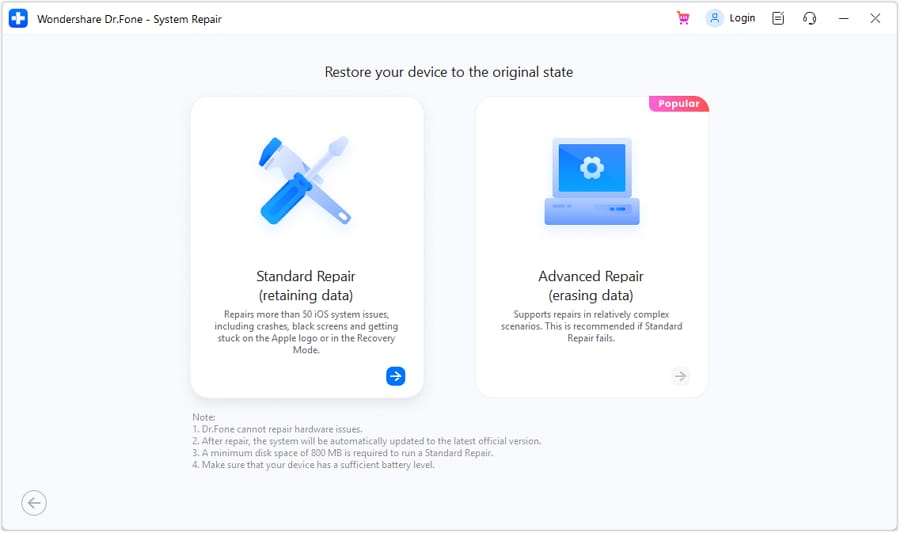
Connect and choose Standard Repair
Install Dr.Fone - System Repair Dr.Fone - System Repair Dr.Fone - System Repair on a Windows PC or Mac, connect the iPhone by USB, then open Toolbox > System Repair > iPhone > iOS Repair > Standard Repair. If available, back up important data before proceeding.
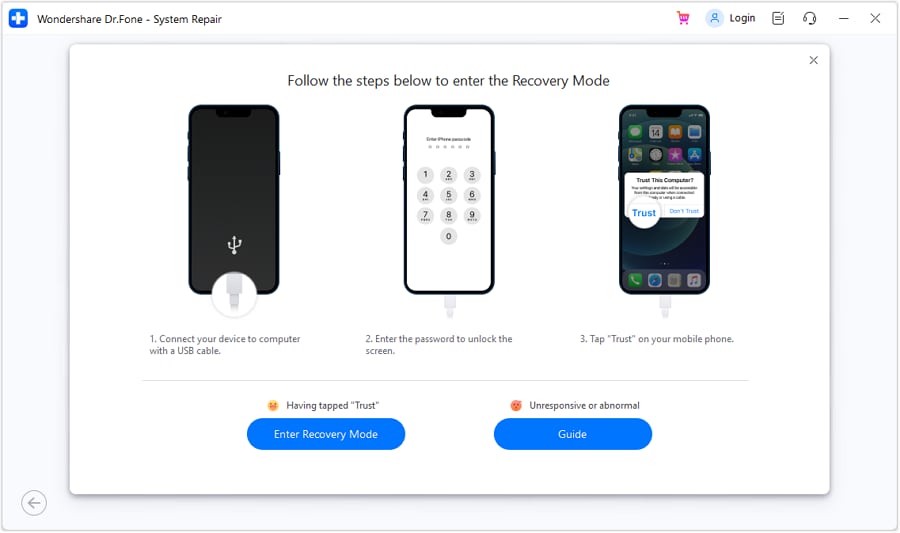
Enter recovery mode
Follow the detected model's on-screen recovery instructions. Keep the phone connected and wait for detection before continuing.
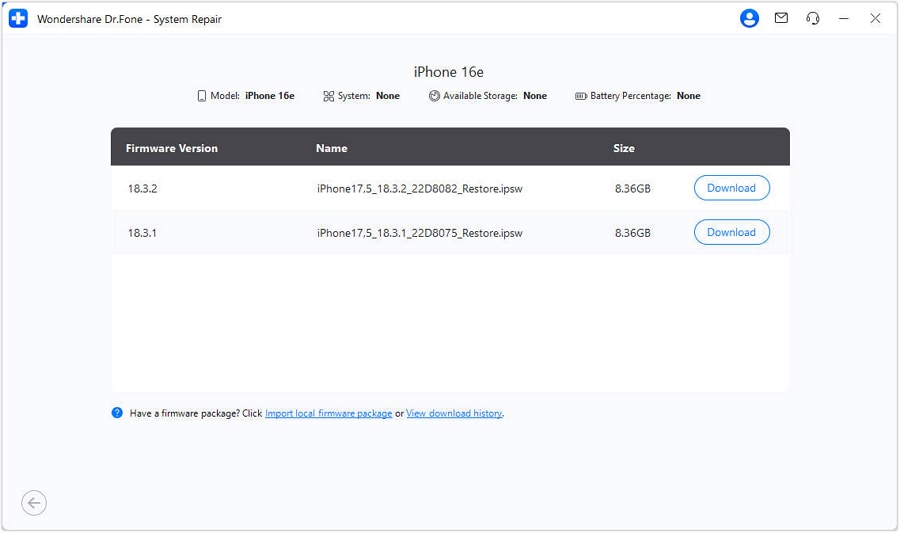
Download matching firmware
Confirm the model and the firmware offered for that device, then click Download. Wait for download and verification; do not substitute another model's firmware.
Start repair and wait for Done
After verification, click Repair Now. Keep the cable connected until the repair finishes and select Done. If repair fails, do not choose Advanced Repair without accepting erasure.
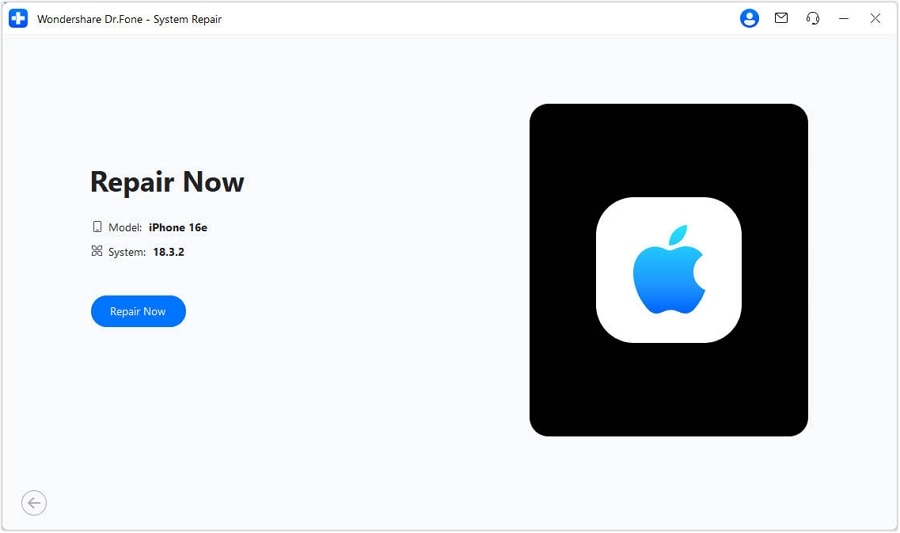
If the phone starts, check touch, important data and the app that froze. If it remains frozen, use the service and last-resort decision instead of treating a completed app screen as proof of a hardware repair.
Watch Dr.Fone System Repair in Action
Success Rate for iPhone Frozen Issues
Based on 50,000+ successful repairs
- • Compatible with Windows & Mac
- • 30-day money-back guarantee
- • Free recovery mode features
What If All The Above Measures Failed?
If the phone still will not work, choose between a last-resort software restore and hardware service. Neither path guarantees a remedy. Check what data is backed up before accepting an erase.

DFU Restore: A Last Resort, Not the First Fix
Device Firmware Update (DFU) mode is a low-level state. Entering it alone does not erase data, but completing a DFU restore does. Try the recovery Update path first when available. If you accept the restore risk, use the linked model-specific DFU guide rather than guessing button timings.
- Requires precise button timing
- Screen stays completely black in DFU
- Backup data beforehand (if accessible)
- Click to learn about how to put iPhone in DFU mode.

Contact Apple for Hardware or Persistent Recovery Problems
Broken buttons, a damaged display, continued no-power problems or a recovery Update/Restore that cannot complete are reasons to seek service. Software cannot fix a physical fault.
- Apple Support can assess hardware and persistent recovery failures; charges and data impact depend on the service.
- If choosing a repair provider, ask for a hardware diagnosis, a written cost estimate and the data/erase policy before agreeing.

A frozen iPhone screen may cause data losses across your iPhone. To save yourselves from unprecedented losses, Dr.Fone provides you with an effortless technique to recover data such as contacts, messages, photos, etc. All the data lost under such issues will be recovered back in its original form.


How to Prevent iPhone Screen Frozen Issues
After the iPhone works again, reduce avoidable problems and keep recovery options open. These habits reduce risk; they do not guarantee a freeze-free phone.

Keep iOS Updated
When the phone is stable and backed up, check Settings > General > Software Update. Review Automatic Updates there; availability and installation requirements depend on the update.

Regular Backups
For iCloud, go to Settings > your name > iCloud > iCloud Backup > Back Up Now on Wi-Fi and check the last successful backup. Automatic iCloud Backup needs it enabled, power, Wi-Fi, a locked screen and enough cloud storage. Dr.Fone desktop backups require device access and authorization.
- · Automatic when configured
- · Check completion
- · Locally
- · Review access requirements

Regular Restarts
Restart when troubleshooting a recurring glitch; there is no universal weekly schedule that prevents freezing. If a freeze returns, note the app and conditions instead of relying on repeated restarts.

Monitor Battery Health
Check the Battery Health information in Settings > Battery when available. Follow a service message or persistent power problem; one capacity percentage alone does not diagnose a frozen screen. Avoid extreme heat or cold.

Remove Problematic Apps
If one app repeatedly freezes, close and reopen that app, update it and retest. Back up its important content before deleting or reinstalling it; local app data can be removed.

Manage Storage Space
Check Settings > General > iPhone Storage. Keep at least 1 GB free to reduce slowdowns; updates can need more. Offload unused apps to keep their documents/data or remove unneeded backed-up files. Extra iCloud capacity does not itself add local device storage.
Keep iOS Updated
When the phone is stable and backed up, check Settings > General > Software Update. Review Automatic Updates there; availability and installation requirements depend on the update.
Regular Restarts
Restart when troubleshooting a recurring glitch; there is no universal weekly schedule that prevents freezing. If a freeze returns, note the app and conditions instead of relying on repeated restarts.
Monitor Battery Health
Check the Battery Health information in Settings > Battery when available. Follow a service message or persistent power problem; one capacity percentage alone does not diagnose a frozen screen. Avoid extreme heat or cold.
Remove Problematic Apps
If one app repeatedly freezes, close and reopen that app, update it and retest. Back up its important content before deleting or reinstalling it; local app data can be removed.
Manage Storage Space
Check Settings > General > iPhone Storage. Keep at least 1 GB free to reduce slowdowns; updates can need more. Offload unused apps to keep their documents/data or remove unneeded backed-up files. Extra iCloud capacity does not itself add local device storage.
FAQs About Frozen iPhone
Low local storage can contribute to slowdowns, but it is not proof of this freeze. Once the screen responds, open Settings > General > iPhone Storage. Apple recommends at least 1 GB free to reduce slowdowns; that is not an update-size requirement. Offload an unused app to keep its documents/data, or free up iPhone storage. More iCloud storage is separate from physical storage on the iPhone.
Low power or temperature can make an iPhone appear unresponsive, but neither diagnoses every freeze. If it will not start, charge for one hour and retry the correct force restart. If a temperature warning appears, turn it off, move it to a cooler place and let it cool. Use battery-drain troubleshooting or battery symptom checks for the matching problem; seek service for persistent power or damage symptoms.
If the Home Screen and other apps respond, close and reopen only the affected app: on Face ID models, swipe up from the bottom and pause to open the App Switcher; on Home-button models, double-click Home. Swipe the affected app preview up, then reopen it. Update the app in the App Store and retest. Back up its important content before deleting/reinstalling, which can erase local app data. iOS does not have one universal Clear App Cache button. See app-crash troubleshooting or apps that will not open. If multiple apps and the whole system still freeze, return to force restart before considering Dr.Fone - System Repair (iOS).


