Teleport your device anywhere instantly with one click.


 100% Security Verified | No Subscription Required | No Malware


 :

 ChatGPT
 Perplexity
 Gemini
 Claude
 Grok
To find Scyther in Pokemon GO, look for recent local sightings and the currently announced encounter pools, not an undated list of permanent nest coordinates. The source provides no verified coordinate set. A map screenshot, a grassy park, or a report from a previous rotation cannot establish that Scyther is spawning there now.
Scyther is not restricted to the United States, and collecting several of them does not create a special player-controlled swarm mechanic. This guide retains the species details, three map resources, and location-tool walkthrough while separating Pokemon lore, current encounter evidence, and GPS simulation. The goal is a useful search plan without invented nest confirmations.
In this article
Part 1: Identify Scyther and understand its evolution
Scyther is the Mantis Pokemon, numbered 123 in the National Pokedex. Its Bug/Flying typing and green, blade-armed appearance distinguish it from its evolution, Scizor. How often you encounter it in GO depends on the active game conditions; calling it permanently rare everywhere is less useful than checking what is appearing locally.

Biology: Species lore is not a nest detector
Scyther's upright insect body resembles a praying mantis. Green armor-like surfaces contrast with pale joints between the head, torso, and abdomen. The head has a pointed, reptile-like profile, while females are depicted with a larger abdomen than males. These visual features help identify the species but do not reveal where one is currently spawning.
Its forearms end in large curved blades, the feature behind its name. The design also includes spiked legs, clawed feet, and wings along its back. Descriptions emphasize speed and cutting ability; these are species traits rather than instructions for changing a GO encounter's catch rate.
The original grassland, camouflage, hunting, and blade-sharpening discussion belongs to Pokemon lore. So do its references to group leadership and reactions to red. Do not interpret that lore as a real-time spawning algorithm: seeing red clothing, forming a group of captured Scyther, or visiting any patch of grass does not guarantee an encounter.
Evolution: Use GO's requirements, not a held-item trade rule
In Pokemon GO, evolving Scyther into Scizor normally consumes 50 Scyther Candy and one Metal Coat. Open the chosen Scyther's detail page, inspect the evolution requirement, and confirm only when you have the resources. The source mixed in a held-item trade description associated with other Pokemon games.
You do not need to trade Scyther while it holds a Metal Coat to perform this GO evolution. Trading and evolving are different actions, and the game displays the current resource cost before confirmation. For the standard requirement, the specialist Metal Coat reference identifies both the item and Candy requirement.
Scizor: Recognize the evolved form

Scizor replaces the green mantis silhouette with a red metallic-looking body and prominent pincers. Its head has three projecting points, with darker joints visible around the neck and torso. The pale wings and clawed legs remain part of the insect-inspired design.
Those appearance differences are helpful when checking a collection or evolution target, but they do not prove which form is available in a particular wild pool. If your immediate goal is Scyther Candy or a Scyther encounter, verify the species name in the actual game or report rather than relying on a small map icon.
Part 2: Check Scyther nest reports near you
A nest report should tell you where an increased concentration was observed and when that observation was made. A single sighting is weaker evidence than several recent independent reports. Even a genuine nest can stop being useful when encounter patterns change, so the timestamp and current species matter more than an old pin's popularity.
The source listed California, Florida, Texas, Georgia, Illinois, Pennsylvania, Oregon, Utah, South Carolina, and Maryland. Treat these as locations mentioned by the old article, not an exclusive habitat range or a confirmed current nest list. Official global event announcements have included Scyther, so the claim that it cannot appear outside the United States is incorrect.
Use your in-game Nearby display, current event details, and trustworthy local community reports before planning a visit. If someone shares coordinates, check the exact park or public place, the observation time, whether the report says nest or individual spawn, and whether access is safe and lawful. No fresh coordinates have been independently confirmed for this article.
The Silph Road: Treat the old atlas screenshot as historical context
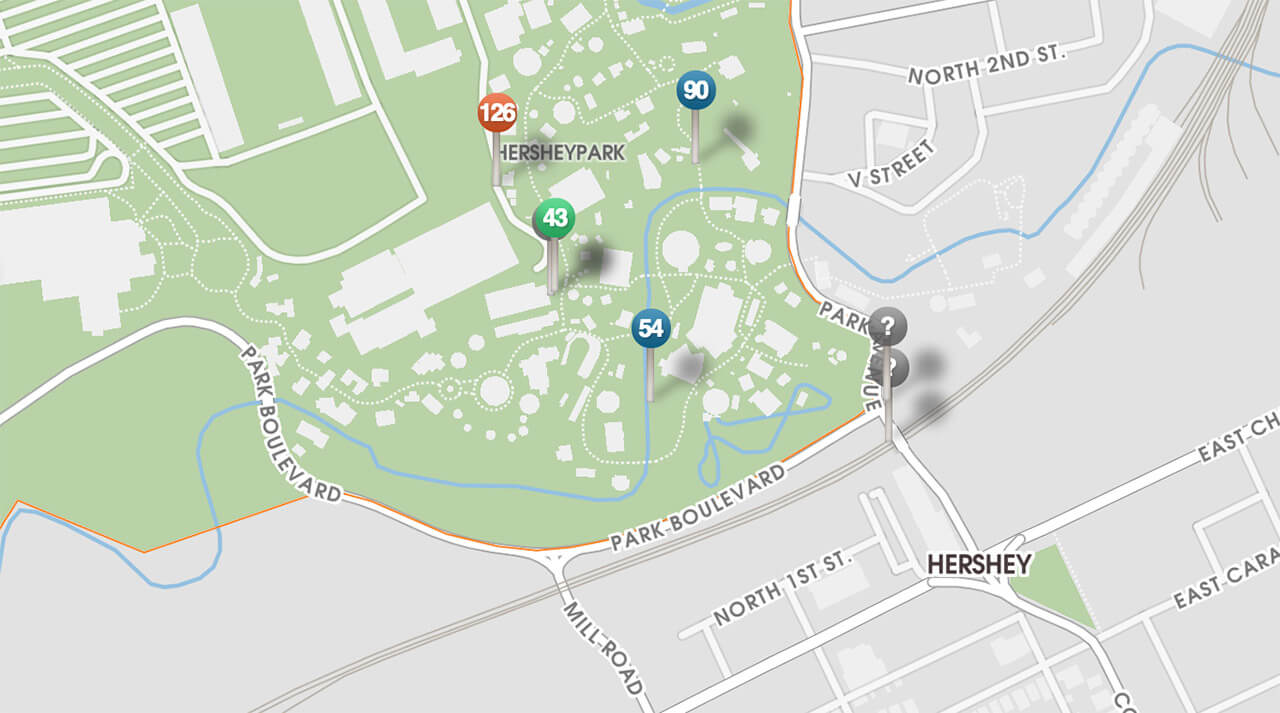
The source misspelled this community project as Sliph Road and presented its Nest Atlas as a continuously updated Scyther tracker. The former atlas is no longer an operational recommendation. Its retained screenshot shows what the old resource looked like, not a current service or a promise that its pins still identify Scyther.
The project's closure and withdrawal of the Nest Atlas are documented in the Silph Road closure report. A community discussion space or archived guide should not be confused with the former interactive map. Use current local reports instead of trying to revive old atlas coordinates.
Poke Hunter: Verify supported coverage before reading a pin
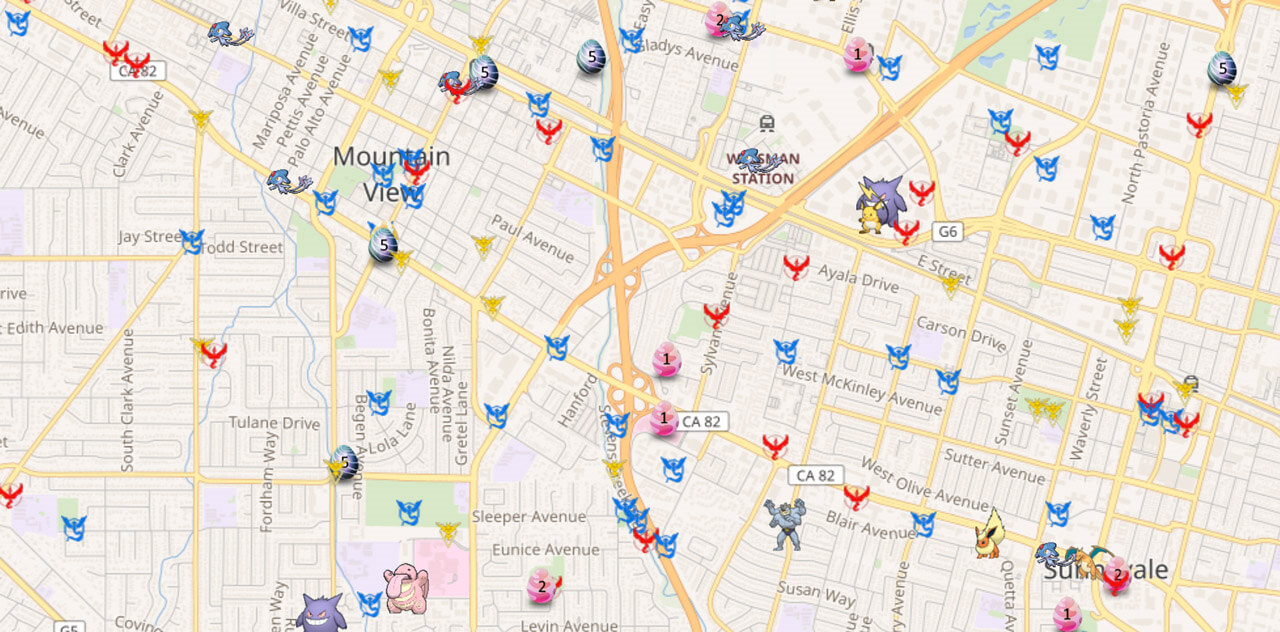
The accessible PokeHunter page lists supported places in California, Minnesota, Oregon, and Washington, rather than worldwide coverage. It also describes loading surrounding gym data. The presence of a working location list does not establish that it offers current Scyther nests in your neighborhood.
The source mentioned social sharing, chat, zoom controls, and spawn countdowns. Do not assume all of those features remain available or that a countdown predicts the next Scyther. Confirm the current map layer, coverage boundary, timestamp, and legend before interpreting any marker. An absent marker outside the supported area is not evidence that the species is absent there.
Pokemon GO Map: Separate community information from live spawns
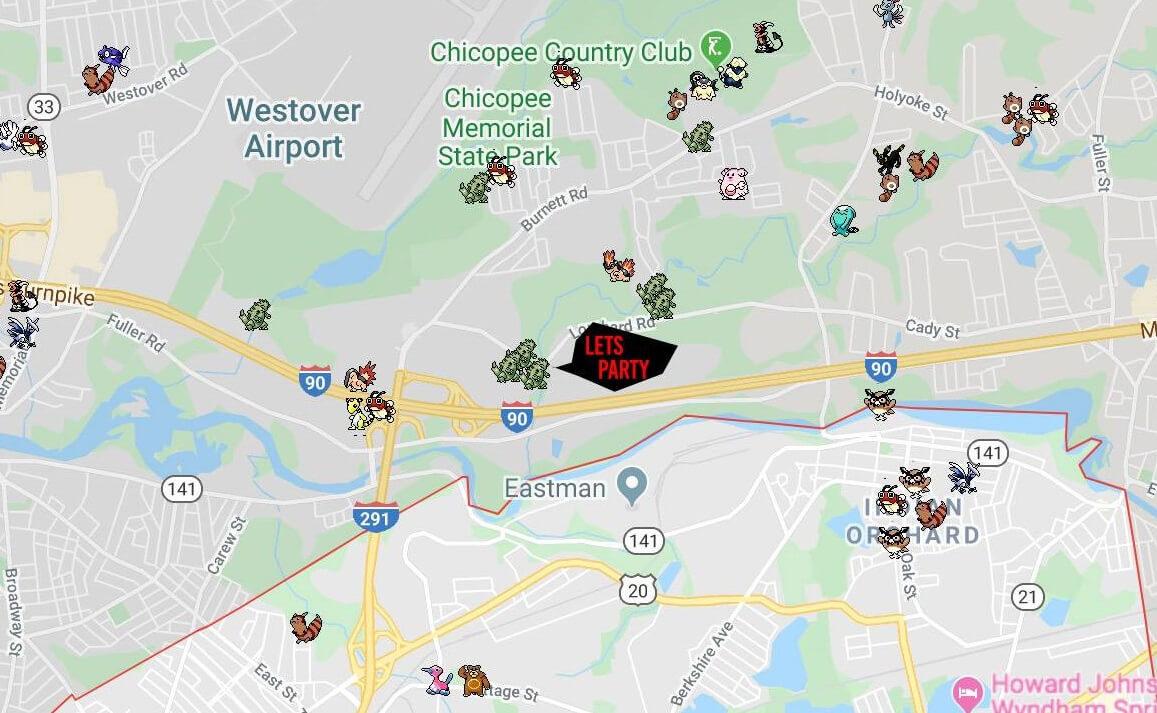
This resource was described as showing nest locations and when spawn sites become active. Its current operation could not be verified during this rewrite, so it is retained as a named source resource, not endorsed as a working live Scyther feed. A map can show points of interest or user submissions without providing authoritative real-time Pokemon encounters.
If you encounter such a map, inspect what its data actually represents. A Pokestop, gym, park boundary, or community note is not the same thing as an active Scyther. Cross-check any useful report in-game and avoid services that ask for account credentials or require unauthorized access to the game's backend.
Across all three resources, the practical rule is the same: recent, relevant evidence is more useful than a visually convincing old screenshot. For multiple catches, look for sustained local reports during the present encounter conditions; do not treat a global map's mere existence as a guaranteed farming route.
Part 3: Understand the limits of catching Scyther from home
The original suggestion to teleport to a United States nest depended on two false assumptions: that Scyther exists only there and that GPS simulation safely guarantees a catch. Neither follows from the information provided. Whether you can encounter one near home depends on what the official game currently makes available around you or through an eligible encounter source.
Trading with another trainer can also be relevant when allowed by the game's trade rules. Scyther is not categorically untradeable, and a collection of several individuals is not a special swarm system that prevents trading. Review the current in-game requirements rather than assuming the source's statement is correct.
Most importantly, the official Pokemon GO Gameplay Fairness Policy identifies location falsification as cheating. Account restrictions or termination are possible, and a waiting period or slow simulated movement does not create an exemption. The following product workflow explains GPS functionality separately from authorized gameplay.
 Set your map route to simulate GPS movement.
- Set your wanted movement speed.
- HD and large map view to check location.
- Fake GPS location to anywhere.

Dr.Fone - Virtual Location lets you select simulated GPS coordinates on supported devices through a desktop map. Teleport mode changes a reported position, while route, speed, and joystick controls address simulated movement. It does not generate Pokemon, validate community nest reports, or guarantee that Pokemon GO accepts the result.
Use location simulation only where it is permitted, such as an appropriate mapping or testing task. The source screenshots remain useful for explaining the program's map workflow, but their Rome example is not a confirmed Scyther destination. The installed interface may differ from the pictured version.
- Destination selection concerns reported device coordinates, not physical travel.
- Route and speed settings do not prove compliance with a game's rules.
- A joystick controls simulated position rather than encounter availability.
- Support depends on device and software versions; no claim of compatibility with every location-based app is made.
Step 1 Open the desktop program
Obtain the appropriate official version, check current device requirements, and launch the application. Locate its Virtual Location module; the installed interface may use a different layout.
Step 2 Connect the supported device
Use a suitable USB data cable and complete the connection and trust prompts. Check that the program recognizes the intended phone before attempting any location change.
Step 3 Inspect the map and choose Teleport
Select the mode by its label instead of relying on the source's instruction to count to the third icon. Use the centering control if necessary to locate the displayed device position.
Step 4 Search a test destination
Enter the intended city or coordinates, run the search, and review the map result. The Rome illustration demonstrates destination entry only; it is not nest evidence.
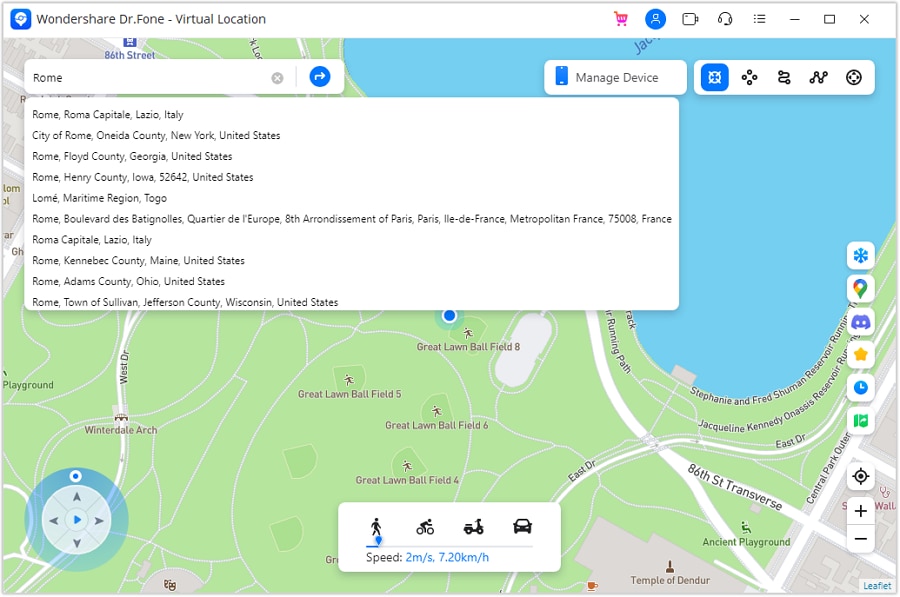
Step 5 Apply the selected position
After confirming the intended pin, select Move Here. This applies a virtual location for the supported session rather than making it a permanent address or concealing the change from every service.

Step 6 Verify the desktop result
Inspect the new marker in the program. A changed desktop marker confirms what the utility reports, not a successful catch or immunity from account enforcement.
Step 7 Check the connected phone
Open Maps on that phone and compare the reported position. This is a device-side validation, not a demonstration of another person's iPhone or a guarantee about all third-party apps.
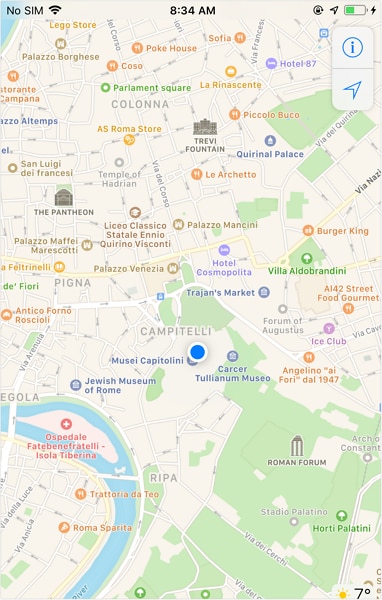
When the permitted test is complete, follow the restoration prompt and restart the device to restore actual location reporting, then recheck Maps. The source's claim that Move Here permanently relocates the phone and that a cooldown makes spoofing undetectable is not supported. No timing strategy removes the game's rule against falsifying location.




Conclusion
Find Scyther through current encounter information and fresh local reports, and treat old nest maps as leads that require verification. Use the correct GO evolution requirement instead of a held-item trading rule, and do not limit your search to the United States. GPS utilities explain how reported device positions can be simulated; they do not establish active nests, produce catches, or make prohibited gameplay safe.
FAQ
1. Are there verified permanent Scyther nest coordinates here?
No. The source contains map illustrations but no independently confirmed current coordinate list. Check recent local sightings and the actual in-game encounter conditions before traveling.2. Is Scyther found only in the United States?
No. That restriction in the source is incorrect. Availability depends on game conditions, and official global event information has included Scyther.3. How does Scyther evolve into Scizor in Pokemon GO?
The standard requirement is 50 Scyther Candy and one Metal Coat. Confirm the current requirement on the Pokemon's evolution screen; it is not a held-item trade process in GO.4. Does a cooldown make GPS spoofing safe?
No. The official fairness policy treats falsifying location as cheating. Waiting, changing speed, or using a GPS tool cannot guarantee protection from restrictions or termination.
 Add Wondershare Dr.Fone as a preferred source on Google