Teleport your device anywhere instantly with one click.


 100% Security Verified | No Subscription Required | No Malware


 :

 ChatGPT
 Perplexity
 Gemini
 Claude
 Grok
Pokémon GO spoofing on Android means supplying a position that does not represent where the phone is actually located. It is not a supported way to expand your collection: the game's fairness policy treats GPS falsification as cheating. A VPN, a mock-location app, and a desktop GPS simulator also do different things, so calling all three safe location changers is misleading.
If you want to catch Pokémon in new areas, ordinary travel and permitted in-game features are the supported options. This 2026 comparison explains why people look for spoofing tools, the potential account consequences, and what the three approaches in the original guide can and cannot change.
In this article
Part 1: Why Android players look for location-changing tools
Pokémon GO combines a real-world map with encounters, PokéStops, Gyms, and events. Players who have explored nearby parks or streets may want different encounters or access to another area. Limited mobility, distance, and a small local play area can make that desire understandable, but they do not make GPS falsification an approved game mechanic.
A position-changing tool attempts to make the phone report another place. It does not create Pokémon, guarantee a rare encounter, provide event tickets, or ensure that a particular Gym can be used. Encounters and features remain subject to the live game, account eligibility, and server-side checks.
You do not need to spoof simply because the local area feels familiar. Local events, changing spawn pools, and supported social or remote features can offer legitimate alternatives where available. The relevant distinction is between a game's permitted feature and a third-party tool misrepresenting physical movement.
Part 2: Account and device risks you should understand first
The original article described Niantic's three-strike approach. The current official Pokémon GO help page redirects to Scopely Explore's Gameplay Fairness Policy, which explicitly includes falsifying location. It also warns that three opportunities are not guaranteed: some misconduct can result in immediate termination.
- First strike: An in-game warning may be accompanied by reduced gameplay for approximately seven days. The policy lists restrictions that can affect rare encounters and other activities; it is not merely an invisible 'shadowban' label.
- Second strike: A suspension can block account access for approximately 30 days. The policy describes restoration after that period, but this is not permission to continue the same behavior.
- Third strike: Continued cheating can lead to permanent termination. An appeal is available through the official Help Center when a termination is believed to be erroneous, without any promise that it will be reversed.
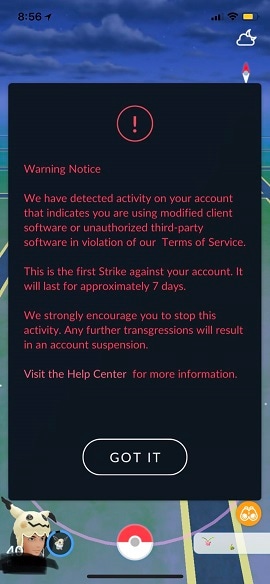
A different app name, a paid plan, a VPN connection, or a more realistic route does not provide exemption from this policy. Neither does closing a utility's visible window. If you have received a warning, stop the prohibited behavior and use the official account-support process rather than searching for a way to hide it.
There are also device and account-security concerns. A location utility may request sensitive permissions, and an unofficial or modified game client can expose login information or destabilize a device. Review a tool's current identity and requirements, avoid untrusted installation files, and never provide your Pokémon GO credentials to a GPS utility merely because it claims account protection.
Part 3: Compare the three approaches and their actual limits
The options below are not ranked as secure Pokémon GO workarounds. They retain the original comparison while correcting two central errors: changing a network address does not normally change GPS coordinates, and Android mock-location apps are not inherently undetectable. Use any location testing only where authorized and permitted.
3.1 VPN: a network tool, not a GPS teleporter
A virtual private network routes traffic through a VPN server and can encrypt the connection to that server. Websites and services may see the server's IP address rather than the phone's ordinary public address. That is different from the latitude and longitude supplied by Android's location services.
The source named ExpressVPN, NordVPN, and IPVanish. Those names are examples, not evidence of personal testing or a current endorsement. Trial terms, supported features, and server availability vary. A standard VPN connection alone does not move a Pokémon GO avatar to the server's city and does not guarantee access in a restricted region.
Step 1 Separate game setup from VPN setup
Use an officially obtained game and your own account. If you need a VPN for network privacy, install its legitimate Android app and review the service terms. A subscription or trial is a separate purchase decision, not a GPS requirement.
Step 2 Connect to an appropriate server
For a network test, close the game before changing connections, open the VPN, and choose a server. Closing Pokémon GO avoids mixing a session with a network change; it does not conceal the VPN or prevent enforcement.
Step 3 Verify what actually changed
Check that the VPN reports a connection, then reopen the game only for ordinary permitted use. Do not expect its GPS map to relocate to the server. If the goal was a remote Pokémon encounter, this procedure has not supplied one.
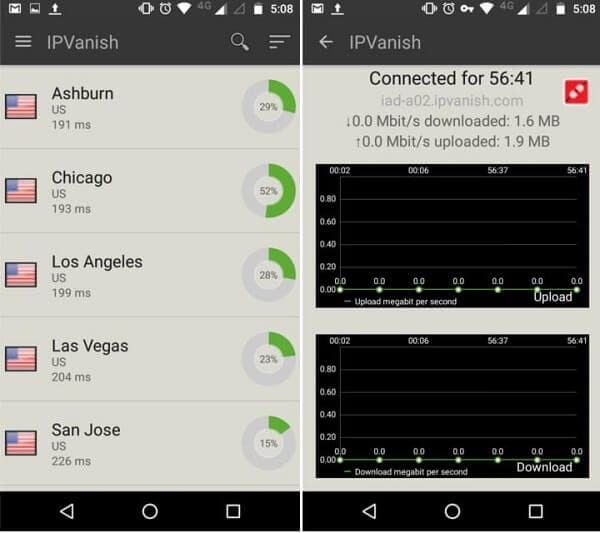
Encryption can protect a network path, but it does not hide every action from the service you sign in to. The game still processes account activity and received location information. Avoid interpreting ordinary VPN privacy features as evidence that location falsification becomes safe.
3.2 Fake GPS Go: Android mock-location testing
Fake GPS Go represents the on-device mock-location approach. Android's developer setting can authorize an installed provider to send test coordinates, often without rooting the device. That says nothing about whether Pokémon GO accepts those coordinates or permits their use.
Android provides an API for identifying mock locations. An app may reject them or respond differently to them, so an old claim that the provider works 'without getting detected' should not guide your decision. App listings, prices, and Android compatibility also change.
Step 1 Open the developer settings
On your own authorized device, locate Build number under About phone or Software information and tap it seven times. Complete any credential prompt, then open Developer options. The exact menu path varies by manufacturer.

Step 2 Select the intended mock provider
For a permitted location test, install the genuine app listing, review its permissions, and choose it under Select mock location app. The older screenshot may use a different label. Do not grant unrelated account access.
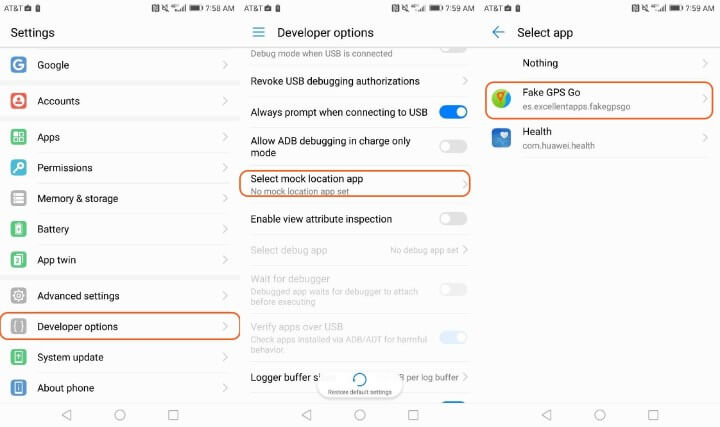
Step 3 Start a controlled location test
Choose a point in the provider and start its simulation, then inspect the position in an app you are authorized to test. The original guide suggested opening Pokémon GO afterward; doing so with false coordinates can violate its rules and is not a recommended verification method.
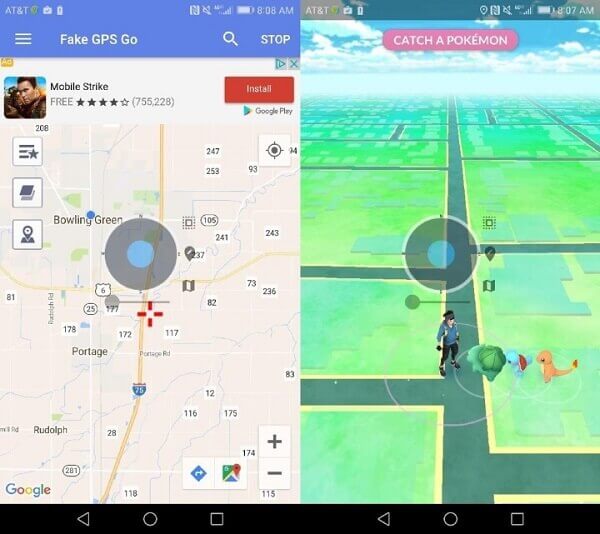
Removing the provider from the foreground does not make mock data unidentifiable. To finish a test, use its Stop control and remove the selected mock provider where offered. Recheck the phone's real position before relying on navigation or other location-dependent services.
3.3 Fake GPS Free: another provider with the same policy risks
Fake GPS Free is another application name used in older mock-location guides. Do not infer universal compatibility, low resource usage, or a current free feature set from that name alone. The source itself mentioned reports of account strikes, which is inconsistent with presenting it as a guaranteed secure Pokémon GO method.
Step 1 Review and install the test app
Enable Developer options through Build number if needed, then review the genuine Google Play listing for the provider. Confirm its developer, permissions, and device requirements before installing.
Step 2 Authorize the provider in Android
Open Developer options and select the installed application under the mock-location app control. Installing an app and authorizing it to supply coordinates are separate actions.
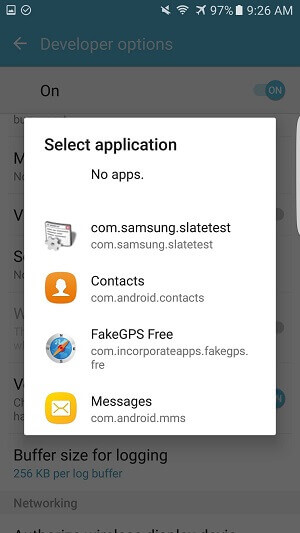
Step 3 Choose the test destination
Open the provider and search or zoom to the intended map point. Check that the selected position matches the test you planned rather than starting with an accidental distant pin.
Step 4 Verify and stop the test
Start the simulation and inspect the provider's status or notification. Verify the coordinates in an appropriate test app, not by assuming Pokémon GO will accept them. When finished, stop simulation and check the real location again.
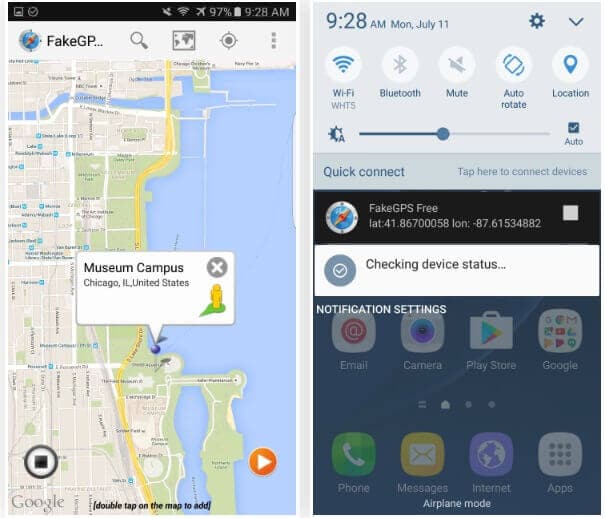
Closing the visible app window is not a detection-avoidance technique. A background service may still supply test positions, and a target app can evaluate the location information it receives. Neither this provider nor Fake GPS Go offers a policy exemption for Pokémon GO.
 Set your map route to simulate GPS movement.
- Set your wanted movement speed.
- HD and large map view to check location.
- Fake GPS location to anywhere.

Dr.Fone - Virtual Location is the desktop GPS simulation product represented by the source's promotional section. Its map interface supports selecting a test position and, on supported setups, using route, jump-teleport, or joystick controls. These are location functions, not VPN encryption or a guarantee of game compatibility.
Check the exact phone, OS, and connection requirements before use. For authorized testing on your own supported device, connect the phone, complete the setup prompts, select Teleport Mode, search for a point, and confirm with Move Here. Compare the result in a suitable phone map and stop if the device or intended app is unsupported.

After testing, stop the simulated movement and follow the restoration prompt; the official teleport guide describes restarting the device to restore the actual position. A successful map change does not guarantee a rare Pokémon, event access, or protection from account penalties. The game's location-falsification rule still applies.




Conclusion
The three approaches differ fundamentally: a VPN changes the network route, while Fake GPS Go and Fake GPS Free attempt to supply Android test coordinates. None should be described as a secure, undetectable way to play Pokémon GO remotely. The account consequences can include warnings, suspension, or permanent termination.
When comparing any Pokémon Go spoofer, distinguish an advertised feature from current compatibility and the game's permission to use it. Keep location simulation for authorized testing, and use supported play methods for collecting Pokémon.
FAQ
1. Can a VPN alone move my Pokémon GO avatar?
A standard VPN changes the network route and public IP address, not the phone's GPS coordinates. A server in another city is not a GPS teleport.2. Are Android mock-location apps undetectable?
No. Android exposes mock-location information, and games can apply their own checks. Closing the utility's visible window does not guarantee invisibility.3. Does the game always issue three warnings before a ban?
No. The published policy describes escalating strikes but says some behavior can result in immediate termination without prior warning.4. Does desktop GPS simulation remove the account risk?
No. Desktop tools change location data in supported contexts; they do not make falsified gameplay permitted or guarantee that an account avoids penalties.
 Add Wondershare Dr.Fone as a preferred source on Google