Teleport your device anywhere instantly with one click.


 100% Security Verified | No Subscription Required | No Malware

 :

 ChatGPT
 Perplexity
 Gemini
 Claude
 Grok
Pokémon GO PokéStop maps are useful for planning where to walk, but a third-party marker is not confirmation that a stop still exists or can be reached safely. For a 2026 search for 'Pokémon stops near me', prioritize recent local coverage and check the result against the official game's map rather than assuming a worldwide directory is complete.
PokéStops supply items when you are close enough to interact with their Photo Discs. A website can help you identify a possible destination, but it does not place your player there, guarantee a Pokémon encounter, or prove that a Team GO Rocket encounter or raid is currently active. The five resources below retain the original comparison while distinguishing published features, local coverage, and retired or unverified services.

In this article
Part 1: How to Choose a Useful Pokémon GO PokéStop Map
Search results can mix community maps, general mapping services, old screenshots, and pages about a different city. A Google Maps interface or a familiar game icon does not establish that the underlying game data is official. Apply the same checks to a PokéStop directory, a raid map, and a nest resource.
- Security: Prefer a service you can inspect without running an unknown installer. Check the operator and any login request before sharing information; a map does not need your Pokémon GO password merely to show public places.
- Update evidence: Look for recent submissions, correction mechanisms, or clear timestamps. A page that still loads can contain old markers, and a screenshot alone cannot establish that the data is maintained.
- Navigation: Test whether you can find your city, identify the legend, and distinguish stops from gyms, raids, or other markers. A dense map is not useful if its symbols are ambiguous.
- Accuracy: Compare a marker's coordinates, name, and real-world landmark with the game's map. Check public access and the actual entrance rather than treating a pin as a safe walking route.
- Coverage: Confirm that the service covers your particular area. A locally active community map may be more helpful than a larger directory with few contributions nearby.
- Cost: Review charges, subscription conditions, and advertisements before paying. Avoid unexpected fees presented as a requirement to unlock a supposedly free local map.
A sensible sequence is to identify candidate stops, compare nearby public landmarks, and then verify them in the game as you approach on foot. The official help page instructs players to move close enough to the stop, tap it, and spin the Photo Disc. It also notes a short cooldown after collecting items; a static community marker does not show your own interaction state.
Part 2: Five Pokémon GO Map Resources and Their Limits
These are the five names from the original article, not five verified worldwide live scanners. For services that could not be inspected, availability is left unconfirmed rather than inferred from an old screenshot. Even a currently reachable site can have incomplete or stale data in your neighborhood.
PogoMap
PogoMap's published FAQ describes a community-contributed map with location voting and user additions. A location's panel can support actions such as marking visits, viewing details, and reporting or viewing raids or tasks. That makes it worth checking for candidate stops and gyms, while still verifying the accuracy of local contributions.
Its own page says Pokémon sightings are 'coming soon', so do not equate this directory with a verified live spawn feed. Start with your city, inspect the marker type, and look for correction or voting information. Adding a marker to a community map does not itself create a PokéStop inside Pokémon GO.
Website: https://www.pogomap.info/

Pokelytics
The original description presented Pokelytics as a color-coded map for stops, raids, and spawn-related information, and claimed broad international coverage. Those older claims do not establish current operation or near-global accuracy. The site could not be inspected successfully during this review, so its present features and local coverage are unconfirmed.
If you can access it, check the legend, city coverage, and update information before planning a trip. A blocked request or temporary access failure is not proof of permanent closure, just as a screenshot is not proof of a functioning live map. Avoid assuming that a colored marker represents an active event.
Website: https://pokelytics.com/

PokeMap
PokeMap describes itself as a collaborative Pokémon map. Its page includes options to show PokéStops and gyms and instructions for users to add a discovered location. The community-input model is important: a large number of markers is not independent confirmation that every entry is still accurate.
Use the stop and gym filters to distinguish the type of destination you are looking for. If contributing, report what you actually observed rather than copying an uncertain point from another map. The site's spawn-related wording should not be read as a guarantee that a Pokémon remains at that coordinate when you arrive.
Website: https://www.pokemap.net/

Poke Hunter
Poke Hunter's published page lists specific supported areas rather than promising every country. Examples include Cupertino and Pasadena in California, Minneapolis and Saint Paul in Minnesota, Portland-area locations in Oregon, and Vancouver in Washington. Check the current location list instead of assuming that nearby cities are automatically covered.
The page also refers to loading surrounding gym data by clicking the map. That supports treating it as a resource with defined geographic coverage, not as proof of a universal nest atlas or a complete PokéStop directory. The original claims about free worldwide browsing and multiple map functions need to be evaluated against the current service you can actually access.
Website: https://pokehunter.co/

The Silph Road
The Silph Road's former atlas is a legacy resource, not a current map recommendation. Closure reporting describes the retirement of its community map and nest atlas. Do not follow the original article's instruction to use the old atlas as though it remains an active directory for adding stops, nests, gyms, or raids.
A nest atlas is also not the same thing as a comprehensive PokéStop map. Preserve that distinction when interpreting an old screenshot or a community discussion. The continued existence of a similarly named community discussion space would not mean that the former website tools have returned.
Original reference address: https://thesilphroad.com/atlas

Conclusion
Use a PokéStop map to shortlist places for real-world exploration, then verify the location, access, and current game state yourself. PogoMap and PokeMap publish community-contribution features, Poke Hunter lists selected regions, Pokelytics could not be verified here, and the former Silph Road atlas should not be recommended as active. A GPS testing product such as Dr.Fone - Virtual Location serves a separate purpose; it does not make an old marker accurate or create a stop in the game.
Dr.Fone - Virtual Location for a separate GPS simulation test
 Set your map route to simulate GPS movement.
- Set your wanted movement speed.
- HD and large map view to check location.
- Fake GPS location to anywhere.
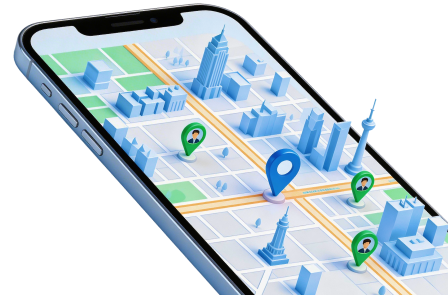
Dr.Fone - Virtual Location offers map-based GPS changes and simulated movement on supported configurations. For an authorized location-aware app test, a chosen coordinate can help compare how an app responds to different reported positions. This is different from contributing a community marker or visiting a physical PokéStop.
Pokémon GO's fairness policy prohibits falsifying gameplay location, so a simulator is not presented here as a compliant remote-spin method or a ban-free route to more resources. Before using the product for another legitimate test, check its current device requirements and follow the official connection instructions.
Step 1 Connect the supported phone
Open the desktop program and complete the device connection and permission prompts.
Step 2 Choose the test coordinate
Select Teleport Mode, search for the intended location, inspect the result, and select Move Here.
Step 3 Check and restore
Verify the reported position in the phone's maps app. When the test is over, restart the device as described by the official guide to restore its real GPS position.
A changed map coordinate does not guarantee game compatibility, a current raid, an encounter, or permission to access a real-world location. Keep map research, physical travel, and authorized GPS testing distinct.




FAQ
1. What is the most reliable way to confirm a nearby PokéStop?
Use community maps to identify candidates, then check the official game's map and the actual location. Public access, marker accuracy, and the current game state can differ from a third-party listing.2. Does adding a stop to PogoMap or PokeMap add it to Pokémon GO?
No. A contribution changes that community resource. It is not the game's process for creating or approving an in-game location.3. Is every listed resource a worldwide live map?
No. Poke Hunter publishes selected areas, Pokelytics was not verified here, and the former Silph Road atlas is a legacy resource. Community data can also be incomplete or out of date.4. Can a GPS simulator guarantee remote PokéStop access without account risk?
No. A simulated coordinate does not establish that the game will accept it, and location spoofing is prohibited by the official fairness policy. Use the official app and real-world exploration for compliant play.
 Add Wondershare Dr.Fone as a preferred source on Google