
Best 7 Android Root Tools to Get Root Access with or without Computer

May 19, 2026 • Filed to: Device Data Management • Proven solutions
 TL;DR:
To safely gain and manage elevated control over your Android device, you must choose between desktop installers to initially unlock root access and mobile apps to control superuser permissions post-rooting.
● Desktop programs like Kingo, SRSRoot, Root Genius, and iRoot provide simplified one-click root installation, but their compatibility is largely restricted to older Android versions and specific device models.
● Mobile apps operate mainly as post-root permission managers, where SuperSU Pro and Superuser are best for users requiring strict access logging, while Superuser X [L] is built for advanced developers needing uninterrupted root access without prompts.
● Because rooting carries severe risks including boot failure, security vulnerabilities, and voided warranties, you must back up all data and verify your exact firmware and bootloader conditions before starting.
Ask AI for a summary
 ChatGPT
 Perplexity
 Gemini
 Claude
 Grok
Grok
Dr.Fone Basic:
Better Control for Your Phone
Manage, transfer, back up, restore, and mirror your device
If you want root access on your phone or tablet, choosing the right Android root tool is the first step. Some tools are designed to root Android with a computer, while others work as Android root apps that help you manage or complete the process directly on the device.
In simple terms, an android root tool is software that helps you gain elevated control over your Android system. People usually root Android to remove preinstalled apps, run advanced utilities, customize system behavior, or install deeper tweaks that are not available on standard devices. However, rooting also carries risks such as data loss, boot failure, reduced security, or warranty issues, so backing up first is strongly recommended.
How do you root your phone?
- Select the right Android root tool or root app for your device and Android version.
- Enable the tool to detect or access your Android phone or tablet.
- Complete the rooting process, then verify or manage root access safely.
This guide compares some of the best desktop root tools and mobile apps to root my phone searches usually refer to. It is designed to help users looking for an android root toolkit, a free root program for Android, or practical options to phone root with or without a computer.
Android rooting may cause data loss or system problems if something goes wrong. Check out your Android backup options before starting, and always verify that the tool supports your exact device model and Android version.
Part 1. Best 4 Android Rooting Tools to Root Android with Computer
If you prefer more control and a more guided process, desktop-based Android root tools are often the better choice. They are commonly used by people who want a one-click workflow, better device detection, or a more stable environment than rooting directly on the phone. For users searching terms like android root tool, android root toolkit, or free root program for android, these tools are usually the starting point.
It is important to note that some tools below are mainly designed to gain root access, while others in later sections are better for managing root permissions after rooting. Choose based on whether you need root installation, root management, or both.
1. Kingo
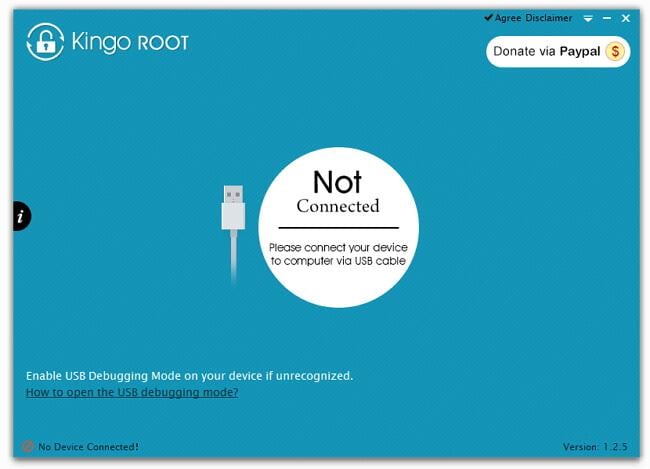
Kingo is a widely known Android root tool for users who want a simple desktop-based solution. It is designed around one-click rooting and has historically supported a range of older Android devices and brands. For beginners looking for a straightforward phone root option on a computer, Kingo is often considered one of the more accessible entries.
Best for: Users who want a simple PC-based root tool for older Android devices.
Download URL: http://www.kingoapp.com/
Pros
- Simple one-click root workflow.
- Historically supported multiple Android brands.
- Offers unroot support in supported cases.
- Free to use.
Cons
- Compatibility depends heavily on device model and Android version.
- Older support ranges may not cover many modern devices.
2. SRSRoot
SRSRoot is another lightweight root tool for Android users who want to root from a computer. It also includes unroot-related functions, which can be useful for people who may want to reverse the process later. If your goal is to test a basic android root tool on an older device, SRSRoot may still be worth considering.
Best for: Users looking for a compact desktop root utility with simple unroot options.
Download URL: http://www.srsroot.com/
Pros
- Lightweight software footprint.
- Simple root and unroot options.
- Easy for users who want a basic tool rather than a complex toolkit.
Cons
- Support is mainly associated with much older Android versions.
- Not ideal for users with newer firmware or recently released devices.

3. Root Genius
Root Genius is an Android root toolkit-style program that focuses on making the rooting process fast and simple. It has often been presented as a one-click desktop tool with broad device coverage, especially for users who want a quick route to root access without manually handling every technical step.
Best for: Users searching for a fast, one-click android root toolkit experience.
Download URL: http://www.shuame.com/en/root/
Pros
- Simple one-click design.
- Broad historical device support claims.
- Useful for users who want speed and convenience.
- Free to use.
Cons
- Device compatibility can vary widely.
- May not offer the same post-root management features as dedicated root managers.
- Support information may feel dated for newer Android versions.

4. iRoot
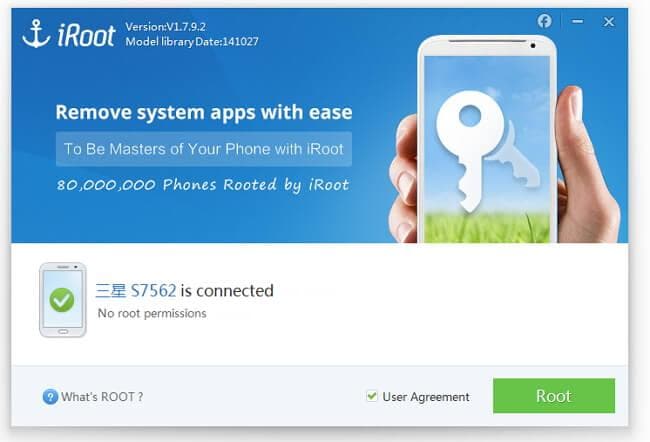
iRoot is another well-known Android root tool aimed at users who want quick desktop rooting. It is often mentioned in lists of root tools because of its simple workflow and large claimed device support base. For people looking for a free root program for Android, iRoot is frequently part of the conversation.
Best for: Users who want a simple desktop rooting tool and are comfortable checking compatibility first.
Download URL: http://www.mgyun.com/en/getvroot
Pros
- Easy one-click approach.
- Commonly cited as supporting many Android devices.
- Free to use.
Cons
- Unroot functionality may be limited.
- Actual success depends on device model, firmware, and Android version.
- Users should verify trust, compatibility, and backup strategy before using it.
Part 2. Best 3 Root Apps for Android to Root Android without Computer
If you want to root without a PC, you will usually be looking for android root apps rather than desktop software. However, there is an important distinction here: some apps help you gain root directly on the device, while others are more useful after rooting because they manage root permissions and access behavior.
For users searching apps to root my phone or android root apps, the following options are among the most commonly mentioned.
1. SuperSU Pro Root App
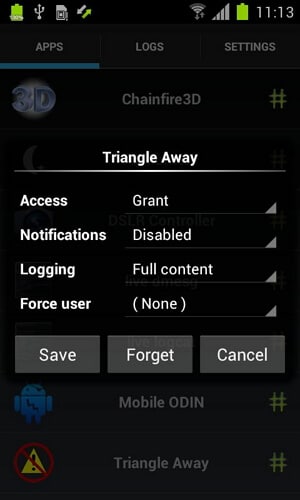
SuperSU Pro is one of the most recognized names in Android root management. It is best known for handling superuser permissions, prompts, logs, and access control once a device is rooted. While many users associate it with the overall rooting process, its strongest role is usually as a root manager rather than a traditional one-click root installer.
Best for: Users who already have root access and want strong permission control and root management.
Features
- Root access prompting, logging, and notifications.
- Temporary unroot or full unroot options in supported cases.
- Can function even when Android is not fully booted in some scenarios.
- System app mode and multiple interface options.
Advantages
- Lightweight and efficient for many users.
- No ads in typical paid usage scenarios.
- Useful for controlling which apps receive root access.
- Helpful after rooting without PC or with PC.
Disadvantages
- It is better understood as a root permission manager than a full standalone Android root installer.
Download SuperSU Pro from Google Play Store: https://play.google.com/store/apps/details?id=eu.chainfire.supersu.pro
2. Superuser Root App
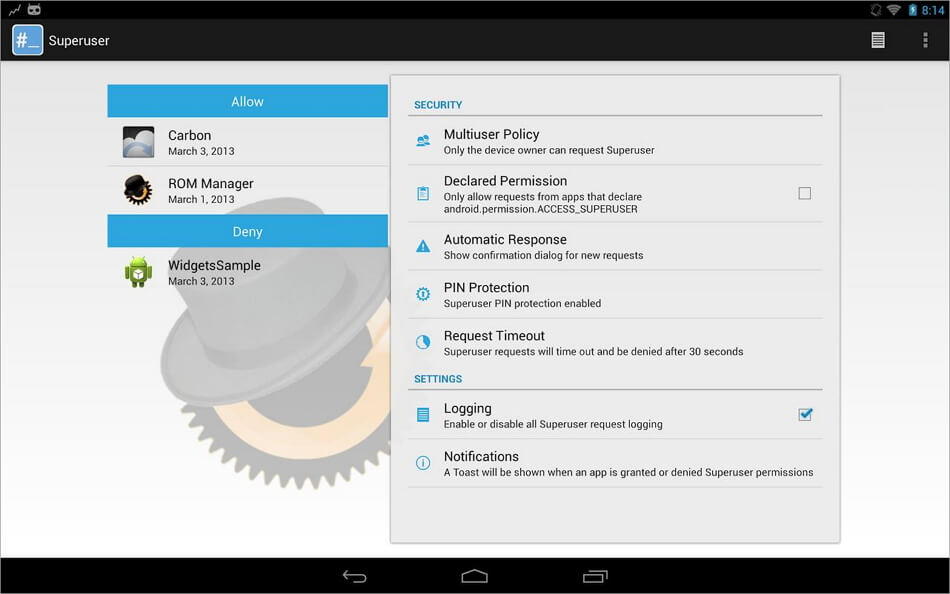
Superuser is another popular solution for managing root access on Android. Like SuperSU, it focuses on granting, denying, and logging superuser permissions. It is often recommended to users who want a free and transparent root management app after the main rooting step has already been completed.
Best for: Users who want a free root manager with configurable permission controls.
Features
- Multi-user support on supported Android versions.
- Open-source project background.
- PIN protection for root access requests.
- Per-app configuration for root permissions.
- Logging and notification features.
Advantages
- Free to use.
- Strong transparency appeal for technical users.
- Good for users who want detailed control over root requests.
- Useful after root access has been obtained.
Disadvantages
- Can feel heavier than some alternatives.
- Its role is closer to root permission management than full device rooting.
Download Superuser from Google Play Store: https://play.google.com/store/apps/details?id=com.koushikdutta.superuser
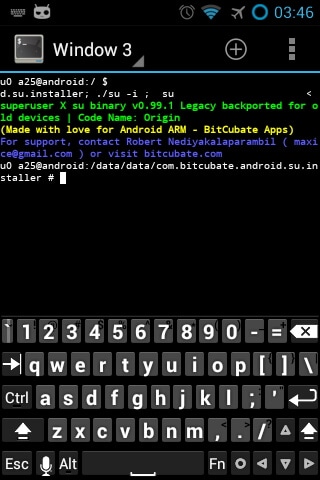
3. Superuser X [L] Root App
Superuser X [L] is aimed more at advanced users who understand the risks of granting wide root access. It reduces repeated permission prompts and is designed for people who want a more direct and developer-oriented experience. This makes it a niche but notable option among android root apps.
Best for: Developers and advanced users who want streamlined root permission behavior.
Advantages
- Can keep root access available even after the app itself is removed in certain setups.
- Reduces repeated prompt interruptions.
- Useful for experienced users managing many rooted apps.
- Works well for users who want a no-frills root permission flow.
Disadvantages
- Not designed for beginners.
- Broader automatic root access can create higher risk if used carelessly.
- Less suitable for users who want frequent permission prompts and tighter manual control.
- Platform support and usability can be more limited than mainstream alternatives.
Download Superuser X [L] from Google Play Store: https://play.google.com/store/apps/details?id=com.bitcubate.android.su.installer
These tools and apps represent different parts of the Android rooting workflow. Some help you actually gain root access, while others help you control and manage that access afterward.
Why Root Android?
Users usually root Android to gain deeper control over their devices. Common reasons include removing bloatware, running advanced backup or automation apps, accessing system files, blocking ads at a deeper level, improving customization, or installing custom ROMs and tweaks. For users searching android root or phone root, these are usually the main motivations.
That said, rooting is not for everyone. It can affect device security, app compatibility, OTA updates, and warranty coverage. If you decide to root Android, make sure you understand both the benefits and the risks before proceeding.
Why you should root the Android phone?FAQs
 Q1. What is the best Android root tool?Q2. Can I root Android without a PC?Q3. Is there a free root program for Android?Q4. What is the difference between an Android root tool and a root manager?Q5. Can I use root tools to root Android 8.0?
Dr.Fone Basic:
Better Control for Your Phone
Manage, transfer, back up, restore, and mirror your device


Android Root
- Generic Android Root
- 1. Text Message Apps for Android
- 2. Root Android ONE Devices
- 3. Best Android Root File Managers
- 4. Get Root Access with Computer
- 5. Delete Preinstalled Apps on Android
- 6. Get Free In-APP Purchase
- 7. Wifi Hotspot Apps without Rooting
- 8. Get Root Access on Android
- 9.Root Android Devices
- 10.Root Android Phones and Tablets
- 11.Root Smartphone on Android
- 12.Why Root Android and How to Root it
- 13.Root Android 4 Series in Two Ways
- 14.Tools to Root Android Online
- 15.Root Android without PC
- Specific Android Root
- 1. Root Samsung Galaxy S7& S7 Edge
- 2. Root LG Devices with Root Script
- 3. Samsung Root Software to Root
- 4. Root Motorola Devices
- 5. 2 Solutions to Root ZTE Devices
- 6. Solution to Root Huawei P9 Safely
- 7. 2 Methods to Root Nexus 7 Easily
- 8. Solutions to Root Sony Devices
- 9. Root Any HTC Device in One Click
- Android Root Tools
- ● Manage/transfer/recover data
- ● Unlock screen/activate/FRP lock
- ● Fix most iOS and Android issues
- Free Download Free Download Free Download


 > How-to > Device Data Management > Best 7 Android Root Tools to Get Root Access with or without Computer
James Davis
staff Editor