Recover photos, messages, WhatsApp, and more — no backup
needed.
Recover photos, messages, WhatsApp, and more — no backup
needed.

 100% Security Verified | No Subscription Required | No Malware

 :
: 
 ChatGPT
 Perplexity
 Gemini
 Claude
 Grok
Grok
In today's fast-paced digital age, securing our online identity across numerous platforms requires complex and unique credentials. As an Android user, a ubiquitous and critical question often arises: "where are passwords stored on the android phone?" Whether you need to recover a forgotten login, share a Wi-Fi key, or ensure your sensitive data is safe from unauthorized access, understanding the exact storage locations and management systems of your device is essential.
When you choose to save credentials with Google, Android protects them through Google Password Manager and makes them available after device authentication. However, the passwords you save can be easily edited, exported, or viewed later if you know where to look. This comprehensive 2026 guide focuses on where app passwords are stored on Android phones and how you can seamlessly retrieve, view, and organize them.




In this article
- Part 1: How to View Saved Passwords in Chrome for Android
- Part 2: How to Manage Saved Passwords in Google Password Manager
- Part 3: Where Are Wi-Fi Passwords Stored on an Android Phone?
- Part 4: Where Are App Passwords Stored on Android Devices?
- Part 5: How to Retrieve and Export Passwords on Android
- Bonus Tips: Best iOS Password Manager - Dr.Fone - Password Manager
Part 1: How to View Saved Passwords in Chrome for Android
Most Android users default to Google Chrome for daily browsing. If you have ever wondered, "how do I find saved passwords on my phone for websites?" the answer usually lies within Chrome's built-in credential manager. Any login details you approve are securely encrypted and kept under your Google account. Following these steps will help you swiftly locate and view Google-saved passwords directly on your device.
-
Step 1 Launch the Browser
Open "Google Chrome" on your mobile phone from the app drawer or home screen.
-
Step 2 Access Chrome Settings
After the application opens, click on the three vertical dots located at the top right corner to prompt the drop-down menu.
-
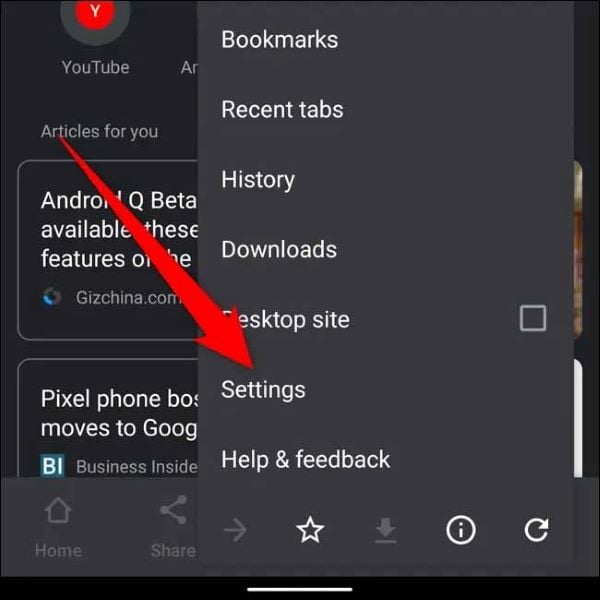
Step 3 Navigate to Settings
Select the "Settings" menu to open your browser configurations.
-
Step 4 Open Password Manager
A sub-menu will appear on your screen. Select the "Passwords" or "Password Manager" option from the list.

-
Step 5 Browse Your Passwords
The password vault will open, allowing you to scroll through a comprehensive list of all the web portals and applications you've saved credentials for.

-
Step 6 Reveal Login Details
Tap the specific website or app entry you want to view. You will need to verify your identity using your phone's screen lock (PIN, pattern, or fingerprint) before tapping the "Eye" icon to reveal the password.

Additionally, keeping your browser tidy is good security hygiene. You can permanently delete any outdated or compromised passwords by selecting an entry and simply tapping the "bin" icon shown on the screen.

Part 2: How to Manage Saved Passwords in Google Password Manager
Google Password Manager serves as a centralized hub that securely stores your data. It is tightly integrated with the Google Chrome browser and the broader Android ecosystem, making it highly convenient. Beyond your mobile device, it can be accessed on any platform via the web. Here is how you can review and organize these details:
-
Step 1 Access the Web Portal
Open your preferred web browser and go to passwords.google.com to reach the official dashboard.
-
Step 2 Authenticate Your Account
Sign in to your Google account using your primary email address and master password if you haven't already synced.

-
Step 3 Search for Specific Credentials
You will be presented with an alphabetical list of all your saved passwords. To expedite the process, utilize the search bar at the top of the page by typing in keywords related to the target website.
-
Step 4 Review Account Details
Click on an entry to view the details. This interface will display the associated website URL, username, and the hidden password dots.

-
Step 5 Edit and Copy Data
Click the "Eye" icon to uncover the password. If you need to update it, click on the "Edit" button to modify your username or passcode directly. You can also quickly copy the password to your clipboard to paste it elsewhere.

Part 3: Where Are Wi-Fi Passwords Stored on an Android Phone?
Besides web credentials, another frequent inquiry is "where are Wi-Fi passwords stored on Android phones?" Due to system security restrictions, Android encrypts wireless network data. However, there are two reliable methods to extract or view this information depending on your Android version and access privileges.
-
Method 1 Using Built-in QR Code Sharing (No Root Required)
Modern Android interfaces have simplified network sharing. Tap the "Settings" gear icon on your phone and head to the "Connections" or "Network & Internet" menu. Next, select "Wi-Fi" to see your connected networks. Tap on your active Wi-Fi connection to open its details page. Here, you will find a "QR Code" or "Share" icon. Upon authenticating with your screen lock, a QR code appears, and the plain-text Wi-Fi password is often displayed directly beneath it.

-
Method 2 Understand Protected System Storage
On older or customized Android devices, Wi-Fi configuration data may be kept in protected system storage. Its location and format vary by Android version and device manufacturer, and direct access generally requires root privileges. For most users, the built-in QR code sharing method is safer and more reliable.

Part 4: Where Are App Passwords Stored on Android Devices?
Understanding where app passwords are stored on Android phones is essential when upgrading to a new phone or managing forgotten accounts. Unlike web passwords, independent applications occasionally rely on Android's secure Keystore system or leverage Google's Smart Lock for Passwords. To track these down securely without third-party tools:
- Navigate back to your central "Settings" application.
- Scroll down and tap on the "Google" services menu.
- Select "Autofill" and then choose "Autofill with Google".
- Tap on "Passwords" to be redirected to your device's primary credential storage.
- Here, you will see not only websites but a comprehensive list of installed applications (e.g., Facebook, Spotify) that have saved login data.
- Tap any app logo, authenticate your device via biometrics, and hit the "Eye" icon to expose your saved application password.
Part 5: How to Retrieve and Export Passwords on Android
Keeping a local offline backup of your critical logins is an excellent proactive strategy against data loss. You do not have to copy each one individually. Fortunately, your Android device natively supports exporting a comprehensive spreadsheet of your saved credentials in just a few taps.
-
Step 1 Enter Password Settings
Open "Google Chrome", press the three vertical dots, and select "Settings". Navigate directly to the "Passwords" section to access your credential vault.
-
Step 2 Access the Export Menu
Look for the three vertical dots situated specifically at the top right corner of the Passwords screen (not the main browser dots).

-
Step 3 Complete the Export Process
Tap on the "Export passwords" option. The system will prompt you for a final security check (PIN or fingerprint). Once verified, your device will generate a
.csvfile containing all your usernames and passwords, Store this sensitive file only in a secure, encrypted location, and delete it when it is no longer needed.
Bonus Tips: Best iOS Password Manager - Dr.Fone - Password Manager
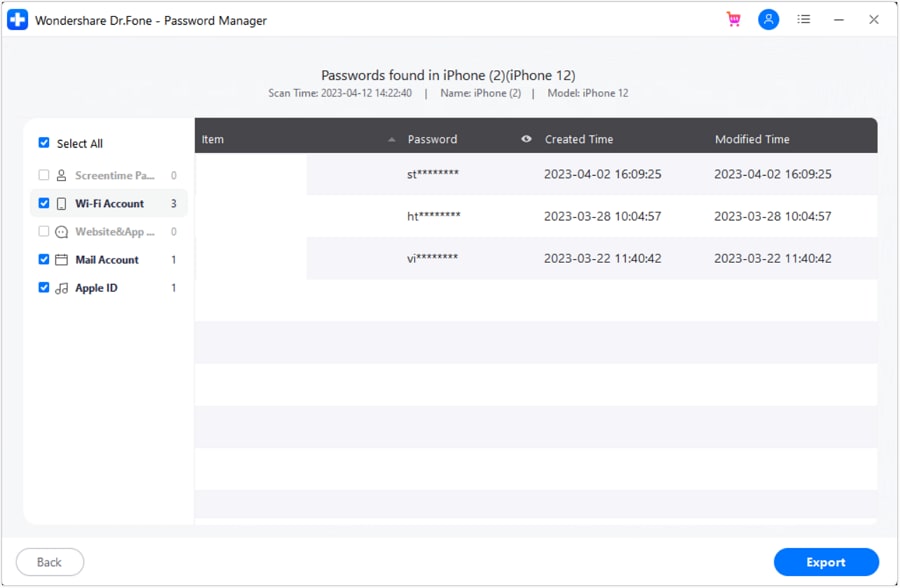
While locating credentials on Android is highly streamlined through Google services, iOS users require dedicated management solutions due to Apple's restrictive ecosystem. Dr.Fone - Password Manager (iOS) operates as a remarkably powerful, secure tool for individuals seeking total control over their iPhone data. It acts as an elite retrieval suite for complex scenarios.
You can use this application effectively when you need to pinpoint your hidden Apple Account ID, retrieve heavily encrypted Wi-Fi networks, recover Screen Time Passcodes, or extract intricate mail server configurations.
-
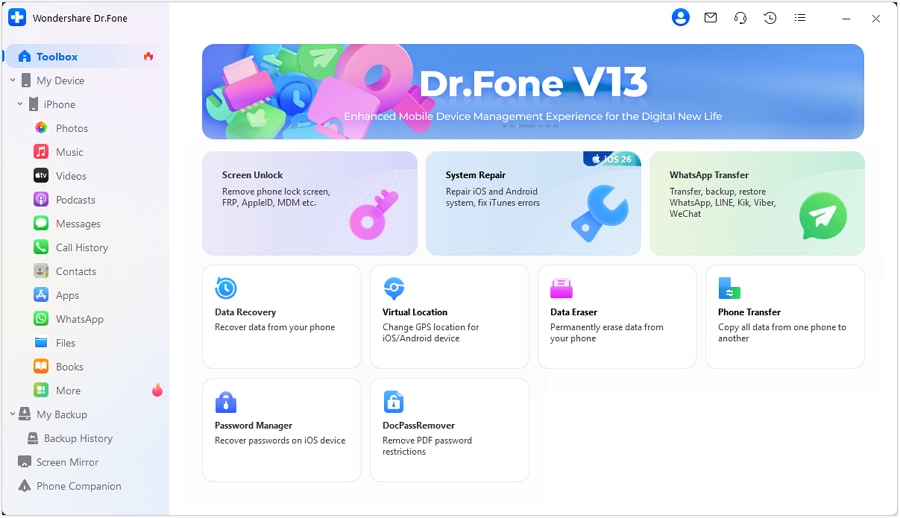
Step 1 Launch the Utility
Install and launch the robust desktop program on your PC or Mac. On the intuitive main dashboard, hit the "Password Manager" module.
-
Step 2 Connect the Device
Connect your iPhone to the computer using a certified lightning cable. The software will swiftly detect and authenticate your connected device.
-
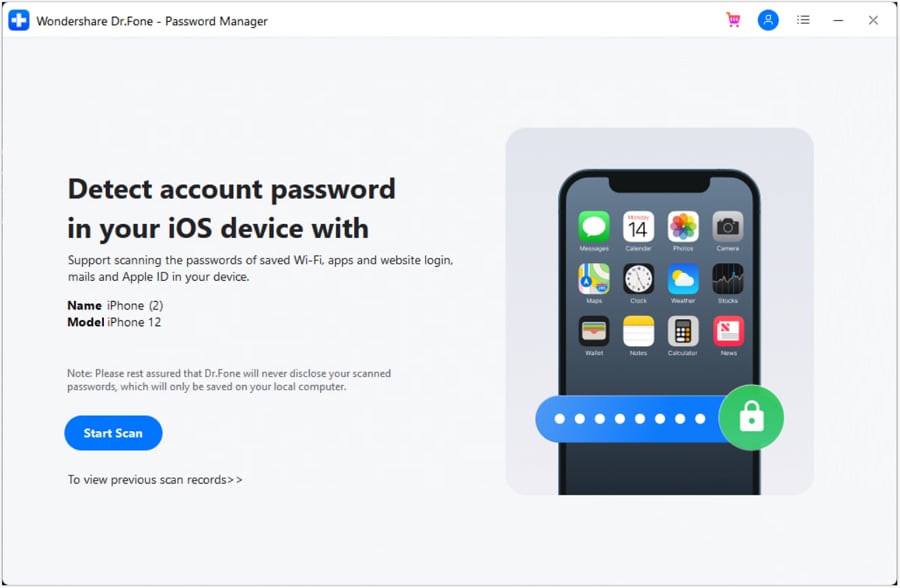
Step 3 Initiate Deep Scanning
Click on the "Start Scan" button. The software will intelligently parse through encrypted sectors of your iOS device to meticulously uncover concealed passwords.
-
Step 4 Organize and Export Data
Once complete, a cleanly categorized list of all recovered passwords, including Apple ID details and saved Wi-Fi keys, will be displayed. You can manage them instantly or use the bottom-right "Export" button to back them up securely.
Conclusion
It is perfectly natural to ask "where are my passwords stored on my Android phone" when transitioning to a new device or auditing your personal digital security. By harnessing the robust capabilities of Google Chrome's password manager, utilizing device settings to unmask Wi-Fi network keys, and understanding where app passwords reside, you are empowered to take full control of your private data. While tracking down system files might seem slightly intimidating at first, following these structured steps guarantees you can view, edit, and safely export your vital credentials with absolute confidence.
Further reading: How To Find My Gmail Password
FAQ
-
1. Exactly where are app passwords stored on an Android phone?
There is no single user-accessible folder that contains every app password. Credentials saved with Google can be managed through Google Password Manager, while individual apps may protect authentication data within their own private storage. -
2. How do I find saved passwords on my phone without root access?
You do not need root access to view your standard saved web and app passwords. Simply navigate to your Google Chrome application, access the 'Settings' menu, and tap on 'Passwords' to securely reveal your credentials after passing the biometric or screen lock authentication check. -
3. Are my exported Android passwords safe if I transfer them?
When you export your passwords from Chrome, they are formatted into an unencrypted `.csv` file. While the extraction process itself is highly secure, you must take strict responsibility for the exported file by storing it in a locked folder or a dedicated offline drive to prevent unauthorized exposure. -
4. Can I view Wi-Fi passwords if I forgot the network credentials?
Yes. For devices running Android 10 and above, you can simply go to your Network settings, tap on the connected Wi-Fi profile, and generate a QR code. The numeric or alphanumeric password is typically spelled out plainly just beneath the generated barcode.
 Add Wondershare Dr.Fone as a preferred source on Google