Recover photos, messages, WhatsApp, and more — no backup
needed.
Recover photos, messages, WhatsApp, and more — no backup
needed.

 100% Security Verified | No Subscription Required | No Malware

 :
: 
 ChatGPT
 Perplexity
 Gemini
 Claude
 Grok
Grok
Many users frequently encounter a frustrating 'iCloud storage full' notification without having a clear idea of what's consuming their valuable space. This becomes incredibly disruptive when your iOS device refuses to back up new data or sync important files due to insufficient capacity. Consequently, managing your digital life becomes a daunting task when you are uncertain about the exact files occupying your cloud account. For this reason, a growing number of individuals are asking, 'how can I see what is in my iCloud storage' directly from their preferred devices.
Whether you rely on an iPhone, an iPad, a Mac computer, or simply log in through a web browser on a Windows PC, checking your iCloud capacity is a straightforward process in 2026. This comprehensive guide will walk you through the essential moments when checking your storage is crucial, followed by highly effective methods to monitor it across multiple platforms. Moreover, if you accidentally delete vital files while trying to free up space, we will provide an advanced tip on how to recover your lost iCloud data seamlessly.
In this article
Part 1. When to See iCloud Storage Content? Quick Insights
There are critical moments when reviewing your cloud capacity becomes an absolute necessity. Below, we explore several common scenarios where you should definitely check your storage content to maintain optimal device performance:
1. When the Storage is Full
If you continuously receive the dreaded 'iCloud storage full' warning, it is an immediate signal to investigate what is dominating your space. In this scenario, figuring out how to see what is in my iCloud storage helps you remove unneeded files promptly, thereby preventing frustrating backup and sync failures.
2. Before Upgrading Your Device
Before purchasing a new iPhone or iPad, verifying your stored content ensures that you do not leave any vital documents behind during the transition. Furthermore, it allows you to eliminate redundant data, guaranteeing that your new 2026 device doesn't become cluttered the moment you restore your iCloud backup.
3. After Restoring from a Backup
Quite often, obsolete or unwanted data gets inadvertently restored alongside your essential files. Taking a moment to review your cloud drive helps you confirm exactly what has been migrated. This proactive step guarantees you only preserve necessary information without exhausting your iCloud tier limits.
4. Before Activating Family Sharing
It is a highly recommended practice to assess your iCloud+ content before you share your subscription with family members. This ensures that massive personal files or heavy video libraries don't monopolize the shared storage pool, preventing your relatives from instantly depleting the available cloud capacity.
5. Managing Professional Work Files
If you regularly use iCloud Drive for business or office tasks, periodically reviewing your storage ensures that outdated drafts or duplicate presentations are removed. Keeping your workspace meticulously organized makes room for newer file versions without forcing you to purchase a more expensive storage plan.
Part 2. How to See What Is In My iCloud Storage [All Devices]
Once you recognize the right moments to monitor your capacity, you might naturally wonder, 'how can I see what is on my iCloud storage?' Fortunately, Apple provides intuitive tools to analyze your data distribution across various operating systems. The following sections will guide you through checking your cloud content on any device of your choice:
For iPhone/iPad
If you are operating an iPhone or iPad, the native Settings app offers a highly detailed breakdown of your iCloud usage. You can effortlessly pinpoint which applications are consuming the most space, check your remaining capacity, and manage older device backups. If you frequently ask, 'how can I see what is stored on my iCloud,' this method provides complete transparency. Follow the instructional steps below to perform this check:
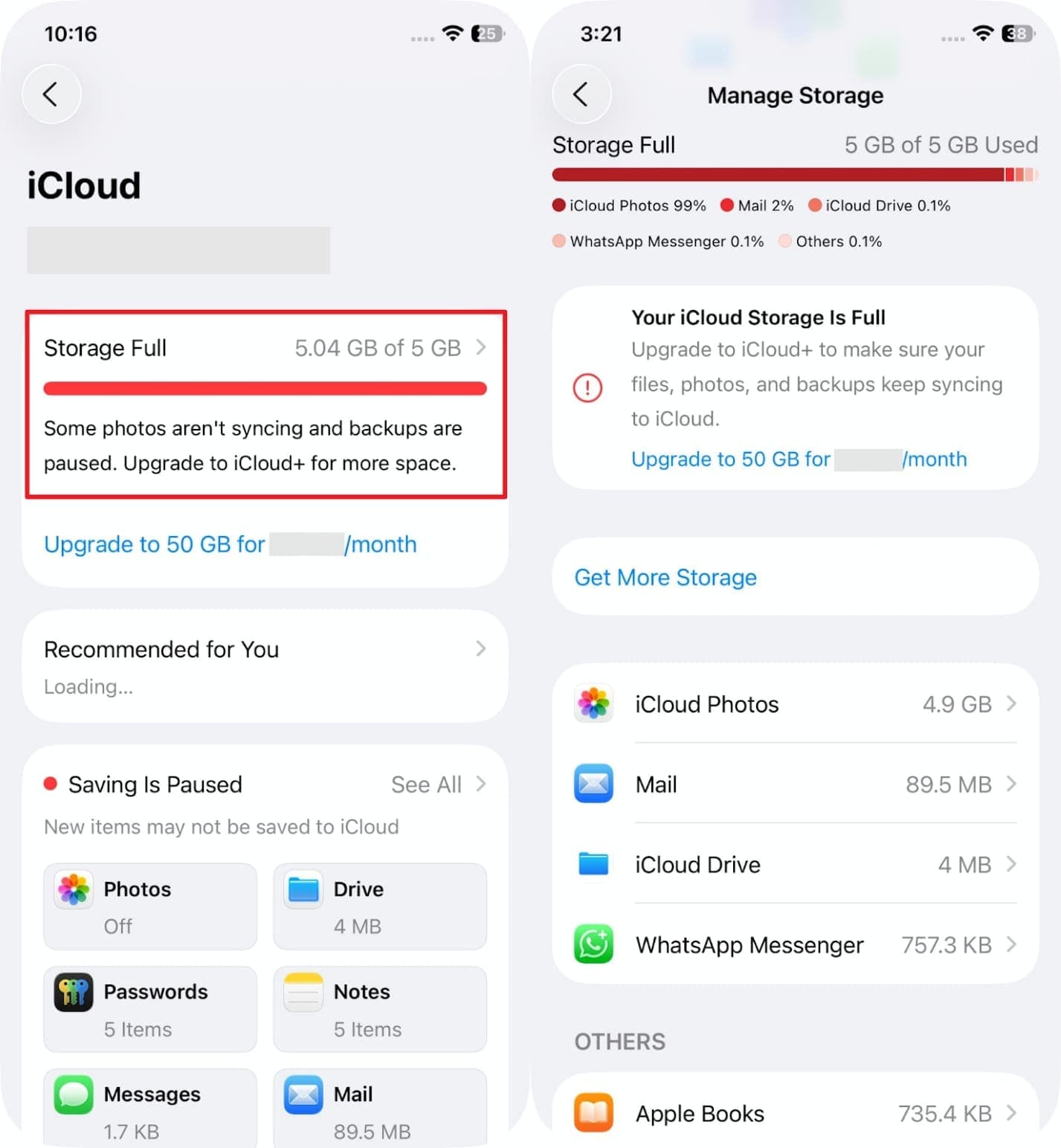
Step 1. Unlock your iOS device and open the 'Settings' app. Tap on your 'Apple Account' banner at the top, and navigate to the 'iCloud' section.
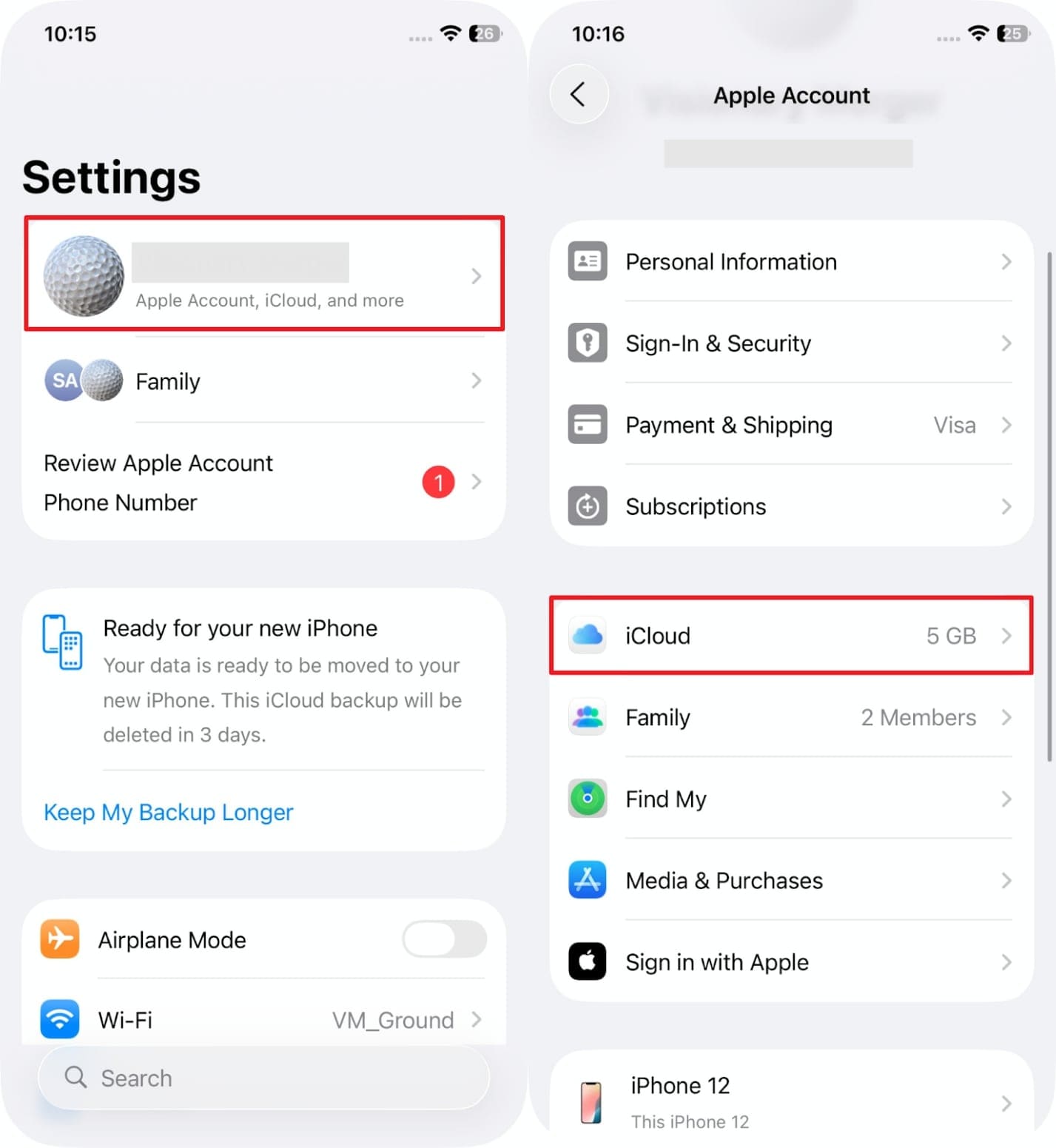
Step 2. Next, tap the 'Storage' or 'Manage Account Storage' button (depending on your iOS version). You will instantly see a color-coded bar and a detailed list of all stored data categories inside your iCloud.
For Mac
Mac users can gain a comprehensive understanding of their iCloud consumption directly through macOS System Settings. This interface breaks down your storage usage by distinct categories—such as Photos, Documents, Mail, and Backups—allowing you to make informed decisions about what to retain and what to discard.
Additionally, you can manage your synced desktop files and eliminate large items without requiring third-party plugins. For those wondering, 'how can I see what's on my iCloud storage' from a desktop environment, here is how you do it:
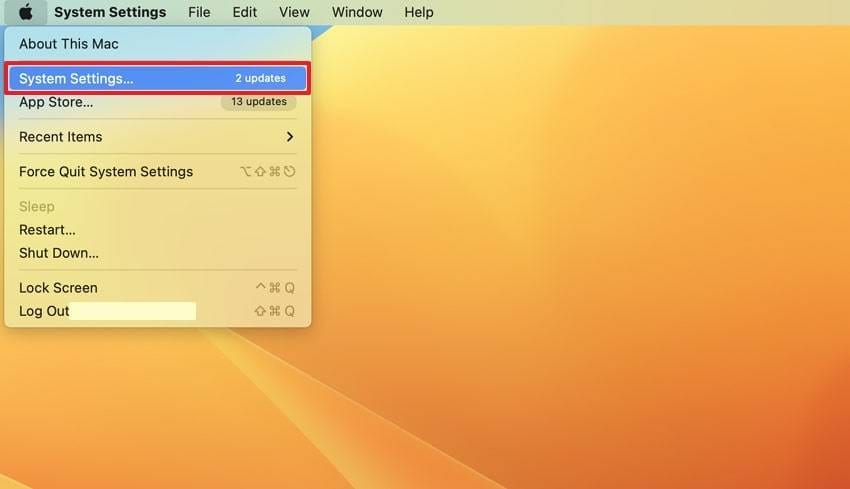
Step 1. Begin by clicking the 'Apple' logo located in the top-left corner of your screen, then select the 'System Settings' (or System Preferences) option from the drop-down menu.
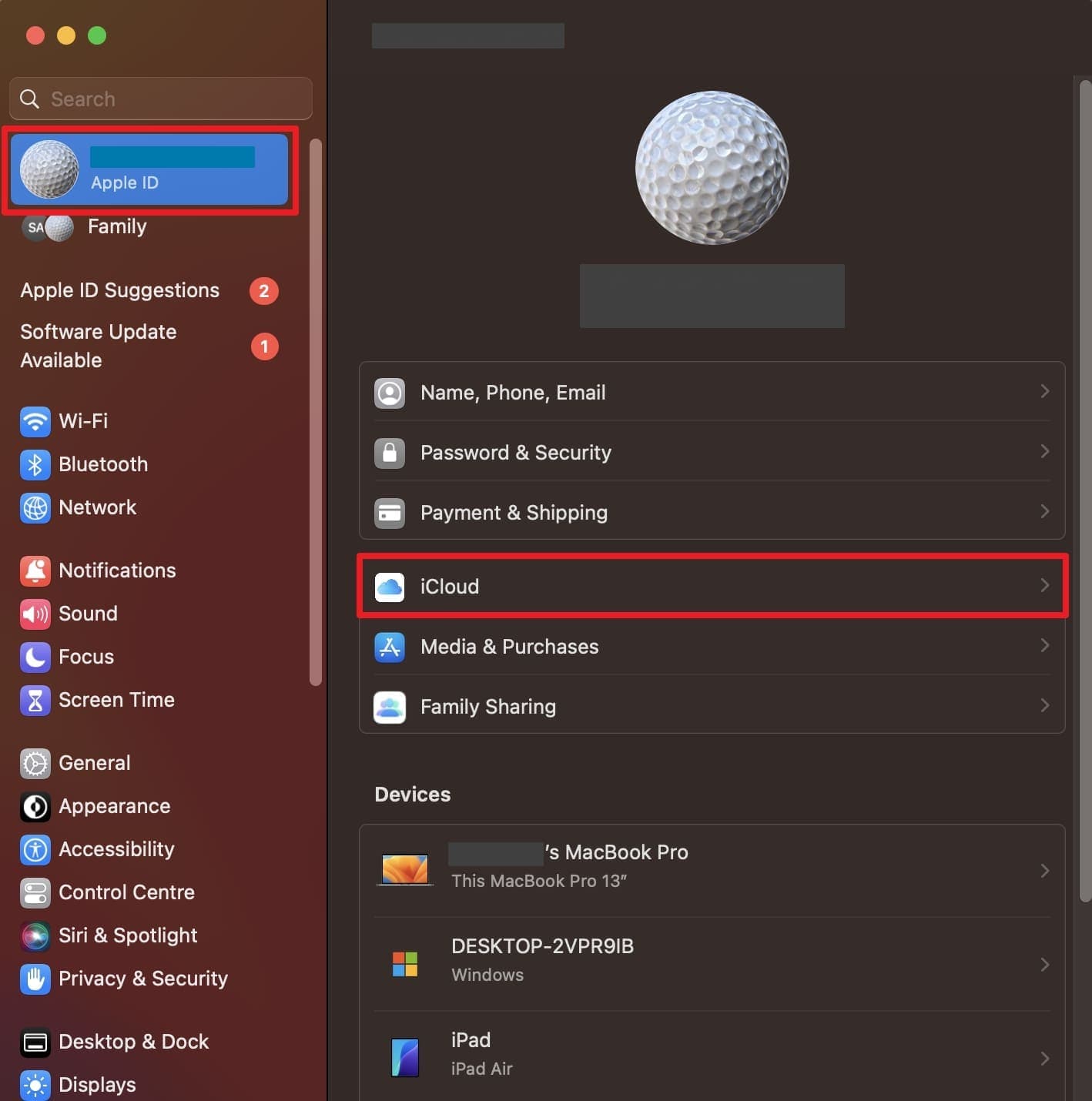
Step 2. Once the window opens, click on your Apple profile name at the top of the sidebar and select the 'iCloud' tab to proceed.
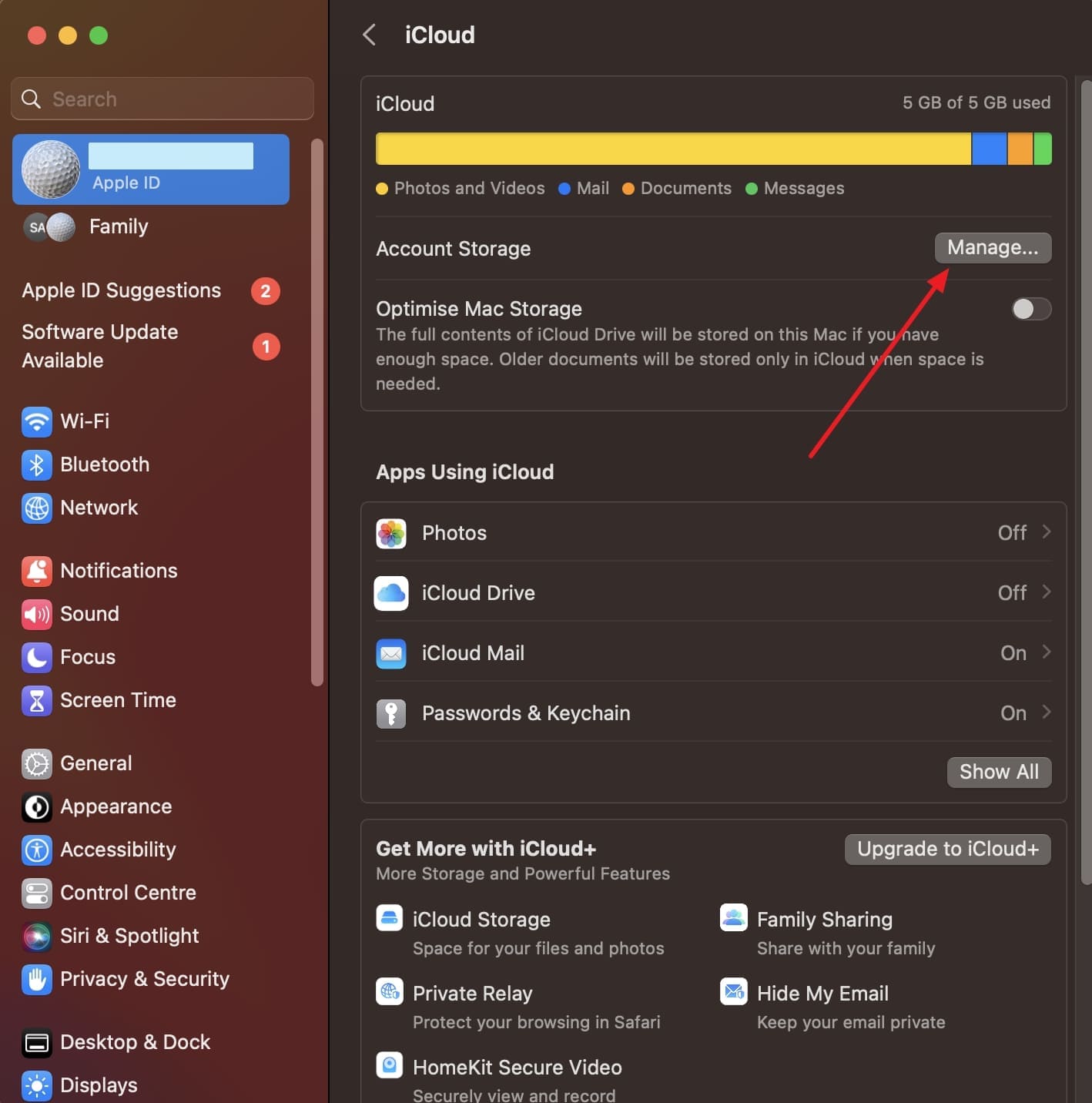
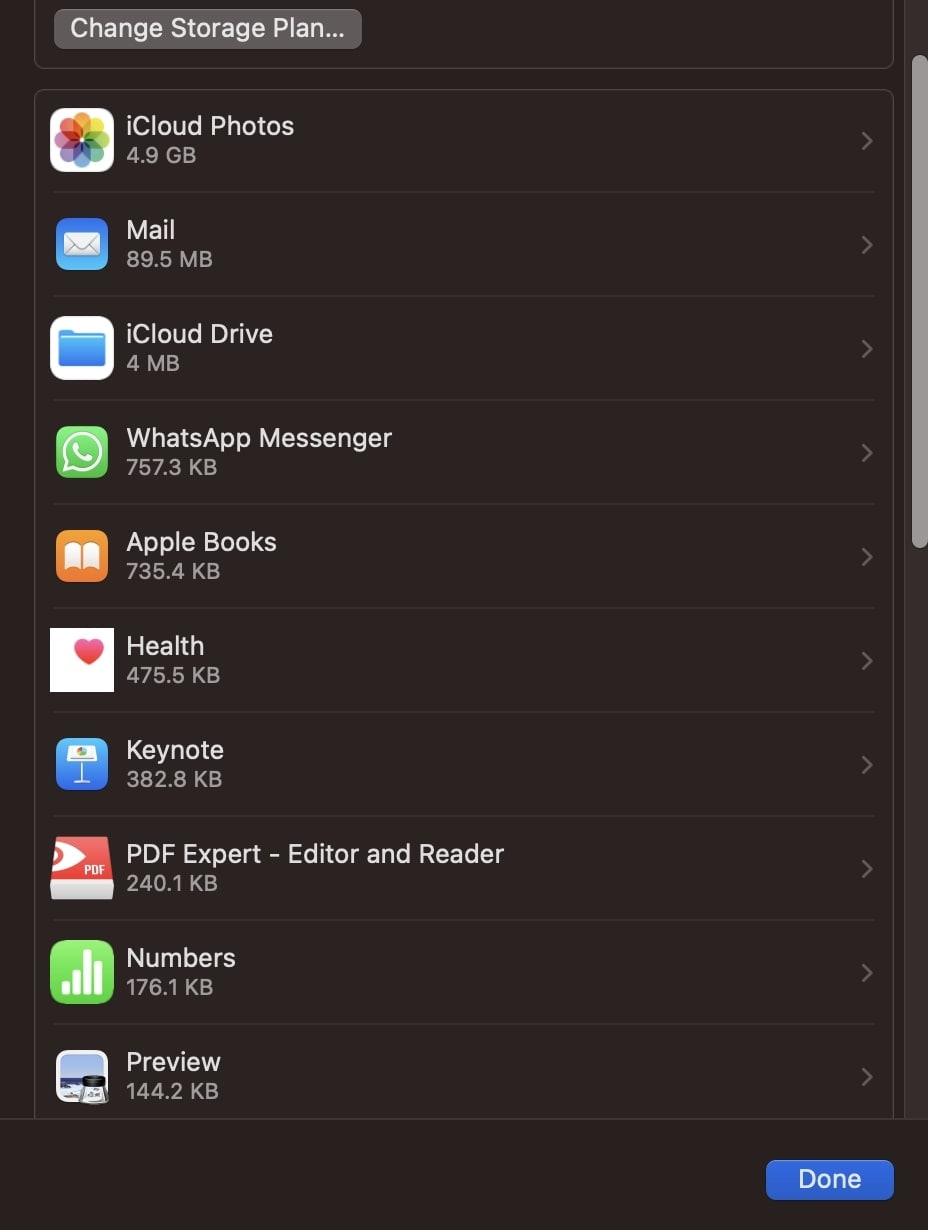
Step 3. Following this, click on the 'Manage' button positioned directly next to the 'Account Storage' indicator.
Step 4. A new dialog box will appear, successfully displaying all the specific data files, app backups, and media currently occupying your iCloud capacity.
For Web
Even if you do not currently have your Apple device on hand, you can still securely access your cloud storage via any standard web browser (like Chrome, Edge, or Firefox). By logging in with your Apple ID credentials, the platform allows you to view your stored content remotely. Moreover, you can seamlessly download, delete, or reorganize files directly from the browser interface. If you find yourself asking, 'how do I see what's stored in my iCloud' on a Windows PC, execute the steps below:
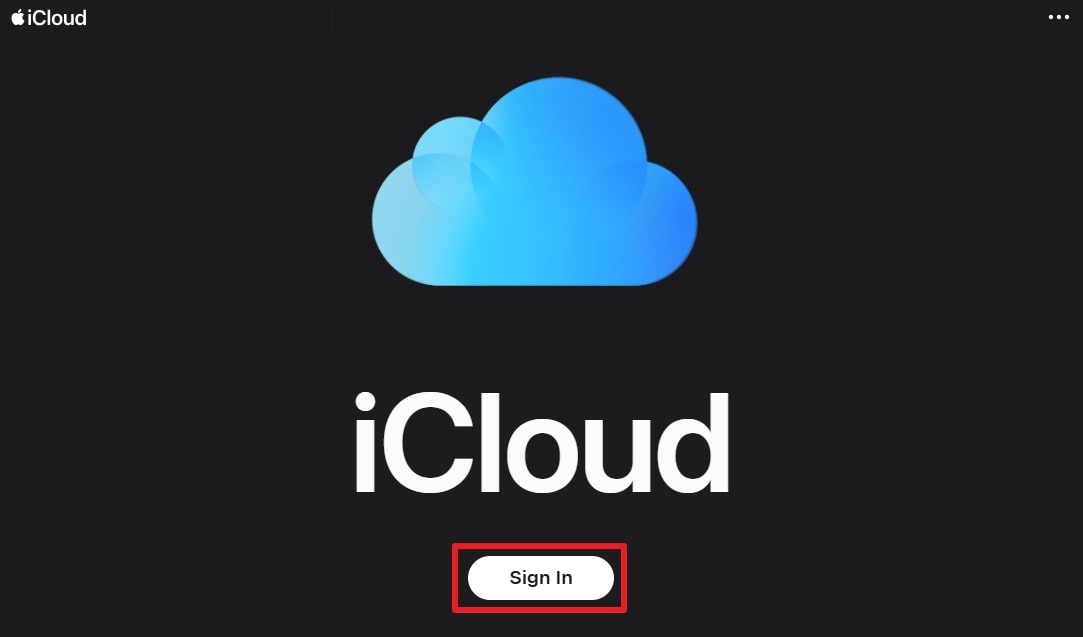
Step 1. Start by launching a web browser, navigating to the official 'iCloud.com' portal, and clicking the 'Sign In' button to authenticate with your Apple ID and password.
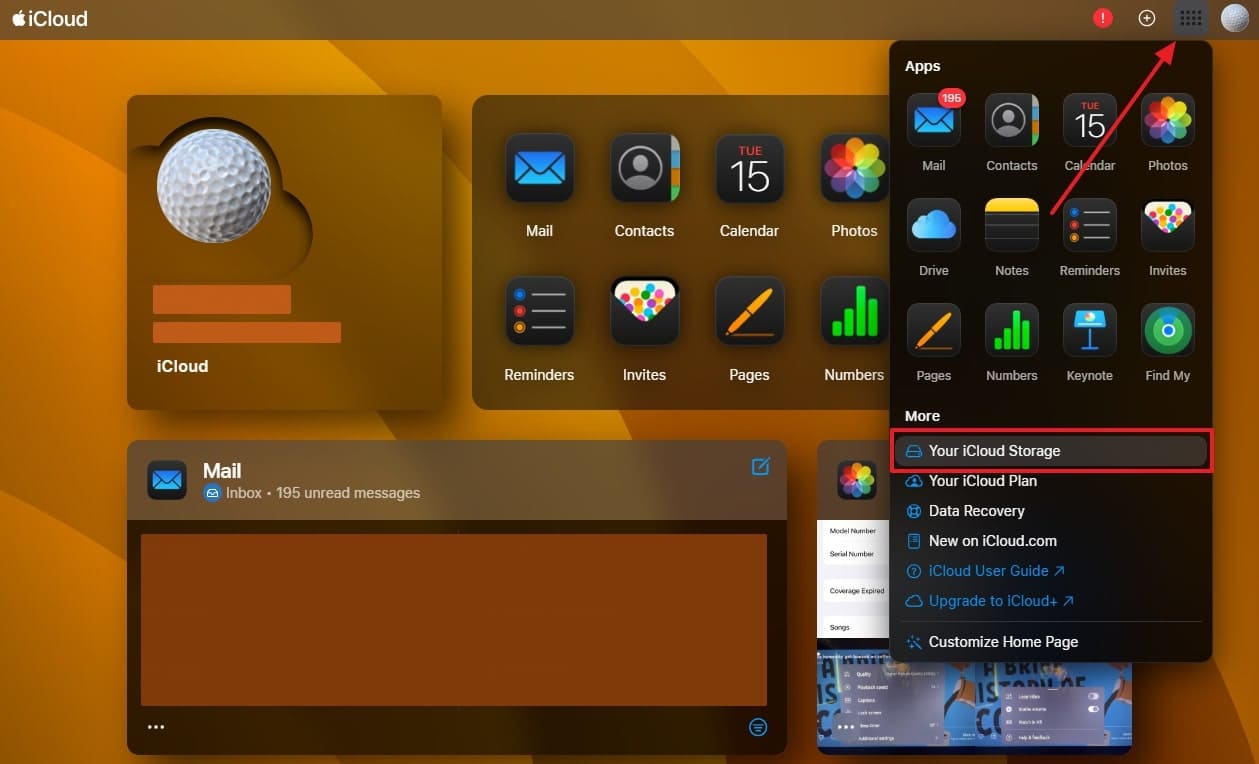
Step 2. Upon reaching the main dashboard, locate the 'Quick Access' icon in the menu and click on the 'Your iCloud Storage' option.
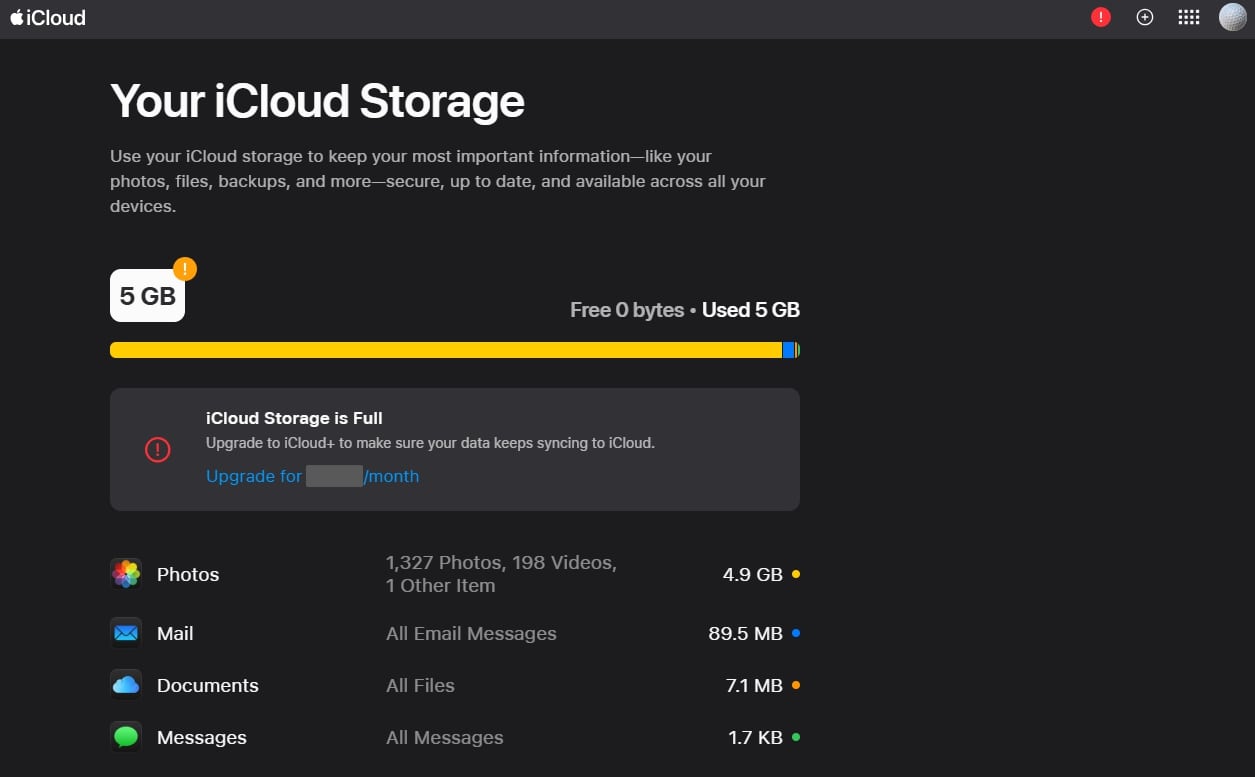
Step 3. You will be directed to a storage management page where you can effortlessly inspect and manage all the synced data currently stored in your cloud.
Pro Tip. Accidentally Deleted an Important iCloud File? Restore Using Dr.Fone
While trying to resolve the question, 'how do I see what is in iCloud storage,' many users accidentally delete critical data such as family photos or business contacts to free up space. Experiencing unexpected data loss during a storage cleanup is a common but stressful scenario. To swiftly address this emergency, you can utilize the highly acclaimed Dr.Fone - Data Recovery (iOS) to seamlessly retrieve your deleted files straight from your iCloud backups.
This industry-leading software is engineered to recover over 18 different data types, including lost videos, text messages, voice memos, and application files. Before committing to a full recovery, the intuitive interface allows you to preview the deleted information, ensuring you only bring back exactly what you need. Most importantly, Dr.Fone operates safely without overwriting your current device data, guaranteeing that your existing files remain completely secure during the restoration process.
 Recovers data after deletion, crashes, or device damage.
- Supports photos, messages, contacts, WhatsApp, and more.
- Supports all major iPhone, iPad, and iPod models.
- Preview and recover only what you need.
Guide to Restore Deleted Important iCloud Files Using Dr.Fone
Now that you are familiar with its powerful capabilities, follow these structured steps to efficiently restore your lost iCloud data using the Dr.Fone software:
Step 1. Launch the Software and Access Data Recovery
After downloading and installing the software, launch the application. Navigate to the 'Toolbox' tab on the main interface, select the 'Data Recovery' feature, and choose 'iOS' as your device type. From the ensuing options, click on 'Recover Data From iCloud' to proceed.
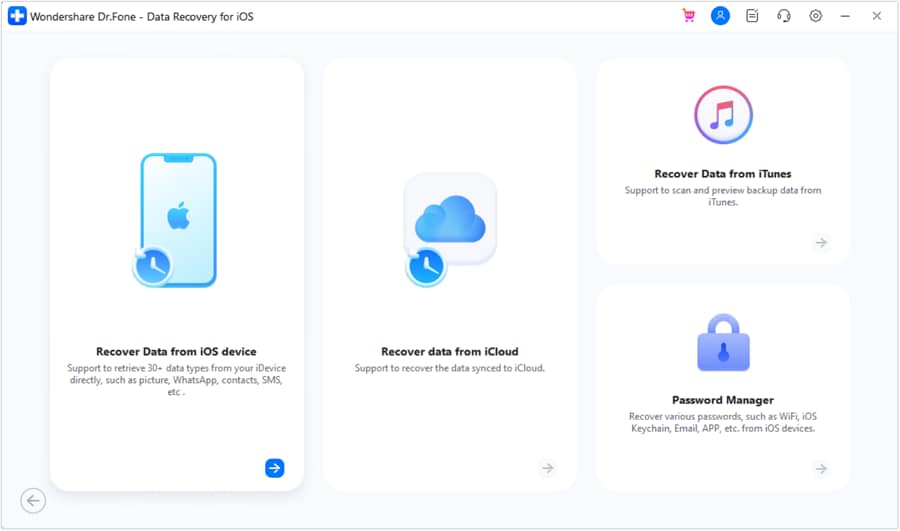
Step 2. Log in to iCloud and Select Target Data
Next, you will be prompted to securely sign in to your 'iCloud' account. Enter your Apple ID credentials, provide the Two-Factor Authentication (2FA) code if required, and click the arrow to verify. Once logged in, Dr.Fone will display various data categories. Select the specific file types you wish to recover and click the 'Next' button.
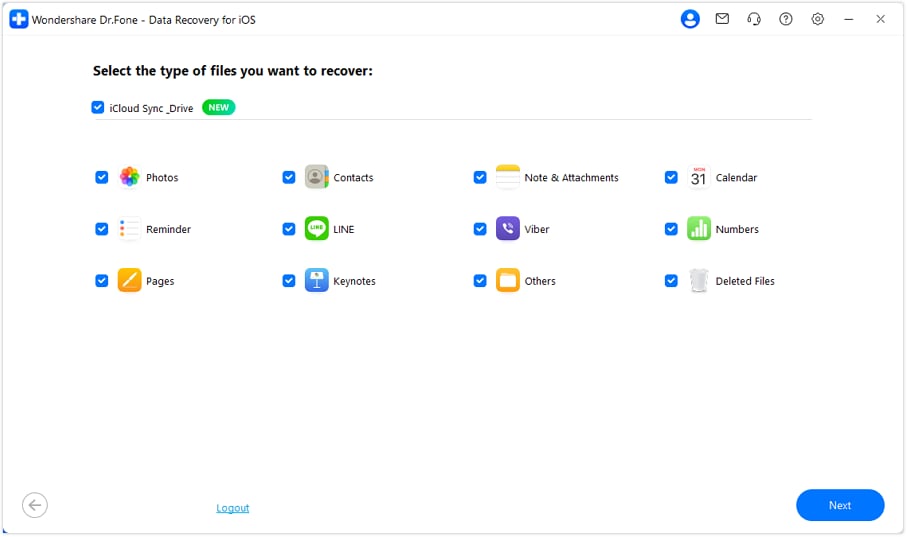
Step 3. Download and Preview the Recoverable Files
The program will begin downloading the relevant backup files from Apple's servers. Once the scan is complete, you can preview the extracted items in high definition. Review the data carefully, check the boxes next to the files you need, and press the 'Restore to Device' button.
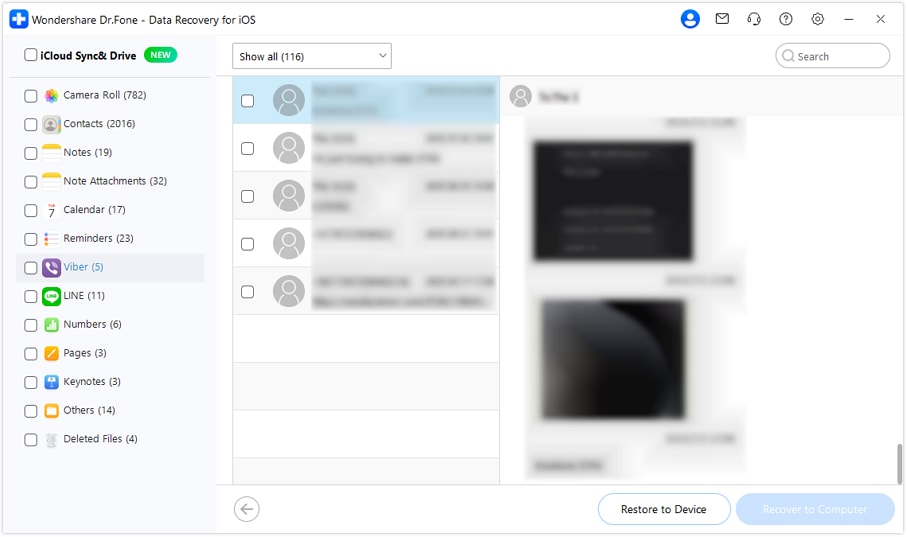
Step 4. Successfully Transfer the Data Back to Your Device
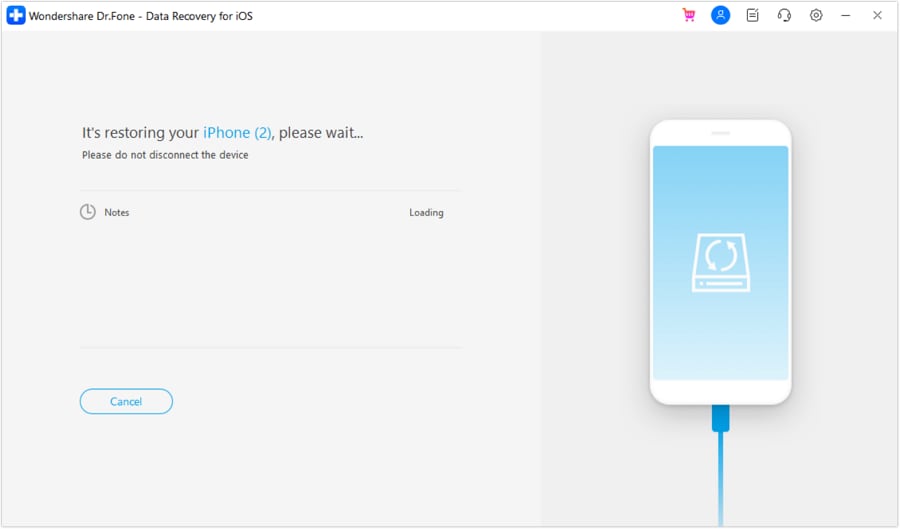
Connect your iPhone or iPad to the computer using a certified USB cable. Select your connected device from the pop-up window, hit the 'Continue' button, and patiently wait as Dr.Fone safely writes the recovered data directly back to your iOS device.




Part 3. How Can I Increase iCloud Storage Space When It's Full?
Once users master the concept of 'how can I see what is in my iCloud storage,' the immediate next step is taking actionable measures to reclaim lost space when their tier is exhausted. To prevent you from having to purchase an expensive subscription upgrade, we have detailed the top four proven methods to increase your available cloud storage efficiently:
Way 1. Disable Backup for Unnecessary Apps
If you need to rapidly liberate iCloud space, toggling off the backup switches for dormant or unessential apps is an excellent start. This configuration allows you to strictly control which applications are permitted to sync their data to Apple's servers. By disabling heavy, non-critical apps (like large games or offline video players), you ensure that only vital data gets protected. After discovering how to see what is in my iCloud storage, follow these precise steps to stop wasteful syncing:
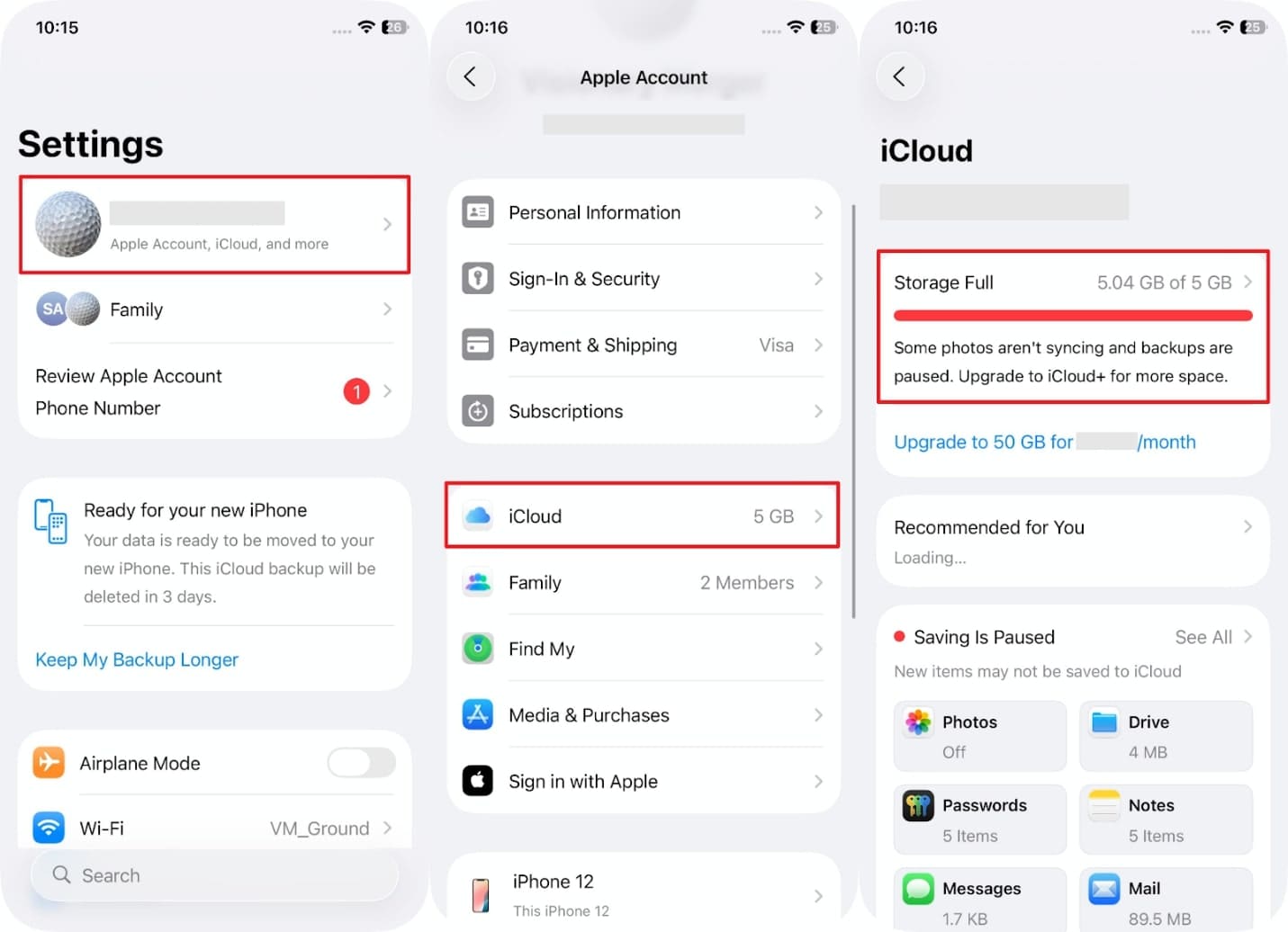
Step 1. Open the 'Settings' app on your iPhone, tap on your profile banner at the very top, and select the 'iCloud' option. On the subsequent screen, tap on 'Manage Account Storage' (or 'Storage Full' if an alert is present).
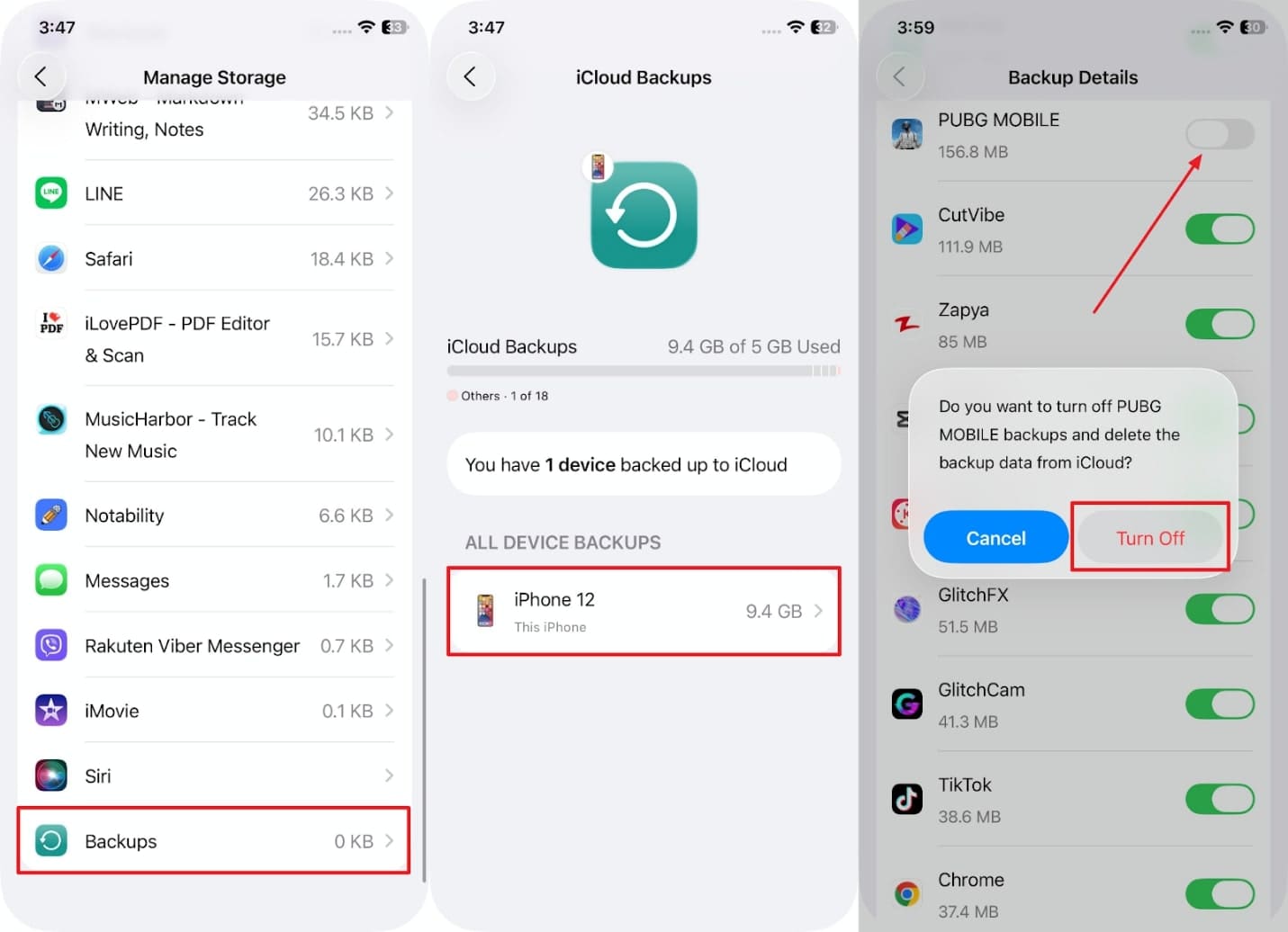
Step 2. Next, tap the 'Device Backups' (or just 'Backups') option, and select the backup profile for your current device. Scroll through the list of applications, locate the ones that are hogging space, and toggle their switches to the 'Turn Off & Delete' position to exclude them permanently.
Way 2. Delete Duplicate or Unwanted Media
One of the most effective strategies to free up a massive amount of iCloud capacity is to eliminate duplicate photos, burst shots, and overly large videos. To automate this tedious chore, leveraging a dedicated cleanup application like MobileClean is highly recommended. Besides simply figuring out 'how can I see what is on my iCloud storage,' this utility empowers you to actively scan and eradicate redundant visual media from your iOS device.
The app performs a deep scan of your entire photo library, categorizing similar images, blurred shots, and massive screen recordings. You are then given full control to review the findings and safely delete the clutter, ensuring that no precious memories are lost. Even better, all deleted media is temporarily moved to the 'Recently Deleted' folder, affording you a safety net against accidental removals.
MobileClean - Photo Cleaner (iOS)
Deep Space Cleaning: Smartly Remove Media Clutter with One Tap
- Smart Clean: Auto-detect large videos, duplicate/similar photos, screenshots, Live Photos, and expired contacts.
- Compress: Reduce photo/video size without quality loss.
- Swipe Clean: Quickly review and batch delete unwanted photos.
- Secret Space: PIN-protected vault that hides private photos/contacts on your iPhone.

[Stepwise Guide] Delete Duplicate/Unwanted Media Using MobileClean
You can instantly eradicate redundant multimedia files and regain GBs of storage by following these simple instructions:
Step 1. Launch the App and Initiate the Smart Scan
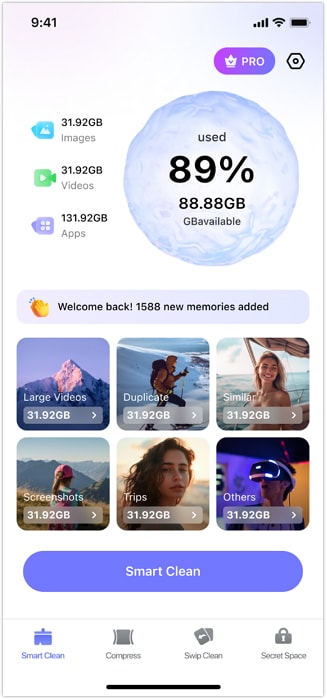
First, open the MobileClean app on your iPhone. Tap the 'Smart Clean' button on the main dashboard, granting the app necessary permissions to index your photo gallery.
Step 2. Review the Detected Duplicate Files
Once the algorithm finishes analyzing your library, navigate to the 'Duplicates' or 'Similar Photos' category to view the results.
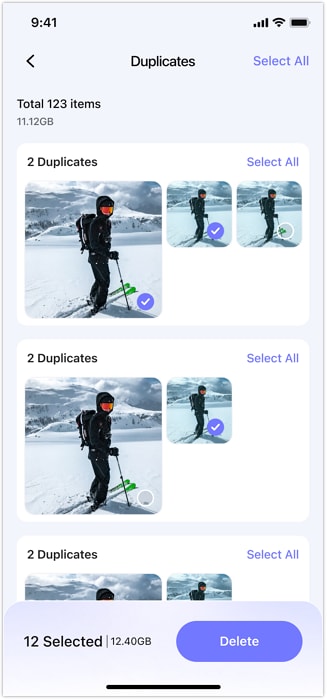
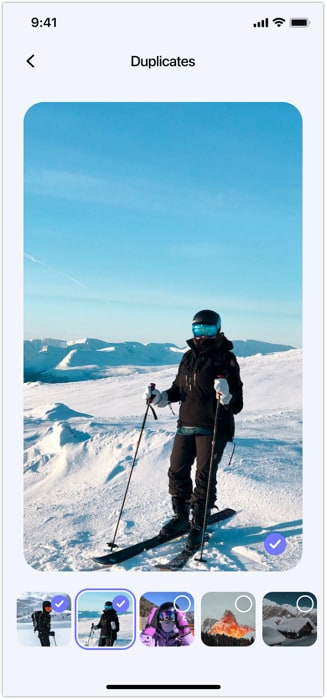
Step 3. Execute the Deletion to Free Up Space
Carefully select the exact duplicate images or heavy media files you no longer need, and tap the 'Delete' button to permanently clear them from your device and iCloud simultaneously.
Way 3. Remove Outdated Documents from iCloud Drive
If your digital workspace is cluttered, removing archaic files directly from iCloud Drive is a practical solution. Over the years, countless forgotten PDFs, Zip archives, and miscellaneous documents accumulate unnoticed. Engaging in this cleanup not only creates space but also helps organize your remaining files efficiently, reinforcing your mastery over 'how can I see what is stored on my iCloud.' Here is how to easily execute the deletion:
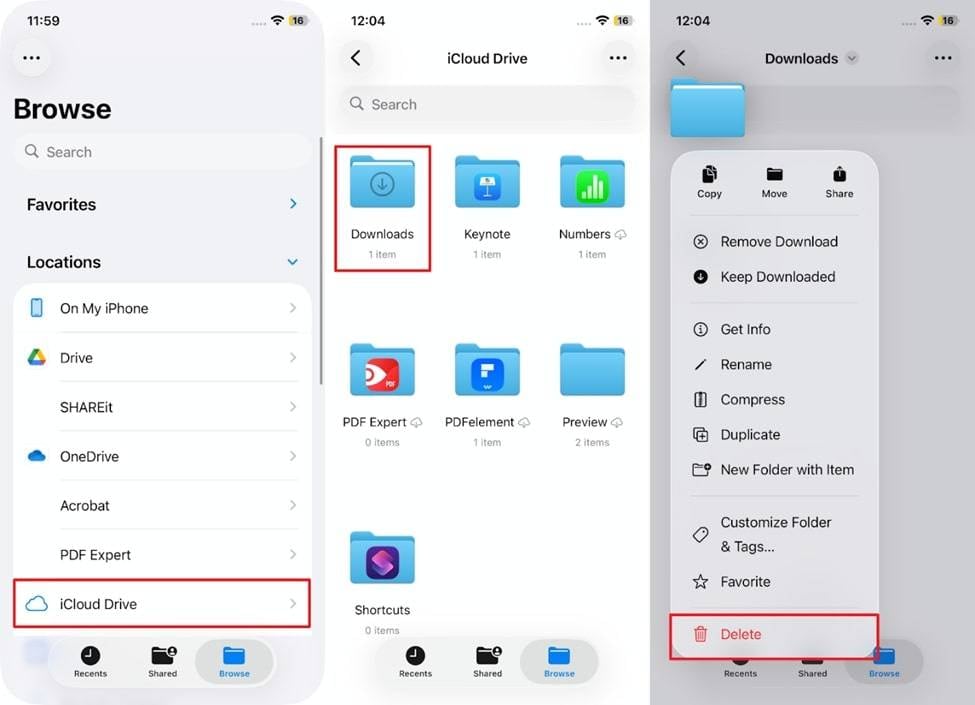
Instruction. Open the native 'Files' app on your iPhone or iPad, and tap on the 'iCloud Drive' location. Browse through your folders to locate outdated documents. Long-press on any unwanted file until a context menu appears, then tap the 'Delete' icon to move it to the Recently Deleted bin.
Way 4. Remove Mail & Messages with Huge Attachments
Surprisingly, a massive portion of your iCloud capacity is often silently drained by legacy iMessage threads and email inboxes overloaded with heavy attachments. By actively purging oversized media from these two platforms, you can reclaim gigabytes of storage rapidly. This is an essential follow-up step once you figure out 'how can I see what's on my iCloud storage.' Follow the methodology below to trim down your communications data:
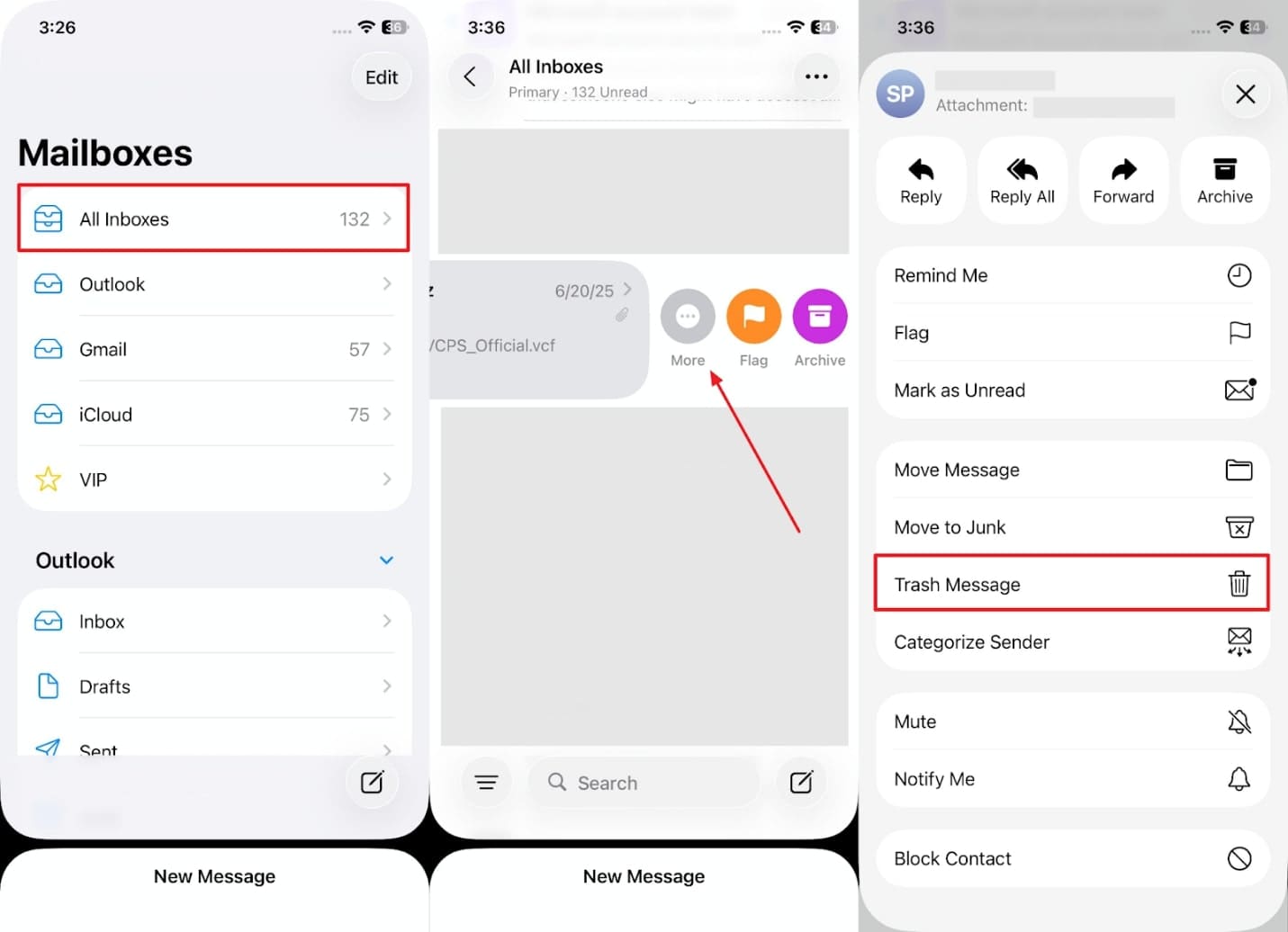
For Apple Mail: Open the 'Mail' app and navigate to 'All Inboxes.' To quickly eliminate a message containing a bulky PDF or image, swipe left on the email preview, tap the 'More' button, and select 'Trash Message.'
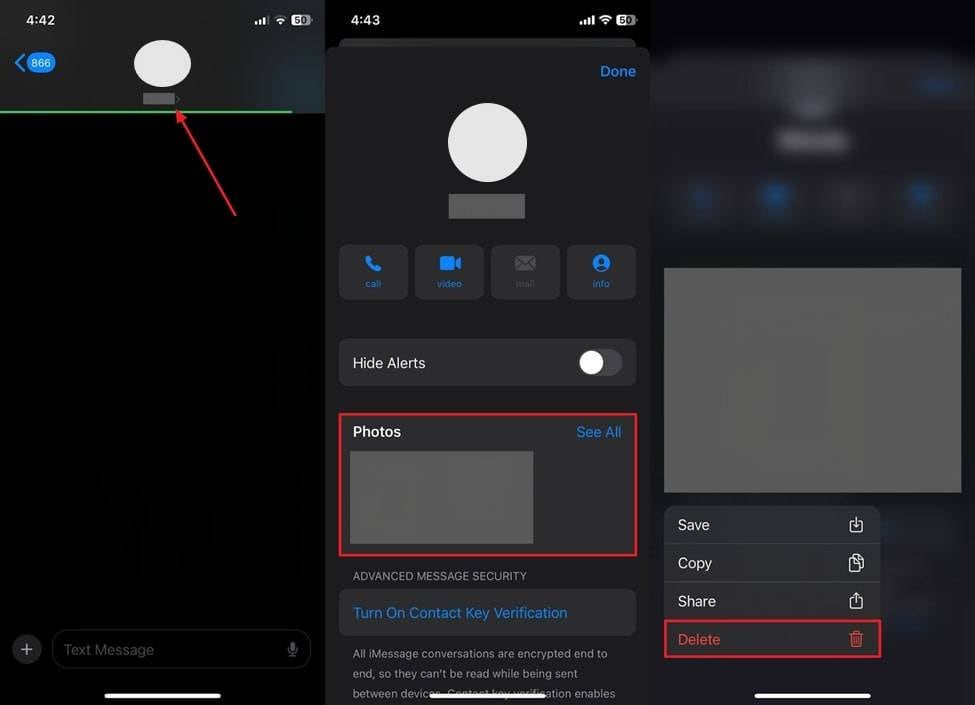
For Apple Messages: Launch the 'Messages' app and open a conversation known for heavy media sharing. Tap the contact's name at the top to access the info screen, scroll down to the 'Photos' section, tap 'See All,' hit 'Select,' and meticulously delete the largest files.
Conclusion
In summary, gaining a solid understanding of 'how can I see what is in my iCloud storage' is crucial for maintaining a healthy and optimized Apple ecosystem in 2026. This extensive guide has equipped you with straightforward instructions to examine your storage metrics across iPhones, Macs, and web browsers, while also offering robust methods to clear out data when you hit your limit.
However, during these rigorous cleanup sessions, accidents can happen. If you inadvertently delete irreplaceable photos, messages, or documents, we strongly recommend utilizing Dr.Fone – Data Recovery (iOS). Its advanced scanning algorithms allow you to swiftly recover over 18 types of data back to your device, entirely stress-free.
FAQ
FAQ
1. Does iCloud storage include my iPhone backup?
Yes, your full iPhone backup is stored directly within your iCloud storage quota. If you are experiencing storage shortages, navigating to Settings > iCloud > Manage Account Storage > Backups can help you identify exactly how much space your device backup is consuming, and you can selectively disable specific apps from being included.2. Why is my iCloud storage full when I have no photos?
Photos are not the only media type that consumes iCloud space. Huge email attachments, legacy iMessage histories, thick PDF documents in iCloud Drive, and third-party app backups (like WhatsApp chat histories) can easily deplete your storage limits even if your camera roll is completely empty.3. How long does it take to sync iCloud storage changes?
Normally, any deletions or modifications you make to your iCloud storage sync across all connected Apple devices almost instantaneously, provided you have a robust internet connection. However, complex data like full device backups or large photo libraries may take several minutes to reflect accurately in the storage bar.4. Can I buy more iCloud storage temporarily?
Apple operates its iCloud+ plans on a monthly subscription model, meaning you can easily upgrade your storage tier for a single month to facilitate a smooth backup or device migration. Once your task is finished, you can effortlessly downgrade back to the free 5GB plan before the next billing cycle begins.
 Add Wondershare Dr.Fone as a preferred source on Google