
How to Fix iPhone 16 Stuck in Recovery Mode

Nov 11, 2026 • Filed to: Phone Repair Solutions • Proven solutions
 TL;DR:
Get iPhone 16 out of Recovery Mode
- Force restart is the no-computer first attempt and does not erase the phone.
- If it returns to the recovery screen, try computer Update. Restore reinstalls iOS and erases data.
- Dr.Fone Exit Recovery Mode is a paid, non-erasing exit tool. Standard Repair is a different option for persistent iOS faults.
- Seek service if a button fails, physical damage is suspected, or Update and Restore cannot complete. DFU Restore is an optional advanced erasing route, not a required step before service.
Ask AI for a summary
 ChatGPT
 Perplexity
 Gemini
 Claude
 Grok
iPhone 16 stuck in Recovery Mode? First try a force restart: quickly press Volume Up, quickly press Volume Down, then hold the Side button until the Apple logo appears. If the cable-and-computer screen returns, use a computer to try Update before choosing Restore. Restore erases the phone, even if you have a backup.
These five options help you choose the next step for an iPhone 16, 16 Plus, 16 Pro, 16 Pro Max, or iPhone 16e stuck in Recovery Mode. Start with the non-erasing actions. A one-click exit tool can leave the recovery screen, but a phone that returns to it may still need an iOS update, repair, or service.
The cable-and-computer screen, sometimes called restore mode, is different from a black DFU screen or an Apple logo with an active progress bar. Use the screen and the last action you tried to choose a method below.
You can also use the complete iPhone Recovery Mode troubleshooting guide to compare manual restart, Update, Restore, and one-click exit methods.

Part 1: What is iPhone Recovery Mode?
Recovery Mode lets a computer update or reinstall iOS when the iPhone cannot start normally. A failed update or interrupted restore can leave it on this screen, but ordinary successful iOS updates do not all put the phone into Recovery Mode.
If your iPhone 16 is stuck in restore mode, it means the same recovery screen, not a separate mode. You cannot use apps or make a normal new backup while it stays there.
The identifying screen shows a cable pointing toward a computer and may show support.apple.com/iphone/restore. An Apple logo alone is not enough to identify Recovery Mode.

DFU Mode is a different firmware-restore state. Its screen stays black, and a connected computer must also detect the device. A black screen alone could simply mean the phone is off or has a display problem.
Part 2: Why Is Your iPhone 16 Stuck in Recovery Mode?
An iPhone 16 can remain in Recovery Mode after a software interruption or a connection problem. The screen alone does not reveal the cause. Consider what happened just before it appeared:
- Interrupted iOS update: a failed installation or loss of power can stop the phone from starting normally.
- Interrupted restore: a cable, computer, or download problem can stop a restore. A backup-restore error alone does not prove that the backup caused Recovery Mode.
- Unofficial software changes: modified software or an attempt to install an older iOS version can cause update or restore errors.
- Low charge or battery trouble: make sure the phone has power. Low charge is not a special protective Recovery Mode feature.
- Physical damage: a damaged connector or internal fault can interfere with communication or startup. Software cannot repair physical components.
- Button sequence: using the Recovery Mode button sequence while connected to a computer can put the phone into this state.
How to reduce future interruptions
- Keep iOS and the computer's Apple software updated. Use a stable connection and connect the phone to power for wireless updates.
- Back up regularly with iCloud or your computer while the phone works normally. A backup can restore saved content after an erase, but it does not stop the erase itself.
- Install apps from trustworthy sources. Do not treat every third-party app as a cause of Recovery Mode.
- Protect the phone and its USB-C connector from moisture and impact.
- Avoid jailbreaking or installing unofficial firmware as a recovery shortcut.
If the phone is already stuck, work through the relevant options below rather than repeating an unsuccessful restore indefinitely.
Part 3: 5 Options to Fix iPhone 16 Stuck in Recovery Mode
Start with Method 1, then choose based on your data priority and the result. Method 2 includes Update before an erasing Restore. You can try Method 5 before Restore if you want an on-screen exit tool. DFU is optional, and service does not require trying every software tool first.
Method 1: Force Restart iPhone 16 (No Computer Required)
Best for: an accidental Recovery Mode entry or a temporary startup interruption. A force restart does not erase the phone and requires no computer. The same buttons apply to iPhone 16, 16 Plus, 16 Pro, 16 Pro Max, and 16e.
Step 1: Quickly press and release Volume Up.
Step 2: Quickly press and release Volume Down.
Step 3: Hold the Side button until the Apple logo appears, then release it. This can take longer than 10 seconds.

For a restart, release at the Apple logo. To deliberately enter Recovery Mode while connected to a computer, you would keep holding past the logo until the cable-and-computer screen appears.
Wait to see whether the lock screen returns. If the phone starts, back it up. If it returns to Recovery Mode, try Update with a computer. If a button is broken or stuck, go to Apple Support.
Method 2: Update or Restore iPhone 16 with a Computer
Best for: a phone that returns to Recovery Mode after a force restart. If you have not tried Update, try it before Restore. Update attempts to reinstall iOS while keeping your data. Restore erases all data on the device whether or not a backup exists. A previous backup can be restored afterward.
Step 1: Update the computer software. On Windows, open the latest Apple Devices app, or current iTunes if that is your setup. On macOS Catalina or later, use Finder; older macOS versions use iTunes. The screenshots here show the legacy iTunes branch, not the current Apple Devices interface.

Step 2: Connect the iPhone 16 using a USB-C cable that supports data, directly to the computer rather than a hub. iPhone 16 models do not have a Lightning port.

Step 3: Select the iPhone in Finder, Apple Devices, or iTunes. A message may say, "There is a problem with the iPhone that requires it to be updated or restored." In iTunes, dismiss the detection alert with OK if prompted. The phone is already in Recovery Mode; if you need to re-enter it, follow the Recovery Mode button sequence.

Step 4: Choose Update first if you have not tried it. If Update fails, decide whether to use Restore. If your data is irreplaceable and you have no backup, pause before any Restore or DFU Restore. You can try the non-erasing exit tool or seek service advice, but neither promises recovery of inaccessible data.

Step 5: Let the computer download and install iOS without disconnecting the phone. After Update, check whether it starts normally and back it up if it does. After Restore, complete setup and restore an available backup.
If the download takes more than 15 minutes: the phone may leave the recovery screen. Let the download finish, then reconnect if needed and repeat the Recovery Mode button sequence before trying again.
If the computer cannot detect the phone or the operation fails, try another data cable, USB port, and updated computer. Note any error code. If Update or Restore still cannot complete, use service support rather than assuming DFU will fix hardware.
Method 3: Use DFU Mode to Recover iPhone 16
Best for: an optional advanced firmware-restore attempt after ordinary Recovery Mode troubleshooting has failed. You do not need to use DFU before contacting Apple. A DFU Restore erases the device. If you have no backup and need the existing data, do not choose Restore just to get past the screen.
iPhone 16 DFU mode uses a black screen rather than the cable-and-computer screen. It is not a way to bypass Apple's firmware authorization or install any iOS version. A black screen plus computer detection, not a black screen alone, indicates a successful entry.
Steps to enter DFU Mode on iPhone 16:
Step 1: Connect the phone with a USB-C data cable and open Finder, Apple Devices, or iTunes for your computer.
Step 2: Quickly press and release Volume Up.
Step 3: Quickly press and release Volume Down.
Step 4: Hold the Side button until the screen turns black. Do not use a fixed three-second count for this phase.
Step 5: While holding Side, also hold Volume Down for about 5 seconds.
Step 6: Release Side and keep holding Volume Down for about 10 more seconds, until the computer detects the phone.
Step 7: Check both conditions: the screen remains black and the computer reports an iPhone requiring restoration. If you have chosen an erasing recovery, select Restore and keep it connected until completion. If the Apple logo or cable screen appears, the timing did not enter DFU. You can stop and use the restart sequence below instead of restoring.

To exit DFU without choosing Restore:
Step 8: Quickly press and release Volume Up.
Step 9: Quickly press and release Volume Down.
Step 10: Hold Side until the Apple logo appears, then release it. This restarts the phone without itself performing a restore. A pre-existing startup problem can still bring the recovery screen back.
For broader recovery-screen troubleshooting, use the iPhone stuck in Recovery Mode guide. If a restore fails or the phone repeatedly returns to the screen, contact Apple rather than repeatedly flashing firmware.
Method 4: Contact Apple Support
Best for: a broken or stuck button, suspected physical damage, or an iPhone that cannot complete Update or Restore. A recurring recovery screen can have several causes and is not, by itself, proof of a hardware fault.
Contact Apple Support for troubleshooting or a service assessment. You do not have to perform DFU or buy repair software before seeking help.
What to expect:
- Remote troubleshooting may help separate computer, connection, and device problems.
- An appointment may be needed for inspection when software steps cannot resolve the fault.
- Repair or replacement eligibility and cost depend on diagnosis, warranty, and AppleCare+ coverage. Service can involve erasing or replacing the device.
Prepare these details:
- The serial number from the original packaging, or Settings > General > About if the phone becomes accessible.
- Proof of purchase and any AppleCare+ details.
- What happened before the recovery screen, any error code, and the cables, computers, Update or Restore attempts already tried.
Tell the service provider if the data is irreplaceable and you do not have a backup. Do not continue software retries on a phone showing signs of battery swelling, unusual heat, or liquid damage.
Method 5: Exit Recovery Mode with Dr.Fone - System Repair (iOS)
Best for: a phone showing the recovery screen when you prefer an on-screen exit command to another button sequence. Dr.Fone - System Repair (iOS) provides a one-click Exit Recovery Mode tool on Windows and Mac. It leaves the mode without an erase-and-restore operation.
Exit Recovery Mode is paid. Enter Recovery Mode is free, and Exit DFU Mode is a different free utility. A successful exit does not reinstall iOS, so a phone with an unresolved startup fault can return to Recovery Mode.

Dr.Fone - System Repair (iOS)
Leave the recovery screen or repair persistent iOS software problems
- Use the one-click Exit Recovery Mode tool without an erase-and-restore.
- Repair iOS software issues such as stuck in Recovery Mode, white Apple logo, black screen, and startup loops.
- Choose Standard Repair for iOS software faults when preserving existing data is the priority.
- Follow guided firmware preparation and repair steps instead of selecting firmware files manually.


Exit Recovery Mode or Standard Repair: which should you choose?
Use Exit Recovery Mode to leave the screen without reinstalling iOS. Use Standard Repair when the phone remains stuck because of an iOS software problem after connection checks and Update. Standard Repair is designed to preserve data; iOS Advanced Repair erases it. Neither option repairs physical damage.
The manual buttons above apply across the iPhone 16 family. The Mac version of Dr.Fone can show a different interface from the Windows screenshots.
Steps to exit iPhone 16 Recovery Mode with Dr.Fone
Step 1: Open the recovery utility. Launch Dr.Fone and open Toolbox > System Repair. Choose iPhone.
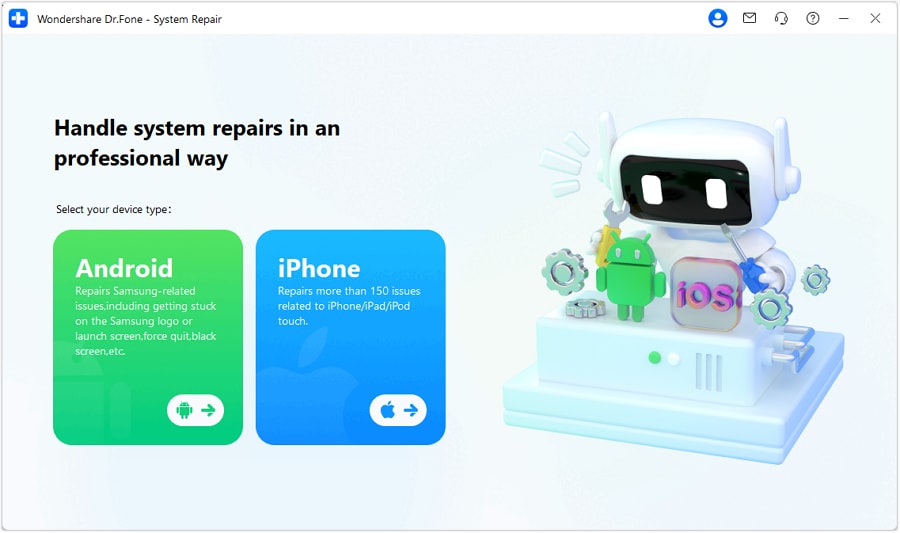
In Toolbox Repair, select Enter/Exit Recovery Mode, then connect the iPhone using its USB-C data cable.
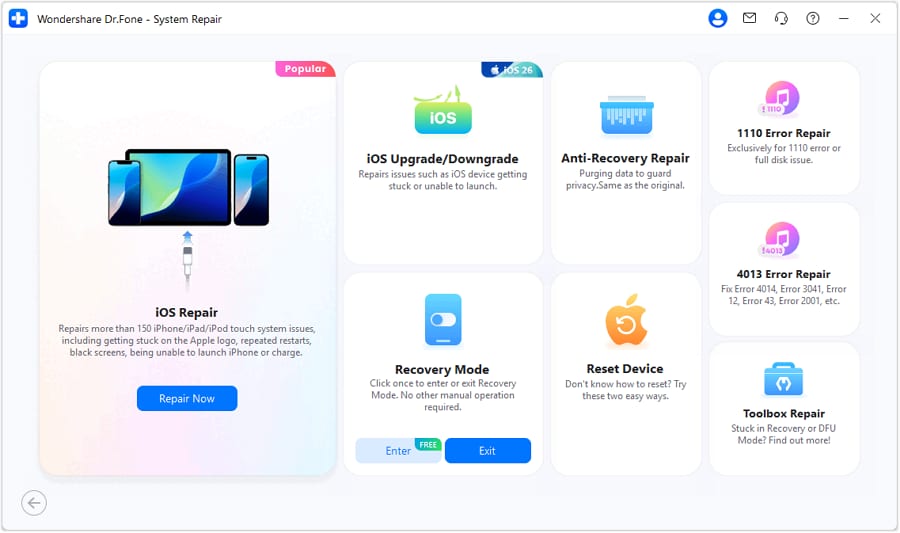
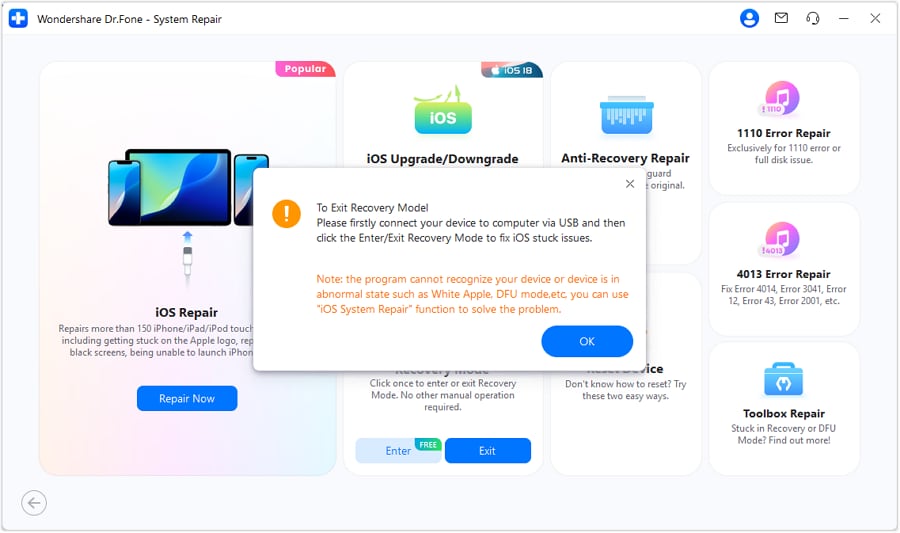
Step 2: Run Exit. Select Exit, then OK to confirm. Keep the phone connected while the tool runs.
Step 3: Check the result. When completion appears, check whether the iPhone reaches its lock screen and stays there.
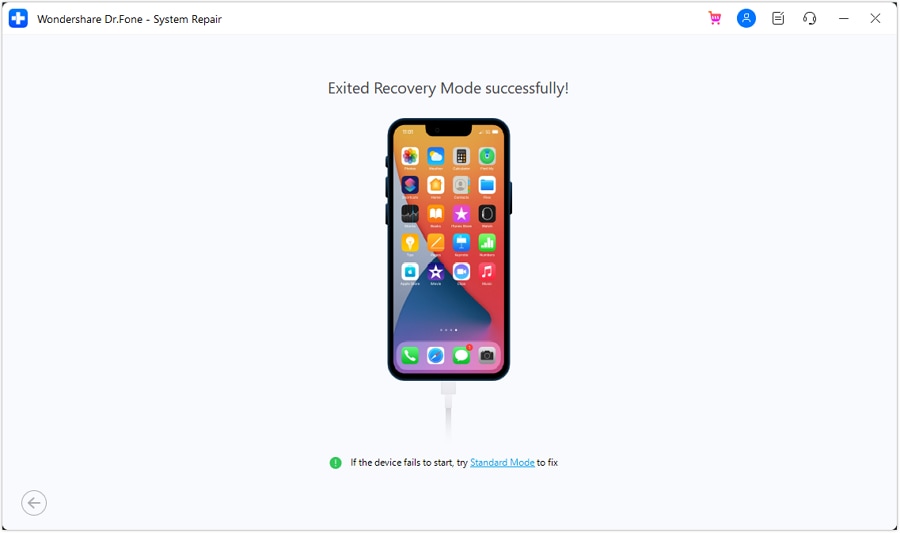
If it starts, back up important data. If it does not start or returns to Recovery Mode, choose Standard Mode from the result screen to consider iOS repair, or return to computer Update if you have not tried it. Before any firmware repair, back up if the phone becomes accessible. Firmware repair can update iOS and remove jailbreak changes or change an unofficial unlock. If the data is irreplaceable, pause before selecting an erasing mode.
Final Words: Which Method Should You Use?
If your iPhone 16 is stuck in Recovery Mode, choose by the result and the data you need to keep:
- Force restart first for a no-computer, non-erasing attempt.
- Computer Update next if not tried. Choose Restore only after accepting the erase and checking what an existing backup contains.
- DFU Restore is an optional advanced erasing route, not a guarantee of success or a mandatory step.
- Contact Apple when buttons fail, damage is suspected, or software recovery cannot complete.
- Dr.Fone Exit Recovery Mode offers a paid non-erasing exit command. Standard Repair addresses persistent iOS software problems instead of merely leaving the mode.
After the phone starts, make a fresh backup and keep its software updated. If it keeps returning to the recovery screen, record the error and seek a diagnosis rather than repeating an erase.
 safe & secure
FAQs
Q1. How do I enter DFU mode on iPhone 16?
Connect with a USB-C data cable, then use Method 3 for the full button sequence: quick Volume Up, quick Volume Down, hold Side to black, hold Side plus Volume Down for about 5 seconds, then release Side while holding Volume Down for about 10 seconds until the computer detects it. The screen must stay black. DFU Restore erases data; merely entering or exiting the mode is not a restore.
Q2. How do I enter recovery mode on iPhone 16 Pro?
Connect the iPhone 16 Pro to a computer with Finder, Apple Devices, or iTunes open. Quickly press Volume Up, then Volume Down. Hold Side past the Apple logo until the cable-and-computer screen appears. This also applies to iPhone 16, 16 Plus, 16 Pro Max, and 16e. Select the phone on the computer and try Update first if you have not done so.
Q3. How do I exit iPhone 16 recovery mode without losing data?
Try a force restart, then computer Update if needed. Dr.Fone also has a paid, non-erasing Exit Recovery Mode command. None guarantees that a damaged or corrupted phone will start. Restore and DFU Restore erase data. You normally cannot create a new computer backup or browse photos while the phone stays on the recovery screen, so do not treat repair software as a promise to recover inaccessible photos.
Q4. What is the difference between iPhone 16 recovery mode and DFU mode?
Recovery Mode shows the cable-and-computer screen and supports Update or an erasing Restore. DFU is a firmware-restore state with a black screen and computer detection. Being in either mode does not itself mean data has been erased. The erase occurs when you choose Restore. For ordinary recovery-screen troubleshooting, try the restart and Update paths before considering DFU.


iPhone Issues
- iPhone Storage Full
- 1. Stuck on Apple Logo Storage Full
- 2. Erase Content Settings not Working
- 3. iPhone Lagging
- 4. iPhone Running Slow
- iPhone Update Problems
- 1. Stuck on Updating iCloud Settings
- 2. iPhone Frozen During iOS Update
- 3. iPhone Checking for Update Stuck
- 4. iPhone Cellular Update Failed
- 5. iPhone Software Update Failed
- 6. iPhone Stuck on Update Requested
- 7. iPhone Update Error 1110
- 8. iPhone is Findable and Won’t Turn On
- 9. iPhone Won't Update
- 10. Update Server Couldn't Be Contacted
- 8. iPhone & iPad Security Updates
- 9. Update iPhone with/without iTunes
- 10. Can't Download or Update Apps
- iPhone Media Problems
- 1. Apple Music Song Not Available
- 2. iPhone Not Ringing
- 3. iPhone Echo Problem
- 4. iPhone Ringer Problems
- 5. iPhone Plays Music by Itself
- 6. Ringer Volume Changes by Itself
- 7. Music Won't Play on iPhone
- 8. Blurry Photos & Videos on iPhone
- 9. iPhone Volume Problems
- iPhone Sound Problems
- 1. YouTube no Sound
- 2. iPhone Microphone Problem
- 3. Test iPhone Microphone
- 4. Headphones No Sound from iPhone
- 5. No Sound on iPhone Game
- 6. iPhone Sound Not Working
- 7. iPhone Screen Recording no Sound
- iPhone Calling Problems
- 1. iPhone No Sound on Calls
- 2. Screen Goes Black During Call
- 3. iPhone Recent Calls Not Showing
- 4. iPhone Dropping Calls Issue
- 5. iPhone Calling Problem
- iPhone Camera Problems
- 1. iPhone Camera Black
- 2. iPhone Camera Blurry
- 3. iPhone Camera Not Working
- 4. iPhone Front Camera Not Working
- 5. TrueDepth Camera Not Working
- 6.Out-of-Focus Photos on iPhone 15
- iPhone Network Problems
- 1. Airpods Won't Connect to iPhone
- 2. iPhone Disabled Connect to iTunes
- 3. iPhone Not Syncing Problems
- 4. iPhone Internet Not Working
- 5. iPhone Keep Disconnecting from Wifi
- 6. iPhone WIFI Not Working
- 7. PC Not Recognizing iPhone
- 8. iPhone Stuck on Connect to iTunes
- 9. iPhone Not Showing up in iTunes
- 10. iTunes Not Detecting Your iPhone
- 11. iPhone Bluetooth Disconnect
- 12.Apple CarPlay Keeps Disconnecting
- iPhone Screen Problems
- 1. White Spots in iPhone Screen
- 2. iPhone Bleeding Screen
- 3. Turn Off iPhone When Frozen
- 4. Fix Orange Dot on iPhone
- 5. iPhone Green Screen Flickering
- 6. Green Lines in iPhone Screen
- Other iPhone Problems
- ● Manage/transfer/recover data
- ● Unlock screen/activate/FRP lock
- ● Fix most iOS and Android issues
- Free Download Free Download Free Download




James Davis
staff Editor
Generally rated4.5(105participated)