
iPhone 13 Black Screen? Diagnose the Cause and Try 6 Fixes

Oct 10, 2026 • Filed to: Phone Repair Solutions • Proven solutions
 TL;DR:
Diagnose the iPhone 13 Black Screen Before Choosing a Fix
- If the phone still rings, vibrates, or is detected by a computer, start with a force restart. If there is still no Apple logo or visible image afterward, a display/OLED, connector, or board-level fault becomes more plausible.
- If the phone shows no signs of life, charge it for up to one hour, then retry the force restart before moving to computer-based recovery.
- For an after-update black screen, use Recovery Mode and try Update before Restore when Apple offers that option. Restore erases the iPhone.
- Dr.Fone - System Repair (iOS) Standard Repair is a software-repair option designed to preserve data; it cannot repair a physically failed OLED, loose display connection, liquid damage, or board fault. Advanced Repair erases data.
| What you observe | What it suggests | Best next step | Data-loss risk |
|---|---|---|---|
| Black screen, but phone vibrates/rings | Phone is powered; cause may still be software or display hardware | Force restart, then check for Apple logo or computer detection | None for force restart |
| No vibration, sound, or response | Battery/power or deeper system failure | Charge for up to one hour, then force restart | None |
| Black screen started after an iOS update | Software/update failure is plausible | Recovery Mode; try Update before Restore | Update is intended to preserve data; Restore erases |
| Black screen after a drop/liquid exposure, or no image after successful reboot attempts | Display, connector, or board-level fault is more plausible | Apple or qualified repair diagnosis | Depends on repair; back up if possible |
Ask AI for a summary
 ChatGPT
 Perplexity
 Gemini
 Claude
 Grok
Grok
"My iPhone 13 screen is black — the phone still vibrates when I get notifications, but I can't see anything. Is there a fix?"
An iPhone 13 black screen can mean two very different things: the phone may still be running while the display path has failed, or the device may be unresponsive because of a drained battery or a deeper software/power issue. The fact that an iPhone 13 still vibrates, rings, or connects to a computer is useful diagnostic evidence, but it does not prove the problem is software-only. This guide starts with the safest checks, shows when software repair is reasonable, and explains when the symptoms point toward display or board-level service.
- Part 1: Why is Your iPhone 13/13 Pro/13 Pro Max Showing a Black Screen?
- Part 2: What to Do If iPhone 13's Screen is Black but Still Works?
- Part 3: What to Do If iPhone 13 Shows a Black Screen and Won't Turn on?

- Part 4:Tips to Reduce the Chance of Another iPhone 13 Black Screen
- Part 5: FAQs about iPhone Black Screen
Part 1: Why Is Your iPhone 13/13 Pro/Pro Max Showing a Black Screen?
Quick Answer: An iPhone 13 black screen can come from a temporary iOS freeze, a failed update, a drained battery, or a display/connector/logic-board problem. A phone that still vibrates or rings is clearly receiving power, but that symptom alone cannot distinguish software from a failed OLED or display connection.
Use the symptoms around the failure instead of assuming every black screen has the same cause:
- Temporary iOS or app freeze: The screen goes black during use, but the phone may still make sounds or respond. A force restart is the safest first check.
- Failed or interrupted iOS update: The problem begins during or immediately after an update. Recovery Mode and an Apple software Update are the next logical software checks if a restart does not work.
- Fully drained battery or charging problem: There are no signs of life. Charge the phone with known-good accessories for up to one hour, then retry the force restart.
- OLED/display or connector failure: The phone rings, vibrates, warms, pairs with accessories, or is detected by a computer, but the screen never shows the Apple logo or any image. This pattern can be hardware-related, especially after a drop, pressure, or liquid exposure.
- Logic-board/display-power fault: Less common board-level failures can also produce a black display. These require component-level diagnosis rather than repeated software restores.
- Thermal protection or recurring instability: If the phone became unusually hot or the problem keeps returning, let it cool and document the trigger. Repeated black screens deserve deeper software or hardware diagnosis instead of repeated destructive restores.
What Does "iPhone 13 Black Screen Jumper Solution" Mean?
Searches for an iPhone 13 black screen jumper solution usually refer to board-level repair work in which a technician bridges or bypasses a damaged trace or component path. That is not a normal button combination or software setting. It requires schematic-level diagnosis, microsoldering tools, and the ability to distinguish a display fault from a board fault first. If you do not have microsoldering experience, do not use a jumper diagram as a first-line fix; use the non-destructive checks in this guide and move to professional hardware diagnosis when the evidence points to the display or logic board.
The key decision is therefore not "software or hardware" based on one symptom. Start with safe, reversible tests and escalate only when those results narrow the cause.
 safe & secure
If the evidence still points to a software-level iOS failure, Dr.Fone - System Repair (iOS) is one software-repair option. It does not repair physical display or board damage.
Part 2: What to Do If iPhone 13's Screen Is Black but Still Works?
safe & secureQuick Answer: If the iPhone 13 is black but still rings or vibrates, start with a force restart because it is fast and does not erase data. If the display still never shows the Apple logo, do not assume the issue is still software: a failed OLED, display connector, or board-level display circuit can produce the same "phone alive, screen black" symptom.
This scenario is useful because it confirms that at least part of the phone is powered. Your goal is to determine whether restarting the system restores video output. If not, check whether a computer detects the phone and consider recent drops, liquid exposure, or screen damage before moving into deeper software recovery.
1. Force Restart iPhone 13 / 13 Pro / 13 Pro Max / 13 mini
A force restart is Apple's first-line step for an iPhone that will not respond normally. It does not erase your photos, messages, apps, or settings.
- Step 1. Press and quickly release Volume Up.
- Step 2. Press and quickly release Volume Down.
- Step 3. Press and hold the Side button until the Apple logo appears. Keep holding if the screen stays black at first; the logo can take longer than 10 seconds to appear.
If the Apple logo appears, let the iPhone finish starting up and monitor whether the black screen returns. If the phone continues to vibrate or ring but you never see an Apple logo after a correctly performed force restart, the result no longer supports a simple frozen-screen explanation. Check whether the device is detected by a Mac or PC and consider display service, especially if there was a recent drop, pressure, or liquid exposure.
2. Remove a Suspicious App Only If the Screen Comes Back
App removal is relevant only when the display returns after the restart and the black screen can be reproduced after opening the same app. If the display never comes back, you cannot meaningfully diagnose the issue by deleting apps; move to Part 3 or hardware diagnosis instead.
- Step 1. After the screen is visible again, note whether the blackout repeatedly follows one specific app or action.
- Step 2. Update that app from the App Store first. If the problem repeats, long-press its icon and choose Remove App / Delete App.
- Step 3. Restart normally and test the phone before reinstalling the app.
If black screens continue across unrelated apps or during startup, treat the issue as an iOS-level or hardware problem rather than blaming a single application.
Dr.Fone App - Smart Clean (iOS)
1-Click iPhone Storage Cleanup: Free Up Space Effortlessly
- Smart scan for albums, contacts, and calendars.
- Clean duplicate screenshots, photos/videos, contacts, and expired calendars.
- Choose items to clean freely.
- Fast & user-friendly.



Part 3: What to Do If iPhone 13 Shows a Black Screen and Won't Turn On?
Quick Answer: If there are no signs of life, charge the iPhone for up to one hour and retry the force restart. If the phone is detected by a computer or the black screen followed an iOS update, move to software recovery. Prefer data-preserving paths before any method that erases the device. If software recovery cannot restore a visible display, or the failure followed physical damage, stop repeating restores and get the hardware diagnosed.
The order matters because several methods below have very different data-loss risks. Start with reversible checks, then software repair, then destructive restore only when necessary.
1. Charge Your iPhone 13 and Retry the Force Restart
A completely discharged battery can look like a serious black-screen failure. Connect the iPhone to a known-good charging cable, power adapter, and outlet. If it does not turn on, leave it charging for up to one hour, then repeat the force-restart sequence from Part 2.

If a low-battery icon appears, Apple advises checking the charging hardware and continuing to charge before retrying. If there is still no response after the charge-and-restart cycle, move to computer detection and software recovery rather than repeatedly changing button combinations.
If the phone powers on but remains stuck on the charging screen, use the dedicated iPhone charging-screen troubleshooting guide instead of continuing with black-screen steps.
📱 iPhone Frozen? Fix It in 3 Steps – No Data Loss!
Struggling with a frozen iPhone screen? 🤔 Our guide covers 6 common causes, step-by-step fixes for all models (iPhone 6s to iPhone 17), and safe data recovery. 98.6% success rate! ✨
2. Use Dr.Fone - System Repair (iOS) for a Software-Related Black Screen
If the iPhone can communicate with a computer and the evidence points to an iOS-level failure, Dr.Fone - System Repair (iOS) is one software-repair path. Its Standard Repair mode is designed to repair common iOS issues without erasing user data. Advanced Repair is a deeper mode and erases data.
Important limitation: System Repair cannot fix a physically failed OLED, broken display connector, liquid damage, or logic-board fault. A black screen that persists after software recovery, especially after impact or liquid exposure, needs hardware diagnosis.
If the symptom is a different display state, use the matching troubleshooting path instead: iPhone 13 white screen, iPhone red screen, or iPhone blue screen.
4,624,541 people have downloaded it
 safe & secure
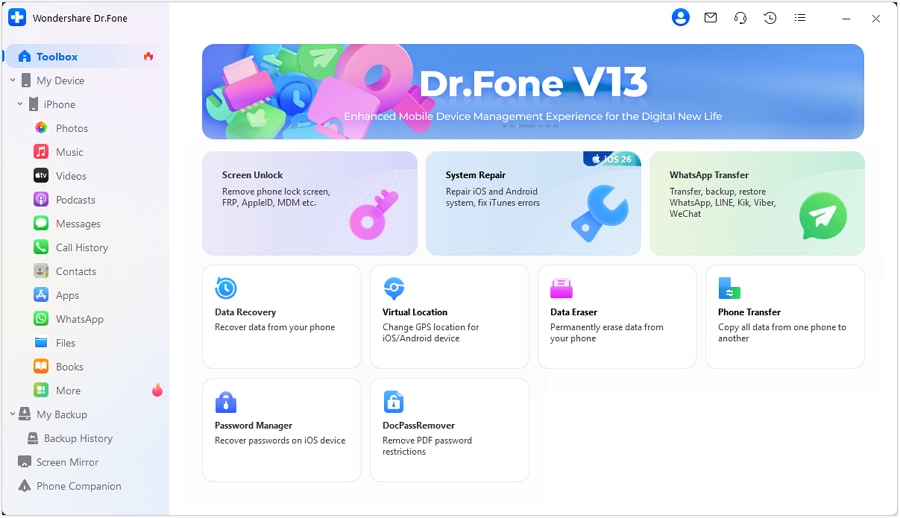
- Step 1: Open System Repair. Install and launch Dr.Fone, connect the iPhone, and open System Repair from the Dr.Fone home screen.
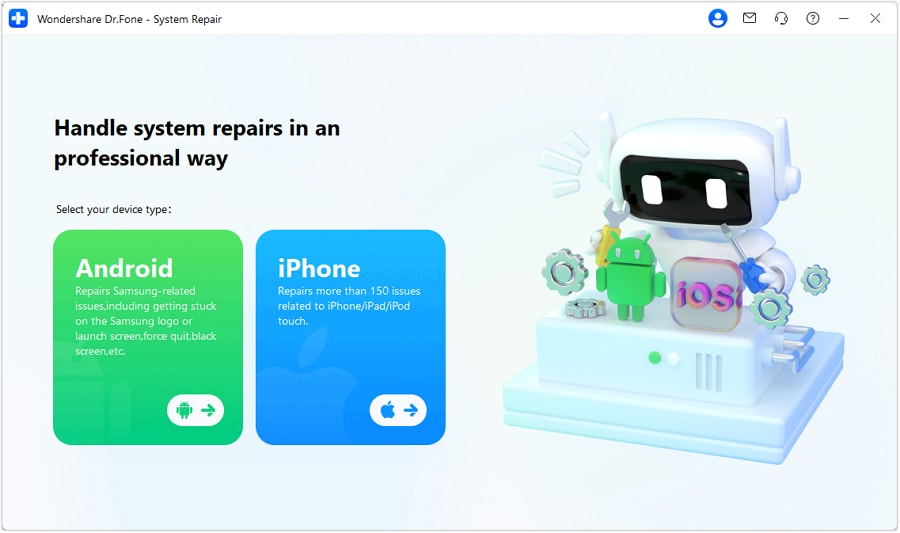
- Step 2: Select iPhone. Choose iPhone as the device type so Dr.Fone loads the iOS repair workflow.
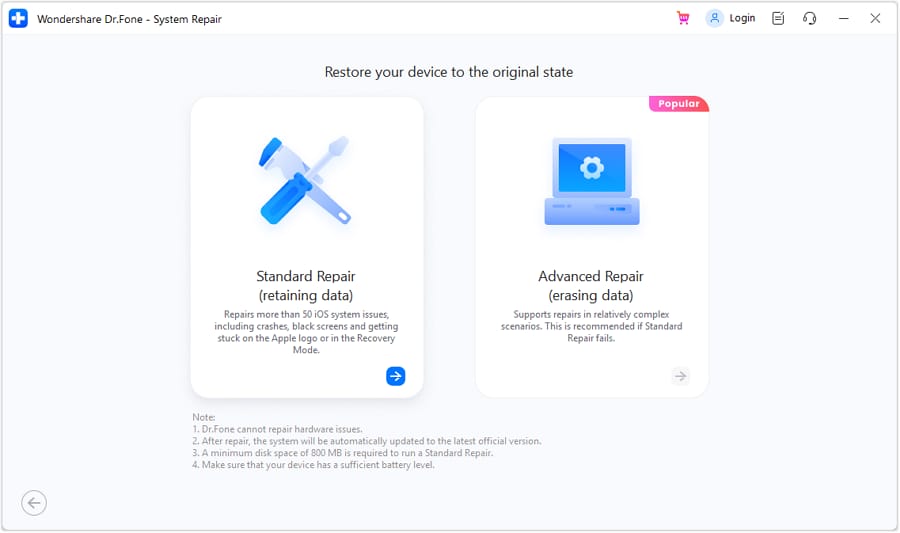
- Step 3: Choose iOS Repair and Standard Repair. Open iOS Repair, then choose Standard Repair when preserving data is the priority.
- Step 4: Follow the Recovery Mode instructions and download firmware. Follow the on-screen steps for Recovery Mode, then select a compatible firmware package and download it.
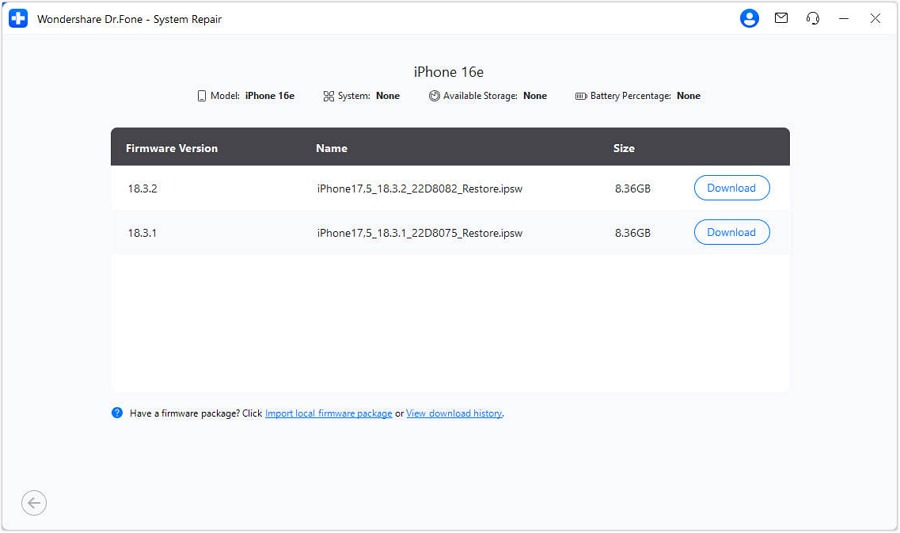
- Step 5: Start the repair. After the firmware is verified, click Repair Now and keep the iPhone connected until the process finishes.
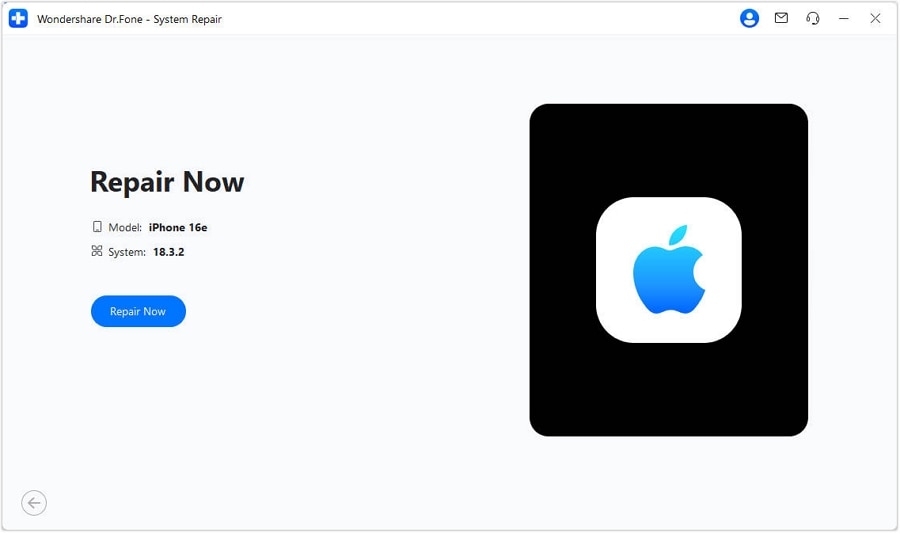
If Standard Repair does not resolve the problem, reassess the evidence before choosing Advanced Repair, because Advanced Repair erases data and will not solve a physical display failure.
safe & secureUse software repair only when the symptoms support a software-related iOS failure.
3. Use Finder or Apple Devices: Try Update Before Restore
For Apple's recovery path, use Finder on a Mac or the Apple Devices app on a Windows PC. Put the iPhone 13 into Recovery Mode: press and quickly release Volume Up, press and quickly release Volume Down, then hold the Side button until the connect-to-computer screen appears.
- Step 1. Connect the iPhone to the computer and open Finder or Apple Devices.
- Step 2. Enter Recovery Mode with the button sequence above and keep holding the Side button past the Apple logo until the recovery screen appears.
- Step 3. If the software offers Update, try Update first when you have not already done so; this attempts to reinstall/update iOS without choosing a full erase.
- Step 4. Use Restore only when needed and after considering your backup status. Restore reinstalls iOS and erases all data on the iPhone.
4. DFU Restore (Advanced Last Resort)
DFU restore is an advanced, destructive recovery path. It should not be the first response to an iPhone 13 black screen, and it cannot repair a failed OLED, loose display connector, or damaged logic board. Use it only when normal Recovery Mode has failed, you understand that the phone will be erased, and you are comfortable with the timing-sensitive button sequence.
- Step 1. Connect the iPhone 13 to the computer. Quickly press Volume Up, quickly press Volume Down, then hold the Side button until the screen goes black.
- Step 2. While the screen is black, hold Side + Volume Down together for about 5 seconds, then release Side while continuing to hold Volume Down for roughly 10 seconds. The display should remain black.
- Step 3. If the computer detects an iPhone that needs to be restored while the screen remains black, follow the restore prompt. If you see the Apple logo or the Recovery Mode graphic, exit and retry rather than guessing.
- Step 4. Keep the phone connected until the restore is complete. If recovery/DFU restore cannot restore a visible display, move to hardware service instead of repeating destructive restores.

Part 4: Tips to Reduce the Chance of Another iPhone 13 Black Screen
Quick Answer: You cannot prevent every black screen, especially hardware failures, but you can reduce avoidable software and power problems and make recovery safer by keeping software current, avoiding extreme heat, maintaining backups, and dealing with repeated symptoms early.
- Keep iOS and apps updated. Install stable iOS updates and current App Store versions so known crashes and compatibility bugs are less likely to recur.
- Keep a current backup. iCloud or computer backups do not prevent a black screen, but they protect your data if Recovery Mode Restore, DFU restore, or hardware replacement becomes necessary.
- Avoid extreme heat and let the phone cool naturally. If the device becomes unusually hot, stop intensive use or charging until it returns to a normal temperature.
- Protect the phone from drops and liquid exposure. Display connectors, OLED panels, and board-level circuits can fail even when the front glass does not look severely damaged.
- Use reliable charging accessories and keep the charging port unobstructed. If charging behavior is inconsistent, test known-good accessories before concluding that the phone itself has failed.
- Escalate recurring black screens instead of repeatedly restoring. Record whether the phone still rings, vibrates, shows the Apple logo, or is detected by a computer. Recurring failures after successful software recovery can be a sign that hardware diagnosis is needed.
Part 5: FAQs about iPhone 13 Black Screen
 Q1. What is the fastest iPhone 13 black screen solution when the phone is still on?Q2. Is the iPhone 13 black screen of death caused by hardware or software?Q3. Which iPhone 13 black screen fixes can preserve my data?Q4. My iPhone 13 just went black and won't turn on — what should I do first?Q5. Why won't my iPhone 13 screen turn on?Q6. What should I do if my iPhone screen is black but the phone is turned on?Q7. Why is my iPhone 13 screen black but still vibrates?Q8. Why is my iPhone screen black but it's not dead?Q9. Why does my Apple iPhone screen keep going black?
Conclusion
An iPhone 13 black screen is easiest to solve when you diagnose the symptom before choosing the tool. If the phone still vibrates or rings, start with a force restart but remember that display hardware can fail while the phone keeps running. If there are no signs of life, charge for up to one hour before escalating. For update-related or other software failures, use data-preserving software paths first; use Restore, DFU, or other erase-based methods only after considering your backup. If the screen never shows an Apple logo after safe troubleshooting, or the problem followed a drop or liquid exposure, professional display/board diagnosis is the more appropriate next step.
Dr.Fone - System Repair (iOS) Standard Repair can be considered when the evidence points to a software-level iOS problem and preserving data matters. It is not a replacement for hardware repair.
4,624,541 people have downloaded it
safe & secure


iPhone 13 Issues
- Apps Keeps Stopping
- 1. iPhone 13 Safari Not Working
- 2. iPhone 13 Apps Keep Crashing
- 3. iPhone 13 Apps Stuck on Loading
- 4. iPhone 13 WhatsApp Calls Don't Work
- 5. iPhone 13 Won't Download Apps
- 6. iPhone 13 Apps Not Opening
- 7. iPhone 13 Apps Won't Update
- 8. iPhone 13 Safari Freezes
- 9. iPhone 13 Safari Not Loading Pages
- iPhone 13 Charging Issues
- 1. iPhone 13 Battery Draining Fast
- 2. iPhone 13 Overheating
- 3. iPhone 13 Overheats While Charging
- 4. iPhone 13 Won't Charge
- iPhone 13 Not Working
- 1. iPhone 13 Overheating And Won't On
- 2. iPhone 11/12/13 Won't Turn On
- 3. iPhone 13 Restarts
- 4. iPhone 13 Problems
- iPhone 13 Screen Issues
- 1. iPhone 13 Touch Screen Not Working
- 2. iPhone 13 Stuck on White Screen
- 3. iPhone 13 Frozen Screen
- 4. iPhone 13 Black Screen
- 5. iPhone 13 Camera Black Screen
- 6. iPhone 13 Goes Black During Call
- iPhone 13 Services Fail
- 1. iPhone 13 Face ID Not Working
- 2. iPhone 13 Not Ringing
- 3. iPhone 13 Call Failed
- 4. iPhone 13 Poor Call Quality
- 5. iPhone 13 iMessage Not Working
- 6. iPhone 13 Dropping Calls
- 7. iPhone 13 No Service Problem
- 8. iPhone 13 Not Receiving Calls
- 9. iPhone 13 SIM Failure/No SIM Card
- 10. iPhone 13 iMessage Not Syncing
- 11. iPhone 13 Hotspot Not Working
- iPhone 13 Tips
- ● Manage/transfer/recover data
- ● Unlock screen/activate/FRP lock
- ● Fix most iOS and Android issues
- Free Download Free Download Free Download




Daisy Raines
staff Editor
Generally rated4.5(105participated)