Resolve common problems and system crashes on both iPhone and Android devices.

 100% Security Verified | No Subscription Required | No Malware

 :
: 
 ChatGPT
 Perplexity
 Gemini
 Claude
 Grok
Grok

Typical symptom: The iPhone shuts down or fails to finish starting, then the Apple logo appears and disappears every few seconds without reaching the Lock Screen or Home Screen.
Common flashing-logo boot-loop pattern
An iPhone flashing the Apple logo on and off is usually caught in a repeated startup cycle, often called a boot loop. The symptom does not identify one cause by itself: a deeply depleted battery, an interrupted update, damaged system files, or a hardware problem can all interrupt startup.
Start with the least destructive checks first. Charge the iPhone and rule out a bad power connection, then try a force restart. If the logo still keeps flashing, use Recovery Mode and choose Update before any option that erases the device. Software-repair tools can be considered for software-related failures, while drop, liquid, charging, or other hardware symptoms are better handled by a repair professional.
In this article
- Part 1. What Causes the iPhone Flashing Apple Logo?
- Part 2. How to Fix iPhone Flashing Apple Logo On and Off
- 2-1. Charge the iPhone and Check the Power Connection
- 2-2. Force Restart Your iPhone
- 2-3. Use Recovery Mode and Choose Update First
- 2-4. Try Dr.Fone Standard Repair for a Software-Related Boot Loop
- 2-5. Restore the iPhone (Erases the Device)
- 2-6. Get Hardware Service When the Symptoms Point Beyond iOS
- Part 3. Tips to Prevent iPhone Flashing Apple Logo in 2026
- Conclusion
Part 1. What Causes the iPhone Flashing Apple Logo?
A flashing or blinking Apple logo means the iPhone is repeatedly attempting to start but is not completing the boot process. The pattern can come from a temporary software problem or a physical power or hardware fault, so the best clue is often what happened immediately before the loop began.
- Interrupted update or software failure: If the iPhone loses power, disconnects, or encounters an error while iOS is updating or restoring, it may fail to finish startup. The exact iOS version matters less than whether the update or restore was interrupted.
- Very low battery or unstable power: A deeply discharged or aging battery, damaged cable, weak adapter, debris in the charging port, or another power-delivery problem can leave the phone with enough power to show the Apple logo but not enough to finish startup. This is especially worth checking when the logo starts flashing after the battery ran flat or only while the phone is plugged in.
- Corrupted system files or unsupported modifications: A severe iOS crash or system modification such as jailbreaking can leave startup components in an unusable state and trigger repeated restarts.
- Physical or liquid damage: A drop, liquid exposure, damaged charging hardware, battery fault, or another internal component problem can interrupt the startup sequence. If the flashing began immediately after physical damage, prioritize diagnostics over repeated software restores.
Part 2. How to Fix iPhone Flashing Apple Logo On and Off
Work through the fixes in the order below. The sequence starts with options that do not erase your data and delays a full Restore until the non-erasing steps have been tried.
| What you notice | Best first action | Data risk |
|---|---|---|
| The battery was nearly empty, or the logo flashes mainly while charging | Charge and check the power connection | No erase |
| The loop started after a crash and the phone is otherwise undamaged | Force restart | No erase |
| Force restart fails and you have a Mac or PC | Recovery Mode > Update | Update is intended to keep personal data |
| Update fails and the problem still appears software-related | Dr.Fone Standard Repair | Standard Repair is designed to preserve data |
| Non-erasing options fail | Restore the iPhone | Erases the device |
| The issue followed a drop, liquid exposure, abnormal heat, or persistent charging failure | Hardware service | Depends on the repair |
2-1. Charge the iPhone and Check the Power Connection
If the Apple logo started flashing after the battery ran very low, or the phone repeatedly shows the logo only when connected to power, begin with the charging path before moving to firmware repair. Apple's current startup troubleshooting recommends charging an iPhone that will not turn on before trying again.
- Disconnect unnecessary USB accessories, docks, headphones, or adapters from the iPhone.
- Use a known-good wall adapter and an undamaged Lightning or USB-C cable that fits the iPhone securely.
- Check the charging port for visible debris or damage. Do not force a connector into the port.
- Leave the iPhone connected to power for at least 30 minutes; if it was fully depleted and still will not start, give it up to an hour before trying the force restart below.
If the iPhone still flashes the Apple logo only while it is plugged in after a proper charge, or it cannot hold power at all, skip repeated Restore attempts and move to hardware service.
For Apple's current startup guidance, see Restart an unresponsive iPhone.
2-2. Force Restart Your iPhone
A force restart is the next low-risk step when the iPhone is stuck in a flashing Apple-logo loop. It does not erase your photos, messages, apps, or other stored data.
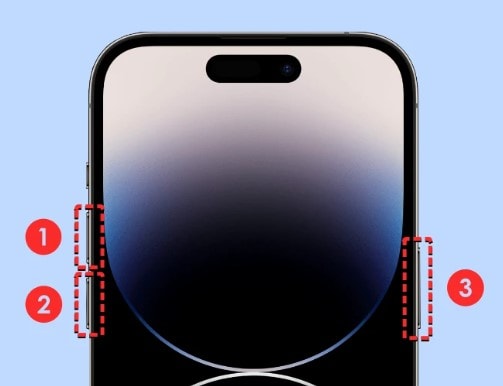
Use the button sequence for your iPhone generation:
- iPhone 8 and later: Press and quickly release Volume Up, press and quickly release Volume Down, then press and hold the Side button until the Apple logo appears.
- iPhone 7 and iPhone 7 Plus: Press and hold the Side button and Volume Down together until the Apple logo appears.
- iPhone 6s and earlier: Press and hold the Home button and the Side or Top button until the Apple logo appears.
2-3. Use Recovery Mode and Choose Update First
If charging and a force restart do not break the loop, connect the iPhone to a computer and use Recovery Mode. Apple's current instructions use Finder on a Mac with macOS Catalina 10.15 or later, Apple Devices or iTunes on Windows, and iTunes on a Mac with macOS Mojave 10.14 or earlier.

-
Step 1 Connect the iPhone and enter Recovery Mode
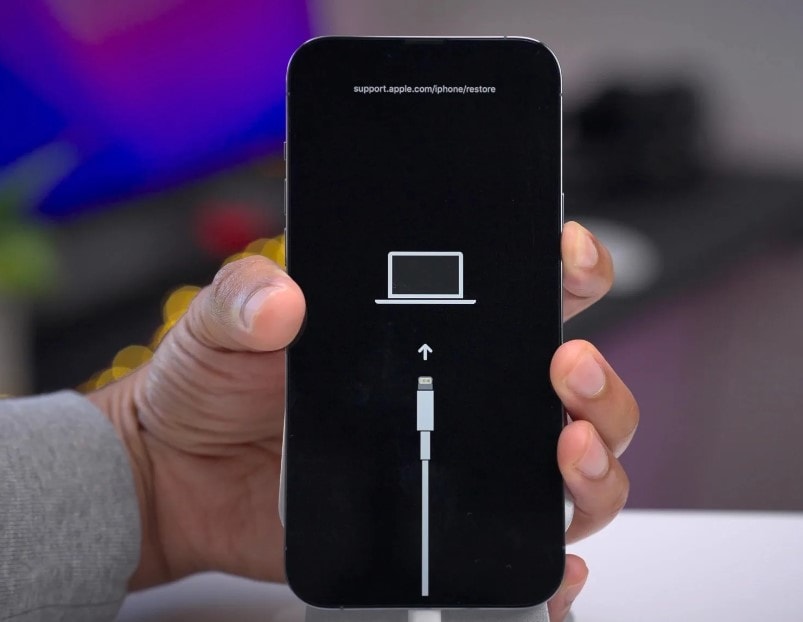
Connect the iPhone to the computer, then open Finder, Apple Devices, or iTunes for your system. Enter Recovery Mode with the appropriate button sequence:
- iPhone 8 and later: Press and release Volume Up, press and release Volume Down, then keep holding the Side button until the Recovery Mode screen appears.
- iPhone 7 and iPhone 7 Plus: Hold Volume Down and the Sleep/Wake button until the Recovery Mode screen appears.
- iPhone 6s and earlier: Hold the Home and Sleep/Wake buttons until the Recovery Mode screen appears.
-
Step 2 Choose Update
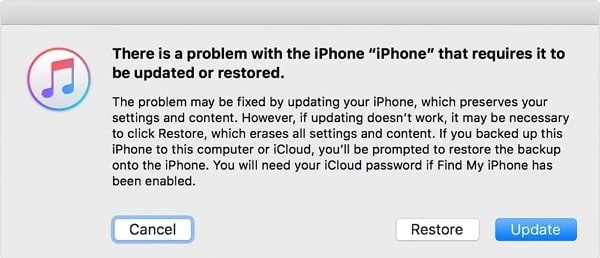
When the computer detects the iPhone in Recovery Mode, choose Update. Keep the device connected while iOS downloads and installs. If the iPhone starts normally afterward, you can stop here.
You can compare these steps with Apple's current Recovery Mode guidance for an iPhone stuck on the Apple logo.
2-4. Try Dr.Fone Standard Repair for a Software-Related Boot Loop
If Recovery Mode Update fails and the flashing logo still looks like a software-related startup problem, Dr.Fone - System Repair (iOS) is an optional guided repair path. Its current product page lists Apple-logo, boot-loop, Recovery Mode, and failed-update problems among the software issues it can address. Standard Repair is designed to preserve personal data; Advanced Repair is for more serious cases and may erase device data.
 Repair software-related Apple-logo, boot-loop, Recovery Mode, and update issues.
- Standard Repair is designed to preserve personal data.
- Advanced Repair is available for more serious issues and may erase device data.
- Current product compatibility includes iOS 26 and iOS 27 Beta.
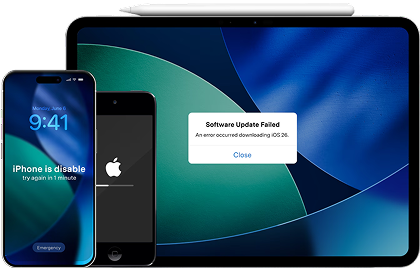
Here's how to resolve the boot loop with Dr.Fone:
-
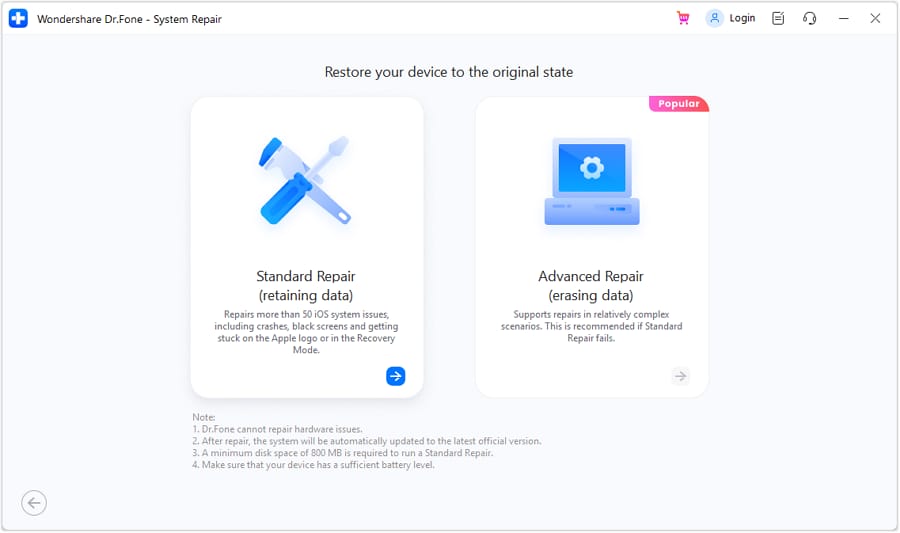
Step 1 Open System Repair and select Standard Repair
Launch Dr.Fone, open Toolbox > System Repair, connect the iPhone, then choose iPhone > iOS Repair > Standard Repair.
-
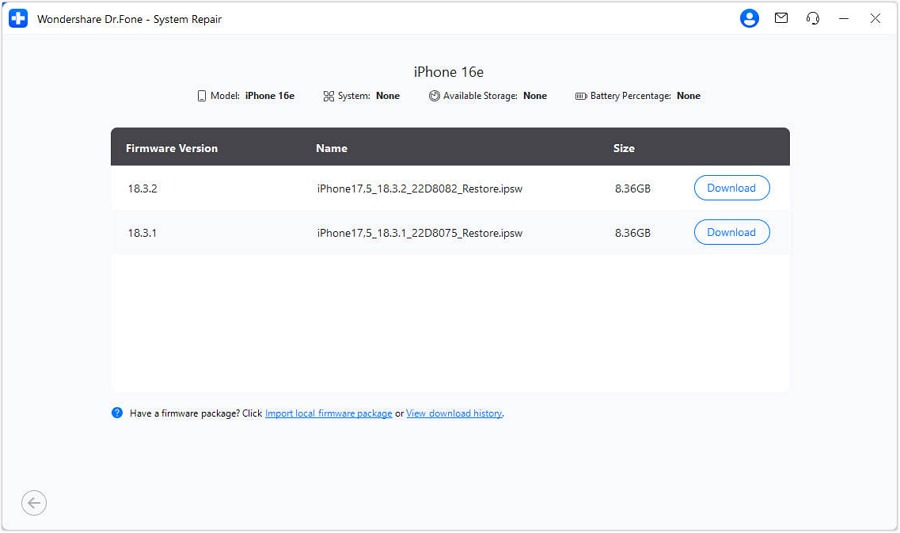
Step 2 Enter Recovery Mode and download the firmware
Follow the on-screen Recovery Mode instructions if prompted. Dr.Fone will then show compatible iOS firmware. Choose the firmware you want to install and click Download; the program verifies the package after download.
-
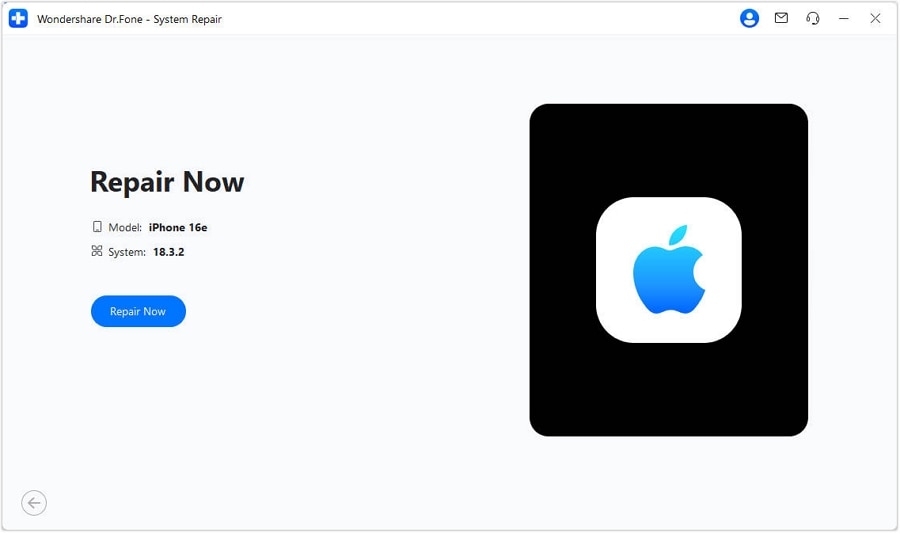
Step 3 Start the repair and keep the iPhone connected
After the firmware is verified, click Repair Now. Keep the iPhone connected while the repair runs, then choose Done when Dr.Fone reports completion.
2-5. Restore the iPhone (Erases the Device)
If the non-erasing options do not solve the flashing Apple logo, a full Restore is the next software reset to consider. Restore erases the iPhone. If you have a usable iCloud or computer backup, you can restore that backup after the device is set up again.
-
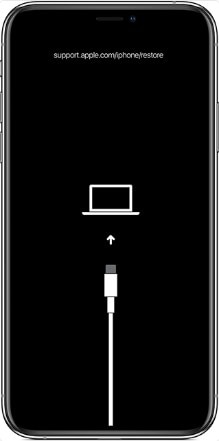
Step 1 Return to Recovery Mode
Connect the iPhone to the computer and enter Recovery Mode again. Open Finder, Apple Devices, or iTunes as described in the previous method.
-
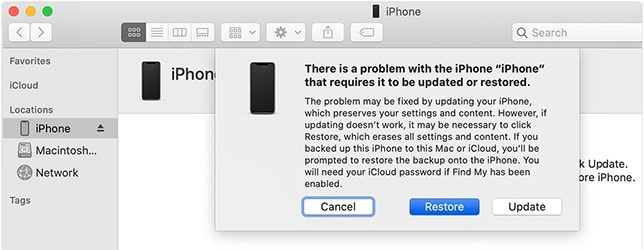
Step 2 Choose Restore
When the computer offers the two actions, choose Restore and confirm the warning. The computer will erase the iPhone and reinstall iOS. Do not disconnect the device while the restore is in progress.
2-6. Get Hardware Service When the Symptoms Point Beyond iOS
Software tools cannot repair a failed battery, damaged charging hardware, liquid damage, or another physical fault. You do not need to assume every failed software fix means the logic board is damaged, but hardware service becomes the better next step when the pattern includes any of these signs:
- The flashing started immediately after a drop, liquid exposure, or another physical incident.
- The iPhone repeatedly shows the Apple logo only while connected to power, even after a proper charging attempt.
- The charging port or cable connection is visibly damaged, unstable, or unusually hot.
- The iPhone cannot hold a charge, or a computer consistently fails to detect it.
- Recovery Mode Update and other appropriate software steps cannot complete.
Apple or an Apple Authorized Service Provider can run hardware diagnostics and advise whether the battery, charging system, or another component needs service.
Part 3. Tips to Prevent iPhone Flashing Apple Logo in 2026
No checklist can prevent every hardware failure or software crash, but these habits reduce avoidable startup problems and make recovery easier if a boot loop happens again:
- Keep iOS updated: Install stable iOS updates from Apple and avoid interrupting an update after it begins. As of September 9, 2026, Apple's security releases list iOS 26.6.2 as the latest stable iOS, while iOS 27 remains in beta.
- Back up before major changes: Keep an iCloud or computer backup so that a full Restore is less disruptive if a future software failure cannot be fixed without erasing the device.
- Use reliable charging hardware: Replace visibly damaged cables or adapters and keep the charging port free of debris. Repeated charging failures should be diagnosed rather than worked around indefinitely.
- Avoid unsupported system modifications unless you accept the risk: Jailbreaking and other system-level changes can complicate updates, repairs, and recovery.
- Protect battery health: Avoid prolonged exposure to excessive heat and pay attention to recurring shutdown, charging, or battery-health symptoms, especially on older iPhones.
For software-related startup problems, Dr.Fone System Repair is one option to keep available alongside Apple's Recovery Mode workflow. You can use the platform download buttons below if you want to try it.
Conclusion
When an iPhone keeps flashing the Apple logo on and off, start with the checks that preserve your data: charge the phone and rule out a bad power connection, force restart it, then use Recovery Mode and choose Update. If the problem still appears software-related, a guided Standard Repair workflow is another option before a full Restore.
Use Restore only after you understand that it erases the iPhone. If the loop began after a drop or liquid exposure, appears only while the phone is connected to power, or continues alongside clear charging or battery symptoms, hardware diagnostics are more appropriate than repeating software repairs.




FAQ
-
1. Will a force restart delete my data when my iPhone is flashing the Apple logo?
No. A force restart restarts the iPhone at the hardware level but does not erase your photos, messages, apps, contacts, or other stored data. -
2. Why does my old iPhone 5 have a flashing Apple logo when plugged in?
An older iPhone that shows the Apple logo only while connected to a charger may have a deeply depleted or degraded battery, but the battery is not the only possibility. A damaged cable, adapter, charging port, or another power-related fault can create a similar pattern. Charge it with known-good hardware first; if it still cannot stay on without external power, have the battery and charging system checked. -
3. What is the difference between Update and Restore in Recovery Mode?
Update reinstalls the latest iOS while attempting to keep your personal data. Restore erases the iPhone and reinstalls iOS. On current systems, use Finder on newer Macs, Apple Devices or iTunes on Windows, and iTunes on older Macs. -
4. Can a hardware issue cause the flashing Apple logo on an iPhone?
Yes. Battery, charging, liquid, connector, or other internal hardware faults can interrupt startup and create a repeating Apple-logo loop. Hardware becomes more likely when the problem follows physical damage, the phone only loops while plugged in, or software recovery cannot complete. -
5. Can I fix an iPhone flashing the Apple logo without a computer?
You can charge the phone, check the cable and charging port, and try a force restart without a computer. If the loop continues, Recovery Mode Update or Restore requires a Mac or PC, and Dr.Fone System Repair also uses a computer. If you do not have computer access and the phone will not start, an Apple Store or Apple Authorized Service Provider can help with diagnostics.
 Add Wondershare Dr.Fone as a preferred source on Google