[6 Fixes] How To Fix an iPhone Stuck in a Boot Loop?
Mar 23, 2026 • Filed to: Phone Repair Solutions • Proven solutions
An iPhone boot loop — also called an iPhone stuck on reboot or Apple boot loop — is one of the most alarming problems an iPhone owner can face. It happens when your iPhone repeatedly displays the Apple logo, restarts, and then loops back to the same Apple logo screen, never fully booting into iOS. The device becomes completely unusable, trapping you in an endless cycle with no obvious way out.
This issue can affect any iPhone model, from an iPhone 6 boot loop on older hardware to the latest iPhone 17 boot loop triggered by a failed iOS 18 update. Whether it's caused by a corrupted software update, a jailbreak gone wrong, or underlying hardware stress, the result is the same: your iPhone is stuck and you need a fast, reliable fix.
In this guide, we cover 6 proven methods to fix an iPhone stuck in a boot loop, ranked from the safest (no data loss) to the most thorough. You'll find solutions that work across all iPhone models and iOS versions — including step-by-step instructions for each fix.
- Part 1: What Causes iPhones to Get Stuck in a Boot Loop?
- Part 2: 6 Ways to Fix iPhone Boot Loop on iOS 18/17/16/15/14/13
- Fix 1: Fix iPhone boot loop via system repair tool (Without data loss)
- Fix 2: Force restart iPhone to fix boot loop issue (The easiest way)
- Fix 3: Restore iPhone Backup to Fix Reboot Loop (Sometimes not working)
- Fix 4: Use iTunes/Finder to fix the iPhone boot loop (Data Loss)
- Fix 5: Clean App Data to fix iPhone stuck in a boot loop
- Fix 6: Contact Apple support to check the hardware problems
- Part 3: How to Avoid iPhone Getting Stuck in Boot Loop Again?
Part 1: What Causes iPhones to Get Stuck in a Boot Loop?
An iPhone bootloop doesn't happen without a reason. Understanding what triggers the infinite restart cycle is the key to choosing the right fix. The most common causes include interrupted software updates, jailbreak-related corruption, unstable computer connections, hardware malfunctions, and corrupted system files. Below is a detailed breakdown of each cause so you can identify what happened to your device.
Software Update Gone Wrong
A failed or interrupted iOS update is the single most common trigger for an iPhone stuck in boot loop. When you update your iPhone's iOS and the process is cut short — whether due to a drained battery, a network dropout, or a storage issue — the device is left with partially written system files. iOS cannot boot from incomplete firmware, causing it to enter a continuous restart loop. This is especially prevalent when upgrading to a major iOS release, such as iOS 17 or iOS 18, where significant system-level changes are written to the device.
Jailbreaking and Unauthorized Modifications
Jailbreaking your iPhone bypasses Apple's built-in security restrictions, exposing the core iOS system to unauthorized modifications. If a jailbreak tool, tweak, or cydia package alters critical system files incorrectly — or if a future iOS update overwrites jailbreak components — the device may fail to complete the boot sequence and get stuck in a bootloop. Jailbroken devices are also significantly more vulnerable to malware. A malicious app or file downloaded from an unverified source can corrupt system processes and trigger a reboot loop that persists through standard troubleshooting.
Unstable Connection During an iTunes/Finder Update
When updating or restoring an iPhone via iTunes (Windows or macOS Mojave and earlier) or Finder (macOS Catalina and later), a disconnection mid-update can corrupt the firmware installation. Unlike an over-the-air (OTA) update, a computer-based update writes firmware in a single session — if the USB cable is pulled, the connection drops, or the computer goes to sleep partway through, the iPhone is left with a broken installation that cannot boot. This is a common cause of iPhone stuck on reboot that users don't immediately connect to their last iTunes session.
Hardware Failure or Physical Damage
In some cases, an iPhone boot loop is not a software problem at all. A failing logic board component, a damaged power management chip, or faulty NAND flash memory can prevent iOS from loading correctly, manifesting as a perpetual restart loop. Physical damage — such as a drop that dislodges an internal connector or liquid damage that corrodes circuits — can also produce this symptom. Hardware-triggered boot loops typically do not respond to software fixes like force restarts or iTunes restores, and require professional diagnosis at an Apple Store or authorized service provider.
Corrupted System Files or App Conflicts
A third-party app with elevated system access — particularly apps installed outside the App Store on jailbroken devices, or enterprise-signed apps — can write corrupted data to system directories and cause an iPhone boot loop fix scenario. Additionally, if a system file becomes corrupted during normal operation (for example, during a sudden shutdown while the device is writing data), the boot process may fail. iOS performs integrity checks on boot; if those checks fail, the device restarts and tries again — resulting in a loop.

📱 iPhone Frozen? Fix It in 3 Steps – No Data Loss!
Struggling with a frozen iPhone screen? 🤔 Our guide covers 6 common causes, step-by-step fixes for all models (iPhone 6s to iPhone 17), and safe data recovery. 98.6% success rate! ✨
Part 2: 6 Ways to Fix iPhone Boot Loop on iOS 18/17/16/15/14/13
If your iPhone is in a boot loop, the fixes below are organized from least to most disruptive. Start with Fix 1 if you want to preserve your data — it's the only method that repairs the iOS system without erasing your content. If you're comfortable with some data risk and prefer built-in tools, work through Fix 2 to Fix 6 in order. Each fix targets a different root cause of the Apple boot loop problem.
Fix 1. Fix iPhone boot loop with Dr.Fone - System Repair without data loss
When your iPhone is stuck in a boot loop, the safest and most effective apple boot loop fix is to use a dedicated iOS system repair tool. Dr.Fone - iOS System Repair is specifically designed to diagnose and repair iOS system-level failures — including boot loops, white Apple logo screens, black screens, and recovery mode issues — without erasing your photos, messages, apps, or settings. Unlike iTunes restore or DFU mode, which wipe your device entirely, Dr.Fone repairs the underlying firmware while keeping your personal data intact. It supports all iPhone models from iPhone 6 through iPhone 17 and is compatible with the latest iOS versions.
Dr.Fone - System Repair (iOS)
Fix iPhone Boot Loop on iOS 18/17/16/15/14/13 Without Data Loss
- Fixes various iOS issues like iPhone stuck on Apple logo, white screen, stuck in recovery mode, etc.
- Works smoothly with all versions of iPhone, iPad, and iPod touch.
- Retains existing phone data during the fix.
- Easy-to-follow instructions provided.
Follow these steps to fix an iPhone boot loop without any data loss using Dr.Fone:
- Step 1. Download and install Dr.Fone on your Windows PC or Mac. Launch the application and select "System Repair" from the main Toolbox screen.
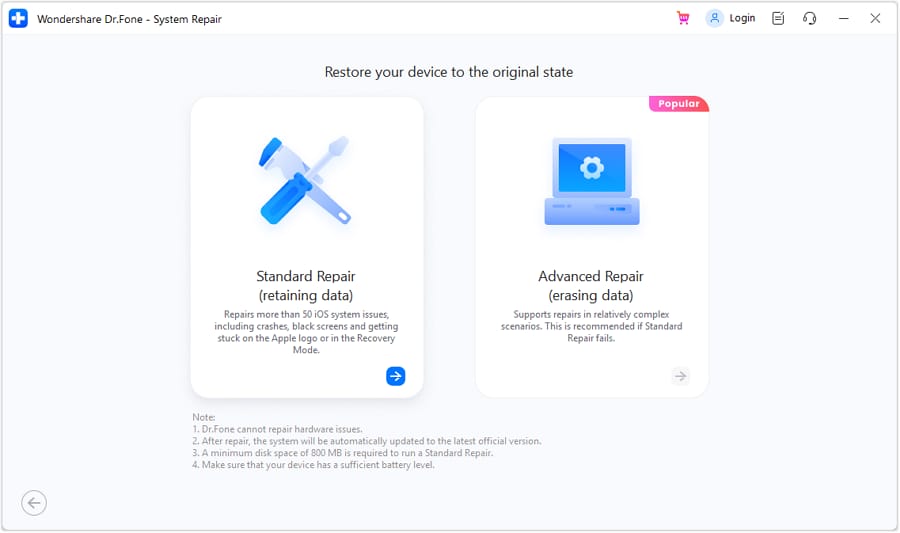
- Step 2. In the System Repair module, choose "iPhone" as your device type. Then select "iOS Repair" followed by "Standard Repair". Standard Repair fixes the boot loop without erasing data — use Deep Repair only as a last resort if Standard Repair doesn't resolve the issue.


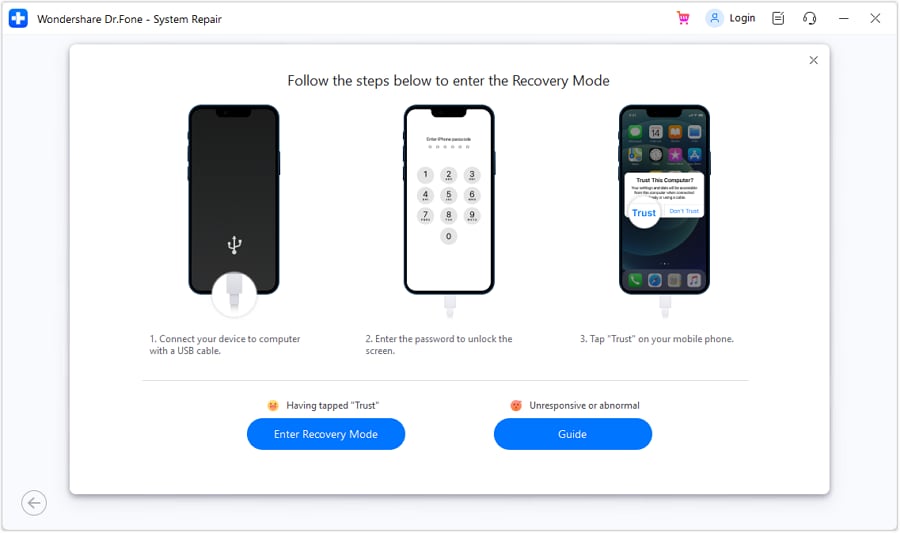
- Step 3. Connect your iPhone to your computer using a USB cable. If your device is unresponsive due to the boot loop, click "Guide" for instructions on how to manually enter Recovery Mode. If Recovery Mode cannot be reached, follow the on-screen prompts to enter DFU (Device Firmware Update) Mode instead — this provides a deeper access point for the repair.
Note: If your iPhone is unresponsive, you need to click "Guide" to put it on the Recovery Mode. If it is unable to enter Recovery Mode, try into DFU (Device Firmware Update) mode as the on-screen instructions show.

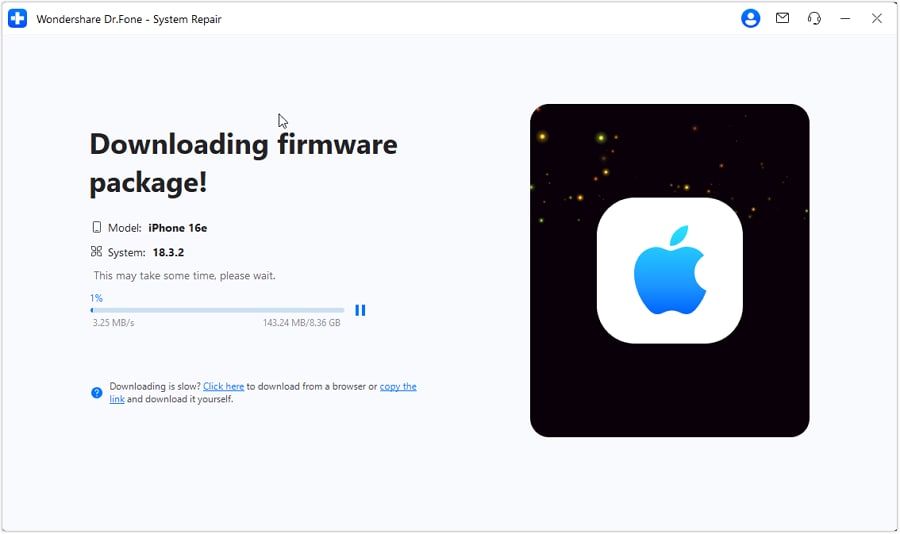
- Step 4. Dr.Fone will automatically identify your device model and display a list of compatible firmware versions. Select the appropriate firmware and click "Download." Ensure your internet connection is stable and your iPhone remains connected throughout the download — the firmware file is typically 4–6GB in size.

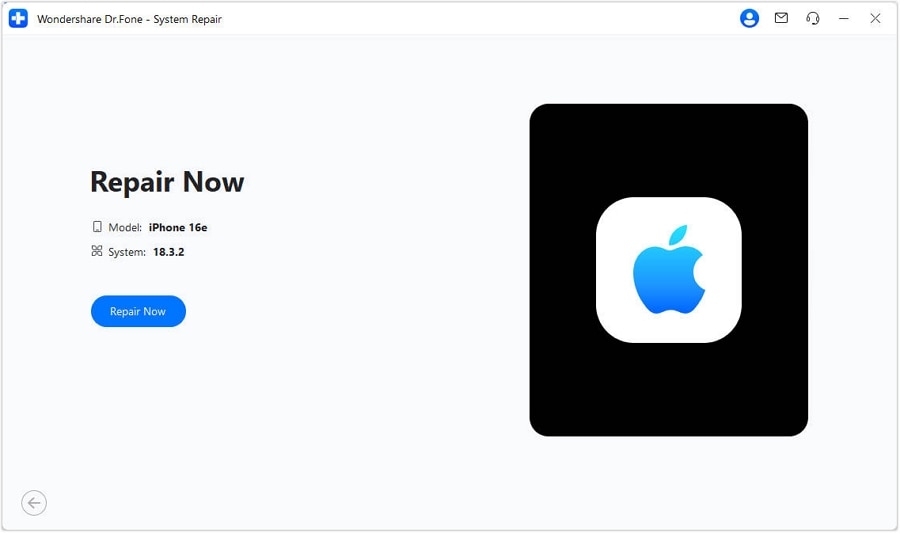
- Step 5. Once the firmware download is complete, click "Repair Now." Dr.Fone will begin flashing the repaired firmware to your device. Do not disconnect your iPhone or close the application during this step.
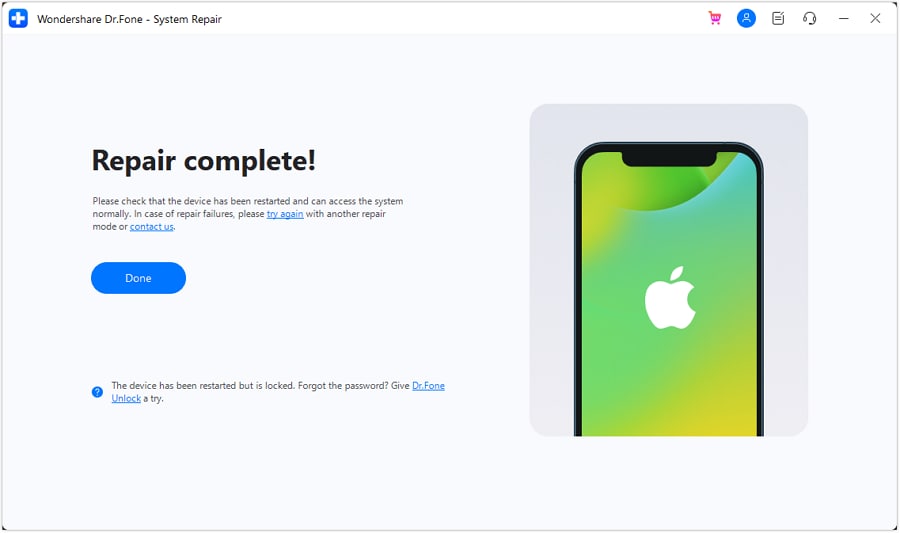
- Step 6. After the repair is complete, your iPhone will automatically reboot into normal iOS. The boot loop should be fully resolved and all your data — contacts, photos, apps, messages — should be intact.

- Step 7. Safely disconnect your iPhone. If the issue persists (rare), click "Try Again" to run another repair cycle, or switch to Deep Repair mode for more thorough system correction.
Fix 2: Force restart iPhone to fix boot loop issue
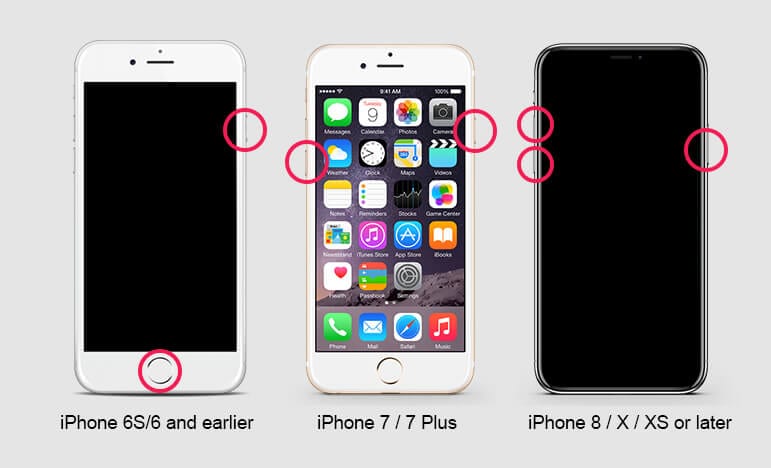
A force restart is the quickest first step to attempt when your iPhone is stuck in a boot loop. Unlike a standard restart, a force restart interrupts the current boot cycle at a hardware level — it doesn't rely on the OS to initiate a shutdown, so it works even when the software is completely frozen. This fix is especially worth trying first for an iPhone 12 boot loop or iPhone 17 boot loop caused by a temporary software glitch or minor crash during an app update. The button combination varies by model — follow the instructions for your specific device below.
For iPhone 8 and later devices (iPhone 8, X, XS, XR, 11, 12, 13, 14, 15, 16, 17):
- Quickly press and release the Volume Up button.
- Quickly press and release the Volume Down button.
- Press and hold the Side (Power) button until the Apple logo appears, then release. Do not release during the shutdown animation — keep holding until the logo appears on a black screen.
For iPhone 6, iPhone 6S, iPhone SE (1st generation), or earlier devices:
- Press and hold both the Home button and the Sleep/Wake (Power) button simultaneously.
- Continue holding both buttons for at least 10 seconds, even after the screen goes dark.
- Release when the Apple logo appears on the screen. Your iPhone will restart normally.
For iPhone 7 and iPhone 7 Plus:
- Press and hold both the Volume Down button and the Sleep/Wake (Power) button at the same time.
- Keep holding both buttons for at least 10 seconds until the Apple logo appears.
Note: The iPhone will first shut down before starting again. Don't release the Side key during this process.

Check out our YouTube video on how to force restart an iPhone (all models included) if you'd like to see it in action.
If it doesn't work, just try Dr.Fone System Repair to fix the iPhone stuck in the boot loop without any data loss.Fix 3:Restore iPhone Backup to Fix Reboot Loop
If a force restart doesn't break the iPhone stuck in boot loop, restoring from a previous backup is the next step — provided you have a recent iTunes, Finder, or iCloud backup available. This method replaces the current (potentially corrupted) iOS data with a known-good state from before the boot loop began. It's particularly effective when the boot loop was caused by a bad app, a failed settings change, or data corruption that occurred after your last backup. Keep in mind: restoring a backup will overwrite any data created after that backup was made, so you may lose recently saved files, messages, or photos that aren't stored elsewhere.
To restore your iPhone using iTunes on Windows or macOS Mojave or earlier:
Connect your iPhone to your computer with a USB cable and open iTunes. Wait for iTunes to detect your device — if it's recognized (shown as a device icon in the top-left), click the icon and select "Restore Backup" from the Summary tab. A pop-up will display your available backups with dates and sizes. Choose the most recent backup that predates the boot loop and click "Restore." Keep your iPhone connected until the process completes — this can take 15–30 minutes depending on backup size.

For Mac users using macOS Catalina or newer (using Finder):
Connect your iPhone to your Mac via USB or Wi-Fi. Open a Finder window and select your device from the left sidebar under "Locations." Click "General" in the button bar at the top, then scroll down and click "Restore Backup." Choose your preferred backup from the drop-down list and click "Restore." If the backup was encrypted, you'll be prompted to enter the backup password before the restore begins. Do not disconnect your iPhone during the process.

Fix 4: How to fix the iPhone boot loop using iTunes/Finder
If your device isn't recognized by iTunes/Finder normally due to the boot loop, you can manually place it into Recovery Mode or DFU Mode to force a full restore. This method completely erases your iPhone and reinstalls a fresh copy of iOS — it is one of the most reliable boot loop fix iphone solutions when other approaches fail, but it will erase all data not backed up beforehand. Make sure you're running the latest version of iTunes before starting, as older versions may not support current iPhone models or iOS versions.
1. Connect your iPhone (iPhone 15, 14, 13, 12, 11, X, 8, 7, 6, or any other model) to your computer using a lightning or USB-C cable and launch iTunes or Finder.

2. iTunes or Finder may automatically detect a problem with your iPhone and display a pop-up prompt asking whether you want to Update or Restore. Click "Update" first — this attempts to reinstall iOS without erasing your data. If the update fails or doesn't resolve the boot loop, repeat the process and choose "Restore" instead.

3. If no automatic prompt appears — common when the iPhone is actively cycling through the boot loop — you'll need to manually trigger the restore. In iTunes, click the device icon and navigate to the "Summary" tab. Click "Restore iPhone" and confirm when prompted. iTunes/Finder will download the latest iOS firmware and perform a clean install. Your iPhone will restart several times during this process — do not disconnect it.

Fix 5: Clean App Data to fix iPhone stuck in a boot loop
In some cases, a problematic third-party app is the root cause of an iPhone stuck on bootloop. Certain apps — particularly those that haven't been updated in a long time, or apps installed through enterprise certificates outside the App Store — can corrupt system-level data directories or interfere with the iOS boot process. If your iPhone can occasionally reach the Settings app before restarting again, use the Analytics tool to identify the culprit.
Go to Settings → Privacy & Security → Analytics & Improvements → Analytics Data. Scroll through the log entries and look for any app name that appears repeatedly with crash or error entries — especially entries timestamped around when the boot loop first started. Uninstall the identified app by long-pressing its icon and selecting "Remove App," then reboot your device to see if the iPhone boot loop is resolved. Also clear any residual data by going to Settings → General → iPhone Storage, selecting the app, and tapping "Delete App" to remove both the app and its associated data.
While if you can't get into Settings and your iPhone keeps in a reboot loop, try Dr.Fone - System Repair (iOS).Fix 6: Contact Apple Support to Check for Hardware Problems
If every software-based fix — force restart, backup restore, iTunes restore, app data cleanup, and Dr.Fone system repair — has failed to resolve your iPhone boot loop, the underlying cause is almost certainly a hardware failure. Physical components such as the logic board, NAND flash storage, power management IC (PMIC), or internal connectors may be damaged or malfunctioning, preventing iOS from completing its startup sequence regardless of what software is installed.
At this point, the correct course of action is to contact Apple Support or visit an Apple Store or Apple Authorized Service Provider in person. Bring your device and any proof of purchase. A technician can run hardware diagnostics that identify failed components. If your device is covered under AppleCare+ or is within the standard one-year warranty, hardware repairs may be covered at no cost or reduced cost. You can initiate a support request at support.apple.com or use the Apple Support app to schedule a Genius Bar appointment at your nearest Apple Store.
Part 4: How to Avoid iPhone Getting Stuck in Boot Loop Again?
Now that you've successfully applied an iPhone boot loop fix, it's worth taking steps to make sure it doesn't happen again. Boot loops are largely preventable with good device habits. The following five practices will significantly reduce your risk of experiencing a future iPhone stuck in boot loop situation.
1. Avoid jailbreaking your iPhone: Jailbreaking removes the operating system's core security protections and exposes critical system directories to unverified software. Even a single poorly written tweak or incompatible package can overwrite essential boot files, triggering a boot loop that's difficult to escape without a full restore. If you want to customize your device, use official Apple features like Shortcuts, Focus Modes, and App Library — these provide meaningful personalization without the risk.
2. Keep your device software up to date: Apple regularly releases iOS updates that patch known bugs, fix system instabilities, and improve compatibility between iOS and third-party apps. Running an outdated iOS version increases the risk that a newly installed app or updated system component will conflict with your firmware. Enable automatic updates in Settings → General → Software Update → Automatic Updates to ensure your iPhone always runs the most stable available version.
3. Be cautious when installing third-party apps: Only download apps from the official App Store, where Apple reviews each submission for security and stability. Apps distributed through enterprise certificates, third-party app stores, or sideloading methods bypass these checks and can install code that interacts with the iOS system in unpredictable ways. If a particular app frequently crashes or behaves unusually, uninstall it before it has the chance to cause broader system damage.
4. Don't overload your device storage: iOS requires a minimum amount of free internal storage to perform system operations — including processing updates, writing logs, and managing virtual memory. When storage drops below 1–2GB free, the system can become unstable and may fail during critical operations, potentially triggering a boot loop. Regularly offload unused apps, clear your cache, and back up photos to iCloud or your computer to keep adequate free space available.
5. Avoid force shutting down your iPhone unnecessarily: Force-restarting your iPhone interrupts active system processes abruptly — including file writes, update installations, and database transactions. While an occasional force restart is harmless, repeatedly force-shutting down your device — especially during an update or while an app is actively syncing data — can leave the file system in an inconsistent state that leads to boot failures. Only use the force restart procedure when the device is genuinely unresponsive.
Tips: Looking for an all-in-one mobile management software? Look no further than Dr.Fone App - the ultimate choice for all your needs:
- For iOS Users: Free up space with Smart Clean, remove any restriction including screen lock, iCloud activation lock, MDM, or Apple ID, and transfer data easily between devices with our all-in-one iOS solution.
- For Android Users: Bypass screen locks and FRP with our Android unlocker, change your location with one click, and repair damaged Samsung devices with ease.
Discover more possibilities for mobile management solutions with Dr.Fone App (iOS) and Dr.Fone App (Android). Don't miss out, try it now and revolutionize your smartphone experience.
Conclusion
An iPhone boot loop is a serious but solvable problem. Whether you're dealing with an iPhone 6 boot loop triggered by an old jailbreak, an iPhone 12 boot loop caused by a failed iOS update, or an iPhone 17 boot loop after upgrading to the latest iOS, the six fixes in this guide cover every common scenario. Start with a force restart — it resolves the majority of temporary boot loop cases in under a minute. If the loop persists, work through the remaining fixes: restore from backup, use iTunes/Finder, or clean problematic app data.
For the most reliable, data-safe apple boot loop fix, we strongly recommend Wondershare Dr.Fone - System Repair. It's the only solution in this guide that repairs your iOS system without erasing your data, and it works on every iPhone model from iPhone 6 to iPhone 17. If hardware damage is suspected, an Apple Store visit is the appropriate final step.
FAQs
iPhone Issues
- iPhone Storage Full
- 1. Stuck on Apple Logo Storage Full
- 2. Erase Content Settings not Working
- 3. iPhone Lagging
- 4. iPhone Running Slow
- iPhone Update Problems
- 1. Stuck on Updating iCloud Settings
- 2. iPhone Frozen During iOS Update
- 3. iPhone Checking for Update Stuck
- 4. iPhone Cellular Update Failed
- 5. iPhone Software Update Failed
- 6. iPhone Stuck on Update Requested
- 7. iPhone Update Error 1110
- 8. iPhone is Findable and Won’t Turn On
- 9. iPhone Won't Update
- 10. Update Server Couldn't Be Contacted
- 8. iPhone & iPad Security Updates
- 9. Update iPhone with/without iTunes
- 10. Can't Download or Update Apps
- iPhone Media Problems
- 1. Apple Music Song Not Available
- 2. iPhone Not Ringing
- 3. iPhone Echo Problem
- 4. iPhone Ringer Problems
- 5. iPhone Plays Music by Itself
- 6. Ringer Volume Changes by Itself
- 7. Music Won't Play on iPhone
- 8. Blurry Photos & Videos on iPhone
- 9. iPhone Volume Problems
- iPhone Sound Problems
- 1. YouTube no Sound
- 2. iPhone Microphone Problem
- 3. Test iPhone Microphone
- 4. Headphones No Sound from iPhone
- 5. No Sound on iPhone Game
- 6. iPhone Sound Not Working
- 7. iPhone Screen Recording no Sound
- iPhone Calling Problems
- 1. iPhone No Sound on Calls
- 2. Screen Goes Black During Call
- 3. iPhone Recent Calls Not Showing
- 4. iPhone Dropping Calls Issue
- 5. iPhone Calling Problem
- iPhone Camera Problems
- 1. iPhone Camera Black
- 2. iPhone Camera Blurry
- 3. iPhone Camera Not Working
- 4. iPhone Front Camera Not Working
- 5. TrueDepth Camera Not Working
- 6.Out-of-Focus Photos on iPhone 15
- iPhone Network Problems
- 1. Airpods Won't Connect to iPhone
- 2. iPhone Disabled Connect to iTunes
- 3. iPhone Not Syncing Problems
- 4. iPhone Internet Not Working
- 5. iPhone Keep Disconnecting from Wifi
- 6. iPhone WIFI Not Working
- 7. PC Not Recognizing iPhone
- 8. iPhone Stuck on Connect to iTunes
- 9. iPhone Not Showing up in iTunes
- 10. iTunes Not Detecting Your iPhone
- 11. iPhone Bluetooth Disconnect
- 12.Apple CarPlay Keeps Disconnecting
- iPhone Screen Problems
- 1. White Spots in iPhone Screen
- 2. iPhone Bleeding Screen
- 3. Turn Off iPhone When Frozen
- 4. Fix Orange Dot on iPhone
- 5. iPhone Green Screen Flickering
- 6. Green Lines in iPhone Screen
- Other iPhone Problems


Alice MJ
staff Editor
Generally rated4.5(105participated)