7 Best Solutions To Fix iPhone Keeps Turning On and Off

Oct 23, 2026 • Filed to: Phone Repair Solutions • Proven solutions
 TL;DR:
Resolve an iPhone (models 6 through 15) that repeatedly turns on and off by first performing a force restart to clear memory glitches, using Wondershare Dr.Fone to repair corrupted firmware without data loss, or replacing the physical battery if its health is severely degraded.
● Prevent storage-induced iOS crashes by offloading unused applications to maintain a strict minimum of 1–2 GB of free local storage.
● Utilize the Standard Repair mode in Wondershare Dr.Fone to safely re-flash corrupted system firmware up to iOS 17, which resolves persistent software-based boot loops without erasing personal data.
● Schedule an Apple-authorized battery replacement if the device unexpectedly powers off at 20–40% charge or displays a maximum capacity below 80% in the Battery Health settings, as software solutions cannot bypass physical voltage drops.
Ask AI for a summary
 ChatGPT
 Perplexity
 Gemini
 Claude
 Grok
Grok
If your iPhone keeps turning off unexpectedly — shutting down mid-call, powering off while charging, or restarting in a continuous loop — you are experiencing one of the most disruptive issues reported across all iPhone models. Whether it is described as "my iPhone keeps turning off by itself," "iPhone keeps shutting off," or "iPhone keeps switching off," the underlying problem is the same: your device is losing power or crashing its core processes without user input.
The good news is that this issue is almost always fixable through software. The cause can range from a minor software glitch or outdated iOS to a power-hungry app, a full storage drive, or a degraded battery. Understanding why your iPhone keeps turning off is the first step — and the right fix follows directly from the cause.
This guide covers the 7 most effective, step-by-step solutions to fix the iPhone keeps turning on and off problem across all iPhone models (iPhone 6 through iPhone 15 series) and all current iOS versions. Solutions are ordered from quickest to most thorough, so you can start with the least invasive option and escalate only if needed.

Part 1: Reasons Behind iPhone Keeps Turning On and Off
To fix the issue effectively, you first need to understand why your iPhone keeps turning off by itself. Different causes point to different solutions — and choosing the wrong fix wastes time. The five root causes below cover the vast majority of reported cases, from software-triggered crashes to hardware failures.
Software Glitches
iOS software bugs are among the most common triggers for an iPhone that keeps turning itself off. These glitches typically appear after a failed or partial iOS update, when corrupted system files accumulate, or when a newly installed app conflicts with a core iOS process. When a critical background process crashes due to a software error, iOS performs an emergency restart to recover — which appears to the user as a random shutdown. Software-triggered shutdowns are recognizable by their unpredictability: they happen during normal use rather than under heavy load. The good news is that these are the easiest cases to fix — a force restart, iOS update, or system repair resolves most software-related iPhone keeps powering off issues without any data loss.
Battery Issues
A degraded or failing battery is the single most common hardware reason for an iPhone that keeps shutting off, even when the battery indicator still shows a charge. iPhone batteries are rated for approximately 500 full charge cycles before significant capacity loss begins. As battery health declines, the battery's ability to deliver stable peak current — especially under processor load — deteriorates. When the voltage drops below the minimum required by the A-series chip, iOS immediately shuts down to protect internal components, even if the display shows 15–40% remaining. To check your battery health, go to Settings → Battery → Battery Health & Charging. A maximum capacity reading below 80% combined with "Peak Performance Capability" warnings is a clear sign that battery replacement is the long-term fix for your apple iphone keeps turning off problem.
Hardware Problems
Internal hardware faults can cause your iPhone to keep switching on and off in ways that software fixes alone cannot resolve. A worn or physically damaged Side/Power button may send unintended restart signals to the OS. Loose internal ribbon cables — often the result of a drop or impact — can temporarily interrupt the power connection between the battery and the logic board, causing sudden shutdowns. A corroded or debris-filled charging port can also disrupt power delivery during charging, creating intermittent voltage drops that trigger shutdowns. If you notice that your iPhone only shuts off after a drop, or only during charging, hardware damage is the likely cause and professional repair is recommended.
Water Damage
Although iPhones from iPhone 7 onward carry IP67 or IP68 water resistance ratings, this protection is not permanent — the adhesive seals that create the barrier degrade with age, heat, and physical stress. Even brief exposure to water, sweat, rain, or high humidity can allow moisture to reach internal circuits and connectors. Corrosion from water damage disrupts normal electrical pathways and can cause erratic behavior, including the iPhone keeps turning on and off loop. Critically, water damage symptoms are not always immediate — corrosion can develop over days or weeks following the exposure event, making the link to water difficult to identify. If your iPhone has any history of liquid exposure and now keeps restarting unexpectedly, water damage should be considered a likely cause.
Overheating
iOS has a built-in thermal management system designed to protect the processor and battery from heat damage. When internal temperature exceeds a safe threshold, iOS displays a temperature warning and then shuts down automatically. This protection explains why some users see their iPhone keeps turning off during charging, gaming, video streaming, or when left in a hot car or under direct sunlight. Overheating shutdowns are distinguishable from other causes by the temperature warning overlay that appears before the shutdown, and by the fact that the device becomes noticeably warm to the touch. If overheating is causing your iPhone keeps powering off issue, remove any case, move the device to a cool shaded environment, and avoid using it while charging until the temperature normalizes.
Part 2: 7 Working Solutions to Fix iPhone Randomly Turns Off Issue
The following seven solutions address every common cause of the iPhone keeps turning off problem. Start with Fix 1 and work your way down — each method builds on the previous one, from a simple restart to a one-click system repair and, as a last resort, professional battery replacement. All methods through Fix 6 are designed to preserve your data.
Fix 1: Force Restart iPhone
Best for: Software glitches, frozen processes, or when your iPhone keeps shutting off after a recent iOS update or app install.
A force restart is fundamentally different from a standard power-off restart. It terminates all active processes — including background daemons and cached system states — and performs a clean cold boot. This clears temporary software bugs, flushes corrupted memory states, and resets all running processes without erasing any data. It is the fastest and safest first step for any iPhone keeps turning itself off scenario.
Follow the steps below based on your iPhone model:
iPhone 8 and Later (including iPhone X, 11, 12, 13, 14, 15)
Quickly press and release the Volume Up button. Immediately after, quickly press and release the Volume Down button. Then press and hold the Side (Power) button until the Apple logo appears on the screen. Release the button and allow the device to complete its restart.
iPhone 7 and 7 Plus
Press and hold the Volume Down button and the Sleep/Wake button simultaneously. Keep both buttons held down until the Apple logo appears, then release.
iPhone 6s, 6, and Earlier
Press and hold both the Sleep/Wake button and the Home button at the same time. Continue holding until the Apple logo appears, then release both buttons.
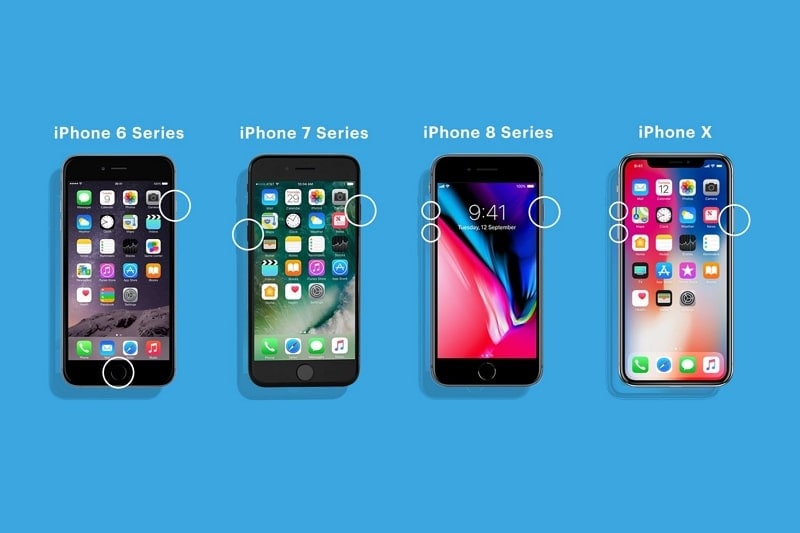
After the force restart, monitor your device over the next hour. If the iPhone keeps turning off issue does not recur, a software glitch was likely the cause. If the problem returns, proceed to Fix 2.
Fix 2: Uninstall Buggy Apps
Best for: When the iPhone keeps turning off consistently after launching a specific app or when the shutdowns started after a recent app installation.
Third-party apps that contain memory leaks, consume excessive background resources, or crash iOS system processes can directly trigger unexpected device shutdowns. Identifying and removing the problematic app eliminates the trigger entirely. If you are unsure which app is causing the issue, start by removing the most recently installed apps or apps that were running when the shutdowns occurred.
- Step 1: On your Home Screen or App Library, locate the app you want to remove. Long-press its icon until a context menu appears, then tap "Remove App" and confirm by tapping "Delete App."
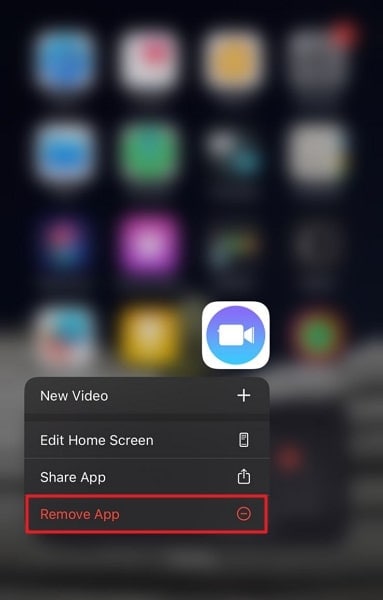
- Step 2: Tap "Delete" on the confirmation prompt to complete the removal. Repeat this process for each suspected app. After removing the apps, use your device normally and monitor for shutdowns.
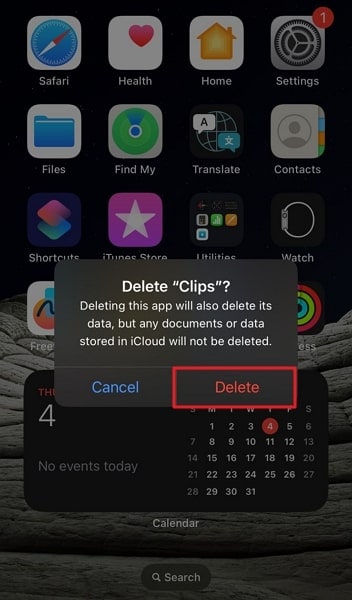
If the shutdowns stop after removing a specific app, that app was the cause. Check the App Store for an updated version before reinstalling.
Fix 3: Update the iOS Version
Best for: When the iPhone keeps turning on and off issue appeared after a prior iOS update, or if your device is running an older iOS version with known stability bugs.
Apple regularly releases iOS updates that include targeted fixes for system crashes, process stability improvements, and battery management optimizations. Running an outdated iOS version means your device is not benefiting from these patches — and known bugs that trigger unexpected shutdowns may remain unaddressed. Keeping iOS current is one of the most effective preventive measures against the iPhone switching on and off problem.
- Step 1: Open the Settings app and tap "General." Then select "Software Update". Your iPhone will check for available updates automatically.
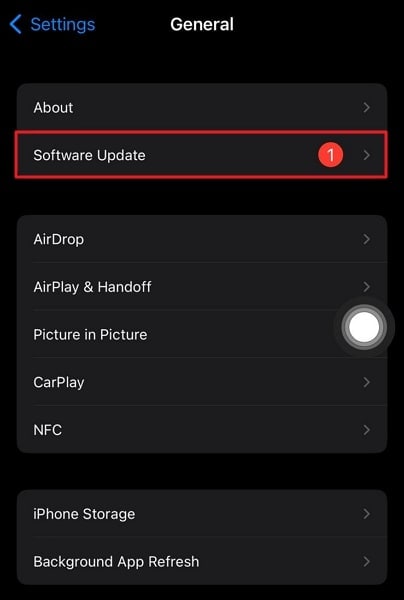
- Step 2: If an update is available, tap "Download and Install." Make sure your iPhone is connected to Wi-Fi and has at least 50% battery charge (or is plugged into a charger) before starting the update to avoid interruption.
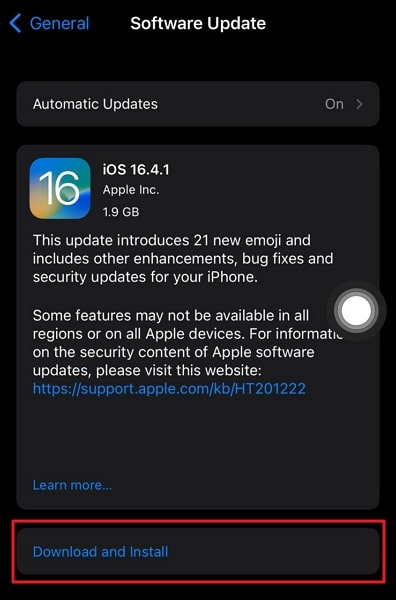
After the update completes, your iPhone will restart automatically. Monitor the device to see if the random shutdown behavior continues. Most iOS-level stability issues are resolved by updating to the latest available version.
Fix 4: Offload Unused Apps
Best for: When your iPhone storage is near capacity and the iPhone keeps shutting off or slowing down during normal use.
Low available storage is a frequently overlooked cause of iOS instability. When the system storage falls below a critical threshold, iOS cannot write necessary temporary files, swap data, or system logs — which can trigger unexpected crashes and shutdowns. Offloading unused apps frees up storage space without deleting the app's data, allowing you to restore the app later with all settings and documents intact. It is the safest way to reclaim storage when your iPhone randomly turns off due to storage pressure.
- Step 1: Open the Settings app, tap "General," then select "iPhone Storage." Review the color-coded storage bar and the list of apps sorted by size.
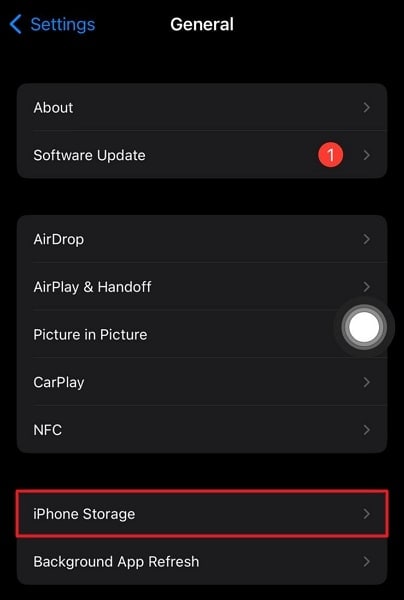
- Step 2: Tap on any large app you don't use frequently. On the app's detail screen, tap "Offload App" and confirm by tapping "Offload App" again. Repeat for multiple apps to free up significant storage space.
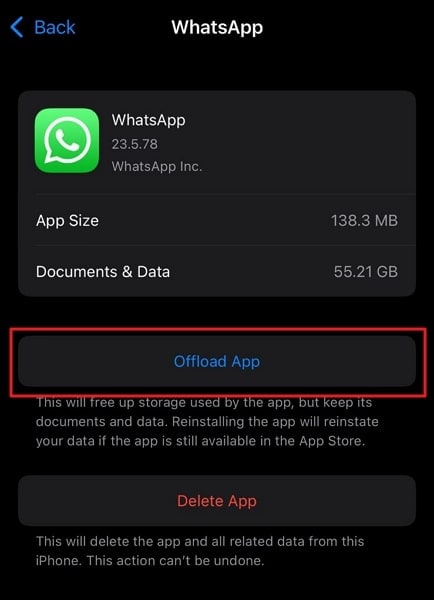
As a general guideline, maintain at least 1–2 GB of free storage on your iPhone to prevent storage-related instability. If your device consistently runs low on space, consider offloading media files to iCloud or a computer as a long-term solution.
Fix 5: Update your Apps
Best for: When specific apps trigger shutdowns, or when you have not updated your apps in several months and the iPhone keeps turning off during use of older apps.
Outdated third-party apps that have not been updated to support the current iOS version can cause memory conflicts, rendering failures, and process crashes that result in unexpected device shutdowns. App developers regularly release updates that address compatibility issues with new iOS versions, fix crash-inducing bugs, and improve memory management. Keeping all your apps current significantly reduces the risk of app-triggered iPhone keeps powering off incidents.
- Step 1: Open the App Store and tap your Profile icon in the top-right corner. Scroll down to the "Available Updates" section to see all apps with pending updates.
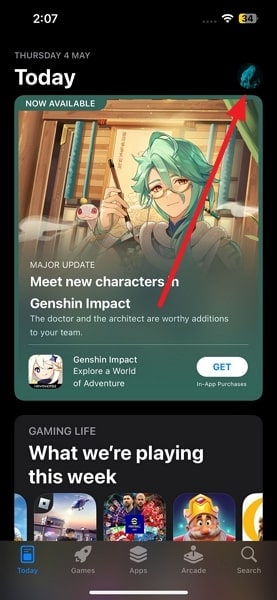
- Step 2: Tap "Update All" to install all available updates at once, or tap the individual "Update" button next to specific apps you suspect are causing the issue.

After updating your apps, restart your iPhone and test for further shutdowns. To prevent future compatibility issues, enable automatic app updates via Settings → App Store → App Updates.
Fix 6: Use a Reliable System Repair Toolkit – Wondershare Dr.Fone
Best for: When basic fixes (Force Restart, iOS Update, App removal) have not resolved the iPhone keeps turning off issue, or when the problem is caused by deeper iOS firmware corruption.
If your iPhone still keeps shutting off after trying the manual fixes above, the root cause is likely deep iOS firmware corruption that cannot be addressed through standard settings. In this case, the most effective solution is Wondershare Dr.Fone — a professional-grade iOS system repair toolkit trusted by millions of users worldwide.
Wondershare Dr.Fone can diagnose and resolve over 150 iOS system issues, including iPhone randomly turning off, the white screen of death, being stuck in Recovery Mode, boot loops, and black screen errors. Its Standard Repair mode re-flashes the correct iOS firmware for your exact device model without deleting any personal data — making it the safest deep-repair option available without visiting an Apple Store.
Key Features of Wondershare Dr.Fone
- Fixes 150+ iOS system issues including iPhone keeps shutting off, boot loops, and frozen screens — in minutes.
- Standard Repair mode resolves most iOS errors with zero data loss.
- Supports all iPhone models and all iOS versions, including the latest iOS 17.
- Also lets you explore iOS beta versions, downgrade iOS, and enable Recovery Mode or DFU Mode with one click.
Steps to Fix the iPhone Keeps Turning Off and On Issue via Wondershare Dr.Fone
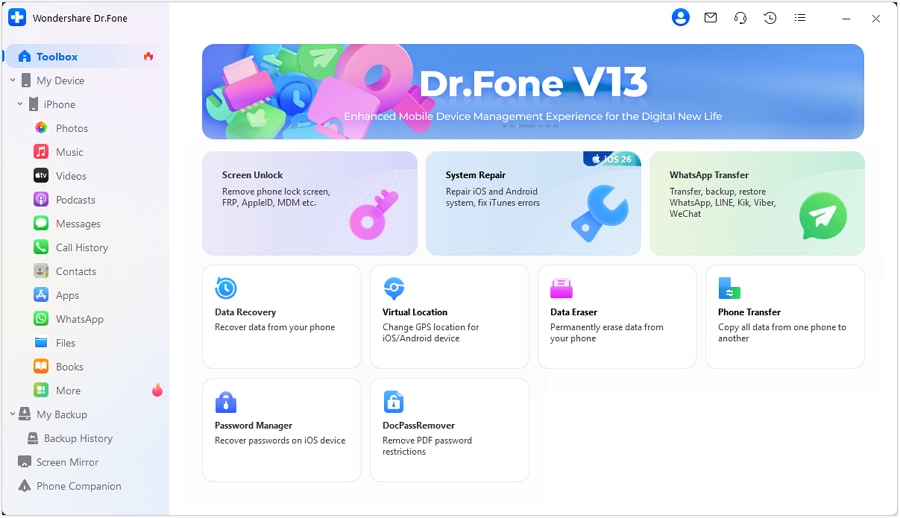
- Step 1: Access System Repair from Wondershare Dr.Fone
Download and install Wondershare Dr.Fone on your Windows PC or Mac, then launch the application. From the main dashboard, select "Toolbox" in the left-side panel, then click "System Repair." Connect your iPhone to your computer using a USB cable.
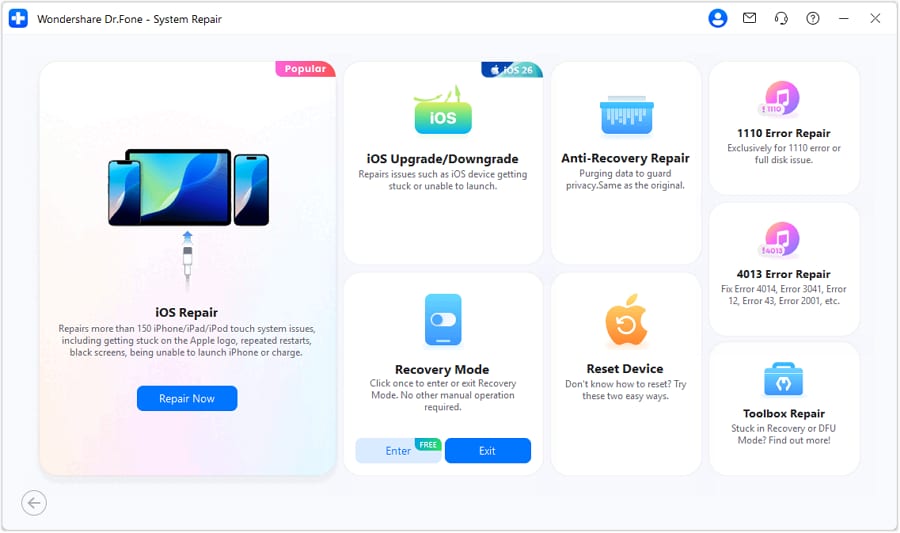
- Step 2: Choose the Repair Mode
On the device selection screen, choose "iPhone," then select "iOS Repair." When prompted to select a repair type, choose "Standard Repair" — this mode repairs your iOS firmware without erasing your personal data. Follow the on-screen instructions to put your iPhone into Recovery Mode.
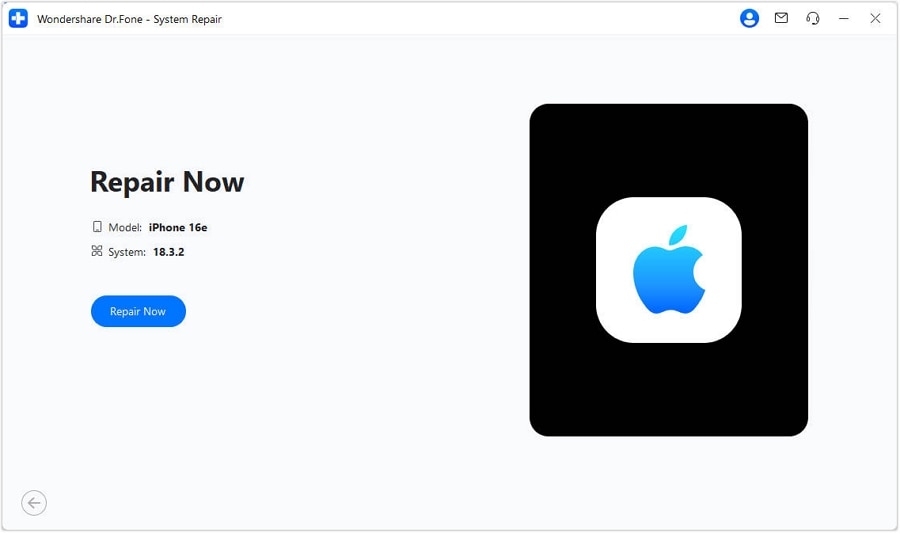
- Step 3: Repair the iPhone Keeps Turning Off Issue
Once your iPhone is in Recovery Mode, Dr.Fone will display the compatible firmware versions available for your device. Select the desired firmware and click "Download." After the firmware downloads and verifies successfully, click "Repair Now" to begin the repair. The process takes a few minutes. When it completes, click "Done" — your iPhone will restart with the iPhone keeps turning off and on issue fully resolved.
Fix 7: Contact Apple Support for Battery Replacement
Best for: When all software-based fixes have been attempted and your iPhone keeps turning off at 20–40% battery, shuts down under load, or when Battery Health shows maximum capacity below 80%.
If you have worked through Fixes 1–6 and the problem persists, a degraded or physically failing battery is the most probable remaining cause. iPhone batteries have a finite lifespan and naturally lose their ability to deliver stable peak power after several hundred charge cycles. A battery that can no longer sustain the power demand of the processor will cause iOS to shut down unexpectedly — even when the battery percentage indicator still reads a seemingly healthy level.
Apple Support is the safest and most reliable path to battery replacement. Apple-authorized technicians use genuine Apple batteries that are calibrated to your device model, ensuring proper capacity readings and thermal management. If your iPhone is still under warranty or covered by AppleCare+, the battery replacement may be free of charge. Contact Apple Support online or visit your nearest Apple Store or Apple Authorized Service Provider to schedule a diagnostic and, if needed, a battery replacement.

 safe & secure
Conclusion
The iPhone keeps turning off problem — whether it manifests as iPhone keeps shutting off, iPhone keeps switching off, or your iPhone keeps turning itself off at random — is caused by one or more identifiable issues: iOS software bugs, degraded battery, incompatible apps, full storage, overheating, water damage, or hardware faults. The 7 solutions in this guide address each of these causes systematically, starting from the simplest (force restart) and escalating to the most thorough (battery replacement). For the majority of users, Fixes 1–3 — force restart, app removal, and iOS update — will resolve the issue immediately with no data loss. If the problem runs deeper, Wondershare Dr.Fone provides a powerful one-click iOS repair solution that eliminates firmware-level causes without erasing your data. For confirmed battery degradation, an Apple-authorized battery replacement is the permanent hardware fix. By following this guide step by step, you can stop your apple iphone keeps turning off issue and restore full, stable performance to your device.
Frequently Asked Questions
An iPhone that keeps turning off by itself is typically caused by one of five root causes: (1) iOS software glitches introduced by a failed update or corrupted system files; (2) a degraded battery that can no longer deliver stable peak power to the processor; (3) physical hardware damage such as a stuck power button or loose internal connectors; (4) water damage causing corrosion on internal circuits; or (5) iOS overheating protection triggering an automatic shutdown under heat stress. The fastest way to isolate the cause is to force restart your device first — if shutdowns stop, software was the trigger. If they continue, check your Battery Health under Settings → Battery → Battery Health & Charging. A maximum capacity below 80% with ongoing shutdowns strongly indicates the battery needs replacement.
There are several methods to fix an iPhone that keeps shutting off without losing any personal data: (1) Force restart your iPhone using the button combination for your model — this clears software bugs without touching user data. (2) Uninstall or update buggy apps — identify apps that trigger shutdowns and remove or update them from the App Store. (3) Update iOS to the latest version via Settings → General → Software Update, which patches known stability bugs. (4) Offload unused apps to free up storage space, as critically low storage can cause iOS crashes. (5) Use Wondershare Dr.Fone Standard Repair — this one-click iOS repair tool re-flashes your device firmware and fixes over 150 iOS errors without deleting any personal data. Only a factory reset or battery replacement involves data risk, and both are last-resort options covered in this guide.
An iPhone that keeps switching on and off in a loop — also called a boot loop — usually indicates a severe iOS software or firmware issue rather than a simple glitch. Common causes include: a major iOS update that failed to install correctly, corrupted iOS system files from storage failure, an incompatible app corrupting launch processes, or a battery too degraded to sustain the power draw during startup. If a force restart does not break the loop, the most effective fix is using Wondershare Dr.Fone System Repair in Standard Repair mode — it reinstalls clean iOS firmware while preserving your data. If the device enters a full Recovery Mode loop (connecting to iTunes/Finder screen), you can also use Dr.Fone to exit Recovery Mode with one click and then proceed with a repair.
If your iPhone keeps powering off and won't restart, follow these steps in order: (1) Charge your device for at least 15–30 minutes using a known-good Apple cable and charger — a deeply discharged or faulty battery may prevent normal startup. (2) Attempt a force restart using the correct button combination for your iPhone model (detailed in Fix 1 above). (3) If the screen remains black or shows only the Apple logo before shutting off again, connect your iPhone to a computer and launch Wondershare Dr.Fone. Use the "Enter Recovery Mode" feature first, then run Standard Repair to reinstall iOS firmware. (4) If none of these steps work, the device likely has a hardware fault — visit an Apple Store or Apple Authorized Service Provider for a diagnostic. If your iPhone is under warranty or AppleCare+, the repair or replacement may be covered at no cost.


Apple Logo
- iPhone Boot Issues
- iPhone Activation Error
- iPad Struck on Apple Logo
- Fix iPhone/iPad Flashing Apple Logo
- Fix White Screen of Death
- iPod Gets Stuck on Apple Logo
- Fix iPhone Black Screen
- Fix iPhone/iPad Red Screen
- Fix Blue Screen Error on iPad
- Fix iPhone Blue Screen
- iPhone Won't Turn on Past the Apple Logo
- iPhone Stuck on Apple Logo
- iPhone Boot Loop
- iPad Won't Turn On
- iPhone Keeps Restarting
- iPhone Won't Turn Off
- Fix iPhone Won't Turn On
- Fix iPhone Keeps Turning Off



Alice MJ
staff Editor
Generally rated4.5(105participated)