Teleport your device anywhere instantly with one click.


 100% Security Verified | No Subscription Required | No Malware

 :

 ChatGPT
 Perplexity
 Gemini
 Claude
 Grok
iPogo and iSpoofer should not be judged as two equally verified current products. The original comparison describes older location controls, feeds, automation, and interface behaviour. iPogo currently publishes feature and installation documentation, but that does not make its use approved by Pokemon GO or confirm that every old comparison remains accurate.
This 2026 review keeps the original feature-by-feature order while distinguishing documented functionality from unverified performance claims. The iSpoofer descriptions below are legacy references, not confirmation of a trustworthy maintained release. GPS spoofing and unauthorized game software can violate the game's fairness policy; a cooldown timer, paid subscription, or polished interface does not guarantee account safety.
In this article
Part 1: Understand what iPogo and iSpoofer refer to
First separate a modified game client or gameplay add-on from a standalone device-location utility. They may all display maps, but installing extra game functionality introduces different security, compatibility, and rules questions. A familiar name alone does not establish who built the package or whether it is still supported.
iPogo: documented features with platform and tier conditions
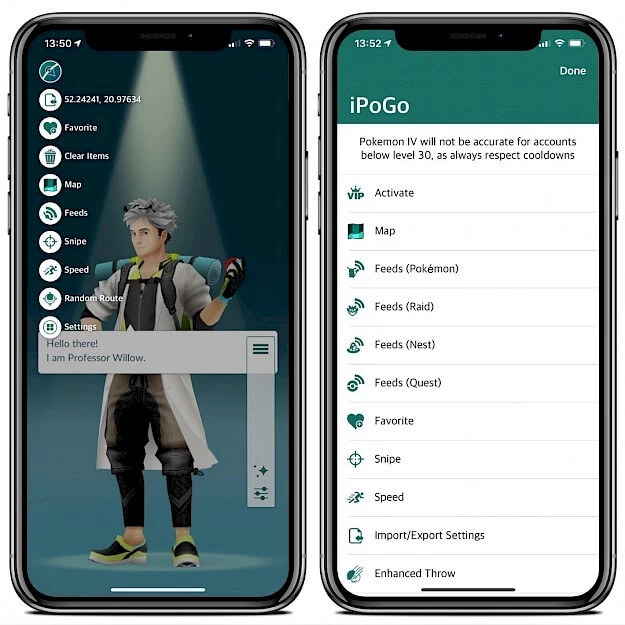
iPogo advertises additional Pokemon GO controls and information displays. Its current documentation describes both free and VIP features, so it is misleading to call the entire feature set free. Installation also depends on the platform and selected method; a no-computer route is not universal.
- Location and encounter feeds can list reported Pokemon, raids, and PokéStop information. A feed is a report, not a guarantee that an encounter remains available.
- Teleport and location-selection controls describe changing a reported position, not permission to access distant gameplay.
- Map overlays organize visible information about areas and game objects.
- A joystick and speed controls provide simulated movement rather than genuine physical travel.
- Saved routes or hotspots organize selected points for later use.
- Inventory and statistics displays expose additional interface information, with device-resource implications.
- Fast Catch is currently documented as exiting an encounter after a successful catch; it does not mean every attempted capture succeeds.
- Interface overlays can be shown or hidden to reduce clutter, depending on the release and feature settings.
These are publisher-described capabilities, not independent test results or approval from the game operator. Check the exact release, installation requirements, and feature tier instead of relying on the screenshot alone.
iSpoofer: read the old feature list as a legacy comparison
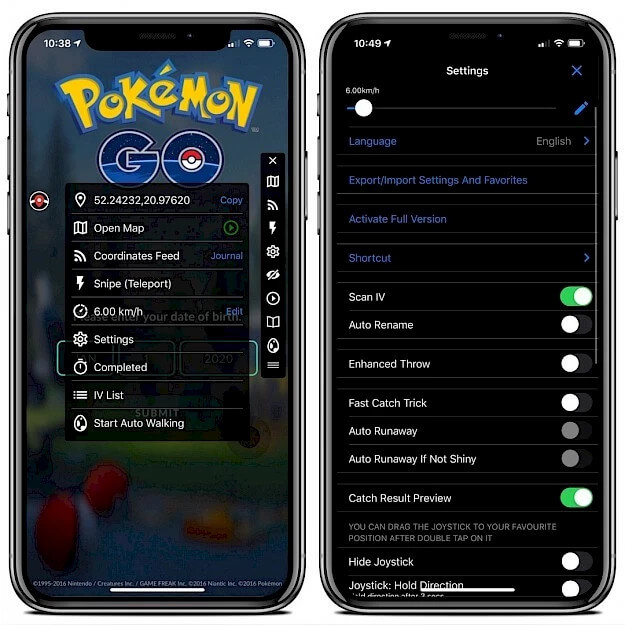
The original article described free and premium iSpoofer editions, but did not establish a current maintained release, authentic download, or complete premium price. This rewrite does not fill those gaps with a guessed subscription or endorse a same-name website. Its list remains useful for understanding what the historical comparison was evaluating.
- Map movement was described as a way to simulate travel without physically moving the phone.
- Gym scanning was presented as a way to inspect reported space availability.
- Patrol routes and generated GPS points were intended to automate a selected route.
- Teleportation was listed among basic controls.
- A feed advertised coordinates for high-IV encounters; such a report is not a universal result for every player or time.
- A nearby radar organized local encounter information.
- Fast Catch was included as a convenience feature rather than evidence of guaranteed captures.
Those source descriptions are not a basis for purchasing an old licence now. Verify maintenance, publisher identity, and current terms before trusting a package, and remember that a premium payment never changes the game's rules.
Part 2: Compare the controls without assuming a current performance winner
The meaningful differences concern installation, feature scope, data freshness, and how the interface handles maps and routes. The source also made claims about crash rates, instant responses, and 'safe' cooldowns without a reproducible test. Those claims must not be presented as measured facts in a current buying recommendation.
iPogo: automation and inventory controls
One highlighted feature was automated catching and PokéStop interaction, which the current publisher calls Virtual Go Plus. It is an emulated software feature, not the same thing as owning an authorized physical accessory. The source's use of the Go-Tcha name should not be read as proof that the products or publishers are identical.
iPogo's documentation says this feature uses ordinary red Poké Balls, throws one ball, and uses neither a curveball nor a berry. It also describes route automation as a companion feature. That explains the intended workflow, but automated interaction and falsified travel are not legitimized by combining them. There is no verified walking duration that makes unauthorized automation safe.
The inventory cleaner is a different function: it lets users specify quantities to keep and remove unwanted items through a shortcut. Review retained-item settings carefully before any bulk deletion. It is not a way to increase bag capacity, and it should not be conflated with capture limits or guaranteed resource collection.
iSpoofer: shortcut controls and a cooldown display
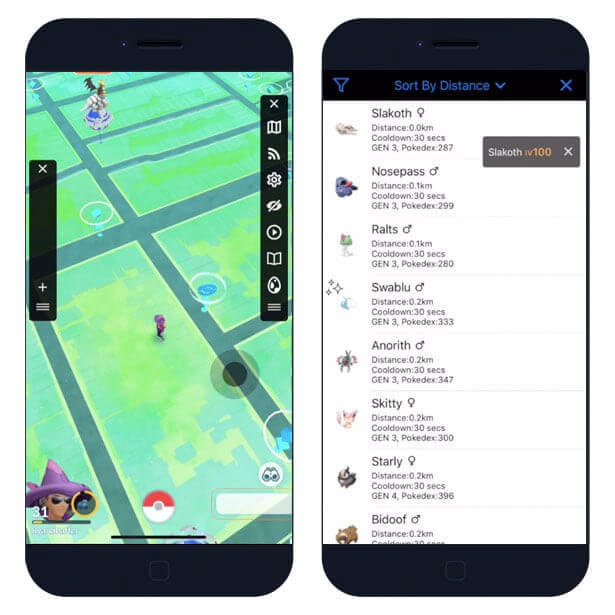
The source highlighted an on-screen shortcut bar that could expose frequently used actions without repeatedly opening settings. Customizable placement is an interface convenience; it does not establish that the underlying feature works in a current game build.
It also described a visible cooldown timer and additional lure/nest feed categories. A timer may help represent an application's own estimate, but it cannot certify that gameplay is safe or that the operator will not detect falsification. Historical shortcut and filtering descriptions should not be repackaged as a verified current advantage.
Before comparing feed categories, check what the data actually measures, where it comes from, and when it was updated. A name such as 'New Lure' says little about report freshness or whether the location is still relevant.
Installation: compare supported methods, not old signing promises
The original discussion named direct downloads, IPA installation, AltStore, Xcode, and Signulous. These are different delivery or development/signing paths, not interchangeable guarantees that a package is authentic or permitted. Do not enter credentials or trust a profile from an unverified mirror just because it repeats one of those names.
iPogo's current installation page lists Signulous for a no-computer stock-iOS route, Sideloadly as a computer-based route, and a separate option for compatible jailbroken devices. The publisher lists a twenty-dollar annual Signulous fee, but availability and terms must be checked with the provider. A signing-service purchase is not the same entitlement as every iPogo VIP feature.
The source's blanket claim that AltStore cannot install iPogo, its promise of a fixed revocation solution, and a suggested one-day recovery window are not established current rules. Apple's signing changes can affect installation and re-signing. Check the exact method's current documentation instead of assuming repeated downloads will fix a revoked certificate.
For iSpoofer, this source does not establish a currently supported installer. Do not use the historical comparison to choose an anonymous IPA, and do not assume that a same-name release is the original product.
Application stability: require reproducible evidence
The source ranked iSpoofer above iPogo and supplied a specific crash-frequency claim, but provided no comparable devices, software versions, feature settings, or test log. That is not enough to declare a stable winner in 2026. A crash can depend on the phone, system release, game build, overlays, and active features.
There is a narrower current warning worth retaining: iPogo's publisher says its inventory-statistics display can cause crashes if left enabled continuously. This supports checking feature-specific resource use, not the source's precise crash counts or a universal comparison with another app. Treat lag and repeated failures as reasons to stop and troubleshoot, not proof that a rival is always safe.
Virtual location: cooldown estimates are not account protection
Both source descriptions include changing a reported point and estimating a cooldown. Their timers were said to differ in whether they considered the last action. That older comparison does not establish the accuracy of either timer or turn an estimated wait into authorization.
iPogo currently says its Cooldown Journal attempts to track activity but cannot see actions taken through other applications or devices. Even a complete local journal is not a guarantee against enforcement. The game's policy covers location falsification itself, not only actions performed before a displayed countdown expires.
App maps: distinguish coverage, filters, and loading claims
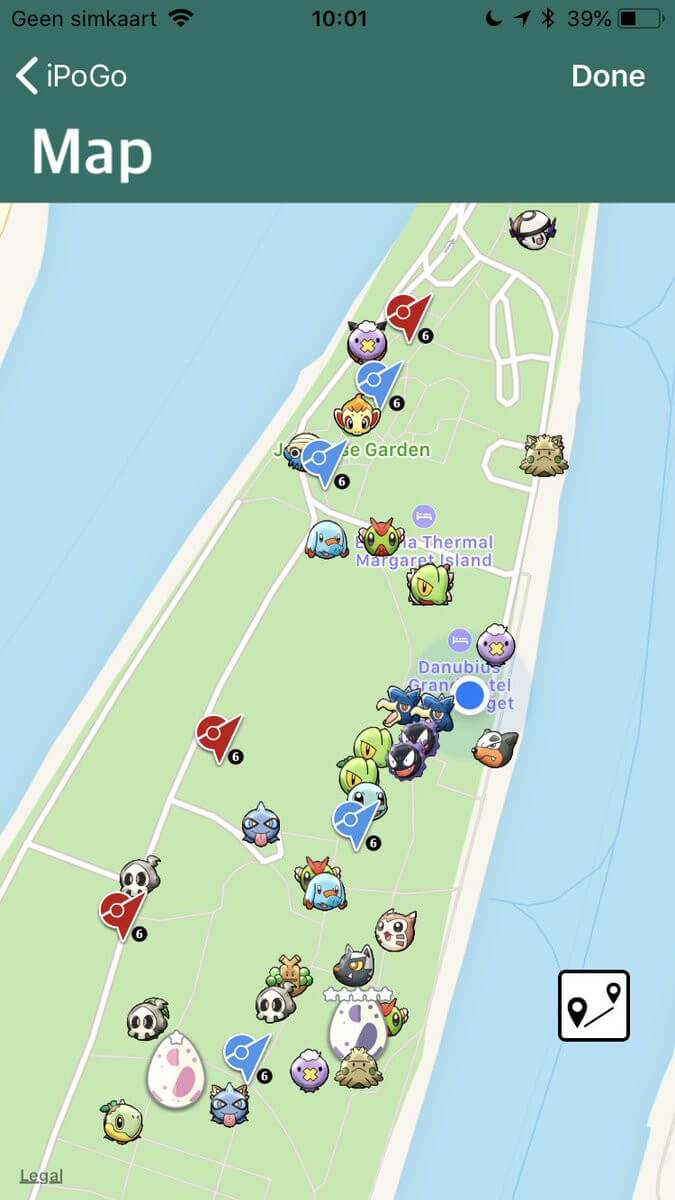
The original screenshots show map interfaces for selecting points and viewing Pokemon, PokéStops, and gyms. Those concepts are separate from the underlying map provider, which should not be assumed unchanged. A pin-selection workflow can avoid manual coordinate entry, but a neat map does not prove that the reported objects are current.
The source credited iSpoofer with faster loading and iPogo with wider browsing and richer filters for species, teams, and raids. Those are historical observations without a controlled current comparison. Evaluate coverage radius, refresh behaviour, filter definitions, and the time attached to a report rather than simply calling one map more polished.
Current iPogo documentation lists global and custom feed overlays along with map-related features. That establishes what the publisher describes, not an independently measured loading-speed advantage. Cosmetic differences such as animation or visual cleanliness are preferences, not reliable evidence of better data.
GPX routing: a generated route is not automatically an optimal route
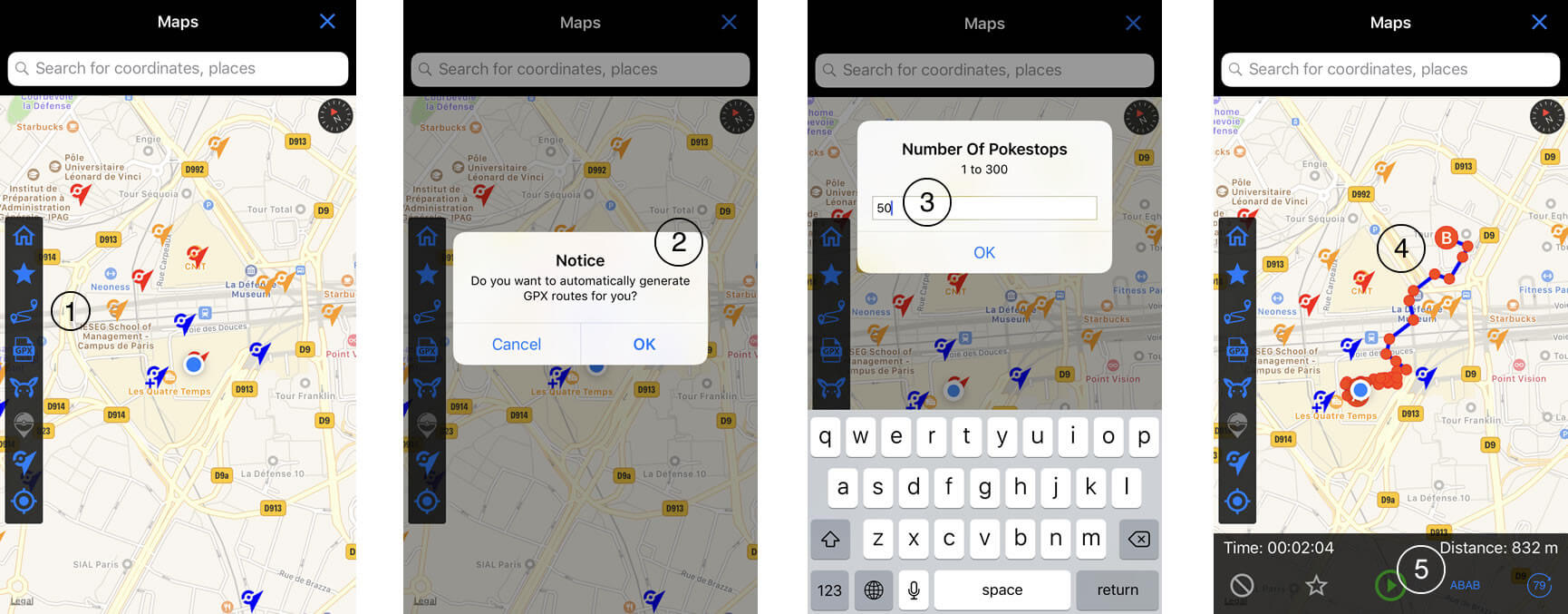
The source described iSpoofer generating a route from a chosen number of stops, then exposing movement controls on the map. It contrasted that with iPogo's random-route and saved-pin workflow. Neither description proves that the generated route is 'best' for accessibility, encounter quality, or current game conditions.
iPogo's current documentation includes custom routes, random routes, and GPX-related options, so the source's claim that its route cannot be viewed should not be generalized to every current release. Route generation, saving, selecting, and simulated movement are separate operations and should be checked independently.
A GPX file is route data, not evidence that you physically travelled it. Review where the points lead and whether a planned real-world route is safely accessible; do not treat automated route execution as permission to falsify activity.
Raid, quest, and Pokemon feeds: freshness matters more than a label
The original comparison preferred iSpoofer's filtering and community-supplied reports, including 'Hot' raids, over iPogo's feeds. Current iPogo documentation now lists global and custom data overlays, so the older assertion that it provides only basic information is not a dependable present-day conclusion.
A feed can differ in refresh frequency, reporting radius, filtering, and the completeness of community contributions. 'No Results Found' may indicate a filter, coverage gap, expired encounter, or missing report; it does not automatically prove that no relevant Pokemon exists anywhere.
Raid participation also depends on real-time availability and the game's own joining rules. A busy-looking report cannot guarantee enough players, a successful raid, or continued access to the advertised encounter. Compare timestamps and source coverage before acting on a lead.
Nearby Pokemon scan feeds: read overlays as reports
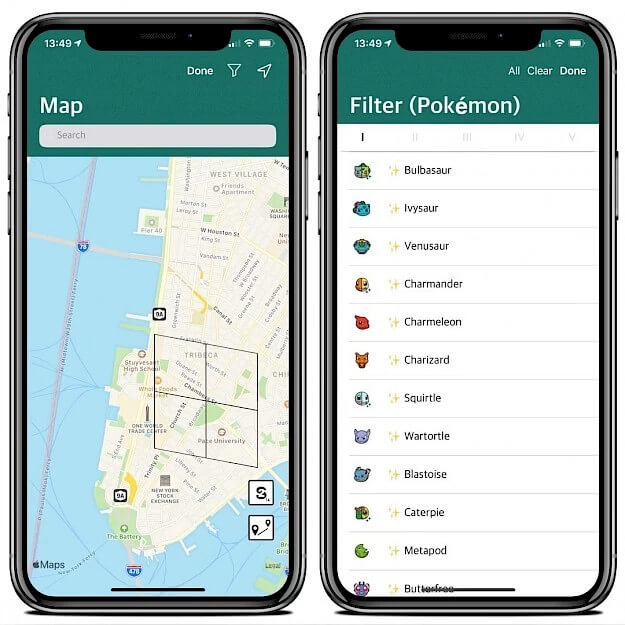
The source described a floating list of nearby encounters, with controls to hide the window or access it through a shortcut. It also described filters for species, Pokédex entry, distance, and shiny-related information. These describe display and selection controls, not certainty about an encounter's eventual result.
iPogo currently documents both a nearby overlay and a shiny scanner, but those are publisher claims rather than permission from the game operator. A filtered result can still be stale or outside an accessible area. Do not supply game credentials to an outside scanning service or assume every displayed value applies identically to every account.
The joystick: consider static and dynamic interaction
Both source descriptions use a directional control and speed selection to simulate movement. The important usability question is how it interacts with other screen gestures. A long-press gesture that summons a joystick may conflict with an unrelated inventory or map action.
The old article described repeated iPogo pop-ups interrupting movement as a universal fault. Current iPogo documentation explains that the joystick can be dynamic, appearing after a long press, or static, staying in one position. Check the actual setting before treating every pop-up as an unavoidable defect. Neither control style turns simulated walking into genuine travel.
Automatic skipping of non-shiny encounters
The source called this feature 'Auto Runaway', but an application skipping an encounter is not the same as a wild Pokemon fleeing by the game's normal catch mechanics. iPogo's current feature page calls its option Block Non Shinies and describes it as skipping non-shiny encounters.
There is no reproducible evidence here for the source's split-second iSpoofer advantage, its exact error timing, or a fixed period during which a sprite disappears. Describe the intended filtering function without inventing a speed benchmark. Automatic filtering may also cause a player to skip an encounter they otherwise wanted to inspect.
A separate desktop GPS-simulation option
 Set your map route to simulate GPS movement.
- Set your wanted movement speed.
- HD and large map view to check location.
- Fake GPS location to anywhere.
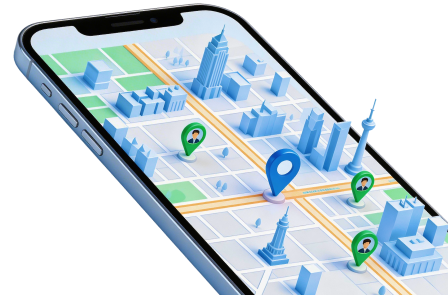
Dr.Fone - Virtual Location is a separate device-location tool rather than the collection of game overlays compared above. Its relevant functions include selecting a simulated map point, defining a route, and adjusting movement parameters on supported devices. Those functions do not imply IV feeds, automatic catches, inventory editing, or a particular game reward.
Check the exact device and system requirements and use location simulation only where permitted. The product's current Android information explicitly excludes Pokemon GO; general Android GPS support must not be advertised as Android game support. A compatible iOS connection likewise does not make falsified gameplay compliant or guarantee freedom from penalties.
Step 1 Connect a supported phone
Open the desktop application's location workspace, attach the unlocked phone, and complete the legitimate computer trust prompt. Confirm that the software recognizes the correct device before continuing.
Step 2 Select and inspect a map point
Choose Teleport Mode, search for the intended address or coordinates, inspect the result, and confirm with Move Here. Compare the reported location in the phone's Maps app with the computer map.
Step 3 Review movement controls and restore actual location
For an authorized route demonstration, set the desired points and speed before starting. End the simulation deliberately, follow the product's restart/restoration prompt, and confirm your real position again.
This completes the desktop GPS overview. A changed map point demonstrates reported location only; it is not evidence that game automation, account restrictions, or regional availability have been bypassed.




Conclusion
There is no sound basis here for the old verdict that iSpoofer is universally better or that iPogo supplies every feature for free. iPogo has current publisher documentation, while the iSpoofer feature list remains a legacy reference unless a trustworthy maintained release is established. The source's advertised three-device licence sharing should not be treated as a verified current purchase term. Compare exact feature tiers, installation conditions, and evidence instead of old crash figures or cooldown promises. For regular Pokemon GO play, the official client and genuine location avoid relying on unauthorized remote-play features.
FAQ
1. Is iSpoofer confirmed as a current maintained alternative here?
No. The original article provides a legacy feature comparison, not verification of a current authentic release or subscription. Do not assume a same-name website distributes the original software.2. Are all iPogo features free?
No. Its current publisher documentation distinguishes free functionality from VIP options, and an installation-service fee is separate from the complete feature entitlement.3. Does a cooldown timer prevent enforcement?
No. It is an estimate based on available activity information, not a guarantee of game authorization or account safety. GPS falsification can violate the rules regardless of the displayed wait.4. Is a GPS simulator the same as a game client with automation?
No. Selecting reported device coordinates is distinct from adding game overlays, automated captures, feed filters, or inventory controls. Compatibility and permission must be assessed separately.
 Add Wondershare Dr.Fone as a preferred source on Google