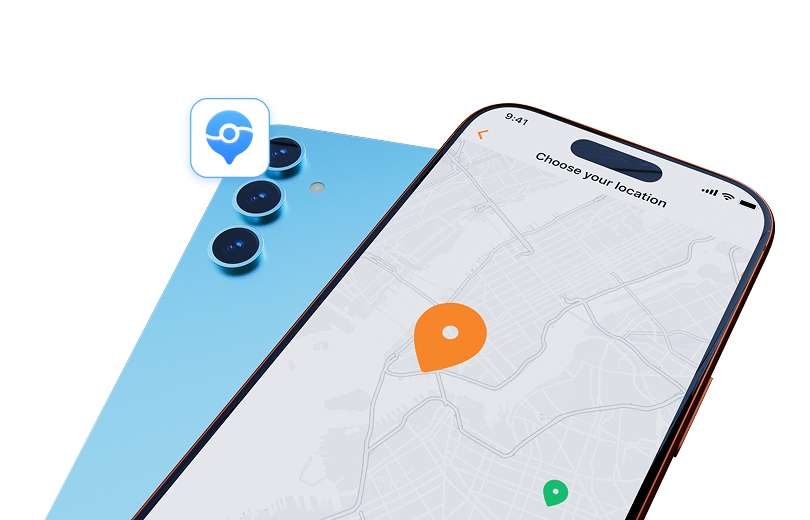
Teleport your device anywhere instantly with one click.


 100% Security Verified | No Subscription Required | No Malware

 :

 ChatGPT
 Perplexity
 Gemini
 Claude
 Grok
Can I use a mock GPS provider on my Samsung S8?
Question raised by Jack in the original Samsung guide

A Samsung phone can use Android's mock-location setting for GPS testing, but that does not make every app accept a fictional position. Jack's original question concerned playing Pokemon Go between classes. The important distinction is that Android's developer feature and a game's compatibility or account rules are separate matters. A working test coordinate is not a guarantee of additional catches or unrestricted gameplay.
The setup involves enabling Developer options, choosing a GPS-testing app, and appointing it as the mock provider. You normally do not need to root the phone for that standard route. This guide explains the preparation, seven selection checks, and three-stage procedure, with the original Samsung screenshots retained as references rather than promises that every One UI version has identical controls.

In this article
Part 1: What a Samsung mock GPS provider actually does
A mock provider supplies test location data instead of the position the phone would ordinarily report. You choose coordinates in an app, and compatible software may then receive that simulated position. The phone itself has not moved, its GPS receiver has not transported you, and a displayed map pin is not evidence that you visited the selected place.
Android exposes this function for development and testing. For example, an app developer can examine whether a location-aware screen behaves properly in another city. The same setting may also affect weather, nearby search, or social features, which is why the effects should be checked outside your original target app.
Do not confuse GPS coordinates with network location or service eligibility. A mock GPS APK does not, by itself, change an internet connection's IP address, Netflix account region, billing details, or a dating service's subscription rules. Games and other services may detect simulated data or prohibit its use. Claims that a mock provider automatically unlocks all those restrictions go beyond what the setting does.
Part 2: Prepare the phone and understand the side effects
The relevant option is usually hidden until Developer options is enabled. Revealing that menu does not require changing every advanced setting. Keep the exercise narrowly focused: enable the menu, select the intended mock provider, and leave unrelated networking, rendering, and debugging controls alone.
- Expect different app results: two apps can interpret the same reported location differently. One may refresh immediately while another uses cached information or refuses the simulated position.
- Protect ordinary positioning tasks: maps, weather, local search, and trusted-person sharing can show misleading results during a test. Avoid using the phone for real navigation while a fictional coordinate is active.
- Plan the reset before starting: learn where the app's stop control is and how to clear the mock-provider selection. Afterwards, verify an actual position rather than assuming an uninstall instantly resets everything.
- Watch resources: a continuously running simulation can add battery and memory usage. Stop unnecessary background activity instead of leaving a test running indefinitely.
- Check permissions: examine location and background access requests. Permission to simulate GPS is not a reason to grant access to unrelated personal data.
- Keep store availability separate: an app being unavailable in Google Play can depend on device compatibility, account region, or other rules. Changing a GPS pin alone is not a dependable fix.

For a managed school or work phone, the developer menu may be restricted by its administrator. Do not treat that restriction as an app fault or assume a random APK can safely bypass it. Use a personal test device or obtain the appropriate permission.
Part 3: Seven checks for choosing a mock GPS app
Search results for mock GPS, mock GPS Pro, and fake location apps can contain near-identical names. Evaluate the publisher and behavior, not just the first listing or an attractive map screenshot. The original guide's selection criteria remain useful when applied to your actual Samsung model and Android release.
- Device compatibility: compare the listing's requirements with your phone's Android version. A successful installation does not establish that the provider works correctly, so plan a short map test before relying on it.
- Download source: prefer the publisher's legitimate store listing over an unknown mock GPS APK mirror. Store distribution is a useful starting point, not proof that every permission request or marketing statement is trustworthy.
- Rooting requirements: the standard Developer options method does not inherently require root. If an app demands root or system-folder changes, recognize that as a different, more invasive process and consider a standard provider instead.
- Location privacy: read the data-safety information and permissions. An app that changes your coordinates may still collect location or other data; simulation and protection from tracking are not the same capability.
- Real cost: inspect ads, subscriptions, trial limits, and optional purchases. A free edition can be sufficient for a basic test, while a paid label such as Pro does not guarantee app compatibility.
- Target-app behavior: verify the specific use case. Support for a map app does not prove support for a game, streaming service, or dating app, and technical acceptance does not override the service's rules.
- Recent user reports: look for feedback mentioning your device family, current Android version, stopping behavior, and support quality. Repeated reports of stuck locations matter more than an isolated enthusiastic rating.

Fake GPS location by Lexa is the example used in the original article. That is a reference to a particular app, not a new claim that it has been tested on every Samsung model. Its store description also warns that a mocked position can sometimes persist after uninstalling, making a restoration check especially important.
Part 4: Configure and test mock GPS on Samsung
Complete these stages in order. The first reveals Android's developer controls; the second chooses the provider; the third starts and ends a controlled simulation. Older screenshots may use Allow mock locations, while newer Android versions generally ask you to select a mock-location app.
Step 1 Enable Developer options
Open Settings > About phone > Software information and locate Build number. Tap it seven times, then enter your device credential if asked. Some older Samsung models place the entry under About device instead. Look for the confirmation that developer features are enabled.

Return to the main Settings list and open Developer options. Keep its main switch enabled. Locate the mock-location entry, but do not select an unrelated app or change other developer settings merely because the older screen shows additional switches.

Step 2 Install and appoint the provider
In Google Play, identify the intended app and verify its publisher. The source example is Fake GPS location by Lexa; another trustworthy testing provider may have different labels or controls. Install the app only after reviewing the compatibility and privacy checks above.

Go back to Settings > Developer options > Select mock location app and choose the provider you installed. This selection authorizes that app to supply test locations. If the app is missing from the list, confirm its installation and requirements rather than selecting something else at random.

Step 3 Start the test, verify it, and stop
Open the chosen provider. Search for a location or move its map to the desired point, place the pin, and use the start or play button. Check a normal mapping app to see which coordinates the phone is reporting before interpreting results in another service.

When finished, press the provider's stop control and clear its selection in Developer options. Give normal location services time to obtain a fresh position and check the map again. If the old coordinate remains, follow the app's documented recovery instructions; uninstalling alone may not immediately clear a cached or mocked position.
Keep a note of your phone model, Android version, app publisher, and the result of the restore check. Those details are more useful for troubleshooting than a general claim that an app worked on someone else's Samsung. A failed result in one service should not be answered with promises of universal compatibility.
Dr.Fone - Virtual Location
 Set your map route to simulate GPS movement.
- Set your wanted movement speed.
- HD and large map view to check location.
- Fake GPS location to anywhere.
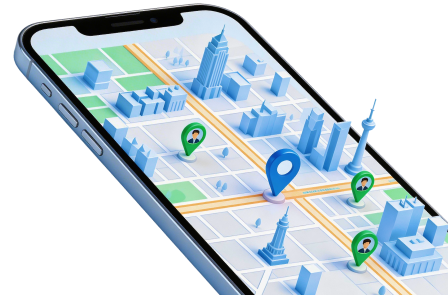
A desktop-managed alternative offers a larger map, destination search, and route planning. Dr.Fone - Virtual Location provides teleport and simulated movement controls, including adjustable speed and stops, for supported iOS and Android configurations. Check the current edition and your particular Samsung system before treating that general platform support as support for a specific app.
For this Samsung article, the Pokemon Go limitation is essential: the current official product page explicitly states that its Android offering does not support Pokemon Go. The old promotional list must not be interpreted as an Android game-compatibility guarantee, even though a separate iOS article discusses that game.
Step 1 Check and connect a supported device
Install the appropriate desktop edition and follow its device-connection prompts. Use your own unlocked phone and approve only the connection permissions required by the documented workflow.
Step 2 Choose the test destination
Open Virtual Location, select Teleport Mode, and search for a place or coordinates. Review the pin and confirm with Move Here. Route controls are a separate option when you need to test movement rather than a single stationary point.
Step 3 Verify the result and restore
Inspect the reported location in a map app, then test only a compatible, permitted use case. End the session using the software's instructions and restart the device when prompted to restore real positioning.
The related source articles on Pokemon Go, Snapchat, Instagram, and Facebook concern different scenarios. Their inclusion is not a claim that one Samsung GPS method works with every service or defeats its account protections.




Conclusion
Use Samsung's mock-provider setting for a limited, verifiable location test: enable Developer options, install a trustworthy provider, select it, start the simulation, and confirm the reset afterwards. Choose software by compatibility and documented behavior rather than promises about restricted content or games. A changed coordinate should never replace accurate positioning for navigation, emergency situations, or people who rely on your shared location.
FAQ
1. Where is Build number on a Samsung Galaxy phone?
It is usually under Settings > About phone > Software information. Tap Build number seven times to reveal Developer options, subject to the phone's authentication and management restrictions.2. Does standard Android mock GPS require rooting?
No. The normal testing route uses Select mock location app in Developer options. An app asking for root is proposing a different workflow with additional risks.3. Can Dr.Fone - Virtual Location run Pokemon Go spoofing on Samsung?
The current official product page says its Android offering does not support Pokemon Go. General Android location simulation must not be presented as support for that game.4. Why is my phone still showing the test coordinate?
The provider may still be running, or an app may be displaying an old position. Stop the simulation, remove the mock provider, refresh normal positioning, and follow the provider's recovery guidance if the problem persists.
 Add Wondershare Dr.Fone as a preferred source on Google