 Teleport your device anywhere instantly with one click.


 100% Security Verified | No Subscription Required | No Malware


 :

 ChatGPT
 Perplexity
 Gemini
 Claude
 Grok
GPS JoyStick lets an Android device supply test coordinates through a floating joystick, map points, and saved routes. Start with its current setup wizard and Android's mock-location selector rather than downgrading Google Play services to match an old tutorial. For iPhone, the Android APK is not the appropriate installation; a supported desktop-controlled location tool uses a different workflow.
This guide preserves the original four topics and screenshots while distinguishing current setup from legacy workarounds. The navigation's old 'bypass the blacklist' wording identifies the source topic, not a reliable promise: cloning an app or changing GPS cannot reverse a Pokémon GO sanction or guarantee accepted play.
In this article
Part 1: What the GPS JoyStick App Can Do
GPS JoyStick by The App Ninjas is an Android testing utility with an overlay control for changing simulated coordinates. A map point represents a position, while joystick or route input produces movement through successive coordinates. The current store description frames it as a way to test location-based applications.
The original assertion that it has the 'best algorithm' is promotional language, not a result of comparative testing. Likewise, realistic-looking movement is not evidence that another app cannot distinguish test data from actual GPS information. Test a permitted application and verify the outcome instead of assuming universal compatibility.
- Directional control: point the joystick in a direction to move the reported position, or enter a coordinate for a stationary test.
- Map selection: choose a starting point or another destination on the map rather than physically moving the handset.
- GPX handling: the current listing describes importing and exporting locations, routes, and custom markers.
- Route controls: create a path from several points, then pause, resume, loop, or reverse its playback as appropriate.
- Overlay customization: change the joystick's size, appearance, and opacity to fit the test screen.
- Distance and cooldown display: inspect the provided information, but do not interpret a timer as a guarantee against game enforcement.
- Visibility controls: show or hide the floating joystick through the notification controls. Hiding an overlay does not make simulated data undetectable.
- Three adjustable speeds: configure movement rates for your test instead of assuming one speed suits every application.
Drawbacks and reliability limits
The source reports confusing setup, sessions stopping after a short time, and poor results in some location-based games. These are reported experiences rather than a new controlled test. Permissions, background restrictions, Android version, and target-app checks can all affect the result. A utility can work correctly while an app receiving its coordinates refuses to use them.
Advanced settings demand more technical judgment than dropping a pin. If you only need to limit location access in an ordinary app, inspect that app's permissions first; spoofing is not the only response to an unwanted location request, and it does not replace privacy settings.
Part 2: Set Up GPS JoyStick Without Mistaking Old Instructions for Current Requirements
Check Settings > About phone for Android version and Android security patch level. Manufacturers may put these fields inside Android version or Software information. Record the values before troubleshooting, because an old patch-specific walkthrough cannot establish compatibility for a different phone.
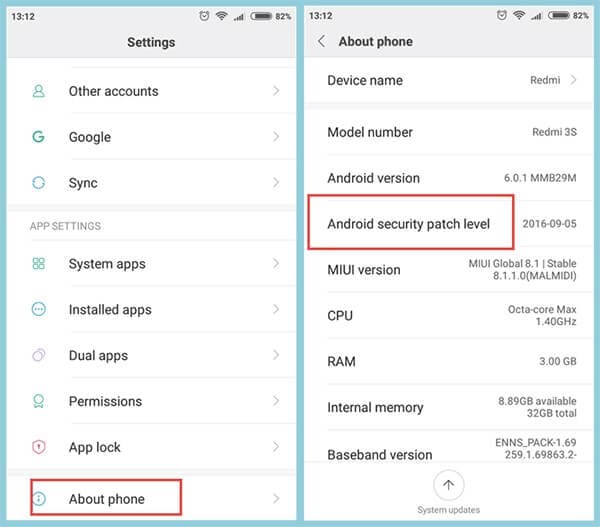
The security patch level is not the date when you personally installed an update. The source's dividing date, March 5, 2017, is a historical Android patch reference, not a current guarantee of app compatibility. Android's corresponding security bulletin confirms that patch level and encourages users to accept security updates.
For an ordinary supported test, install the legitimate app, complete its Setup Wizard, allow the needed overlay permission, and select GPS JoyStick in Developer options > Select mock location app. The developer's current setup page says most apps work with this basic configuration. Use Setup & Help to rerun the wizard if necessary.
2.1 Android 6.0 and Later: Understand the Newer-Patch Legacy Branch
The source's longer branch depended on Google Play services 12.6.85 or earlier. Its instruction to skip directly to a later step applied only to that particular legacy arrangement. The current GPS JoyStick developer documentation says this downgrade approach is extremely unlikely to work on devices updated beyond that old era. It is not a suitable default setup in 2026.
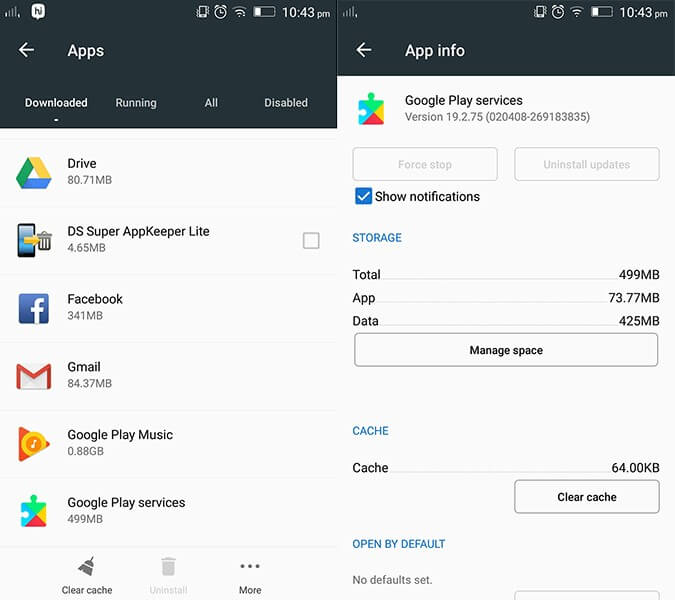
You can inspect the installed Google Play services version in Settings > Apps > Google Play services > App info. That is a diagnostic check, not an instruction to replace it. The original screenshot is retained to explain which component the old guide referred to.

The old sequence next tried to prevent changes by turning off Play Store auto-updates. Its screenshot shows the former side-menu route to an auto-update setting. Do not copy that as a requirement for using a joystick; keeping application updates disabled can leave important fixes unapplied.
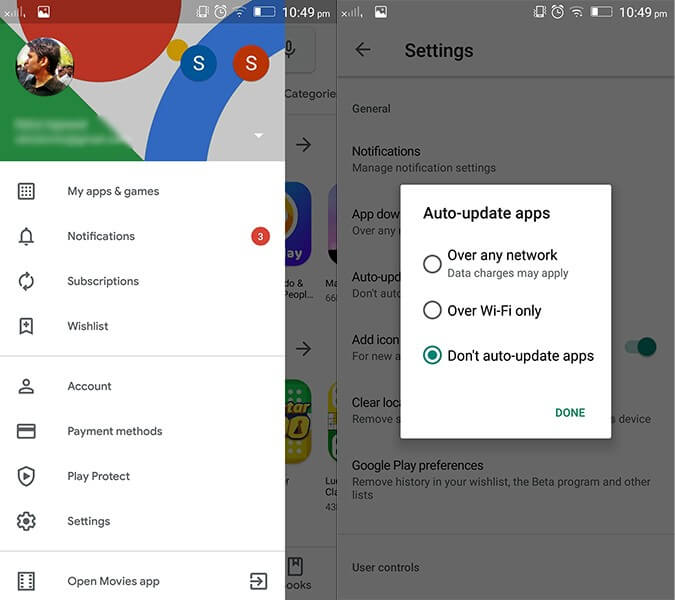
It then pointed to an older Google Play services APK at https://www.apkmirror.com/apk/google-inc/google-play-services/google-play-services-12-6-85-release/, advised matching the Android variant, and postponed installation until other changes were complete. This is a source reference for understanding the old process, not a recommendation to sideload or execute that system component.
Another stage disabled Find My Device under Security & Location. That weakens a useful device-recovery function and is not part of the ordinary setup wizard. Keep recovery protections available on your everyday phone rather than following an old workaround blindly.
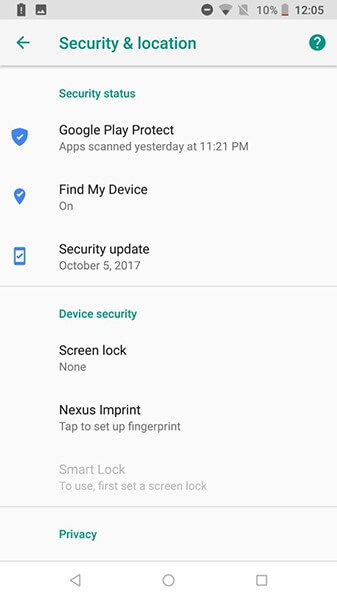
The sequence also attempted to uninstall Google Play services updates and, if blocked, deactivate Android Device Manager under Device Administrators. It then installed the older package and rebooted. These are consequential system changes, not harmless joystick preferences. The source also blurred 'Google Play' and 'Google Play services'; they are not interchangeable app names.
What remains relevant to a basic test is selecting the actual mock provider. Enable Developer options if required, open its mock-location selector, choose GPS JoyStick, and return to the app. Do not change unrelated developer settings to make the screen look like the screenshot.
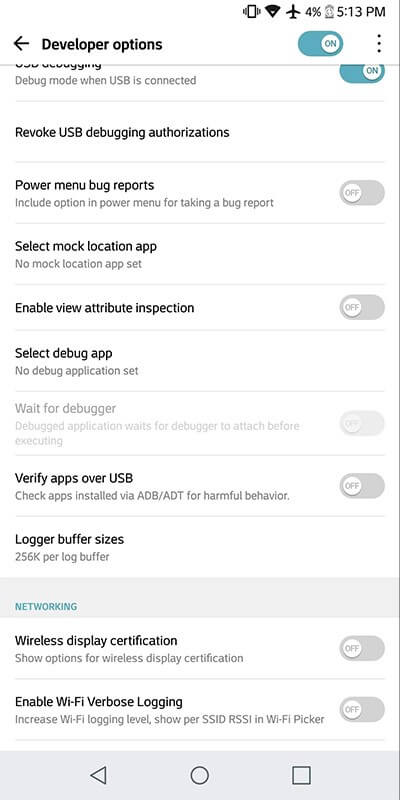
The legacy branch ended by enabling Suspended Mocking. The developer still documents this as an unlocked experimental option that briefly broadcasts and then pauses mock data. Its presence does not establish that it is needed for your test or accepted by another app. Start with the normal wizard instead of enabling advanced switches without a defined reason.

2.2 Android 6.0 and Later: Understand the Older-Patch Branch
The source's older-patch branch first selected GPS JoyStick in Developer options. The current developer documentation still distinguishes that normal provider choice from advanced modes. An obsolete security patch is not a benefit worth deliberately recreating on a phone that handles your daily accounts.

Its second action was enabling Indirect Mocking in the app settings. The developer describes that as a legacy approach involving the Network provider on older Android builds. It is not a universal setting for current phones, and the documentation treats it separately from System Mode. Keep the distinction between an experimental configuration and a supported result in the receiving app.

2.3 Android 4 or 5: Correct the Mixed-App Instructions
The final branch in the source refers to installing GPS JoyStick, opening developer settings, and then unexpectedly using an 'FGL pro' joystick. That is a different product name and makes the sequence unreliable as written. Do not combine instructions for separate apps just because both can display a joystick.

The original also proposed disabling Mock Locations after showing the overlay, followed by launching Pokémon GO. That is not a general Android 4/5 procedure and does not prove game support. Old Android versions may no longer be eligible for a current app; check the current store's installation result and use the exact utility's own instructions.
For a permitted test on a genuinely supported older device, establish the selected mock provider, start a stationary location first, then test joystick movement and stopping. Verify that real coordinates return after you finish. Do not assume that an overlay being visible means another app accepted the location.
Part 3: Why Privacy Mode Does Not Guarantee a Pokémon GO Blacklist Bypass
Two separate issues were combined in the original blacklist discussion: recognition of an installed app package and enforcement against a game account. GPS JoyStick's developer describes Privacy Mode as generating a clone with a different name, randomized package identifier, and recolored icon. That explains a software feature; it does not establish that game enforcement disappears.
The source's Quick Options screen offered a path to generating a private copy and installing it. Its next stages replaced the original app, removed other spoofing utilities, and used the generated package. Those steps are retained here as a description of the old claim, not as instructions for reversing a warning or avoiding the game's rules.
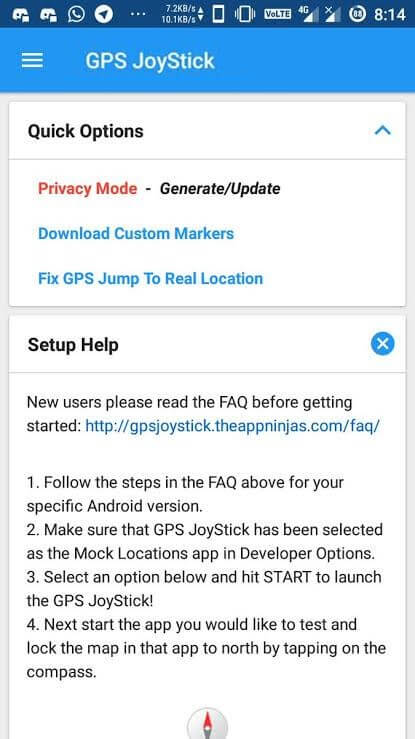
The source also described using an Update control to regenerate an existing private copy. Current developer guidance places Privacy Mode in its settings and explains the changed package identity. Neither a renamed package nor an updated clone removes a sanction already associated with an account, and a game may use signals beyond installed package names.

Pokémon GO's current gameplay fairness policy explicitly includes falsifying location as cheating and describes warnings, suspensions, and termination. It also says some conduct may lead to immediate termination rather than three guaranteed chances. If you believe enforcement is mistaken, use the official appeal process; do not treat a joystick setting as an account-recovery tool.
Part 4: Use an Appropriate GPS Joystick Workflow on iPhone
 Set your map route to simulate GPS movement.
- Set your wanted movement speed.
- HD and large map view to check location.
- Fake GPS location to anywhere.

An Android GPS JoyStick APK cannot be installed on an iPhone as though it were an iOS app. Dr.Fone - Virtual Location instead provides a computer-based map, location selection, routes, and movement controls for supported devices. Confirm current iOS and computer requirements before connecting.
The source mentions Pokémon GO, Ingress, Zombies, Run!, and Geocaching as location-aware examples. That list is not proof of universal current compatibility or permission to simulate movement in them. The official product page specifically excludes Pokémon GO from Android support; do not extend an iPhone-oriented example into an Android game recommendation. The retained video is a source reference, not an independent compatibility test.
Step-by-Step iPhone Connection and Location Test
Step 1 Install and connect
Install the appropriate desktop version, launch it, and attach your supported iPhone with a data-capable USB cable. Complete trust or device-preparation prompts shown by the software.
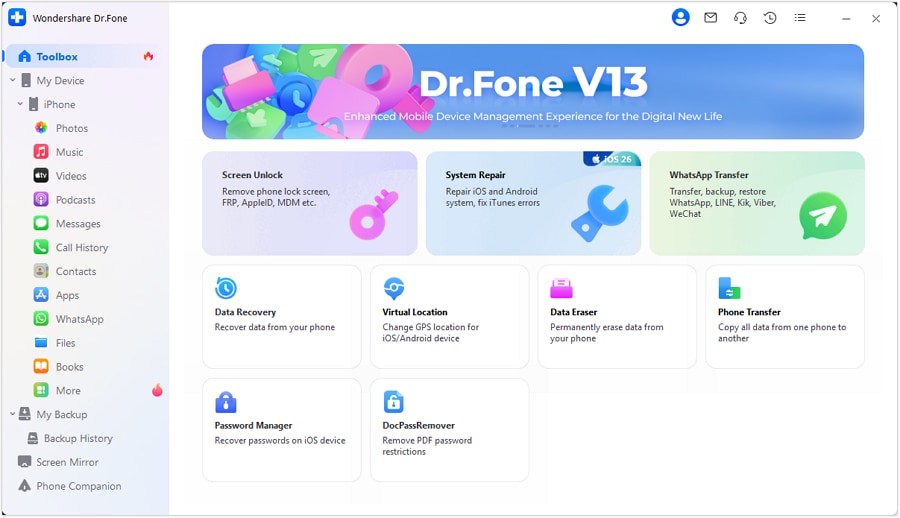
Step 2 Open Virtual Location
Choose the Virtual Location module and allow any required resources to load. The source screenshots show an earlier dashboard; follow the current module name when the layout differs.
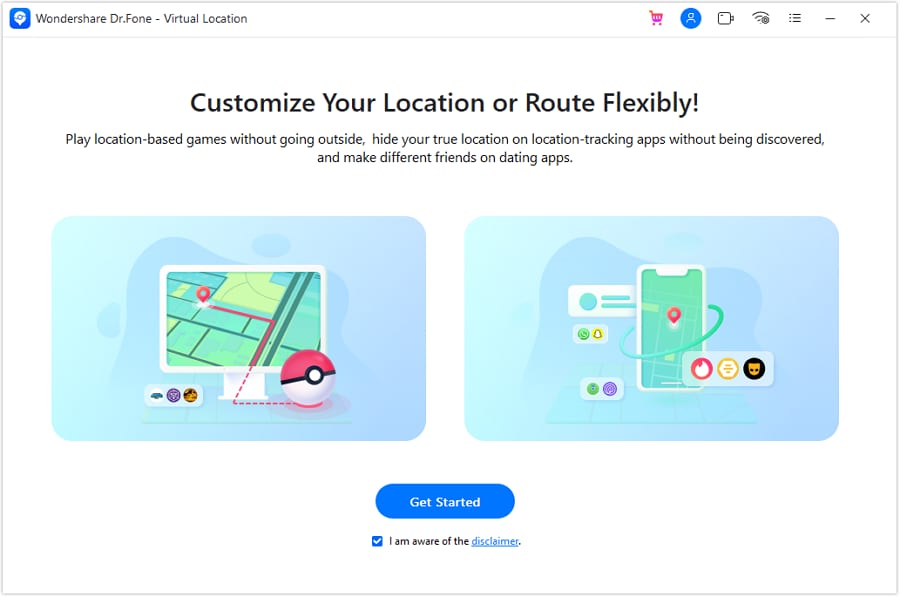
Step 3 Enter a test destination
Proceed through Get Started where shown, select Teleport Mode, and search for the address or coordinate. Inspect the result, then confirm Move Here. Selecting an address and applying it are separate actions.
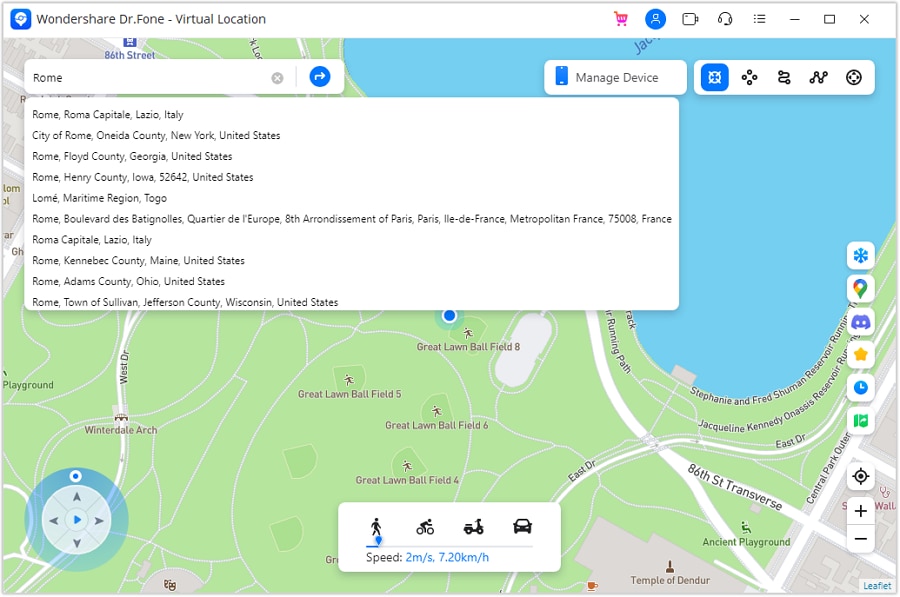
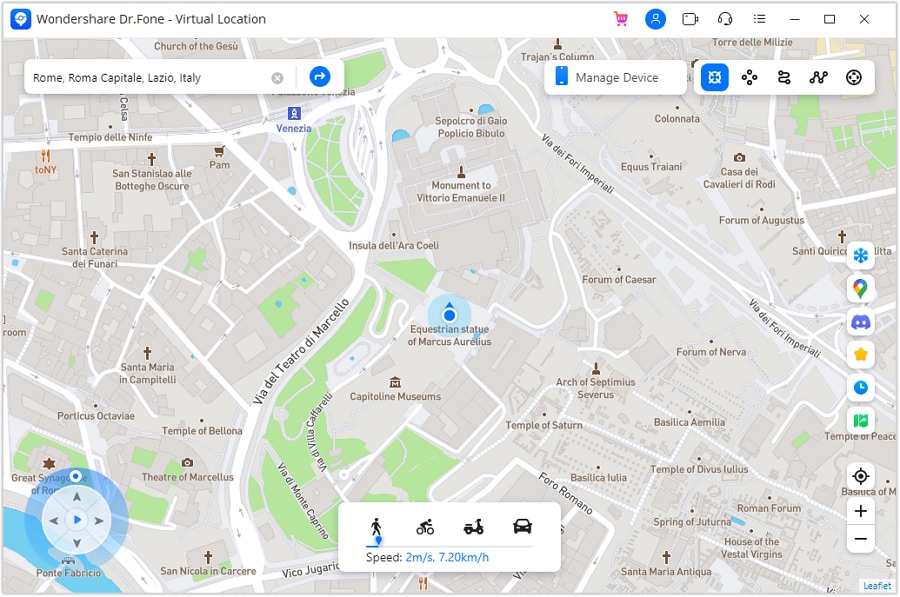
Step 4 Inspect the computer map
Check that the map marker and displayed location match the intended point. If they do not, correct the search before attempting a route or moving the joystick.
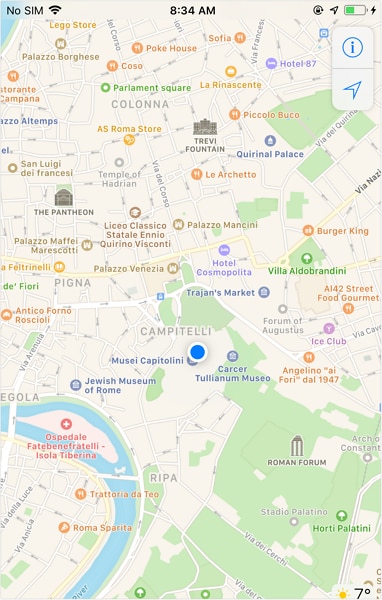
Step 5 Compare the handset's reported position
Open Maps on the iPhone and inspect its current-position marker. A matching result establishes what that map reports; it does not prove every app accepts the same simulated coordinate.
Step 6 Test movement and return to real coordinates
For a permitted movement test, choose a one-stop or multi-stop route, inspect the path, and set an appropriate simulated speed. Route playback is different from manual joystick steering. Stop the test and follow the device-restart prompt to restore the actual location. This replaces the source's unsupported instruction to gain Pokémon GO points without moving.
Before using navigation, ride-hailing, or another service that needs your real position, confirm that the handset has returned to its actual coordinates.




Continue from a fixed point to route or joystick testing
- Set your map route to simulate GPS movement.
- Set your wanted movement speed.
- HD and large map view to check location.
- Fake GPS location to anywhere.
Dr.Fone - Virtual Location also separates automatic route movement from manual joystick or keyboard control. Its official product page describes adjustable speed, route points, GPX import/export, favorite places, and history. These tools can make a supported test more repeatable without turning it into an approved game action.
This fixed product presentation replaces the old standalone promotional block, including its obsolete discount and broad game claims. There is no verified basis here for the original download counter, a universal game list, or an account-safety promise. The practical task is controlling and observing a test path on your own supported device.
Step 1 Select the appropriate movement mode
Use a route when you need repeatable waypoints, or the joystick controls when you need to steer manually. Check the starting point before movement begins.
Step 2 Configure speed and direction
Review the speed setting and use the available direction controls. The official page describes keyboard movement through W, A, S, D or arrow keys; select only the controls your installed version actually provides.
Step 3 Observe, stop, and restore
Watch the reported route in a permitted test app, pause or stop when the test is complete, and use the restart workflow to restore actual coordinates. Recheck real-position reporting instead of assuming that closing a window alone completed restoration.
Keep GPS testing separate from game account decisions: neither route planning, a cooldown display, nor a joystick can guarantee that another service allows simulated movement.
Conclusion
Use GPS JoyStick's current Android setup wizard for a supported test and treat patch-specific downgrade instructions as legacy material, not prerequisites. Preserve device protections, confirm the actual mock provider, and distinguish an overlay from accepted location data. On iPhone, use a supported workflow rather than an Android APK, and always verify restoration of the real location when testing ends.
FAQ
1. Can I install the GPS JoyStick Android APK on an iPhone?
No. The Android package and an iPhone workflow are different. Check the requirements of a supported iOS-compatible location tool rather than trying to install an Android APK.2. Must I downgrade Google Play services to use a joystick?
Not for ordinary setup. The current developer documentation starts with its setup wizard and mock-provider selection, and warns that the old 12.6.85 downgrade approach is not viable for most current devices.3. Does Privacy Mode remove a Pokémon GO warning or ban?
No reliable account-enforcement bypass is established. Privacy Mode changes an app copy's identity, while the game's fairness policy treats location spoofing as cheating. Use official support for an appeal.4. What should I check if the joystick disappears or the position resets?
Review required permissions, the selected mock provider, whether the session is still running, and background restrictions. If the target app rejects test data, do not assume cloning or weakening device protections will fix it.
 Add Wondershare Dr.Fone as a preferred source on Google



