 Teleport your device anywhere instantly with one click.


 100% Security Verified | No Subscription Required | No Malware


 :

 ChatGPT
 Perplexity
 Gemini
 Claude
 Grok
To enable location services on Android, open Settings, find Location, and turn on Use location or the equivalent switch. Then review which apps can access your position. The device-wide switch, an app's permission, and Google's Location Accuracy service are separate controls, not three names for the same setting.
These controls support navigation, local weather, nearby searches, and some lost-phone functions, but availability depends on the device and service configuration. This guide preserves the original enablement steps and explanations of High accuracy, Battery saving, Device only, and Emergency Location Services while distinguishing older Android menus from current settings. A separate GPS simulation tool is not needed just to turn normal location services on.
In this article
Part 1: How to Enable Location Services on Android
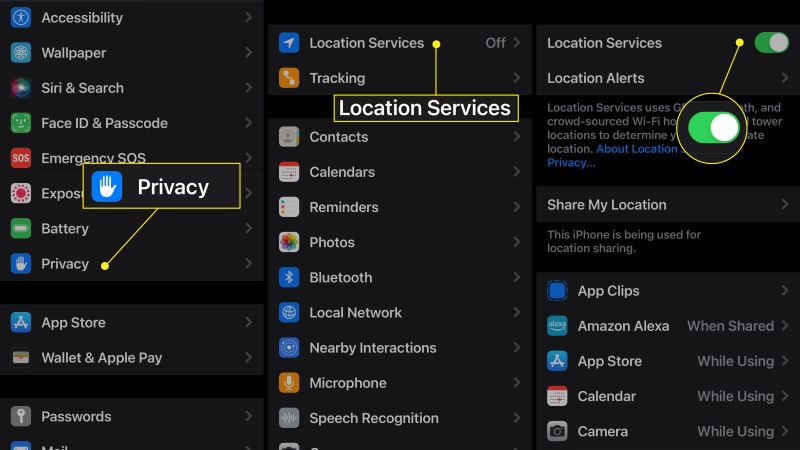
Menu names vary by Android release and manufacturer. If your phone does not match the screenshot, search Settings for Location rather than looking for a mode selector that may not exist. You can usually also reach the device setting through the Location tile in Quick Settings.
-
Step 1 Open the phone's Settings
Use the system Settings app on the device whose location you want to manage. App-specific controls alone cannot replace the device-wide switch.
-
Step 2 Find Location
Open Location, or use Settings search if it is grouped under Security or another manufacturer-specific menu. Check that you are editing the correct profile if the device has separate user or work profiles.
-
Step 3 Turn on Use location
Enable the master location switch. To stop ordinary app access to device location later, return here and turn it off. This affects location-dependent functions; it does not erase older records or remove IP-based regional estimates.
-
Step 4 Choose the controls your Android version provides
Older versions may show High accuracy, Battery saving, or Device only under Mode. On newer phones, inspect Location services, Location Accuracy, and App location permissions instead. On Android 12 and later, supported permission screens also distinguish precise from approximate access.
-
Step 5 Review prompts and test the intended app
Read any consent request before agreeing, then open a map or another app that needs location. Grant an appropriate permission, such as access while using the app, where offered. If the device switch is on but the app is denied permission, it may still be unable to show your current position.
Wondershare Dr.Fone: When You Need a Test Location Instead
 Set your map route to simulate GPS movement.
- Set your wanted movement speed.
- HD and large map view to check location.
- Fake GPS location to anywhere.

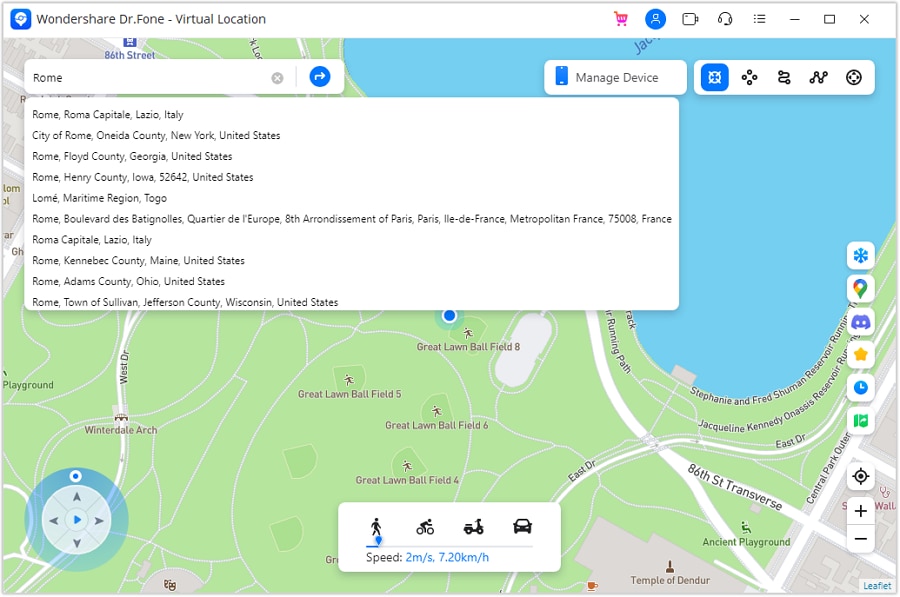
Dr.Fone - Virtual Location is relevant when you need to simulate coordinates on a supported iOS or Android phone, not when you simply want to enable Android's normal location service. Its desktop map provides Teleport Mode and route simulation, with destination and movement controls for an authorized location test.
A virtual point does not replace Android permissions, encrypt traffic, or repair every inaccurate GPS reading. Check the current device and system requirements before using it, and do not assume that another app will accept simulated data. For navigation or emergency use, keep or restore the genuine device location.
-
Step 1 Connect the supported phone
Open the desktop software, select Virtual Location, attach the device, and complete the legitimate connection prompts. Follow the current on-screen prerequisites for your system.
-
Step 2 Select a specific destination
Activate Teleport Mode, search for your intended point, inspect the map, and select Move Here to confirm. Choosing a map view or recentering it alone is not the same as applying a new position.
-
Step 3 Verify the result and restore afterwards
Check the phone's map app before drawing conclusions about another service. Once the authorized test ends, follow the restore prompt; the official guide describes restarting the device to return to its actual position.
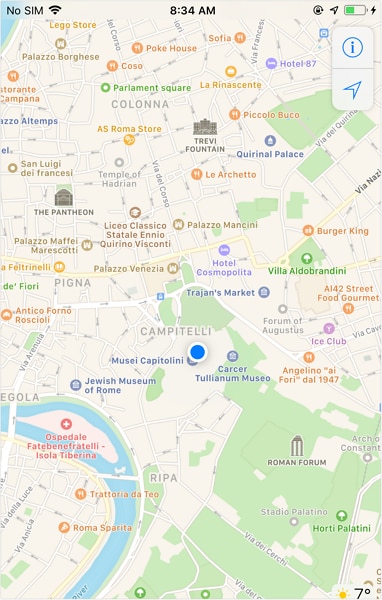
Confirm the real map position again before using turn-by-turn directions or any task that depends on where the phone actually is. GPS simulation is a separate workflow from the Android settings explained below.




Part 2: Understanding Android's Location Controls
Google's current documentation places the three named location modes in its guidance for older Android releases. On modern phones, Location Accuracy controls the sources used to estimate position, while app permissions control access. Wi-Fi and Bluetooth scanning, account Timeline, and location sharing are additional settings with their own effects.
High Accuracy
On older versions, High accuracy combines GPS, wireless-network information, and available sensors to improve a position estimate. Its modern counterpart is not necessarily a mode with the same name: Google's Location Accuracy service uses available Wi-Fi, cellular, GPS, and sensor signals to estimate location more quickly and accurately, especially when satellites are obscured.
This can help with navigation in built-up areas or indoors, but it does not promise a perfect address or indoor fix. Open the Location services or Location Accuracy setting to review it. On a supported modern phone, an individual app can still be limited to approximate location even while the device's Location Accuracy service is enabled.
Battery Saving
The older Battery saving location mode uses lower-power location sources such as Wi-Fi and mobile networks rather than GPS. It is not a guarantee of street-level precision, and it should not be confused with the phone's separate system Battery Saver feature.
If that mode is absent on your device, do not install a tool just to recreate the old menu. Review which apps have background access and choose permissions appropriate to their purpose. The balance between battery use and useful position information depends on the phone, signal conditions, and app behavior; there is no universal savings figure.
Device Only
The legacy Device only mode relies on GPS and device sensors rather than Google's network-assisted location estimates. It is a receiving function, not an internet connection, and typically benefits from a clearer view of the sky. Buildings and other obstructions can make a fix slower or less accurate.
On a modern phone, disabling Location Accuracy can limit the sources used to GPS and available device sensors, but that is not the same as turning off Location altogether. Check the actual manufacturer's controls. Do not select this mode on the assumption that it will always save battery or reliably outperform a combined estimate.
Emergency Location Services
Emergency Location Services can help provide a device's location when you call or text a supported emergency number. Its availability depends on the country or region, mobile network, and responder support; 911 is an example, not the emergency number for every location.
Google explains that emergency services or a mobile carrier can still send location to responders during an emergency call or text even when the ordinary Location switch is off. Therefore, that switch is not a promise that no emergency-location information can be sent. Review the Emergency Location Service setting separately where available, and do not disable safety functions merely to troubleshoot a map display.
Conclusion
For everyday Android location settings, start with the device's Location switch, then inspect the relevant app permission and Location Accuracy. Treat High accuracy, Battery saving, and Device only as version-dependent legacy labels, not mandatory menus on every phone. Turning Location off can disrupt maps, sharing, and finding a lost device, while IP-based regional information and emergency-location exceptions remain separate. Use GPS simulation only when that is your actual task, and restore the real position afterwards.
FAQ
-
1. How do I turn on location services on Android?
Open Settings, find Location, and enable Use location or the equivalent switch. Then allow the app that needs your position to access it under App location permissions. -
2. Why can I not find the High accuracy mode?
That label belongs to older Android menus. A newer phone may offer Location Accuracy under Location services instead, with separate controls for each app's precise or approximate access. -
3. Does turning Location off hide every location signal?
No. Google notes that IP-based local results can remain, and emergency services or a carrier can still provide location to responders during supported emergency calls or texts. -
4. Is a GPS changer required to manage normal permissions?
No. Android's system settings control ordinary location access. A compatible GPS simulator serves a different purpose: testing a chosen virtual position on a supported device.
 Add Wondershare Dr.Fone as a preferred source on Google



