Recover photos, messages, WhatsApp, and more — no backup
needed.
Recover photos, messages, WhatsApp, and more — no backup
needed.

 100% Security Verified | No Subscription Required | No Malware

 :
: 
 ChatGPT
 Perplexity
 Gemini
 Claude
 Grok
Grok
Safeguarding your digital life is more crucial than ever, and knowing how to execute a proper iPhone 17 backup is the foundation of robust data security. When you store precious memories, essential work documents, and sensitive settings on your device, having a secure copy guarantees that unexpected hardware failures, device theft, or accidental damage won't lead to permanent data loss. Many users assume that creating a comprehensive backup for the newest iOS ecosystem is a convoluted technical chore that requires hours of troubleshooting. However, modern data management solutions have streamlined this workflow significantly.
Whether you are preparing to update to the latest firmware or simply securing your files against unforeseen digital hazards, this extensive guide explores the most effective techniques to backup iPhone 17 on iOS 27. From wireless cloud synchronization to robust third-party desktop managers and traditional Finder/iTunes methods, we will walk you through each step. Review our tailored recommendations to find the exact backup method that aligns seamlessly with your specific daily requirements.
In this article
Part 1. Why Do You Need to Backup Your iPhone 17?
Before diving into the actual procedures to backup iPhone 17 iOS 27, you might find yourself wondering why this precautionary step is strictly necessary, especially when your device seems to be running flawlessly. A proactive backup strategy serves as a digital insurance policy. To help you understand the gravity of data preservation, here are the most critical reasons why backing up your data is indispensable.
- Guard Against Loss, Theft, or Destruction: Even the most cautious users can experience accidents. A dropped phone, sudden hardware failure, or theft can instantly wipe out years of digital history. Maintaining an up-to-date backup allows you to seamlessly restore everything to a new unit without missing a beat.
- Easy Device Upgrades and Transfers: Whether you plan to switch to a future model or replace a damaged iPhone 17, an existing backup makes migration practically invisible. It flawlessly retains your application layouts, background settings, and specific configurations just the way you left them.
- Secure Yourself from Buggy Updates or Betas: Installing a major iOS 27 release or participating in beta testing carries inherent risks, including compatibility bugs that might corrupt data. Having a recent archive ensures you can safely roll back your iPhone 17 to a stable state if the update malfunctions.
- Protection of Data That is Not Simply Synced: It is a common misconception that all files are automatically housed in iCloud. Many high-resolution media files, specialized app caches, and localized documents remain strictly on internal storage. Full computer or premium cloud backups trap this unsynced data safely.
- Flexibility and Resilience with Multiple Methods: Utilizing a hybrid approach—such as keeping an iCloud backup alongside a local computer backup—creates necessary redundancy. If one recovery avenue fails or cloud servers face an outage, your secondary backup steps in as a reliable failsafe.
Free IMEI Check for iPhone — Confirm iCloud/Activation Lock First
Skip the guesswork. Use Dr.Fone Unlock Online – Free & Ad-Free IMEI Check to verify your device in 1–60s, works worldwide and on mobile.
- Activation Lock & iCloud / Blacklist status
- MDM Lock & Carrier Lock status
- Warranty details, Full device info & Part Number
No ads • First check is free • Supports all regions & mobile devices
Part 2. The Best Way to Backup an iPhone 17 in Seconds with Dr.Fone Basic
Supported Data Types: Over 24 distinct categories including high-resolution photos, 4K videos, music libraries, podcasts, contacts lists, Safari bookmarks, app data, call histories, and more.
Creating a thoroughly secure iPhone 17 backup is incredibly efficient with the Wondershare Dr.Fone toolkit. This versatile software distinguishes itself by offering automatic and wireless functionality that fundamentally shifts how users handle their data. Once the initial backup is established, Dr.Fone utilizes incremental technology—meaning every subsequent backup exclusively records newly generated data. This dramatically minimizes storage consumption on your hard drive while ensuring absolute file recoverability. Furthermore, users can actively preview individual items before restoring them, bypassing the blind restoration process typical of native apps.
This application guarantees zero data loss during operations, adeptly bypassing the overwrite restrictions associated with default tools. By connecting via USB-C or configuring a Wi-Fi link, users can selectively isolate which data chunks to archive and where exactly they should be stored on the host computer. Unlike Apple's standard ecosystem, this software even facilitates transferring iPhone backup archives directly to newly acquired Android devices, unlocking unparalleled cross-platform freedom.
 Effortlessly manage data through preview, delete, export, etc.
- Transfer all data between devices.
- Robust backup solutions for reliable data protection.
- Mirror screens to PC for meetings, teaching, and control.
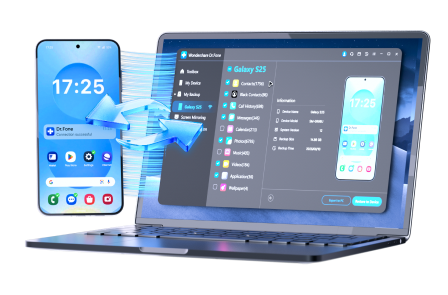
Guide on How to Back Up Data with Dr.Fone - Phone Backup
To effortlessly generate a highly secure backup of iPhone 17 iOS 27 locally on your computer, closely follow this simplified operational guide:
-
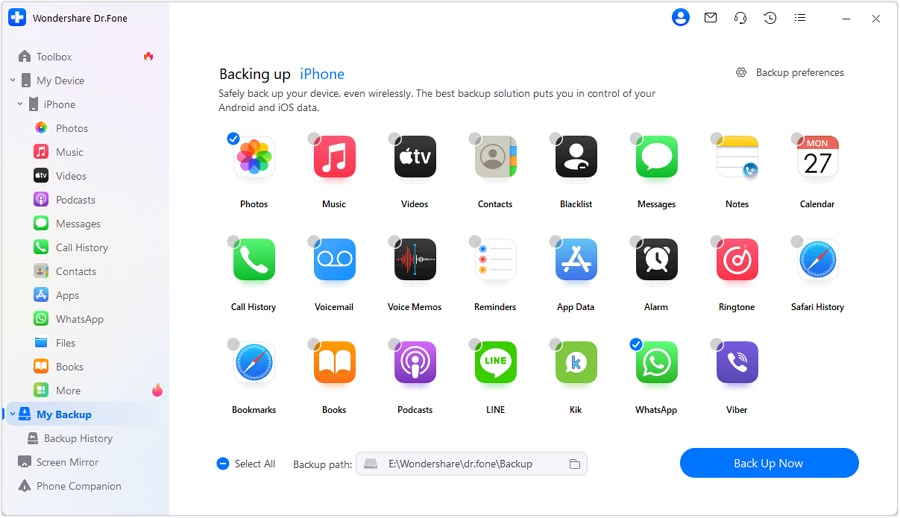
Step 1 Launch the Tool and Navigate to My Backup
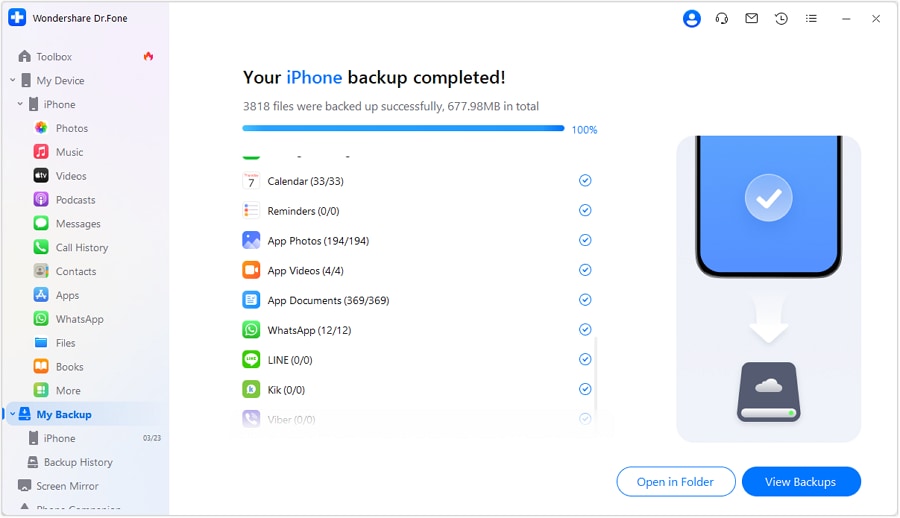
Begin by downloading and opening the Dr.Fone software on your PC or Mac. Access the main dashboard and click on the "My Backup" tab located on the left-side panel. Choose the specific file types you wish to secure, define your preferred local destination folder, and hit the "Back Up Now" button to initiate the sequence.
-
Step 2 Allow Automatic Data Detection and Processing
Once triggered, the application will instantaneously interface with your iPhone 17. It will actively detect the selected databases and safely copy them over to your PC monitor in real-time. Ensure your connection remains stable during this phase.

-
Step 3 Access and Manage Your Restorable Archive
Upon receiving the success prompt on your screen, click "View Backups" or "Open in Folder". This grants you direct access to intuitively explore, organize, or selectively restore your protected iOS 27 data elements without any restrictive barriers.
Why Choose Dr.Fone Phone Backup?
If you are debating the ultimate value of this third-party utility for your iPhone 17 backup needs, analyze the comparative matrix below to understand its technical superiority:
| Criterion | Dr.Fone – Phone Backup |
|---|---|
| Automation Features | Executes automatic, wireless background backups when connected to the same Wi-Fi network, alongside traditional high-speed cable syncs. |
| Cross-Platform Capabilities | Offers dedicated workflows to restore and export archived iOS data directly to Android devices without system conflicts. |
| Data Range Covered | Engulfs 24+ unique types including WhatsApp/LINE chats, voice memos, sensitive call logs, and granular application elements. |
| Backup Encryption | Fully supported; effortlessly safeguards passwords, health metrics, and other highly sensitive private items with robust encryption keys. |
| Incremental Storage | Smart incremental versioning heavily reduces disc space bloat; allows visual previews of prior versions before execution. |
| Selective Recovery | Provides surgical precision—restore only the text message or photo album you lost without overwriting your phone's current state. |




Part 3. How to Backup iPhone 17 iOS 27 Using iCloud
Supported Data Types: Comprehensive device settings, customized home screen layouts, iMessage logs, extensive photo libraries, app behavior data, purchased ringtones, Apple Watch configurations, and visual voicemail passwords.
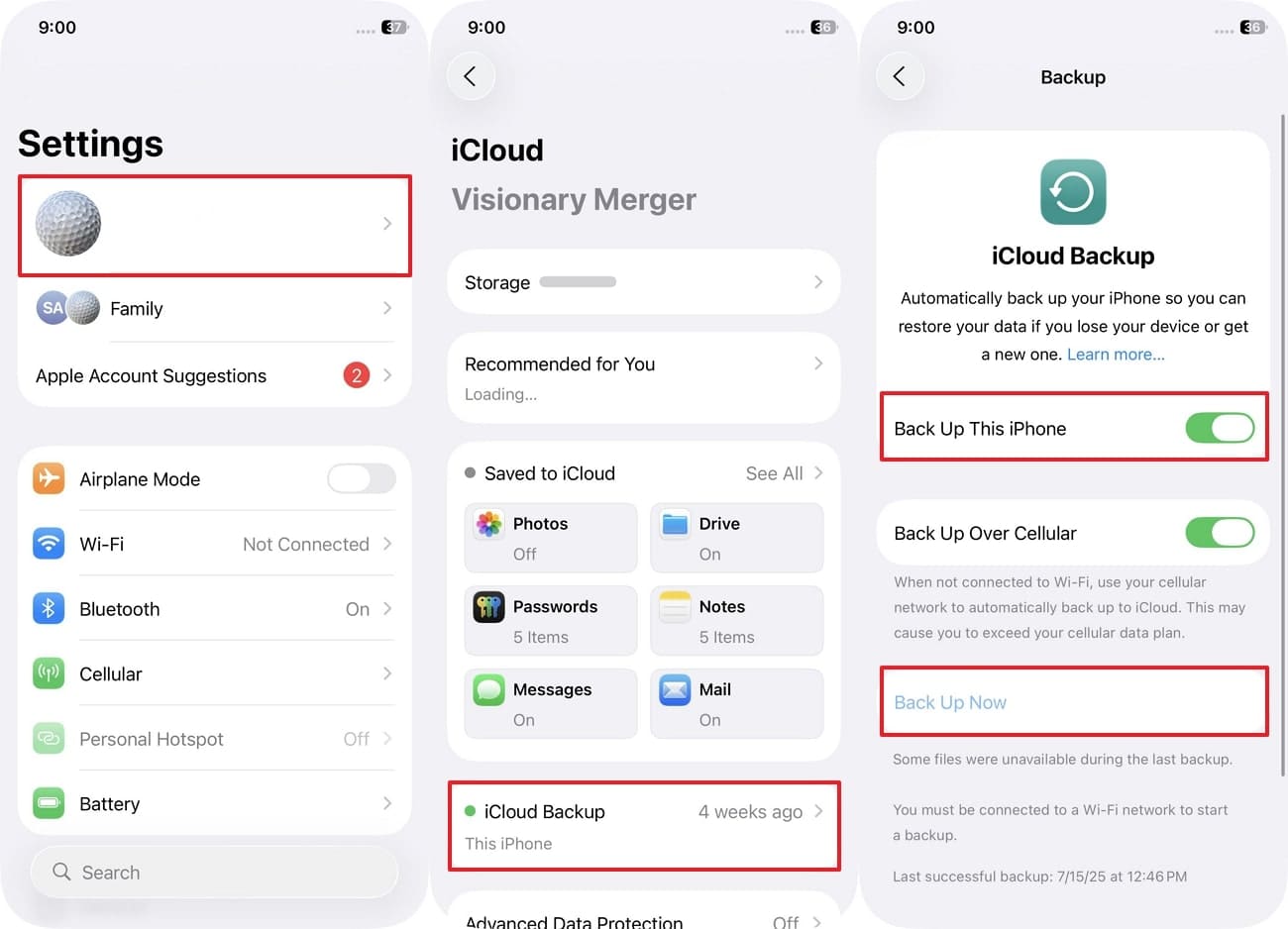
Leveraging Apple's native architecture to execute an iPhone 17 backup provides a deeply integrated, hands-off approach. When utilized effectively, iCloud captures continuous, periodic snapshots of your most critical data, enabling almost magical over-the-air restorations. Normally, this protocol is activated by default the moment you finalize your Apple ID sign-in process during initial setup. To manually control these cycles and inspect exactly when your last successful save occurred, follow the sequence below:
Step-by-Step Instructions: Unlock your iPhone 17 and open the central "Settings" application. Tap your Apple ID profile banner situated at the very top. Navigate down to the "iCloud" section and press on "iCloud Backup". Ensure the primary toggle marked "Back Up This iPhone" is switched to the green active state for automated daily synchronization. To force an immediate data push, simply tap the "Back Up Now" button while remaining connected to a strong Wi-Fi network.
Method Limitations
- Every Apple ID is capped at a strict 5GB of complimentary iCloud storage. Backing up a modern iPhone 17 invariably demands purchasing a monthly iCloud+ subscription plan to accommodate sizable photo and application loads.
- Due to strict firmware downgrade protections, attempting to push an iCloud backup iOS 27 onto a device running legacy software (such as iOS 18 or 17) is entirely unsupported and will trigger continuous boot loop errors.
📱 iPhone Frozen? Fix It in 3 Steps – No Data Loss!
Struggling with a frozen iPhone screen? 🤔 Our guide covers 6 common causes, step-by-step fixes for all models (iPhone 6s to iPhone 17), and safe data recovery. 98.6% success rate! ✨
Part 4. How to Create an iPhone 17 Backup via iTunes/Finder
Supported Data Types: Vital device parameters, network configurations, SMS/MMS threads, local camera rolls, granular app databases, complete website browsing histories, and localized widget arrangements.
For those who prefer keeping their data entirely off cloud servers, generating an iPhone 17 backup iOS 27 locally is highly achievable using iTunes on Windows (versions 8 through 11) or Finder on macOS systems (Catalina 10.15 and newer). This traditional technique leverages a physical, hardwired connection, effectively eliminating network latency and cloud subscription fees. Before engaging this method, heavily verify that your host PC or Mac possesses adequate internal storage to accommodate potentially hundreds of gigabytes of phone data.
Through Mac Finder
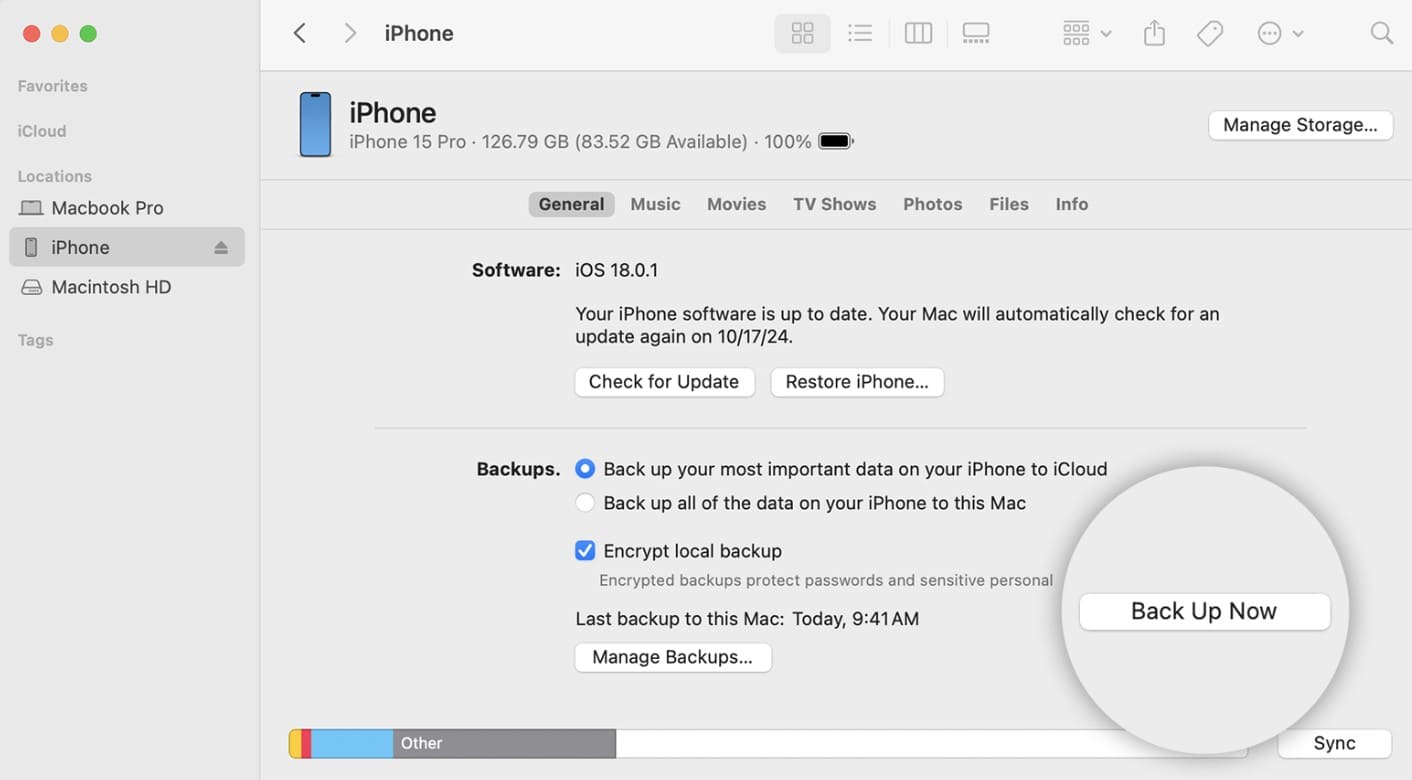
Step-by-Step Instructions: Attach your iPhone 17 to your Mac using a certified high-speed USB-C cable. Authorize the connection by tapping "Trust" on your handset screen. Open a new Finder window and locate your iPhone listed under the "Locations" sidebar on the left. Click on the device, navigate to the "General" properties tab, scroll to the backups section, and forcefully click the "Back Up Now" module. Once finalized, the timestamp adjacent to "Latest Backup" will dynamically update.
Through Windows iTunes
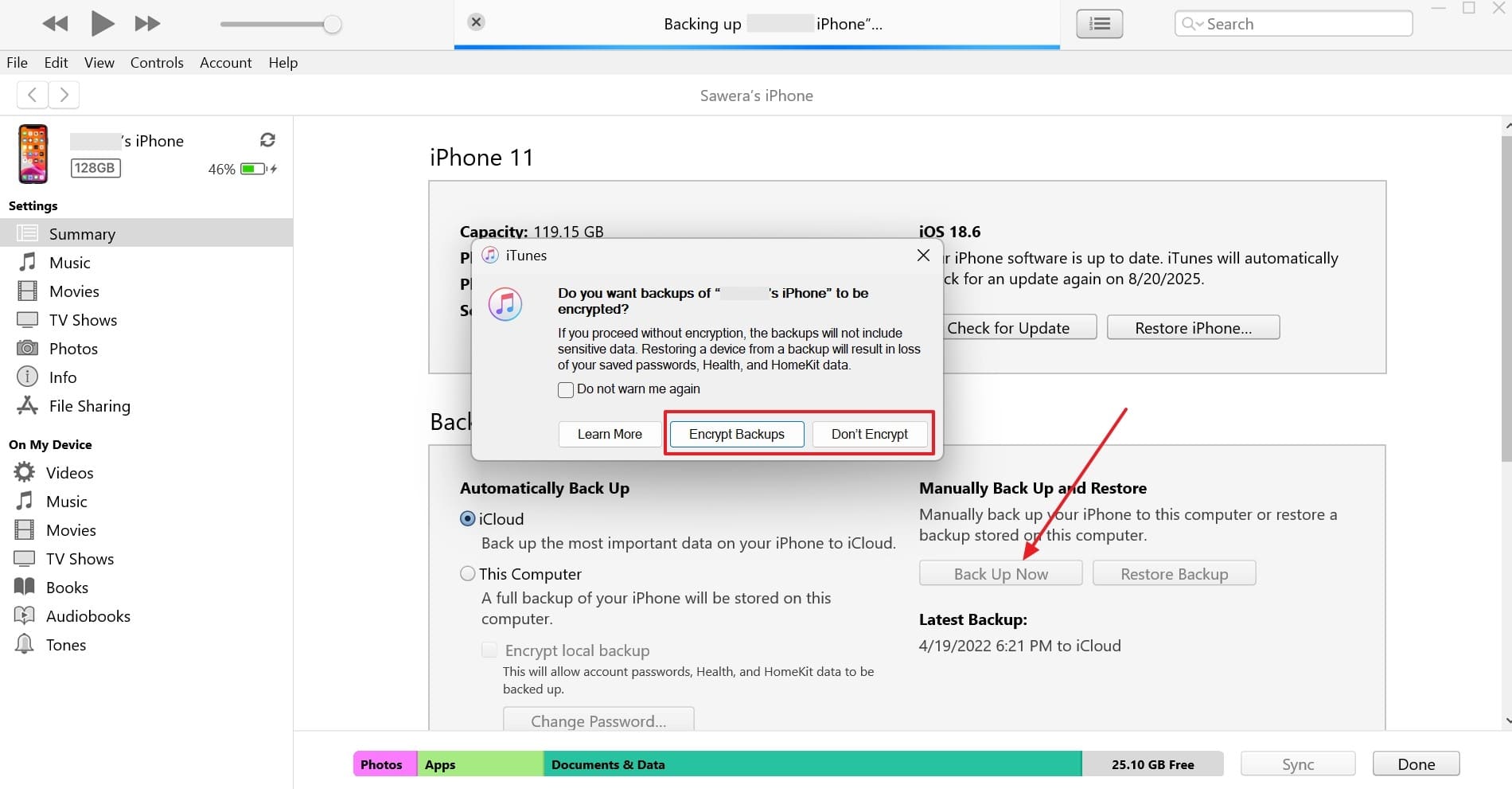
Step-by-Step Instructions: Boot up the latest iteration of iTunes on your Windows computer and physically connect the iPhone 17. Confirm "Trust This Computer" prompts on the mobile screen and input your designated passcode. Within the iTunes interface, click the small smartphone icon positioned near the upper-left toolbar. Inside the "Summary" tab, navigate to the "Backups" quadrant and select "This Computer". Press "Back Up Now", optionally engaging the "Encrypt local backup" checkbox if you wish to secure sensitive health or password data with a dedicated local password.
Method Limitations
- To conserve bandwidth and duplication, native local backups intentionally ignore re-downloadable ecosystem content such as Apple Music tracks, rented movies, or App Store binaries.
- Restoring from Finder or iTunes is an absolute, all-or-nothing process. Recovering a localized archive permanently wipes and overwrites the entire existing iOS ecosystem on the target device, forbidding selective extraction.
Conclusion
Ultimately, navigating the intricacies of how to effectively back up iPhone 17 models in 2026 is manageable once you comprehend your storage preferences and hardware limitations. This guide has dissected both standard Apple ecosystem protocols and highly specialized third-party desktop tools. If your primary goal revolves around hands-free convenience, iCloud remains a solid albeit storage-restricted choice. Conversely, for users demanding granular control, zero data overwrite capabilities, and vast cross-platform functionality, deploying Dr.Fone - Phone Backup stands out as the ultimate definitive safety net for your iOS 27 data.
FAQ
-
1. Can I thoroughly back up my iPhone 17 without relying on iCloud?
Absolutely. If cloud storage limits frustrate you, you can pivot to localized strategies such as Mac Finder, Windows iTunes, or versatile third-party desktop administrators. Software like Dr.Fone - Phone Backup excels here, securely storing over 24 distinct file configurations directly on your hard drive, allowing offline access and eliminating monthly subscription fees. -
2. How frequently should I establish a fresh iPhone 17 backup?
For optimal data security, professionals recommend initiating a manual local backup at least bi-weekly, or configuring daily automatic routines via Wi-Fi. It is particularly crucial to execute an immediate backup just before downloading major firmware patches, testing beta software, or traveling. This guarantees your digital archive never falls hazardously out of date. -
3. Does a standard backup automatically archive all my installed applications and system settings?
Yes, primary backup mechanisms capture deeply integrated data like custom system parameters, home screen arrangements, local message databases, and application data states. While standard tools restore this in an all-or-nothing manner, utilizing specialized managers like Dr.Fone grants you the distinct power to sift through the archive and extract specific components independently. -
4. What happens if I attempt to restore an iOS 27 backup to an older operating system?
Apple's infrastructure strictly prohibits backward compatibility for complete device restorations. If you generate an archive using iOS 27, it cannot be unpacked onto a device operating on iOS 18. In these complex cross-version scenarios, dedicated third-party backup software is often required to bridge the extraction gap without bricking the handset.
 Add Wondershare Dr.Fone as a preferred source on Google