 Effortlessly manage data through preview, delete, export, etc.

 100% Security Verified | No Subscription Required | No Malware

 :
: 
 ChatGPT
 Perplexity
 Gemini
 Claude
 Grok
Grok
I recently experienced a severe system crash and lost crucial business files. What is the most secure and reliable iPhone backup extractor to retrieve my files without fully restoring the device and overwriting existing data?
Sarah J., Small Business Owner

There are countless scenarios in 2026 where you might need to urgently extract data from your iOS device. Whether you accidentally deleted vital work documents, experienced an unexpected hardware malfunction, or simply need a safe way to transition information to a brand-new handset, having the ability to pinpoint and extract specific files is incredibly invaluable. Standard restore methods often force you to overwrite your current setup, which is far from ideal.
This comprehensive guide will dive into the most efficient techniques to bypass these limitations. We will examine professional-grade methods that empower you to seamlessly extract files from the iPhone, ensuring you never lose access to your most precious digital memories and records. If you are struggling with exactly how to extract data from iPhone securely, keep reading for the ultimate solutions.
In this article
Part 1. Extract iPhone Data Using Wondershare Dr.Fone - Data Recovery (iOS)
Attempting to pull specific files from a locked or malfunctioning handset might seem like an impossible challenge for those without deep technical knowledge. Fortunately, by leveraging advanced tools like Wondershare Dr.Fone, this complex technical hurdle becomes a straightforward, click-through process. The software features a robust Data Recovery module engineered specifically for iOS architectures, making it the premier choice for extracting missing components from your Apple hardware.
 Recovers data after deletion, crashes, or device damage.
- Supports photos, messages, contacts, WhatsApp, and more.
- Supports all major iPhone, iPad, and iPod models.
- Preview and recover only what you need.
This industry-leading toolkit can salvage a massive variety of file categories including high-resolution photos, 4K videos, SMS threads, comprehensive call logs, and crucial notes. Whether you're dealing with a system crash, severe physical damage, or an accidental factory reset, this utility guarantees that you can quickly locate and restore multiple data variations securely.
1. Granular File Previews: Instantly view thumbnails and read full text messages before executing the final extraction, ensuring you only retrieve exactly what is necessary.
2. Selective Restoration: Save gigabytes of storage space by cherry-picking individual items rather than forcing a full device overwrite.
3. Multi-Source Recovery: Beyond standard device scanning, it effortlessly penetrates iCloud and iTunes repositories.
1-1. Recover Directly From iOS Device
If you don't have a recent backup on hand, you can still securely scan the internal memory of your device. Follow these verified steps to quickly extract iPhone data natively:
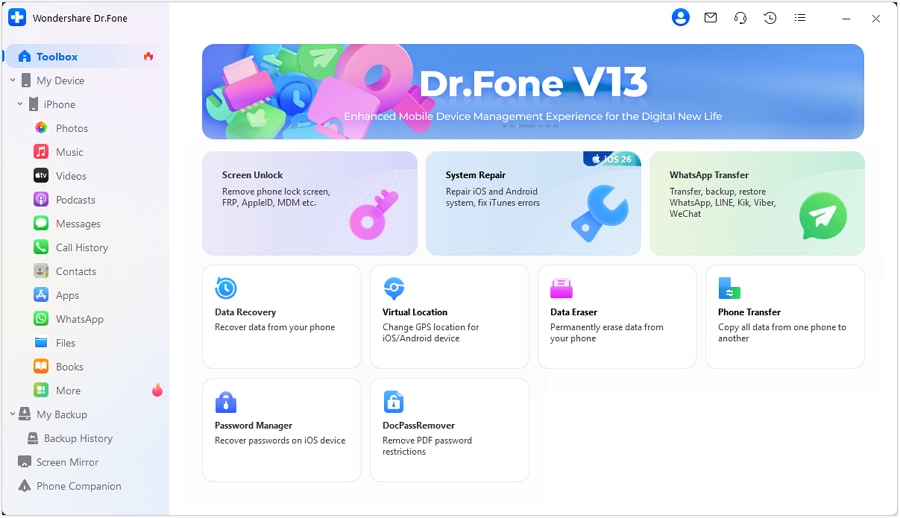
Step 1 Launch the Recovery Module on Your Desktop
Once the swift installation concludes, open the application and head straight to the "Toolbox" section. Click on "Data Recovery" and specify "iOS" on the subsequent prompt. You will immediately be presented with specialized toolsets tailored to your operating system.
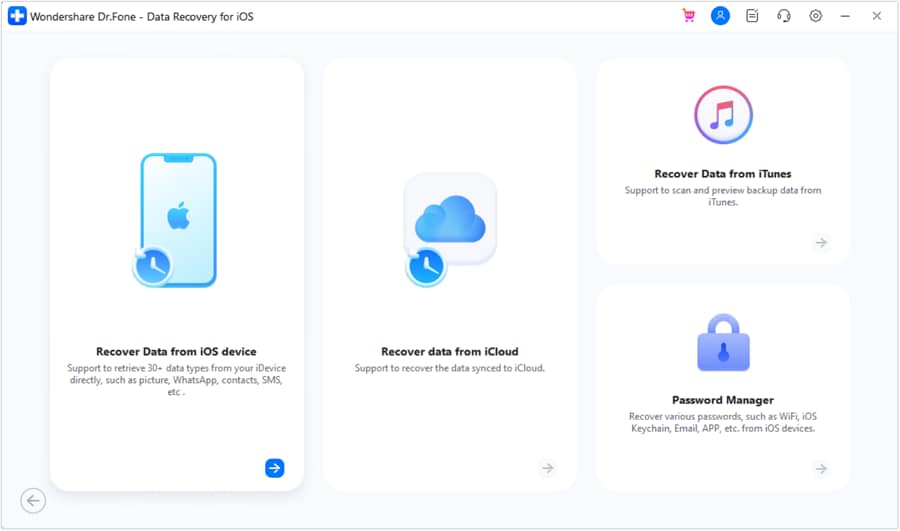
Step 2 Establish a Secure Connection with Your Computer
Select the "Recover Data from an iOS device" pathway. Use an original, certified lightning or USB-C cable to plug your device into the PC. Upon successful recognition, press "Start Scan". The software will methodically dig into the core sectors of your storage, slowly revealing accessible files.
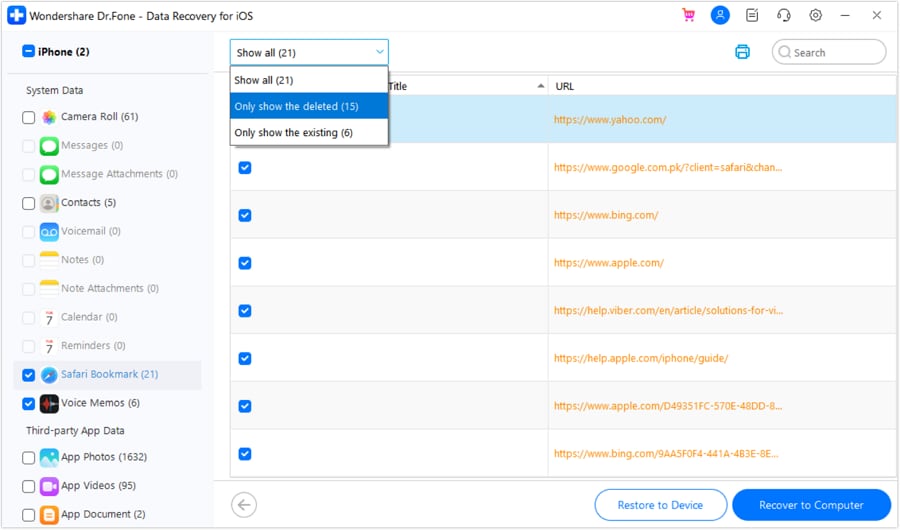
Step 3 Review and Complete the Extraction
As the deep scan finalizes, navigate through the sidebar to inspect specific file formats. The application offers unparalleled flexibility, letting you click "Restore to Device" to send files straight back to your mobile, or "Recover to Computer" to maintain a safe local archive.
1-2. Extract Backup Data From iCloud
For users searching for a seamless iPhone backup extractor to pull assets from the cloud without resetting their handset, this utility is unparalleled. It can parse through remote archives in mere minutes. Follow these guided steps:
Step 1 Select the iCloud Extraction Option
From the main "Toolbox" interface, tap on "Data Recovery" and then pick "iOS". Instead of scanning the physical phone, choose "Recover data from iCloud" to redirect the tool's focus to Apple's remote servers.
Step 2 Authenticate Your Apple Credentials
Input your Apple ID credentials to securely log into the portal. The software strictly respects privacy and fully supports two-factor authentication (2FA). After verifying your identity, check the boxes next to the data categories you wish to pull down from the cloud.
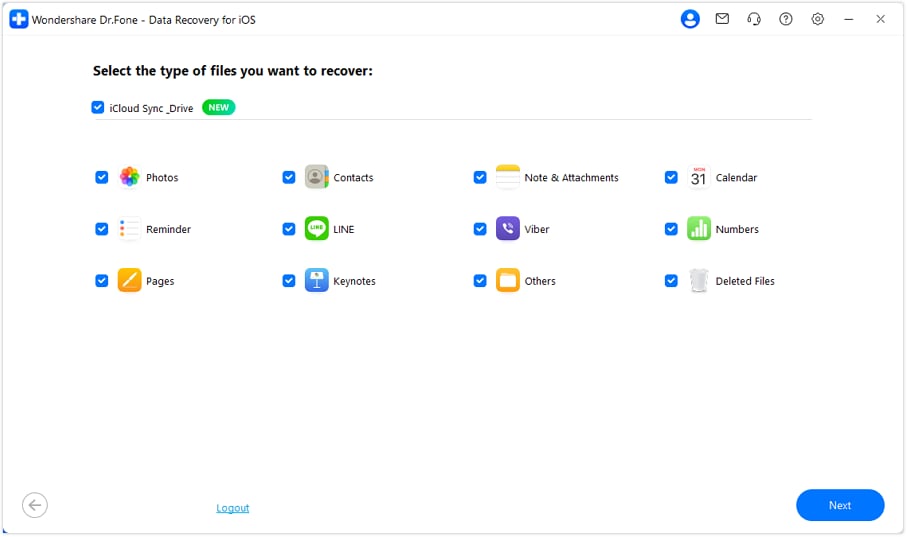
Step 3 Finalize the iCloud Restoration
Hit the "Next" button to commence the download and extraction phase. Once the files are successfully parsed and displayed on your dashboard, use either "Restore to Device" or "Recover to Computer" depending on your current needs.
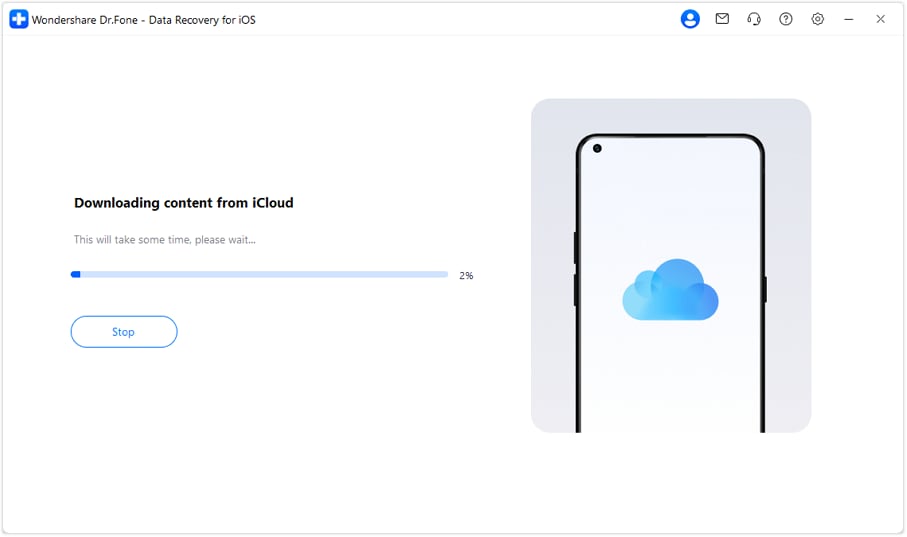
1-3. Retrieve Files From iTunes Backup
If you're in a situation where you need to extract data from incomplete iPhone backup files stored locally, the iTunes extraction feature is a lifesaver. Here is how to dissect your old iTunes archives:
Step 1 Initiate the iTunes Recovery Protocol
Return to the primary "Data Recovery" menu under the "Toolbox" section. Select "iOS" and subsequently opt for "Recover Data from iTunes". This shifts the software's scanning engine toward local drive directories.
Step 2 Locate and Scan Local Archives
The interface will automatically populate a list of all existing iTunes backup packages found on your hard drive. Highlight your preferred backup package and click "Start Scan". Specify exactly which data fragments you wish to unpack on the subsequent prompt.
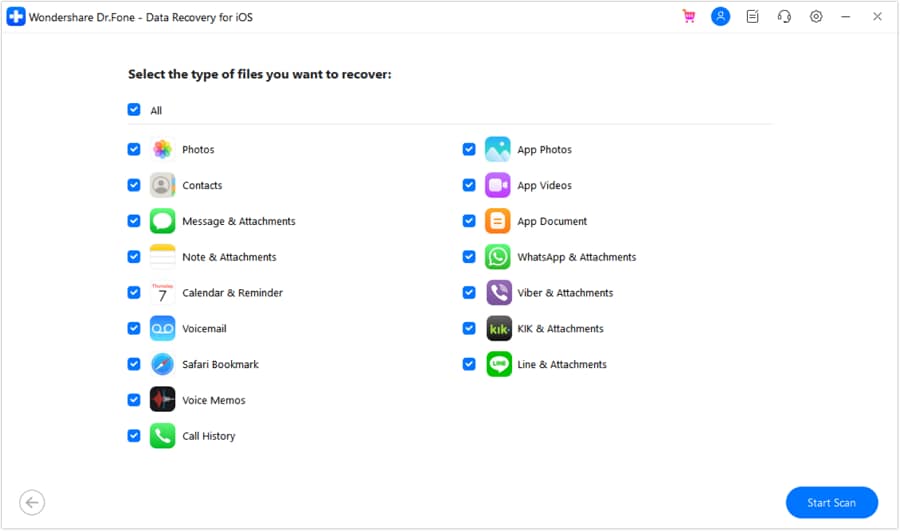
Step 3 Complete the iTunes Extraction
You can monitor the real-time progress bar as the utility unwraps the encrypted package. Once complete, browse through the retrieved iTunes files and seamlessly export them using the "Recover to Computer" or "Restore to Device" actions.
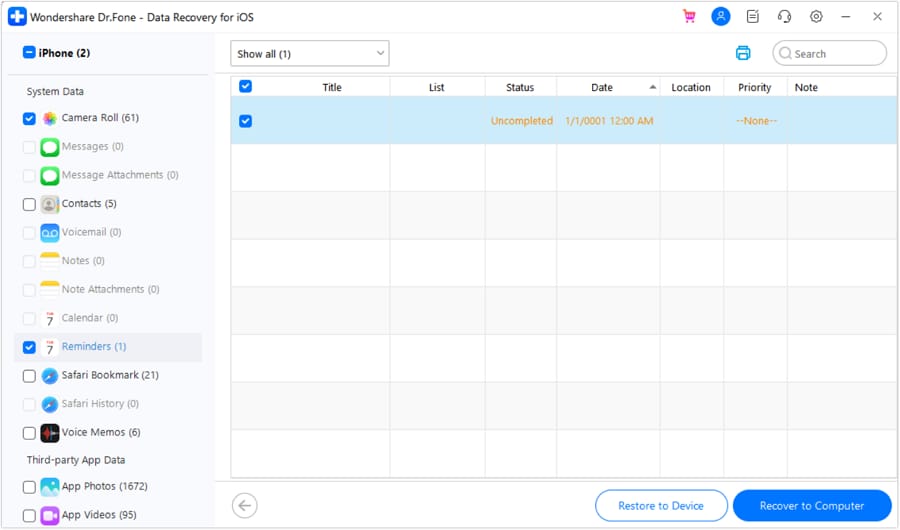
Part 2. iPhone Backup Extractor: Extract Files From iPhone 
Another prominent tool in this space is iPhone Backup Extractor, a dedicated utility fine-tuned specifically to rip assets out of static iCloud and iTunes backup packages. It provides an alternative way to recover iPhone data, whether it vanished due to an accidental swipe or a corrupted OS update. Available across both Windows and macOS environments, it prides itself on navigating heavily fragmented or corrupted iCloud repositories.
Furthermore, this software thrives when dissecting local iTunes packages, boasting the ability to bypass light encryption to present your raw data. Follow these streamlined steps if you wish to extract iPhone data using this alternative application:
- Capable of handling severely corrupted backup files.
- Supports extraction from encrypted iTunes backups.
- Lightweight installation process for quick access.
- User interface feels slightly outdated compared to modern tools.
- Advanced features are locked behind high premium tiers.
- Can be overwhelming for non-technical users.
Step 1 Access the Overview Dashboard
Once you download and launch Reincubate iPhone Backup Extractor, connect your device or locate your existing archive. Navigate to the "Overview" tab to identify high-level data categories available for quick extraction.

Step 2 Utilize the Advanced Preview Mode
If the generic Overview tab doesn't reveal the granular data you are hunting for, shift over to the "Preview" tab. This panel drills down into individual application folders, allowing you to highlight specific app data for recovery.

Step 3 Execute the Extraction Procedure
After isolating the required information, hit the "Extract" button positioned in the top-left area. This action lets you define the exact output format for your export. In more complex scenarios, the application's "Expert Mode" can be utilized to dig into raw PLIST files and databases.

Part 3. What Should a Good iPhone Backup Extractor Have
Identifying top-tier recovery software can be challenging with so many options crowding the market in 2026. A truly exceptional extractor should inherently possess several non-negotiable attributes to guarantee that your lost assets are retrieved intact and securely. When evaluating your options, ensure the software meets the following technical benchmarks:
- Broad Hardware Compatibility: The extractor must seamlessly interface with the latest iOS architectures and legacy iPhone models alike, guaranteeing universal access regardless of your device generation.
- Intuitive User Interface: Complex data recovery should be simplified through clean, accessible dashboards. A well-designed UI prevents accidental deletions and guides users through the extraction pipeline without demanding a computer science degree.
- Multi-Channel Versatility: True utility comes from the ability to decode diverse backup formats, including local iTunes archives, remote iCloud syncs, and proprietary third-party snapshots.
- Granular Selective Extraction: Users should never be forced to restore an entire 50GB backup just to retrieve a single PDF. Selective filtering preserves storage capacity and significantly accelerates the recovery timeline.
- Real-Time Data Previews: An integrated viewer that renders text, images, and audio before the extraction phase ensures flawless accuracy, meaning you never extract corrupted or incorrect files.
- Uncompromised Data Integrity: The chosen tool must strictly maintain the original file structures, metadata, and quality, ensuring zero degradation during the transfer sequence.
- Military-Grade Privacy: Given the sensitive nature of personal backups, the software must deploy zero-knowledge protocols, ensuring your personal data is never uploaded, tracked, or cached externally.
| Feature / Software | Dr.Fone - Data Recovery | iPhone Backup Extractor | Standard iTunes Restore |
|---|---|---|---|
| Selective File Extraction | (Fully Supported) | (Fully Supported) | (Overwrites Entire Device) |
| Real-Time Data Preview | (Built-in Media Viewer) | (Basic Previewer) | (Blind Restore) |
| Direct Device Scanning | (Advanced Deep Scan) | (Backup Only) | (Not Applicable) |
| User-Friendly Interface | (Modern & Intuitive) | (Slightly Technical) | (Requires Syncing Steps) |
Conclusion
Navigating the stressful reality of digital loss requires precision and reliable tools. Ultimately, if you are scrambling to urgently extract iPhone data, Wondershare Dr.Fone proves to be a vastly superior, all-encompassing suite. Thanks to its robust backend framework, it delivers a highly successful, fail-safe environment for extracting hidden or deleted content across internal storage, iCloud, and iTunes architectures.
By utilizing Dr.Fone's sophisticated data recovery infrastructure, you unlock the ability to meticulously sift through gigabytes of archives. Its combination of granular previews, selective extraction, and impenetrable security ensures your workflow remains uninterrupted while keeping your privacy completely shielded in 2026.




FAQ
1. Will using an iPhone backup extractor overwrite the current data on my phone?
No. Professional backup extractors like Dr.Fone are designed to operate selectively. They pull specific files directly to your computer or append them to your device without wiping or overwriting your current system data, unlike standard iTunes or iCloud restorations.2. Can I extract data from a heavily corrupted or incomplete iTunes backup?
Yes, specialized extraction software is engineered to bypass structural file errors. Tools such as iPhone Backup Extractor and Dr.Fone can scan fragmented backup packages and successfully salvage intact data chunks like photos or SMS logs from otherwise broken archives.3. What happens if my iTunes backup is encrypted with a password?
If your local backup is encrypted, you will still need to enter the correct password when prompted by the extractor software. Once authenticated, the tool will instantly decrypt the package and allow you to view and extract the internal contents freely.4. Is it safe to enter my Apple ID into third-party extraction software?
Top-tier recovery tools employ zero-knowledge architectures and direct API connections with Apple's servers. They do not store or transmit your login credentials. However, always ensure you are using reputable, officially certified software like Wondershare Dr.Fone to guarantee absolute privacy and support for Two-Factor Authentication (2FA).
 Add Wondershare Dr.Fone as a preferred source on Google



