Teleport your device anywhere instantly with one click.


 100% Security Verified | No Subscription Required | No Malware

 :

 ChatGPT
 Perplexity
 Gemini
 Claude
 Grok
PGSharp is an Android GPS-spoofing tool associated with Pokemon GO, not an official way to catch Pokemon. Its attraction is map-based movement: joystick controls, adjustable travel speed, and location selection without walking to the displayed point. However, the game's fairness policy expressly treats GPS falsification and unauthorized clients as cheating. No installation method, VPN, or device configuration guarantees account safety.
Pokemon GO uses the phone's location to place the player on its map. Nearby encounters, accessible landmarks, and local conditions affect what appears, which explains the interest in remote coordinates. More city landmarks can mean more places to explore, but a larger city does not promise a particular rare encounter or an unlimited supply of Pokemon.

Changing a GPS coordinate is also different from changing an internet address. A GPS tool does not automatically alter the IP address used by a streaming service, provide VPN encryption, or make online activity anonymous. For normal gameplay, the supported route is the official client with genuine location information. This 2026 guide explains the source's advertised features, installation checkpoints, and troubleshooting issues without presenting spoofing as risk-free.
In this article
Part 1: PGSharp Features and What They Actually Change
The original description presents PGSharp as a way to control the player's apparent position from an Android device. The individual controls below explain that appeal. They describe location and interface behavior, not an endorsement from the game's publisher or a promise that a current game release accepts the software.
Availability can depend on the current PGSharp build and plan. Because the official PGSharp site could not be independently retrieved for this update, do not treat an older screenshot as confirmation of today's interface, supported login methods, license terms, or device requirements. Inspect the publisher's current information before installing anything.
Joystick-Based Map Movement
The joystick described in the source provides directional movement on the map rather than requiring the player to travel physically in each direction. Forward, backward, and sideways controls change the simulated position presented through the tool. They do not move the person holding the phone or make the movement legitimate under the game's rules.
Adjustable Simulated Travel Speed
A speed selector changes the rate at which the simulated position moves. This can make a route appear slower or faster on screen, but increasing the value does not guarantee quicker catches, distance credit, or acceptance by the server. Do not equate a walking-like setting with an account-protection feature.
Teleporting Between Map Points
Teleport controls select a new apparent position without travelling between the two places. The important distinction is between an instant map change and an actual journey. A successful move on the screen does not prove that the game will permit an interaction there, that a target Pokemon is still present, or that enforcement cannot follow.
Selecting a Destination with Coordinates
Latitude and longitude identify a more precise point than a broad city name. Where the installed version offers coordinate entry, the values direct the marker to that selected position. Check their order, signs, and map result before interpreting the location. A coordinate is not a permanent guarantee of a particular spawn, landmark, or event.
Automated Routes Around PokeStops
The source describes automatic movement through multiple PokeStop locations. That is a route-control feature, not a guarantee of collected items or earned experience. Rewards still depend on the game's interaction rules, availability, account state, and other conditions. Automation should not be described as a sanctioned substitute for visiting locations.
Remembering a Previously Selected Location
A saved position can make it easier to select the same map area again. It should not be confused with a backup of the player's account, captured Pokemon, or progress. Those are different kinds of data; preserving a coordinate does not recover an inaccessible account or prevent a sign-in problem.
Part 2: Understanding Android Location Spoofing Before Catching Pokemon
Android's ability to install applications from outside an app store does not mean that every package is trustworthy or supported by Pokemon GO. Likewise, a developer mock-location setting is not a general permission to alter an online game's location data. The software's installation requirements and the game's participation rules are separate questions.
The source workflow follows a simple idea: select an area on the tool's map, let the client display that apparent position, and use another area when finished. That explains how a stationary player can appear elsewhere, but it does not establish that the approach works on every Android phone or game update. There is no reliable promise that every local Pokemon can be collected before moving on.
For ordinary catching, use the official Pokemon GO app, allow the required location access, explore permitted public areas safely, and follow the current event and encounter conditions. A rural player may have different local opportunities from a city player, but that does not make an unauthorized client the official solution.
2.1 Rules, Privacy, and Device Risks to Consider
- Read the current fairness policy: it explicitly includes GPS spoofing and unauthorized access through third-party software. Account action can include warnings, suspension, or termination; not every case must receive three warnings first.
- Separate VPN privacy from game enforcement: a VPN changes network routing and may encrypt traffic to its server, but it neither legitimizes falsified coordinates nor guarantees that a modified client escapes detection.
- Do not rely on intermittent use: taking days off or using a second account does not create an exemption from the rules or establish a safe usage schedule.
- Do not equate non-root with safety: the absence of rooting or jailbreaking does not verify a package's integrity, ensure compatibility, or protect an account from sanctions.
The relevant rule is a service's participation policy, not a blanket claim that every location tool is inherently lawful or unlawful in every context. For this game, the publisher's stated restrictions are enough to reject an assurance that spoofing is safe. Stop using an unauthorized setup rather than searching for a guaranteed anti-ban trick.
Part 3: PGSharp Installation and Activation Checkpoints
The original installation sequence includes account creation, package download, installation, sign-in, a possible license key, and map selection. Those are preserved below as checkpoints, with the unsupported claims corrected. Screenshots are retained for context; they do not prove that a current build uses the same screens or offers the same free features.
Step 1 Check the current account requirements
The old walkthrough starts by creating a Pokemon Trainer Club account. Do not assume that this is required merely to download a package or that every supported sign-in method remains the same. Use legitimate account-registration channels and inspect the publisher's current compatibility information.

Step 2 Check the software publisher and package information
The source points readers to PGSharp's own website. Avoid mirror sites, repackaged installers, and unsolicited files. Check the current release information and Android requirements; a familiar logo or a successful download does not establish authenticity or permission from the game publisher.

Step 3 Review installation and sign-in prompts
If evaluating the software despite the stated account risk, inspect the package source, requested permissions, free storage, and operating-system requirements before proceeding. Do not disable protective checks merely because installation fails. Use only a login method actually supported by the current release.

Step 4 Verify any license request
If the selected plan asks for a key, obtain it only through the publisher's legitimate account or purchase process. Do not use random keys found online. A license authorizes use of that software under its terms; it does not secure a Pokemon GO account or remove the game's restrictions.

Step 5 Recognize what map selection means
The source finishes by selecting a destination on the map. This sets an apparent location; it does not certify game compatibility, establish a free entitlement, or guarantee access to a catch. For supported gameplay, return to the official client and genuine position instead.
3.1 Troubleshooting PGSharp
Record the exact error before changing anything. A startup queue, license rejection, sign-in failure, unsupported device message, and package-install error are not interchangeable. The original beta-key explanation may describe one older situation, but it should not be applied to every current problem.
- Startup waits or capacity messages: check the publisher's actual service notices. Waiting can help a documented queue; it will not fix an incompatible Android build.
- Unable to sign in: confirm the selected provider, account credentials, connectivity, and current client support. A sign-in error does not by itself prove a server outage.
- Unsupported device: compare the phone's software and hardware with the current requirements rather than assuming the message will disappear with time.
- Activation failure: inspect the plan, key status, and official activation instructions. Restarting may clear a temporary issue, but it cannot turn an invalid license into a valid one.
- App not installed: investigate package authenticity, storage, Android version, and any package conflict. Reinstallation is not a universal remedy and may remove local settings.
3.2 Use a Deliberate Recovery Sequence
First preserve account-recovery information and any important local settings. Then check documented requirements and the exact message, restart only where appropriate, and contact the relevant publisher if the cause remains unclear. Do not repeatedly enter credentials into lookalike packages or assume a reinstall can reverse a game-account suspension. A restriction imposed by the game requires its own official support or appeal process.
Dr.Fone - Virtual Location for Separate GPS Testing
 Set your map route to simulate GPS movement.
- Set your wanted movement speed.
- HD and large map view to check location.
- Fake GPS location to anywhere.
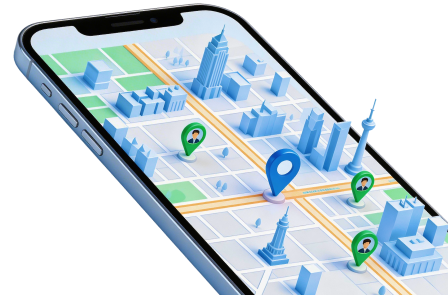
Dr.Fone - Virtual Location provides a desktop-guided way to select an apparent GPS location on supported devices and simulate map routes. Its role here is a separate location-testing option, not an official Pokemon GO client or a promise of safer cheating. A product license does not override the rules of an app receiving the position.
The official product page explicitly says Pokemon GO is not supported on Android. General Android GPS simulation must not be presented as an Android Pokemon GO alternative. Use the tool only for permitted, supported location tests, and confirm the current phone and operating-system requirements first. Route and speed controls do not guarantee encounter availability or immunity from enforcement on any platform.
Step 1 Establish the device connection
Open Virtual Location on the computer, connect the supported phone, and complete the required device prompts.
Step 2 Set a test point
Select Teleport Mode, search for a place or coordinate, inspect the result, and confirm Move Here only after checking the marker.
Step 3 Verify the reported position
Check the phone's maps app and compare the marker with the intended test point. Follow the tool's current route instructions if a permitted test needs simulated movement.
When testing is finished, restore the actual location using the documented restart procedure. Do not leave a simulated position active for navigation, emergency use, or a family arrangement that depends on genuine coordinates.




Conclusion
PGSharp's advertised appeal comes from joystick movement, coordinates, speed settings, and saved places, but those features do not make Pokemon GO spoofing authorized or account-safe. Treat installation and activation as separate from the game's rules, and diagnose errors by their actual messages rather than a universal beta-key explanation. For permitted GPS testing, Dr.Fone - Virtual Location is a distinct module, not a replacement for every toolkit function or a supported Android Pokemon GO solution.
FAQ
1. Is PGSharp an official Pokemon GO application?
No. It is a third-party tool. The current gameplay fairness policy includes GPS falsification and unauthorized clients among prohibited cheating behaviors.2. Does a VPN prevent a spoofing ban?
No VPN can guarantee that outcome. Network routing and GPS coordinates are different signals, and changing one does not authorize an altered client or falsified position.3. Do I need a key from an internet forum?
No. If your chosen plan requires activation, use the publisher's legitimate licensing process. Random keys may be invalid and do not provide game-account protection.4. Is every sign-in failure a server problem?
No. Credentials, supported login providers, package versions, connectivity, account restrictions, and device compatibility can all matter. Record the exact error and use the relevant official support channel.
 Add Wondershare Dr.Fone as a preferred source on Google