How To Remove Data From iCloud: The Complete 2026 Guide
Selena LeeOriginally published Jul 27, 2026, updated Oct 10, 2026
:
TL;DR:
When your iCloud storage is completely full, you can instantly regain space by systematically deleting outdated backups, unnecessary app data, and synced media across your connected devices.
Leverage native device settings: Navigate to Settings > [Your Name] > iCloud > Manage Account Storage on iOS to individually target and delete specific app data or clear out old device backups.
Opt for permanent erasure for complete privacy: Because native deletion methods can leave recoverable traces, using a dedicated tool like Dr.Fone - Data Eraser is highly recommended before selling your device, as it completely wipes sensitive iCloud-linked data beyond recovery.
Activate storage optimization features: Keep your standard 5GB tier from maxing out by turning on 'Optimize iPhone Storage' for photos and enabling the 'Offload Unused Apps' function.
Do you frequently receive those frustrating alerts warning you that your iCloud storage is almost full? If you find yourself asking, "how do you remove data from iCloud?" you are definitely not alone. Millions of Apple users struggle with managing the limited 5GB of free storage provided, inevitably needing to purge old files, cached data, and redundant backups to reclaim space.
Understanding exactly how to delete something from iCloud is an essential digital maintenance skill for 2026. This comprehensive guide provides step-by-step instructions on various reliable methods to eliminate unwanted data, clear backup on iCloud, and manage your cloud ecosystem efficiently across iPhones, iPads, Macs, and Windows computers.
When searching for solutions on how to erase iCloud data, especially before giving away or selling an iOS device, relying on standard native deletion isn't always enough. Basic manual deletion merely removes the visual interface link to the file, but specialized recovery software can sometimes retrieve it.
To guarantee complete privacy, using a dedicated software solution like Wondershare Dr.Fone - Data Eraser is the industry standard. This powerful utility overwrites data multiple times using military-grade wiping algorithms. Not only does it help you understand how to remove data from iCloud connected devices entirely, but it also effortlessly removes deeply hidden cache files and third-party app remnants, massively improving device performance.
Here is a streamlined guide on how to delete iCloud data securely using Dr.Fone:
Step 1 Launch Dr.Fone and Connect Device
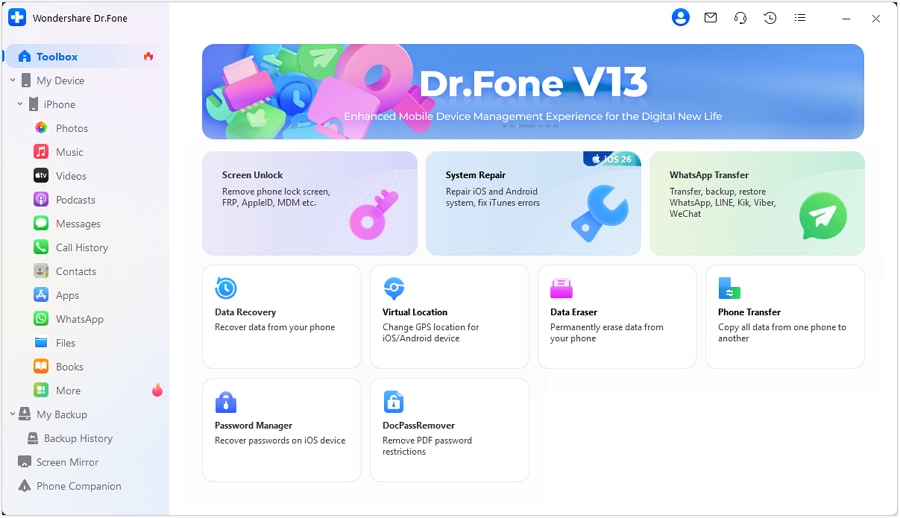
Download and install Dr.Fone onto your PC or Mac from the official website. Once launched, select the Data Eraser module from the main toolbox. Connect your iPhone to your computer using a certified USB-C or Lightning cable.
Step 2 Initiate Data Erasure
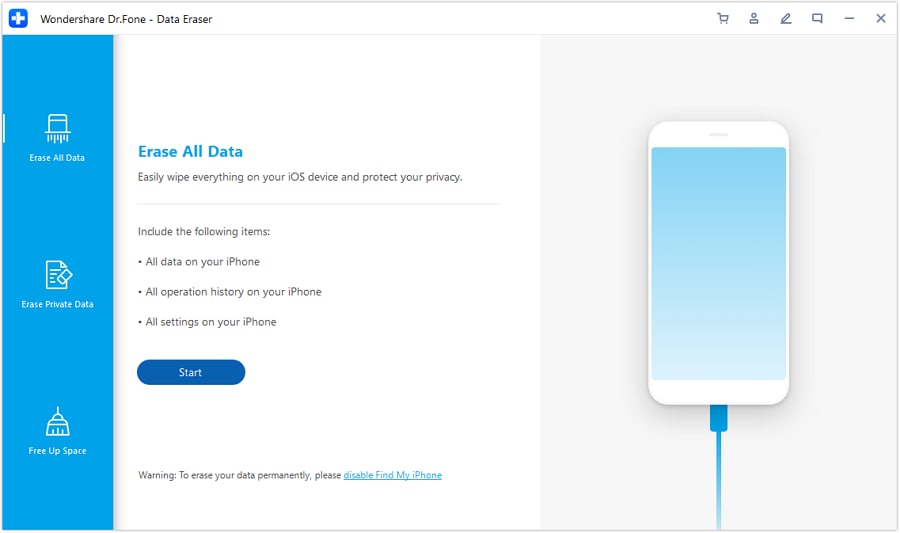
Once Dr.Fone successfully detects your mobile device, navigate to the sidebar and click on the Erase All Data option. Press the Start button to prepare the device for an intense wipe.
Step 3 Select the Required Security Level
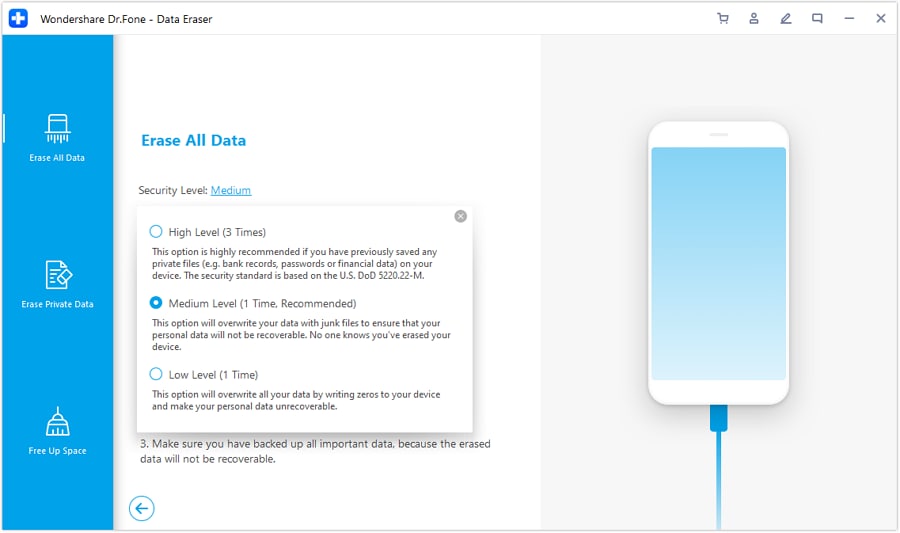
You must pick a security level that dictates how intensely your data will be scrubbed. Choose from High (multiple overwrites), Medium, or Low depending on the level of confidentiality you require.
Step 4 Confirm and Erase Now
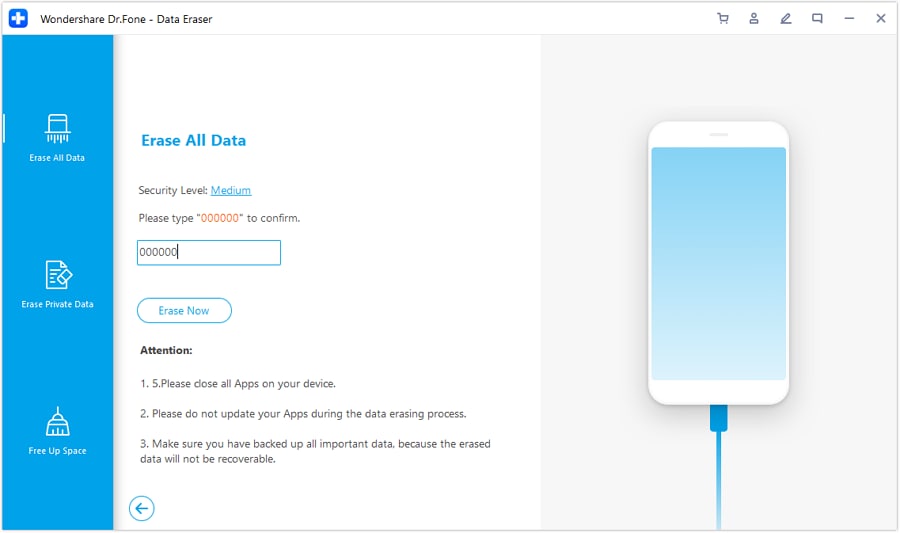
To prevent accidental deletion, Dr.Fone will prompt you to enter a specific confirmation code displayed right on the screen. Type the code in, then click the Erase Now button to execute the task.
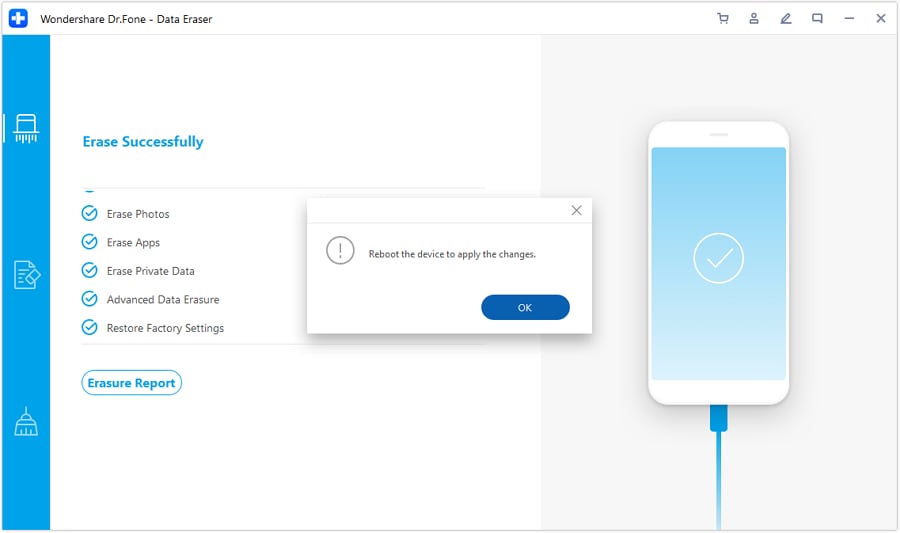
Step 5 Reboot and Finalize
Allow the software a few minutes to deeply delete all designated files. The duration largely depends on your internal storage size. Once completed, safely reboot your phone to complete the removal of your iCloud-associated local data.
Part 2. How to Delete iCloud Data Automatically and Manually
While utilizing a professional utility like Dr.Fone provides the most robust form of permanent data destruction, Apple has also integrated several native methods allowing users to figure out how to delete files on iCloud manually across various operating systems.
Method 1: Use the iOS Settings App
If you want to know how to delete iCloud directly from your handheld device, the integrated Settings app provides the fastest route. This method is incredibly useful for instantly disabling data hogs.
Step 1 Access Apple ID Profile
On your primary iPhone or iPad, open the built-in Settings app. At the very top of the menu, tap directly on your Apple ID profile banner (where your name and picture are displayed) to access your ecosystem preferences.
Step 2 Navigate to Account Storage
Tap on the iCloud option from the subsequent list. Here, you will see a visual breakdown of your cloud storage. Scroll down slightly and tap on Manage Account Storage.
Step 3 Target Specific App Data
A comprehensive list of all applications and services utilizing your cloud storage will populate. Carefully select the specific app you want to manage. From here, you can isolate and remove heavy documents.
Step 4 Disable and Delete
To eliminate the app's cached data from the cloud entirely, simply tap on Disable and Delete and confirm the dialogue box. If you wish to halt future uploads, flip the synchronization toggle to the off position.
Method 2: How to Delete iCloud Data from Mac
If your main workstation is a macOS device, you can easily control and figure out how to delete iCloud data without needing to reach for your phone. System settings provide robust cloud management.
Step 1 Open Apple ID Settings
Click on the Apple logo situated in the top-left corner of your menu bar, and select System Preferences (or System Settings in newer macOS versions). Click directly on your Apple ID, then choose the Manage option located next to your iCloud storage bar.
Step 2 Review Active Services
A detailed window will appear showcasing every application backing up data to your cloud account. Click on the targeted application you wish to investigate from the left-hand sidebar.
Step 3 Execute File Deletion
Select the specific files, documents, or data packages you want to erase, and click the Delete button to permanently sever them from your Mac's cloud storage pool.
Additionally, Mac users have the luxury of using Finder to intuitively manage their virtual files. If you're wondering how to delete files on iCloud Drive, follow these steps:
Step 1 Access iCloud Drive via Finder
Open a new Finder window. Look at the left sidebar and click on iCloud Drive. Navigate through the directory to locate the exact folder storing the data you no longer require.
Step 2 Move to Trash
Highlight the targeted files, right-click, and select Move to Trash. To finalize the process and regain the server space, you must remember to empty your Mac's Trash bin completely.
Method 3: How to Delete iCloud Data from Windows
Apple hasn't left PC users out of the loop. If you are operating a Windows environment and need to delete iCloud backup files or manage storage limits, the dedicated Windows app provides seamless access.
Step 1 Setup iCloud for Windows
Download and install the official iCloud for Windows application directly from the Microsoft Store. Launch the software and authenticate using your primary Apple ID credentials.
Step 2 Modify Sync Preferences
In the main dashboard, simply uncheck the checkboxes beside any features (like Photos, Mail, or Drive) that you no longer want taking up cloud space. Click Apply to implement the changes across your entire Apple ecosystem.
Note: When you clear backup on iCloud via the Windows app or iCloud.com, the changes are global. The deleted data will instantly vanish from all associated iPhones, iPads, and MacBooks synced to that Apple ID.
Part 3. Pro Tips to Delete iCloud Data and Manage Storage
Learning how to delete something from iCloud is only half the battle. Consistently managing your digital footprint ensures you rarely hit that dreaded storage limit. Implement these advanced tips:
Routinely analyze usage: Habitually visit your Manage Storage dashboard to pinpoint precisely which applications are covertly hogging the most space.
Delete iCloud backup files systematically: Old iOS updates and outdated device backups are the biggest culprits of wasted space. Go to Settings > [Your Name] > iCloud > Manage Storage > Backups, select obsolete backups from devices you no longer own, and press "Delete Backup".
Leverage photo optimization: High-resolution images eat up gigs of data. Enable iCloud Photos and toggle on "Optimize iPhone Storage". This keeps visually flawless thumbnails on your phone while hiding the massive full-resolution files securely in the cloud.
Curate iCloud Drive: Treat your Drive like a physical filing cabinet. Every month, dedicate ten minutes to clear out rogue PDFs, bloated spreadsheets, and outdated project folders.
Clear Safari web data: Browsing history, saved offline reading lists, and massive website cache files sync across your Apple ID. Erasing this history via Safari settings can free up surprising amounts of space.
Purge abandoned shared albums: If you are lingering in heavily populated shared photo albums that you no longer care about, unsubscribe and delete them to drop the cached storage weight.
Utilize "Offload Unused Apps": Turning this feature on in your App Store settings automatically uninstalls bulky applications you haven't touched in months, yet meticulously preserves your saved data in iCloud just in case you ever redownload them.
Conclusion
This officially concludes our deep dive on how to remove data from iCloud and master cloud storage mechanics in 2026. Maintaining a pristine, clutter-free iCloud account guarantees that your Apple devices continue to sync effortlessly, back up reliably, and operate without throwing persistent low-storage errors.
Always remember that before you decide to heavily delete iCloud backup data, you should confirm that your most critical files, irreplaceable photos, and business documents are securely backed up onto a localized external hard drive. If you are preparing a device for sale and require total data destruction, bypass native methods entirely and utilize Wondershare Dr.Fone - Data Eraser to guarantee that your digital identity remains permanently protected.
FAQ
1. How do I completely wipe all my iCloud data permanently?
To completely and irreversibly wipe your iCloud data, especially before a device transfer, the most secure method is utilizing a professional-grade wiping tool like Dr.Fone - Data Eraser. Additionally, you can manually log into iCloud.com, manually delete all synced categories (Photos, Drive, Contacts), sign out of all your linked devices, and submit a formal request to Apple to completely delete your Apple ID and associated server data.
2. Can I recover deleted iCloud data if I made a mistake?
Yes, but only within a strict time frame. Apple provides a "Recently Deleted" folder for Photos, Notes, and iCloud Drive files which safely stores your erased data for up to 30 days. Once that 30-day window expires, or if you manually empty the Recently Deleted folder, the files are purged from the server and cannot be recovered natively.
3. Exactly how long does it take to delete an iCloud backup?
Deleting an iCloud backup is generally an instantaneous process on Apple's servers, typically taking no more than a few seconds. However, if your backup contains hundreds of gigabytes of data or if you are on a severely restricted internet connection, the visual confirmation on your iPhone or Mac might take several minutes to properly update and reflect the newly freed storage space.
4. Does deleting an old iCloud backup actually free up local storage space?
Deleting an iCloud backup frees up storage capacity within your cloud server allocation (such as your 5GB free tier), not the local physical storage on your iPhone or Mac. By choosing to clear backup on iCloud, you are essentially making more virtual room to allow your current device to back up its latest daily data without being blocked by storage capacity limits.
Chief Editor of the Dr.Fone team since 2012, Selena is a veteran technology editor known for turning complex iOS and Android topics into clear, user-focused guidance.
 Permanently erase all iOS & Android data—completely unrecoverable.

 100% Security Verified | No Subscription Required | No Malware

 :
: 
 ChatGPT
 Perplexity
 Gemini
 Claude
 Grok
Grok

 Permanently erase all data on iOS & Android — completely unrecoverable.






 Add Wondershare Dr.Fone as a preferred source on Google