Permanently erase all iOS & Android data—completely unrecoverable.

 100% Security Verified | No Subscription Required | No Malware

 :
: 
 ChatGPT
 Perplexity
 Gemini
 Claude
 Grok
Grok

I can't find some apps on my iPhone's home screen anymore. How do I remove hidden apps on my iPhone? Please HELP!
An iPhone User
Many iPhone users encounter this issue. Whether you've intentionally hidden an app for privacy or accidentally removed it from your home screen, knowing how to permanently delete these elusive applications is crucial. Getting rid of apps you no longer need helps maintain a tidy device, optimizes storage, and enhances your digital security.
This comprehensive guide will explore several effective methods for deleting hidden apps on your iPhone. We'll cover everything from simple, built-in iOS features to advanced tools, ensuring you have complete control over your device's content and can easily manage any app, visible or not.
In this article
- Part 1: Deleting Hidden Apps from the App Library (iOS 14 and Later)
- Part 2: Removing Apps Hidden by Screen Time Restrictions
- Part 3: Deleting Apps via iPhone Storage Settings
- Part 4: Managing and Deleting Apps with a Computer (iTunes/Finder)
- Part 5: How to Securely and Permanently Erase Hidden Apps with Dr.Fone
Part 1: Deleting Hidden Apps from the App Library (iOS 14 and Later)
With the introduction of iOS 14, Apple revolutionized app management with the App Library. This feature automatically organizes all your apps, providing a single place to find everything, including apps you've removed from your home screen. This method is the most straightforward for users on modern iOS versions, as it's quick and avoids navigating complex settings menus.
Here's how to delete an app that is not on your home screen using the App Library:
-
Step 1 Access the App Library
On your iPhone's home screen, swipe left past all your app pages until you arrive at the App Library. Tap the search bar at the top to view an alphabetical list of all your installed apps.
-
Step 2 Locate and Delete the App
Scroll through the list or type the name of the hidden app you wish to remove. Once you find it, press and hold the app icon. A context menu will appear. Tap "Delete App" and then confirm by tapping "Delete" again in the pop-up dialog.

Part 2: Removing Apps Hidden by Screen Time Restrictions
Sometimes, an app may seem hidden because it has been restricted through Screen Time settings, often used for parental controls or digital wellbeing. This method is essential if you suspect an app is unavailable due to content or privacy restrictions. By adjusting these settings, you can make the app visible again, allowing you to delete it normally.
This is particularly useful for managing both built-in Apple apps and downloaded apps that are subject to age or content ratings.
Here’s how to check and modify these settings:
2-1. For Stock Apple Apps
-
Step 1 Open Screen Time Settings
Navigate to "Settings" > "Screen Time" and tap on "Content & Privacy Restrictions". You may need to enter your Screen Time passcode if it's enabled.

-
Step 2 Manage Allowed Apps
Tap on "Allowed Apps." Here you'll see a list of core Apple apps. If an app like Safari or Mail is missing, the toggle next to it is likely off. To unhide it, simply toggle it back on. Once it reappears on your home screen or in the App Library, you can delete it using the standard methods.

2-2. For Downloaded Apps
-
Step 1 Navigate to Content Restrictions
Go to "Settings" > "Screen Time" > "Content & Privacy Restrictions." Tap on "Content Restrictions."
-
Step 2 Adjust App Age Ratings
Select "Apps." You can see if an age rating limit has been set (e.g., 9+, 12+). If an app's rating is higher than the limit, it will be hidden. To unhide all apps, select "Allow All Apps." After adjusting, the apps will reappear, and you can proceed to delete them.

Part 3: Deleting Apps via iPhone Storage Settings
Another effective way to find and remove hidden apps is through the iPhone Storage menu in Settings. This method is incredibly useful because it provides a comprehensive list of every installed application, sorted by size. It's the perfect approach if you're looking to free up space, as it helps you identify and delete large, forgotten apps that are consuming valuable storage.
Follow these steps to delete hidden apps from your iPhone's storage settings:
-
Step 1 Access iPhone Storage
Open the "Settings" app on your iPhone. Scroll down and tap on "General," then select "iPhone Storage."
-
Step 2 Find the App to Delete
Your iPhone will take a moment to calculate and display a list of all your apps, ordered from largest to smallest. Scroll through this list to locate the hidden app you want to remove.

-
Step 3 Delete the App
Tap on the app's name to see more details. You will see two options: "Offload App" (which keeps your data) and "Delete App" (which removes the app and all its data). Select "Delete App" and confirm your choice to permanently remove it.
Part 4: Managing and Deleting Apps with a Computer (iTunes/Finder)
If you prefer managing your iPhone's content from a computer, you can use iTunes (on Windows or older Macs) or Finder (on macOS Catalina and newer) to delete apps. This method provides a larger interface for organizing your apps and can be useful for users who find it easier to manage their devices on a bigger screen. It gives a clear, comprehensive view of all installed applications.
Here’s the process:
-
Step 1 Connect Your iPhone
Connect your iPhone to your computer using a USB cable. Open iTunes or a Finder window and select your device from the sidebar.
-
Step 2 View Your Apps
In iTunes, click on the "Apps" section. In Finder, you would typically manage apps directly on the device view, but syncing and app management have changed in recent macOS versions. For older systems using iTunes, you will see a visual layout of your home screens and a list of all installed apps.

-
Step 3 Remove the App and Sync
Find the app you want to remove from the list and click the "Remove" or "X" button next to it. After making your changes, click the "Sync" or "Apply" button to save the changes to your iPhone.

Part 5: How to Securely and Permanently Erase Hidden Apps with Dr.Fone
For users who are highly concerned about privacy and want to ensure that a deleted app and all its associated data are gone for good, standard deletion methods may not be sufficient. When you delete an app normally, fragments of data can remain on your device. Third-party tools like Wondershare Dr.Fone - Data Eraser offer a more robust and secure solution.
Dr.Fone's Data Eraser functionality goes beyond simple deletion. It securely overwrites the data, making it completely unrecoverable. This is crucial if the app contained sensitive personal or financial information, or if you are preparing to sell or give away your iPhone. It ensures a complete wipe of the app and its data, providing ultimate peace of mind.
 Permanently erase all data on iOS & Android — completely unrecoverable.
- Military-grade wiping to fully protect your privacy.
- Generate verified erasure reports to boost device resale value.
- Selectively erase private data and remove junk & large files.
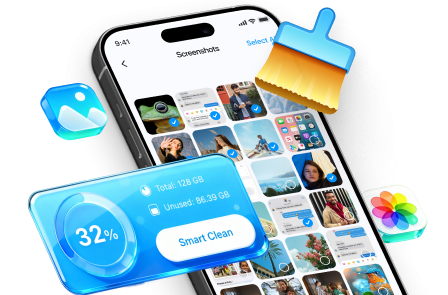
Here are the simple steps to use Wondershare Dr.Fone to completely wipe your iPhone, including all apps and data, ensuring nothing is recoverable.
-
Step 1 Download and Launch Dr.Fone
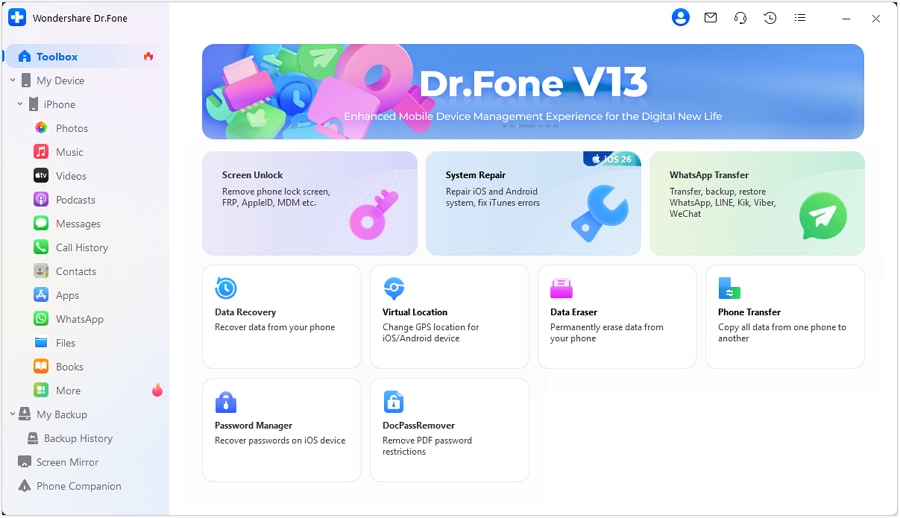
Visit the official Wondershare website to download the Dr.Fone toolkit for your Mac or Windows PC. Install and launch the program. Connect your iPhone to your computer with a USB cable and select the "Data Eraser" module from the main interface.
-
Step 2 Start the Erasing Process
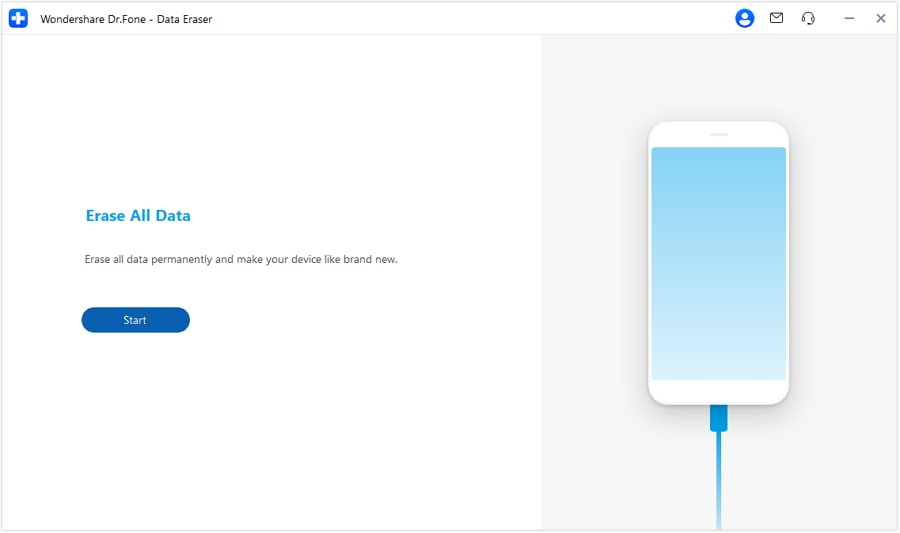
Once the Data Eraser tool opens in a new window, click the "Start" button to begin the process of scanning your device for data to be erased.
-
Step 3 Confirm the Deletion
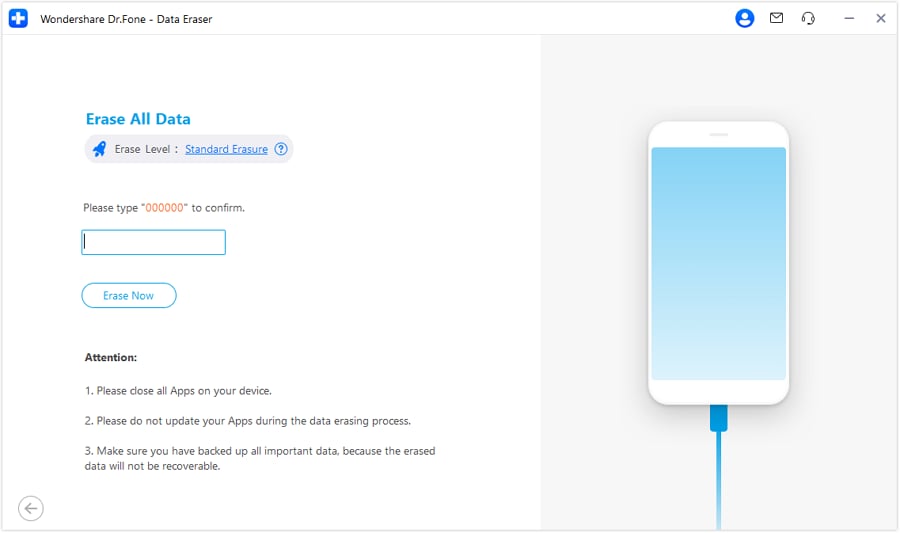
To prevent accidental data loss, you must confirm that you want to erase all data. Type the displayed confirmation code into the box and then click "Erase Now" to proceed.
-
Step 4 Monitor the Process
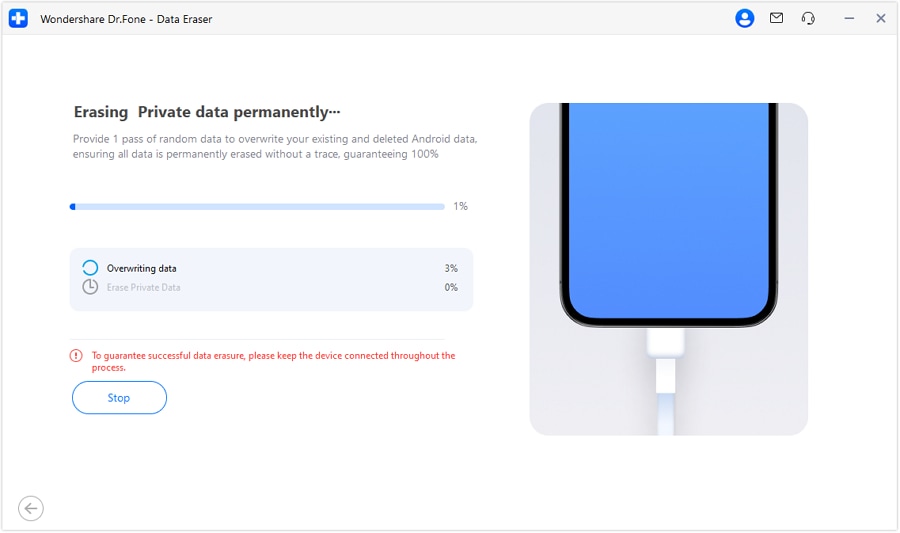
Dr.Fone will now begin to permanently erase all data from your iPhone. You can monitor the progress on the screen. If you need to stop the process for any reason, you can click the "Stop" button, but be aware that the process will be incomplete.
-
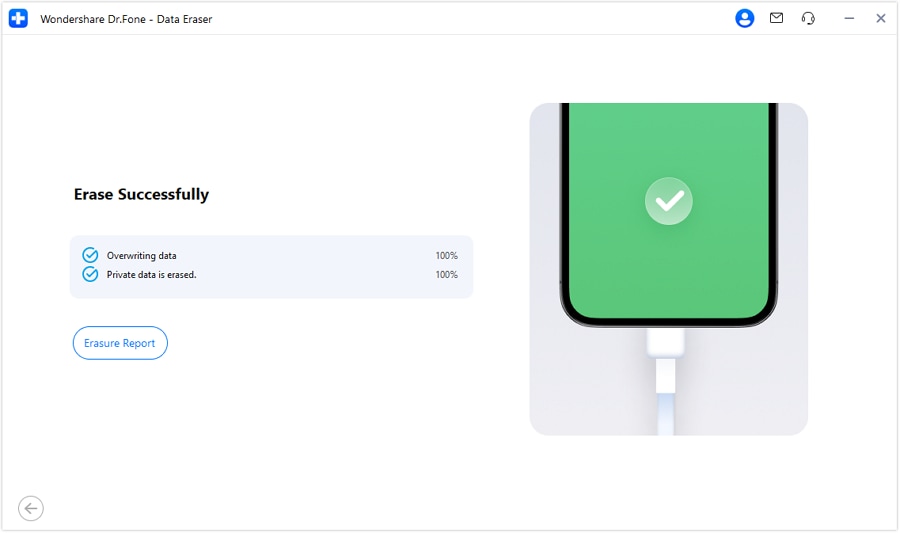
Step 5 Erasure Complete
Once the erasure is finished, a confirmation message will appear on the screen. For your records, you can click on "Erasure Report" to view a detailed log of the data types that have been permanently removed from your device.
Conclusion
Managing hidden apps on your iPhone doesn't have to be a complicated task. By utilizing the methods outlined in this guide—from the simple App Library search to the detailed iPhone Storage list—you are now fully equipped to keep your device organized and clutter-free.
Regularly reviewing and removing unused or hidden applications not only frees up valuable storage but also enhances your device's performance and safeguards your personal information. Whether you're looking to simply delete an app not on the home screen or require a more secure and permanent solution, these strategies give you complete control. For those who prioritize absolute data privacy, tools like Wondershare Dr.Fone - Data Eraser provide the ultimate clean slate for your device.
Frequently Asked Questions
-
1. What's the easiest way to find a hidden app on my iPhone?
The quickest method is to use the Spotlight Search. Swipe down from the middle of your home screen and type the name of the app. If it's installed, it will appear in the search results. You can also find a complete alphabetical list of all your apps in the App Library by swiping to the very end of your home screen pages. -
2. Does deleting an app also cancel my subscription to it?
No, deleting an app does not automatically cancel any associated subscriptions. You must manage your subscriptions separately to avoid being charged. You can do this by going to Settings > [Your Name] > Subscriptions. -
3. Can I delete the built-in apps that came with my iPhone?
Yes, Apple allows you to delete most of its built-in apps, such as Mail, Music, and Calculator. If you delete one, you can always redownload it from the App Store later. However, a few essential system apps, like Settings and the App Store itself, cannot be removed. -
4. What happens to my data after I delete an app?
When you delete an app, the app itself and its local data are removed from your iPhone. However, data stored in iCloud (like backups or files in iCloud Drive) may remain. Furthermore, standard deletion doesn't guarantee the data is unrecoverable. For sensitive information, using a data eraser tool is recommended for permanent deletion.
 Add Wondershare Dr.Fone as a preferred source on Google