Recover photos, messages, WhatsApp, and more — no backup
needed.
Recover photos, messages, WhatsApp, and more — no backup
needed.

 100% Security Verified | No Subscription Required | No Malware

 :
: 
 ChatGPT
 Perplexity
 Gemini
 Claude
 Grok
Grok
iPhones have evolved into treasured digital vaults of memories, storing precious high-definition videos of sunset silhouettes, irreplaceable family gatherings, and unforgettable travel adventures. For many iOS users, losing such footage can feel incredibly devastating. Accidental deletions happen to everyone, but with the right iPhone video recovery strategies, you can easily recover deleted videos from iPhone, including the latest iPhone 17 running the newest operating systems, ensuring those priceless memories are never lost for good.
Luckily, the underlying file architecture of iOS means that all hope is not lost when precious videos are suddenly erased from our screens. It is now entirely possible to recover deleted videos from iPhone models with ease, thanks to advanced data retention technology. When you understand the basic mechanics of how iOS handles deleted files, you can quickly reclaim those precious memories before they are overwritten by new data. This comprehensive article delves into the world of data recovery for iPhones, exploring a range of tried-and-tested, highly effective methods to rescue deleted videos.
In this article
Part 1: Is It Possible to Recover the Deleted Videos on iPhone?
Accidents happen daily, and in the blink of an eye, your cherished videos can be wiped away from your iPhone's camera roll. This sudden data loss leaves you feeling devastated and helpless. But before you resign yourself to the permanent loss of your media, the burning question remains: Are you confused about whether it is actually possible to recover deleted videos from your iPhone?
The good news is that in the majority of scenarios, yes, it is indeed possible to recover deleted videos from your iPhone. Modern Apple smartphones come equipped with advanced flash storage architecture and robust data management systems. These mechanisms often keep deleted content hidden but intact for a certain period, providing a realistic window of hope for full recovery.
When you initially delete a video from your iPhone, the operating system doesn't vanish the media from the device's physical memory forever. Instead, iOS merely removes the file index and moves the visible file to a temporary "Recently Deleted" album. Here, the video resides safely for up to 40 days before an automated permanent deletion is triggered. This built-in safety net offers you a hassle-free chance to restore your videos with ease.
However, if the videos are permanently deleted from this album, the success of your subsequent video recovery depends heavily on several crucial factors. These include the amount of time that has passed since the deletion occurred and the frequency of your device usage. The longer you wait to attempt professional recovery, the lower the chance for a successful retrieval. In the same way, the more you use your iPhone (downloading apps, taking new photos) after permanent deletion, the higher the risk of the original video data being permanently overwritten and unrecoverable.
Part 2: How To Restore Recently Deleted Videos on iPhone
If you've recently deleted videos on your iPhone, there is an excellent chance that they are still perfectly recoverable directly from the "Recently Deleted" album. This built-in Apple safety feature allows you to restore deleted videos instantly without downloading any third-party apps. Follow these simple steps to learn how to recover deleted videos from your iPhone using the native Photos app:
Step 1 Locate and Access the Recently Deleted Folder
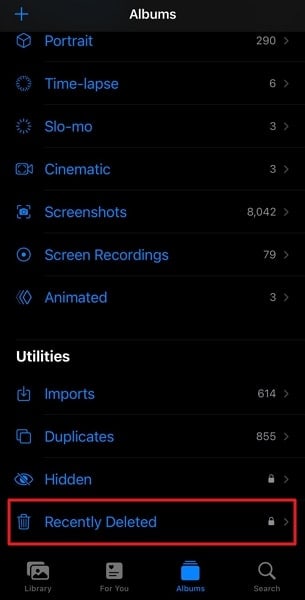
Locate and launch the native "Photos" app on your iOS device. Inside the "Photos" app, tap on the "Albums" tab located at the bottom of the screen. Scroll all the way down until you find the "Recently Deleted" album listed under the "Utilities" section. You may need to authenticate using Face ID or Touch ID to view its contents.
Step 2 Select and Recover Your Desired Videos
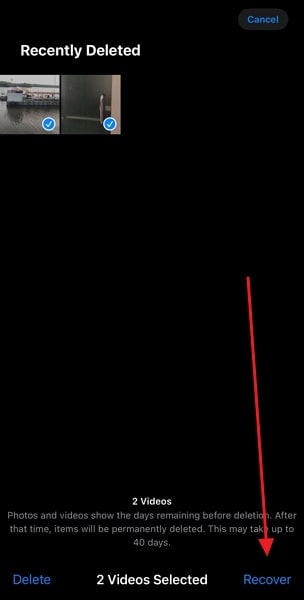
Once inside the "Recently Deleted" album, browse through the hidden content. Now locate the specific videos you wish to recover and select them by tapping "Select" in the top right corner. Then, tap the "Recover" button at the bottom-right corner and confidently confirm the action by tapping "Recover X Video" to proceed with returning them to your main Camera Roll.
Part 3: 2 Ways To Recover Permanently Deleted Videos on iPhone
The native ‘Recently Deleted’ album on your iPhone allows you to conveniently restore videos within a generous 40-day window, but what happens if that time window has passed or the multimedia files were manually, permanently erased? In such critical data-loss cases, third-party software tools become absolutely essential. A highly trusted and industry-recognized solution for complete iPhone video recovery is Wondershare Dr.Fone, which possesses the specialized capability to recover deleted videos from iPhone, seamlessly supporting the latest iPhone 17 hardware. Furthermore, it excels at retrieving segmented data from iTunes backups without requiring a full device reset. This makes it a powerful and flexible option to retrieve lost memories securely and efficiently.
 Recovers data after deletion, crashes, or device damage.
- Supports photos, messages, contacts, WhatsApp, and more.
- Supports all major iPhone, iPad, and iPod models.
- Preview and recover only what you need.

Way 1: Wondershare Dr.Fone - Data Recovery (iOS)
Wondershare Dr.Fone is an industry-leading data recovery software that stands out for its high success rate and user-friendly interface. It offers a comprehensive solution for retrieving various types of deeply lost data. This massive supported data list includes videos, photos, contacts, messages, call logs, and more. Dr.Fone provides an efficient and remarkably reliable method to recover permanently deleted videos directly from the iOS file system without requiring technical expertise. Here is a clear guide on how to retrieve deleted videos on iPhone with these simplified, step-by-step software instructions:
Step 1 Select Data Recovery from the Main Toolbox
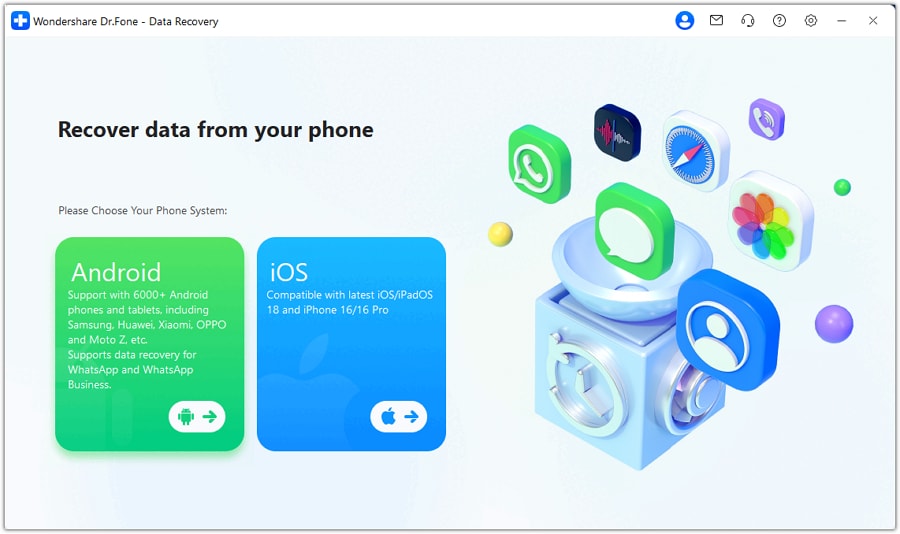
Initiate the data retrieval process with the prompt installation of Wondershare Dr.Fone on your computer (Windows or Mac) and launch the application. Now navigate to the main menu and choose the "Data Recovery" tool from the "Toolbox" tab. Proceed to select "iOS" on the following operating system selection screen.
Step 2 Connect and Scan Your iOS Device
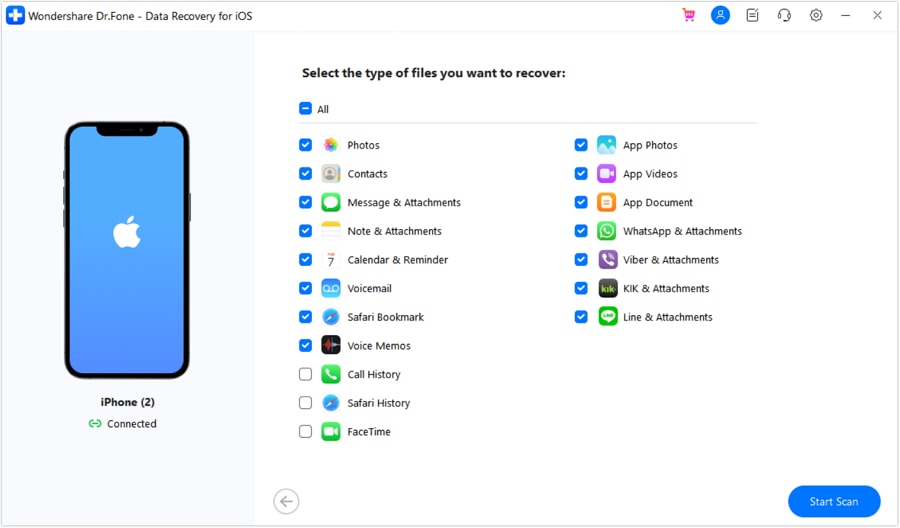
Click on "Recover Data from an iOS device" and use a sturdy, Apple-certified lightning or USB-C cable to firmly connect your iPhone to the computer. Once the device is successfully detected and verified by Wondershare Dr.Fone, select the precise data types you want the software to look for. After ensuring the box for "Videos" and any other relevant media data is checked, tap "Start Scan" to begin analyzing the device's internal storage.
Step 3 Preview and Store the Recovered Data Safely
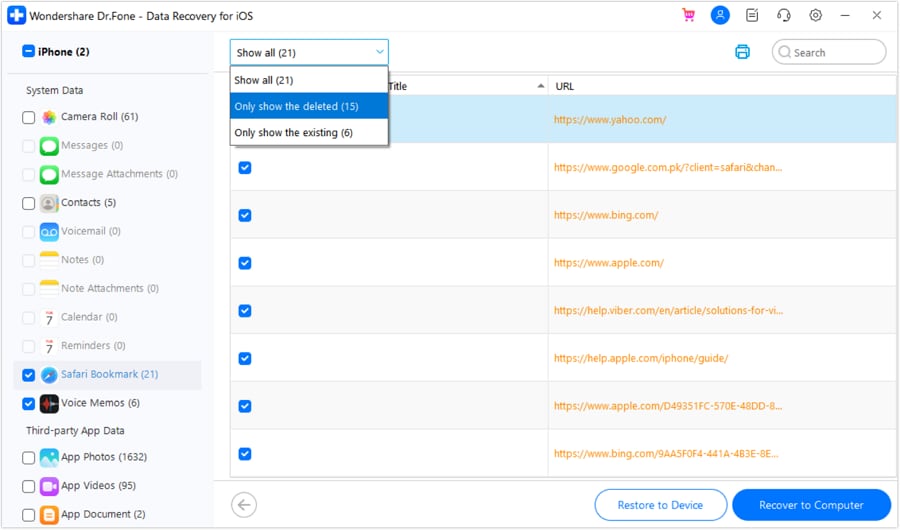
As the deep scan progresses, the newly recovered data will dynamically start appearing on the Wondershare Dr.Fone visual interface. You can conveniently preview the recovered files when looking for your specific lost videos. Once the comprehensive scan is 100% complete, find and preview the exact video files you need. After selectively choosing those videos, seamlessly use either the "Restore to Device" or "Recover to Computer" option to permanently recover them to your desired safe location.
Way 2: Wondershare Dr.Fone - Data Recovery (iTunes)
If you have been proactively backing up your iPhone regularly using iTunes or Finder, you are in a great position. In the scenario where you strictly do not want to execute a full iTunes restore (which wipes current device data), we have you perfectly covered. Wondershare Dr.Fone can cleanly extract and recover your deleted videos directly from an existing iTunes backup repository. You will not have to forcefully restore the entire backup, as Wondershare Dr.Fone allows targeted, selective restoration. Follow these expert steps for how to find deleted videos on your iPhone via backups:
Step 1 Choose Recover Data from iTunes in Dr.Fone
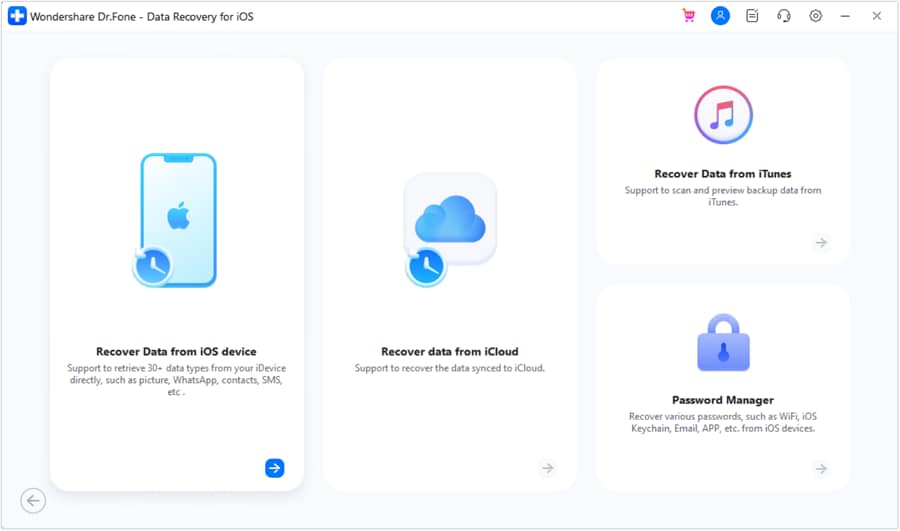
To safely recover videos from a local iTunes backup without risking device data deletion, you need to first select "Data Recovery" from the main "Toolbox". Follow this action by choosing "iOS" and purposefully clicking "Recover Data from iTunes". Now Wondershare Dr.Fone will automatically scan your computer system directories to locate all available iTunes backup files.
Step 2 Select and Scan the Desired iTunes Backup File
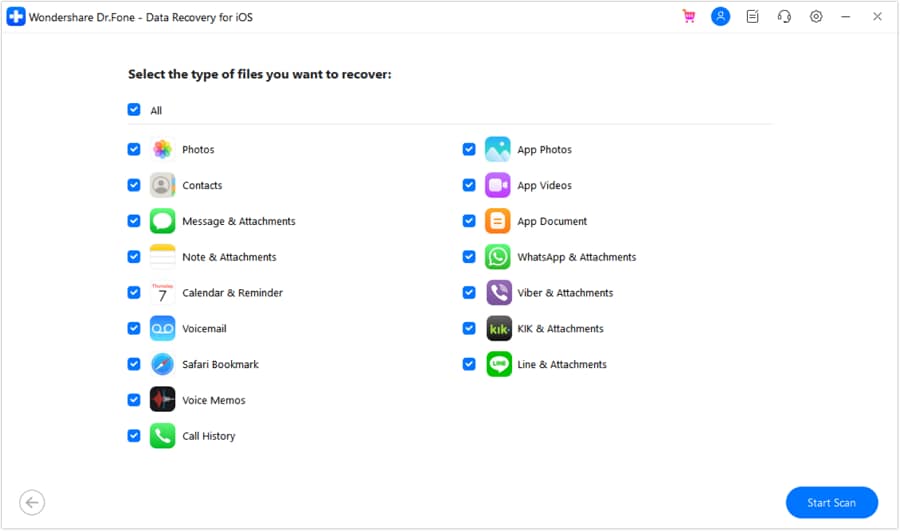
On the subsequent screen, you will be able to clearly see all the detected iTunes backups meticulously categorized by Wondershare Dr.Fone. Next, highlight the specifically targeted backup that contains your lost video and click "Start Scan" from the bottom right corner. Now, select the precise data types you eagerly want to look for, prioritizing videos, and confidently hit "Start Scan" on the ensuing screen to extract the backup contents.
Step 3 Restore the Extracted Videos to the Targeted Location
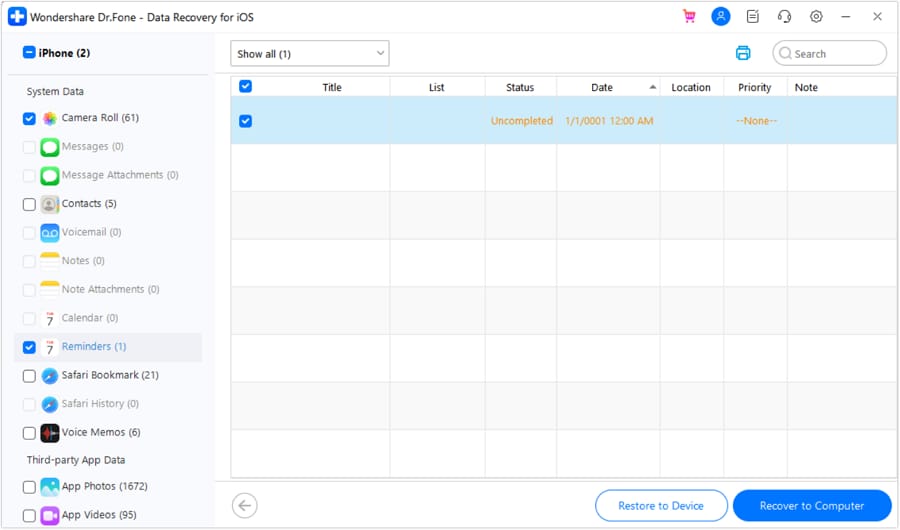
Wondershare Dr.Fone will systematically show you all the parsed data securely stored within the chosen iTunes backup. If you desperately want to restore the media videos directly back to your connected iPhone, ensure it is linked to the computer, and after granting "Trust this Computer" permissions, tap "Restore to Device". Alternatively, to recover the iTunes backup file data directly onto your computer's hard drive for permanent safekeeping, simply press the "Recover to Computer" button.
Bonus Tip: Simplified Tips To Protect Videos From Getting Permanently Deleted on iPhone
Proactive prevention is undeniably always better than desperately relying on iPhone video recovery maneuvers long after important files are gone. To adequately protect your cherished videos from sudden, permanent loss, developing a few remarkably smart digital habits can make all the difference. Whether you are using a slightly older iOS model or upgrading to the powerful new iPhone 17, adhering to these structured practices will drastically help minimize the critical risk of losing your digital memories and severely reduce the chances that you will ever genuinely need to recover deleted videos from iPhone using third-party tools.
- Perform Regular Backups: Always prioritize backing up your iPhone routinely. Use integrated Apple services like iCloud or iTunes/Finder to strictly create redundant backups that safely include your heavyweight videos and other essential iOS data. With a recent, verified backup securely on hand, you can flawlessly restore your videos in any catastrophic case of accidental deletion.
- Be Highly Mindful of "Delete" Actions: Always exercise deliberate caution when mass deleting videos, burst photos, or other storage-heavy media from your iPhone. Double-check your gallery selection thoroughly before hastily confirming any permanent deletion prompts. This incredibly simple behavioral step can independently prevent the vast majority of accidental losses.
- Use Third-Party Cleanup Apps with Utmost Caution: Be particularly cautious when blindly using aggressive third-party photo or video management and storage-cleaning apps. Some specialized cleaning apps may employ their own brute-force deletion methods that intentionally bypass the protective iOS "Recently Deleted" album entirely. Intimately understand the app's core functionality before casually granting it full read/write access to your media library.
- Set Up Strict Screen Time Restrictions: For much younger users or shared family devices, heavily consider setting up custom Screen Time restrictions. It will efficiently limit the administrative ability to delete native apps or core media. This can effectively prevent unintentional deletions by safely restricting global access to specific critical device functions.
- Use Dedicated Albums for Granular Organization: Proactively create custom metadata albums to organize your growing list of videos. Methodically moving raw videos to highly specific contextual albums can tremendously help you quickly find and effectively manage your digital media. This naturally leads to a massive reduction in the statistical chances of unintentional, accidental deletions when trying to clear up generic storage space.
Conclusion
In analytical summary, our daily iPhones act as an incredibly secure treasure chest of priceless memories seamlessly captured in high-resolution videos—but simple, everyday accidental deletions can quickly and mercilessly erase them from existence. The incredibly good news is that by utilizing the right systematic methods, it is perfectly possible to recover deleted videos from iPhone, even if they have been presumed permanently removed from the device memory. In this ultimate guide, we meticulously explored different powerful iPhone video recovery options, strategically starting with the native built-in ‘Recently Deleted’ album and intelligently moving beyond its restrictive 40-day retention limit. For the absolute most reliable and structurally sound solution, Wondershare Dr.Fone provides unmatched, advanced data recovery specifically designed for iOS devices, parsing both localized iTunes and cloud-based backups, undeniably making it the absolute best choice to safely and completely restore your lost videos.




FAQ
1. Can I recover a video I completely deleted from the 'Recently Deleted' folder?
Once a video is manually removed from the 'Recently Deleted' album (or expires after the 40-day limit), it is considered permanently deleted by the iOS file system. To recover it, you will need to utilize a professional data recovery tool like Dr.Fone to scan the flash memory, or rely on extracting the video from an older iTunes or iCloud backup.2. Is it genuinely possible to recover permanently deleted videos from an iPhone for free?
Recovering permanently deleted videos entirely for free is only feasible if you actively maintain a recent iCloud or iTunes backup created prior to the deletion event. Without an existing backup, free recovery via built-in methods is highly unlikely, making professional third-party software your most viable and effective option.3. Exactly how long do I have to recover a deleted video organically?
You have a maximum grace period of up to 40 days to easily restore a deleted video natively from the 'Recently Deleted' album. For videos that bypass this or are permanently deleted, the sooner you act with recovery software, the vastly higher your chances of successful recovery, as new file creation can permanently overwrite the fragmented old data sectors.4. Does restoring my iPhone from an iCloud backup overwrite my current device data?
Yes, performing a standard Apple iCloud or iTunes restore will mandate completely wiping your current device data to seamlessly replace it with the archival backup content. To effectively avoid losing newly created files while attempting to retrieve older videos, it is highly recommended to use a dedicated selective recovery tool that allows precision restoration of just the deleted videos.
 Add Wondershare Dr.Fone as a preferred source on Google