Effortlessly manage data through preview, delete, export, etc.

 100% Security Verified | No Subscription Required | No Malware

 :
: 
 ChatGPT
 Perplexity
 Gemini
 Claude
 Grok
Grok
WhatsApp has fundamentally transformed how we connect globally, and its evolution into a robust desktop communication tool has significantly enhanced user flexibility. By introducing the ability to initiate a WhatsApp desktop video call, the platform changed the game for professionals and casual users alike who want a unified communication experience without constantly reaching for their mobile devices.
With this powerful functionality, the WhatsApp Desktop app offers a streamlined and familiar interface, eliminating the constraints of small smartphone screens. This evolution not only simplifies virtual meetings and personal catch-ups but also consolidates your daily communication tools. Whether you are collaborating on a work project or catching up with family, this setup makes WhatsApp a truly versatile, one-stop solution for both mobile and desktop video calls.
To guide you seamlessly through the initial setup and ensure you have all the technical requirements covered, we have put together this comprehensive breakdown of how to make a WhatsApp video call on PC and Mac effortlessly.
In this article
Part 1. How To Install WhatsApp on Desktop
WhatsApp Desktop offers an exceptionally convenient solution for users seeking to conduct high-quality video calls on their computer, closely mirroring the intuitive experience previously exclusive to the WhatsApp mobile app. It is important to note that while many users attempt to make video calls on WhatsApp Web, this browser-based version currently does not support voice or video calling features. Consequently, downloading the native WhatsApp Desktop client has become the primary and most reliable alternative.
To start making a video call whatsapp desktop integration a reality, you must first verify that you have the official WhatsApp Desktop app properly installed on your machine. Your computer's operating system needs to meet specific minimum requirements: you should be running Windows 10 64-bit version 1903 and newer, or macOS 11 and newer to adequately support the advanced desktop calling framework.
To get your environment correctly configured for WhatsApp on your desktop, carefully follow these simple step-by-step instructions to install the application:
Step 1 Download WhatsApp for Desktop.
Navigate to the official WhatsApp website via your preferred internet browser to access the official download page. Choose the specific software version designed for your operating system environment (Windows or Mac) and click on the designated download button to initiate the installer file download process.
Step 2 Install WhatsApp Desktop.
Once the download is fully complete, locate the downloaded executable file. Open it and follow the on-screen wizard instructions to install WhatsApp securely on your desktop's local drive.
Step 3 Launch WhatsApp Desktop.
After the automated installation process concludes, launch the WhatsApp Desktop app on your computer. A QR code will instantly appear on your monitor, waiting to be scanned.
Step 4 Scan the QR code to log in.
Pick up your smartphone and open the standard WhatsApp mobile app. Navigate to the Menu icon (the three vertical dots button on Android or Settings on iOS) and select “Linked devices.” Use your phone's camera to carefully scan the QR code displayed on your desktop screen.
Once the QR code is successfully registered and scanned, your active WhatsApp account will be fully linked and synchronized to the desktop app. You are now perfectly positioned to start a seamless video call on WhatsApp PC or Mac.

Part 2. How To Start WhatsApp Video Calls on PC
Now that your software is up and running, let’s transition to the main focus of this operational guide: how to successfully make a WhatsApp video call on a PC. As of current software versions, the WhatsApp Desktop application empowers users to make highly stable, end-to-end encrypted one-to-one video calls directly from their Mac or PC setup. While the initial rollouts prioritized these individual calls, WhatsApp continues to expand functionality, paving the way for more complex group voice and desktop video environments.
Executing a call is highly intuitive once you are familiar with the interface. Follow the structured steps below on how to start a WhatsApp video call on computer without technical hiccups.
Step 1 Launch WhatsApp Desktop.
Open the synchronized WhatsApp Desktop app on your computer. If you happen to be logged out, simply sign back into your WhatsApp account by scanning the QR code displayed on your computer screen using the built-in scanner tool found in the WhatsApp mobile app on your smartphone.
Step 2 Navigate to the contact.
Locate the specific contact you wish to reach in your active WhatsApp Desktop contact list situated on the left panel. You can rapidly type their name in the search bar or manually scroll through your active conversation history. Click directly on the contact's name to open the primary chat window.
Step 3 Initiate the video call.
Within the top-right corner of the active chat window, identify the video call icon, which universally looks like a miniature video camera symbol. Click on this camera icon to prompt the system to start the WhatsApp video call immediately.
Step 4 Wait for the connection.
Once initiated, the desktop application will attempt to establish a secure peer-to-peer connection to your contact, and you'll hear a ringing notification originating from their end. Wait patiently for them to answer the incoming desktop call.

Part 3. Why Can't I Make a WhatsApp Call on a PC?
Even with a proper setup, you might occasionally find that you are unable to make a WhatsApp desktop video call mac or PC connection. When these errors disrupt your communication flow, it is usually tied to hardware permissions or network stability. Here is a curated list of common technical issues that might actively prevent you from making seamless WhatsApp calls on your PC, along with how to check them.
- Compatibility constraints: Verify that your computer actually meets the strict minimum operating system requirements. WhatsApp Desktop calling is fundamentally supported exclusively on Windows 10 64-bit version 1903 and newer architectures, as well as on macOS 11 and subsequent Apple updates.
- Relying on the Web browser version: Double-check that you have genuinely installed the standalone WhatsApp Desktop app on your computer instead of just logging into the browser-based WhatsApp Web, which lacks camera integration capabilities.
- Restrictive Permission settings: Your OS architecture demands that WhatsApp be granted explicit permission to access your computer's built-in or external microphone and webcam for making media-rich calls. Ensure you've navigated to your computer's overarching privacy or security settings and toggled the permissions to "Allow" for WhatsApp.
- Unstable Internet connection: A robust, high-bandwidth, and highly reliable internet connection is an absolute prerequisite for making high-definition WhatsApp video calls. Audit your current network connectivity, test your router speeds, and strongly consider switching from Wi-Fi to a hardwired Ethernet network connection if dropouts persist.
- Outdated application builds: It is imperative to keep your WhatsApp Desktop app consistently up to date. Running severely outdated legacy versions may expose you to unresolved software bugs or underlying compatibility conflicts that silently disable the video calling feature.
Bonus: How To Backup Your WhatsApp on Your Computer
In addition to mastering the process of making WhatsApp video calls on PC, managing the influx of critical data tied to your desktop and mobile synced chats is equally essential. You can proactively safeguard your vulnerable WhatsApp conversation histories, multimedia, and documents by creating routine, localized backups directly stored on your computer's hard drive. One of the most effective, globally trusted applications specifically engineered for this advanced archival purpose is Wondershare Dr.Fone.
 Transfer WhatsApp across Android & iOS.
- Backup & restore WhatsApp to PC securely.
- Preview & export chats selectively.
- Works with all iPhone & Android models.
Dr.Fone offers a specialized, standalone WhatsApp Transfer module that is meticulously designed to make the rigorous backup process of your WhatsApp data onto your computer both incredibly straightforward and time-efficient. Featuring a highly intuitive, user-friendly graphical interface and industry-leading data extraction features, this versatile tool guarantees that your sensitive textual conversations, high-resolution photos, long videos, and vital PDF attachments remain heavily secured against accidental deletion or device failure.
Here is how to properly back up your extensive WhatsApp repository using the Dr.Fone software toolkit:
Step 1 Launch Dr.Fone after installing it.
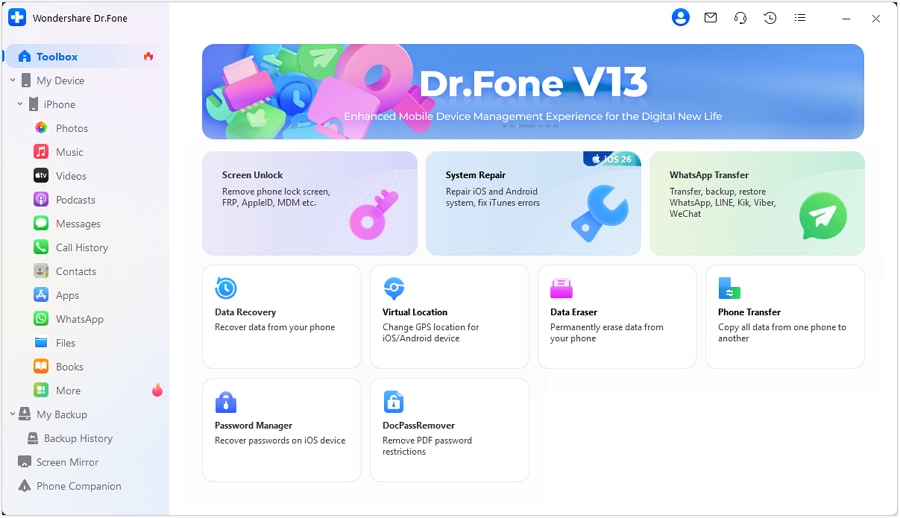
Open the Wondershare Dr.Fone software on your desktop computer once you have completely downloaded and installed the executable package. Next, connect your mobile device securely via a high-quality USB cable. From the main dashboard interface, navigate to and click on Toolbox > WhatsApp Transfer to initialize the dedicated module.
Step 2 Select the WhatsApp backup function.
Once the module fully loads, transition to the side menu and select WhatsApp > Backup WhatsApp messages. This action prompts the software program to instantly begin evaluating and extracting the backup payload for your WhatsApp data. You can easily monitor the real-time backup progress via the visual progress bar displayed on the subsequent screen.

Step 3 Complete WhatsApp backup.
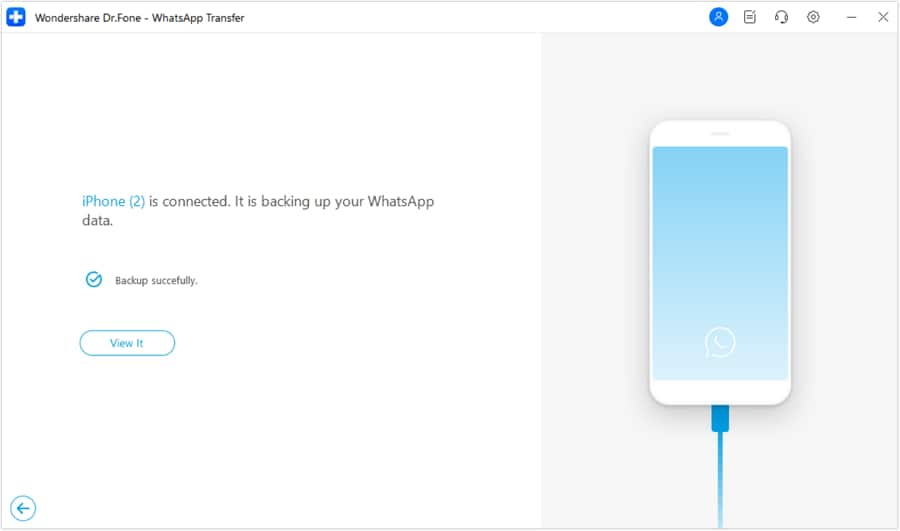
Wait patiently for the progress bar to reach 100 percent. Once the software indicates that it is completely done backing up your WhatsApp data safely, you can immediately click the "View It" button. This action will open your meticulously organized and newly stored chat logs and rich media in a completely separate, highly readable window.
Conclusion
The strategic inclusion of dedicated video calling capabilities directly into the WhatsApp Desktop architecture has truly transformed the modern way we connect and communicate with our global networks. This technological evolution effectively allows busy users to enjoy the immense convenience of conducting long, stable video calls directly from their dual-monitor PCs or Mac laptops, drastically expanding the overall reach, ergonomic comfort, and functional flexibility of the broader WhatsApp ecosystem.
Moreover, leveraging WhatsApp for desktop video calls is widely considered to be a highly seamless, fully encrypted, and profoundly convenient daily process. Immediately after properly installing the standalone WhatsApp Desktop app and seamlessly linking it to your active mobile account via the QR sync framework, you can effortlessly initiate endless one-to-one video calls with your trusted contacts directly from your computer terminal. Beyond basic communication, you also possess the distinct ability to thoroughly back up and preserve your sprawling WhatsApp history securely on your local computer storage using Dr.Fone’s industry-leading WhatsApp Transfer tool.
By ensuring your camera permissions and network strength are optimized, you can now enjoy completely uninterrupted, high-quality video communication, making it easier than ever before to stay intimately connected with friends, distant family members, and professional colleagues across the globe.




FAQ
1. Can I make group video calls on WhatsApp Desktop?
Currently, WhatsApp Desktop supports seamless one-to-one video and voice calls. While group calls are actively supported on the mobile app, bringing multi-participant video capability to the desktop ecosystem is actively being expanded, so keep your desktop application updated to receive the newest feature rollouts as they arrive.2. Why is there no video call icon on my WhatsApp Web browser?
The ability to make a video call is exclusively built into the native, downloadable WhatsApp Desktop application. WhatsApp Web (accessed via Chrome, Safari, etc.) inherently lacks the necessary hardware integration protocols for secure video routing, meaning you must install the desktop app to access the camera icon.3. Do I need to keep my phone connected to the internet during a desktop call?
Thanks to recent multi-device linkage updates by WhatsApp, once you initially link your smartphone to your WhatsApp Desktop app, your phone no longer needs to remain continuously online or connected to the internet for you to initiate or receive video calls on your computer.4. How do I change which camera WhatsApp Desktop uses?
When you start a video call whatsapp desktop session, you can easily change your video source. Simply click the three-dot menu icon that appears on the active call screen overlay, and select the specific external webcam or integrated camera you prefer from the provided drop-down hardware menu.
 Add Wondershare Dr.Fone as a preferred source on Google