Effortlessly manage data through preview, delete, export, etc.

 100% Security Verified | No Subscription Required | No Malware

 :
: 
 ChatGPT
 Perplexity
 Gemini
 Claude
 Grok
Grok
In our increasingly digital world, securing your Samsung device is more important than ever. While features like fingerprint and face unlock offer convenience, they aren't foolproof. This is where the Samsung backup PIN comes in as a critical safety net. Understanding this feature is essential for every Samsung user.
This comprehensive guide for 2026 will explore everything you need to know about the Samsung backup PIN. We'll cover what it is, why it’s non-negotiable for your security, how to set it up, and the exact steps to take if you find yourself locked out of your phone. We will also discuss how to use tools like Dr.Fone for effective device backups to prevent data loss.
In this article
- Part 1. What Is a Samsung Backup PIN?
- Part 2. The Critical Role of a Backup PIN on Your Samsung Device
- Part 3. How to Set Up Your Samsung Backup PIN
- Part 4. How to Change Your Existing Backup PIN
- Part 5. Locked Out? What to Do Without Your Samsung Backup PIN
- Part 6. Proactive Tip: Regularly Back Up Your Samsung Device
Part 1. What Is a Samsung Backup PIN?
A Samsung backup PIN is a secondary, numeric password that serves as a fallback unlocking method. You are typically prompted to create one when you set up a primary screen lock that is not a standard PIN or password, such as a pattern, face unlock, or voice unlock. Its sole purpose is to grant you access to your device if the primary method fails for any reason.
Samsung offers various screen lock options, each with a different level of security. Here's a quick comparison:
| Lock Method | Security Level | Requires Backup PIN? |
|---|---|---|
| Swipe | Very Low | No |
| Face Unlock | Low | Yes |
| Pattern | Medium | Yes |
| PIN | High | N/A (Is a primary method) |
| Password | Very High | N/A (Is a primary method) |
Essentially, if your phone doesn't recognize your face, you forget your complex pattern, or a software glitch prevents the primary lock from working, the backup PIN is your key to get back in without losing your data. It acts as a master key for your chosen lock screen.

Part 2. The Critical Role of a Backup PIN on Your Samsung Device
While convenient, alternative unlocking methods like Face Unlock and Pattern Lock have inherent vulnerabilities. Understanding these limitations highlights why a backup PIN isn't just an option—it's a necessity.
- Face Unlock Limitations: This feature works by recognizing your facial features. However, it can be less secure because someone with a strong resemblance to you might be able to unlock your device. Furthermore, poor lighting, a new pair of glasses, or even a bad angle can cause it to fail, leaving you locked out.
- Pattern Lock Forgetfulness: A pattern lock requires you to connect dots on a grid. While seemingly simple, it's surprisingly easy to forget a complex pattern, especially if you change it infrequently. Repeated incorrect attempts by you or even a child playing with your phone can lead to a temporary or permanent lockout.
So, what happens if you can't unlock your phone and have no backup PIN?
Without a backup PIN to fall back on, you face a serious problem. After exhausting other options like your Google account credentials (which may not always work), your only remaining choice is often a factory reset. This action erases all data stored on your phone's internal memory—photos, contacts, messages, and apps. This potential for catastrophic data loss is the single most important reason to always set up and remember your backup PIN for Samsung.
Part 3. How to Set Up Your Samsung Backup PIN
Setting up a backup PIN is part of the process of enabling a primary screen lock like a pattern or face unlock. If you haven't set a lock screen yet, here’s how to do it and create your backup PIN along the way.
-
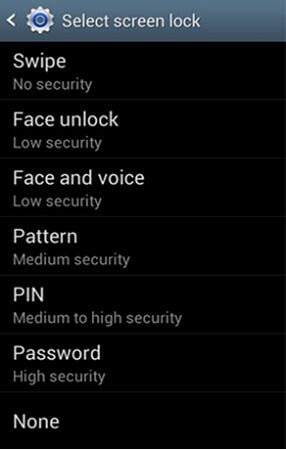
Step 1 Navigate to Security Settings
Open the Settings app on your Samsung device. Scroll down and tap on Lock screen, then select Screen lock type.
-
Step 2 Choose a Lock Method
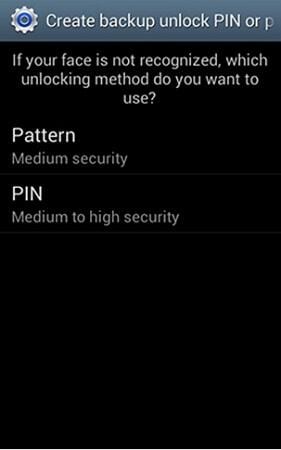
Select one of the methods that requires a backup, such as Pattern or Face. The system will then guide you through setting up that method first.
-
Step 3 Create Your Backup PIN
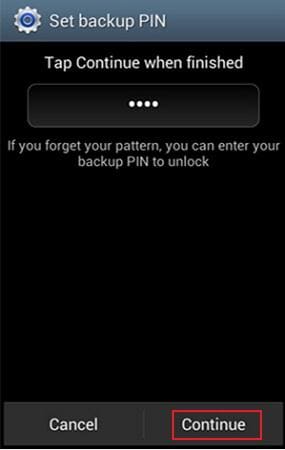
After setting your primary lock (e.g., drawing your pattern), you will be automatically prompted to create a backup PIN. Enter a numeric PIN that is 4 to 16 digits long and easy for you to remember but hard for others to guess. Tap Continue.
-
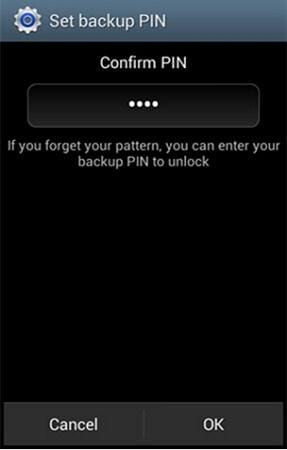
Step 4 Confirm Your PIN
Re-enter the same PIN to confirm it. Tap OK to finalize the process. Your screen lock is now active, and your backup PIN is securely in place.
Part 4. How to Change Your Existing Backup PIN
If you feel your backup PIN has been compromised or you simply want to change it to something more memorable, you can do so easily. The process involves re-configuring your primary screen lock.
-
Step 1 Access Screen Lock Settings
Go to Settings > Lock screen > Screen lock type.
-
Step 2 Authenticate Yourself
You will be asked to enter your current screen lock information (e.g., draw your pattern or enter your current PIN) to verify your identity. Enter it and proceed.
-
Step 3 Re-select and Re-configure
From the list of lock types, you can either select your current method again (e.g., 'Pattern') or choose a new one. The setup process will begin again, which will include a prompt to set a new backup PIN. Follow the on-screen instructions to set a new pattern/face scan and then enter your new desired backup PIN twice to confirm it.
Part 5. Locked Out? What to Do Without Your Samsung Backup PIN
Forgetting both your primary lock and your backup PIN can be a stressful experience. However, you still have options. One method can save your data, while the other will unfortunately erase it.
Solution 1: Unlock Your Samsung Without Data Loss (Recommended)
Before resorting to drastic measures, a specialized tool like Dr.Fone - Screen Unlock (Android) can be a lifesaver. This software is designed to bypass various types of lock screens on many Samsung and LG devices without wiping your data. For other Android brands, it can remove the lock screen but will require data erasure. It offers a secure and effective way to regain access to your device when you're completely locked out.
 Unlock Android phone in seconds.
- Remove PIN, pattern, password, fingerprint.
- Bypass Google FRP lock easily.
- Works on all Android brands & models.
- No tech skills required – user-friendly.
Solution 2: The Last Resort - Performing a Factory Reset
If you don't have a backup and can't use an unlocking tool, the final option is a factory reset. Warning: This process will permanently delete all data from your phone's internal storage, including apps, photos, and files, returning it to its original state.

-
Step 1 Power Down Your Device
Switch off your Samsung phone completely. If it's unresponsive, you might need to hold the power button for a longer time or remove the battery if possible.
-
Step 2 Enter Recovery Mode
Press and hold one of the following key combinations simultaneously until you feel a vibration or see the 'Android system recovery' screen:
- Volume Up + Power Key
- Volume Up + Home + Power Key
- Volume Down + Power Key
-
Step 3 Initiate the Data Wipe
Use the Volume Down button to scroll through the menu and highlight the “Wipe data / factory reset” option. Press the Power key to select it.
-
Step 4 Confirm the Deletion
Use the Volume Down button again to select “Yes -- delete all user data” or a similar confirmation message. Press the Power key to begin the reset process.
-
Step 5 Reboot Your Device
Once the reset is complete, the “Reboot system now” option will be highlighted. Press the Power key to restart your phone. It will now be unlocked but completely wiped.
Part 6. Proactive Tip: Regularly Back Up Your Samsung Device
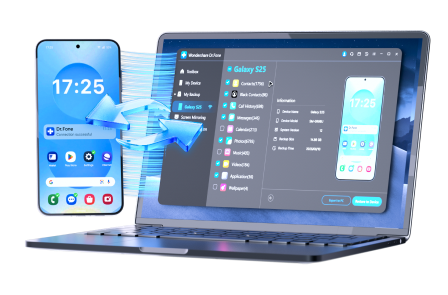
The risk of getting locked out highlights the immense importance of having a current backup of your data. A tool like Dr.Fone Basic provides a simple and reliable way to back up everything from photos and videos to contacts and messages, ensuring your digital life is safe regardless of what happens to your phone.
- Effortlessly manage data through preview, delete, export, etc.
- Transfer all data between devices.
- Robust backup solutions for reliable data protection.
- Mirror screens to PC for meetings, teaching, and control.
Here’s how to back up your Samsung device using Dr.Fone:
-
Step 1 Connect Your Device
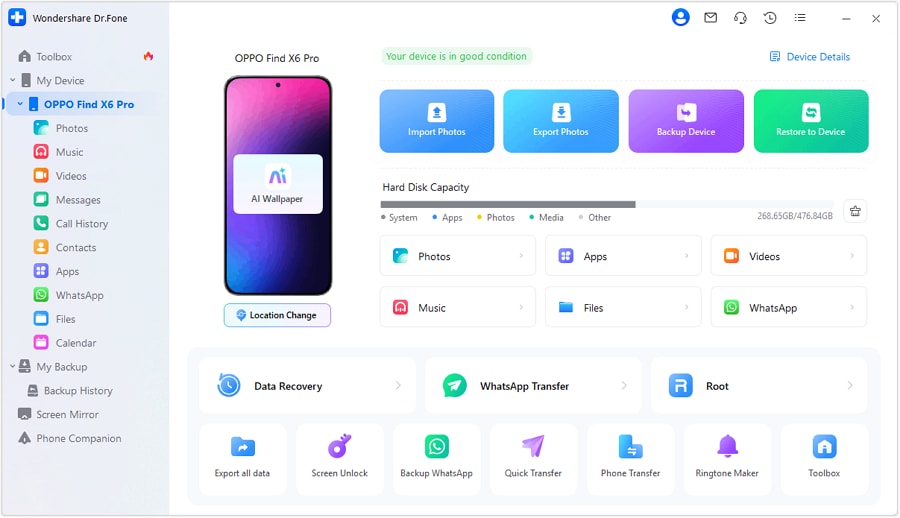
Launch Dr.Fone on your computer and connect your Samsung phone with a USB cable. From the main toolbox, select Phone Backup.
-
Step 2 Initiate the Backup
On the next screen, click the Back Up button. If you have previous backups, you can also click "View backup history" to manage them.
-
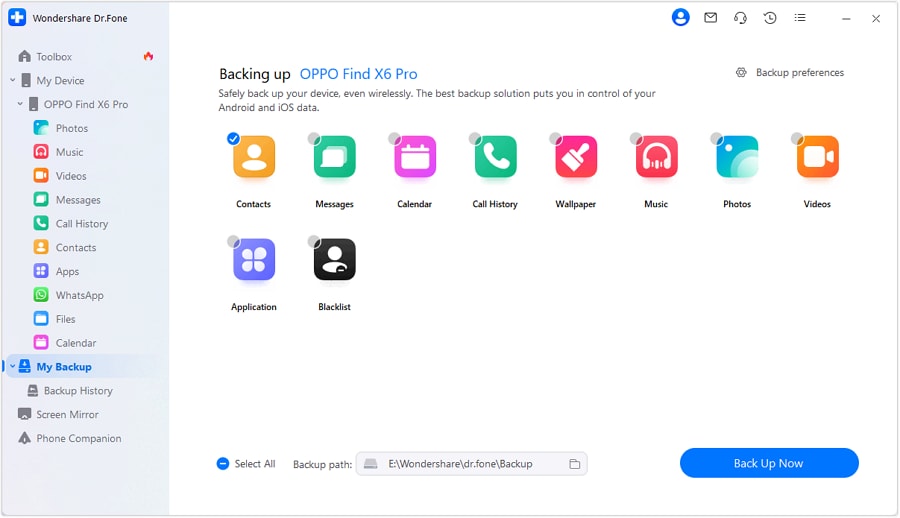
Step 3 Select Data Types
Dr.Fone will display all the data types available for backup. Select the categories you want to save, such as 'Gallery' for photos, 'Contacts', 'Messages', and more. Click Back Up to start the process.
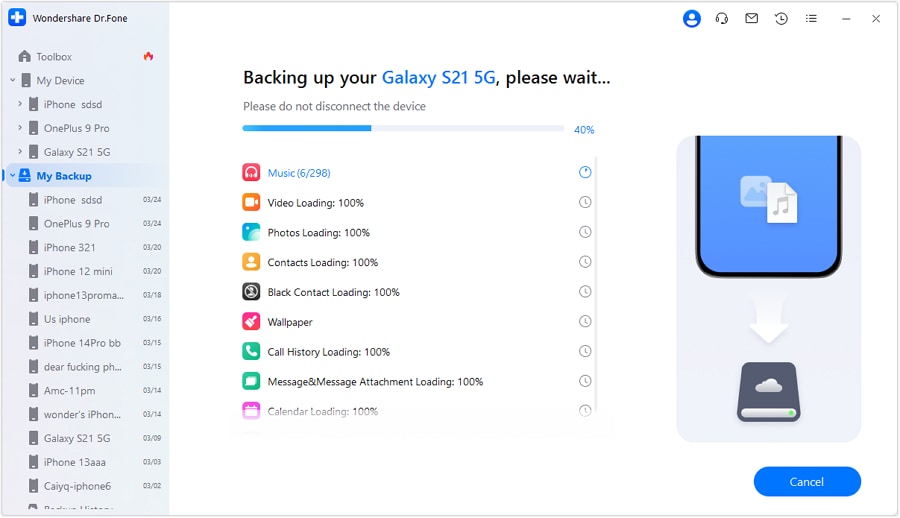
Once the backup is complete, your data will be safely stored on your computer, ready to be restored whenever you need it.




Conclusion
Mastering your Samsung device's security features is crucial, and the backup PIN is a cornerstone of that security. It's your essential fallback for less secure but convenient options like pattern and face unlock. This guide has shown you how to set up, change, and use your backup PIN effectively.
More importantly, we've outlined clear steps for what to do in the worst-case scenario of a lockout, emphasizing data-saving solutions like Dr.Fone - Screen Unlock before resorting to a factory reset. By combining the smart use of a backup PIN with regular data backups using the Dr.Fone toolkit, you can ensure your device is both secure and your valuable information is always protected.
FAQ
-
1. What is the difference between a normal PIN and a Samsung backup PIN?
A normal PIN is a primary lock screen method. You enter it every time you unlock your phone. A backup PIN is a secondary method you only use when your primary method (like a pattern or face scan) fails. You set the backup PIN during the setup of those other lock types. -
2. Can I disable the Samsung backup PIN?
No, you cannot disable the backup PIN feature itself if you are using a pattern, face, or voice unlock. It is a mandatory security measure required by the Android system for these specific lock types to ensure you can always access your device. To not have a backup PIN, you must switch your primary lock screen to a standard PIN or Password. -
3. I entered the correct backup PIN, but it's not working. What now?
If you are certain you're entering the correct backup PIN and it's being rejected, there might be a temporary software glitch. Try restarting your device first. If the issue persists, your best option is to use a professional tool like Dr.Fone - Screen Unlock to bypass the screen without data loss, as this avoids the need for a factory reset. -
4. Does a factory reset remove the backup PIN lock?
Yes, a factory reset (also called a hard reset) will remove all locks from the device, including the primary lock and the backup PIN. However, it achieves this by completely erasing all user data, settings, and files from your phone's internal storage, returning it to its out-of-the-box state.
 Add Wondershare Dr.Fone as a preferred source on Google