
WhatsApp Backup Extractor for PC: View, Read, and Export WhatsApp Backups
WhatsApp Manage
- WhatsApp Transfer
- 1. Save Whatsapp Audio
- 2. Transfer WhatsApp Photos to PC
- 3. WhatsApp from iOS to iOS
- 4. WhatsApp from iOS to PC
- 5. WhatsApp from Android to iOS
- 6. WhatsApp from iOS to Android
- 7. Whatsapp Communities Messages
- 8. Switch Between WhatsApp and GBWhatsApp
- 9. Recover Deleted WhatsApp Call History
- 10. Delete Call History on WhatsApp
- 11. Starred Messages in WhatsApp
- 12. Send Bulk SMS on WhatsApp
- 13. Download Whatsapp Audio Notes
- 14. Saving Videos from WhatsApp
- WhatsApp Backup
- 1. Access WhatsApp Backup
- 2. WhatsApp Backup Extractor
- 3. Backup WhatsApp Messages
- 4. Backup WhatsApp Photos/Videos
- 5. Backup WhatsApp to PC
- 6. Backup WhatsApp to Mac
- 7. WhatsApp Backup Stuck
- 8. Restore WhatsApp Backup from Google Drive to iCloud
- 9. Find the Best WhatsApp Clone App
- WhatsApp Restore
- 1. Top Free WhatsApp Recovery Tools
- 2. Best WhatsApp Recovery Apps
- 3. Recover WhatsApp Messages Online
- 4. Recover Deleted WhatsApp Messages
- 5. Restore Deleted WhatsApp Messages
- 6. Retrieve Deleted WhatsApp Messages
- 7. Recover Deleted WhatsApp Images
- 8. WhatsApp Restoring Media Stuck
- 9. Restore Old WhatsApp Backup
- 10. See Deleted WhatsApp Messages
- WhatsApp Tips
- 1. Best WhatsApp Status
- 2. Best WhatsApp Messages
- 3. Most Popular WhatsApp Ringtones
- 4. Best WhatsApp Mod Apps
- 5. What is Blue WhatsApp
- 6. 234 Country Code WhatsApp
- 7. Delete WhatsApp Account
- 8. Hide WhatsApp Ticks
- 9. Hack WhatsApp Account
- 10. Verify WhatsApp without SIM
- 11. Blue Ticks on WhatsApp
- 12. WhatsApp Plus Download
- 13. Grey Tick on WhatsApp
- 14. Does WhatsApp Notify Screenshots
- WhatsApp Problems
- 1. WhatsApp Common Problems
- 2. WhatsApp Calls Not Working
- 3. Whatsapp Not Working on iPhone
- 4. WhatsApp Backup Stuck
- 5. WhatsApp Not Connecting
- 6. WhatsApp Not Downloading Images
- 7. WhatsApp Not Sending Messages
- 8. Couldn‘t Restore Chat History
- 9. WhatsApp Not Showing Contact Names
- WhatsApp Business Manage
- 1. WhatsApp Business for PC
- 2. WhatsApp Business Web
- 3. WhatsApp Business for iOS
- 4. Add WhatsApp Business Contacts
- 5. Backup & Restore WhatsApp Business
- 6. Convert a WhatsApp Account to a Business Account
- 7. Change A WhatsApp Business Account to Normal
- 8. WhatsApp Notifications Are Not Working
- Other Social Apps Manage
- ● Manage/transfer/recover data
- ● Unlock screen/activate/FRP lock
- ● Fix most iOS and Android issues
- Free Download Free Download


Nov 12, 2026 • Filed to: Social App Management • Proven solutions
 TL;DR:
How to read a WhatsApp backup on PC
- iPhone or iTunes/Finder backup: scan the available source with an iPhone backup extractor, preview the WhatsApp data it finds, and save selected items to the computer. An encrypted local backup needs its password.
- A Dr.Fone WhatsApp backup: open it in WhatsApp Transfer to preview and export. PDF, HTML, CSV, and Excel exports are available for both iOS and Android.
- An Android crypt14 file: the file alone is not enough for a standalone viewer. You need the matching decryption key and compatible software, or an authorized phone-backed backup workflow.
- Google Drive versus TXT: a cloud backup is for WhatsApp restoration, not a normal readable Drive document. An exported TXT chat is already readable, but it is not a backup you can import to restore chats.
Ask AI for a summary
 ChatGPT
 Perplexity
 Gemini
 Claude
 Grok
A WhatsApp backup extractor helps you read or export WhatsApp messages from a backup, but the right method depends on where the backup came from. An iPhone backup, an Android local msgstore.db.crypt14 file, a Google Drive backup, and an exported TXT chat are different formats and cannot be opened the same way.
Choose the Right WhatsApp Backup Extractor
| Backup source | Can you read it directly on PC? | Recommended path |
|---|---|---|
| iPhone / iTunes / Finder backup | Not as a normal chat document; encrypted local backups require their password. | Scan an available iPhone or local backup source, then preview and export. |
| Dr.Fone WhatsApp backup | Yes, through WhatsApp Transfer. | Open the existing backup to view and export; no phone restore required. |
| Android msgstore.db.crypt14 | No, it is encrypted; renaming it to .db does not decrypt it. | Check the matching-key or source-phone requirements first. |
| Google Drive WhatsApp backup | No direct human-readable file export | Use the same-account/number Android restore path; do not assume any desktop tool can import a Drive backup directly. |
| Exported WhatsApp TXT chat | Yes | Open the TXT with a text editor; keep any exported media alongside it. It is not a restorable backup. |
For a WhatsApp backup viewer on Windows, choose by input, not just by the word "viewer": a decrypted database, a key-protected Android file, a whole iPhone backup, and a backup created by a desktop app need different readers. Keep an untouched copy of the original backup before importing or converting it.
Google Drive backups: restore in WhatsApp, then make a readable copy
A Google Drive WhatsApp backup is not a chat document you can double-click or preview as messages on PC. To restore it, use the same phone number and Google Account: install WhatsApp on the receiving Android phone, verify that number, and choose Restore from backup when offered. If prompted, enter the encrypted-backup credential associated with that backup.
Before restoring: protect any new chats on the receiving phone. Restoring old chat history replaces new history rather than merging it. Do not uninstall or clear WhatsApp on your only working phone just to obtain a PC-readable file. If you already have access to the chats, make a computer backup and export from it instead. For the official recovery path, use Google's Android WhatsApp restore instructions.
Exported TXT chats: readable archives, not restorable backups
If you already exported a chat from WhatsApp, open its TXT file in a text editor on your computer. When the export includes media files, preserve those files with the text. You do not need a crypt14 decryptor for a TXT export. TXT, PDF, HTML, CSV, and Excel are readable archive formats; do not treat them as files that can be imported to recreate chat history inside WhatsApp.
Part 1. Extract WhatsApp from iPhone or iTunes Backup
Dr.Fone - Data Recovery (iOS) scans available iPhone and backup sources, previews supported recoverable content, and exports selected items to a computer. WhatsApp availability depends on the source, app data present, device, and iOS version: preview the actual messages before relying on a recovery result.

Dr.Fone - Data Recovery (iOS)
Extract and preview supported WhatsApp data from iPhone and backup sources.
- Preview recoverable WhatsApp messages before export.
- Export selected data to a readable computer file.
- Work with supported iOS devices and backup sources.
Read an existing iTunes or local iPhone backup
Keep the complete local backup folder available on the computer, not just a single file taken from it. Scanning an existing backup is a different task from scanning a connected iPhone: you do not need to restore the phone to inspect that backup. For an encrypted Finder, Apple Devices, or iTunes backup, you need its backup password; changing the password for future backups does not unlock an older one.
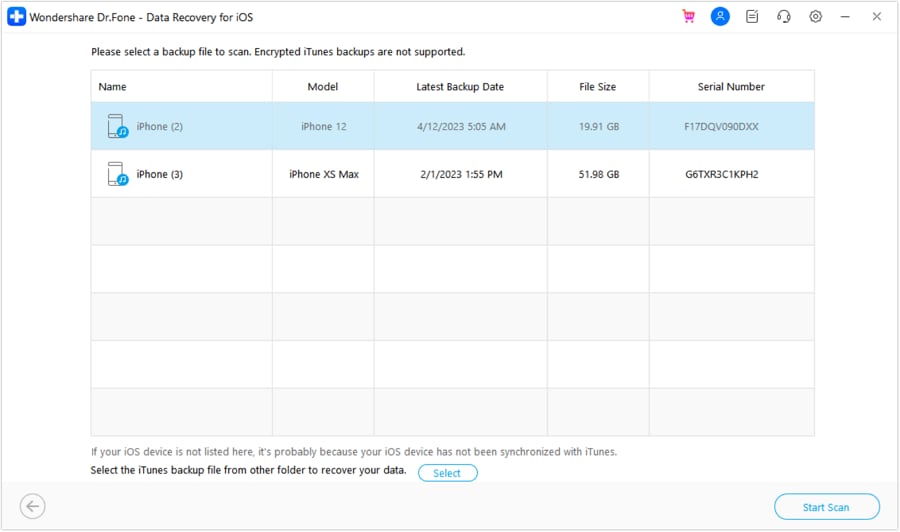
- Choose the backup source. Open Toolbox > Data Recovery > iOS > Recover Data from iTunes. Select the detected backup with the relevant date and click Start Scan.
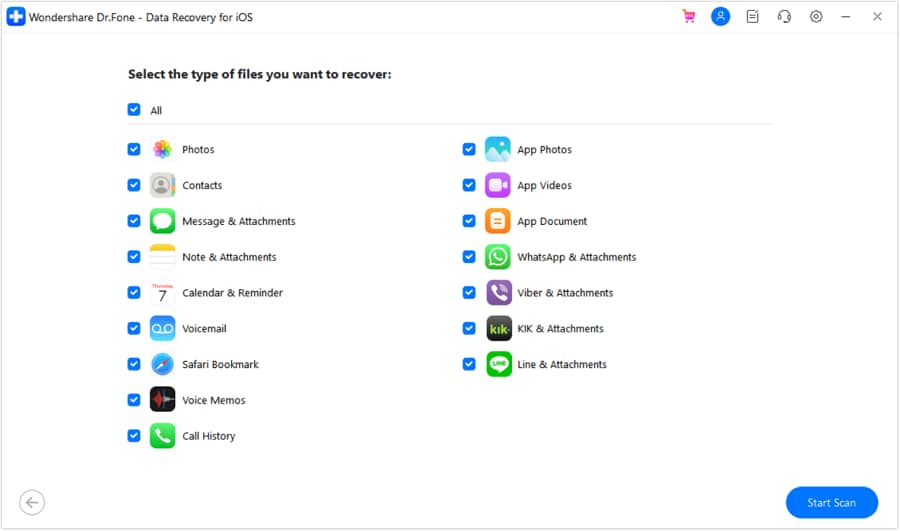
- Scan the available data types. Select the categories offered for that backup and start the scan. Use the results to establish whether the WhatsApp messages and attachments you need are available; a backup's name alone does not establish that.
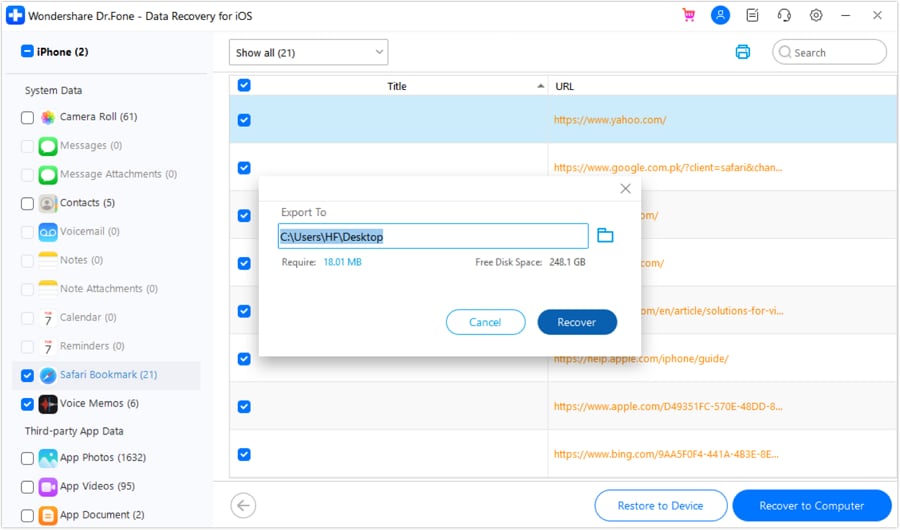
- Preview and save to the computer. Select the records you can preview, choose Recover to Computer, set a destination folder, and click Recover. Open the saved files to check the content. Do not choose Restore to Device when you only want a readable computer copy.

Scan an accessible iPhone instead
Use this branch when the source is the iPhone itself rather than an existing computer backup. Unlock and trust the computer if prompted. Dr.Fone's Mac interface can differ from the Windows screenshots.
- Open the device recovery path. Launch Toolbox > Data Recovery > iOS > Recover Data from an iOS device, connect the iPhone, and choose the recovery mode appropriate to the categories available on your device.
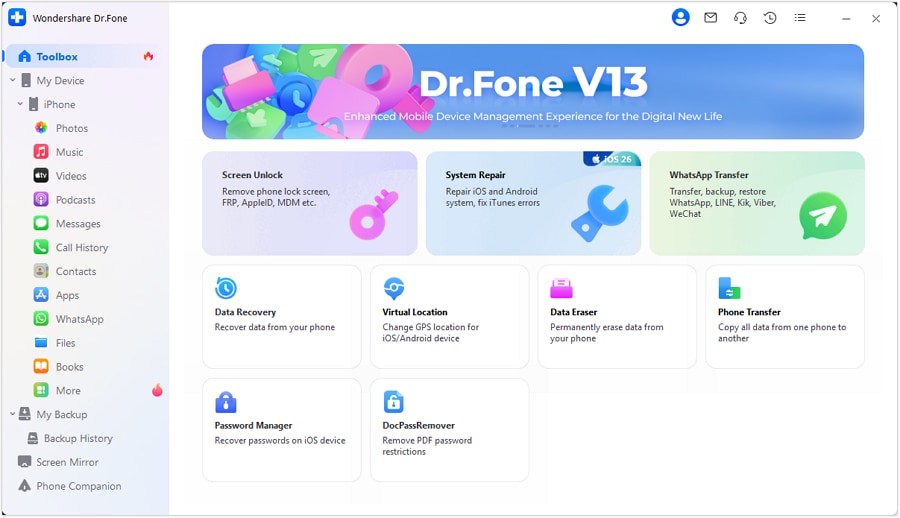
- Select data and scan. Select the data types offered for the device and mode, then click Start Scan. Keep the device connected until the scan finishes.
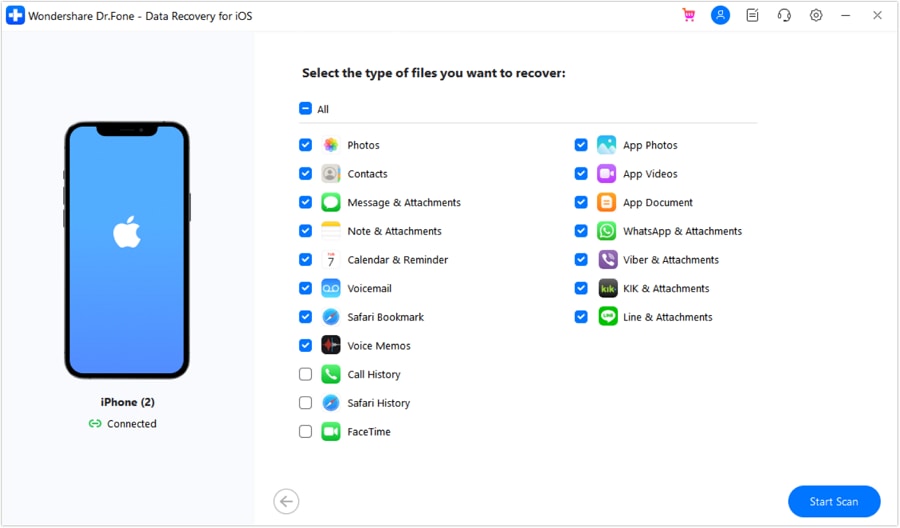
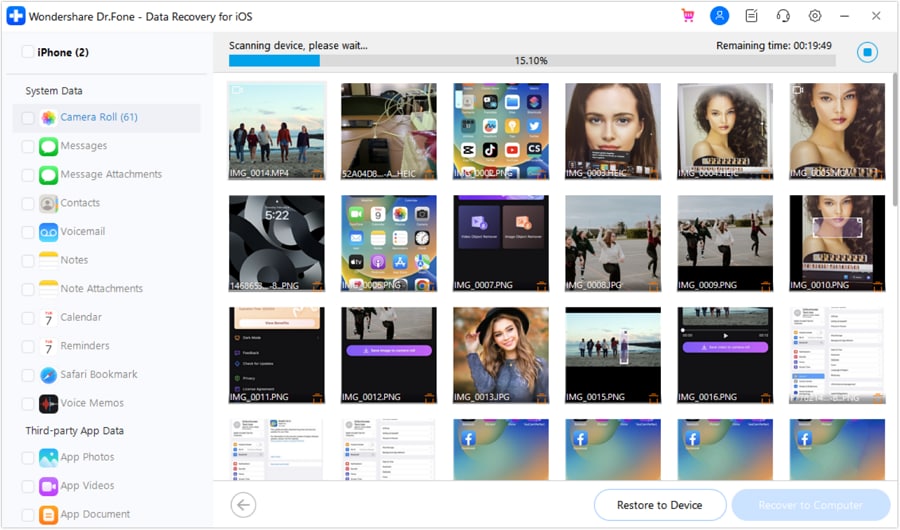
- Preview and export available records. Select the messages or attachments found, click Recover to Computer, choose the folder, and confirm Recover. If the required WhatsApp data is not in the preview, do not assume a paid export will recover it. If the chats are still accessible in WhatsApp, create a WhatsApp-specific backup instead.
Part 2. Back Up, View, and Export WhatsApp with Dr.Fone
If your goal is to create a readable WhatsApp backup before changing phones, Dr.Fone - WhatsApp Transfer can back up WhatsApp to your computer, let you view supported backup content, and export selected items.
Dr.Fone - WhatsApp Transfer
Back up, preview, export, and restore supported WhatsApp data.
- Back up WhatsApp chats to a computer.
- Preview backup content before export or restore.
- Transfer WhatsApp between supported Android and iOS devices.
Choose by the output you need: export to PDF for a readable fixed-layout record, HTML for browser viewing, or CSV/Excel for tabular review. These four export formats are supported for both iOS and Android. A readable export is different from restoring a backup to WhatsApp on a phone.
Create an iPhone WhatsApp backup to read on PC or Mac
Connect an accessible iPhone to the computer, unlock it, and trust the connection if prompted. Open Toolbox > WhatsApp Transfer.
- Start a WhatsApp backup. Select WhatsApp > Backup WhatsApp messages for the connected iPhone.

- Wait for the backup. Keep the phone connected and follow the progress screen until the backup completes.
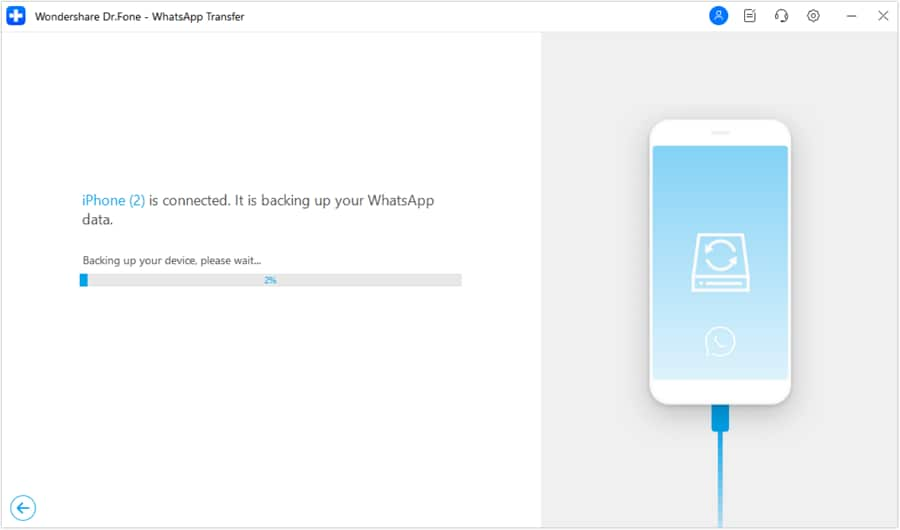
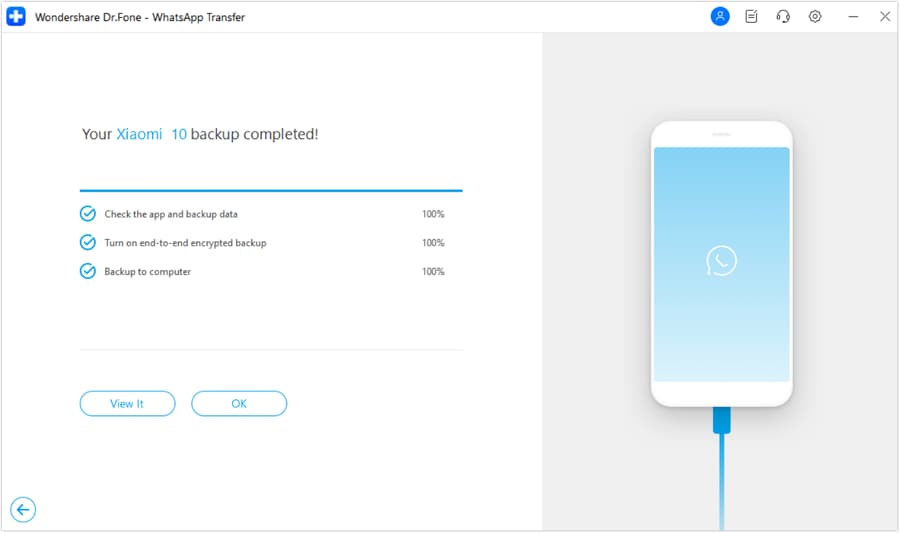
- Open the result. At the completion screen, click View It to inspect the saved chats. Continue with the preview and export choices below.
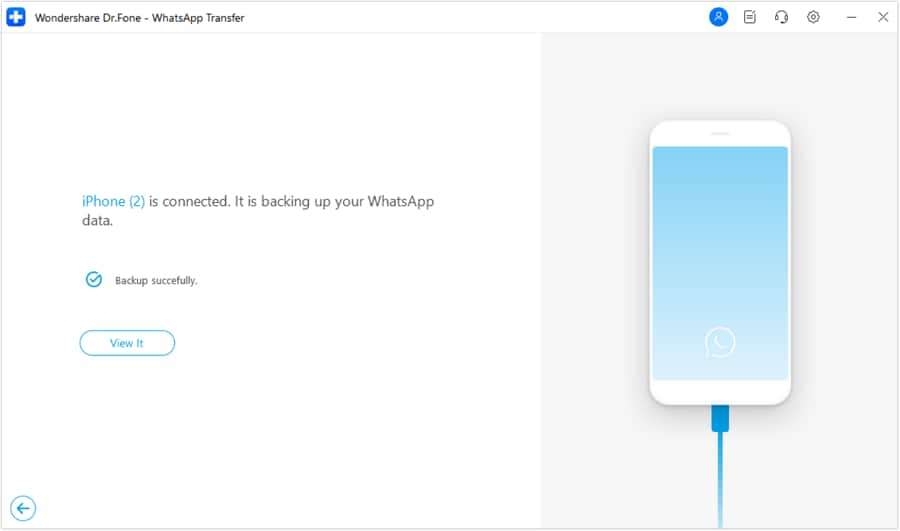
Create an Android WhatsApp backup on your computer
Connect your Android phone and open Toolbox > WhatsApp Transfer. You will set up an encrypted WhatsApp backup on the connected phone, then save a computer copy for viewing and export. Keep your encryption key private and saved somewhere you control. If you have only a copied crypt14 file, use the Android database options below instead.
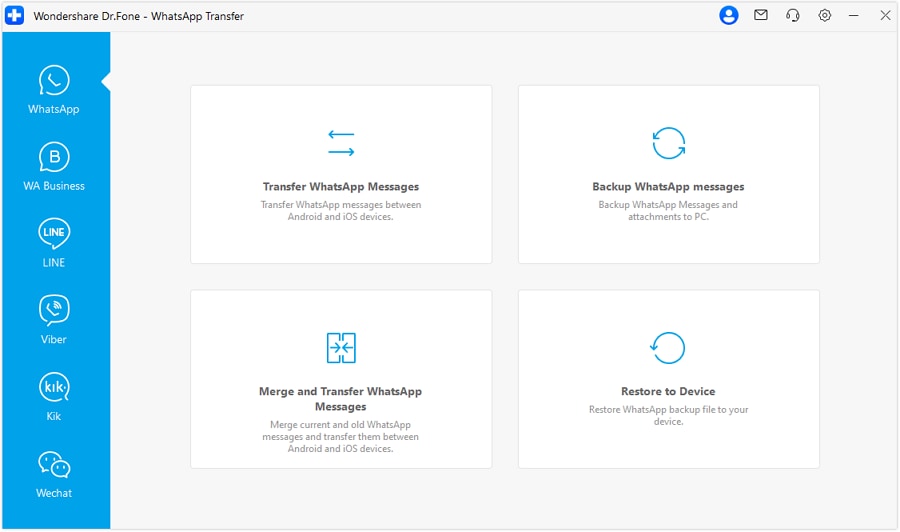
- Choose the Android backup. Select Backup WhatsApp messages and follow the connected-device prompt.
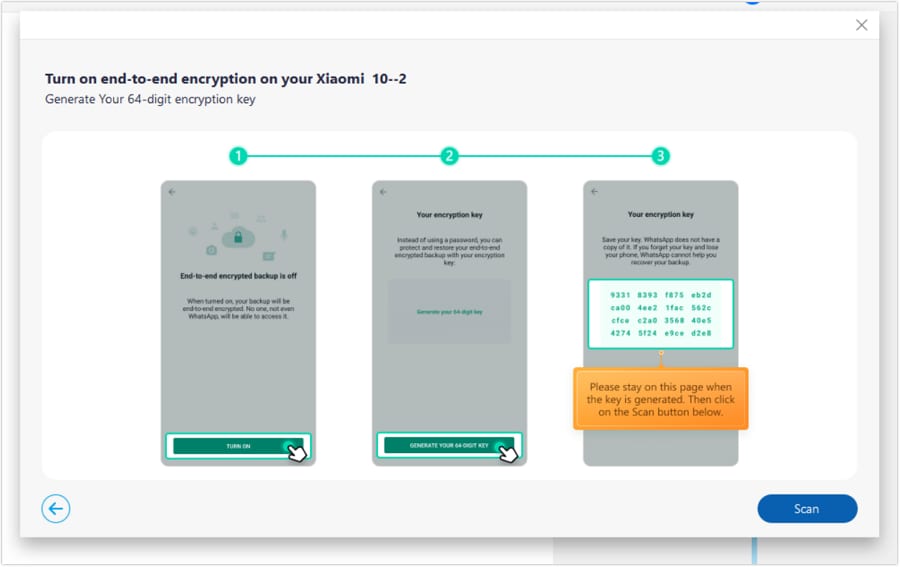
- Set up the requested encrypted-backup key. On the phone, open WhatsApp > Settings > Chats > Chat backup > End-to-end encrypted backup. In this workflow, choose Use 64-digit Encrypted Key Instead, then follow Turn On > Generate Your 64-Digit Key. Use Scan on the computer when instructed.
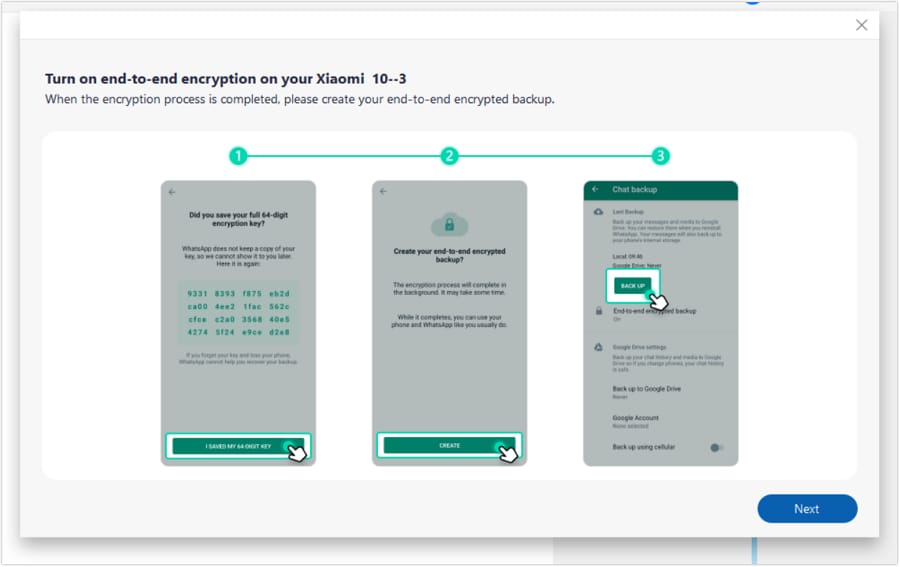
- Create the phone backup. After saving the key, tap I Saved My 64-Digit Key and Create on Android. Let that backup finish, then click Next on the computer.
- View the finished computer backup. When Dr.Fone reports completion, click View It. Use the preview/export branch below to save readable records.
View and export an existing Dr.Fone WhatsApp backup
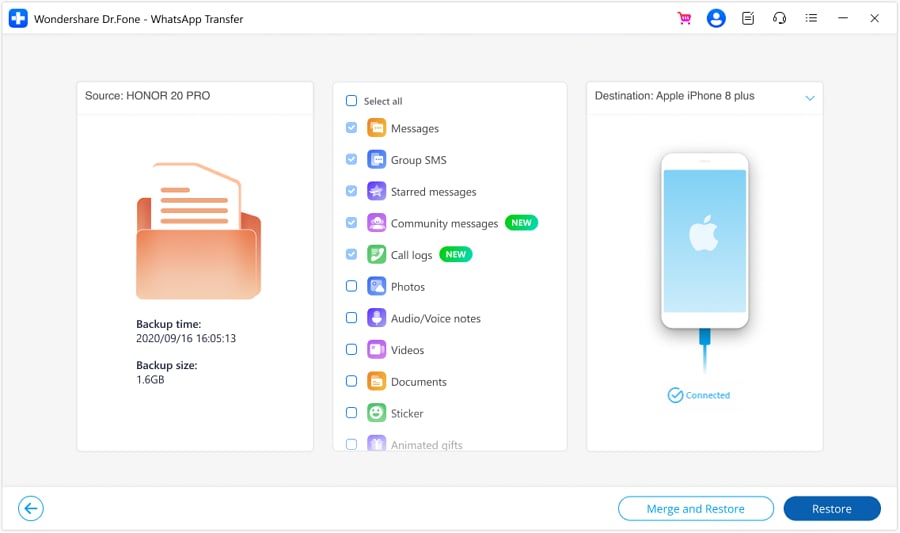
In WhatsApp Transfer, open WhatsApp > Restore to Device to reach the saved-backup list, select the backup by device and date, and click View. This opens the preview; it does not mean you have started a phone restore. Select the chats or items to save, choose the export option and an available PDF, HTML, CSV, or Excel format, and save the result to your computer. Open the saved file and check that the required conversations and attachments are present.
If you choose phone restoration instead: back up the destination's current WhatsApp history first and read its replace/backup prompt; restoring a backup may replace existing chats rather than merge them. For Android-to-iPhone transfer, you can select the data types to move; available choices vary by transfer direction. Before exporting, restoring, or transferring, check whether your chosen function requires a paid license.
Part 3. Read Android WhatsApp Backups and msgstore.db.crypt14 Files
You cannot read an encrypted msgstore.db.crypt14 file just by opening it in SQLite, changing its extension, or supplying a phone number to a generic file viewer. A standalone decryptor needs the matching decryption key and support for that file format. A crypt14 device key is not automatically interchangeable with an encrypted cloud backup's password or recovery credential.
If you only have the encrypted file and no matching key or authorized source-phone workflow, there is no supported keyless reading method in the tools described here. Keep the original file intact. If your chats still open on the phone, create a supported Android computer backup; if you need to restore a cloud backup into WhatsApp, use the account-based restore route.
Free offline viewer or guided desktop backup tool?
- Already have a decrypted
msgstore.db, or the matching key: WhatsApp Msgstore Viewer is a free, open-source option for reading contact and group chats, call logs, and local media. It supports crypt12/14/15 files with the matching key. Compatibility also depends on the database structure used by your WhatsApp version; this is a third-party tool, not a WhatsApp product. - Need contact names and attachments: retain the optional
wa.dbcontact database and the WhatsApp media directory alongside the message database. Without them, a viewer can show phone numbers instead of saved names or lack full media even when text messages are readable. - Have only the phone and want an ongoing computer archive: the Dr.Fone WhatsApp backup and export workflow handles creating a backup, previewing content, and exporting readable records rather than asking you to manage a raw database yourself.
- Have an older backup: WhatsApp Viewer supports crypt5, crypt7, crypt8, and crypt12, with TXT/HTML/JSON export. For a crypt14 backup, choose a compatible viewer such as WhatsApp Msgstore Viewer instead.
Online viewers: local browser processing is not the same as uploading
A WhatsApp backup reader with a web interface can either process files locally or send them to a server. For example, WhatsApp Msgstore Web Viewer is designed to process files in your browser and requires a decryption key for encrypted input. It has been tested with crypt15; older formats may not open correctly.
Before opening sensitive chats, check whether the viewer uploads your files and how it stores your data. If you want to keep backups off an external server, choose software you can run locally. Local processing does not by itself make a tool secure, so use a trusted copy and keep the original backup intact. Never share your backup and key publicly or send verification codes to another person.
Dr.Fone - Data Recovery (Android)
Recover and preview supported Android WhatsApp data with a desktop workflow.
- Scan supported Android devices and recovery sources.
- Preview recoverable WhatsApp messages before exporting.
- Use a local desktop workflow instead of uploading backups to unknown websites.
For data on an Android device, not a standalone crypt14 file: Data Recovery scans supported device data and previews what is recoverable. This is a separate task from decrypting a copied backup, and a scan cannot guarantee that deleted chats still exist.
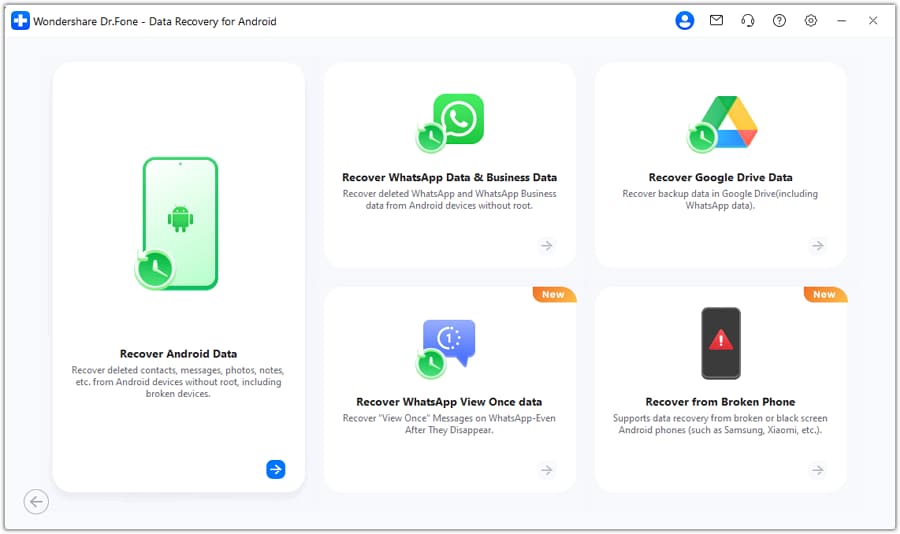
- Open the device scan. Launch Toolbox > Data Recovery > Android > Recover Android Data, choose Standard Recovery, click Start Scan, and connect the phone as prompted.
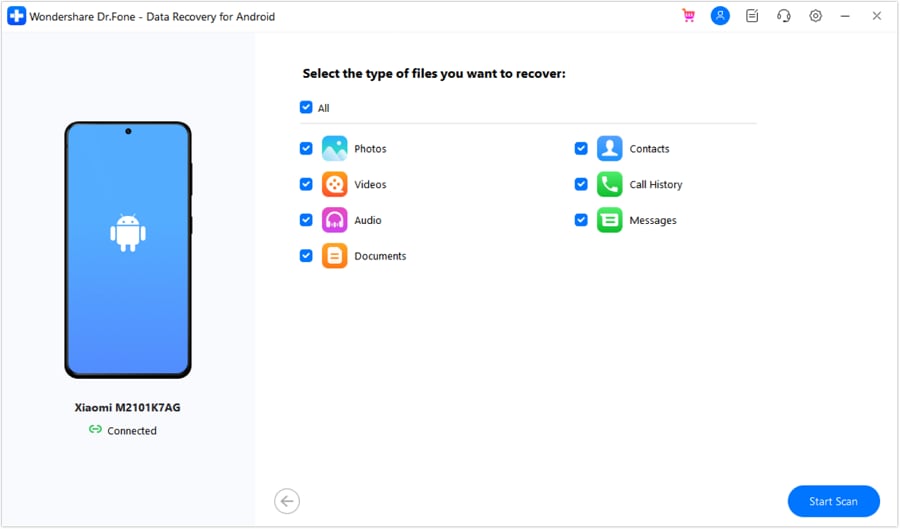
- Choose the offered data types and scan. Select the WhatsApp category when available for your device and mode, then click Start Scan. Keep the phone connected while the scan runs.
- Preview and recover the records found. Filter the results, select the items you need, click Recover, choose a computer folder, and confirm. Check the saved records rather than assuming every deleted message was recovered.
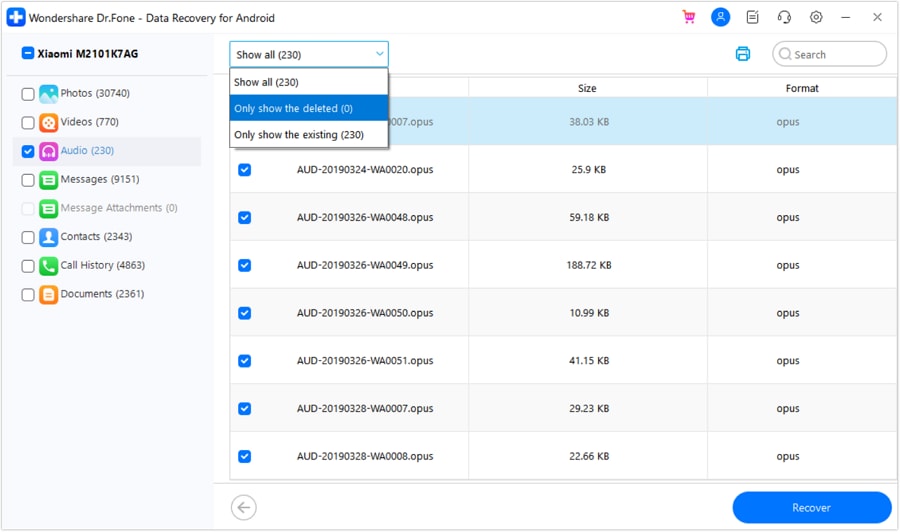
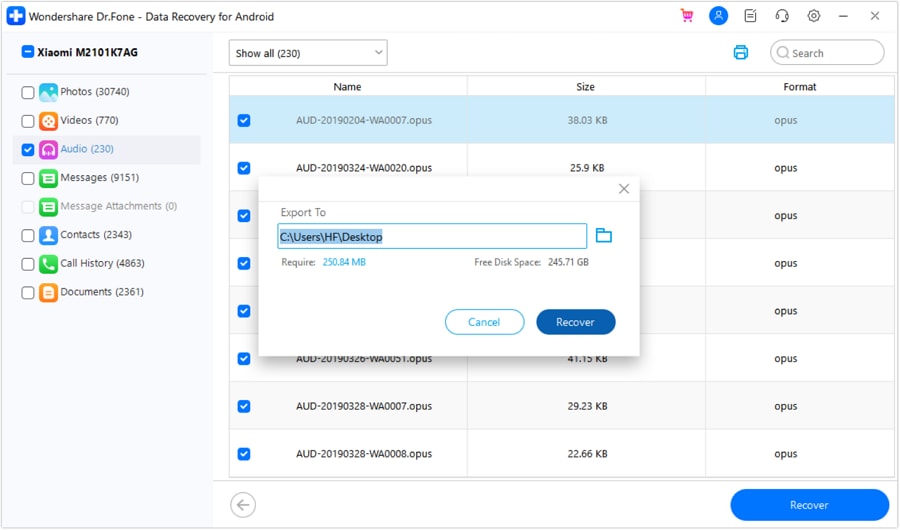
If you need Advanced Recovery for deleted app data, use a Windows computer and a supported phone running Android 9-13; Huawei devices running Android 12-13 are excluded. Scan WhatsApp and WhatsApp Business separately from other app categories. This mode recovers device data; it does not unlock a standalone crypt14 file without its key.
Part 4. Backuptrans WhatsApp Backup Viewer
Backuptrans lets you import Android WhatsApp backups, including crypt14 backups, into a local database to read conversations, export PDFs, print chats, or transfer them to a phone. To import a backup, you need access to the original Android phone and its WhatsApp phone number. Prepare the data with Backuptrans WA Sync's Copy Data function, copy the WhatsApp folder to your computer, and verify the number associated with the backup.
Before you begin: the Backuptrans setup instructions include changing Google Drive backup settings, disabling two-step verification, and installing WA Sync on the source phone. Keep a separate copy of your existing backup before making changes. If you prefer not to change those security settings, choose a local viewer with your matching decryption key or create a computer backup from your connected phone. A copied encrypted file on its own is not enough for this import process.
Once you have prepared the data on your source phone, import it on your computer:
- Copy the prepared WhatsApp folder. After backing up on the phone and completing WA Sync > Copy Data, copy the complete
WhatsAppfolder fromAndroid/media/com.whatsappto the computer, preserving its databases and media.
- Start the import. In Backuptrans WhatsApp Transfer, choose File > Import Android WhatsApp Backup Data, or the equivalent command on the local database.

- Select the encrypted database. Browse to the copied WhatsApp folder and choose your backup database. The screenshot below shows
msgstore.db.crypt12; for a crypt14 backup, select yourmsgstore.db.crypt14file instead. Crypt15 compatibility is not confirmed, so use a crypt15-compatible viewer with the matching key for that format.
- Complete your own number verification. Enter the phone number associated with that backup and complete the vendor's verification prompt, including the SMS code if requested, inside the application you chose to trust. Do not share that code with another person. Wait for the chats to load into the local database.

- Read, export, or print. Inspect the imported conversations, then use the available export or print action. Use PDF export for a readable record. Transferring messages to a phone is a separate action; preserve the destination's existing history before choosing it.

Conclusion
The right WhatsApp backup extractor matches the source you actually have. Choose iOS recovery to inspect an available iPhone or local backup source, WhatsApp transfer to create, preview, and export a computer backup, or a compatible local viewer for an Android database with the required key. Keep readable exports separate from backups meant for in-app restoration.
If your source is an iPhone or an existing iTunes backup, start with the iOS Data Recovery download below and preview the available content before recovery. For other sources, return to the backup-source selector.
 safe & secure
4,624,541 people have downloaded it
FAQs
You Might Also Like


 >
How-to
>
Social App Management
> WhatsApp Backup Extractor for PC: View, Read, and Export WhatsApp Backups

Alice MJ
staff Editor