Teleport your device anywhere instantly with one click.


 100% Security Verified | No Subscription Required | No Malware

 :

 ChatGPT
 Perplexity
 Gemini
 Claude
 Grok
A Snapchat fake GPS setup and Ghost Mode solve different problems. Ghost Mode changes whether friends see your position on Snap Map. GPS simulation supplies a test coordinate to a supported phone or app. If you simply do not want to share your whereabouts, start with the built-in privacy setting rather than assuming a fictional pin is safer.
For a location test, iPhone and Android use different setup paths. The original iPhone method uses a connected computer and Teleport Mode; Android uses a selected mock-location app. Both need a verification step, because a changed coordinate does not guarantee Snapchat will refresh to it or that another service will accept it. The instructions below retain the original procedures while making those boundaries explicit.
In this article
Part 1: What Snapchat's location feature reveals
Snap Map provides a map-based view of location sharing. When a friend has chosen to share with you, you can inspect the position and information Snapchat makes available. This does not mean every person on your friends list can retrieve your live coordinates whenever they want. Your sharing audience and device permissions matter.
Open the Map using the navigation in your installed Snapchat version. The older pinch gesture described in the source is not the only interface pattern, so do not treat a missing gesture as evidence that the feature is unavailable. Tap a shared avatar to inspect the information actually shown, including whether the position appears current.
Background updates depend on the permission and sharing arrangement. Snapchat's current help guidance distinguishes 'Only while using' access from 'Always' access, so closing the app is not a universal stop-sharing method. A location label in a Story or a Snap submitted to the public map is also a separate disclosure from your friends-only map position.
How to turn map visibility off
Open Snap Map settings and enable Ghost Mode. Where timer choices appear, select the appropriate duration or Until Turned Off. This is the direct control for hiding your location from friends on the map, not a way to make the phone report a different GPS coordinate.
When you want to share again, switch Ghost Mode off and review the audience rather than restoring broad visibility automatically. You can choose the friends you intend to include. Separately inspect live-location conversations and phone permissions: Snapchat can still receive location in Ghost Mode, and submitted map Snaps may still appear publicly.
Part 2: Decide why you need another location
Privacy concerns are understandable, particularly when a shared position reveals routines or places you did not intend to disclose. However, a Snapchat spoofing tool is not a substitute for deciding who can receive your location. It does not erase account information, previous posts, messages, or other clues about your whereabouts.
If you cannot change sharing settings because someone else controls the device or pressures you to keep sharing, do not rely on an unverified GPS change as a safety measure. Review your situation using a device you control and consider help from someone you trust. A test location cannot guarantee that nobody will know where you actually are.
The other scenario in the original article is a playful fictional trip. You can demonstrate a simulated place without misleading friends into relying on it for a meeting or emergency. Be clear that the pin is part of a demonstration, and respect Snapchat's rules rather than treating technical access as permission to bypass protections.
Part 3: Test an iPhone position without jailbreak
 Set your map route to simulate GPS movement.
- Set your wanted movement speed.
- HD and large map view to check location.
- Fake GPS location to anywhere.
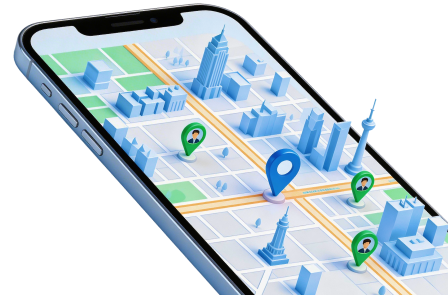
Dr.Fone - Virtual Location offers a desktop map for choosing simulated GPS coordinates on supported devices. The source's iPhone workflow uses a cable connection and does not require jailbreaking. Check the current iPhone, system, and desktop-edition requirements before installing it.
You can search with a place name, address, or coordinates, refine a point on the map, and use route controls when you need simulated movement. Those are GPS functions. They do not promise Snapchat anonymity, universal dating or game support, hidden Story views, or a particular map update time. Keep real navigation outside the test session.
Step 1 Install and open Virtual Location
Install the appropriate desktop edition on your Windows computer or Mac. Launch the toolkit and select Virtual Location. Connect your own iPhone using a working cable and keep the phone unlocked for the connection prompts.
Step 2 Complete device recognition
Approve the required trust prompt on the iPhone, review the software terms, and continue through Get Started or its current equivalent. Wait for successful recognition before searching for a destination; a map test is not meaningful when the intended phone is not connected.
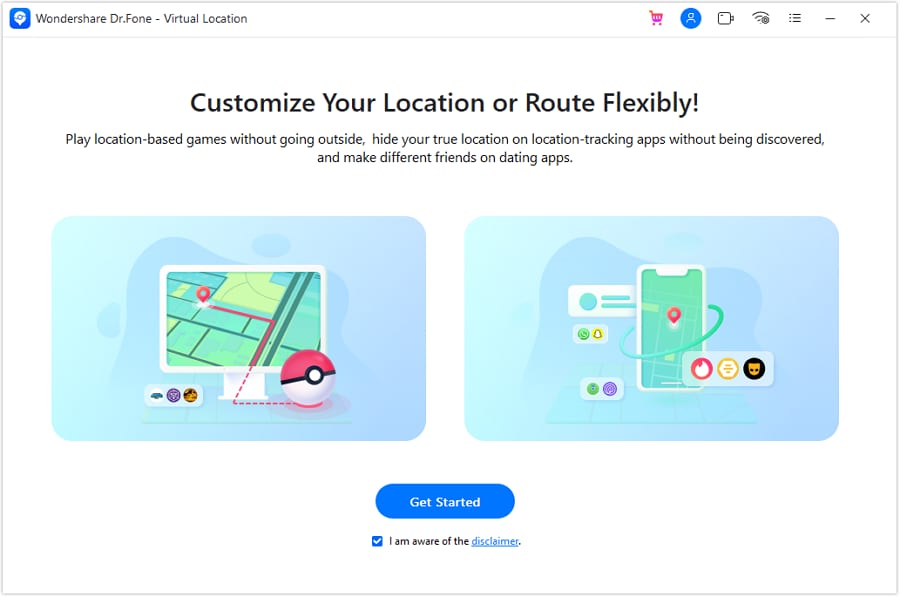
Step 3 Select Teleport Mode
Review the phone's displayed starting location, then select Teleport Mode in the upper-right controls. If the current point is unclear, use the map's current-location control first. You are selecting a location-testing mode, not changing Snapchat's sharing audience.
Step 4 Search and inspect the destination
Enter a place name, street address, or exact coordinates in the search bar. Submit the search, then check the result. Similar place names can point to different cities, so inspect the pin rather than assuming the first suggestion is correct.
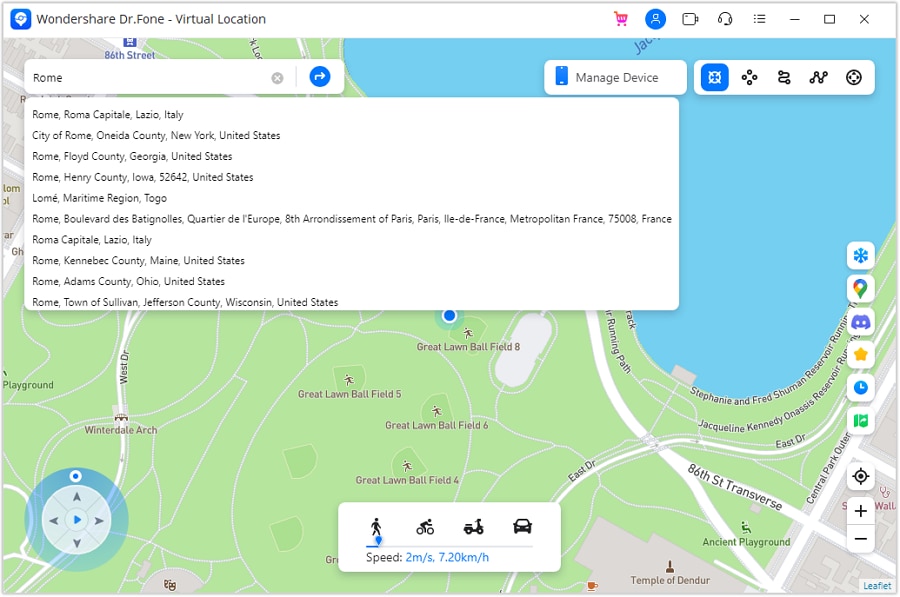
Step 5 Confirm and check the reported position
Zoom or adjust the pin as needed, then select Move Here. Inspect a mapping app on the phone to see whether it reports the chosen coordinate. After that, open Snapchat and examine the actual Snap Map result and freshness, without assuming the application must accept or immediately display the test value.
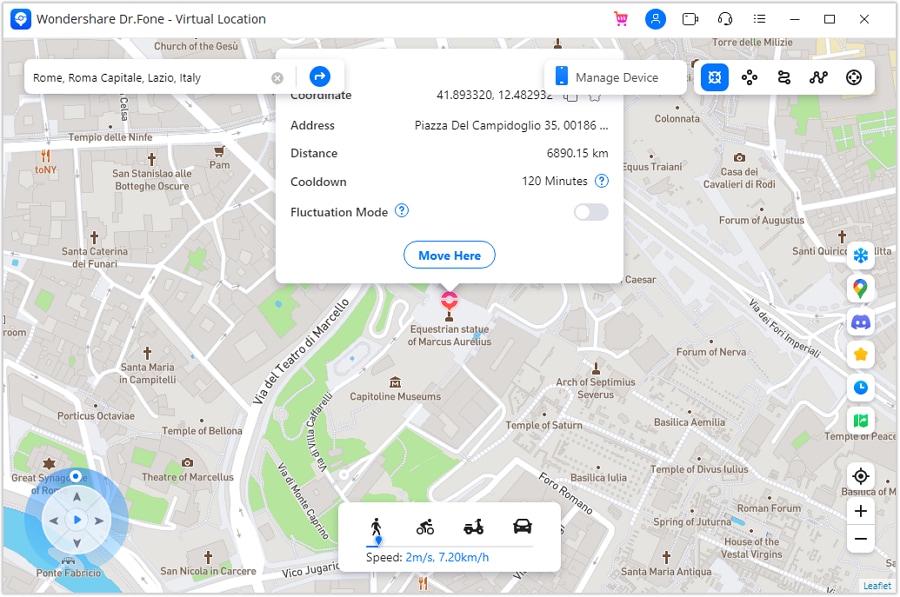
When finished, follow the software's instructions for ending the session. Its official teleport guide advises restarting the device to restore the actual location. Confirm normal positioning afterwards, especially before navigation or sharing your position with someone who relies on it. If Snapchat does not reflect the test location, do not replace that observation with a guaranteed-success claim.




Part 4: Configure an Android mock-location provider
Android exposes a developer setting for a GPS-testing app to supply simulated locations. That built-in mechanism generally does not require root, but it does require choosing a suitable app and assigning it as the provider. It does not make every installed application accept mock coordinates.
The source mentioned Lexa and Hola as examples of fake GPS apps. Treat those names as examples from the source rather than current endorsements or proof that similarly named listings are the same product. Check the publisher, operating-system requirements, permissions, and recent reports before installation. Do not rely on a blanket claim that all GPS apps are allowed or prohibited by a particular store.
Step 1 Reveal Developer options
Open Settings > About phone and locate Build number. Samsung commonly places it under Software information. Tap Build number seven times and enter the phone's credential if asked. The exact menu path varies by manufacturer and Android version.
Step 2 Inspect the mock-location setting
Return to Settings and open Developer options. Older versions can show an Allow mock locations switch; newer versions generally use Select mock location app. You may need to install the intended provider before it can appear in that list. Leave unrelated developer controls unchanged.
Step 3 Install and select the intended app
Choose a trustworthy GPS-testing app from its legitimate distribution source. Review permissions, then return to Select mock location app and choose that exact package. A download alone does not appoint it as the provider, and a similar app name is not enough to identify the right publisher.
Step 4 Run a test and restore afterwards
Launch the provider, search for your chosen place or position its map pin, and use its start control. Check a normal map first and Snapchat separately. When finished, stop the provider, remove its mock-location selection, and verify a fresh real position. If a location remains stuck, use the app's documented recovery instructions instead of assuming uninstalling always resets it.
A different location in a weather or mapping app does not prove Snapchat has changed too. Apps can refresh at different times, use cached data, or reject mock information. That is a compatibility boundary to acknowledge, not evidence that you need more invasive changes to your phone.
Conclusion
Use Snapchat's own controls when the goal is map privacy, and treat GPS simulation as a separate test with explicit setup and restoration steps. The connected-iPhone workflow offered by Dr.Fone - Virtual Location and Android's mock-provider method have different prerequisites. Neither justifies promises of no harm, no detection, or automatic changes in every app. Verify what the phone and Snapchat actually show, then return to normal positioning.
FAQ
1. Should I use Ghost Mode or fake GPS?
Choose Ghost Mode to control visibility to friends on Snap Map. A GPS tool is for testing a different reported position, not a replacement for the app's sharing settings.2. Does the iPhone method require jailbreak?
The described desktop workflow does not require jailbreak on supported devices. Verify current device and system support before beginning, and follow the connection prompts for your edition.3. Why does Android need Select mock location app?
That setting identifies the provider allowed to supply test locations. Install the intended app, select its exact package, and then start the test from inside that app.4. Can a GPS change make Snapchat use anonymous?
No. Coordinates are only one aspect of app activity. Simulation does not hide account identity, erase previous disclosures, or guarantee that Snapchat accepts the supplied position.
 Add Wondershare Dr.Fone as a preferred source on Google