 Teleport your device anywhere instantly with one click.


 100% Security Verified | No Subscription Required | No Malware


 :

 ChatGPT
 Perplexity
 Gemini
 Claude
 Grok
Can a Facebook post show another country when I am still at home, and does that require changing the phone's GPS?
A question adapted from the source article

You can change a Facebook location in several different senses: edit the city on your profile, attach a place to a post, or test a different GPS position on a phone you own. Those actions are not interchangeable. Choosing Paris as a post's place, for example, does not move your device's map dot to Paris or prevent Facebook from receiving other location signals.
This 2026 guide separates the four source methods so you can select the least intrusive one for your purpose. Use account settings and permission controls for privacy; reserve coordinate simulation for clearly disclosed demonstrations or testing. The inherited directory below contains a legacy 'Nearby Friends' label. That feature has been discontinued, and no GPS tool can restore it.
In this article
Part 1. Edit the City Displayed on Your Facebook Profile
For a different public profile location, start with Facebook itself rather than a GPS utility. Your current city and hometown are account fields that describe your profile. Editing them changes the information a visitor may see, subject to the audience you select. It does not rewrite device coordinates, alter network routing or establish that you are physically present in the chosen city.
The desktop interface may differ between accounts. Look for the profile's introductory details or the places section under About, rather than expecting every button to match an older screenshot exactly.
Step 1 Open your own profile
Sign in on Facebook's website using your normal browser. Select your account picture or name and navigate to the personal profile whose city you want to edit. Do not change another person's account or use a fabricated location to impersonate a business.
Step 2 Locate the editable details
Check Intro for Edit details. If the city is not editable there, open About and locate Places lived. Facebook may expose the same information through a different editing panel depending on the interface.
Step 3 Choose the city field
Use the edit control beside Current city, then search for the intended place. Keep current city separate from hometown; changing one is not an instruction to rewrite every address-like field on the profile.
Step 4 Review visibility and save
Select the matching city result, review its audience control where offered, and save the record. Return to the profile's About view to confirm the displayed result. If your goal is to share less, restricting the audience or removing the city may be more appropriate than entering a false one.


Part 2. Test Mock GPS on an Android Phone
Android offers a developer setting for a designated mock-location provider. One example from the source is Fake GPS Location. Its Play listing describes a testing tool with limited free functionality. Review the current listing, permissions and device requirements before installation; this is not a guarantee that Facebook will accept the reported position.
A VPN is not a replacement for this setting: it changes a network route and public IP address, not the coordinates provided by Android's location service. Conversely, selecting a mock provider does not give you VPN encryption or make your Facebook account anonymous.
Step 1 Install and inspect the app
Use the linked Google Play listing on your own Android phone. After installation, open the app and read any setup notices before granting access. Avoid lookalike packages or downloads from unknown sites.
Step 2 Assign the mock-location provider
Find Build number under About phone or Software information and tap it seven times if Developer options is hidden. Unlock the setting if prompted. Open Developer options, locate Select mock location app and choose Fake GPS. Manufacturer menus differ, so Additional settings is only one possible route.

Step 3 Start a controlled location test
Return to the map, search for your demonstration destination or position the pin, and start the simulation with the app's play control. Check a maps app first to see whether Android is reporting the selected coordinates. Do not rely on the display in the mock app alone.
Step 4 Check Facebook and end the test
Open the Facebook feature you intended to examine and inspect its actual behavior. It may use a manually selected place, cached data or non-GPS signals instead. When finished, stop the mock app and remove its mock-provider assignment. Confirm a fresh real position in Maps before navigation or any service that depends on where you actually are.
The app's own listing warns that a mocked position can sometimes persist after uninstalling. Stop the simulation before removal and follow the developer's troubleshooting guidance if the map remains stuck. Neither a changed map dot nor a successful check-in proves that every Facebook surface has changed region.
Part 3. Add a Different Place to a Facebook Check-In
For a travel memory, fictional example or clearly labeled joke, a post-level place tag may be sufficient. A check-in is information attached to content, not a live-location feed or proof of attendance. Available place results vary, and Facebook does not necessarily offer every address as a selectable check-in.
Keep the context honest, especially when friends could interpret a post as a request for help or as evidence that you are nearby. You do not need to modify GPS merely to see whether a place is available in the post composer.
Step 1 Prepare the post
Open the composer through What's on your mind? on the app or supported website view. Write enough context to distinguish a past trip or imaginary destination from your current whereabouts.
Step 2 Open the place picker
Choose Check in, sometimes shown with a pin symbol or inside the additional post options. The initial suggestions may reflect nearby places, but the list is not the same as a GPS settings panel.

Step 3 Search and inspect the result
Enter the city, venue or landmark name. Select an available result only after checking that its name and location correspond to the place you mean. A selected venue label is not a new account address or a change to the phone's GPS.
Step 4 Confirm the audience before posting
Review the text, attached media, place and audience together. Publish only when the combination communicates what you intend. To correct a mistaken place later, use the post's editing options where available rather than trying to fix it through a separate GPS app.
Part 4. Use a Dedicated GPS Tool, Not the Retired Nearby Friends Feature
 Set your map route to simulate GPS movement.
- Set your wanted movement speed.
- HD and large map view to check location.
- Fake GPS location to anywhere.

Dr.Fone - Virtual Location provides a desktop map for selecting a simulated position on a supported connected phone. Teleport mode is relevant when you actually need to test coordinates rather than edit a profile field. Route and speed controls are additional GPS simulation functions; they do not alter your IP address or Facebook's stored account information.
The original article tied this method to Nearby Friends. That feature is no longer available, so the valid use here is testing your own phone's location behavior, not reviving a retired Facebook service. Check the current device and operating-system requirements before using the software. App-specific detection and server-side decisions mean there is no universal compatibility or undetectability guarantee.
- Choose a destination through the desktop map rather than repeatedly dragging a small mobile map.
- Use an address or coordinates to distinguish similarly named places before confirmation.
- Simulate a route and select a movement speed when an authorized test requires movement rather than one fixed point.
- Verify the result on the phone and restore normal location afterward; a computer-side success message alone is insufficient.
The inherited video and screenshots illustrate the workflow. Button placement can differ from the installed version, so identify controls by their labels rather than an old icon number.
Step 1 Connect the phone you control
Install the appropriate desktop edition, open Virtual Location and attach the supported phone using USB. Unlock the phone and approve the trust or connection prompts that apply to that platform. Do not grant a computer access unless you control it.
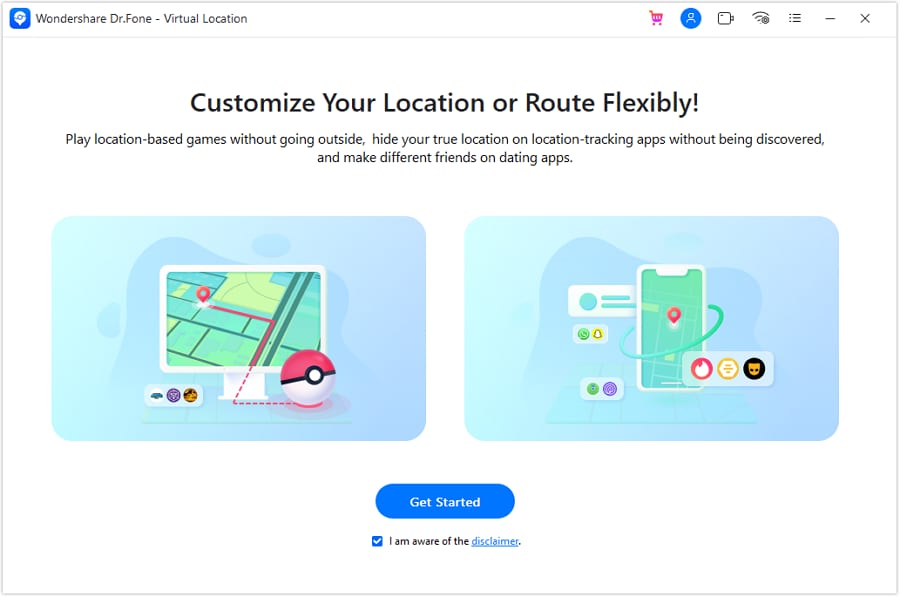
Step 2 Complete connection and load the map
Use Get Started if your edition shows that control, then finish the device-specific setup presented onscreen. Wait for the phone to be recognized before choosing a destination. A connection error should be resolved first rather than interpreted as a successful location change.
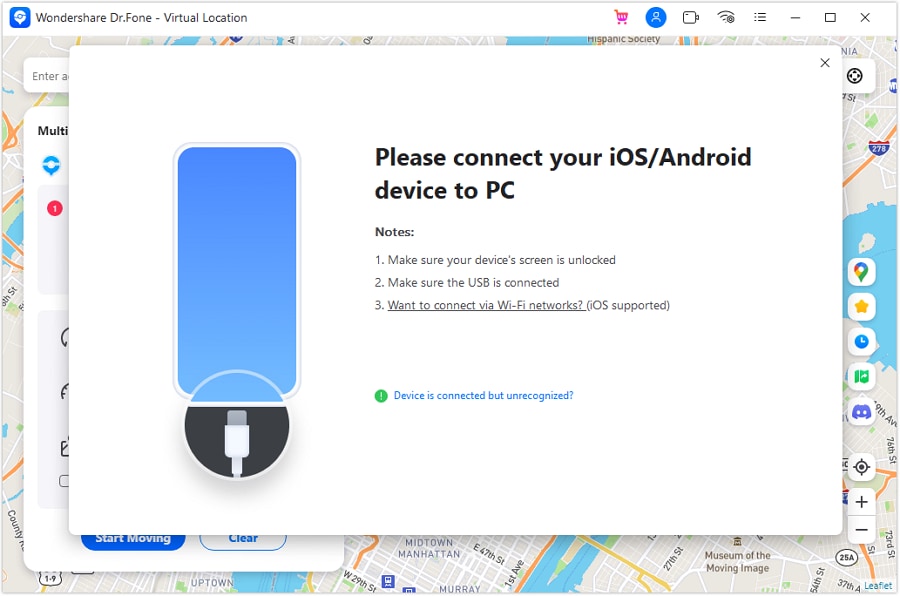
Step 3 Select and verify a teleport destination
Activate Teleport Mode, search for the intended place and inspect the resulting pin. Confirm with Move Here only after checking the destination. The current official guide identifies Teleport Mode by its label; the source's older instruction to choose the third icon should not override the interface you see.
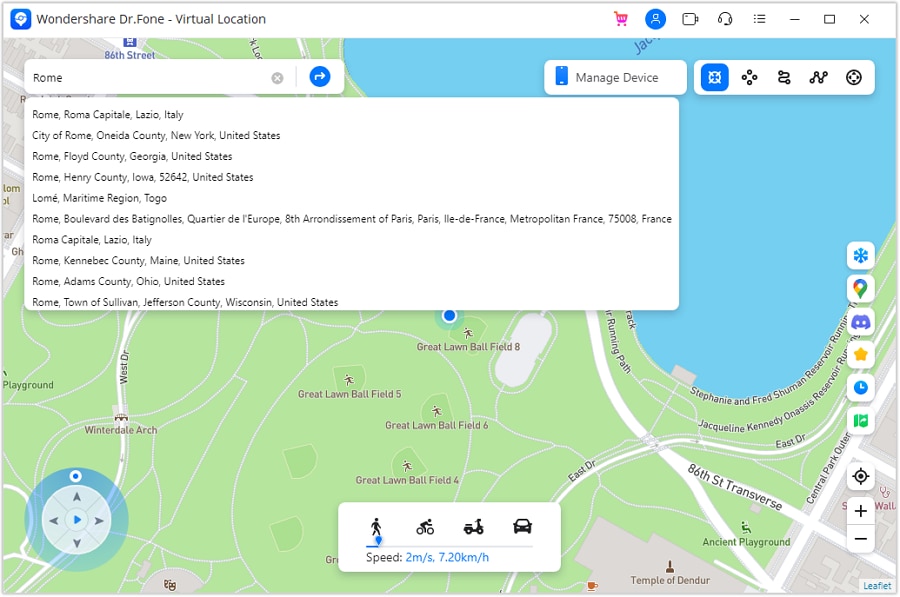
Check the phone's location in a maps app, then inspect the relevant Facebook screen without assuming that a GPS change rewrites every location signal. This test may also affect weather, navigation or other apps that read the same location service. Avoid using simulated coordinates for emergency services, real bookings or any activity requiring your genuine position.
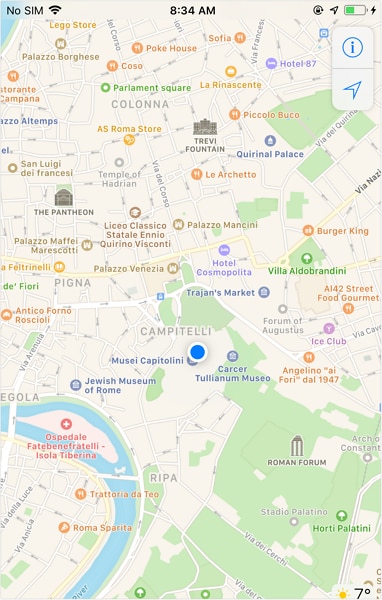
After the demonstration, end the simulation and use the software's restart or restore guidance. The official teleport guide describes restarting the connected device to recover its actual location. Confirm that recovery in Maps before returning to normal location-dependent activity.




Conclusion
Choose the Facebook location method according to the data you actually want to change. A profile edit changes a biographical field; a check-in labels a post; mock GPS supplies test coordinates to a supported phone. None is a complete privacy solution, and no current tool restores Nearby Friends. For an authorized coordinate test, the desktop Virtual Location workflow offers a map-based option, provided you check compatibility, inspect the result and restore the phone afterward.
FAQ
1. Is faking a Facebook location risk-free?
No. Third-party software, account rules and incorrect location-dependent behavior all create risks. Use your own device, review permissions and avoid misleading people who depend on your real whereabouts.2. Can Facebook recognize a simulated GPS position?
It may. A service can use signals beyond GPS, and this guide does not establish how Facebook detects a particular tool. Do not treat a changed map dot as proof that the account is anonymous or that detection is impossible.3. Can the change affect apps besides Facebook?
Yes, other apps that read the phone's location service may receive simulated coordinates too. Their behavior can differ, so inspect the affected apps and restore a genuine position before using navigation or location-sensitive services.4. Does a VPN accomplish the same task as mock GPS?
No. A VPN affects network traffic and the public IP address seen by services. A mock-location provider changes reported device coordinates. Neither changes a post's manually selected place automatically, and neither guarantees that every Facebook regional setting will follow.
 Add Wondershare Dr.Fone as a preferred source on Google



