Resolve common problems and system crashes on both iPhone and Android devices.

 100% Security Verified | No Subscription Required | No Malware

 :
: 
 ChatGPT
 Perplexity
 Gemini
 Claude
 Grok
Grok
If your Android phone won't turn on, do not jump straight to a factory reset or firmware flashing. First check whether the phone has any sign of power, charge it with known-good accessories, and try a force restart. A phone that still rings, vibrates, or is detected by a computer may have a black-screen or display problem rather than a true no-power failure.
In this article
Part 1. Diagnose Why Your Android Phone Won't Turn On
The fastest way to choose the right fix is to separate a true no-power problem from a display problem or a startup failure. Check what the phone still does before changing system settings.
| What you notice | Likely direction | Best next step |
|---|---|---|
| No light, vibration, sound, charging icon, or computer detection | Deeply discharged battery, charging-path problem, battery failure, or other hardware fault | Check the charging equipment and port, then charge for at least 30 minutes before retesting. If there is still no response, use the hardware-service decision. |
| The phone rings, vibrates, alarms sound, or a computer detects it, but the screen stays black | The phone may be powered on while the display is frozen or damaged | Check for a display problem and try a force restart. Continued signs of power with no picture point toward display diagnosis or repair. |
| A battery icon or light appears, but Android never starts | The phone is receiving power; the problem may be a frozen startup, failed update, or system issue | Follow the charging-but-not-starting branch; use Safe Mode or Recovery Mode only if the phone can reach them. |
| The problem started after an update or repeated crash | Software or firmware failure is more plausible | Use the after-update decision path: restart first, then choose an available software recovery option and review its data impact before proceeding. |
| The phone stopped after a hard drop, liquid exposure, unusual heat, smell, or a swollen battery | Hardware or battery damage is more likely | Stop repeated restart/charging attempts and seek professional inspection. |
Common causes
- Battery or charging path: a fully drained or failed battery, damaged cable/adapter, blocked port, or charging-circuit fault can make the phone look completely dead.
- Display failure: the phone can still be running even when the screen shows nothing.
- Software or firmware issue: a crash, problematic app, or interrupted update can block startup.
- Physical hardware damage: drops, liquid, damaged buttons, battery swelling, storage failure, or board faults require a different path from software troubleshooting.
Part 2. 7 Ways to Fix an Android Phone That Won't Turn On
Work from the least destructive checks to the more invasive options. Stop once the phone starts, and back up important data as soon as you regain access.
Fix 1: Check the charger, cable, port, and battery state
-
Step 1 Use known-good charging equipment
Connect the phone to a wall charger with a cable and adapter that can charge another device. Try another outlet if needed.
-
Step 2 Inspect the charging port
Look for lint, dust, corrosion, or physical damage. Do not scrape the contacts with a metal object. If your phone supports wireless charging, testing a compatible wireless charger can help separate a port problem from a battery or system problem.
-
Step 3 Leave it charging for at least 30 minutes
A deeply discharged battery may need time before any icon or light appears. If the phone becomes unusually hot, smells abnormal, or the battery is swollen, disconnect it and move to professional service.
Android phone charging but not turning on? A charging icon shows that the phone detects charging; it does not prove that the battery is healthy or that Android can boot. After charging, try a force restart. If a logo appears but startup stalls, try Safe Mode if Android can load, or review the supported software-repair options. If it rings while the screen stays black, follow the display check instead.
Still no icon or response? Repeat the check with another known-good compatible cable and charger. No charging icon alone does not establish that the phone is dead: a drained battery or failed display can look the same. If the checks and a force restart produce no sign of power, seek hardware diagnosis instead of flashing firmware.
Fix 2: Check whether the phone is on but the screen is black
Call the phone from another device, listen for alarms or notifications, feel for vibration, and connect it to a computer with a known-good USB cable. If it rings, vibrates, or is recognized while the display remains black, the phone may be running and the screen may be the real problem.
After the force restart, wait about two minutes and call again. If it rings but the screen is still blank, arrange a display inspection before choosing a reset. A computer detecting a USB device is only a diagnostic clue: it does not by itself mean Android has fully started, the phone is unlocked, or its files are readable.
For a dedicated display-focused workflow, see how to diagnose an Android black screen.
Fix 3: Force restart the Android phone
A force restart can clear a frozen startup state without intentionally erasing personal data. It is not a factory reset. Use the row for your phone; these button combinations are not interchangeable across every Android brand.
| Device | What to press | What to check next |
|---|---|---|
| Samsung Galaxy | Hold Power/Side + Volume Down together for at least 7 seconds. Release when the Samsung logo appears and the device vibrates. | If a case blocks the buttons, remove it. If there is no response, check charging before trying again. |
| Google Pixel | Hold Power for about 35 seconds to reboot, following Google's blank-screen troubleshooting instructions. | Wait about 2 minutes, then call the phone. Ringing with no picture is a reason to seek display repair. |
| Other Android brands | First try the ordinary Power-button start. Use your model's force-restart method if it remains unresponsive. | Do not assume a Samsung or Pixel combination applies. A bootloader or recovery screen is not a prompt to select a wipe option. |
These sequences follow Samsung's no-power troubleshooting and Google's Pixel charging and screen checks. For general charging checks, see the official Android troubleshooting guide.
Fix 4: Try Safe Mode if the phone can reach the startup logo
Safe Mode temporarily disables downloaded third-party apps. It can help when an app prevents normal startup, but it cannot power up a phone with a failed battery or guarantee recovery from a firmware failure. The phone must start far enough to load Android.
Step 1 Start the phone and use the correct timing: on a Samsung Galaxy, hold Volume Down when the Samsung logo appears; on a Google Pixel, hold Volume Down when the startup animation begins. Keep holding until startup finishes, then check for Safe mode on the screen. Other brands may use a different method.

Step 2 If Safe Mode starts and the phone remains stable, remove recently installed or updated apps one at a time, restarting normally after each removal to check the result. Restarting normally also exits Safe Mode. Back up important files once the phone is usable.

If the phone never reaches a logo or startup screen, Safe Mode is not the right next step; return to the power/display checks or move to repair service.
Fix 5: Use Recovery Mode only if your device can enter it
Recovery Mode can provide system-level troubleshooting options, but the available menu items vary by device. If your recovery menu includes Wipe cache partition, clearing temporary system cache is not intended to erase personal files. Do not assume every modern Android device has this option.
If you are already in a recovery menu that offers it, use the volume keys to highlight Wipe cache partition, select it with the Power key, and confirm the cache-only action if prompted. When it finishes, choose Reboot system now. Follow the controls shown by your device if they differ. Wipe data/factory reset is a different, destructive option; do not select it as a substitute when cache clearing is absent.

If the phone will not enter Recovery Mode, do not keep escalating through random button combinations. Use the manufacturer-specific recovery instructions or a supported repair path.
Fix 6: Repair a supported software or firmware problem with Dr.Fone
If the phone still shows signs of power and the symptoms point to a software or firmware failure, Dr.Fone - System Repair (Android) can repair supported Samsung, Xiaomi, Redmi, and POCO devices from a Windows PC. It is intended for software/system issues such as black screens, boot loops, stuck logos, failed updates, and supported phones that will not start; it does not repair physical hardware damage.

| Your situation | Is this a suitable next option? | Data and purchase decision |
|---|---|---|
| Supported Samsung with a likely software failure | Consider the Samsung repair workflow on Windows if the phone can communicate in the required Download Mode. | The process erases local data. If files are irreplaceable, review recovery feasibility before proceeding. |
| Supported Xiaomi, Redmi, or POCO with a likely system failure | Use the brand-specific firmware workflow on Windows. | This branch is designed for repair without root or data loss. Use the matched device/firmware details, not Samsung's instructions. |
| Pixel, another brand, or no compatible device/firmware option shown | This Android repair feature is not documented here as a solution for that device. | Choose manufacturer support rather than purchasing on the assumption that every Android phone is supported. |
| No power, no required-mode connection, or physical/liquid damage | Software cannot repair a failed charging circuit, display, battery, or board. | Prioritize hardware diagnosis. The trial button does not promise a free completed firmware repair. |
 For supported Samsung, Xiaomi, Redmi, and POCO devices.
- Guided firmware matching instead of manual ROM searching.
- Designed for software/firmware failures, not physical hardware damage.
Core steps for supported Samsung devices
Use a Windows PC and a stable USB connection. This is a firmware-repair path, not a way to extract files first. Stop before confirming repair if you cannot accept erasing the phone's local data.
-
Step 1 Open System Repair and connect the phone
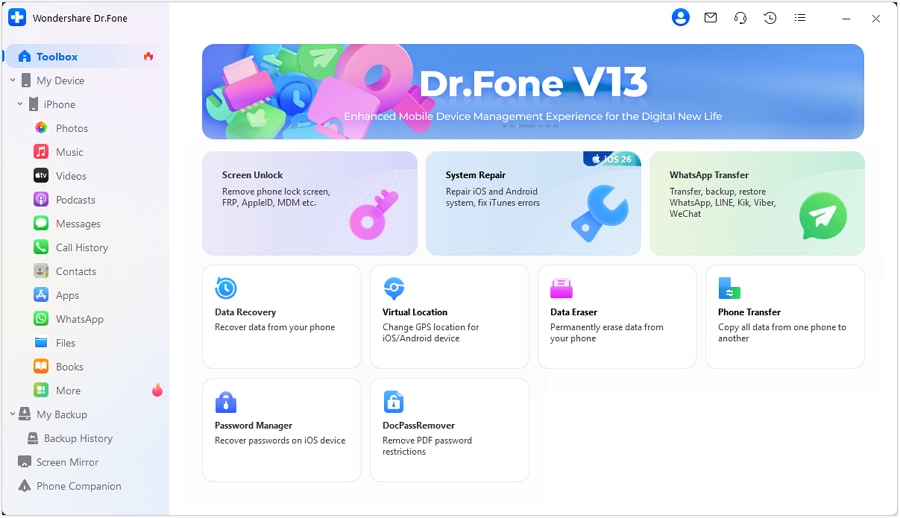
Connect the Samsung device to your Windows PC. In Dr.Fone's Toolbox, open System Repair, select Android, then Android Repair > Repair Now. Choose Samsung and continue with Start.
-
Step 2 Confirm the exact device details and prepare firmware
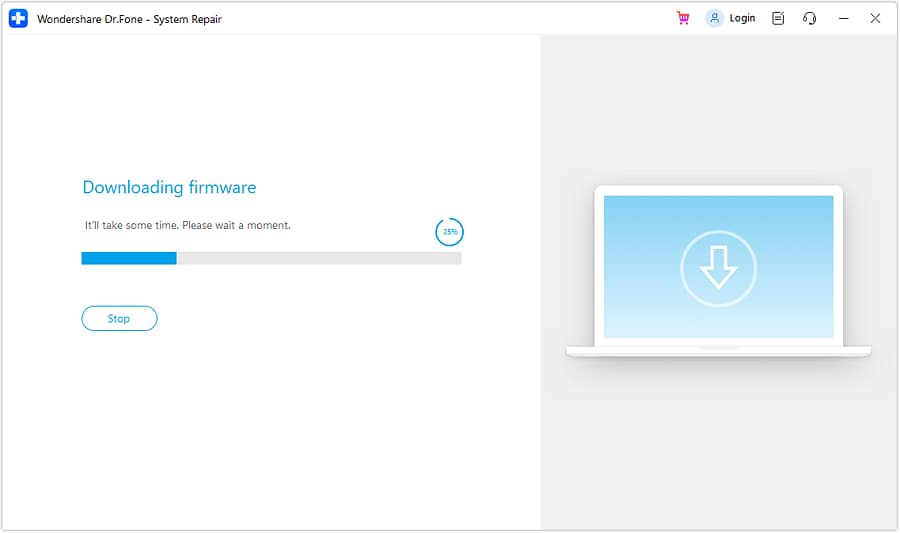
Confirm the device name, model, country, and carrier shown by the tool. Read the warning before continuing. Follow the on-screen Download Mode instructions for your exact button layout; the one-click entry option requires a connected, already-unlocked device. Once the required mode is reached, let the matching firmware download. If the device or required mode is unavailable, stop rather than selecting a different model.
-
Step 3 Start repair and keep the connection stable
After firmware verification, choose Fix Now. To accept the data-erasure warning, enter 000000 only when you are ready to proceed. Keep the connection stable during installation. When the tool reports completion, check that the phone starts and choose Done. If startup still fails, use the result and error details to contact support rather than repeatedly flashing it.
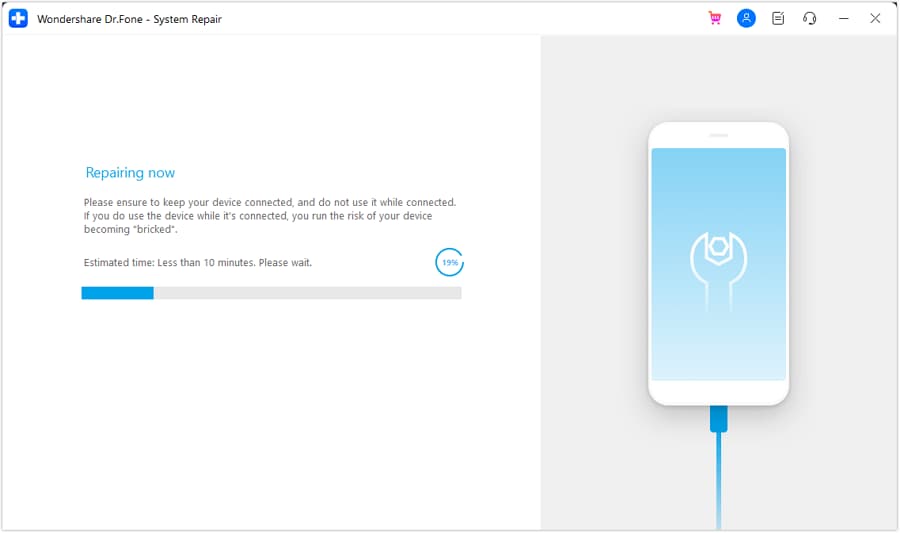
The Samsung Android repair Guide shows the detailed screens and model-specific Download Mode branches.
Core steps for supported Xiaomi, Redmi, and POCO devices
Use this separate branch for a supported Xiaomi, Redmi, or POCO device. It is designed to preserve data without root, but the phone must still communicate with the software and have a matching firmware option.
-
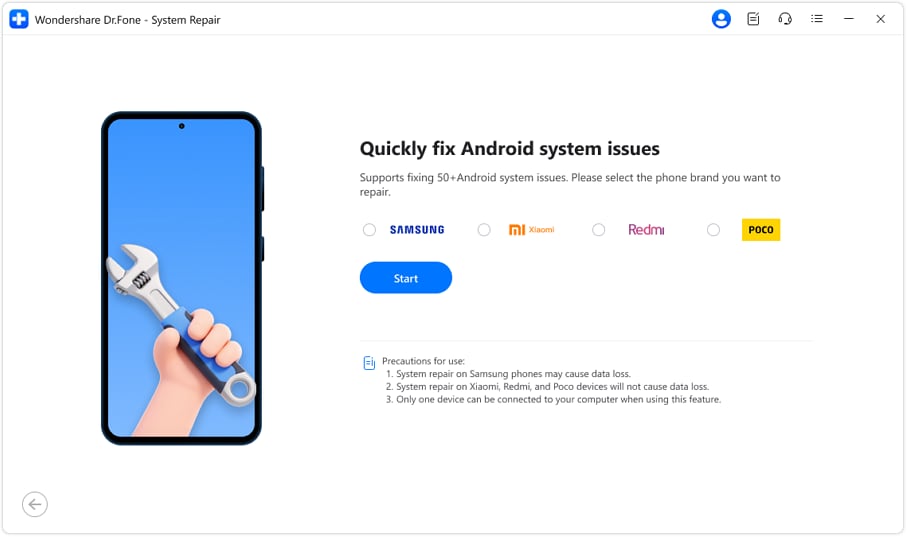
Step 1 Connect and select the correct brand
On a Windows PC, open System Repair > Android > Android Repair > Repair Now. Connect the phone, choose Xiaomi, Redmi, or POCO as applicable, and select Start.
-
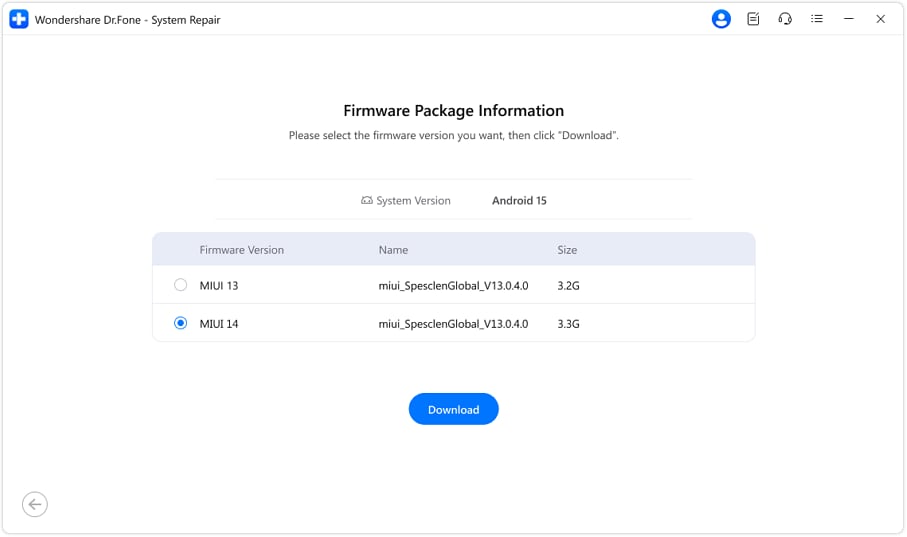
Step 2 Select and download matching firmware
Review the firmware packages matched to the detected device and system. Choose the appropriate package and select Download; allow the download and preparation to finish. Stop if the device details do not match or no compatible package is offered.
-
Step 3 Confirm the firmware and run repair
Review the prepared device and firmware information, then select Fix Now. Do not disconnect or operate the phone during repair. Wait for the completion message and reboot, then check whether Android starts normally.
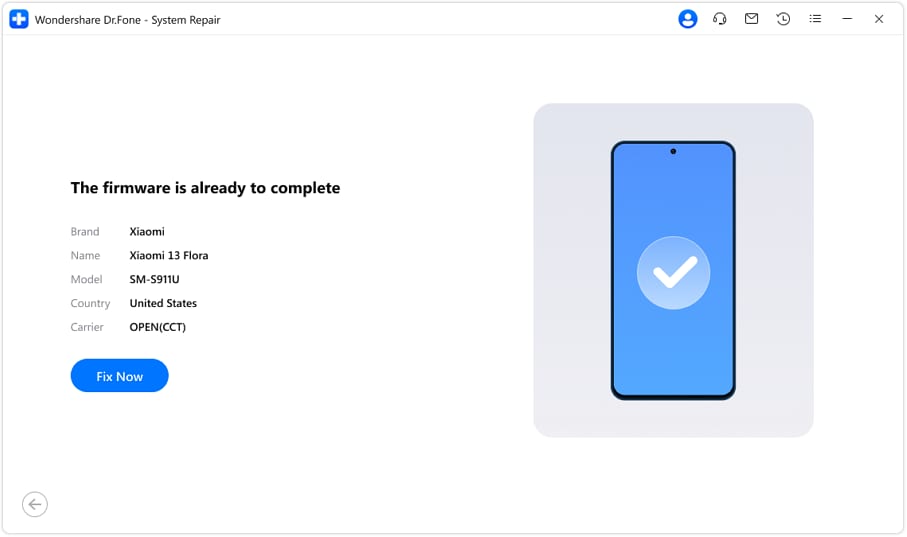
The Xiaomi, Redmi, and POCO system-repair Guide shows this branch's screens. Do not substitute Samsung firmware or its erasure-confirmation procedure.
See the current Dr.Fone Android System Repair compatibility and workflow before starting.
Fix 7: Use factory reset only for a likely software failure, or get hardware service
A factory reset erases local data and should be a last resort, not the default next step for every phone that will not turn on. Consider it only when the phone can enter Recovery Mode, the evidence still points to a software problem, and safer options have failed.

Stop software troubleshooting and seek professional repair if the phone has a swollen battery, abnormal heat or smell, significant liquid exposure, severe drop/bend damage, or still shows no sign of power after known-good charging checks. If it rings or vibrates but the screen stays black after a drop, display repair may protect your data better than a reset.
What if the Android phone won't turn on after an update?
First complete the charging checks and force restart. A failed update is more plausible if the phone still shows a logo or startup activity, not simply because it stopped working near an update. If it can load Android, try Safe Mode. If startup remains blocked, choose the manufacturer's supported recovery/update option or, for a compatible device, the brand-specific system-repair path. No logo, charging response, or other sign of power after these checks calls for hardware diagnosis instead. Protect any accessible data before a reset or erasing firmware repair.
If the device is looping on the logo rather than staying completely dead, use the more specific Android boot loop troubleshooting guide.
Should you flash a custom ROM to revive a phone that will not turn on?
Custom ROM flashing is not a recommended first-line fix for a general no-power problem. It normally requires device-specific knowledge, an appropriate bootloader/recovery state, and exact compatible files; a mistake can cause additional data loss or make the device harder to recover. If the phone is truly unpowered or not detected, ROM flashing will not solve an underlying battery, charging, display, or board failure. Use manufacturer-supported firmware tools or an experienced repair path when firmware restoration is genuinely required.
Part 3. Protect or Recover Data Before Destructive Fixes
Gaining access to your files depends on what the phone can still do. A black screen is not the same as a completely dead, undetected phone.
Before erasing or sending the device for repair, check existing Google Photos, Google Drive, contacts, and app-specific backups from another device signed into your account. These are copies already stored online, not a way to read an unpowered phone's local storage. A USB connection alone does not bypass the screen lock, encryption, or file-access permission requirements.
| Phone condition | Data-recovery outlook | What to do |
|---|---|---|
| Display is visible but touch does not work | A visible-screen, unresponsive-touch access workflow may be available across Android brands when the device can still communicate with the computer. | In Dr.Fone's Recover from Broken Phone, choose Display still works, but the screen is broken or unresponsive. If access is established, use the PC controls to export important files before destructive repair. |
| Black/unreadable screen but the phone still powers on | Dr.Fone's black/no-access broken-phone recovery path is limited to selected older Samsung models. | Verify the exact model first. For other devices, consider display repair, existing cloud backups, or manufacturer-supported access options. |
| No power and the computer cannot detect the phone | Software-only recovery is often not feasible because the storage cannot be accessed through the device interface. | Prioritize hardware diagnosis or a professional data-recovery service before repeated resets or flashing. |
For the supported broken-screen workflows, see Dr.Fone Broken Android Data Recovery. You can also review the broader Android Data Recovery options for recognized devices and available backups.
- Preview supported recoverable files before export.
- Broader support when the screen is visible but touch is unresponsive.
- Black/no-access recovery is limited to selected older Samsung models.
Conclusion
When an Android phone won't turn on, the best next step depends on whether the device has any sign of power. Start with charging and a force restart, then separate a black-screen/display problem from a true no-power failure. Use Safe Mode, Recovery Mode, or system repair only when the phone can reach the required state, and keep factory reset as a last resort because it erases local data. If the phone is swollen, unusually hot, liquid-damaged, badly dropped, or completely undetected after basic power checks, hardware service is the safer path.
FAQ
-
1. How can I tell if the problem is the battery, screen, or software?
Charge the phone with known-good equipment and look for signs of life. If it rings, vibrates, shows notifications, or is detected by a computer while the display stays black, the screen may be the problem. If it shows no response at all, focus on the battery, charging path, or hardware. If it reaches a logo but cannot finish starting, software or firmware is more plausible. -
2. Will a factory reset delete all my data?
Yes. A factory reset erases local user data and settings. Use it only after safer troubleshooting has failed and after protecting any data you can still access. -
3. Can I fix an Android phone that won't turn on without losing data?
Start with charging checks, a force restart, Safe Mode, and a cache-partition wipe only if your recovery menu provides that option. These steps are not intended to erase personal files. Data impact becomes more important with firmware repair or factory reset: the Samsung system-repair workflow erases local data, while Dr.Fone's supported Xiaomi/Redmi/POCO repair workflow is designed for no data loss. -
4. What is the difference between Safe Mode and Recovery Mode?
Safe Mode starts Android with third-party apps disabled so you can test for an app conflict. Recovery Mode is a separate maintenance environment that can expose options such as cache clearing, updates, or factory reset, depending on the device. -
5. What if my Android phone is frozen and won't power off?
Use the manufacturer-recommended force-restart combination for your exact model. A long press of the Power button or Power plus a Volume key is common, but the combination and timing vary. If the phone becomes unusually hot or shows battery swelling, stop and seek service. -
6. Can I recover data from a completely dead Android phone?
If the phone has no power and is not detected by a computer, software-only recovery is often not possible because the storage cannot be accessed through the device. Hardware repair or a professional data-recovery service may be needed first. If the phone still powers on but the display is unusable, more recovery options may be available depending on the model.
 Add Wondershare Dr.Fone as a preferred source on Google