Resolve common problems and system crashes on both iPhone and Android devices.

 100% Security Verified | No Subscription Required | No Malware

 :
: 
 ChatGPT
 Perplexity
 Gemini
 Claude
 Grok
Grok
An Android blue screen of death usually means the phone has frozen or crashed on a solid blue display, but not every blue screen is the same problem. On Samsung phones, a blue screen with text such as "Downloading... Do not turn off target" can simply be Download Mode rather than a system crash.
Start with the least destructive checks: identify the screen, force restart the phone, remove external cards if appropriate, and protect any accessible data before using repair or reset options. If the blue screen follows a drop, liquid exposure, overheating, or keeps returning after software troubleshooting, treat hardware damage as a real possibility.
In this article
- First: Identify what kind of blue screen you have
- Part 1: Protect or recover data before deeper repair
- Part 2: Repair supported Android system issues with Dr.Fone
- Part 3: Force restart your Android phone
- Part 4: Power cycle a phone with a removable battery
- Part 5: Remove and reinsert the SIM/SD card
- Part 6: Check the LCD connector or other hardware damage
- Part 7: Update Android after the phone can boot
- Part 8: Factory reset as a last resort
- Part 9: Get professional repair if the blue screen persists
- FAQs about Android blue screens
First: Is It a Real Android Blue Screen Crash or Samsung Download Mode?
Before choosing a fix, look at what is actually displayed. This avoids treating a normal maintenance screen like a crash or jumping to a data-erasing reset too early.
| What you see | What it may mean | Best next step |
|---|---|---|
| Solid blue/teal screen, little or no readable text, phone frozen | Software/firmware crash, display fault, or another hardware problem | Force restart first, then continue through the low-risk fixes. |
| Samsung screen says "Downloading... Do not turn off target" | Samsung Download Mode/Odin Mode, which is not the same as a BSOD | Exit Download Mode safely if you entered it by accident. |
| Blue screen appeared after an update and the phone still will not boot | Possible firmware/update failure | Protect data if possible, then consider supported system repair or manufacturer service. |
| Blue/purple display after a drop, liquid exposure, pressure, overheating, or visible screen damage | Display connector, panel, motherboard, or other hardware damage | Stop repeated software resets and assess hardware repair. |
How to exit a Samsung blue Download Mode screen
If a Samsung phone shows "Downloading... Do not turn off target" and you are not actively flashing or repairing the device, press and hold Volume Down and the Power/Side button for about 7 seconds until the phone restarts. If it immediately returns to Download Mode, check whether a case or stuck button is pressing the hardware keys and consider Samsung service if the problem continues.
Where should you start?
- If this looks like a temporary crash, go to Part 3: Force Restart.
- If your data is accessible and you may need repair or reset later, protect it first in Part 1.
- If the phone keeps returning to a blue screen and the issue looks software- or firmware-related, see Part 2: System Repair.
- If the blue screen followed a drop, liquid exposure, overheating, or visible display damage, skip repeated software fixes and go to Part 6: Hardware Check.
- Use Factory Reset only after lower-risk options fail because it erases local data.
Part 1: Protect or Recover Data Before Deeper Repair
If the phone is still usable long enough to unlock it, back up important photos, messages, contacts, and files before trying firmware repair or a factory reset. If the display is visible but touch does not respond, Dr.Fone provides a guided broken-phone path. If the screen becomes black or unreadable, the dedicated extraction path is limited to certain older Samsung models, so verify the exact device before proceeding.
Dr.Fone - Broken Android Data Recovery can help in supported broken-screen scenarios. The safest workflow depends on what the screen can still display and whether the phone is recognized by the computer.
 Scan Android phones and tablets directly.
- Preview and recover only what you want.
- Supports WhatsApp, photos, videos, contacts, and more.
- Works with 6000+ Android devices.
For a blue screen that is still visible but the phone cannot be controlled normally:
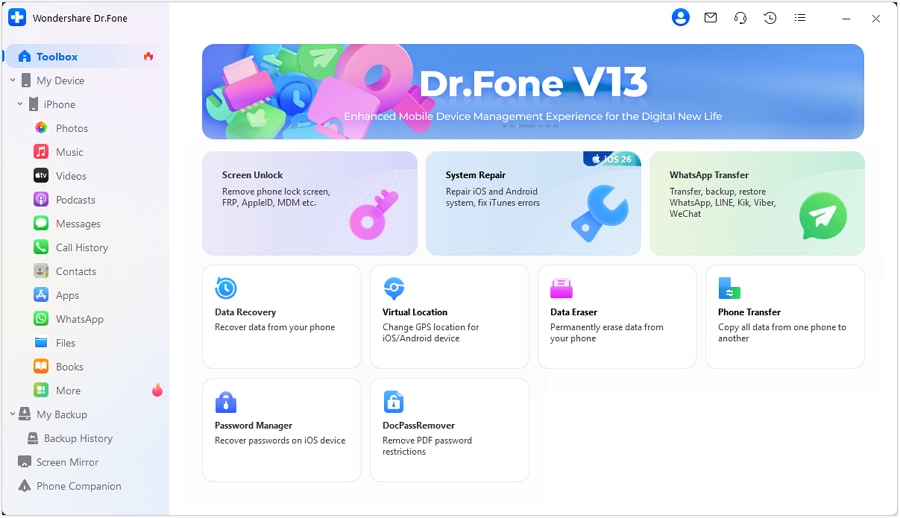
Step 1. Open Dr.Fone, go to Toolbox, and choose Data Recovery.
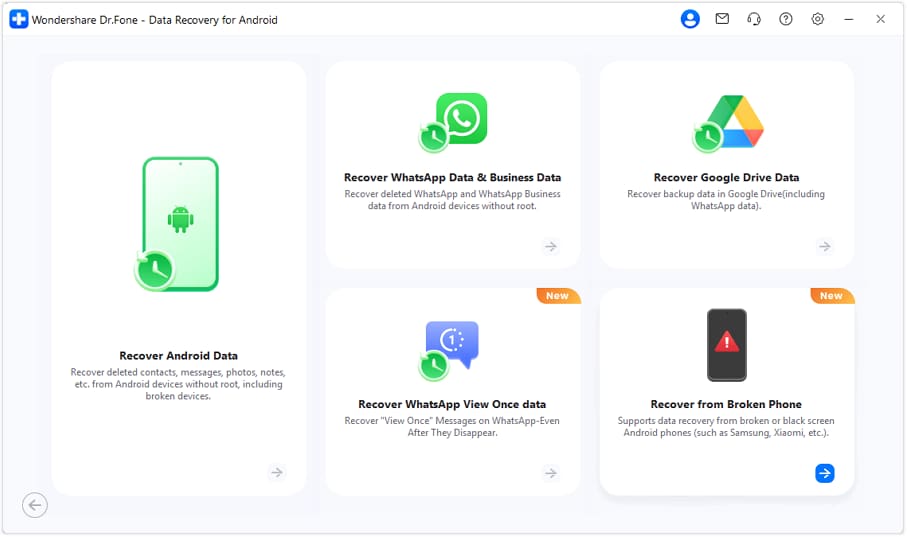
Step 2. Select Android, then choose Recover from Broken Phone for the broken-screen recovery workflow.
Step 3. If the display is visible but touch is unresponsive, choose Screen On but Unresponsive. This is the relevant route for a phone that still shows the screen but cannot be operated normally.
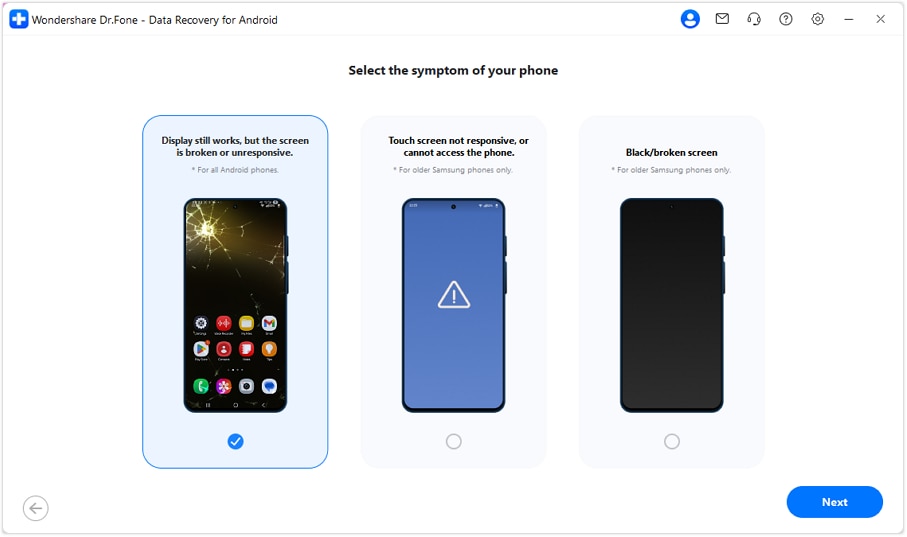
Step 4. Connect only the affected phone and allow Dr.Fone to install the required driver. Follow the on-screen connection instructions until the phone can be controlled from the computer.
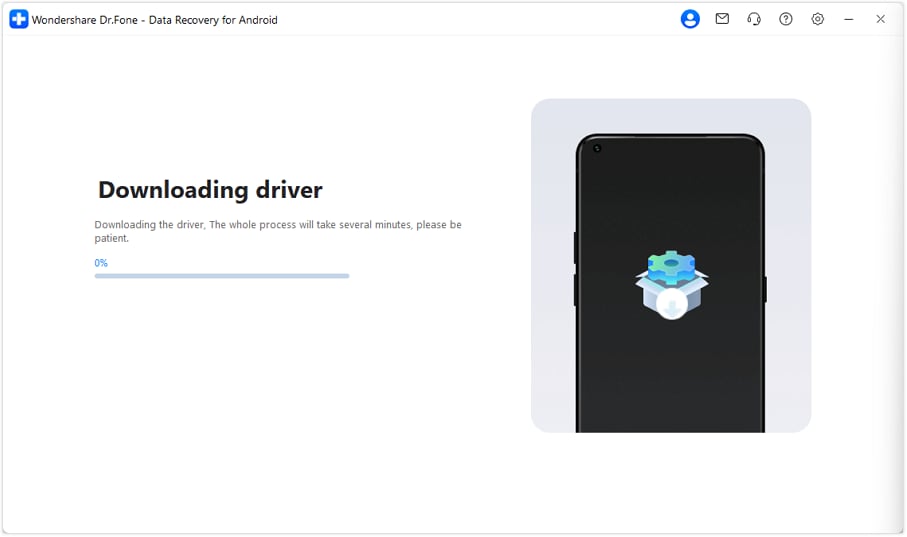
Step 5. Use the available recovery options to access the data you need and export it to the computer before moving on to repair or reset.
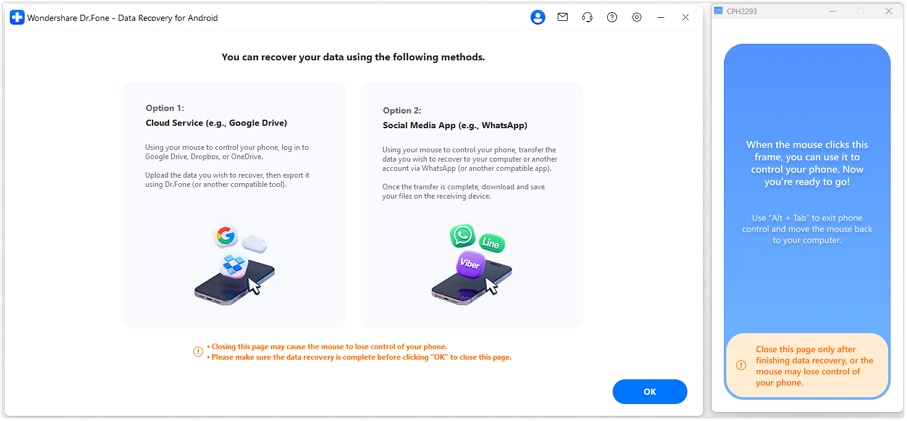

You can also use the Dr.Fone App for supported Android data-recovery tasks when the phone remains usable enough to run the app. For a phone that is frozen on a blue screen and cannot be operated normally, use the desktop broken-phone workflow above or address the system/hardware problem first.
Part 2: Repair Supported Android Blue Screen of Death With Dr.Fone
If the blue screen points to a software or firmware problem rather than physical damage, Dr.Fone - System Repair (Android) provides a guided repair workflow for supported Samsung, Xiaomi, Redmi, and POCO devices on a Windows PC.
- Fix Android instantly – no skills needed.
- Solve boot loop, black screen, won’t turn on, etc.
- High success rate for all system issues.
- User-friendly interface with easy-to-follow steps.
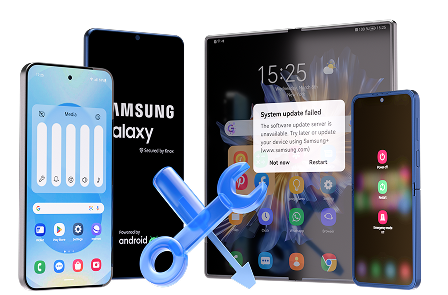
Before repair: confirm that the phone is a supported model and back up anything you can access. The Samsung repair workflow erases device data. Do not use software repair as a substitute for hardware service when the screen is cracked, liquid-damaged, or the phone shows other physical-failure symptoms.
The steps below show the current Samsung repair path. Supported Xiaomi, Redmi, and POCO devices use a separate guided repair workflow in Dr.Fone.
Step 1. Open Dr.Fone on a Windows PC, connect the Samsung phone, go to Toolbox, and choose System Repair.
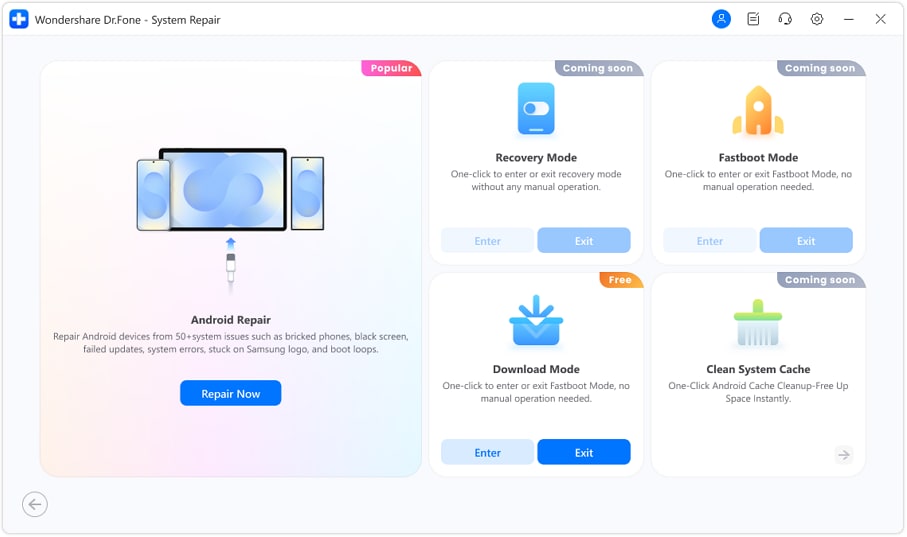
Step 2. Select Android, choose Android Repair, and click Repair Now.
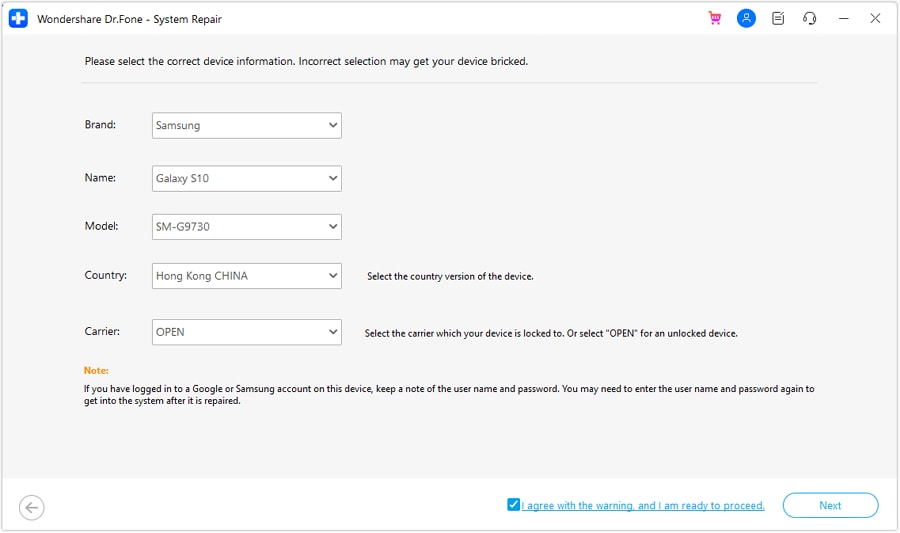
Step 3. Select Samsung, then confirm the correct device Name, Model, Country, and Carrier. Read and accept the data-loss warning, then click Next.
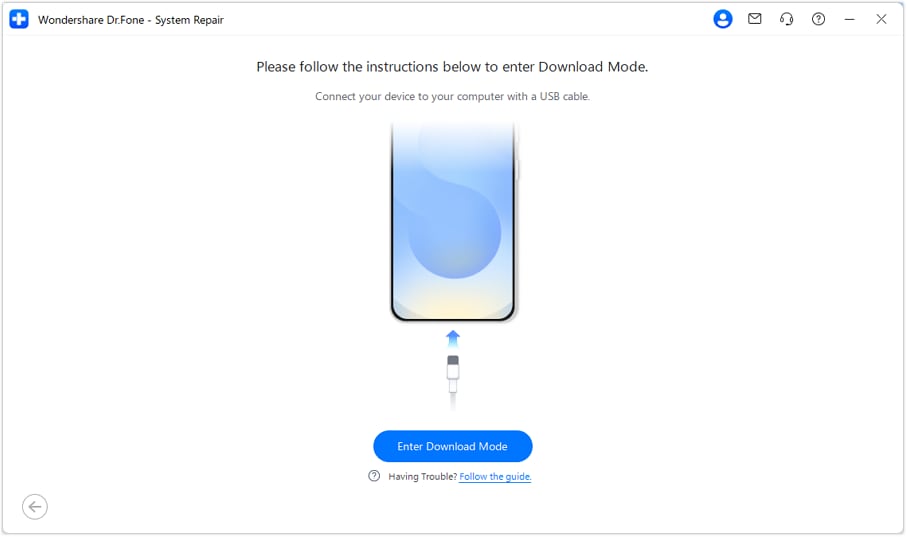
Step 4. Follow the on-screen instructions to put the Samsung device into Download Mode. The exact method depends on the device's button layout, so use the branch shown by Dr.Fone for your model.
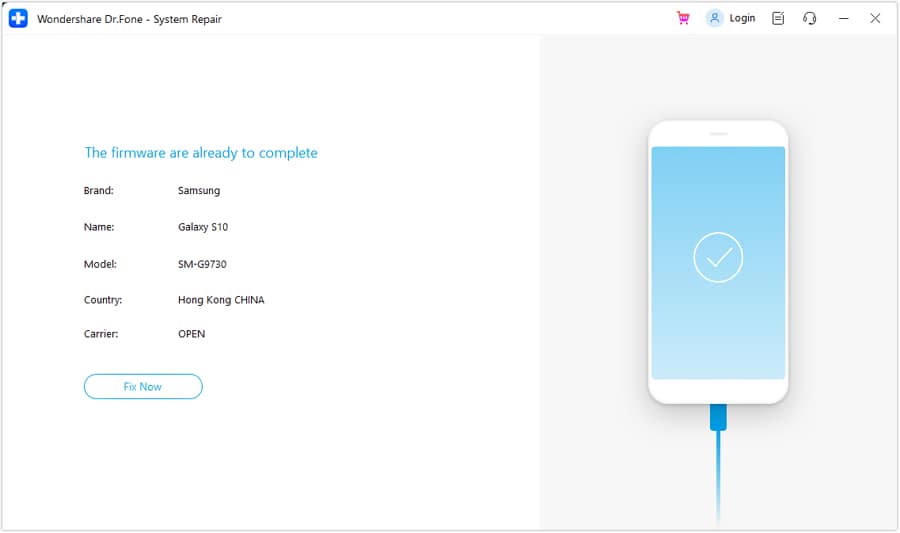
Step 5. After Dr.Fone prepares the required firmware, click Fix Now and confirm the repair when prompted. Keep the device connected while the repair is running.
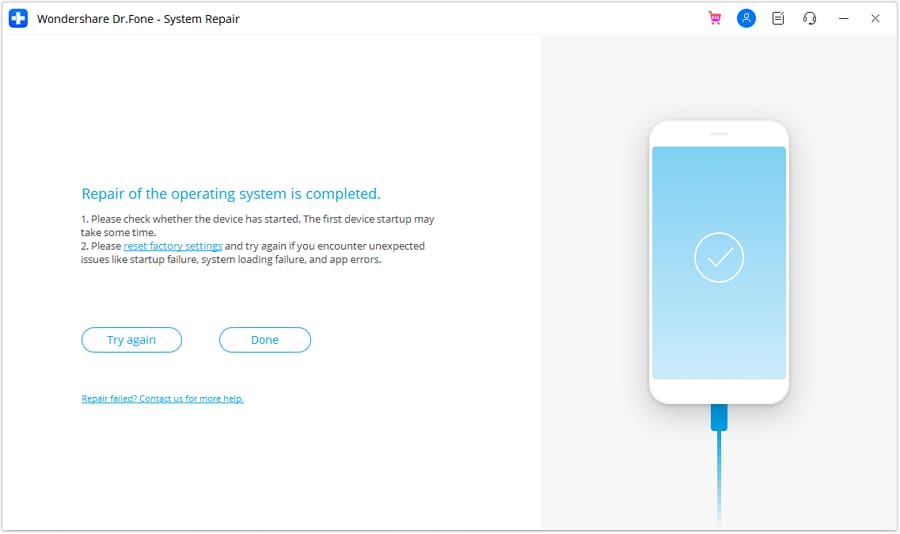
Step 6. When the repair finishes, check whether the phone starts normally. Choose Done if the issue is resolved or Try Again if the guided repair needs to be repeated.





Part 3: Force Restart Your Android Phone
A force restart is the best first fix for a one-off software freeze because it does not erase your personal data.
Step 1. Press and hold Power and Volume Down together for about 10-15 seconds on many Android phones.
Step 2. Release the buttons when the device restarts, then wait for Android to finish booting. If this combination does not work, use the manufacturer's button sequence for your exact model.

If the phone immediately returns to a Samsung "Downloading" screen, use the Download Mode exit steps above instead of repeating forced restarts.
Part 4: Power Cycle a Phone With a Removable Battery
This method applies only to older Android phones with a user-removable battery. Do not pry open a sealed modern phone to reach the battery.
Step 1. Power the phone off if possible, remove the back cover, and take out the user-removable battery.

Step 2. Leave the battery out for a few minutes. While it is removed, hold the Power button briefly to discharge residual power.
Step 3. Reinstall the battery and back cover, then power the phone on and check whether it boots normally.
Part 5: Remove and Reinsert the SIM or SD Card
A faulty or corrupted removable card can sometimes contribute to boot or display problems. This check is most useful if the blue screen started after changing a SIM or microSD card.
Step 1. Power the phone off completely.
Step 2. Remove the SIM and any removable microSD card, then inspect the tray for obvious damage or debris.
Step 3. Start the phone once without the removable card installed and check whether the blue screen returns.
Step 4. If the phone boots normally, power it off again and reinsert one card at a time to identify which item may be contributing to the problem.
This method will not fix a motherboard, display panel, or other physical hardware failure.
Part 6: Check the LCD Connector or Other Hardware Damage
A blue screen can also come from physical display, connector, battery, or motherboard problems. Hardware is more likely when the issue started after a drop, liquid exposure, strong heat, visible screen damage, or when the phone repeatedly returns to a blue screen after software troubleshooting.
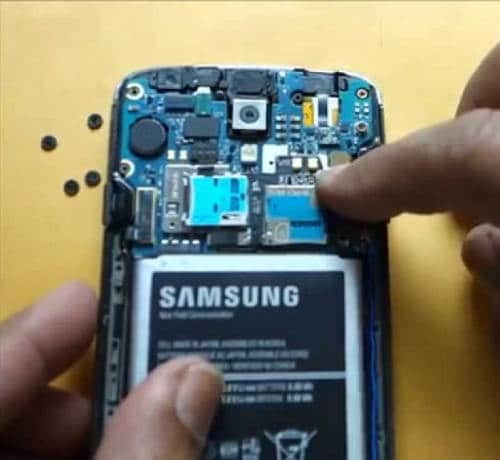
Do not open a sealed phone just to clean or replace an LCD connector unless you are qualified to service the device. If there is swelling, severe overheating, liquid damage, or visible physical damage, stop repeated restart/repair attempts and use an authorized or trusted repair service.
Part 7: Update Android After the Phone Can Boot
If the phone restarts successfully and the blue screen appeared after a software glitch, check for an official system update. Only use this method when the phone can boot reliably enough to complete the update.
Step 1. Open Settings on the Android phone.
Step 2. Go to Software update or System update, depending on the device brand.
Step 3. Check for an available official update and install it while the phone has stable power and network access.

If the phone cannot boot reliably enough to finish an update, move to recovery/system repair or professional support instead.
Part 8: Factory Reset as a Last Resort
A factory reset can resolve some persistent software problems, but it erases local user data. Use it only after lower-risk troubleshooting fails and after backing up or recovering anything you can still access.
Step 1. Enter Recovery Mode using the current button sequence for your exact device model. Recovery Mode combinations vary by manufacturer, so use the device maker's instructions when necessary.

Step 2. Use the volume keys to highlight Wipe data/factory reset, then confirm the selection with the Power button only if you accept the data loss.
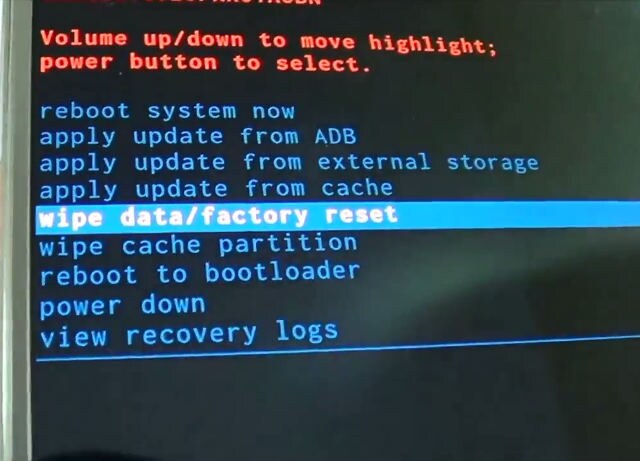
Step 3. After the reset completes, choose the reboot option, set up the phone, and check whether the blue screen returns.
If the blue screen returns even after a clean reset, hardware damage or a deeper firmware problem becomes more likely.
Part 9: Get Professional Repair if the Blue Screen Persists
Seek professional service when the blue screen survives a force restart and appropriate software troubleshooting, keeps returning after reset/repair, or follows a drop, liquid exposure, overheating, battery swelling, or other physical symptoms. A technician can test the display, battery, connectors, board, and storage without assuming every blue screen is a software error.
FAQs About Android Blue Screens
-
1. Can the Android blue screen of death be fixed?
Often, yes, but the fix depends on the cause. A one-off software freeze may clear with a restart, while firmware corruption may need recovery/system repair and physical display or motherboard faults need hardware service.
-
2. Is an Android blue screen permanent?
Not necessarily. A temporary crash can be recoverable, but a blue screen that repeatedly returns or follows physical damage is a stronger reason to check for hardware failure.
-
3. Why did my Android phone suddenly turn blue?
Common possibilities include a software/firmware crash, a failed update, an accidentally entered maintenance mode, or hardware/display failure. On Samsung, a blue screen with "Downloading" text is usually Download Mode rather than a true BSOD.
-
4. Can I fix a blue screen without factory resetting my phone?
Yes, and you should try lower-risk options first: identify the screen type, force restart, remove problematic removable cards, protect accessible data, and use a compatible repair path only when needed. Factory reset is a last resort because it erases local data.
Conclusion
An Android blue screen of death is a symptom, not one single failure. First distinguish a true frozen blue screen from Samsung Download/Custom OS Mode, then work from low-risk fixes toward repair or reset. Protect your data before any data-erasing step, and treat recurring blue screens after physical damage or repeated software fixes as a reason for professional hardware diagnosis.
safe & secure Add Wondershare Dr.Fone as a preferred source on Google