
How To Fix Unresponsive Phone Touchscreen

Oct 23, 2026 • Filed to: Phone Repair Solutions • Proven solutions
 TL;DR:
You can resolve an unresponsive or frozen Android or iPhone touchscreen by executing a hardware-specific force restart, removing external interference, or utilizing Wondershare Dr.Fone to repair underlying OS crashes without data loss.
● To safely force a restart without deleting personal files, hold Power and Volume Down for 7–10 seconds on Samsung models, sequentially press Volume Up, Volume Down, and hold the Side button for iPhone 8 and later, or hold the Power button for 10 seconds on Pixel and Xiaomi devices.
● Software-related touch failures are increasingly common on Android 13, 14, and 15; if installing patches fails to fix the sensitivity bug, a factory reset is the final manual option, which wipes all data and requires your linked screen lock PIN and account passwords to complete.
● Wondershare Dr.Fone's Standard Mode repairs system loops and black screens on iOS 18 and over 2,000 Android models in under 10 minutes, but it requires a Windows or macOS computer, potential firmware downloads, and separate paid licenses depending on your device's operating system.
Ask AI for a summary
 ChatGPT
 Perplexity
 Gemini
 Claude
 Grok
Grok
When your Android phone touch screen is not working — even though the phone is clearly on — it can disrupt your entire day. Whether your screen is completely frozen, lagging, or only partially responsive, this issue affects millions of Android and iPhone users worldwide. A mobile touch not working but phone is on is one of the most searched smartphone problems in 2026, and the root causes range from software glitches to physical hardware damage.
This guide explains exactly why your phone screen stopped responding to touch, and walks you through 5 proven, step-by-step fixes you can apply right now — no technical background required. Whether you're using a Samsung, Xiaomi, Google Pixel, or iPhone, at least one of these methods will restore your touchscreen.

Quick overview — what this guide covers:

Part 1: Why Is Your Phone Not Responding to Touch? Top Causes Explained
An unresponsive phone touchscreen is usually caused by one of four things: physical screen damage, a software crash, a faulty third-party app, or interference from a dirty screen or accessory. Identifying the correct cause is the fastest way to find the right fix. Since Android 13, 14, and 15 have all introduced new touch sensitivity layers, software-related touch issues have become increasingly common even on high-end devices.
Here are the four most common reasons your Android phone touch screen is not working or responding properly:
- Physical Damage to the Screen
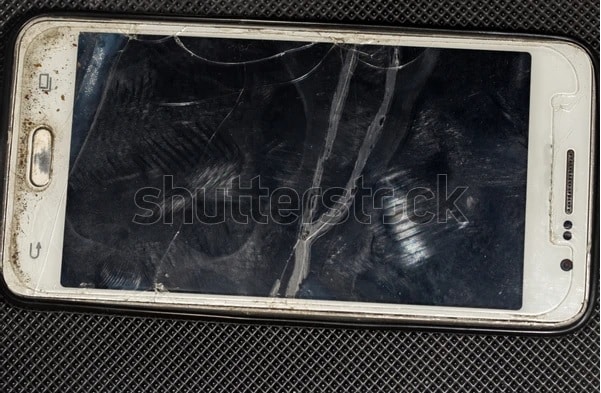
If your phone is not responding to touch after a drop or impact, a cracked or internally damaged LCD display is likely the cause. Damage to the digitizer — the layer beneath the glass that detects finger input — can make the screen completely unresponsive or cause phantom touches. Even microscopic cracks invisible to the naked eye can disrupt the capacitive sensing grid. Additionally, extreme temperatures (both hot and cold) can cause the touch layer to temporarily stop functioning, especially on iPhones, which will display a temperature warning and freeze all input until the device returns to a safe operating range.

- Faulty or Malicious Applications
Third-party apps are a surprisingly common cause of touch screen issues on Android. A poorly coded or malicious app can consume excessive CPU and RAM resources, causing the OS to become unresponsive. In some cases, your Android screen may work perfectly everywhere except inside one specific app — a clear sign the problem is app-level, not hardware. If you recently installed a new app before the issue started, that app is likely the culprit. Keeping all apps updated and only installing from trusted sources (Google Play, Apple App Store) significantly reduces this risk.
- Software Glitches or OS Bugs
Android is not responding errors and frozen touchscreens are frequently caused by OS-level software bugs that accumulate during normal use. Running too many memory-intensive apps simultaneously can overwhelm available RAM, causing the system to hang or freeze entirely. Major Android OS updates — particularly when jumping between major versions (e.g., Android 13 to Android 14) — can sometimes introduce new bugs that affect touchscreen sensitivity or gesture recognition. Similarly, iOS updates occasionally break touch input on certain iPhone models until a point-release patch is issued.
- Dirty Screen, Moisture, or Incompatible Accessories
Capacitive touchscreens require direct electrical contact between your fingertip and the screen's conductive layer. Water, sweat, body oils, dust, or heavy screen protectors can all interfere with this signal, causing your phone to not respond to touch correctly. A screen protector that is too thick, bubbled, or not designed for your specific phone model can reduce touch sensitivity dramatically. Similarly, a tightly fitted phone case that slightly overlaps the screen edges can prevent the phone from registering touches near the borders.
Part 2: How to Fix Phone Screen Not Working — 5 Proven Solutions
If your phone screen is not responding to touch, start with the simplest fix first and work your way down the list. Most cases of an unresponsive Android or iPhone touchscreen can be resolved without any special tools or technical expertise. The five methods below are ordered from least to most invasive, ensuring you only perform a factory reset if all other options have been exhausted.
Methods at a glance:
- Clean Your Smartphone Screen
- Remove External Accessories
- Force Restart Your Device
- Update Your OS Software
- Perform a Factory Reset
Fix 1: Clean Your Smartphone Screen
A dirty or wet screen is one of the most overlooked causes of unresponsive phone touchscreen problems — and also the easiest to fix. Use a clean, dry microfiber cloth to gently wipe the entire screen surface, removing any water, fingerprint oils, dust, or residue. If your device was recently exposed to rain or submerged in water, power it off immediately and leave it to air-dry for at least 2–3 hours before attempting to use it again. Do not use paper towels, rough cloths, or cleaning sprays, as these can scratch the oleophobic coating. Once clean and dry, test the screen again before trying other fixes.

Fix 2: Remove External Accessories and Peripherals
Connected accessories can sometimes interfere with your phone's touch input system. If your phone screen stops working while something is plugged in, disconnect all external devices — including USB-C cables, Lightning cables, wired headphones, or third-party charging adapters. For Android users, also disable any Bluetooth devices that are currently paired and active. If your phone uses a case, temporarily remove it to rule out physical pressure on the screen edges. After removing all accessories, test the touchscreen again. If it responds normally, the external device was causing the interference.
Fix 3: Force Restart Your Device
Force restarting is the single most effective quick fix for a frozen or unresponsive Android or iPhone screen. It clears temporary memory, kills all background processes, and reboots the OS without deleting any of your personal data, apps, or settings. Here is how to perform a force restart on the most common Android brands and iPhone:
Samsung Galaxy (All Series)
- Press and hold the Power and Volume Down buttons simultaneously for 7–10 seconds until the screen goes black and the Samsung logo appears, then release.

Xiaomi / Redmi / POCO
If your Xiaomi or Redmi phone is stuck on a loading screen or the display is frozen and unresponsive, follow these two steps to force a restart:
Step 1: Press and hold the Power button on the right side of the device for 8–10 seconds. A menu will appear on screen.
Step 2: Tap Restart, then confirm by tapping Accept if a confirmation dialog appears. Wait 30–60 seconds for the device to complete its reboot cycle.

iPhone (iPhone 8 and later)
- Quickly press and release Volume Up, then quickly press and release Volume Down, then press and hold the Side button until the Apple logo appears.
Google Pixel
- Press and hold the Power button for approximately 10 seconds until the device restarts automatically.
Fix 4: Update Your Software (iOS and Android)
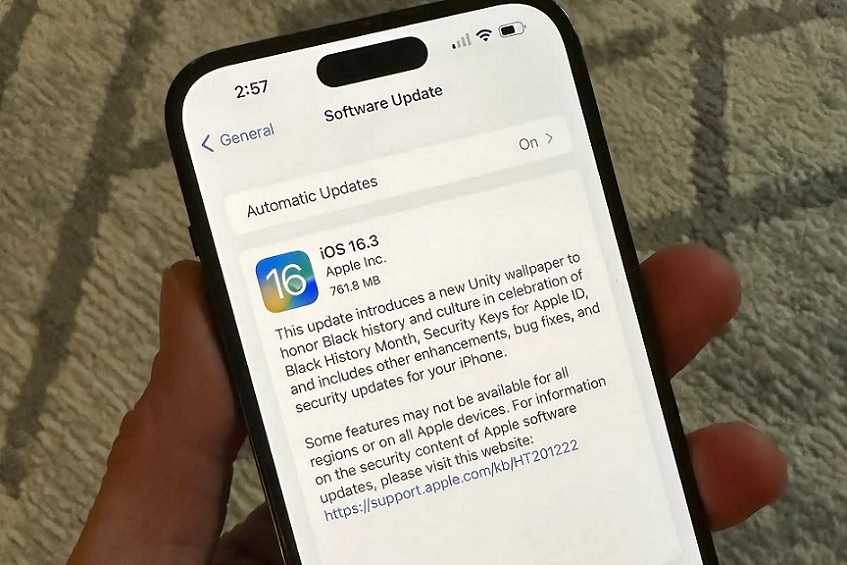
Outdated software is a leading but often invisible cause of phone screen not working issues. OS developers regularly release patches that specifically address touchscreen sensitivity bugs, gesture conflicts, and memory management problems. Keeping your device updated ensures you have the latest touch-input drivers and security patches. Here is how to check for and install updates:
- iOS (iPhone): Go to Settings → General → Software Update. If an update is available, tap Download and Install. Ensure your phone has at least 50% battery or is plugged in before starting.
- Android (General): Go to Settings → Software Update (or System → System Update on some devices) → tap Check for Updates. Download and install any available update.
- Samsung Galaxy: Go to Settings → Software Update → Download and Install.
- Xiaomi / MIUI / HyperOS: Go to Settings → About Phone → MIUI / HyperOS Version → tap to check for updates.
Fix 5: Perform a Factory Reset (Last Resort)
If all previous fixes have failed and your phone touch screen is still not working, a factory reset is the final software-level option. A factory reset wipes all user data, apps, settings, and cached files, returning the device to its original out-of-box state. Important: back up all your data (photos, contacts, documents) before proceeding. You can use Google Drive, Samsung Cloud, or iCloud for automatic backup.
Android — Samsung Galaxy Series
Step 1: Open Settings and navigate to General Management.
Step 2: Scroll down and tap Reset → Factory Data Reset. Review the list of data that will be deleted, then scroll to the bottom and tap Reset.
Note: If you have set a screen lock PIN, pattern, or password, you will be prompted to enter it before the reset proceeds.
Step 3: If a Samsung account is linked to your device, you may be asked to enter your Samsung account password after tapping Delete All. The device will then erase all data and restart. You will see the initial setup screen once the reset is complete.
Android — General (Pixel, OnePlus, Xiaomi, etc.)
Step 1: Open Settings → System → Reset Options → Erase All Data (Factory Reset).
Step 2: Tap Reset Phone and confirm with your PIN or password. The device will reboot and complete the reset automatically.
Part 3: How to Fix Unresponsive Touchscreen With Wondershare Dr.Fone
If the manual fixes above have not resolved your unresponsive phone touchscreen, Wondershare Dr.Fone is the most reliable software solution available for both Android and iOS in 2026. Unlike a factory reset, Dr.Fone's System Repair module can fix deep-rooted OS-level issues — including persistent touch failures, black screen of death, boot loops, and bricked devices — in under 10 minutes, without erasing your personal data.
Dr.Fone supports over 2,000 Android models across all major brands (Samsung, Xiaomi, OPPO, Vivo, Google Pixel, OnePlus) and is fully compatible with iOS 18 and the latest iPhone 16 series.
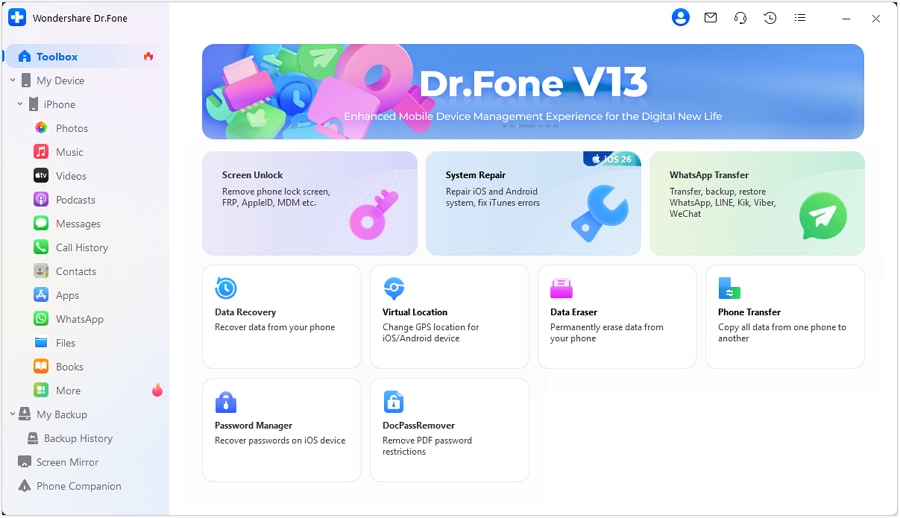
Key Features of Wondershare Dr.Fone System Repair
Here is what makes Dr.Fone the go-to tool for fixing an unresponsive touch screen on Android or iPhone:
- Fix 50+ iOS and Android System Problems in Under 10 Minutes
Dr.Fone's System Repair engine directly addresses OS-level faults that cause touchscreen failures, black screens, frozen displays, and restart loops. For iPhones, it resolves issues such as white screen of death, iPhone stuck in recovery mode, and stuck on Apple logo — all without data loss. For Android users, it fixes unresponsive screens, black screen of death, persistent boot loops, and devices stuck on a manufacturer logo.
- Supports 2,000+ Android Models and iOS 18
Dr.Fone is compatible with virtually every major Android device released in the past decade, including the latest Samsung Galaxy S24/S25 series, Xiaomi 14, Google Pixel 9, and OnePlus 13. On the iOS side, full support extends from iPhone 6 through iPhone 16 and all iOS versions up to iOS 18. No special technical knowledge or jailbreaking is required.
- Two Repair Modes: Standard and Advanced
Standard Mode fixes most common issues without affecting your saved data. If Standard Mode is insufficient, Advanced Mode performs a deeper system repair, which may require reinstalling the firmware but achieves near-100% success rates for severe touch failures or corrupted system files.
System Requirements
The following are the minimum system requirements for running Wondershare Dr.Fone on your computer.
| Computer OS | iOS Support |
| Windows: 10, 11 (64-bit recommended) | Supports all iOS versions including iOS 16, iOS 17, and iOS 18 |
| macOS: 14 (Sonoma), 13 (Ventura), 12 (Monterey), 11 (Big Sur), 10.15 (Catalina), 10.14, 10.13, 10.12 |
System requirements for Wondershare Dr.Fone (Android):
| Computer OS | Android Support |
| Windows 10, 11 (64-bit recommended) | Android 5.0 and above, including Android 13, 14, and 15 |
Pros and Cons of Wondershare Dr.Fone
Pros
- Clean, beginner-friendly interface — no technical expertise required to start a repair immediately after installation.
- Repairs most touchscreen issues in under 10 minutes without deleting your personal files (Standard Mode).
- Dual repair modes (Standard and Advanced) give you flexible options depending on the severity of the issue.
- Supports the widest range of Android models and iOS versions of any competing tool in 2026.
Cons
- iOS and Android versions are sold as separate licenses, so users with both device types will need to purchase both.
- Advanced Mode may require a firmware download, which can take additional time on slower internet connections.
Pricing
Wondershare Dr.Fone offers flexible licensing options for both iOS and Android versions.
Dr.Fone (iOS) License Plans:
- Quarterly License (1–5 Devices) — $6.65/month (Auto-Renew)
- 1-Quarter License (1–5 Devices) — $7.32/month (No Auto-Renew)
- 1-Year License (1–5 Devices) — $4.99/month (No Auto-Renew)
- Perpetual License (1–5 Devices) — $79.95 (One-Time Payment)
Dr.Fone (Android) License Plans:
- 1-Year License (1–5 Devices) — $39.95
- Perpetual License (1–5 Devices) — $49.95
- 1-Year Business License (Unlimited Devices) — $399.00
Step-by-Step: How to Fix an Unresponsive Touchscreen With Wondershare Dr.Fone
Follow these three steps to repair your unresponsive phone screen using Dr.Fone's System Repair module on Windows or Mac:
Step 1: Download and install Wondershare Dr.Fone on your Windows PC or Mac. Open the program, select System Repair from the main menu, then connect your Android or iPhone to your computer using a USB cable.
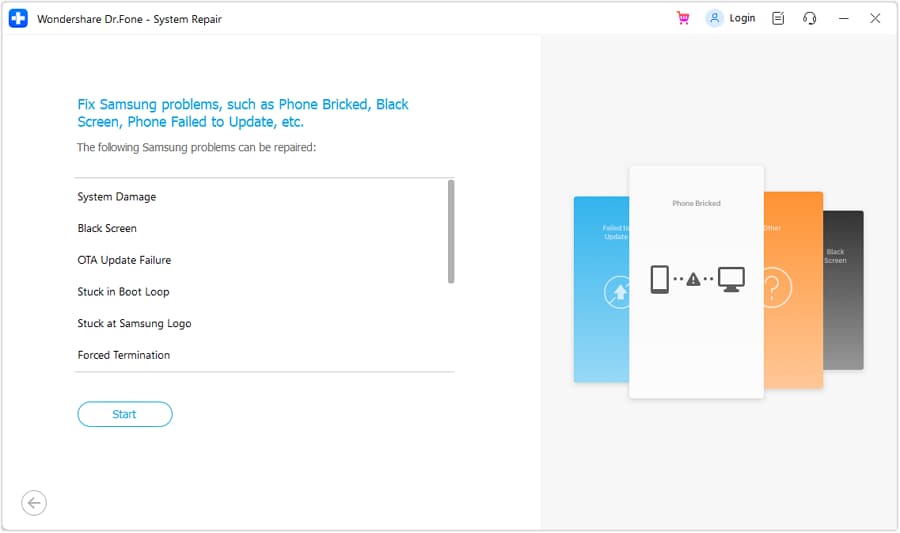
Step 2A (iOS Users): Select your iPhone model from the dropdown list. Dr.Fone will automatically identify the correct firmware package compatible with your device and iOS version. Click Download to fetch the firmware.
Step 2B (Android Users): Select your device's Brand, Name, Model, Country, and Carrier from the dropdown menus. Verify all details are correct, then click Next to proceed to the repair preparation screen.
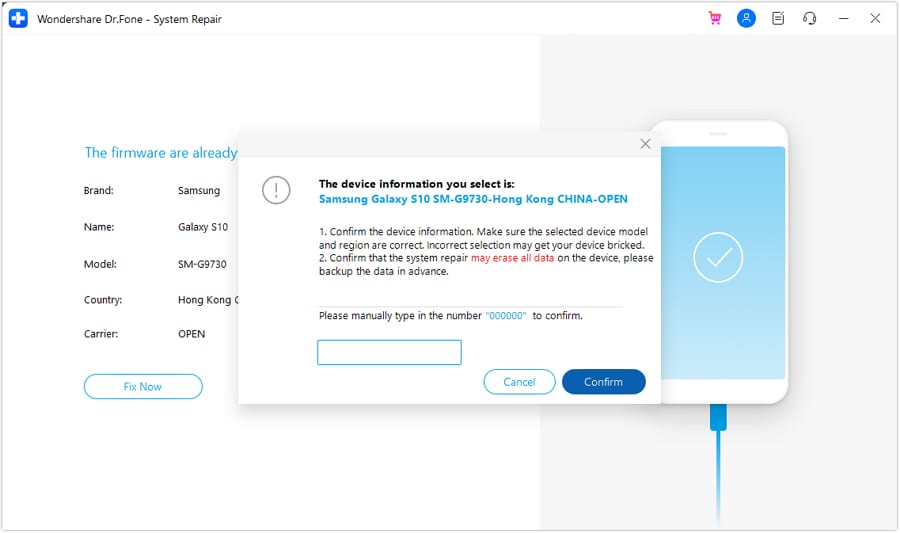
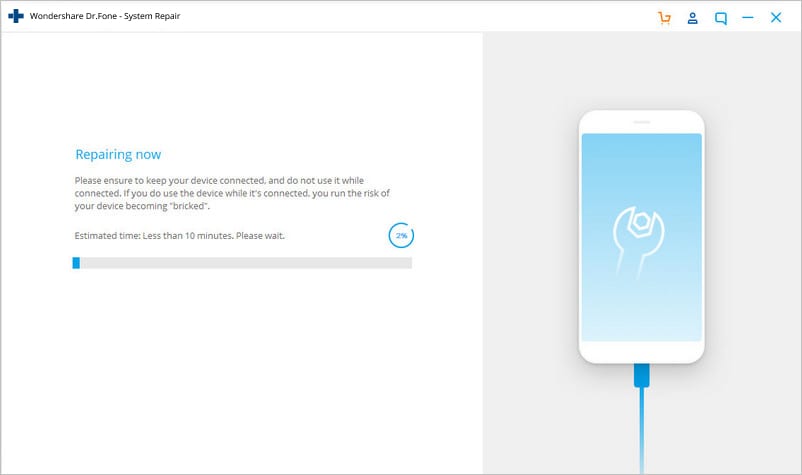
Step 3: Follow the on-screen instructions to put your device into the required mode (Download Mode for Android, Recovery Mode for iPhone). Dr.Fone will then automatically download the correct firmware and apply the system repair. The entire process typically completes in 5–10 minutes. Do not disconnect your phone during the repair.
Part 4: People Also Ask About Unresponsive Phone Touchscreens
Below are answers to the most frequently asked questions about diagnosing and fixing a touchscreen that is not responding, frozen, or partially working on Android and iPhone.
1. Why Did My iPhone Screen Go Black After Not Responding to Touch?
When an iPhone screen stops responding to touch and then goes black, it typically indicates one of several underlying problems: a software crash that forced the display off, a critically low battery that caused an emergency shutdown, a hardware fault (such as a damaged display connector), or an app-level crash that froze the entire OS. If the battery is fully depleted, simply plug in your charger and wait a few minutes for the screen to reactivate. If the battery is not the issue, perform a force restart: quickly press and release Volume Up, quickly press and release Volume Down, then hold the Side (Power) button until the Apple logo appears. If the black screen persists after a force restart, the issue is likely hardware-related and requires professional service or a Dr.Fone System Repair.
2. How Do I Keep My Android From Crashing and Freezing?
Preventing your Android from crashing or experiencing touch issues comes down to consistent maintenance habits. First, keep all apps updated through the Google Play Store, as updates frequently include stability fixes and memory optimizations. Second, regularly clear app caches: go to Settings → Storage → Cached Data and clear it to free up working memory. Third, avoid running more than 5–6 intensive apps in the background simultaneously, as RAM exhaustion is a leading cause of Android freezing. Fourth, avoid installing apps from outside the Play Store, as sideloaded APKs often contain memory leaks or conflicts that destabilize the OS. Finally, restart your Android phone at least once per week to flush temporary files and refresh system processes.
3. Can I Use Dr.Fone for Free?
Wondershare Dr.Fone can be downloaded and installed at no cost. The free version allows you to connect your device, run a system scan, and preview the issues detected. You can also test the first few steps of the repair workflow to confirm your device is recognized and compatible. However, to complete the actual system repair and fix your unresponsive touch screen, you will need to activate a paid license by clicking the Fix Now button and entering your license key. Dr.Fone's pricing is tiered, with the most affordable entry point being a 1-Year License starting at $4.99/month for iOS.
 safe & secure
Conclusion
An unresponsive phone touchscreen is a frustrating but highly fixable problem. In most cases, one of the five methods covered in this guide — cleaning the screen, removing accessories, force restarting, updating the OS, or performing a factory reset — will fully restore touch functionality on your Android or iPhone. Understanding the root cause first (physical damage, software glitch, dirty screen, or a faulty app) helps you choose the fastest and least disruptive fix. If none of the manual methods resolve the issue, Wondershare Dr.Fone provides a professional-grade solution that repairs deep OS-level faults, supports over 2,000 Android models and iOS 18, and completes the repair in under 10 minutes — without data loss in Standard Mode.
FAQs
 Q1. How Do I Fix My Unresponsive Touch Screen on Android?
Q2. How Do I Fix an Unresponsive Touch Screen Without a Factory Reset?
Q3. Why Is My Android Phone Touch Screen Not Working Even Though the Phone Is On?
Q4. How Do I Fix a Frozen Phone Touch Screen on Android Quickly?
Q1. How Do I Fix My Unresponsive Touch Screen on Android?
Q2. How Do I Fix an Unresponsive Touch Screen Without a Factory Reset?
Q3. Why Is My Android Phone Touch Screen Not Working Even Though the Phone Is On?
Q4. How Do I Fix a Frozen Phone Touch Screen on Android Quickly?


Android Issues
- Android Update
- 1. Download and Use Samsung Odin
- 2. Samsung Phone Stuck in Odin Mode
- 3. Latest Updates in Android 11
- 4. Update Android Oreo 8.1
- Android Not Working
- 1. Solution To Bricked Android Phone
- 2. Fix 'Android Phone Won't Turn On'
- 3. Flash Dead Android Phone
- 4. Fix Phone Keep Turning Off
- 5. Fix Android Bootloop Problem
- 6. Fix Android Phones and Tablets
- Android Errors
- 1. Fix Error 495 While Download Apps
- 2. Fix Error 505 in Google Play Store
- 3. Fixes For Authentication Error
- 4. Fix Error Code 963 on Google Play
- 5. Fix Error Code 920 In Google Play
- 6. Fix Encryption Error
- Screen Problems
- 1. Fix Unresponsive Fire Tablet Screen
- 2. Fix Unresponsive Android Screen
- 3. Fix Android Screen Problem
- 4. Fix Phone Is Stuck on Boot Screen
- 5. Fixes for Tablet Screen Not Working
- 6. Tools for Removing Stuck Pixels
- 7. Fix Android Black Screen of Death
- 8. Fix Android Stuck on Boot Screen
- 9. Fix Android White Screen of Death
- 10.Fix Android Blue Screen of Death
- 11.Fix ONN Tablet Screen Not Working
- 12.Fix Android Touch Screen Proble
- 13.Fix Smartphone With a Black Screen
- 14.Fix Realme Screen Not Responding
- 15.Fix Phone Screen Not Responding
- Android Problems
- ● Manage/transfer/recover data
- ● Unlock screen/activate/FRP lock
- ● Fix most iOS and Android issues
- Free Download Free Download Free Download



James Davis
staff Editor
Generally rated4.5(105participated)