
[Solved] iPhone XS (Max) Screen Not Responding - Troubleshooting Guide

Oct 10, 2026 • Filed to: Phone Repair Solutions • Proven solutions
 TL;DR:
Most unresponsive iPhone XS (Max) screens stem from recoverable software glitches or failed firmware updates and can typically be fixed without data loss using a forced restart or dedicated iOS repair tools.
● To execute a force restart without erasing files, quickly press Volume Up, immediately press Volume Down, and continuously hold the Side button for 10 to 15 seconds until the Apple logo appears.
● For persistent software corruption, using Dr.Fone - System Repair (iOS) in Standard Mode or selecting the Update option in iTunes will safely download and reinstall the iOS firmware while fully preserving your personal data.
● DFU Mode provides the deepest software-level restore but permanently erases all device data; if the display remains black or unresponsive after a successful DFU restore, the root cause is physical hardware damage requiring professional component repair.
Ask AI for a summary
 ChatGPT
 Perplexity
 Gemini
 Claude
 Grok
Grok
"I recently bought an iPhone XS Max, and it's suddenly showing a black screen with no response at all — my iPhone XS Max touch is not working and I have no idea why. What are the best ways to fix the iPhone XS Max screen not responding issue?"
If your iPhone XS Max touch screen is not working, or your iPhone XS screen is not responding to touch, you are dealing with one of the most common iPhone XS problems reported by users globally. Whether the display is completely frozen, intermittently unresponsive, or stuck on a black screen with zero reaction to input, the underlying cause is almost always either a recoverable software glitch or a hardware-level issue that can be addressed with the right approach. The good news: most cases of xs max touch not working can be resolved at home — without visiting a repair shop or losing your data. This guide walks you through 6 proven, step-by-step methods to fix an unresponsive iPhone XS (Max) screen, ordered from the safest and simplest to the most comprehensive — so you can restore your device as quickly as possible.

- Part 1: Why Is My iPhone XS (Max) Screen Unresponsive?
- Part 2. How to Fix an Unresponsive iPhone XS (Max) Screen?
- 1. Force Restart Your iPhone XS (Max)
- 2. Fix iPhone XS (Max) unresponsive without data loss

- 3. Update your iPhone XS (Max) to the latest software
- 4. Restore iPhone XS (Max) in Recovery Mode
- 5. Restore iPhone XS (Max) in DFU Mode
- 6. Reach out to an official Apple Support channel
- Part 3. FAQs
Part 1: Why Is Your iPhone XS (Max) Touch Screen Not Working or Unresponsive?
The iPhone XS (Max) screen not responding to touch is almost always traceable to one of several well-documented root causes. Understanding which category your problem falls into will help you choose the correct fix — and avoid wasting time on solutions that don't apply to your situation. In most cases where the iPhone XS Max touch screen is not working, the cause is software-related and fully fixable without hardware replacement.

- Software Glitches or System Crashes: Temporary bugs, runaway background processes, or a frozen iOS kernel can cause your iPhone XS Max touch to stop working entirely. This is the most frequent cause and is usually fixed by a force restart or an iOS repair tool.
- Failed or Corrupt iOS Update: A recently installed iOS update that didn't complete successfully — or that introduced incompatible firmware components — can render the touchscreen partially or fully unresponsive. This is a key reason why an iphone xs problem often appears "out of nowhere" after a system update.
- Touchscreen Digitizer Calibration Failure: Apple's OLED display on the XS series relies on precise capacitive calibration. Any disruption to this calibration — such as electromagnetic interference, proximity to strong magnets, or internal calibration drift — can cause an iphone xs screen not responding to touch, even when the hardware is intact.
- Physical Damage or Impact: Drops, impacts, or water exposure can damage the touchscreen digitizer, crack the OLED panel, or — importantly — displace the display flex cable connector from its socket on the logic board. A partially disconnected display connector can produce intermittent xs max touch not working symptoms without visible cracks.
- Overheating: The iPhone XS (Max) will automatically reduce touchscreen sensitivity or temporarily disable touch input when internal temperature rises above safe thresholds. If your device feels warm and the screen becomes unresponsive, allow it to cool in a shaded area for 10–15 minutes before troubleshooting further.
- Incompatible or Overly Thick Screen Protector: Certain tempered glass screen protectors — especially those with excessive thickness (above 0.4mm) or poor edge adhesion — can create an insulating air gap that reduces capacitive sensitivity and causes the iphone xs max touch screen not working issue.
- Third-Party App Conflicts or Malware: Malfunctioning apps, rogue background processes, or poorly coded third-party software can trigger iOS system crashes that lock the display. If your screen became unresponsive immediately after installing a new app, this is likely the cause.
- Low Battery or Battery Fault: An iPhone XS (Max) with a critically low or degraded battery may display a black screen and refuse to respond to touch, even when connected to power. This can mimic a hardware fault but is actually a power management issue.
If your device shows an iphone xs black screen with no response, begin with the software-based fixes in Part 2 before assuming hardware damage — the majority of black screen + unresponsive touch cases are resolved through software repair. For a comprehensive overview of other common iPhone XS hardware and software problems, including power-on failures and boot loop issues, our related troubleshooting guides provide additional diagnostic context.
Part 2: How to Fix iPhone XS (Max) Screen Not Responding — 6 Proven Methods
The following methods are arranged in order of safety and impact — start with Method 1 (no risk, no data loss) and work your way down only if earlier methods fail. For most users whose iPhone XS Max touch is not working due to a software issue, Methods 1 or 2 will be sufficient.
Method 1: Force Restart Your iPhone XS (Max) to Fix Touch Screen Not Working
Best used when: your iPhone XS Max screen is completely frozen, not responding to any touch, or showing a black screen with no input response — and you want to fix it quickly without connecting to a computer or risking data loss.
A force restart is the single fastest and safest first response to any xs max touch not working situation. Unlike a regular shutdown, a force restart bypasses the normal iOS shutdown sequence and forces the device's processor to perform a hard reboot — clearing all temporary memory, ending frozen processes, and resetting the display controller. This method does not delete any data, apps, or settings, and works even if the screen is completely unresponsive to touch. Follow these steps precisely and without pausing between button presses:
- Step 1. Quickly press and immediately release the Volume Up button. This press should be rapid — under one second — do not hold it down.
- Step 2. Immediately after releasing Volume Up, quickly press and release the Volume Down button in the same manner. Do not pause between the two presses.
- Step 3. Without any delay, press and hold the Side button (the power/lock button on the right side of the device). Continue holding it firmly.
- Step 4. Keep holding the Side button for approximately 10–15 seconds. Your screen may turn black initially — do not release. Continue holding until the Apple logo appears on the screen.
- Step 5. Once the Apple logo is visible, release the Side button and allow your iPhone XS (Max) to complete its restart cycle normally.

Important: The entire button sequence (Volume Up → Volume Down → hold Side) must be performed in one continuous, fluid motion. Any pause longer than a second between steps will cause the sequence to fail, and you will need to start over from Step 1. If the Apple logo does not appear after 20 seconds of holding the Side button, release and retry the full sequence.
What to expect after: Your iPhone XS (Max) will restart and return to the lock screen. In most cases of software-induced screen unresponsiveness, the touch screen will be fully functional again. If the screen remains unresponsive after a successful force restart, proceed to Method 2.
Method 2: Fix iPhone XS (Max) Screen Not Responding Without Data Loss — Recommended
If a force restart doesn't resolve your iPhone XS screen not responding to touch, the next and most effective step is to repair the underlying iOS system using a dedicated repair tool. Dr.Fone - System Repair (iOS) by Wondershare is the industry-leading solution for this — it diagnoses and repairs iOS firmware corruption, resolves system-level crashes, and fixes unresponsive screen issues caused by software faults, all without deleting a single byte of your data.
Why this method is recommended for most users: Unlike iTunes restore (Method 3) or Recovery/DFU Mode (Methods 4 and 5), Dr.Fone's Standard Repair mode does not erase your photos, contacts, messages, or app data. It works by downloading a fresh, verified iOS firmware package and applying it to repair only the corrupted system components — leaving your personal data completely intact. This makes it the safest and most effective solution when your iPhone XS Max touch screen is not working due to a software issue.
Dr.Fone - System Repair (iOS)
- Fix with various iOS system issues like stuck on recovery mode/ DFU mode, white Apple logo, black screen, looping on start, etc.
- Fix other iPhone error and iTunes errors, such as iTunes error 4013, error 14, iTunes error 27, iTunes error 9 and more.
- Only fix your iOS to normal, no data loss at all.
- Work for all models of iPhone, iPad and iPod touch.
- Supports iPhone and the latest iOS version fully!

Step-by-step guide: How to use Dr.Fone - System Repair (iOS) to fix iPhone XS (Max) screen not responding
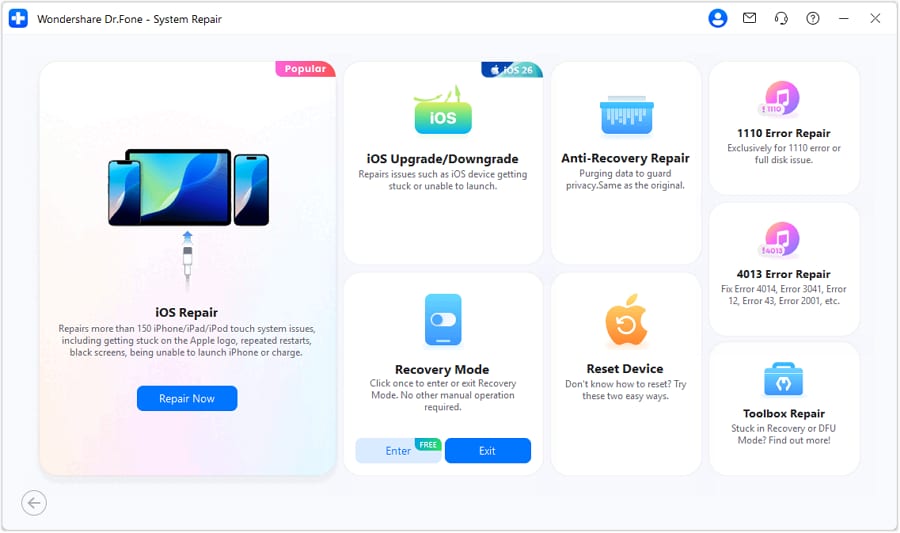
- Step 1. Download and install Dr.Fone - System Repair (iOS) on your Mac or Windows PC. Launch the Dr.Fone toolkit and click on the "System Repair" module from the main dashboard.
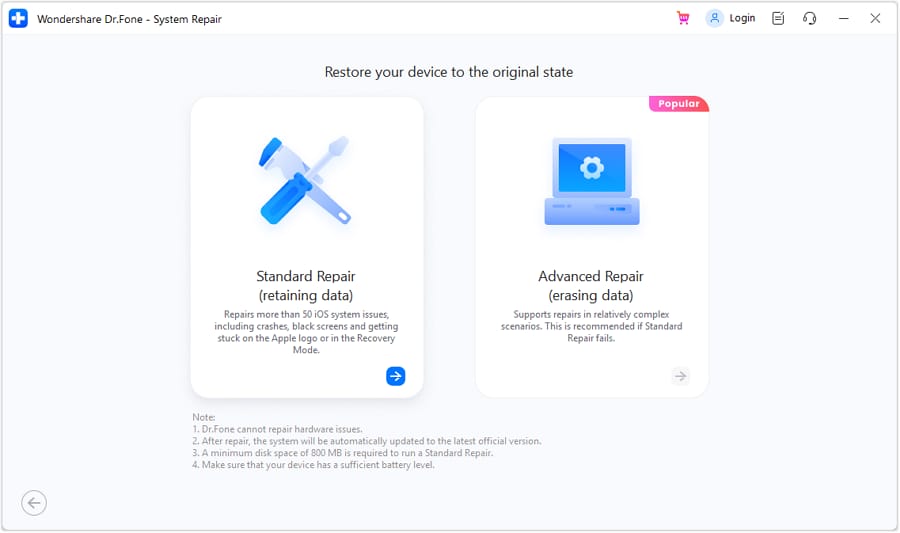
- Step 2. Connect your iPhone XS (Max) to the computer using an original or Apple-certified Lightning cable. On the next screen, select "Standard Mode" — this is the no-data-loss repair path and is the correct choice for most screen not responding issues. (Advanced Mode performs a deeper repair but does erase device data; use it only if Standard Mode fails.)
Note: If your computer cannot recognize your iPhone, you need to put your phone in the DFU mode. To do this, you can view the on-screen illustrations to know the key combinations. For example, press the Volume Down and Side button at the same time for 10 seconds. Later, release the Side button while still holding the Volume Down button for 5 seconds. I have also listed the basic steps to put iPhone XS (Max) / iPhone XR in DFU mode later in this guide.
- Step 3. Dr.Fone will automatically detect your iPhone model. Verify that the device model and iOS version shown on screen are correct, then click the "Start" button to proceed. The tool will identify the latest stable firmware compatible with your device.
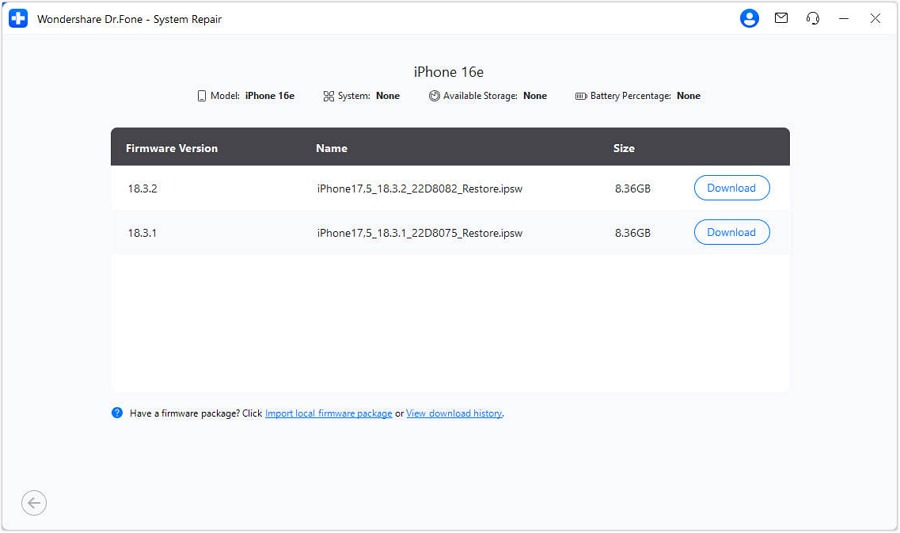
- Step 4. Dr.Fone will begin downloading the verified iOS firmware package for your device. This download is typically 3–6 GB in size — ensure you have a stable Wi-Fi or wired connection and sufficient disk space. The progress bar on screen will display the download status in real time. Do not disconnect your iPhone during this step.
- Step 5. Once the firmware download is complete, Dr.Fone will verify its integrity and prompt you with a confirmation screen. Click "Fix Now" to begin the repair process. The tool will apply the firmware to repair the corrupted iOS system components responsible for your iPhone XS (Max) screen not responding issue.
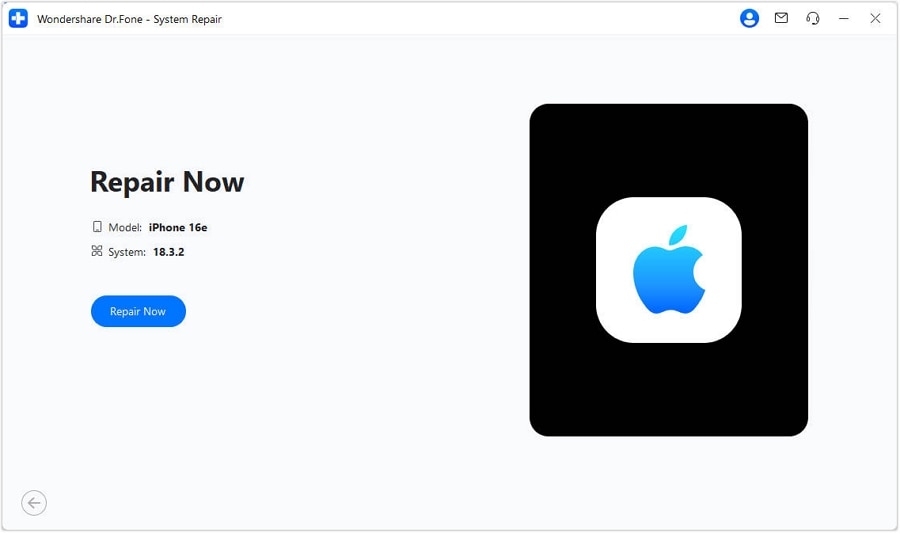
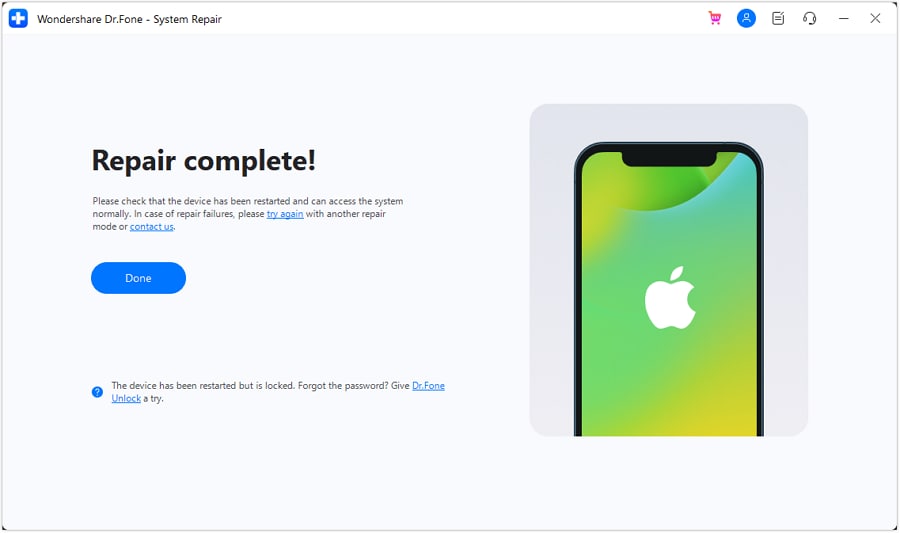
- Step 6. The repair process takes approximately 5–10 minutes. Keep your device connected and do not interrupt the process. Once complete, Dr.Fone will automatically restart your iPhone XS (Max) in normal mode with the repaired, updated firmware installed.
4,624,541 people have downloaded it
 safe & secure
After completing these steps, your iPhone XS (Max) will reboot into normal mode with a fully repaired iOS system — and your touchscreen should respond normally. All your personal data, apps, messages, and settings will remain exactly as they were before the repair. If the screen not responding issue persists after Standard Mode repair, re-run Dr.Fone using Advanced Mode (note: this will erase the device), or proceed to Method 3.
Other issues you may run into:
Method 3: Update iPhone XS (Max) iOS via iTunes to Fix Unresponsive Screen
Updating or restoring your iPhone's iOS through iTunes is an effective solution when the screen not responding issue is caused by a corrupted, outdated, or incomplete iOS installation — particularly if the problem started after a failed over-the-air (OTA) update. Even if your iPhone XS (Max) screen is completely unresponsive to touch, you can still perform this operation because iTunes communicates with the device through the Lightning cable connection, not the touchscreen.
When to use this method: Use iTunes to update iOS if your iPhone XS (Max) screen stopped responding immediately after an iOS update, if you suspect a software corruption issue, or if Method 1 and Method 2 did not fully resolve the problem. Note that updating iOS via iTunes preserves your data, while restoring your device (also available in iTunes) will erase all data — choose "Update" rather than "Restore" if you want to keep your files.
- Step 1. On your Mac or Windows PC, open iTunes (on macOS Catalina or later, use Finder instead). Make sure you are running the latest version of iTunes to ensure full compatibility with iPhone XS iOS versions.
- Step 2. Connect your iPhone XS (Max) to the computer using a genuine Lightning cable. If prompted, trust the computer on your device — you may need to use Siri or AssistiveTouch if the screen is unresponsive to enter the passcode.
- Step 3. In iTunes, click on your iPhone icon in the top-left corner to open the device summary panel. Click on the "Summary" tab in the left sidebar.
- Step 4. Click "Check for Update." iTunes will connect to Apple's servers and check whether a newer stable iOS version is available for your device. If an update is available, click "Download and Update" — this will install the new iOS version while preserving your existing data. Alternatively, if the software is already up to date, click "Restore iPhone" to perform a full reinstall (data will be erased, so ensure you have a backup first).

- Step 5. Confirm your selection and allow iTunes to download the iOS software package. The download progress is shown via an on-screen indicator in the top-right corner of the iTunes interface. Download size is typically 3–6 GB; keep your internet connection stable throughout.

- Step 6. Once the download is complete, iTunes will automatically verify and install the update on your iPhone. Your device will restart at least once during this process. After the restart, check whether the iPhone XS (Max) screen is now responding normally to touch.
Tips: Looking for an all-in-one mobile management software? Look no further than Dr.Fone App - the ultimate choice for all your needs:
- For iOS Users: Free up space with Smart Clean, remove any restriction including screen lock, iCloud activation lock, MDM, or Apple ID, and transfer data easily between devices with our all-in-one iOS solution.
- For Android Users: Bypass screen locks and FRP with our Android unlocker, change your location with one click, and repair damaged Samsung devices with ease.
Discover more possibilities for mobile management solutions with Dr.Fone App (iOS) and Dr.Fone App (Android). Don't miss out, try it now and revolutionize your smartphone experience.



Method 4: Restore iPhone XS (Max) in Recovery Mode to Fix Persistent Screen Issues
Recovery Mode is Apple's built-in diagnostic and restore environment — it allows iTunes to fully reinstall iOS on a device that is malfunctioning or unable to boot normally. If Methods 1, 2, and 3 have not resolved your iPhone XS (Max) screen not responding problem, Recovery Mode is the next step. However, be aware that this method will completely erase all data on your iPhone — including photos, messages, contacts, and app data — and restore it to factory settings. Only proceed if you have an existing iCloud or iTunes backup, or if you have accepted that data loss is unavoidable.
Before proceeding, we strongly recommend that you create a complete iPhone backup using iTunes or iCloud to avoid permanent data loss. If your screen is completely unresponsive and you cannot back up manually, proceed understanding that data recovery after a factory restore may require a dedicated tool.
Recovery Mode vs. DFU Mode: Recovery Mode reinstalls iOS while keeping the bootloader intact — it is less aggressive than DFU Mode and is the recommended restore method for most screen unresponsiveness cases. Use DFU Mode (Method 5) only if Recovery Mode fails or if the device cannot be detected in Recovery Mode.
- Step 1. Launch the latest version of iTunes on your Mac or Windows PC. Ensure your computer has an active internet connection for the firmware download.
- Step 2. Connect your iPhone XS (Max) to the computer using an original Lightning cable. If iTunes does not immediately detect the device, proceed to put it into Recovery Mode using the steps below.
- Step 3. Quickly press and release the Volume Up button.
- Step 4. Immediately after, quickly press and release the Volume Down button.
- Step 5. Press and hold the Side button immediately after releasing Volume Down.
- Step 6. Continue holding the Side button as the device screen turns black and then displays the "Connect to iTunes" symbol (a cable pointing to a computer screen). Once this symbol appears, release the Side button — your device is now in Recovery Mode.

- iTunes will automatically detect your iPhone in Recovery Mode and display a prompt offering two options: Update or Restore. Click "Restore" to perform a full iOS reinstall (this erases the device), or attempt "Update" first — Update will try to reinstall iOS without erasing data. Follow the on-screen instructions to complete the process.

After the restore completes, your iPhone XS (Max) will restart in normal mode running a fresh iOS installation. The touch screen should now be fully responsive. You can then restore your data from a previously created iCloud or iTunes backup. If your device could not be detected in Recovery Mode, or if the process failed, proceed to Method 5 (DFU Mode).
Method 5: Restore iPhone XS (Max) in DFU Mode — Deep Firmware Restore
Device Firmware Update (DFU) mode is the deepest level of restore available for any iOS device. Unlike Recovery Mode — which reinstalls iOS while leaving the bootloader and some firmware untouched — DFU mode bypasses the bootloader entirely and allows iTunes to reprogram the device at the firmware level, overwriting every software layer including the baseband firmware. This makes DFU mode the most powerful software-based solution for an iPhone XS Max black screen that won't respond to touch, a boot loop, or any scenario where Recovery Mode was insufficient.
When to use DFU Mode: Use this method only after Methods 1 through 4 have failed, or when the device cannot be detected in Recovery Mode. Like Recovery Mode, DFU mode will erase all data on your device and restore it to factory settings. Make sure you have a backup before proceeding.
Key difference from Recovery Mode: In Recovery Mode, you will see the "Connect to iTunes" screen on your device. In DFU mode, your device screen remains completely black — there is no on-screen indicator. If you see any screen content (including the Apple logo or Connect to iTunes icon), you are NOT in DFU mode and must restart the sequence.
- Step 1. Launch the latest version of iTunes on your Mac or Windows PC and ensure it is connected to the internet.
- Step 2. Connect your iPhone XS (Max) to the computer using an original Lightning cable. Turn your device completely off if it is not already off.
- Step 3. Press and hold the Side (power) button for exactly 3 seconds.
- Step 4. While still holding the Side button, simultaneously press and hold the Volume Down button. Hold both buttons together.
- Step 5. Continue holding both buttons for exactly 10 seconds. If the Apple logo appears at any point during these 10 seconds, you pressed the buttons for too long — release everything and restart the sequence from Step 1.
- Step 6. After exactly 10 seconds, release the Side button only — but continue holding the Volume Down button.
- Step 7. Keep holding the Volume Down button for another 5 seconds. If the "Connect to iTunes" screen appears during this step, you held the Side button too long in the previous step — restart from Step 1.
- Step 8. If successful, your iPhone screen will remain completely black with no display output. iTunes should display a notification that it has detected a device in recovery mode that needs to be updated or restored. This confirms your iPhone XS (Max) has entered DFU mode.

- Click "OK" in the iTunes prompt and then click "Restore iPhone" to begin the full firmware reinstall. iTunes will download the latest iOS firmware and apply it to your device at the DFU level. This process typically takes 10–20 minutes depending on your internet speed.

After the DFU restore completes, your iPhone XS (Max) will reboot with a completely fresh iOS installation. If the screen is now responding normally, the problem was firmware-related and has been resolved. If the screen remains non-functional even after a successful DFU restore, the issue is hardware-related — proceed to Method 6 for professional repair options.
Method 6: Contact Apple Support or Visit an Apple Authorized Service Center
If your iPhone XS (Max) screen is still unresponsive after attempting all five software-based methods above, the problem is almost certainly hardware-related. Common hardware causes at this stage include a damaged OLED panel, a cracked or disconnected display digitizer flex cable, logic board damage, or a failed touch controller IC. These issues cannot be resolved through software and require physical inspection and component-level repair by a trained technician.
What to do before going to Apple:
- Confirm whether your device is still covered under Apple's standard one-year warranty or an active AppleCare+ plan. Screen repairs and hardware issues caused by accidental damage are covered under AppleCare+ (subject to a service fee), which can save you significant repair costs.
- Note your device's serial number (Settings → General → About, if accessible) to speed up the service process.
- Describe the exact symptoms clearly to the Apple technician: when the screen stopped responding, whether it shows an iphone xs black screen or just doesn't register touch, and which troubleshooting steps you have already attempted.
- If your device is out of warranty and Apple's out-of-warranty repair cost is too high, consider visiting an Apple Authorized Service Provider — these third-party repair centers use genuine Apple parts and certified technicians, often at a lower cost than Apple's own retail service.

You can locate the nearest Apple Store or Apple Authorized Service Provider through Apple's official location tool right here. Apple's online support chat and telephone support are also available if you prefer remote assistance before committing to a physical visit. Keep in mind that hardware repairs for out-of-warranty iPhone XS (Max) models — particularly screen replacements — can range from $150 to $350+ depending on your region and the extent of the damage.
Having exhausted all software fixes, do not hesitate to lean on professional support. With the right expertise and genuine Apple components, even serious hardware-related iPhone XS problems can be fully resolved.
4,624,541 people have downloaded it
safe & securePart 3. FAQs About iPhone XS (Max) Screen Not Responding
1. Why does my iPhone XS (Max) screen become unresponsive after an iOS update?
An iOS update can sometimes introduce firmware incompatibilities or fail to complete properly, leaving the iOS system in a partially corrupted state that causes the touchscreen to stop responding. This is one of the most frequently reported iPhone XS problems following a system update. The fix: perform a force restart first. If the screen remains unresponsive, use Dr.Fone - System Repair (iOS) in Standard Mode to repair the iOS system without data loss — it downloads a verified clean firmware and rebuilds the corrupted components. As a last resort, use iTunes to reinstall iOS via Recovery Mode.
2. Can I fix a physically damaged iPhone XS (Max) screen at home?
If the screen damage is purely cosmetic — such as superficial scratches or a hairline crack that does not affect touch sensitivity — you can apply a tempered glass screen protector to prevent further deterioration and continue using the device normally. However, if the physical damage is causing the iPhone XS screen not responding to touch (broken digitizer, cracked OLED, or impact-displaced flex cable), a home repair is not recommended. iPhone XS (Max) screens require specialized tools, an electrostatic discharge (ESD)-safe workspace, and precise calibration to reinstall correctly. Incorrect DIY repairs can permanently damage the Face ID sensor assembly or the display controller. Contact Apple Support or an Apple Authorized Service Provider for safe, professional screen replacement using genuine components.
3. Will restoring my iPhone XS (Max) via iTunes or DFU Mode delete all my data?
Yes — both Recovery Mode restore and DFU Mode restore will completely erase all personal data from your iPhone XS (Max), including photos, messages, contacts, and app data, restoring it to factory settings. iTunes' "Update" option (distinct from "Restore") attempts to reinstall iOS while preserving data, but this is not guaranteed if the iOS system is severely corrupted. To avoid data loss, always use Dr.Fone - System Repair (Standard Mode) as your first repair attempt — it repairs iOS without erasing data. If you must use Recovery or DFU Mode, back up your device first via iCloud (Settings → [your name] → iCloud Backup) or iTunes (right-click your device in iTunes → Back Up).
4. My iPhone XS (Max) screen is still not responding after trying all the methods — what now?
If your iPhone XS (Max) screen is still not responding to touch after a force restart, Dr.Fone System Repair, an iTunes iOS update, Recovery Mode, and DFU Mode, the issue is almost certainly hardware-related. The most likely hardware causes are a damaged OLED display panel, a failed touch digitizer, a detached display flex cable connector, or logic board damage from water intrusion or impact. At this stage, the only solution is professional hardware repair. Contact Apple Support to arrange an out-of-warranty or AppleCare+ repair, or visit an Apple Authorized Service Provider for a diagnosis. If you previously backed up your data, you will be able to fully restore your device after the hardware repair is completed.
Final Thoughts: Restore Your iPhone XS (Max) Touch Screen — Step by Step
An unresponsive iPhone XS (Max) screen — whether it's a complete touch failure, an iPhone XS Max black screen, or intermittent xs max touch not working behavior — does not have to mean the end of your device. In the vast majority of cases, the problem is software-related and fully fixable without hardware replacement or data loss.
Here is a quick reference for choosing the right method:
- Screen frozen or black after a crash → Method 1: Force restart (30 seconds, no data loss, no computer needed)
- iphone xs max touch not working after iOS update → Method 2: Dr.Fone System Repair Standard Mode (recommended, no data loss)
- Old or corrupted iOS version → Method 3: Update via iTunes (no data loss with "Update" option)
- Deep software corruption → Method 4: Recovery Mode restore (erases data — back up first)
- Recovery Mode failed or firmware-level damage → Method 5: DFU Mode restore (deepest software fix, erases data)
- All software methods failed → Method 6: Apple Support / authorized hardware repair
For the fastest resolution with zero risk to your data, start with Dr.Fone - System Repair (iOS). It is the only method on this list that combines deep iOS repair capability with complete data preservation — making it the ideal first-line solution for any iPhone XS problem related to software. Download it today and have your device fully functional within minutes.
4,624,541 people have downloaded it
safe & secure


iPhone Issues
- iPhone Storage Full
- 1. Stuck on Apple Logo Storage Full
- 2. Erase Content Settings not Working
- 3. iPhone Lagging
- 4. iPhone Running Slow
- iPhone Update Problems
- 1. Stuck on Updating iCloud Settings
- 2. iPhone Frozen During iOS Update
- 3. iPhone Checking for Update Stuck
- 4. iPhone Cellular Update Failed
- 5. iPhone Software Update Failed
- 6. iPhone Stuck on Update Requested
- 7. iPhone Update Error 1110
- 8. iPhone is Findable and Won’t Turn On
- 9. iPhone Won't Update
- 10. Update Server Couldn't Be Contacted
- 8. iPhone & iPad Security Updates
- 9. Update iPhone with/without iTunes
- 10. Can't Download or Update Apps
- iPhone Media Problems
- 1. Apple Music Song Not Available
- 2. iPhone Not Ringing
- 3. iPhone Echo Problem
- 4. iPhone Ringer Problems
- 5. iPhone Plays Music by Itself
- 6. Ringer Volume Changes by Itself
- 7. Music Won't Play on iPhone
- 8. Blurry Photos & Videos on iPhone
- 9. iPhone Volume Problems
- iPhone Sound Problems
- 1. YouTube no Sound
- 2. iPhone Microphone Problem
- 3. Test iPhone Microphone
- 4. Headphones No Sound from iPhone
- 5. No Sound on iPhone Game
- 6. iPhone Sound Not Working
- 7. iPhone Screen Recording no Sound
- iPhone Calling Problems
- 1. iPhone No Sound on Calls
- 2. Screen Goes Black During Call
- 3. iPhone Recent Calls Not Showing
- 4. iPhone Dropping Calls Issue
- 5. iPhone Calling Problem
- iPhone Camera Problems
- 1. iPhone Camera Black
- 2. iPhone Camera Blurry
- 3. iPhone Camera Not Working
- 4. iPhone Front Camera Not Working
- 5. TrueDepth Camera Not Working
- 6.Out-of-Focus Photos on iPhone 15
- iPhone Network Problems
- 1. Airpods Won't Connect to iPhone
- 2. iPhone Disabled Connect to iTunes
- 3. iPhone Not Syncing Problems
- 4. iPhone Internet Not Working
- 5. iPhone Keep Disconnecting from Wifi
- 6. iPhone WIFI Not Working
- 7. PC Not Recognizing iPhone
- 8. iPhone Stuck on Connect to iTunes
- 9. iPhone Not Showing up in iTunes
- 10. iTunes Not Detecting Your iPhone
- 11. iPhone Bluetooth Disconnect
- 12.Apple CarPlay Keeps Disconnecting
- iPhone Screen Problems
- 1. White Spots in iPhone Screen
- 2. iPhone Bleeding Screen
- 3. Turn Off iPhone When Frozen
- 4. Fix Orange Dot on iPhone
- 5. iPhone Green Screen Flickering
- 6. Green Lines in iPhone Screen
- Other iPhone Problems
- ● Manage/transfer/recover data
- ● Unlock screen/activate/FRP lock
- ● Fix most iOS and Android issues
- Free Download Free Download Free Download


 > How-to > Phone Repair Solutions > [Solved] iPhone XS (Max) Screen Not Responding - Troubleshooting Guide
Alice MJ
staff Editor
Generally rated4.5(105participated)