Resolve common problems and system crashes on both iPhone and Android devices.

 100% Security Verified | No Subscription Required | No Malware

 :
: 
 ChatGPT
 Perplexity
 Gemini
 Claude
 Grok
Grok

My iPhone XS Max suddenly went completely dark and unresponsive. Even when I plug it in, my iPhone XS (Max) won't turn on. How can I safely fix this iPhone X black screen problem without losing all my family photos and messages?
Anonymous Apple User
Apple is renowned for pushing technological boundaries, and the iPhone XS (Max) remains a powerful device even in 2026. However, despite being packed with robust features, it isn't immune to sudden system failures. Just like any sophisticated piece of technology, your device might unexpectedly stop working, leaving you frustrated.
Finding that your iPhone XS (Max) won't turn on or encountering the dreaded iPhone XS (Max) screen black error are highly common issues reported by users today. Usually, this happens due to severe software crashes, deeply discharged batteries, or failed firmware updates. Don't panic—there are several highly effective strategies to resolve this. We have compiled a comprehensive, step-by-step guide to definitively fix the iPhone X not turning on.
In this article
Part 1: Force Restart your iPhone XS (Max)
Whenever your iOS device starts to malfunction or becomes completely unresponsive, a hard reset is the very first diagnostic step you should take. More often than not, a simple force restart will instantly fix the iPhone X black screen problem by forcibly cutting the power and rebooting the system. When you force restart the device, it interrupts the current corrupted power cycle and resets the temporary memory.
This method safely eliminates minor software glitches that cause the display to remain dark. Fortunately, a hard reboot is completely safe and won’t delete any existing data on your smartphone. Follow these precise steps to forcefully restart your iPhone XS (Max):
-
Step 1 Quick-press Volume Up
Firstly, press and instantly release the Volume Up button. Do not hold it down; simply click it for a second or less.
-
Step 2 Quick-press Volume Down
Without waiting or hesitating, immediately press and release the Volume Down button in the same swift motion.
-
Step 3 Hold the Side Button
Now, firmly press and continue holding the Side (Power) button on the right side of the device for at least 10 to 15 seconds.
-
Step 4 Wait for the Apple Logo
Keep the Side button pressed until the screen vibrates or lights up. Once you see the silver Apple logo appear on the display, you can let go.


Part 2: Charge the iPhone XS (Max) for a while
It might sound obvious, but if your smartphone is completely devoid of power, you will inevitably experience the iPhone XS (Max) screen black issue. Typically, an iPhone warns you when the battery dips below 20%. However, if the device was left unattended or experienced an extreme temperature drop, the battery can drain rapidly to absolute zero, which guarantees the iPhone XS (Max) won't turn on.
When a battery is deeply depleted, simply plugging it in won't immediately turn the screen on. You need to provide it with sustained power. Use an authentic Apple MFi-certified charging cable and a reliable wall adapter to charge your phone. Let it sit on the charger for at least an hour completely undisturbed before attempting to power it on.
Double-check that your wall socket, USB wire, and charging block are fully functional. You can test them with another device to rule out accessory failure. Once the phone has accumulated sufficient battery life, press and hold the Side button to power it on normally.

Part 3: How to fix iPhone XS (Max) won't turn on without data loss?
If charging and force restarting fail, you are likely dealing with a severe firmware corruption. In this scenario, you need professional iOS repairing software. We highly recommend utilizing Dr.Fone - System Repair (iOS). Designed by Wondershare, this industry-leading tool securely fixes complex system anomalies without triggering any data loss. This means all your photos, contacts, and app data remain perfectly intact while the software repairs the core OS.
This intuitive application can resolve almost every major iOS-related malfunction, including the scenario where the iPhone XS (Max) won't turn on, the stubborn iPhone X black screen problem, boot loops, and the Apple logo of death. Because the software is entirely GUI-based, you require zero technical expertise to fix your phone. It seamlessly supports all modern iOS versions and is updated for 2026 compatibility.
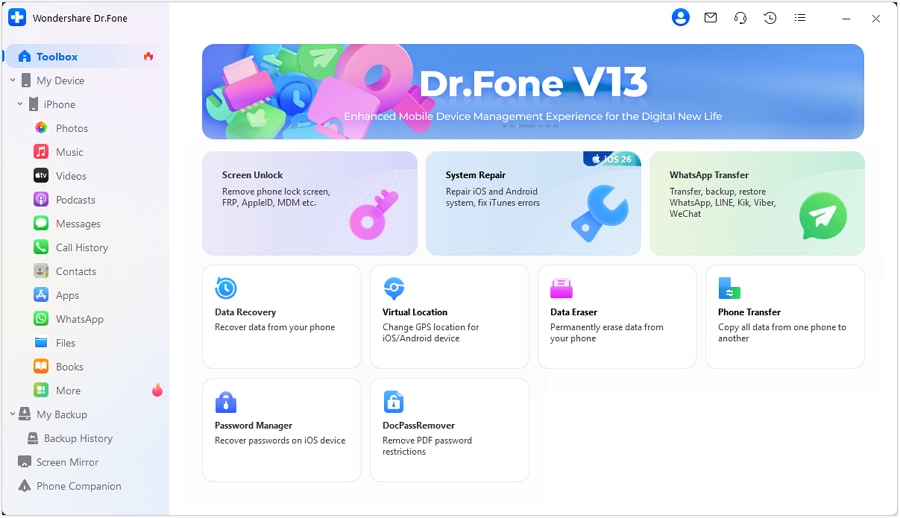
- Launch the Dr.Fone toolkit on your Mac or Windows PC. From its welcome interface, select the "System Repair" module.
 Fix iOS issues, no data loss.
- One-click repair for all iOS problems.
- Solve recovery mode, Apple logo, black screen, etc.
- Upgrade or downgrade iOS without iTunes
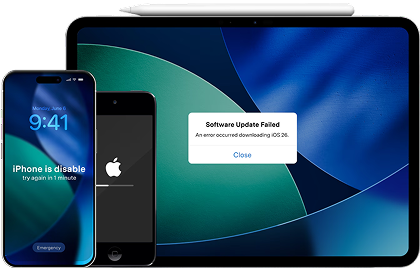
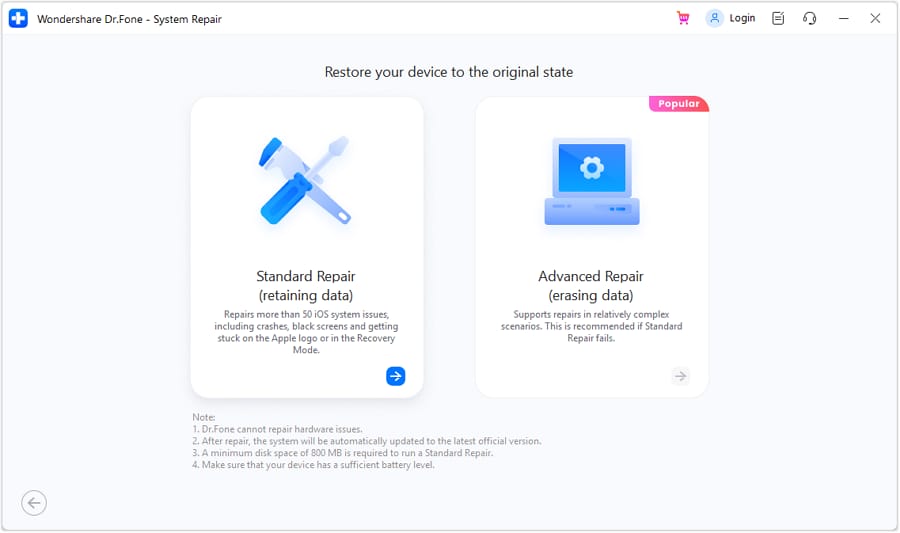
Using a reliable lightning cable, connect your malfunctioning device to the computer and wait a few moments for the software to detect it. Click on the "Standard Mode" option, which is specifically engineered to fix the iPhone won't turn on issue while securely retaining all user data.
- The application will automatically detect your specific phone model and details. Select the appropriate iOS system version in the dropdown menu and click "Start" to proceed.
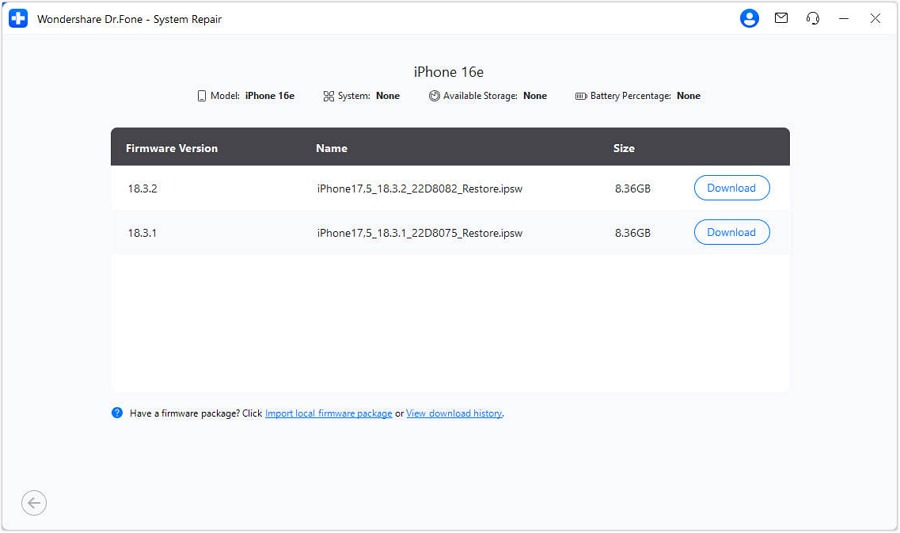
- This action will initiate a secure download of the official firmware designed for your device. Ensure your PC or Mac remains connected to a strong network to avoid any interruptions.
- Once the firmware package is fully downloaded and automatically verified, you will arrive at the final screen. Click on the "Fix Now" button to commence the repair of your iPhone XS (Max) won't turn on problem.
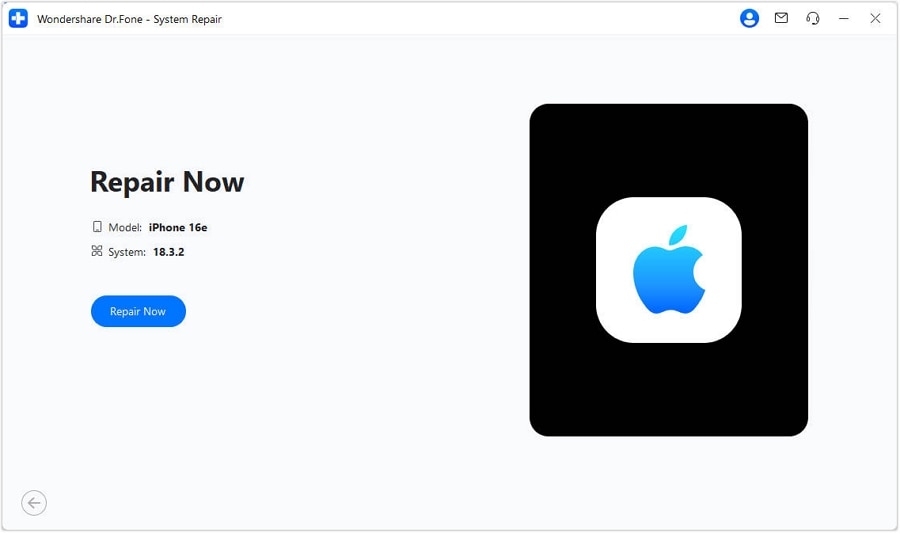
Simply wait patiently as the tool meticulously rewrites the corrupted system files. Do not disconnect the USB cable during this critical phase. Finally, a success message will appear, and your iPhone will automatically reboot into normal mode. You can now safely unplug your device and resume using it as usual.




Part 4: How to fix iPhone XS (Max) won't turn on in DFU mode?
By executing a specific combination of physical key presses, you can forcefully boot your iPhone XS (Max) into DFU (Device Firmware Update) mode. This is the deepest restore state available for iOS devices. When combined with iTunes (or Finder on newer macOS versions), this mode entirely bypasses the corrupted bootloader and flashes a brand new operating system onto the motherboard.
While this is an extremely potent method for fixing severe OS crashes, you must proceed with caution: DFU mode will completely wipe your device. All existing personal photos, saved passwords, applications, and settings will be permanently overwritten by factory defaults. If you have not routinely backed up your iPhone to iCloud or a local drive, this is generally considered a last-resort solution for the iPhone X black screen problem.
- Free official solution provided by Apple
- Extremely thorough firmware overwrite
- Can fix deeply rooted system corruption
- Guarantees 100% data loss without backup
- Button sequences are tricky to master
- Takes significantly longer to complete
The main advantage is that DFU mode forces a hardware-level update, making it possible to connect even when the device is entirely powered off. Here is the accurate procedure:
- Launch the latest version of iTunes on your Windows PC or Mac. Update the application first if prompted to avoid compatibility bugs.
- Connect the unresponsive iPhone XS (Max) to the system using a certified lightning cable. Leave the phone as it is (it should already be in its black screen state).
- Firmly press and hold the Side (Power) key on your iPhone for exactly 3 seconds.
- Without releasing the Side key, simultaneously press and hold the Volume Down button. Keep both keys depressed together for exactly 10 seconds.
- If the Apple logo appears, you have held them for too long and must restart the process from step one.
- If the screen remains black, release the Side button but continue holding the Volume Down button for an additional 5 seconds.
- Your screen should remain completely black, confirming you have successfully entered DFU mode. If a "Connect to iTunes" icon shows up, you are in Recovery Mode, not DFU, and need to retry.

Once iTunes detects your device in this low-level recovery state, it will immediately display a prompt informing you that it has detected an iPhone in recovery mode. Simply confirm the prompt by clicking "Restore" and wait patiently as iTunes downloads the latest firmware, completely wipes the memory, and restores your device back to operational status.
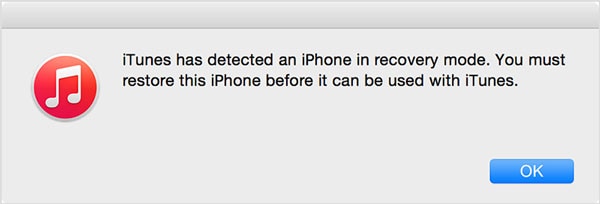
Ultimately, your device will restart on the welcome screen with the newest firmware installed. As warned, unless you can restore from a cloud backup, all prior data will be gone.
Part 5: Contact Apple Support to check if it's a hardware issue
While powerful tools like Dr.Fone - System Repair can flawlessly fix the software side of things, a persistent black screen can occasionally point to severe physical damage. If your iPhone X not turning on continues even after attempting a DFU restore and utilizing third-party system repair tools, you are undoubtedly facing a hardware failure. Common hardware culprits include a dead logic board, a disconnected display connector, or a fully degraded internal battery.
To safely resolve physical damage, it is highly recommended to visit an authorized Apple Service Center or connect with their Genius Bar support team online. You can easily schedule an appointment and learn more about your options by visiting the official Apple support page right here. If your smartphone is still covered by AppleCare+ or regional consumer warranty laws in 2026, you may be eligible for a free repair or a low-cost replacement.

Conclusion
Encountering a dead device is highly stressful, but following the systematic diagnostic steps outlined in this guide ensures you have the best possible chance of revival. More often than not, the iPhone XS (Max) won't turn on or the iPhone X black screen problem is just a temporary software glitch that can be easily remedied by a force restart or a long charging session.
For persistent firmware crashes, deploying a dedicated tool like Dr.Fone - System Repair (iOS) remains the smartest and safest workaround. Not only does it fix the root OS failure, but it completely shields your personal data from deletion—a massive advantage over the harsh wipe of iTunes DFU mode. We highly recommend keeping this versatile toolkit installed on your computer to swiftly manage any future iOS emergencies.
FAQ
-
1. Why does my iPhone XS (Max) screen go completely black randomly?
The sudden black screen issue typically occurs due to a system memory overload, corrupted apps crashing the background processes, or a battery that has degraded past its optimal peak performance capability. In rare instances, physical impact or liquid damage may sever the connection to the display. -
2. Can I fix an iPhone that won't turn on without using a computer?
Yes, if the issue is a minor glitch or battery drain. You can fix it directly on the device by either plugging it into a wall charger for at least an hour or performing the hardware force restart combination (Volume Up, Volume Down, hold Side button) to manually bypass the software crash. -
3. Does entering DFU mode permanently damage my iPhone?
No, DFU (Device Firmware Update) mode is an official diagnostic state built into the Apple hardware. It does not physically harm the device. However, successfully executing a DFU restore via iTunes will completely erase all user data on the storage drive, essentially factory resetting it. -
4. What should I do if Dr.Fone and iTunes both fail to recognize my phone?
If multiple software tools fail to recognize the device even when it is plugged in and placed in Recovery/DFU mode, this strongly indicates a critical hardware failure. The lightning port may be damaged, or the logic board has failed. Your next step must be contacting official Apple Support for physical hardware repair.
 Add Wondershare Dr.Fone as a preferred source on Google