Teleport your device anywhere instantly with one click.


 100% Security Verified | No Subscription Required | No Malware


 :

 ChatGPT
 Perplexity
 Gemini
 Claude
 Grok
If Facebook is not loading, first determine whether the failure affects the service, your connection, one app, or your account. A blank feed and a disabled-account notice are not the same problem, and neither automatically means the iPhone's operating system needs repair.

This 2026 guide contains twelve numbered fixes, plus an outage check and a conditional iOS troubleshooting section. It covers the Facebook app and website without claiming that every remedy is proven to work for every reader. Start with reversible checks and preserve your sign-in access before removing an app or changing system software.
In this article
- First, Let's Check: Is Facebook Down Today?
- Part 1: Quick Fixes for Common App & Connectivity Issues
- Fix 1: Force Close and Re-Open the App
- Fix 2: Check Your Internet Connection
- Fix 3: Clear the Facebook App Cache
- Part 2: Device-Level Troubleshooting for Persistent Problems
- Fix 4: Restart Your Device
- Fix 5: Update the Facebook App
- Fix 6: Update Your Device's Operating System
- Fix 7: Check App Permissions
- Fix 8: Reinstall the Facebook App
- Part 3: Advanced Fix for Stubborn iOS System Glitches (The Ultimate Solution)
- Part 4: Specific Fixes for Other Common Facebook Issues
- Fix 9: "Facebook Login Error"
- Fix 10: "Feed Not Loading New Posts"
- Fix 11: "Sorry, Something Went Wrong"
- Fix 12: "Account Disabled for No Reason"
- FAQ
- Conclusion: Your Roadmap to a Working Facebook
First, Check Whether Facebook Is Down
A service incident can look like a local app problem. Check a current outage tracker such as Downdetector, look for recent reports from other users, and compare them with any official notices available from Meta. A spike in user reports is a useful signal, not a confirmed explanation of the underlying cause.
On August 14, 2025, contemporaneous reporting described Facebook login and loading problems without a confirmed cause from Meta. The December 11, 2024 outage disrupted several Meta services and was described by Meta as a technical issue. These are historical examples, not evidence that Facebook is down today.
The first example is documented in The Economic Times' contemporaneous report; ABC's reporting on the December Meta outage records the broader disruption and Meta's acknowledgement.
Step 1 Compare recent outage reports
Look at when reports increased and which functions users describe. A tracker showing website errors may not explain a problem confined to one account.
Step 2 Cross-check other reports
Search recent posts for terms such as #facebookdown and compare timestamps. Avoid entering your Facebook password into an account-recovery link shared by an unknown user.
If a widespread incident is confirmed, wait for the service to recover rather than resetting your phone. If no incident is visible, continue with local checks, but remember that the absence of public reports does not prove that the fault is yours.
Part 1: Quick Checks for the App and Internet Connection
Test these low-impact actions first. After each relevant change, reopen the same page or app screen so you can tell whether the result changed.
Fix 1: Close Facebook and Open It Again
A stalled app session can sometimes recover after a normal close and relaunch. This refreshes the session; it is not a factory reset and does not prove that the operating system was damaged.
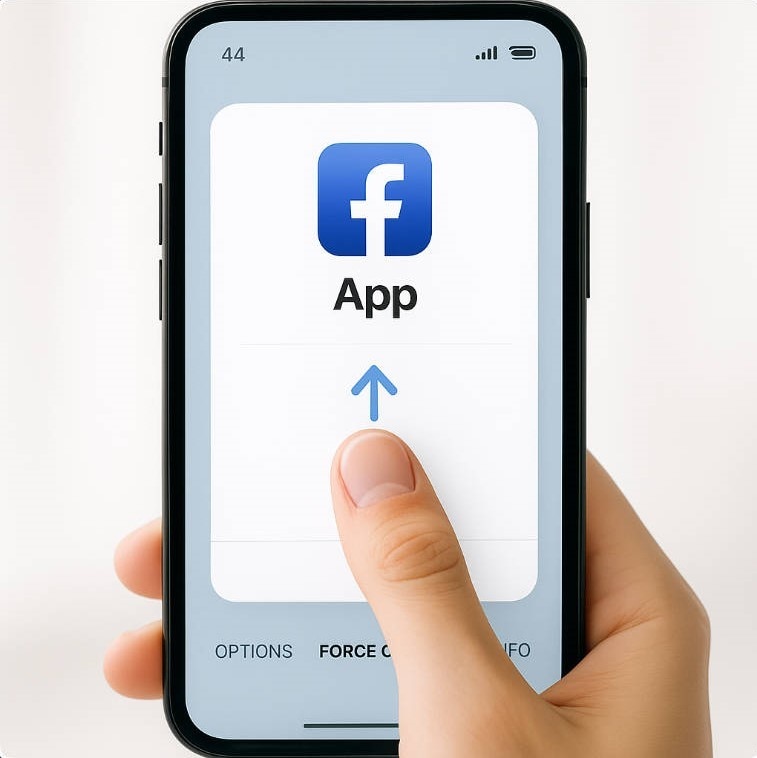
- iPhone or iPad: Open the app switcher with the gesture appropriate to your model, then swipe away Facebook's preview. Models with a Home button can use the corresponding double-press action.
- Android: Open Settings, find Facebook under Apps, and use Force stop if the app remains unresponsive.
Launch Facebook again. For a website-only failure, reload the page and test a different browser or private window. If that works, inspect extensions and site data in the affected browser rather than reinstalling the mobile app.
Fix 2: Test Wi-Fi and Cellular Access
Open another website or application on the same connection. If several services fail, the network deserves attention before Facebook-specific repair. If only Facebook fails, continue testing rather than declaring the connection healthy from a signal icon alone.
- Switch connections: Where available, compare Wi-Fi with cellular data. Be aware of mobile-data charges.
- Refresh the connection: Turn Airplane Mode on briefly, then off, and reconnect to the intended network. Wi-Fi can remain separately enabled, so verify what actually reconnected.
- Restart a router you control: Follow its normal power-cycle procedure, allow it to reconnect, and consider others using it before interrupting service.
On a work or school network, contact the administrator if access is restricted. Do not treat GPS simulation as a way to repair a blocked network or establish a VPN connection.
Fix 3: Review Cache and Local App Storage
Temporary app or browser data can contribute to display problems, but clearing it is not a universal cure. Start with the narrowest option and understand whether it will sign you out.
- Android: Look under Settings > Apps > Facebook > Storage or Storage & cache. Choose Clear cache if available. Clear storage or Clear data is a different, broader action that can remove local state.
- iPhone: Settings > General > iPhone Storage > Facebook may offer Offload App. Offloading removes the app while preserving its documents and data, so it is not equivalent to deleting all cached or corrupted local data.
- Website: If a private window works, consider clearing Facebook-specific site data in the affected browser. Have your password and second-factor access ready before removing sign-in cookies.
If you reinstall an offloaded app, test again. Do not infer a deeper system fault solely because this storage-related step did not help.
Part 2: Check the Device and Application Settings
When basic checks do not help, compare app versions, device behavior, and relevant data settings. Continue to separate a foreground loading failure from content that simply does not refresh in the background.
Fix 4: Restart the Device
Save active work and restart the phone or computer using its normal controls. A restart reloads processes and can resolve a temporary stuck state. It cannot remove a server outage, reverse an account restriction, or guarantee that a persistent software defect is gone.
After restarting, open Facebook before launching unrelated troubleshooting utilities. Note whether the whole device is unstable or only Facebook has a problem.
Fix 5: Install an Available Facebook Update
Open the App Store or Google Play Store, locate the official Facebook listing, and choose Update if offered. Avoid unofficial packages claiming to repair Facebook or restore a disabled account.
Reopen the updated app and reproduce the same action. A missing Update button can mean the installed version is current for that device; it is not a reason to download an unverified installer.
Fix 6: Check for a Supported Operating-System Update
Device software and apps must work together, so check for supported system updates after verifying the basics. Back up important information and follow the device's charging and network requirements before installing.
- iPhone: Open Settings > General > Software Update.
- Android: Look under Settings > System > System update, or your manufacturer's equivalent menu.
If the failure began immediately after an update, record that timing, the app version, and whether other apps fail. Timing alone does not establish a corrupted system. The Advanced Fix section explains when broader device troubleshooting may be relevant and why it is not a guaranteed Facebook cure.
Fix 7: Check Data Access and Background Restrictions
Make sure Facebook is allowed to use the network you are testing. Background settings affect what happens while the app is not actively open; they should not be confused with a requirement to load a feed in the foreground.
- iPhone: Inspect Facebook's app settings and cellular-data permission. Depending on the iOS interface, app settings may be under Settings > Apps > Facebook. Review Background App Refresh if the complaint concerns background updates.
- Android: Inspect Facebook's Mobile data & Wi-Fi settings, background-data restrictions, and Data Saver behavior. Allow unrestricted data only if it fits your needs; it is not automatically necessary for every foreground session.
Camera, microphone, contacts, and precise-location permissions are not general fixes for a feed that will not load. Do not enable unrelated permissions simply to troubleshoot connectivity.
Fix 8: Reinstall the App Carefully
Before removing Facebook, confirm that you know the correct sign-in method and can complete two-factor authentication. Save any local drafts or downloaded items you need. Deleting the app does not itself delete the Facebook account, but not every local item is guaranteed to survive.
Uninstall normally, reinstall from the official store, and test again. If the problem persists, possible explanations still include the service, account, network, an app defect, or device software. Reinstallation failure is not proof that iOS is almost certainly corrupt.
Part 3: Advanced iOS Troubleshooting Requires a Diagnosis
Distinguish App Failures From Wider System Problems
Look beyond Facebook only when the symptoms justify it. Repeated device restarts, several unrelated apps freezing, or a phone stuck on a system screen warrant broader investigation. A Facebook login error by itself is not a diagnosis of a damaged operating system.
System-level repair changes device software and deserves more caution than clearing a cache. Back up first where possible, check official device-support options, and distinguish a data-preserving repair mode from an erasing restore. Do not perform a factory reset solely because a social-media feed will not refresh.
The source discusses Dr.Fone - System Repair (iOS) as a separate module for supported iOS system faults. It is not the Virtual Location module and should not be presented as a way to fix Meta servers, passwords, or account appeals.
Dr.Fone - System Repair (iOS): Assess the Correct Use Case
The vendor describes support for problems such as an iPhone stuck on the Apple logo, recovery-mode difficulties, and certain system-screen faults. Check current device and firmware support rather than assuming every iPhone, iPad, or iPod model is covered.
Its Standard Repair mode is intended to retain data, while Advanced Repair can erase it. That is a mode distinction, not a reason to promise that every attempted repair is risk-free or that it must resolve Facebook. Keep a backup and read the selected operation's warnings before proceeding.

| Scenario | What to Check | Appropriate Next Step |
|---|---|---|
| Facebook crashes after an iOS update | Check whether only Facebook fails, whether an app update exists, and whether the same account works in a browser. | Investigate app and compatibility problems first; consider supported system repair only when broader evidence points to iOS. |
| The iPhone freezes or restarts during use | Determine whether instability also affects other apps or the device outside Facebook. | Back up if possible and seek device-level diagnosis; repair software is not a substitute for assessing possible hardware faults. |
| A black or white screen persists | Distinguish a blank Facebook view from an unresponsive system-wide display. | Try app-level steps for an app-only fault; follow appropriate device recovery guidance for a wider system problem. |
The Original Three-Stage System Repair Workflow
The following retains the source's three stages while clarifying the current official process. Interface labels can differ from the inherited screenshots. These steps belong to System Repair, not to the location simulator described afterward.
Step 1 Open System Repair and connect
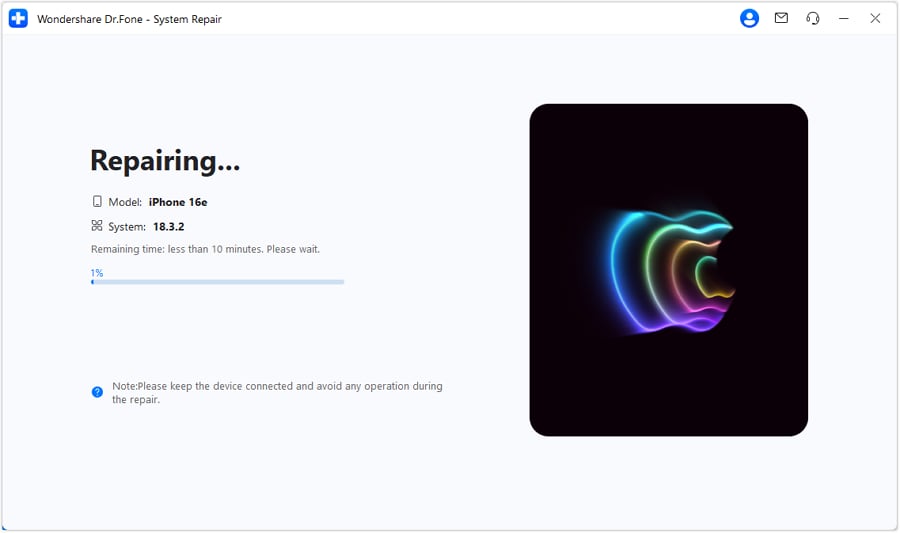
Launch the desktop program, select System Repair, connect the supported iPhone by cable, and choose the iPhone/iOS repair path shown by the software.
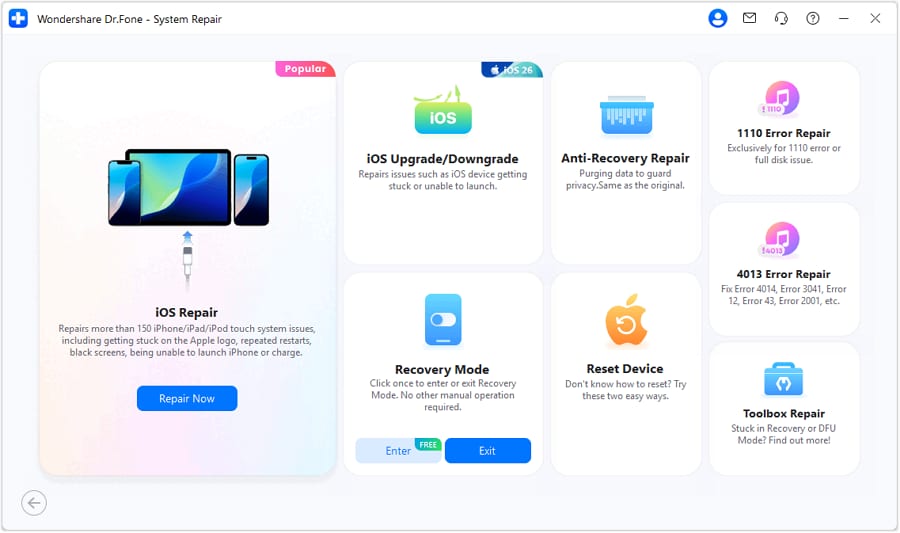
Step 2 Choose the repair mode and firmware
Select Standard Repair if it is appropriate for the diagnosed fault and you intend to retain data. Follow the on-screen recovery-mode instructions, confirm the detected device, and download and verify compatible firmware. Do not choose an erasing mode without understanding its consequences.
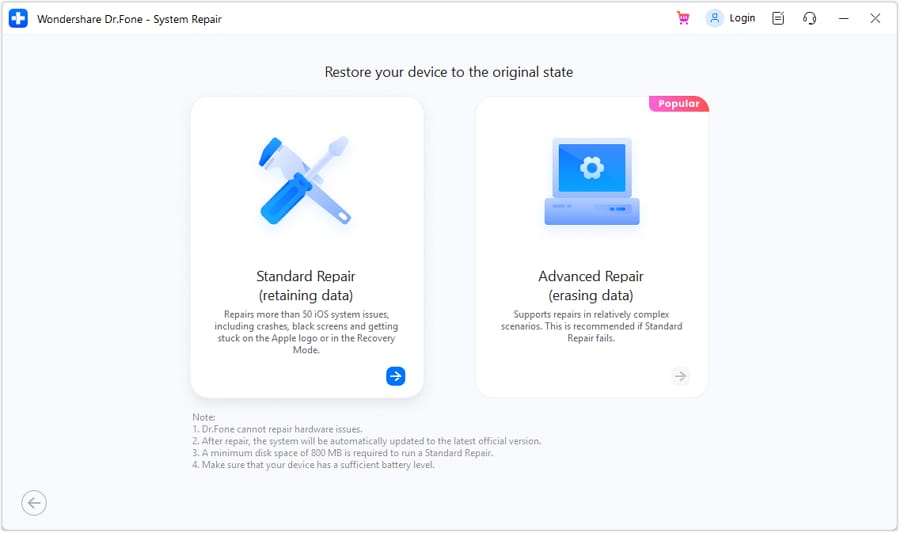
Step 3 Complete repair and retest
Use Repair Now, or the equivalent Fix Now label in an older interface, and keep the device connected until the process finishes. After the restart, verify the wider device problem and then test Facebook separately; completion does not prove a server or account issue is resolved.
Dr.Fone - Virtual Location: For GPS Tests, Not Facebook Loading Repair
 Set your map route to simulate GPS movement.
- Set your wanted movement speed.
- HD and large map view to check location.
- Fake GPS location to anywhere.

Dr.Fone - Virtual Location has a different purpose: it simulates a supported phone's GPS position using a map, selected destinations, and movement controls. It can be relevant when deliberately testing location-based behavior after normal connectivity works.
It does not repair Facebook's app files, fix an iOS installation, change a password, provide VPN encryption, or overturn an account restriction. Keep that boundary explicit. If Facebook will not load at all, work through the service, network, app, and account checks rather than changing the GPS position.
Step 1 Connect a supported phone
Open the desktop program's Virtual Location function and connect your own compatible device. Complete its setup and trust prompts for the device and software version.
Step 2 Select a test location
Choose Teleport Mode, search for the intended address or coordinates, inspect the marker, and confirm with Move Here.
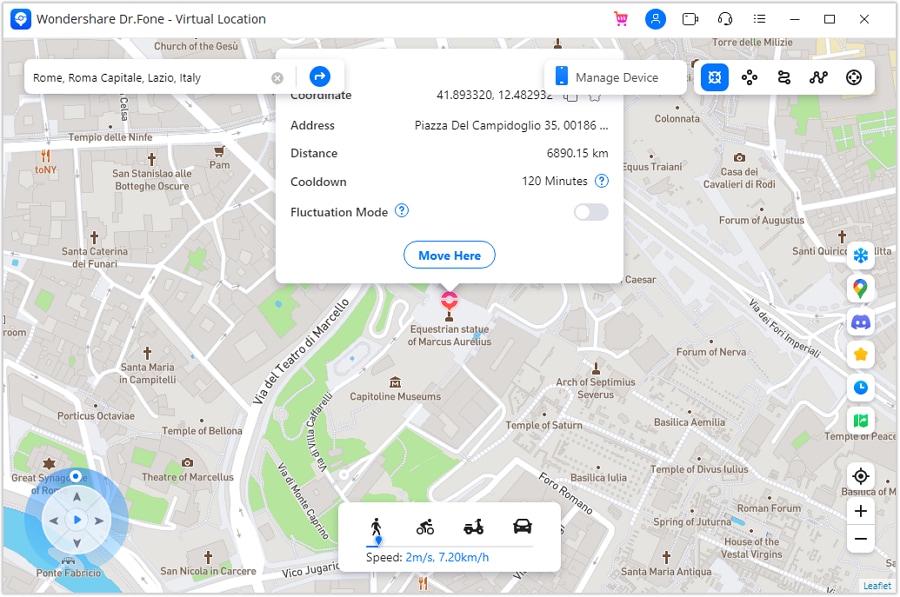
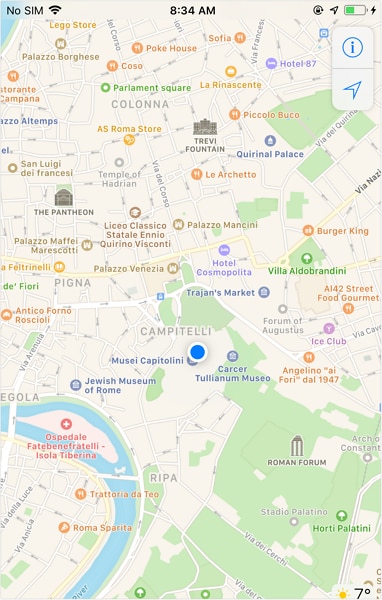
Step 3 Verify the reported position
Check Maps on the phone and then the intended location-based feature. An app may reject or use other signals besides the simulated GPS reading.
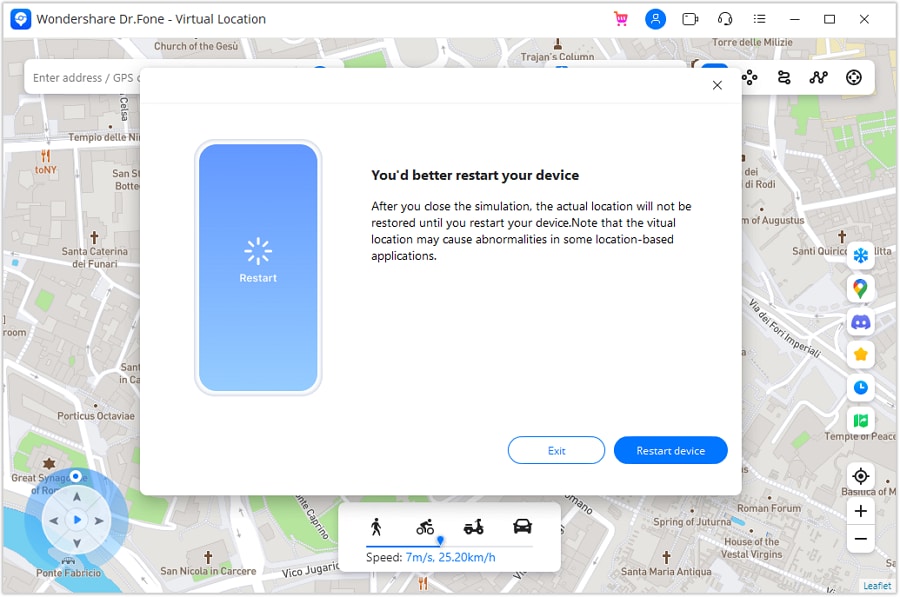
Step 4 Restore the actual location
After the controlled test, follow the software's restart-device prompt and confirm the normal position. Do not rely on a simulated reading for navigation or important location sharing.
The GPS workflow ends here. Continue below for Facebook-specific login, feed, generic-error, and account-review issues; none is resolved merely by selecting a different point on a map.




Part 4: Handle the Specific Facebook Error
Once the application or website opens, identify whether a particular function remains unavailable. Feature-specific errors need different responses from a service-wide failure.
Fix 9: Resolve a Facebook Login Error

Check the email address, phone number, and password for typing errors. If you cannot remember the password, use the official Forgot password flow and retain access to your recovery email, phone, or authentication method.
Follow any account-specific security prompt. A password problem is not repaired by reinstalling iOS. The Advanced Fix is relevant only when there are genuine wider device symptoms, not merely because the login request failed.
Fix 10: Refresh a Feed That Shows No New Posts
Refresh the feed and check whether other Facebook pages load. Where available, use the Feeds or Following-style view to compare it with the main Home feed. Labels and availability differ; a current interface may not have the old Most Recent option in the same position.
On desktop, inspect the left-side navigation or See more menu for the available feed choices. A feed's ranking, followed accounts, and available posts can affect what appears, so older-looking posts do not automatically prove the app stopped syncing.
Fix 11: Investigate 'Sorry, Something Went Wrong'
This is a generic failure message, not a reliable diagnosis by itself. Reports from August 14, 2025 included login and loading problems; the message itself does not establish a cause.
Check recent service reports, refresh once, and compare a browser with the app or a different network. If many people are affected, wait for recovery. If only your session fails, investigate that session or account and report the exact action that triggers the message rather than assuming a system-repair tool is required.
Fix 12: Respond to a Suspended or Disabled Account
A disabled-account notice belongs to Facebook's enforcement and account-review process. Read the notice, use any official appeal option offered, and follow its instructions and time limits. Neither clearing a cache nor changing GPS location reverses a platform decision.
Do not assume the decision was automatically a Facebook error or pay a stranger who promises guaranteed reinstatement. Use Facebook's official channels, keep the notice and relevant account information, and distinguish an account restriction from a password-recovery problem.
Conclusion
Begin with service status and connectivity, then move through app restarts, cache or storage checks, updates, data settings, and a careful reinstall. Use the specific error to decide whether you need login recovery, a feed refresh, or an account appeal. Do not jump from an unsuccessful app reinstall to a claim that the phone must be corrupt.
Dr.Fone - System Repair (iOS) is relevant only to supported device-software problems after appropriate diagnosis. The separately described GPS simulator has no role in repairing a Facebook outage or disabled account. Preserve important data and choose the remedy that matches the actual failure.
FAQ
1. Why is Facebook not working today?
It may be a service incident, network issue, app problem, or account-specific restriction. Check current reports and the exact message first. Historical outages do not establish today's service status.2. Does reinstalling Facebook delete my account?
Deleting the app does not itself delete the account or server-held posts. Local drafts, downloaded items, and sign-in state can be affected, so preserve what you need and confirm recovery access first.3. How can I troubleshoot on iPhone while protecting data?
Start with low-impact checks, such as a restart and reviewing updates. Offloading preserves app documents and data but is not a full cache deletion. Back up before any system repair, and distinguish Standard Repair from modes that erase data.4. Can Virtual Location fix Facebook loading or a disabled account?
No. GPS simulation changes a supported reported position; it does not repair the network, Meta's service, account credentials, or enforcement decisions. Use the corresponding troubleshooting or official account-review process.
 Add Wondershare Dr.Fone as a preferred source on Google