How to Recover Your Facebook Password: 3 Working Solutions
Daisy RainesOriginally published Jul 27, 2026, updated Oct 15, 2026
:
TL;DR:
If you find yourself locked out and need to recover your Facebook password, you can easily retrieve or reset it using native platform tools, browser autofill features, or dedicated iOS password managers.
Direct Reset Method: Tap 'Forgot Password' directly on the Facebook login portal to request a one-time recovery code via your linked email ID or phone number.
Browser Extraction: Access the native password management settings inside Google Chrome, Mozilla Firefox, or Safari, which may automatically store your FB password during previous logins.
iOS Retrieval Tool: Utilize Dr.Fone - Password Manager to securely scan your connected iPhone and extract deeply stored or forgotten app login credentials without risking data privacy.
I recently changed my Facebook password but completely forgot it. Now I am locked out of my account. What is the most effective way to recover my Facebook password without losing access permanently?
Have you recently changed your Facebook password or simply can't seem to remember an existing login credential? If you are locked out of your social media, you are certainly not alone. Every day, thousands of users encounter this exact scenario and find it incredibly frustrating to recover their essential account details. Losing access to your profile means losing touch with friends, missing updates, and sometimes even losing access to business pages connected to your personal account.
The good news is that restoring your digital identity doesn't have to be a nightmare. By utilizing some straightforward native methods or highly effective third-party solutions, you can effortlessly retrieve your Facebook password. In this comprehensive guide, I will walk you through some proven, tried-and-tested solutions that successfully helped me retrieve my Facebook password—and these steps can definitely help you regain your access, too.
Part 1. How to Recover Forgotten Facebook Password on an iPhone?
The most straightforward and stress-free way to retrieve your FB password from an iOS device is by utilizing a professional desktop utility like Dr.Fone - Password Manager. This advanced desktop application is designed to easily scan and retrieve all kinds of saved passwords (for installed apps and visited websites) right from your iPhone's internal memory. It functions as a powerful credential extraction tool that can also reveal your Apple ID details, hidden WiFi logins, screen time passcodes, and so much more without complicated jailbreaking procedures.
The best aspect of Dr.Fone - Password Manager is its uncompromised commitment to privacy and excellent security. It operates entirely locally on your machine, which guarantees that your sensitive passwords won't be leaked, uploaded to the cloud, or shared with third parties. While it flawlessly allows you to retrieve your saved account details, it completely prevents unauthorized forwarding or storing. That is exactly why, when I desperately needed to find my Facebook password, I confidently relied on the assistance of Dr.Fone - Password Manager. Follow the steps below to see how it works:
Step 1 Connect your iPhone and Let Dr.Fone detect it
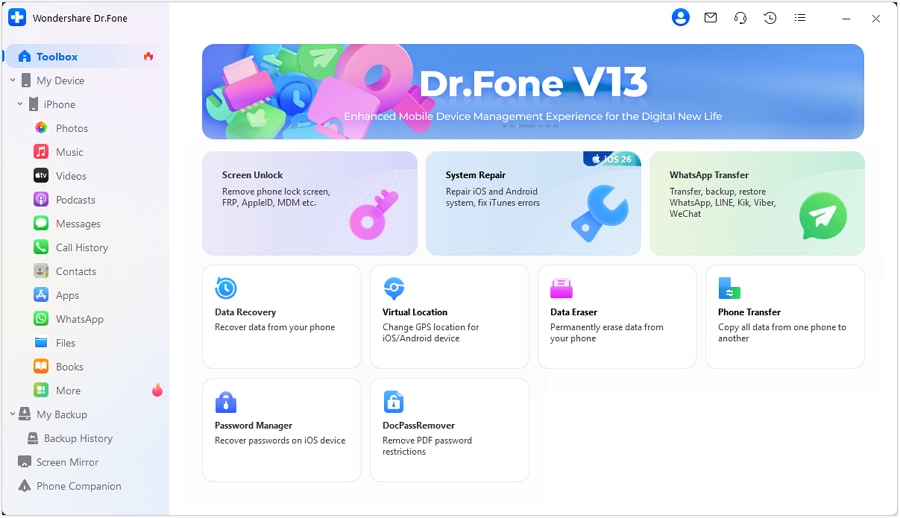
Begin the process by downloading and installing Dr.Fone - Password Manager onto your computer. Launch the main application suite whenever you are ready to retrieve your Facebook password. Once the main welcome screen of the Dr.Fone toolkit appears, click on the "Password Manager" module to initiate the tool.
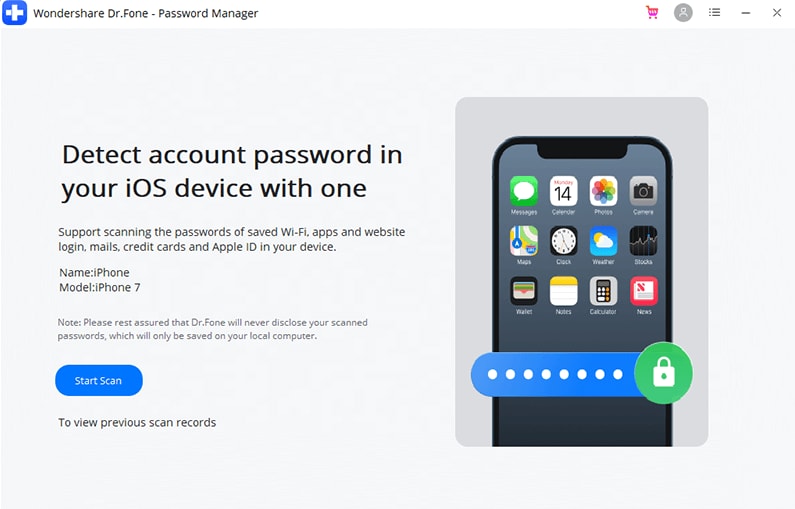
As the dedicated interface of Dr.Fone - Password Manager opens up, take a functioning lightning cable and physically connect your iPhone to the computer. Make sure you unlock your iPhone and tap 'Trust' if prompted.
Step 2 Let Dr.Fone Recover your Facebook Password
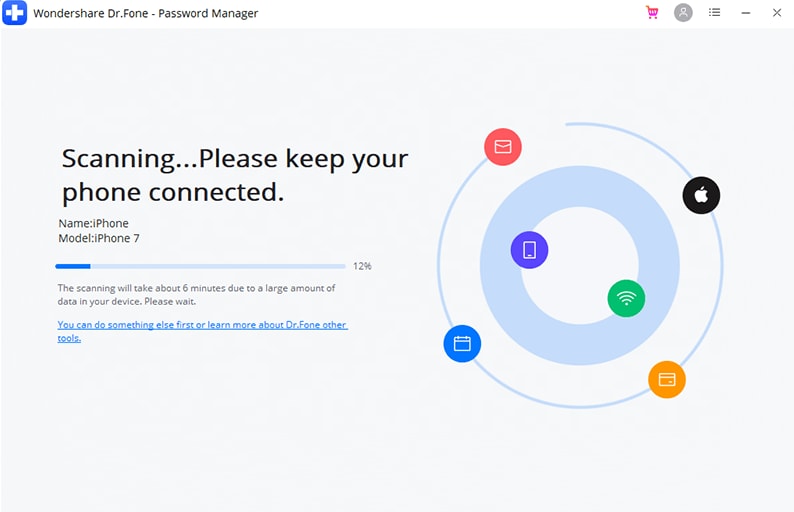
Once your connected iPhone is properly detected by the application, the software interface will display the basic details of your iOS device. To prompt the tool to start the deep password recovery process, click on the "Start Scan" button located on the lower right of the screen.
Excellent! At this point, Dr.Fone - Password Manager will begin safely extracting all available saved account details directly from your iOS device. Please be patient and simply wait for a few moments. It is highly recommended not to disconnect the phone or close the application midway, as it needs continuous access to scan your iPhone and retrieve its hidden passwords efficiently.
Step 3 View and Save your Passwords via Dr.Fone
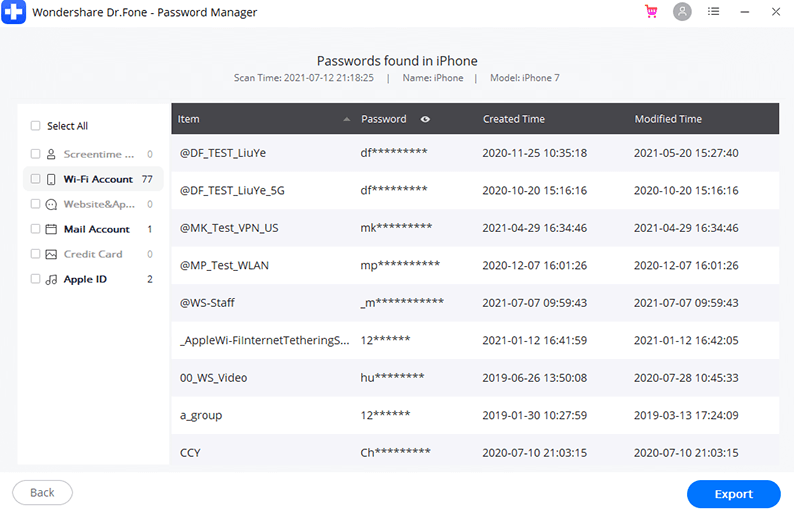
As soon as the software completes the thorough scanning process, it will present a categorized notification on the screen. You can now conveniently navigate through any category on the left sidebar to view different credentials, such as app/website passwords, Apple ID details, mail accounts, and so on. Simply look for the Facebook password within the list, and then click on the 'eye' icon next to it to make the hidden characters visible.
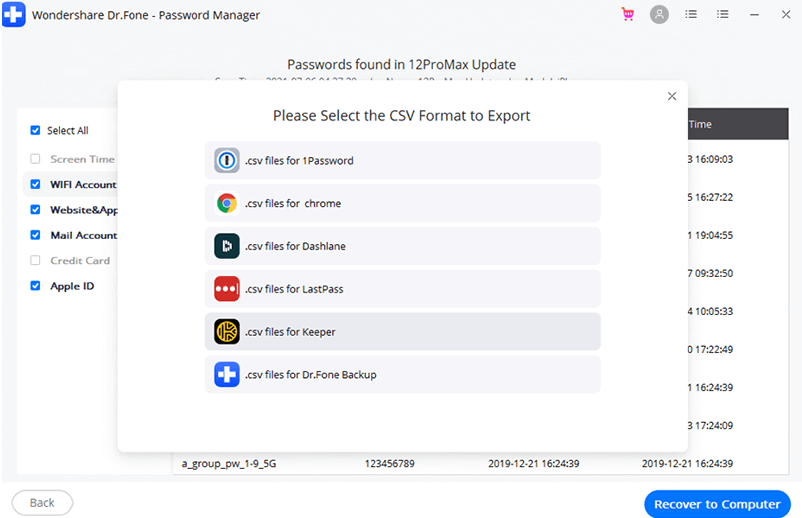
In case you want to create a secure backup or save your newly extracted passwords from the application to your local drive, you can click on the "Export" button situated at the bottom right. This allows you to compile and save all the retrieved credentials neatly in the form of a CSV file for future reference.
Remember that this tool isn't limited only to retrieving your FB password. The comprehensive application can equally assist you in getting back countless other crucial account details embedded deep within your iOS device.
Part 2. Recover your Facebook Password from your Web Browser
If you prefer to browse without entering credentials every time, you might already be aware that modern desktop browsers possess a robust capability to automatically save the login credentials of frequently visited websites and web apps. Therefore, if you had previously enabled the autosave passwords option on your desktop, you can easily extract your forgotten FB password straight from the browser's internal vault.
2-1. On Google Chrome
When I originally needed to find my Facebook password on my computer, I took advantage of the native password manager feature built into Google Chrome. It serves as a secure digital vault. To access it, you simply need to launch Google Chrome on your system and navigate directly to its Settings menu. You can do this by clicking on the three-dot vertical icon situated in the top-right corner of the browser window.
Once the main Settings page of Google Chrome is actively open, you can locate the "Autofill" tab located on the left-hand side menu. From there, click on the "Passwords" section to access your credential vault.
This action will load and display an exhaustive list of all the various account passwords currently saved by Google Chrome. To find your social media credential swiftly, you can type "Facebook" directly into the top search bar, or manually scroll down the alphabetical list to look for it. Afterward, click on the distinct 'eye' icon next to the entry and enter the master administrative security code of your Windows or Mac system to unhide and successfully check your Facebook password.
2-2. On Mozilla Firefox
Much like Chrome, you also have the choice to view your saved FB password if your primary web client is Mozilla Firefox. To accomplish this, start by launching Firefox and visiting its core Settings portal. You can reach it by clicking on the three-line 'hamburger' icon situated at the top right of your screen.
Great! After the comprehensive Settings page of Firefox has launched, proceed to the "Privacy & Security" segment positioned on the left sidebar. Within this menu, scroll down until you locate the specific "Logins and Passwords" field, and then simply click on the dedicated "Saved Logins" button.
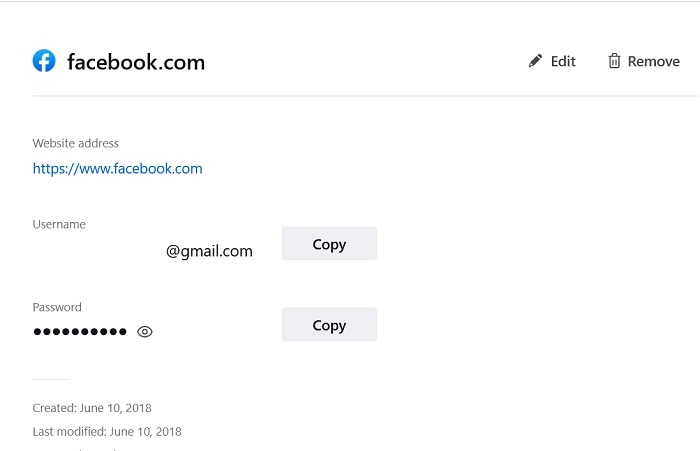
That is essentially it! This process will open a new secure Firefox Lockwise window containing all your saved login records. You can now browse through the list for your saved Facebook account records manually, or simply search for the keyword "Facebook" in the provided search box at the top.
This panel will safely display both the associated email ID and the password for your Facebook account. You are free to view, highlight, or copy your FB password directly from here after correctly entering the master password of your operating system to authenticate yourself.
2-3. On Safari (Mac)
Lastly, dedicated macOS users who rely on Safari can seamlessly take advantage of the browser's deeply integrated password manager feature to view their securely saved FB password. To examine your stored credentials, launch the Safari browser on your Mac, navigate to the top Apple menu bar, and go to Safari > Preferences.
This action immediately opens a new dedicated preferences window populated with various configuration options related to your Safari browsing experience. From the row of available tabs along the top, simply select the "Passwords" tab. The system will prompt you to enter your Mac administrator password (or use Touch ID) to bypass its stringent security check.
That is all there is to it! Safari will now list all the website passwords securely synchronized with your iCloud Keychain or local vault. You just need to search for the stored Facebook password entry and select it to either view the characters or securely copy it to your clipboard without any technical difficulty.
Note: Please be aware that these browser-based solutions for recovering an FB password have limitations. They will only work effectively if you had intentionally agreed to save your account details within the browser's built-in password manager during a previous successful login session.
Part 3. How to Retrieve or Change your Facebook Password Directly?
Apart from trying to access your Facebook password directly from your web browser caches, you always have the option to actively change or restore your locked account details directly via the official Facebook website or its mobile app. This is considered the primary, native method supported by the platform's security framework, and it is most commonly utilized by users when they want to change their Facebook passwords after a potential security breach.
However, to successfully change your FB password using this official route, you absolutely must possess active access to either the email account or the mobile phone number currently linked to your Facebook ID. This verification step exists because when you request to change your Facebook password, the platform's servers generate a one-time customized link or OTP (One Time Password) that grants you permission to reset the sensitive account details. Here are the sequential steps you can implement to safely reset your FB account details:
Step 1 Start the Account Recovery Process on Facebook
To commence the recovery procedure, you can either launch the official Facebook app on your smart device or navigate to the Facebook website using any preferred desktop browser. Initially, attempt to log into your FB account by entering what you believe is the existing password. Once the system detects you have entered incorrect credentials multiple times, you will automatically receive an on-screen prompt featuring a "Forgotten Password?" option to help you recover your locked Facebook account.
Step 2 Enter Details of the Linked Email Account on Facebook
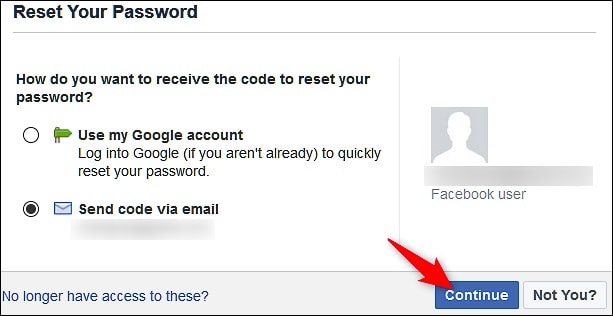
As you actively proceed with the request to recover your account, Facebook's system will prompt you to enter the verified phone number or the registered email ID originally linked to your Facebook account. If you input your associated phone number, you will shortly receive an SMS containing a one-time generated code. Alternatively, if you use your email, a unique clickable link will be delivered straight to your email inbox, providing a secure pathway to reset your password.
Let us assume you have chosen to recover your account utilizing the currently linked email ID. At this stage, simply select how you wish to receive the recovery data and click on the blue "Continue" button to move to the next phase.
Step 3 Change your Facebook Account's Password
Subsequently, an automated security email will be dispatched to your linked inbox. Open this email to find a dedicated verification link specifically generated to let you reset your password. If you had chosen the phone verification route, simply check your messages for the one-time generated code and input it into the designated text box on the recovery screen.
That is practically it! You will immediately be redirected back to a secure page on the Facebook app or website where you are permitted to enter and confirm your brand new password. Once you have successfully verified and changed your FB password, you must exclusively use these newly updated account credentials to access your account across all platforms.
Note: While this native reset process is quite straightforward and highly effective, its major limitation is that it will absolutely only function if you still retain full access to the email account inbox or the mobile phone number initially linked to your Facebook ID.
Conclusion
This brings us to the very end of this extensive, step-by-step guide on how to safely reset or change your Facebook password. As you can see through our detailed exploration, relying solely on official channels or browser caches can sometimes present significant limitations when it comes to recovering an older FB password, particularly if you have lost access to your primary email or phone number. Therefore, if you are looking for a reliable and robust way to simply restore your original Facebook password directly from your iPhone memory, you should strongly consider taking the assistance of Dr.Fone - Password Manager. It acts as an incredibly user-friendly and ultra-secure application that empowers you to instantly extract all kinds of saved, hidden, or previously inaccessible passwords directly from your iOS device's secure vault.
1. How can I intentionally change my Facebook password?
If you still have current access and can successfully log in to your Facebook account, you can effortlessly change your password directly from the platform. Simply navigate to the platform's main 'Settings & Privacy' menu, select 'Account Settings', go to the 'Security and Login' section, and choose the option to change the current password. If you are locked out, you must follow the automated reset procedure using your linked email ID or phone number.
2. How to make my Facebook account more secure against hacking?
To significantly bolster your account's defense, you should turn on the Two-Factor Authentication (2FA) verification process, which actively links your Facebook login attempts with your personal mobile phone number. Alternatively, for an even safer approach, you can securely link your Facebook ID with an advanced authenticator app, such as Google Authenticator or Microsoft Authenticator, which generates a temporary, randomized security code every 30 seconds.
3. Is it completely safe to keep my FB passwords saved permanently on Chrome?
While utilizing Google Chrome's built-in password manager is extremely convenient and undeniably helps you keep your complex passwords handy, it carries inherent local security risks. The vault can easily be bypassed or exposed if a malicious actor physically gains access to your computer and knows the master PIN or passcode of your operating system. For maximal security, relying on an isolated, encrypted, standalone password manager is typically safer than storing all critical credentials in a browser cache that can potentially be cracked.
4. Can I recover my Facebook password if I don't have access to my email or phone number?
Yes, it is possible, but it requires more effort. If you no longer have access to the original email or phone number associated with your account, you can try utilizing the 'No longer have access to these?' option on the Facebook password reset page. This will prompt you to enter an alternative email address or phone number where Facebook can reach you, and you may be required to submit an official photo ID to manually prove your identity and ownership of the locked account.
Daisy is an iOS-focused editor with a deep interest in the Apple ecosystem, creating practical, easy-to-follow content that helps users navigate everyday device challenges.
 Recover photos, messages, WhatsApp, and more — no backup
needed.
Recover photos, messages, WhatsApp, and more — no backup
needed.

 100% Security Verified | No Subscription Required | No Malware

 :
: 
 ChatGPT
 Perplexity
 Gemini
 Claude
 Grok
Grok













 Add Wondershare Dr.Fone as a preferred source on Google