
2 Ways to Clone A Cell Phone Without A SIM Card

May 19, 2026 • Filed to: Device Data Management • Proven solutions
 TL;DR:
You can successfully clone a cell phone without a SIM card to transfer personal data like contacts and photos, but transferring your actual phone number still requires carrier activation via a replacement SIM or eSIM.
● Use Dr.Fone - Phone Transfer (also called Dr.Fone Switch) on a Windows PC or Mac for a complete data migration across iOS and Android devices, which requires both phones to be connected to the system simultaneously via reliable cables.
● Avoid the Android security menu workaround if your goal is moving content, as this technical method only allows you to view hardware identifiers like ESN or MEID numbers and cannot transfer personal files or carrier setups.
Ask AI for a summary
 ChatGPT
 Perplexity
 Gemini
 Claude
 Grok
Grok
Dr.Fone Basic:
Better Control for Your Phone
Manage, transfer, back up, restore, and mirror your device
“How to clone a cell phone without a SIM card? My SIM card is missing, and I still need to move everything to a new phone.”
Yes, you can clone a cell phone without a SIM card if your goal is to transfer data such as contacts, photos, videos, messages, notes, and other personal content. In most cases, a SIM card is only needed for carrier authentication, calls, texts, and mobile network activation. It is not required for a full phone-to-phone data transfer workflow.
In this guide, “clone a cell phone” means copying your important content and settings from one device to another as completely as possible. It does not mean duplicating a SIM identity or bypassing mobile carrier activation. If you are trying to transfer phone number to new phone without SIM card, the short answer is that data transfer is possible, but your number usually still needs a SIM card or eSIM activation from your carrier.
To help you choose the right approach, this article explains one fast and reliable way to clone phone content in one click and one limited Android-based workaround that may help in specific cases. We also explain what each method can and cannot do, so you can avoid data loss, setup issues, or confusion during migration.
Part 1: Clone cell phone using Dr.Fone - Phone Transfer in one click
If you want the easiest and most dependable way to clone a phone without a SIM card, Dr.Fone Switch is the better option. It is designed for users who want to move data directly from one phone to another without relying on the old SIM card. Instead of focusing on carrier-level authentication, it focuses on what most users actually need during migration: moving personal data quickly, safely, and with minimal manual work.
This makes it especially useful when your SIM card is lost, damaged, inactive, or still tied to another device. It is also a practical choice when you are upgrading phones, switching between iPhone and Android, or setting up a replacement device after loss or repair.
Unlike complicated manual methods, Dr.Fone Switch lets you transfer content directly between devices in a guided workflow. In most scenarios, that includes contacts, photos, videos, messages, call history, calendars, notes, and more. For users searching for terms like how to clone a cell phone, clone cell phone, or how do you clone a cell phone, this is the method that most closely matches what they really want: a complete and safe data migration.

Dr.Fone - Phone Transfer
1-Click Phone to Phone Transfer
- Easy, fast and safe.
- Move data between devices with different operating systems, i.e iOS to Android.
-
Supports iOS devices that run the latest iOS 11

- Transfer photos, text messages, contacts, notes, and many other file types.
- Supports over 8000+ Android devices. Works for all models of iPhone, iPad and iPod.


Before you start, it helps to understand one important point: a SIM card is not required for transferring local phone data, but it may still be required later if you want to activate the same phone number on the new device. In other words, Dr.Fone can clone your content without the SIM card, while your carrier handles the phone number side separately through a SIM or eSIM process.
To clone a cell phone without a SIM card using Dr.Fone Switch, follow these steps:
Step 1: Connect both the devices to the system
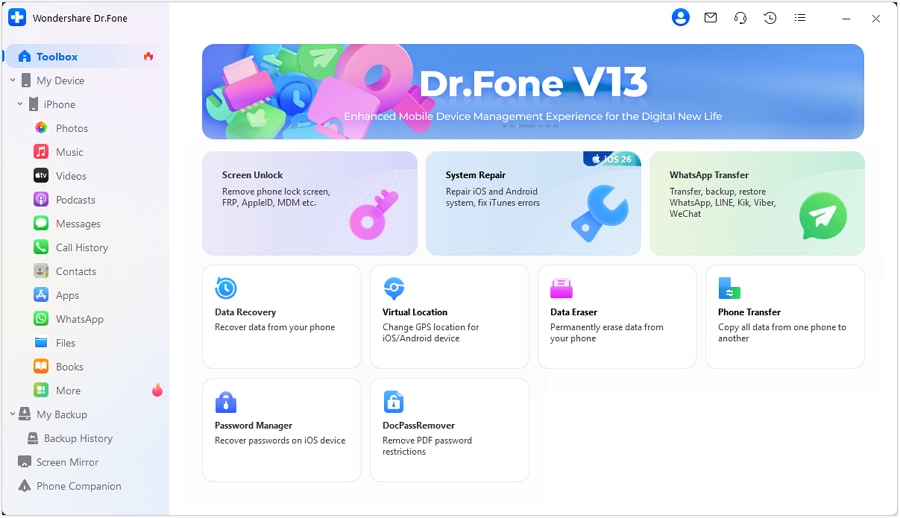
Download and install Dr.Fone Switch on your Windows PC or Mac. Launch the program, then connect both the old phone and the new phone to your computer. On the home screen, choose the “Switch” option to begin the transfer process.
This step matters because the software needs stable access to both devices at the same time. If one phone disconnects during transfer, the process can pause or fail. Make sure both devices have sufficient battery power and use reliable cables for the best result.
Step 2: Select the data you wish to move
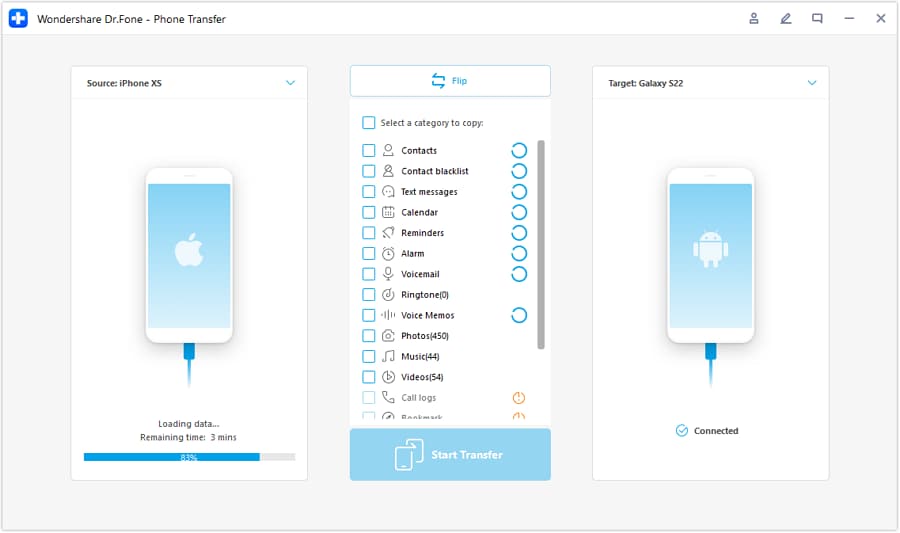
Once both phones are detected, Dr.Fone will display them as the source and destination devices. If they are in the wrong order, click the “Flip” button to switch them. After that, choose the exact types of data you want to transfer.
You can use this step to perform either a full migration or a selective one. For example, you might move contacts, messages, and photos only, or you can transfer a broader set of content including call logs, calendar data, videos, notes, and music. If the destination phone is already in use, you can also consider the “clear data before copy” option shown below the target device.
This flexibility is one reason the method is better than many manual workarounds. It gives you more control over the transfer and reduces the risk of missing key data categories during setup.
Step 3: Clone your phone
After selecting the content you want, click the “Start Transfer” button. Dr.Fone will begin copying the selected data from the source phone to the destination phone. Keep both devices connected throughout the process so the transfer can finish without interruption.
The total time depends on how much content you are moving. A small transfer may finish quickly, while a full migration with large photos and videos will take longer. When the process is complete, you will see a confirmation message on screen.
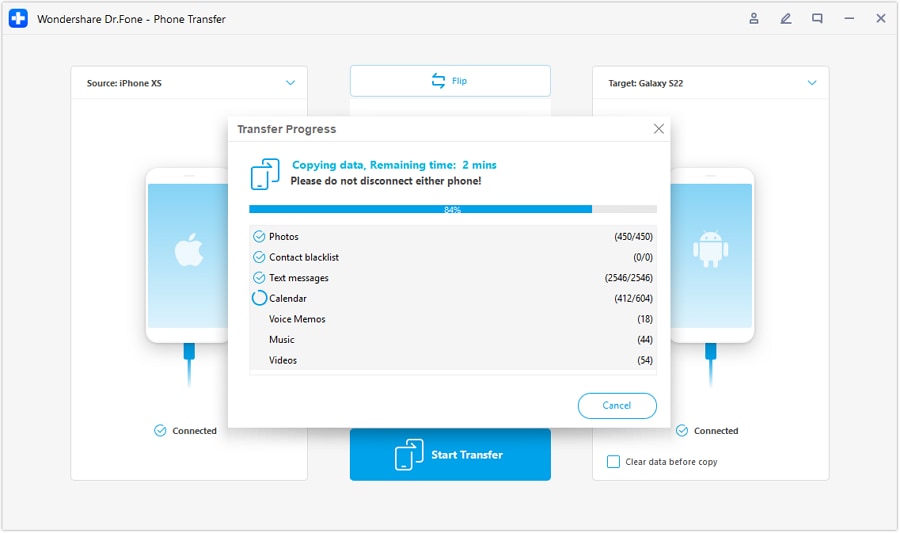
At that point, you can safely disconnect both devices and continue with any network setup you still need, such as inserting a replacement SIM card or activating an eSIM. If you also need help with device setup, you can explore related guides such as transferring contacts to a new phone, moving data between iPhone and Android, or restoring a phone from backup.
Why this method is recommended:
- It transfers personal data without depending on the original SIM card.
- It works for both iPhone and Android migration scenarios.
- It is faster and more complete than most manual methods.
- It is easier for beginners who want a guided process.
- It reduces the chance of leaving behind important files or records.
Part 2: Clone cell phone without SIM card using security menu
If you are looking for another approach, you may come across Android-based workarounds that involve device settings, security information, or device identifiers. However, it is important to understand what this method can realistically do. It is not a true full-phone cloning solution, and it is not a practical replacement for a proper phone transfer tool.
In most cases, this type of method only helps you identify device information or change limited settings on Android. It does not transfer all major content categories from one phone to another, and it does not safely move your full setup the way a dedicated migration tool does. It is also more technical, less consistent across models, and much harder for average users.
If you still want to understand the general idea behind this workaround, the process usually looks like this:
1. Firstly, unlock your source Android device and go to its Settings > Security. From here, you may be able to check device-related information such as the model number. On some phones, this information may also appear under the “About Phone” section.

2. If the model details do not appear there, users often check the retail box, purchase record, or official product page for the same information.
3. Some guides also suggest checking hardware identifiers such as ESN or MEID numbers. These details are device-specific and may not be easy to access on modern phones, especially those with sealed battery designs.

4. The same information would then need to be checked on the target Android device so the user can compare compatibility, settings, or available options.
5. Some older tutorials refer to device-specific service codes or configuration codes. These are not universal, they vary by manufacturer and model, and they are not a reliable method for full phone migration.
6. Even when such codes are available, they usually relate to settings or testing menus rather than true data cloning. They do not copy your photos, messages, contacts, app content, or personal files from one phone to another.
7. After making changes, users may test whether the target phone behaves as expected, but this still does not equal a full data transfer or a proper number migration.
What this method can do:
- Help you inspect certain Android device details.
- Support limited troubleshooting in model-specific scenarios.
- Give advanced users more technical visibility into device settings.
What this method cannot do well:
- It cannot fully clone a cell phone in the way most users expect.
- It cannot transfer the majority of your personal content automatically.
- It cannot replace carrier steps needed to move or activate a phone number.
- It is not ideal for beginners or for time-sensitive phone replacement.
For that reason, this method is best understood as a limited Android workaround rather than a complete answer to the question “how to clone a number” or “clone phone number.” If your goal is to move your data safely to a new phone without the original SIM card, a dedicated transfer tool remains the more practical choice.
To sum up, you can clone a cell phone without a SIM card when your goal is to transfer personal data from one device to another. What you usually cannot do without additional carrier support is activate or move the same mobile number entirely on your own. That is why the best approach depends on what you are trying to move: content, phone service, or both.
If you want the fastest and most complete solution, Dr.Fone Switch is the better option because it helps transfer major data types directly between phones without depending on the old SIM card. The Android security-menu approach is far more limited and does not provide a complete migration experience. If you want a safer, simpler, and more beginner-friendly way to clone your phone content, starting with Dr.Fone is the more reliable path.
FAQs
 Q1. Can you clone a cell phone without a SIM card?Q2. How to transfer phone number to new phone without SIM card?Q3. How do you clone a cell phone safely?Q4. Can you clone a SIM card or clone a phone number with these methods?
Dr.Fone Basic:
Better Control for Your Phone
Manage, transfer, back up, restore, and mirror your device


Phone Clone
- 1. Clone Tools & Methods
- 1 App Cloner
- 2 Clone Phone Number
- 3 Clone SIM Card
- 5 Duplicate SIM Card
- 6 Clone Cell Phone Text Messages
- 7 PhoneCopy Alternative
- 8 Clone Phone Without Touching It
- 9 Migrate Android
- 10 Phone Cloning Software
- 11 Cloneit
- 12 Clone Phone Without SIM Card
- 13 How to Clone an iPhone?
- 15 Huawei Phone Clone
- 16 How to Clone Phone?
- 17 Clone Android Phone
- 18 SIM Card Clone App



James Davis
staff Editor