Teleport your device anywhere instantly with one click.


 100% Security Verified | No Subscription Required | No Malware


 :

 ChatGPT
 Perplexity
 Gemini
 Claude
 Grok
Viewing Pokémon GO on a PC is not the same as installing a supported desktop edition. Screen mirroring displays a session that still runs on your physical phone. An Android emulator creates a separate virtual device, which introduces different compatibility and location problems. Neither approach automatically hides your real position, improves the game's artwork or grants permission to falsify movement.
If your aim is a larger display, start by understanding mirroring and the phone connection it requires. If you found this page while searching for a Pokémon GO PC download, treat emulator landing pages as vendor claims rather than proof of a functioning game. This 2026 guide retains the MEmu, BlueStacks, wireless, USB and location workflows, with explicit limitations instead of guaranteed results. Original navigation labels remain below; their rankings are not test findings.
In this article
Part 1. Separate Emulation from Mirroring Before Choosing a PC Setup
With emulation, the Android software runs inside a computer-hosted environment. With mirroring, the computer receives the phone's display and may offer supported interaction controls. A larger monitor alone does not provide the phone's GPS, move an avatar legitimately or turn an unsupported device into a supported one.
The game's official device guidance describes mobile hardware, GPS, Location Services and connectivity requirements. It does not establish a native Windows or macOS version here. Check the current requirements before investing time in a setup, and avoid substituting modified clients or credential-sharing services when an emulator fails.
Method 1. MEmu Player: Understand the Installation Claim
MEmu is an Android emulator for running compatible Android software on a PC. Its Pokémon GO landing page advertises the game and provides installation instructions. That establishes what the emulator vendor promotes, not that every current game release accepts the virtual device or that the game operator approves the configuration.
We did not perform a current gameplay test for this article. Do not treat general keyboard mapping, a large game library or a successful installer as Pokémon GO-specific evidence. The screenshots are carried over from the source to explain the advertised process and its checkpoints.

What MEmu can and cannot establish: it can host an Android environment on a supported PC. The game's installation, location validation and account rules are separate questions. If you only want a larger view of your existing phone session, mirroring addresses that goal without claiming to replace the mobile runtime.
Step 1 Check MEmu's official PC requirements
Obtain any installer from the emulator publisher rather than an advertisement promising a special unlocked game build. Review its current computer requirements first. Installing an emulator is optional and should not be presented as a requirement for using the official mobile game.
Step 2 Inspect the official store listing
The vendor's advertised route opens Google Play inside the emulator and searches for Pokémon GO. Check the genuine publisher and any compatibility message. A search result or the supplied screenshot does not prove that the current virtual device is supported.

Step 3 Respect installation restrictions
If the store offers installation, the package is installed inside the emulator rather than as a native PC game. If it is unavailable or marked incompatible, stop. Do not replace the game with an unknown APK or alter security checks to force the installation.
Step 4 Distinguish an installed icon from working gameplay
An icon on the emulator's home screen only confirms that a package is present. It does not establish acceptable GPS input, successful sign-in or ongoing compatibility. If the official client rejects the environment, return to a supported phone rather than following claims of a guaranteed emulator fix.
Method 2. BlueStacks: Read the Compatibility Warning, Not Just the Headline
BlueStacks also runs compatible Android apps in a computer-hosted environment. Its Pokémon GO landing page combines promotional play instructions with an explicit 'non-compatible' label. The same publisher also retains a support-withdrawal announcement. Those signals do not justify calling BlueStacks a reliable current Pokémon GO solution.
The generic installation sequence below explains the source article's recommendation while adding the missing stop conditions. It is not a report that we successfully launched the current game. Keyboard and mouse support in an emulator does not establish that Pokémon GO will accept it.

Step 1 Check the current BlueStacks edition
Consult the official publisher for your computer and operating system. Product editions and platform requirements differ; do not assume that one Windows or Mac installer fits every device. The game's non-compatible label matters before you begin.
Step 2 Use the genuine Google sign-in flow, if needed
Google Play access inside an emulator may require a Google account. Never enter game or Google credentials into a third-party page claiming it can unlock compatibility. Signing in to an app store does not grant game-specific support.
Step 3 Inspect the Pokémon GO listing
Search within the legitimate store and check its publisher and compatibility state. Marketing text outside the store cannot override an installation restriction. If the title is absent or unavailable, that is a stopping point rather than a prompt to find a modified client.
Step 4 Do not confuse download completion with acceptance
The source describes clicking Install and waiting for the package. Even where that option exists, download completion says nothing about GPS validation or game policy. This guide does not recommend forcing a package onto an incompatible virtual device.
Step 5 Use a supported phone if the environment fails
Launching an installed icon may still produce an unsupported-device, connection or location error. Do not promise that graphics adjustments or new key bindings solve those checks. For a practical larger-screen view, consider mirroring your own physical handset instead.
Method 3. Screen Mirror: Display the Phone You Already Use
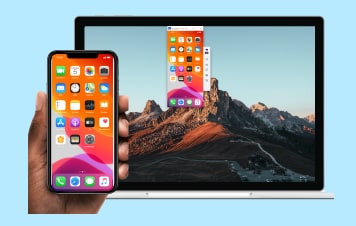
Wondershare Dr.Fone has a separate screen-mirroring function. The official page describes USB and same-network Wi-Fi connections, Android interaction, screenshots and recording. This is not the Virtual Location module and should not be confused with a native Pokémon GO PC installation.
The physical phone continues to run its apps and supply its location. Mirroring does not itself simulate walking or supply a replacement GPS fix. Display quality, interaction support, delay and available controls depend on the actual device and connection; we have not established universal 4K, 60fps, zero-latency playback or direct streaming to every social platform.
- Larger display: view a connected phone session on the computer without claiming that the game now runs natively there.
- Capture tools: supported screenshot and recording controls can document the display; check the current resolution and permission settings.
- Device interaction: Android control may be available in supported configurations. Do not infer universal game-specific keyboard mapping.
- Connection requirement: keep the phone powered and connected. Casting does not remove its processing, network or battery workload.
Way 1. Connect Android wirelessly
The source screenshots span connection setup and the completed session. Follow the actual order of prompts on your devices; do not assume a connection is complete merely because one illustration shows a status panel. Only mirror a phone you own or have explicit permission to use.
Step 1 Prepare the desktop program
Install the official desktop application and open its screen-mirroring function. Dr.Fone Link is the companion used on the mobile side; it should not be confused with the desktop toolkit. Confirm the requirements for your installed release.
Step 2 Open the wireless connection panel
In the illustrated interface, My Device and Wireless lead to a QR code. Place the phone and computer on the same permitted Wi-Fi network. The current program may instead expose a direct Screen Mirror entry, so identify the function by its label.

Step 3 Review the connection state
Inspect whether the desktop is waiting for pairing or already showing a device. The status screenshot illustrates a recognized session; if your phone has not paired, continue through the scan and approval steps rather than assuming this screen will appear automatically.

Step 4 Scan the displayed pairing code
Use the supported scanning flow on your Android device to read the computer's QR code. Install the legitimate companion app if the official setup requests it. Scan only a code from the computer you intend to pair with, not one supplied by an unknown person.

Step 5 Approve screen sharing on the handset
Read and accept the connection or screen-capture prompt when you recognize the intended session. Close sensitive notifications before sharing a display. Wait for the desktop view to show the same phone rather than interpreting a notification alone as proof of full control.

Step 6 Use the available display controls
Check that the view updates and identify Speaker, Rotate, Screenshot and Disconnect where available. These manage the mirrored display, not the game's location rules. Use End Mirroring or Disconnect when finished, and do not leave a sensitive device session shared unattended.

Way 2. Connect Android with USB
A cable offers a different connection path, not a guarantee of higher frame rate or game approval. Keep the computer trusted, use a data-capable cable and follow the current on-screen instructions. The same phone still performs the work of running Pokémon GO.
Step 1 Confirm the desktop and mobile prerequisites
Open the legitimate desktop program and confirm that the required Android companion is installed if the current workflow calls for it. Verify the supported handset and operating system rather than relying solely on an old screenshot.
Step 2 Attach your phone with a data cable
Connect the Android handset to the intended computer, then select the cable-based mirror option. Complete only the legitimate permissions requested by the software and your device; do not accept unexpected prompts from an unknown workstation.

Step 3 Wait for the connection to become active
The pictured progress view represents connection setup. Allow it to finish, then check whether the live display appears. If it stalls, inspect the cable and approved permissions instead of repeatedly launching another game client.

Step 4 Confirm the session on Android
The phone-side Dr.Fone Link view helps identify the current connection. Check that the device and computer correspond to the intended pairing. Screen sharing should remain an explicit, visible activity rather than a background session you cannot account for.

Step 5 Check controls and disconnect cleanly
Use the supported desktop controls for viewing or capture, and verify any interaction feature on your exact configuration. Stop mirroring when finished. A cable may charge the handset, but simultaneous gaming and casting can still consume power and generate heat.

Part 2. Virtual Location: Separate GPS Simulation from a PC Display
 Set your map route to simulate GPS movement.
- Set your wanted movement speed.
- HD and large map view to check location.
- Fake GPS location to anywhere.

Dr.Fone - Virtual Location is the GPS-simulation module, not the screen-mirroring feature described above. Its documented map functions include destination changes, route planning and simulated movement. They can support an authorized location-aware app demonstration on a compatible connected device.
Do not turn those functions into a claim that Pokémon GO runs on a PC, that regional encounters are guaranteed or that account penalties can be prevented. The vendor expressly excludes Pokémon GO from its Android support statement. Its iOS marketing is not game-operator approval, and the operator's fairness policy prohibits falsifying location. Realistic speed and a desktop interface do not create an exception.
The following five stages retain the source's map workflow for a permitted test. Start with your own supported phone connected to the desktop module. Keep game compatibility and account rules separate from whether a mapping view reflects simulated coordinates.
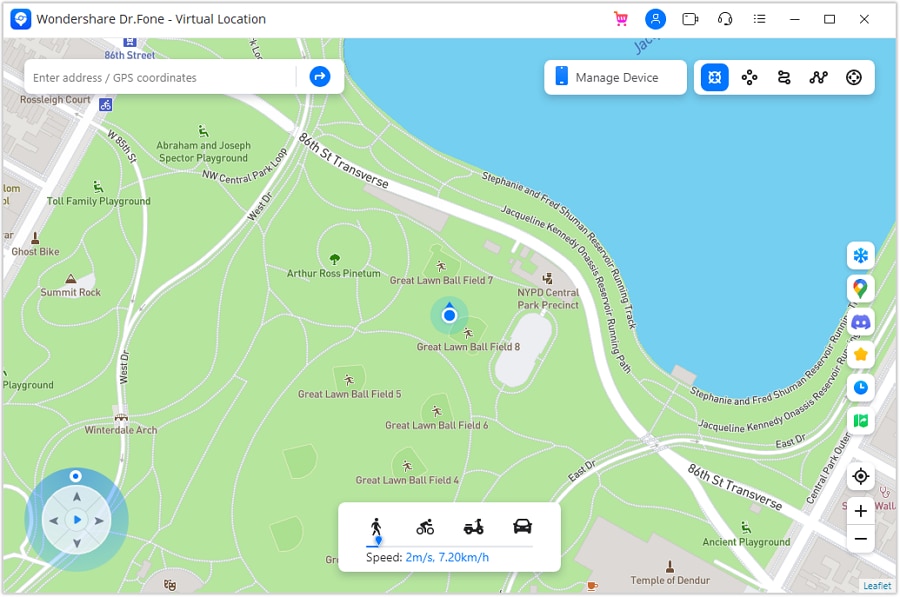
Step 1 Choose the labeled Teleport mode
Find Teleport in the installed interface after the connected phone is recognized. The original source inconsistently describes icon positions; use the current label rather than a claimed first or third icon. Inspect the map before changing anything.
Step 2 Search for the test destination
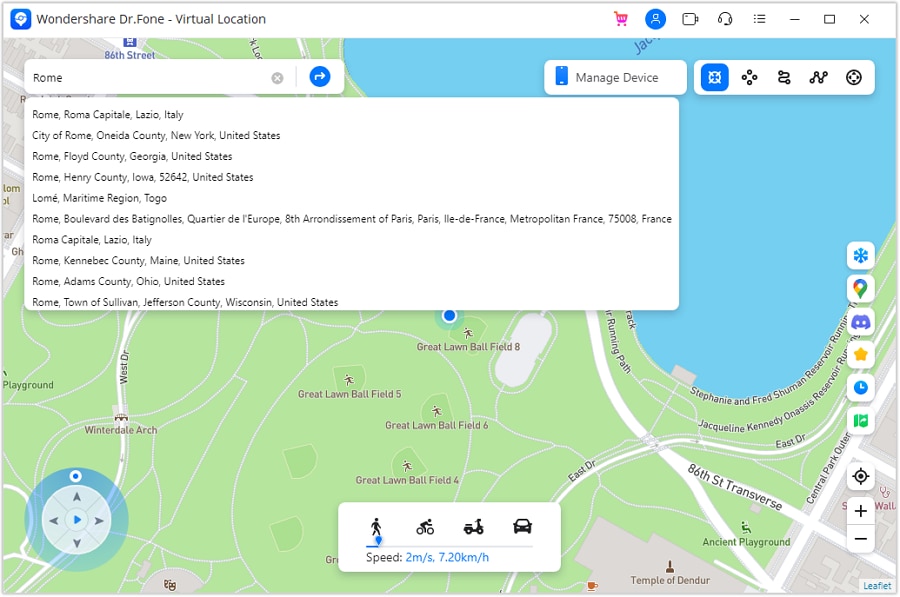
Enter the place name, address or coordinates required by your authorized demonstration. Review the search result and check that it identifies the intended area. Searching does not physically move the phone or make a location valid for another service.
Step 3 Apply the selected point
Use Move Here after reviewing the displayed destination. This applies simulated positioning where the device connection supports it. It is not a remedy for a game's unsupported-environment warning or for an account suspension.

Step 4 Inspect the desktop result
Check where the desktop map now places the connected handset. A change in that view shows the program's state; it does not independently prove what Pokémon GO receives or accepts. Record only the outcome you can observe.
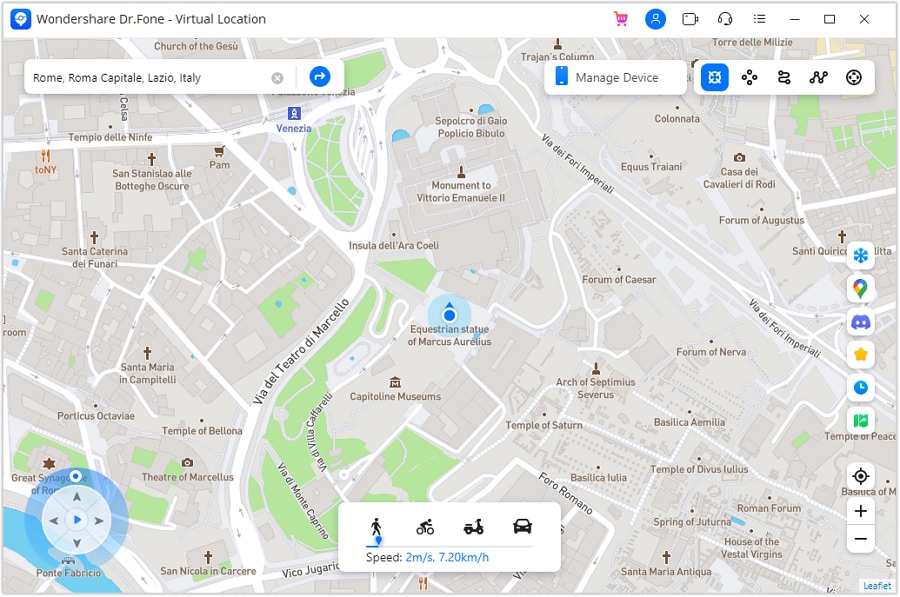
Step 5 Verify a permitted phone map and restore real GPS
Open the mapping view used for the authorized test and compare the position with your selected point. End simulation using the current software instructions, then confirm normal location before ordinary navigation or gameplay. Do not treat this check as an account-safety certification.
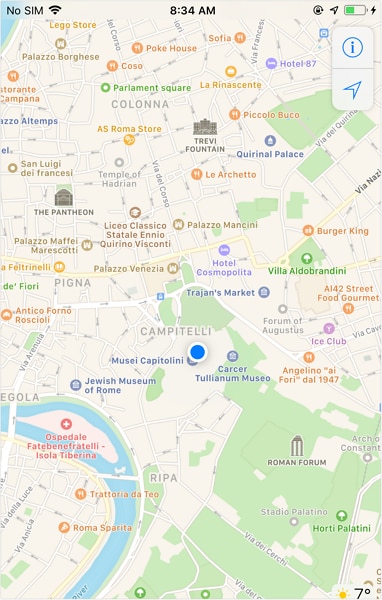
The five-step location demonstration is complete after the handset check. A successful demonstration means only that the supported test reflected a different position; it does not establish a working or approved Pokémon GO PC spoofer.




Dr.Fone - Virtual Location addresses GPS simulation on supported configurations, while Screen Mirror addresses display sharing. Treat those as distinct products and purposes. For evidence behind the compatibility limits, consult the official device guidance, BlueStacks game listing and MEmu's advertised workflow.
Conclusion
Choose the method that matches your actual goal. Mirroring can place an existing phone session on a larger screen; emulation creates a different Android environment with unresolved game compatibility. Neither is equivalent to an official desktop edition. Keep the phone's current requirements, location permission and game rules in view instead of relying on broad promises of effortless PC play.
FAQ
1. Is mirroring the same as running a Pokémon GO PC edition?
No. The game remains installed and running on the phone, and the computer displays its screen. An emulator instead runs a separate Android environment. Neither process creates an official native desktop client.2. Can a PC location simulator guarantee no account penalty?
No. The game's fairness policy treats GPS falsification as cheating. A route, realistic travel speed or a paid desktop tool does not guarantee protection from restrictions or termination.3. Which setup fits a larger-screen viewing goal?
Mirroring directly addresses viewing your existing handset on a computer. It still needs the phone and an approved connection, and controls or capture quality vary. Emulator installation claims do not establish current Pokémon GO support.4. Does mirroring stop phone battery use?
No. Gaming, networking and screen sharing still require phone resources. USB may supply charging power, but charging rate, heat and workload affect the result. An emulator's separate runtime does not make it a supported alternative.
 Add Wondershare Dr.Fone as a preferred source on Google