Why Your OPPO Screen Might be Unresponsive and How to Fix It

Sep 24, 2026 • Filed to: Phone Repair Solutions • Proven solutions
 TL;DR:
Most unresponsive OPPO touch screens can be resolved by forcing a restart—pressing and holding the Power and Volume Down buttons simultaneously for 10–15 seconds—to clear ColorOS software freezes without erasing personal data.
● If the hardware button combination fails or the device is stuck in a boot loop, letting the battery drain completely forces the system to reinitialize all processes upon the next charge, which is specifically recommended for older models like the A3s and F1s.
● To identify third-party app conflicts, boot into Safe Mode by holding Volume Down when the OPPO logo appears; for deeper firmware corruption or a powered-on black screen, use Dr.Fone System Repair via a USB connection to bypass touch input and fix the OS without data loss.
● Software troubleshooting cannot resolve touchscreen failure caused by impact or liquid exposure; if the device gets wet, immediately power it off, remove the SIM tray, avoid using a hairdryer, and let it dry for 24–48 hours before seeking professional digitizer or flex cable repair.
Ask AI for a summary
 ChatGPT
 Perplexity
 Gemini
 Claude
 Grok
Grok
Is your OPPO touch screen not working or completely unresponsive? You're not alone — this is one of the most frequently reported problems across the entire OPPO lineup, from the budget-friendly A3s to the flagship Reno 8 5G. While a frozen or dead touchscreen feels alarming, the root cause is far more likely to be a software issue than a hardware failure, and the majority of cases can be resolved at home without visiting a repair shop.
An unresponsive OPPO phone screen typically falls into one of three categories: a temporary system freeze caused by app conflicts or memory overload, a deeper OS or firmware issue such as a corrupted update or soft-brick, or physical hardware damage from drops, pressure, or liquid. Knowing which category applies to your situation is the key to choosing the right fix and avoiding unnecessary data loss.
This guide covers 8 step-by-step solutions ordered from simplest to most advanced — including a force restart, safe mode boot, cache wipe, software update, and professional repair using Dr.Fone. Whether you have an OPPO Reno 8 touch screen not working, an OPPO A3s touch not working, or any other ColorOS device with an unresponsive display, at least one of these fixes will resolve your issue.
Models covered: OPPO Reno 8, Reno 8 5G, Reno 7, A3s, A5, A5s, A37, A57, F1s, F3, Find X series, and all other OPPO/ColorOS smartphones.
Part 1. 4 Solutions to Solve OPPO Screen Unresponsive Issues
Quick Answer: Start with a force restart, then check for a ColorOS update or test the phone in Safe Mode when supported. If further troubleshooting requires Recovery Mode or Fastboot Mode, Dr.Fone provides free guided tools to help enter or exit these modes. Back up accessible data before selecting any reset, wipe, or firmware-related option.
Encountering an unresponsive OPPO screen is a frustrating experience, but most causes are fixable with software-level solutions. The following four methods progress from the quickest 30-second fix to more thorough repair options. Work through them in order — most users resolve the issue within the first two steps.
1. Force Restart

A force restart is the fastest and safest first step when your OPPO phone screen is not responding. It terminates all running processes and clears temporary RAM data that may be causing the freeze, without deleting any personal files or settings. This fix resolves the majority of sudden or one-off touchscreen freezes.
- Step 1. Press and hold the Power button on your OPPO device for 3–5 seconds.
- Step 2. When the power options appear on screen, tap Restart.
- Step 3. If the screen is completely unresponsive and you cannot tap anything, perform a hard restart: press and hold the Power button + Volume Down button simultaneously for 10–15 seconds until the screen goes black and the device vibrates or reboots. This works on most OPPO Reno, A-series, and F-series models running ColorOS 11 or later.
- Step 4. Once the device shuts down, press and hold the Power button again to turn it back on. Wait for the boot sequence to complete, then test the touchscreen.
If the screen responds normally after the restart but the problem recurs regularly, this suggests a persistent software conflict — proceed to Step 3 (Software Update) or use Dr.Fone to repair the underlying OS issue.
2. Drain the Battery Completely
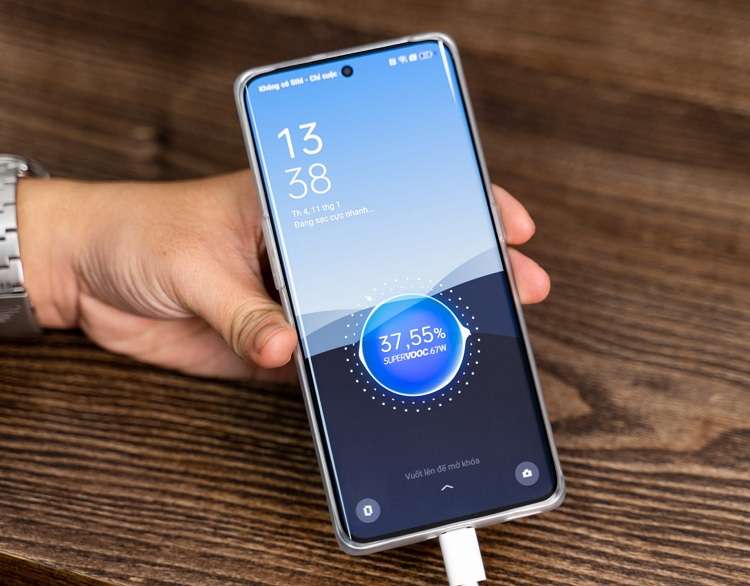
If a force restart doesn't resolve the issue — for example, if the Power + Volume Down combination isn't working or the device is stuck in a boot loop — letting the battery drain completely is an effective alternative reset method. When an OPPO device fully powers down from battery depletion, the system reinitializes all processes from scratch on the next boot, which can clear stubborn software states that a manual restart cannot.
- Step 1. Leave your OPPO device on and do not plug it in. If the screen is frozen on an app or the lock screen, simply let it sit until the battery depletes and the device shuts itself down automatically.
- Step 2. Once the device has been completely off for at least 60 seconds, connect it to a charger using the original cable and adapter.
- Step 3. Allow the device to charge for at least 5–10 minutes before pressing the Power button to turn it back on. Starting with some charge prevents an immediate low-battery shutdown.
- Step 4. After the device boots, test the touchscreen across different areas of the display to confirm responsiveness has returned.
This method is particularly useful for older OPPO models like the A3s and F1s where the Power + Volume combination for hard restart may differ from newer models.
3. Check for Software Updates

A known and frequently overlooked cause of OPPO touch screen not working after a reset or system update is a bug introduced in a specific ColorOS firmware version. OPPO regularly releases patches to address touchscreen calibration errors, display driver bugs, and system process conflicts that can cause an unresponsive screen. Keeping your device on the latest firmware is one of the most effective long-term fixes.
- Step 1. Go to Settings on your OPPO device. If the touch is partially working, use careful taps or connect a USB OTG mouse for navigation.
- Step 2. Scroll down and tap Software Updates (on some models this is under About Phone > Software Updates).
- Step 3. Tap Check for Updates. If an update is available, tap Download and Install and follow the on-screen prompts.
- Step 4. After the update installs and your device reboots, test the touchscreen. If the problem was caused by a software bug in your previous firmware, the update should resolve it completely.
If your device cannot reach the Settings menu because the screen is fully unresponsive, try booting into Safe Mode first: power off the device, then hold the Power button. When the OPPO logo appears, press and hold Volume Down until the phone finishes booting — you will see "Safe Mode" in the bottom-left corner. In Safe Mode, all third-party apps are disabled, which allows you to determine whether a downloaded app is causing the touch issue. If touch works in Safe Mode but not normally, uninstall recently added apps one by one.
4. Contact Customer Service
If none of the software-based solutions above have resolved the problem, the issue is likely related to hardware — such as a damaged digitizer, a disconnected display cable, or screen damage from a previous drop that has now worsened. In these situations, professional diagnosis and repair is the safest path forward to avoid further damage or permanent data loss.
- Step 1. Go to the OPPO website (www.oppo.com) and navigate to the Support section.
- Step 2. Select your device model and click Contact Us.
- Step 3. Choose your preferred method of contact, such as phone or email, and describe the issue you're experiencing — include when it started, what you've already tried, and whether any physical damage occurred before the screen stopped working.
- Step 4. If your device is under warranty, OPPO may repair or replace it at no cost. If the warranty has expired, request a repair cost estimate before authorizing any work.
Before handing your device over to any repair service, consider backing up your data using a computer or cloud backup. If your touch is partially working, Dr.Fone's System Repair tool (see below) can also attempt a software-level fix first — potentially resolving the issue without requiring physical repair.
Tips: Dr.Fone Android Repair is a professional tool that can help fix a wide range of software issues on your Android device. Dr.Fone Repair can be a good option to protect your data and files while troubleshooting an unresponsive Android screen.
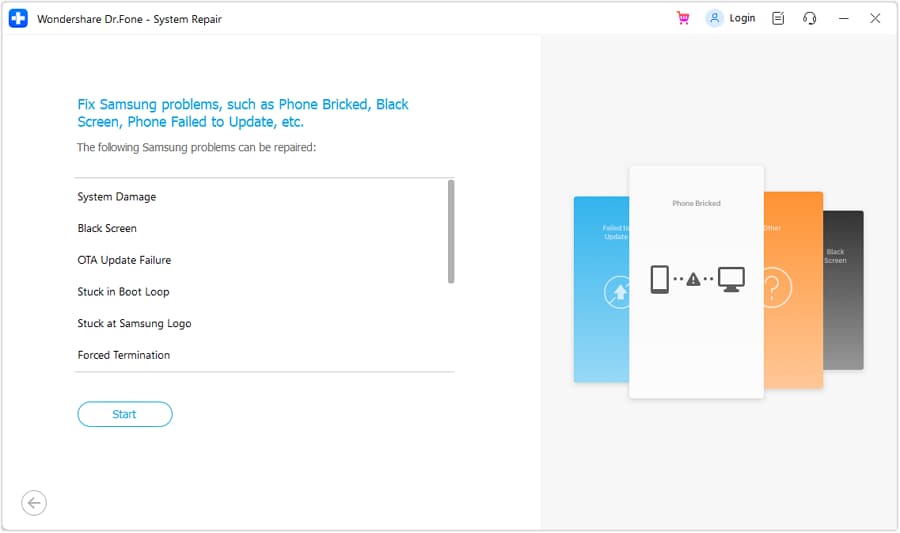
- Step 1. Download and install Dr.Fone Repair software on your computer.
- Step 2. Connect your Android phone to your computer using a USB cable.
- Step 3. Launch Dr.Fone Repair and select the System Repair option.
- Step 4. Select the Android Repair option from the available choices.
- Step 5. Click on Start to begin the repair process.
- Step 6. Provide the necessary device information on the screen, including your name and model.
- Step 7. Click Next to proceed to the next step.
- Step 8. Follow the on-screen instructions to complete the repair process for your Android phone's touchscreen.
 safe & secure
Part 2. Why is My OPPO Screen Not Responding? Common Causes
Quick Answer: The three most common reasons an OPPO touch screen stops working are: (1) software or firmware bugs — including issues introduced by a failed update, corrupted OS files, or a conflicting app; (2) hardware wear and tear — where the digitizer or internal components degrade over time; and (3) physical damage from drops or impacts — even when no visible cracks are present.
Understanding why your OPPO phone touch screen is not working helps you choose the right solution and avoid wasting time on fixes that won't address the real problem. Here are the three primary causes in detail:
-
Software and Firmware Issues: Software glitches are the single most common reason an OPPO screen becomes unresponsive. These can range from a minor app conflict to serious system-level problems like corrupted firmware, a failed OTA (over-the-air) update, or a soft-bricked ColorOS installation. Common symptoms include the device freezing on the OPPO boot screen, displaying a persistent black screen while still powered on, touch becoming intermittently unresponsive, or the screen not registering input in specific screen regions. This type of issue affects a wide range of models: the OPPO A3s, A37, A5, A5s, A57, as well as devices in the F-series (F1s, F3), Reno series (Reno 7, Reno 8, Reno 8 5G), and Find series. Software issues are the most fixable category — a force restart, safe mode boot, or OS repair using a tool like Dr.Fone can resolve them without data loss.
-
Hardware Failure from Wear and Tear: Over time, internal components deteriorate from normal daily use — heat cycling, vibration, and micro-flexing of the display assembly gradually weaken connections and the digitizer itself. The digitizer is the transparent layer above the display that detects finger touch inputs; when it degrades, the screen may register ghost touches, fail to respond in certain areas, or stop working entirely. This is particularly common on older models like the OPPO F1s and F3 after 2–3 years of use. Unlike software issues, hardware wear typically worsens progressively over weeks or months rather than appearing suddenly. Professional screen replacement is usually the only permanent solution.
-
Physical Damage from Drops or Impacts: Accidental drops onto hard surfaces are a frequent cause of sudden touch screen failure on OPPO devices — even when there is no visible crack on the glass. The internal ribbon cable (flex cable) connecting the display panel to the device's mainboard is particularly vulnerable to damage from impacts; when it becomes partially dislodged or torn, the screen may display a working image but register no touch at all. This type of damage is common on models like the OPPO Reno series and Find X. Some cases of loosened cables can be re-seated by a technician without requiring a full screen replacement, making professional diagnosis worthwhile even after a drop.
Part 3. How to Avoid OPPO Screen Unresponsiveness Issue
Quick Answer: To prevent your OPPO touch screen from becoming unresponsive, keep your ColorOS firmware and apps updated, use a quality protective case and screen protector, only install apps from official sources, and use a reliable repair tool like Dr.Fone to address software issues before they escalate into a complete screen freeze.
Prevention is significantly more effective — and less stressful — than troubleshooting an already-broken screen. These four strategies address all three root causes identified in Part 2:
-
Keep Your Software and Apps Updated: Regularly installing ColorOS system updates is the single most effective way to prevent software-related screen issues. OPPO's firmware updates deliver critical bug fixes, security patches, display driver improvements, and touch calibration corrections. Delaying updates leaves your device exposed to known bugs — including the specific firmware bugs that cause frozen screens, boot loops, and OPPO touch screen not working after reset scenarios on models like the Reno 8 and A3s. To enable automatic updates, go to Settings > Software Update > Auto Download and enable overnight update downloads. Similarly, keeping your installed apps updated through the Google Play Store prevents compatibility conflicts between apps and the current ColorOS version, which is a common hidden cause of intermittent touch failures.
-
Protect Your Device from Physical Damage: A quality drop-protection case and a tempered glass screen protector are your most important defenses against impact-induced screen failure. Many users make the mistake of using only a thin decorative case that provides minimal shock absorption; for OPPO's slim Reno and Find X series devices, a case with raised bezels around the screen and corners provides significantly better protection. Even when no visible cracks appear after a drop, internal connectors can be partially dislodged — so careful, two-handed handling habits are just as important as the protective accessories you choose. Avoid placing your phone in pockets or bags with hard objects like keys that can cause continuous pressure damage to the screen.
-
Install Apps from Trusted Sources Only: One of the most overlooked causes of an OPPO phone screen not responding is malware introduced through unofficial app downloads. Avoid sideloading APK files from unknown websites or third-party app stores, as these can contain malicious code that interferes with system processes — including the touch input service — and can cause persistent, hard-to-diagnose screen responsiveness issues. For maximum safety, only install applications from the Google Play Store or OPPO's official App Market. If you need to install an APK from outside these sources, scan the file with a reputable mobile security app first and verify it comes from the official developer's website.
-
Use a Dedicated Repair Tool for Software Issues: When a restart, Safe Mode, and an official ColorOS update do not resolve the issue, further diagnosis may require Recovery Mode or Fastboot Mode. Dr.Fone provides free tools with guided steps for entering or exiting these modes, reducing reliance on model-specific button combinations. Back up accessible data before using any reset or firmware option, because some actions available inside Android maintenance modes may erase device data.
Conclusion
An unresponsive OPPO touch screen is a solvable problem in the vast majority of cases — and this guide has equipped you with every tool you need to fix it. Starting with a 15-second force restart and progressing through safe mode, software updates, and professional OS repair with Dr.Fone, these solutions cover every software-related scenario across all OPPO models, including the Reno 8 5G, A3s, and Find X series.
The key takeaways: most OPPO phone screen not responding issues are caused by software glitches and can be resolved without hardware repair or data loss. Understanding the three root causes — software bugs, hardware wear, and physical damage — helps you choose the right fix immediately. And by staying on top of software updates, using physical protection, and downloading apps only from trusted sources, you can prevent the issue from recurring. Bookmark this guide and refer back to it any time your OPPO screen freezes or stops responding.
 safe & secure
Frequently Asked Questions (FAQ)
 Q1. Why Is My OPPO A3s Touch Not Working After an Update? Q2. Can I Fix an OPPO Screen That Is Not Responding Due to Water Damage? Q3. My OPPO Display Is Not Working but the Phone Is On. What Should I Do? Q4. How Do I Restart My OPPO Phone When the Screen Is Completely Frozen?


OPPO Manage
- OPPO Unlock
- 1. Unlock OPPO A53
- 2. Unlock OPPO A37
- 3. Unlock OPPO A3s
- 4. Unlock OPPO CPH 2127
- 5. Unlock OPPO Phone Tips
- 6. OPPO Screen Unlock Tools
- 7. Bypass OPPO FRP with FRP Code
- 8. Bypass FRP OPPO Without PC
- OPPO Reset
- 1. Hard Reset OPPO A3s
- 2. Hard Reset OPPO A5s
- 3. Hard Reset OPPO A15
- 4. Hard Reset OPPO A37
- 5. Hard Reset OPPO A53
- 6. Hard Reset OPPO Full Guide
- 7. Reset OPPO Without Password
- 8. Reset Privacy Password in OPPO
- OPPO Problems
- 1. Unresponsive OPPO Screen
- 3. Android App Not Installed Error
- 4. Bricked Your Android Phone
- 5. Encryption Unsuccessful Error
- 6. Android Stuck in Download Mode
- 7. Flash Dead Android Phone Safely
- OPPO Tips
- ● Manage/transfer/recover data
- ● Unlock screen/activate/FRP lock
- ● Fix most iOS and Android issues
- Free Download Free Download Free Download



Daisy Raines
staff Editor
Generally rated4.5(105participated)