
2026 Quick-Fix Guide: Android App Not Installed Error

Sep 24, 2026 • Filed to: Phone Repair Solutions • Proven solutions
 TL;DR:
To fix the Android "App Not Installed" error during manual APK sideloading, you must free up at least 1 to 2GB of internal storage, completely uninstall any existing versions of the app to clear cryptographic certificate mismatches, and restart the device to reset the package manager service.
● Devices running Android 8.0 Oreo and newer mandate that you manually grant the "Install Unknown Apps" permission on a per-app basis specifically for the browser or file manager attempting to execute the APK file.
● Installations will immediately abort if your device defaults to an unmounted SD card or if the APK manifest explicitly requires internal memory; switching the App Installation Preference to internal storage prevents this conflict.
● Persistent package manager failures across multiple verified APKs indicate operating system corruption, requiring you to download and flash the exact matching device firmware using the Dr.Fone - System Repair (Android) application on a Windows PC.
Ask AI for a summary
 ChatGPT
 Perplexity
 Gemini
 Claude
 Grok
Grok
The "App Not Installed" error is one of the most common Android APK installation problems, appearing when a user tries to install an app manually using an .apk file instead of downloading it through the Google Play Store. The error message — which sometimes appears as "Something went wrong. App not installed" or "App isn't installed on your device" — signals that Android has rejected the installation attempt before it could complete.
Why does this happen? The "App Not Installed" error on Android is typically caused by one of the following: insufficient device storage, a corrupted or incomplete APK file, an unmounted SD card, a certificate mismatch with an existing app version, blocked app permissions, or underlying system file corruption. It is not a sign of hardware failure — in nearly all cases, it can be fixed through software adjustments.
This guide covers everything you need to know about the app not installed problem: the seven most common causes, a one-click system repair solution using Dr.Fone, and eight step-by-step fixes you can apply right now. Whether you're sideloading an APK on a Samsung device, troubleshooting an android apk app not installed issue, or fixing an app install problem after a system update, you'll find the right solution here.

Part 1: Common reasons for the "Android App not installed" error
Before applying a fix, it's important to understand what's actually causing the "Android App Not Installed" error on your specific device. The cause determines the correct solution — and using the wrong fix wastes time. Below are the seven most common reasons for how to fix app not installed APK on Android situations, explained in detail so you can identify your exact problem.
Reason 1: Insufficient Storage
Every Android app requires a minimum amount of free internal storage to unpack and install its APK contents — typically at least 2–3x the file size of the APK itself. When your device's internal storage is nearly full — occupied by photos, videos, cached data, downloaded files, and existing apps — Android may not have enough space to complete the installation process, immediately triggering the "App Not Installed" error. Devices with 16GB or 32GB total storage are especially vulnerable to this issue. As a general rule, keep at least 1–2GB of free internal storage available to allow smooth app installations. You can check available storage by going to Settings → Storage on your Android device.
Reason 2: Corrupted or Incomplete APK File
When you download an APK from a third-party website rather than the Google Play Store, there's a significant risk that the file is corrupted, incomplete, or has been tampered with. A corrupted APK occurs when the download was interrupted, the source file was damaged, or the APK was modified by an unverified distributor. Android's package installer performs an integrity check before installing any APK — if the file fails this check, installation is refused and the "Something went wrong app not installed" error message appears. To avoid this, always verify the APK's SHA256 hash when available, download from known-good sources, and ensure the download completed fully before attempting installation. Tools like the AFTVnews Downloader app on Fire TV devices can sometimes fail to deliver complete APK files if the source URL is broken or the download was interrupted — resulting in the same installation failure.
Reason 3: SD Card Not Properly Mounted
Android assigns an installation destination to each app during the install process. If your device is set to install apps to the SD card by default, but the SD card is currently unmounted — for example, because your phone is connected to a PC via USB in Mass Storage mode, or because the SD card was recently inserted and hasn't been recognized yet — the installer cannot write to the target location and returns the "App is not installed" error. This is a particularly common cause on budget Android phones and older devices that still support removable microSD cards. Disconnecting from the PC and manually mounting the SD card from Settings → Storage → Mount SD Card typically resolves this instantly.
Reason 4: Incorrect Installation Storage Location
Not all Android apps are designed to run from an SD card. Some apps — particularly those that integrate deeply with system services, use background processes, or require low-latency storage access — are specifically coded to run only from internal memory. If your device is configured to default new app installations to the SD card, and an app that requires internal storage is directed there instead, the installation may fail with the "App Not Installed" error. Android's package manager will reject the installation if the app's manifest file explicitly declares it cannot be moved to external storage. Allowing Android to automatically select the installation location — rather than forcing external storage — is the recommended practice to avoid this conflict.
Reason 5: Corrupt or Damaged Storage
Over time, both SD cards and internal storage can develop corrupted sectors — areas of memory that can no longer reliably read or write data. This is especially common with cheap or aging microSD cards, but can also occur in internal storage after repeated sudden shutdowns, failed updates, or physical damage. When the Android package manager attempts to write APK files to a storage area containing corrupted sectors, the write operation fails and the app installation is aborted. A corrupted SD card will typically trigger the error consistently for all apps directed to that storage location. Formatting the SD card (which erases and remaps all sectors) usually resolves SD card corruption. Internal storage corruption is more serious and may require a Dr.Fone system repair or factory reset.
Reason 6: App Permission or "Unknown Sources" Blocked
Android's security model requires that users explicitly grant permission to install APK files from sources outside the Google Play Store — a setting often labeled "Install unknown apps" or "Unknown sources." If this permission has not been granted for the specific app you're using to open the APK (such as your file manager, browser, or a sideloading tool), Android will block the installation entirely, displaying the "App isn't installed" error. In newer Android versions (Android 8.0 Oreo and later), this permission is granted per-app rather than globally. For example, if you downloaded an APK using Chrome but are opening it with a file manager that doesn't have the "Install unknown apps" permission, the installation will fail. You must grant this permission to every app you use to install APKs — go to Settings → Apps → [Your App] → Install Unknown Apps → Allow from this source.
Reason 7: Certificate Mismatch or Incorrect APK Variant
Every Android app is digitally signed by its developer using a unique cryptographic certificate. When Android installs an app, it stores the certificate associated with that app. If you attempt to install a different version of the same app — particularly one from a different source or signed with a different certificate (such as a modded APK, a regional variant, or a beta build signed with a developer key) — Android will detect the certificate mismatch and refuse to install it over the existing version. This is a critical security feature that prevents malicious apps from impersonating legitimate ones by reusing the same package name. To resolve this: fully uninstall the existing version of the app first, then install the new APK. This clears the stored certificate and allows the new signing certificate to be accepted.
Understanding which of these seven causes applies to your situation is the most efficient path to fixing the app not installed problem. Once identified, each cause has a direct, targeted solution covered in Part 3 below.
Tips: Looking for an all-in-one mobile management software? Look no further than Dr.Fone App - the ultimate choice for all your needs:
For iOS Users: Free up space with Smart Clean, remove any restriction including screen lock, iCloud activation lock, MDM, or Apple ID, and transfer data easily between devices with our all-in-one iOS solution.
For Android Users: Bypass screen locks and FRP with our Android unlocker, change your location with one click, and repair damaged Samsung devices with ease.
Discover more possibilities for mobile management solutions with Dr.Fone App (iOS) and Dr.Fone App (Android). Don't miss out, try it now and revolutionize your smartphone experience.



Part 2: One-click to fix App not installed on Android error
If you've tried basic troubleshooting and the "App Not Installed" error persists regardless of which APK you attempt to install, the root cause is likely corrupted Android system files rather than any issue with the APK itself. In this scenario, the Android package manager is broken at the system level — no amount of storage cleanup, permission resetting, or APK re-downloading will fix it, because the problem lies in the core OS infrastructure that handles all app installations.
The most effective solution in this case is Android system repair. Dr.Fone - System Repair (Android) is specifically designed to diagnose and fix system-level issues — including the "android app not installed" error caused by corrupted package manager files, damaged system partitions, or incomplete OS updates — with a single click. It downloads the correct firmware for your exact device model and reinstalls the system components responsible for app installation, restoring full functionality without requiring technical expertise.

Dr.Fone - System Repair (Android)
A powerful tool to fix the "Android App not installed" error in one click
- Fix all Android system issues like Android App not being installed, the system UI not working, etc.
- One-click to fix Android App not installed. No technical skills are required.
- Support all the new Samsung devices, etc.
- On-screen instructions are provided to prevent any misoperation.
Note: Getting your Android system repaired may erase the existing device data. It is recommended that you should back up your Android data before starting the Android repair.
Follow these steps to fix the "Android App not installed" error using Dr.Fone in one click:
- Step 1: Download and install Dr.Fone on your Windows computer. Launch the application and click "System Repair" from the main Toolbox interface. Connect your Android device to your PC using a USB cable — ensure USB debugging is enabled on your device for the connection to be recognized.
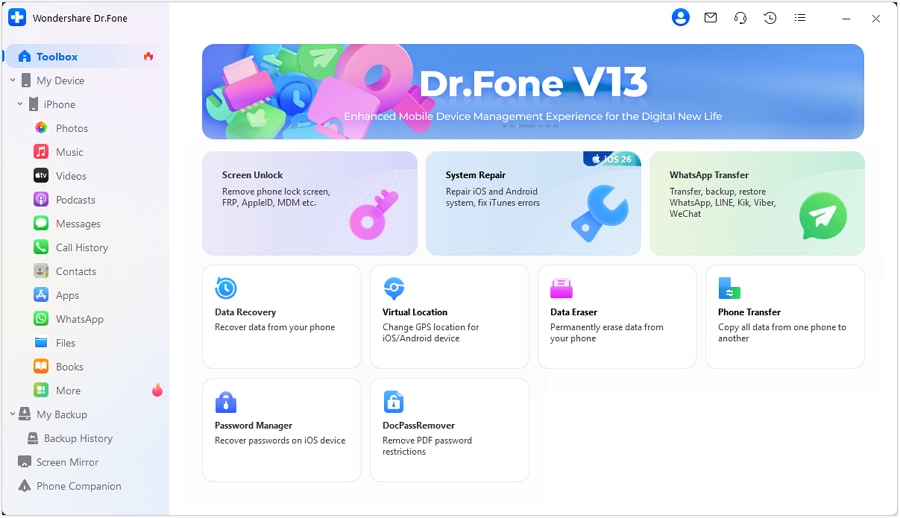
- Step 2: Select "Android" as your device type and click "Start." Dr.Fone will begin the repair initialization process and prepare to identify your device model.
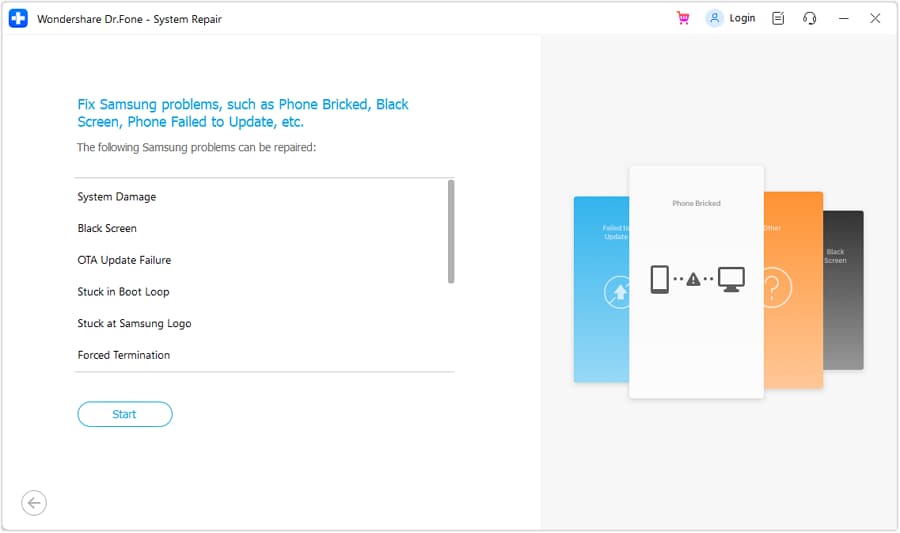
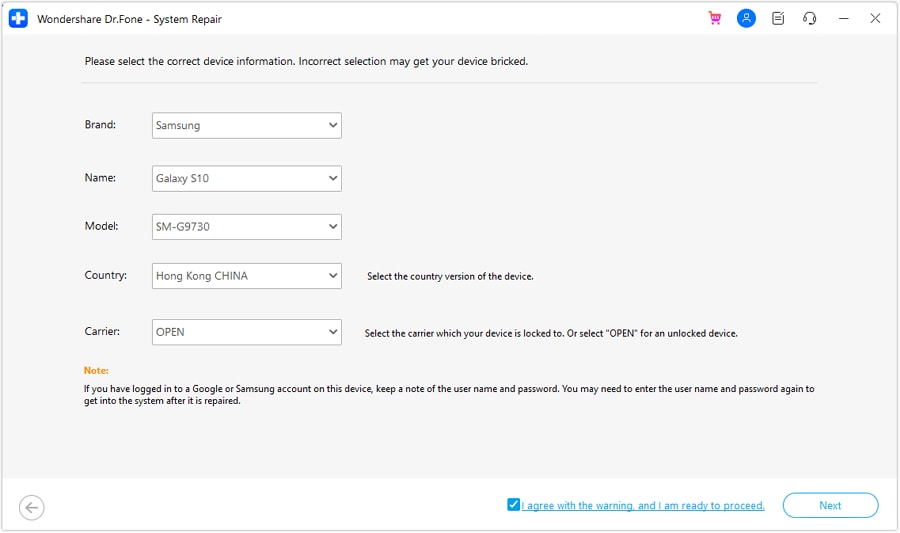
- Step 3: Enter your device information accurately — Brand, Name, Model, Country, and Carrier. It is critical that all details match your actual device, as Dr.Fone uses this information to download the correct firmware package. Incorrect details may result in the wrong firmware being applied. Confirm the details and click "Next."
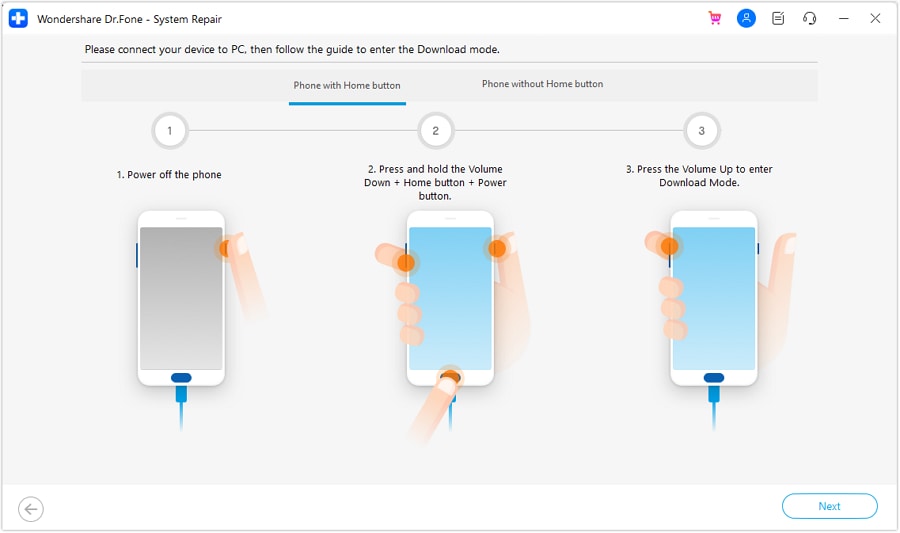
- Step 4: Follow the on-screen instructions to place your Android device into Download Mode. Once in Download Mode, Dr.Fone will automatically download the matching firmware for your device — this may take several minutes depending on your internet speed. After the download completes, the tool will verify the firmware package and begin the repair process. It will replace corrupted system components — including the package manager that handles app installations — with fresh, verified files. Once the repair finishes, your device will reboot and the "App Not Installed" error should be fully resolved.
 safe & secure
Dr.Fone App (iOS) & Dr.Fone App (Android)
Your One-Stop Expert for Screen Unlock, Smart Clean, Data Recovery, Change Location, and Phone Management of Mobile Devices!
- Effortlessly unlock various locks on your device.
- Instantly free up storage space by smart clean.
- Rapidly recover different kinds of lost phone data and information.
- Easily changes GPS location on Android devices.
- Easily manage cluttered and private device content.
Part 3: How to fix App not installed error on Android
The following eight solutions address every common cause of the "App Not Installed" error on Android. Start from the top — #1 and #8 are quick fixes that resolve the majority of cases in under five minutes. Work through the list based on the cause you identified in Part 1. Each solution includes detailed steps so you can apply the fix correctly the first time.
#1. Delete Unnecessary Files and Apps to Free Up Storage
Insufficient storage is the single most common cause of the app install problem on Android. When your internal storage is nearly full, Android cannot unpack the APK contents during installation, causing the process to fail immediately. Before retrying any APK installation, free up at least 500MB–1GB of internal storage — more if the app is large. Here's how to do it efficiently:
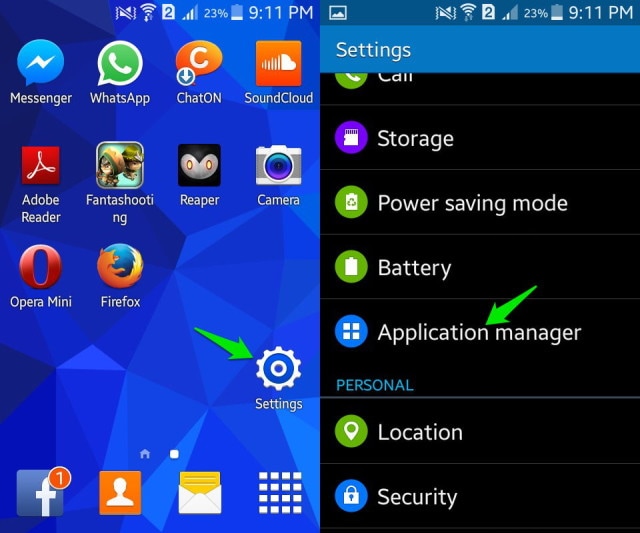
Step 1: Open "Settings" on your device and navigate to "Apps," "Application Manager," or "Manage Apps" (the label varies by manufacturer and Android version). This screen shows all installed applications and their storage usage.
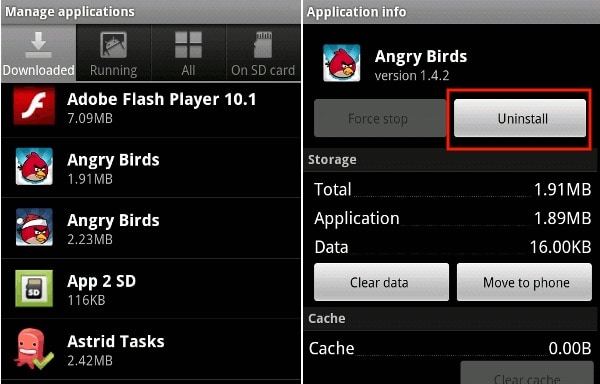
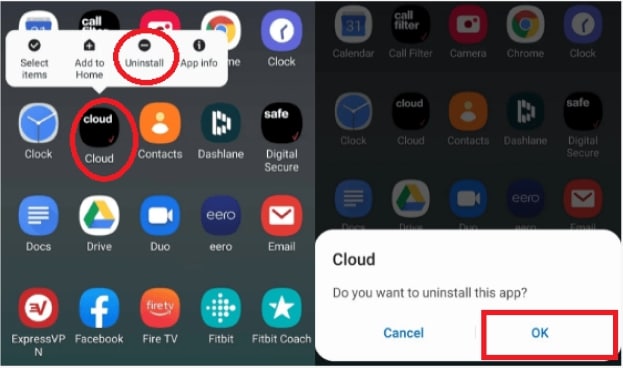
Step 2: Sort apps by size and identify large apps you no longer use. Tap the app you want to remove to open its App Info screen, then tap "Uninstall" and confirm. This immediately reclaims that storage space.
Step 3: Alternatively, from the home screen, long-press any app icon until a context menu appears. Drag it to the "Uninstall" option or select "Uninstall" from the menu. Tap "OK" to confirm. Repeat for all apps you no longer need. Additionally, clear app caches from Settings → Apps → select app → Storage → Clear Cache to recover storage without deleting the app itself.
#2. Use Only the Google Play Store for App Downloads
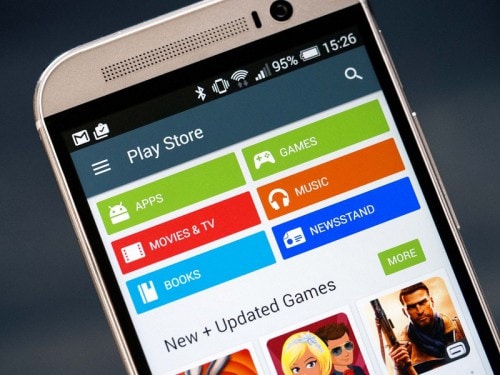
The Google Play Store is the safest and most reliable source for Android apps. Every app published on the Play Store is reviewed by Google's security systems and scanned for malware, corrupted code, and certificate issues before being made available for download. When you download an APK directly from a website, forum, or third-party app store, you bypass these protections entirely — the file may be incomplete, tampered with, or incompatible with your device's Android version or CPU architecture. If you're experiencing the app isn't installed error with a specific APK from a third-party source, the simplest fix is to find the same app on the Google Play Store and install it from there instead. Play Store installations almost never produce the "App Not Installed" error because Google manages the package verification, certificate validation, and device compatibility checks automatically.
#3. Mount Your SD Card Properly
If your device is configured to install apps to an SD card and that SD card is not currently mounted, every APK installation will fail with the "App Not Installed" error. SD cards become unmounted when the device is connected to a PC via USB in Mass Storage or MTP mode, when the card is removed and reinserted, or when Android fails to recognize the card after a reboot. To properly mount your SD card and resolve this issue:
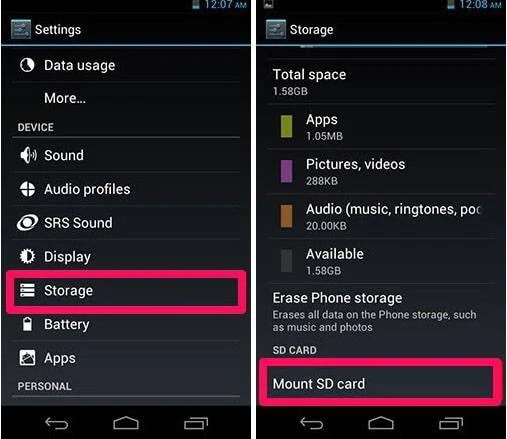
To check the same: First, disconnect your device completely from your PC by unplugging the USB cable — this is essential, as the SD card may be inaccessible while connected. Then navigate to Settings → Storage on your Android device. If the SD card is unmounted, you will see a "Mount SD Card" option. Tap it and wait for Android to mount and verify the card (this takes 10–30 seconds).
Once the SD card is successfully mounted, restart your device and attempt the APK installation again. If the "Mount SD Card" option does not appear, try ejecting and reinserting the SD card, then repeat the above steps.
#4. Choose App Installation Location Wisely
Android allows users to direct new app installations to either internal storage or an SD card. While storing apps on an SD card can conserve internal space, it can also trigger the "App Not Installed" error when an app is incompatible with external storage. Apps that rely on fast read/write speeds, use live widgets, run background services, or integrate tightly with Android system APIs are typically incompatible with SD card storage. To avoid this conflict, set your default installation location to internal memory: go to Settings → Apps → [three-dot menu] → App Installation Preference and select "Internal storage." For most users, it's best to allow Android to automatically determine the optimal storage location rather than forcing apps to the SD card — this eliminates one of the most avoidable causes of the app not installed problem.
#5. Format the SD Card to Fix Storage Corruption
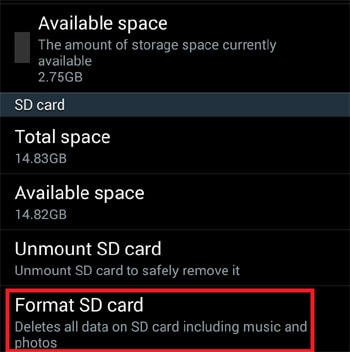
If your SD card is the designated installation location but has developed corrupted sectors or a damaged file system, every app directed to it will fail to install. Formatting the SD card erases all its data, remaps all storage sectors, and rebuilds the file system from scratch — effectively eliminating corruption as the cause of the android apk app not installed error. Warning: Formatting will permanently delete all data stored on the SD card. Back up any important files to your computer before proceeding.
To format your SD card: navigate to Settings → Storage → SD Card → Format (or Format SD Card depending on your Android version). Confirm the operation and wait for the format to complete. After formatting is complete, tap "Mount" to remount the card. Your device will now treat it as fresh storage, resolving any corruption-related installation failures.
#6. Reset App Permissions to Enable APK Installation
On Android 8.0 (Oreo) and later versions, the ability to install APKs from outside the Play Store is controlled on a per-app basis under the "Install Unknown Apps" permission. If this permission hasn't been granted to the specific app you're using to open the APK (e.g., your browser, file manager, or download manager), Android will silently block the installation, producing the "App isn't installed on your device" error. To resolve this:
Go to Settings → Apps and find the app you used to download or open the APK (for example, Chrome, Files by Google, or ES File Explorer). Tap it, then tap "Install Unknown Apps" or "Special App Access" and toggle "Allow from this source" to ON.
On older Android versions (7.0 and below), the permission is a single global setting: go to Settings → Security and enable "Unknown Sources." Additionally, you can perform a full app permissions reset — go to Settings → Apps → [three-dot menu] → Reset App Preferences — to restore all permission settings to their default state and clear any conflicting permission states that may be preventing installation.
#7. Verify and Use the Correct APK File
Installing the wrong variant of an APK is a common but easily overlooked cause of the "something went wrong app not installed" error. There are several scenarios where this occurs: downloading a version of the app signed with a different certificate than the version already installed on your device; using an APK intended for a different CPU architecture (ARM vs. x86); downloading an APK built for a different Android API level than your device supports; or attempting to install a modded or repackaged APK that shares the same package name as the original but has different signing credentials. Here's how to fix this correctly:
- Completely uninstall any existing version of the app from your device before installing the new APK.
- Verify that the APK is for the correct Android version and CPU architecture for your device (check your device specs under Settings → About Phone).
- Only download APKs from trusted repositories (APKMirror, the developer's official website, or Google Play Store) that publish version-specific and architecture-specific packages.
- If using a sideloading tool such as the Downloader app (commonly used on Amazon Fire TV or Android TV devices), ensure the download URL is pointing to a live, up-to-date APK source — broken or outdated download links are a common reason the app reports the error after what appears to be a successful download.
#8. Reboot Your Device to Clear System State
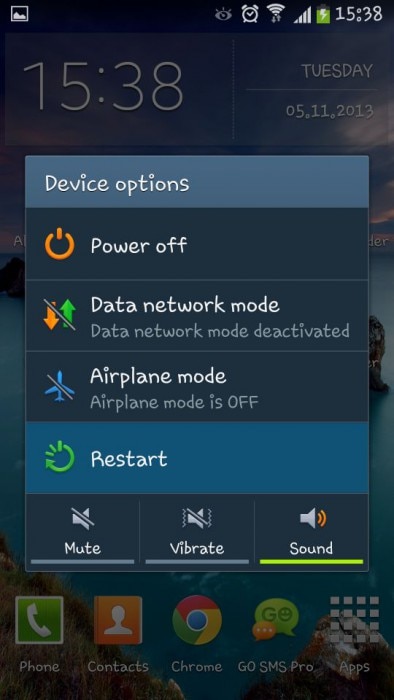
If you've made changes — freed up storage, granted permissions, formatted your SD card, or uninstalled a conflicting app version — a device restart is often necessary to apply those changes and clear any temporary system state that may still be blocking the installation. A reboot terminates all background processes, flushes the RAM, resets the package manager service, and gives Android a clean slate. This is a required final step after most of the above fixes, not just a last resort. To restart your Android device: press and hold the Power button until the power menu appears on your screen. Select "Restart" (or "Reboot" on some devices) and tap "OK" if prompted to confirm. Wait for your device to fully restart, then attempt the APK installation again.
Conclusion
The "App Not Installed" error on Android has a clear set of causes and equally clear solutions. In most cases, the fix comes down to one of four things: freeing up storage space, granting the correct installation permissions, resolving an SD card issue, or correcting the APK source. The eight solutions in this guide address every common scenario — from simple storage cleanup to full system repair. If you're experiencing the "something went wrong app not installed" message or the app isn't installed on your device error across multiple APKs, that points to a system-level issue best resolved with Dr.Fone - System Repair (Android), which fixes the Android package manager with a single click without requiring technical expertise.
Whether you're troubleshooting an android apk app not installed error on a Samsung Galaxy, a budget Android phone, or a sideloading device, these fixes will get your apps installing successfully again. Always prefer the Google Play Store for everyday app downloads, keep a minimum of 1–2GB of free storage on hand, and verify your APK sources carefully to prevent this error from recurring.
safe & secureFAQs
 Q1. Why Does My Android Keep Showing "App Not Installed" When Installing an APK?Q2. How Do I Fix "Something Went Wrong. App Not Installed" on Android?Q3. A Mobile User Installs an App and the Android Device Freezes — What Is the Cause?Q4. How Do I Fix the "App Isn't Installed on Your Device" Error on Android?


Android Stopped
- Apps Keep Stopping
- 1. Make Instagram Work Properly
- 2. Fix App Has Stopped Error
- 3. Fixe Gmail Not Working on Android
- 4. Fixe Spotify Keeps Crashing
- 5. Fix Chrome Crashes on Android
- 6. Fix TouchWiz has stopped
- 7. Fix WhatsApp has stopped
- 8. Solve YouTube App Crashing
- 9. Fix Apps Keep Crashing on Android
- 10.Fix Android App Not Installed
- 11.Fix WhatsApp issues on Android
- 12.Fix App Won't Open on Android
- Google Services Crash
- 1. Uninstall Google Play Service
- 2. Fix Google Maps Not Working
- 3. Fix Google Services Has Stopped
- 4. Fix Google Services Won't Update
- 5. Fix Google Play Store Not Working
- 6. Fix Play Store Stuck on Downloading
- Android Services Fail
- 1. Fix Phone Keep Disconnecting
- 2. Fix Android SystemUI Has Stopped
- 3. Fix Process Acore Has Stopped
- 4. Fix Process Media Has Stopped
- 5. the .com.android.phone Has Stopped
- 6. Fix Android Not Receiving Texts
- 7. Fix Bluetooth Not Working
- 8. Fix Home Button Not Working
- 9. Fix SIM not provisioned MM#2 Error
- 10.Fix Phone Has Stopped on Samsung
- 11.Fix Settings Has Stopped on Android
- 12.Fix Video Not Playing on Android
- 13.Fix Wi-Fi Not Working on Android
- 14.Fix Contacts Has Stopped Error
- 15.Fix Android System Crash Issue
- 16.Fix Process System Isn't Responding
- 17.Fix GPS Signal Not Found
- ● Manage/transfer/recover data
- ● Unlock screen/activate/FRP lock
- ● Fix most iOS and Android issues
- Free Download Free Download Free Download



Alice MJ
staff Editor
Generally rated4.5(105participated)