Recover photos, messages, WhatsApp, and more — no backup
needed.
Recover photos, messages, WhatsApp, and more — no backup
needed.

 100% Security Verified | No Subscription Required | No Malware

 :
: 
 ChatGPT
 Perplexity
 Gemini
 Claude
 Grok
Grok

I accidentally deleted important photos and contacts from my iPhone. Since it doesn't have an external SD slot, is it even possible to recover data from the iPhone internal memory card?
Anonymous User Query
If you've searched online for solutions to retrieve deleted files, you may have found numerous data recovery programs declaring their ability to recover lost data from mobile phone memory cards. However, if you read closely, most of these tools only target external SD cards. For iOS users, this creates a major point of confusion because Apple devices do not use external memory cards—they rely exclusively on built-in internal storage.
So, the critical question remains: Is it possible to perform iPhone memory card recovery and retrieve data directly from the device's internal memory? The answer is a resounding YES. With the right techniques and specialized software, recovering data from an iPhone internal memory card is a highly effective process. Read on to discover three proven methods to get your precious files back.
In this article
Part 1. How to Perform iPhone Memory Data Recovery?
First and foremost, you need to acquire the right iPhone memory recovery software. While many tools claim to offer this functionality, very few can actually dive deep into the iOS file system to extract deleted data safely. If you don't know where to start, the most reliable recommendation is Dr.Fone - Data Recovery (iOS).
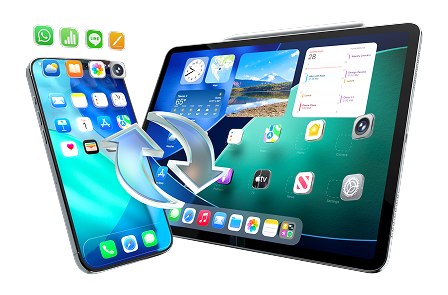
This software allows you to seamlessly retrieve iPhone memory data by extracting information from local computer backups or by directly scanning the internal storage to recover data from iPhone internal memory cards. It supports selective recovery, meaning you can preview your lost contacts, messages, photos, and notes before hitting the recovery button.
 Recovers data after deletion, crashes, or device damage.
- Supports photos, messages, contacts, WhatsApp, and more.
- Supports all major iPhone, iPad, and iPod models.
- Preview and recover only what you need.
Part 2. Directly Scan and Recover Data from iPhone Internal Memory
If you don't have a recent backup, your best option is to directly access the iPhone's storage. Data isn't immediately destroyed when deleted; instead, the space is marked as available. As long as you act quickly, those invisible files can be salvaged.

-
Step 1 Connect your iPhone to the computer
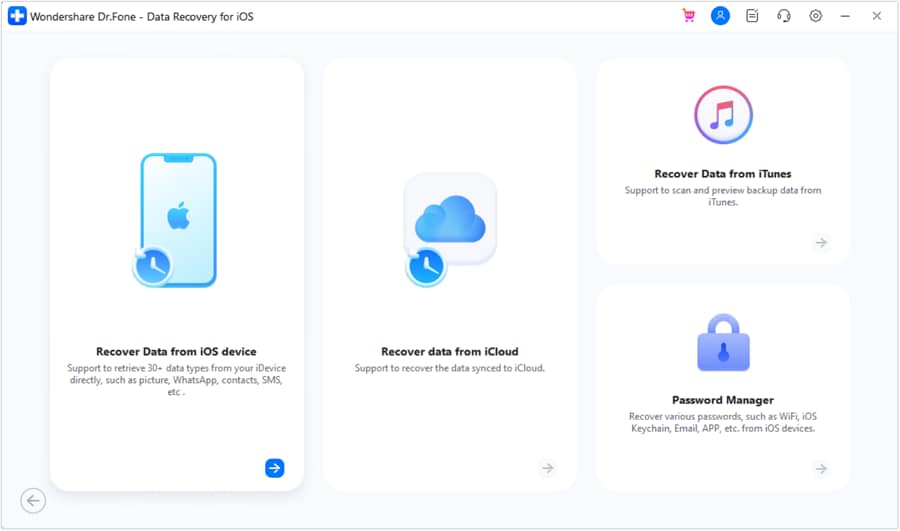
Run Dr.Fone on your computer and select the 'Data Recovery' feature from the main interface. Connect your iPhone to the PC or Mac using a reliable lightning or USB-C cable. Once recognized, you'll enter the primary recovery dashboard.
-
Step 2 Scan your iPhone memory
Navigate to the 'Recover Data from iOS device' tab on the left. The software will display various file types you can retrieve. Select the specific file categories you need (like Photos, Contacts, or Messages), and click "Start Scan". Dr.Fone will automatically begin thoroughly scanning your iPhone's internal memory.
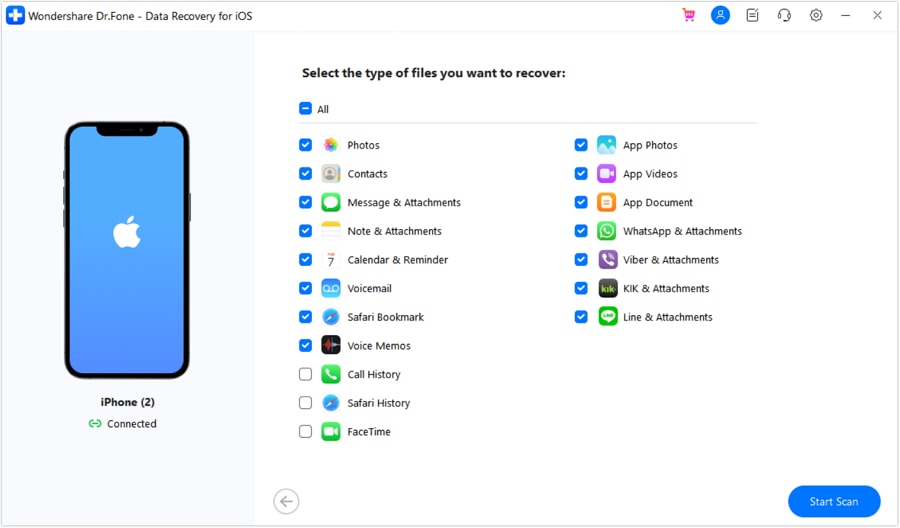
-
Step 3 Preview & recover data from iPhone memory card
The scanning process will take a few minutes depending on the size of your internal storage. Once files start appearing, you can preview them in real time. You can even pause or stop the scan once you've located the desired lost data. Simply mark the checkboxes next to the items you want back, and click "Recover to Computer" to securely export them.
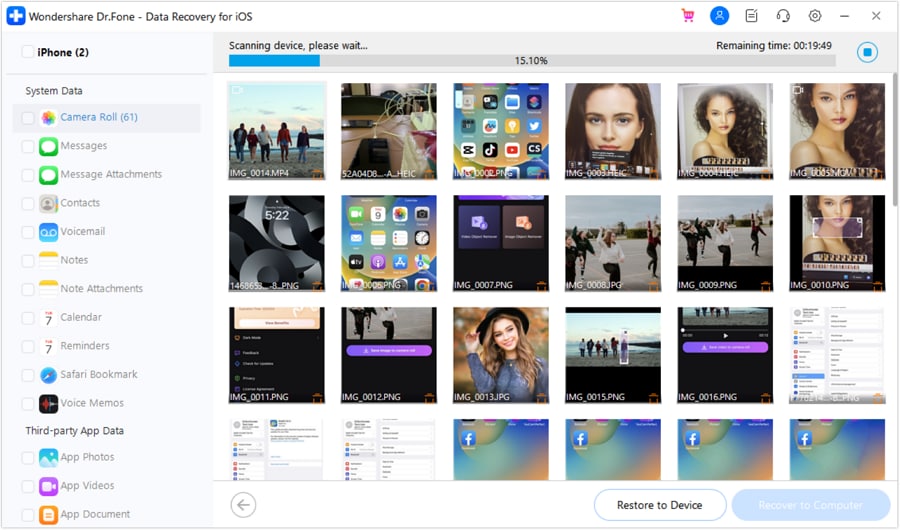
Tips: Data found in each category includes recently deleted items. You can quickly filter the view by toggling the "Only display the deleted items" button at the top of the screen.
Video Tutorial: Directly Scan and Recover Data from iPhone Memory




Part 3. Scan and Extract iTunes Backup to Recover iPhone Memory Data
Many users routinely sync their devices to their computers. If you've done this recently, your lost files might be safely hidden within an iTunes or Finder backup file. Extracting from these backups is an excellent alternative to direct internal memory scanning.
-
Step 1 Scan your iTunes backup
Launch the Dr.Fone software and select the 'Data Recovery' module. In the left panel, switch to the "Recover Data from iTunes backup file" option. The program will detect and display a list of all iTunes backup files stored locally on your computer. Select the most relevant backup corresponding to your iPhone and hit "Start Scan" to extract its internal contents.
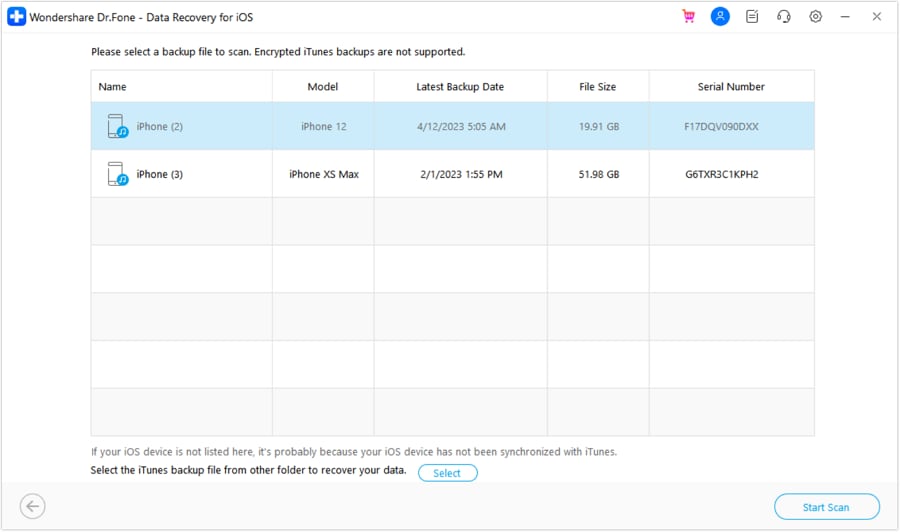
-
Step 2 Preview and recover iPhone memory data
After the backup file has been fully extracted, the software will categorize everything clearly. You can now preview the exact texts, images, or documents you lost. Mark the checkboxes for the items you need, and click "Recover to Computer" to save them locally without overriding your existing phone setup.
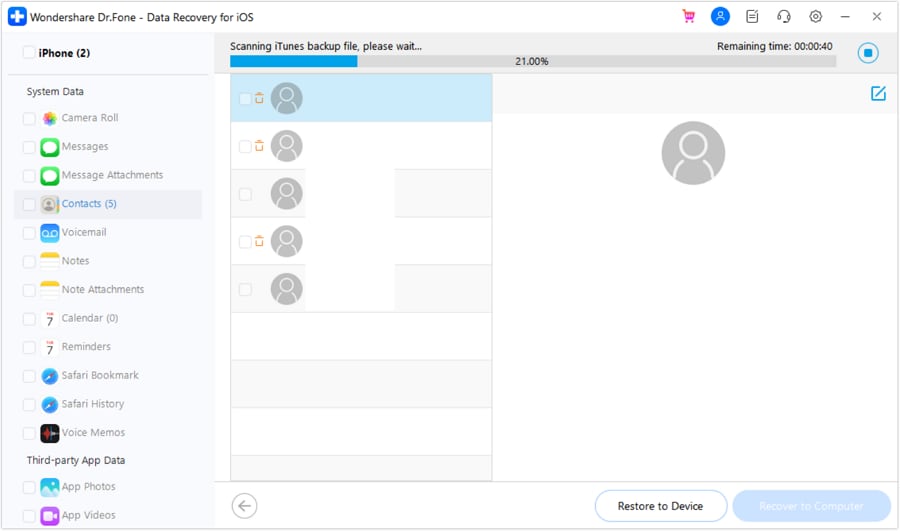
Part 4. Extract iCloud Backup to Recover iPhone Memory Data
If you have automatic iCloud backups enabled, your deleted information is highly likely to be stored securely on Apple's cloud servers. Instead of resetting your whole phone to apply the backup, Dr.Fone allows you to pull specific data directly from the iCloud backup.
-
Step 1 Log into your iCloud account
Run Dr.Fone's Data Recovery tool and choose the "Recover from iCloud Backup File" tab. You will be prompted to enter your Apple ID and password. Your privacy is strictly protected, and no account details are stored.
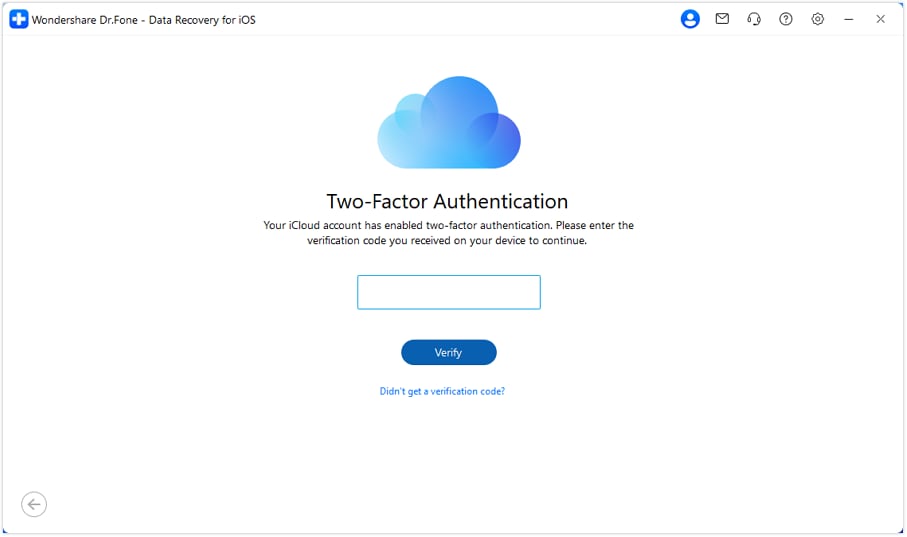
-
Step 2 Download iCloud backup to retrieve iPhone memory data
Upon successful login, a list of your associated iCloud backup files will appear. Locate the backup dated prior to the data loss and click the "Download" button next to it. You can choose to download only the specific data types you need to save time.
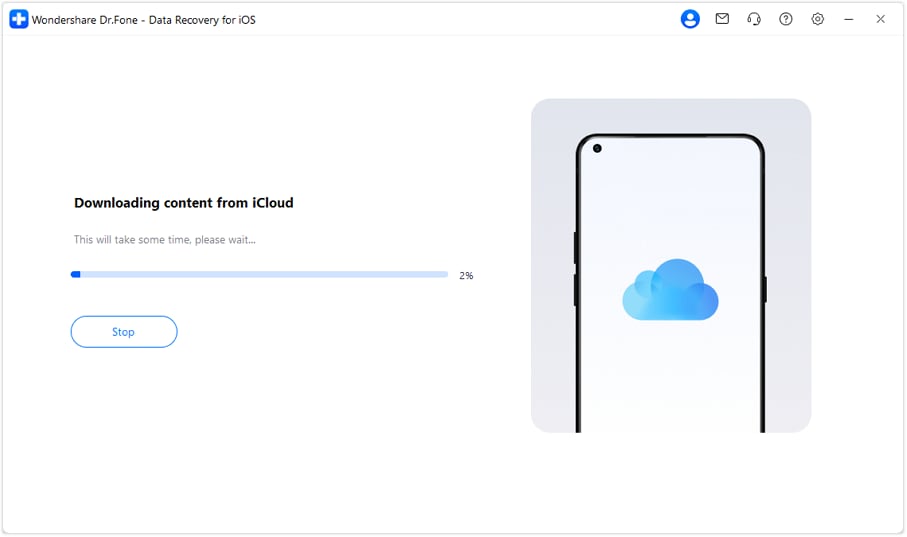
-
Step 3 Check and recover iPhone memory data
Once the download and scan processes are completed, navigate through the categories on the left sidebar. Check the data you want to retrieve and click "Recover to Computer" to safely export your iPhone's internal memory data to your desktop.
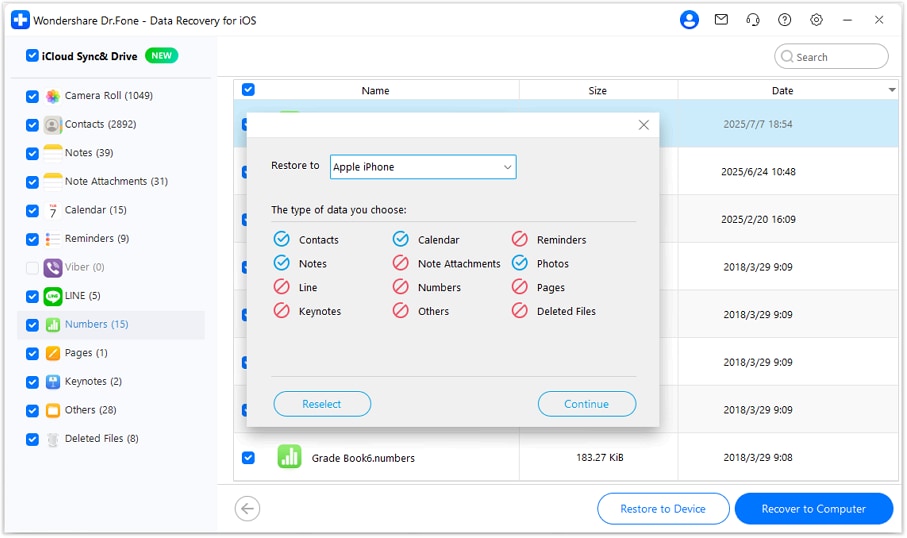
Conclusion
While the terminology surrounding an "iPhone internal memory card" might be slightly inaccurate due to the lack of physical SD card slots on Apple devices, recovering data directly from its internal storage is entirely achievable. By acting swiftly to prevent data overwriting and utilizing a robust recovery tool, you can seamlessly navigate through direct device scanning, iTunes backups, or iCloud files to restore your valuable memories and critical information. To safeguard against future loss, it is highly recommended to perform routine backups of your device's internal memory.
FAQ
-
1. Can I insert a physical SD memory card into an iPhone for extra storage?
No, iPhones do not support external SD or MicroSD cards. All data is stored on an integrated NAND flash storage chip (the "internal memory card"). To expand usable storage, you must rely on cloud services like iCloud or use specialized external lightning-based flash drives. -
2. What happens to the internal memory data when a file is deleted?
When you delete a file on an iPhone, the iOS system does not instantly wipe the binary data. Instead, it unlinks the file and marks that specific space in the internal memory as available for new data. This is why specialized recovery tools can find and retrieve these hidden files before they are overwritten. -
3. Why is it important to stop using my iPhone after data loss?
Continuing to use your iPhone generates new data (such as app caches, incoming texts, or background updates). This new data can overwrite the "free" space left by your deleted files on the internal memory, making them permanently unrecoverable.
-
4. Does scanning my internal memory with recovery software void my warranty?
No. Using legitimate and professional data recovery software like Dr.Fone only performs a read-only scan on your device's internal memory. It does not modify system files, require a jailbreak, or alter hardware, thereby keeping your Apple warranty intact.
 Add Wondershare Dr.Fone as a preferred source on Google