Recover photos, messages, WhatsApp, and more — no backup
needed.
Recover photos, messages, WhatsApp, and more — no backup
needed.

 100% Security Verified | No Subscription Required | No Malware

 :
: 
 ChatGPT
 Perplexity
 Gemini
 Claude
 Grok
Grok
Accidental file deletion is incredibly common in 2026, especially when we manage countless spreadsheets, personal images, or critical system logs on a daily basis. Whether it’s due to a manual operational error, an unexpected system crash, or an accidental memory card reformatting, losing important data can be highly frustrating and disruptive to your workflow. The gt recovery undelete restore apk offers a simple yet powerful on-device solution to recover deleted files, images, videos, and more—directly from your Android smartphone without necessarily relying on a computer.
For anyone seeking a reliable mobile data recovery tool, the gt recovery undelete restore app is considered a strong candidate that brings peace of mind when accidental deletion strikes. In this comprehensive guide, we will explore exactly how this tool works, its specific system requirements, and provide a detailed tutorial on retrieving your valuable data safely and efficiently.
In this article
Part 1. What is the GT Recovery Undelete Restore App?
The GT Recovery undelete restore solution is a powerful mobile application engineered to help users recover lost, permanently deleted, or hidden data directly from their smartphones. Unlike conventional file managers that only view accessible storage, it delves deep into the root directory to retrieve a wide range of data types. Supported formats include high-resolution photos, documents, SMS, phone contacts, WhatsApp and Facebook messenger histories, call logs, audio clips, videos, and even saved Wi-Fi passwords.

Designed primarily for advanced Android data retrieval, this app specifically functions on rooted devices. One of its main advantages is the ability to fetch and recover recently deleted files without needing an existing backup on Google Drive or local storage. By thoroughly scanning your device’s internal and external storage partitions, GT Recovery locates and organizes lost data efficiently, allowing you to selectively restore exactly what you need.
Another major advantage of the gt data recovery apk is its built-in preview capability. Users can preview audio tracks and video files before executing the final recovery—saving both time and storage space. It natively supports major file system formats such as FAT, EXT3, and EXT4, ensuring broad compatibility across older and newer Android OS versions.
While the app delivers robust on-device recovery features, it's vital to note that nearly all its functions mandate a rooted Android device to bypass the system's sandbox limitations. Certain operations may also request superuser permission levels multiple times. Nevertheless, if internal data recovery is your top priority and you possess a rooted phone, GT Recovery remains a solid solution worth utilizing.
Part 2. Pros and Cons of Using GT Data Recovery APK
Before installing any deep-scanning recovery application on your device, it is important to weigh its advantages and limitations. Below is a breakdown of what makes the gt recovery undelete restore tool effective, alongside some considerations regarding device safety and usability.
- Completely free to use for basic file recovery needs.
- Directly retrieves data without requiring a PC connection.
- Allows preview of photos and videos before restoring.
- Supports various formats including FAT, EXT3, and EXT4.
- Strictly requires the Android device to be rooted.
- The interface is slightly outdated compared to modern apps.
- Not available on the official Google Play Store (requires sideloading).
- Might overwrite existing data if not handled cautiously.
Part 3. How to Use GT Recovery Undelete Restore with a Rooted Android
A common question is how to use the GT Recovery app efficiently on a rooted smartphone. The steps involved are highly straightforward, designed to ensure users can rescue their lost information with minimal hassle. Follow the detailed steps outlined below to start restoring your data.

-
Step 1 Install the Application
To start with, download the GT Recovery for android from a trusted repository. Since it is unavailable on the Play Store, it is always advisable to use an official or verified source for download to guarantee reliability and safeguard your device from unwanted bugs or malicious software.
-
Step 2 Grant Root Permissions
Click on “Install” and open the app. If your phone is not rooted, the app will explicitly prompt you to root the device before proceeding with any data extraction.

 Note: If your phone is rooted, but you didn’t allow GT’s application for superuser rights, the smart app will not fail to remind you. It will show an empty screen until rights are granted.
-
Step 3 Choose Data Types
Next, the GT recovery app will organize the home view and prompt you to select what you want to restore. Remember, this selection interface populates properly only when superuser rights are fully allowed in your root manager.

-
Step 4 Analyze Phone Storage
To retrieve deleted items, simply click ‘Recover File’ on the homepage. Next, select the specific type of data (e.g., Photos, SMS, or Contacts). The GT recovery undelete restore app will begin analyzing your device’s internal partition tables.

-
Step 5 Run the Scan Process
After the device structure is successfully analyzed, tap on the “Scan device” prompt to initiate the deep scanning process. The app will gradually populate a list of files that can be restored.

The beauty of this integrated process is that you have full control—you can stop the scanning at any time without waiting for it to reach 100% completion. Indeed, it’s a cherry on top for users in a rush!

-
Step 6 Save Recovered Items
Once the scanning is done or paused, check the boxes next to your desired files. Then, click the designated save button on the top right-hand side corner (as shown below) to save the chosen files securely to your local memory card or specified directory:

-
Step 7 View Results
To review the successfully saved files and ensure they are intact, click ‘View the result’ in the pop-up dialogue box. This will take you directly to the destination folder.

With these straightforward steps, you can reliably leverage the gt recovery undelete restore app to salvage critical information. No matter what kind of file you lose, this mobile-centric tool enables you to restore data directly on your rooted device.
Part 4. Can I Recover Data Without Rooting My Android Phone?
 Scan Android phones and tablets directly.
- Preview and recover only what you want.
- Supports WhatsApp, photos, videos, contacts, and more.
- Works with 6000+ Android devices.
Unlike GT Recovery, which strictly requires a rooted device to perform deep-level file scanning, using desktop software offers a much safer and user-friendly way to recover lost data without compromising your phone's security or voiding its warranty. This is where Dr.Fone - Data Recovery (Android) shines as a premier alternative for modern 2026 devices.
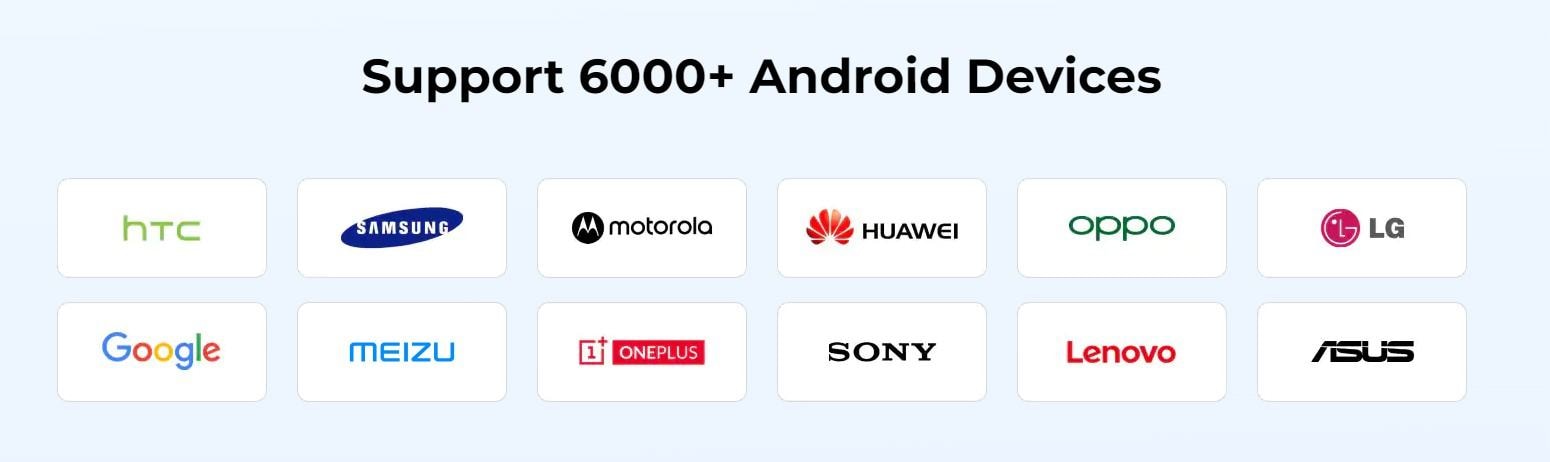
Recognized globally as one of the first and most advanced Android data recovery programs, Dr.Fone boasts an industry-leading retrieval rate. It supports restoring contacts, text messages, high-resolution photos, 4K videos, documents, and social media app data—directly from your smartphone or tablet. Furthermore, it can seamlessly extract data even if your device is broken, damaged, or stuck in a relentless reboot loop. If you want to know more about the broader ecosystem, feel free to visit Dr.Fone - Data Recovery (Android) for extensive features.
Let’s understand how Dr.Fone - Data Recovery directly recovers data for Android devices:
-
Step 1 Launch the Tool
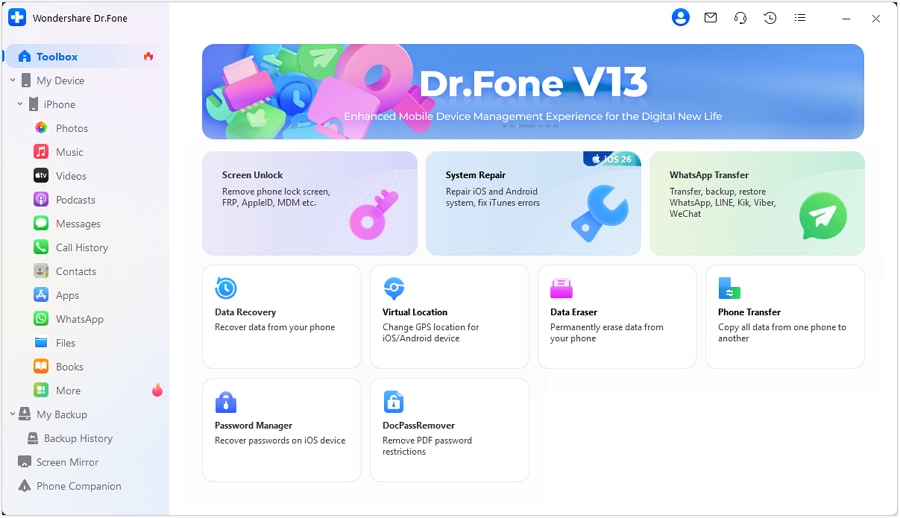
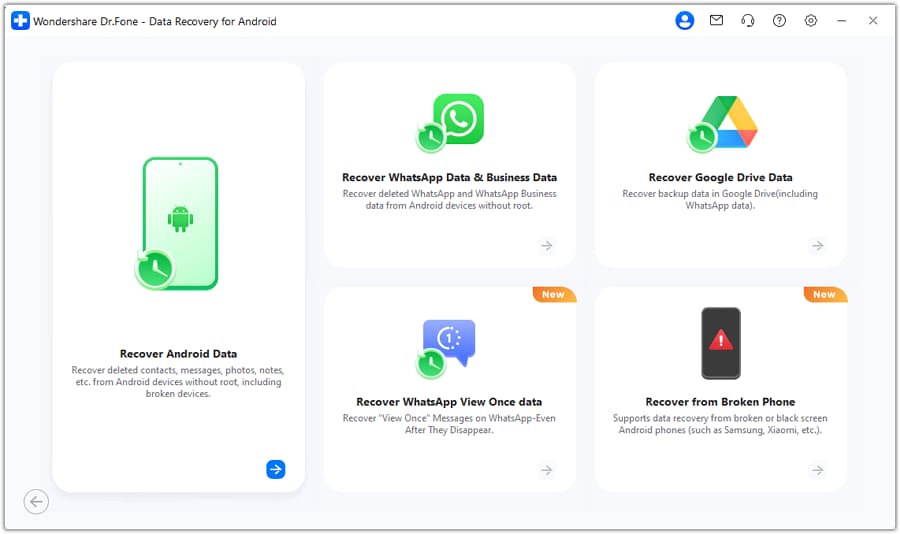
First thing first, Download Dr.Fone - Data Recovery (Android) onto your PC or Mac. Launch the program on your computer once you have completed the standard installation. On the main interface, navigate and choose “Data Recovery” to proceed.
-
Step 2 Connect Your Android Device
Now, connect your Android smartphone or tablet to your PC using a certified USB cord. Ensure that you have enabled "USB debugging" in the developer options on the Android phone. Refer to the image below to see how the connection screen looks once the device is successfully detected by the desktop software:
-
Step 3 Select and Scan the Files
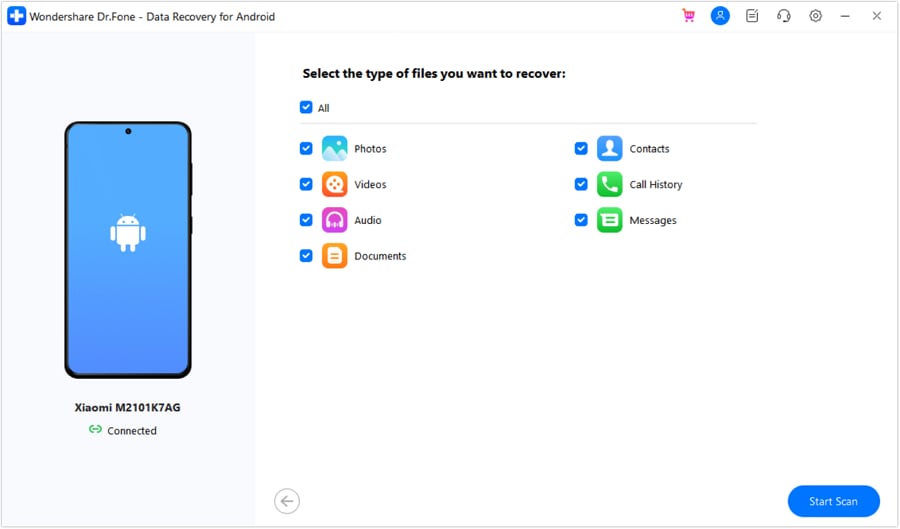
Once connected, Dr.Fone will display all the supported data types it can recover. As a default function, it will pre-select the majority of the files. You can manually check or uncheck the specific data you plan to recover. Subsequently, click the “Start Scan” button for the program to scan and analyze your device’s storage comprehensively. The recovery scan will take a couple of minutes; a few more may be required depending on the size and type of data you want to rescue. Hang on tight till that happens, for good things take some extra time to arrive.
-
Step 4 Preview and Recover Your Data
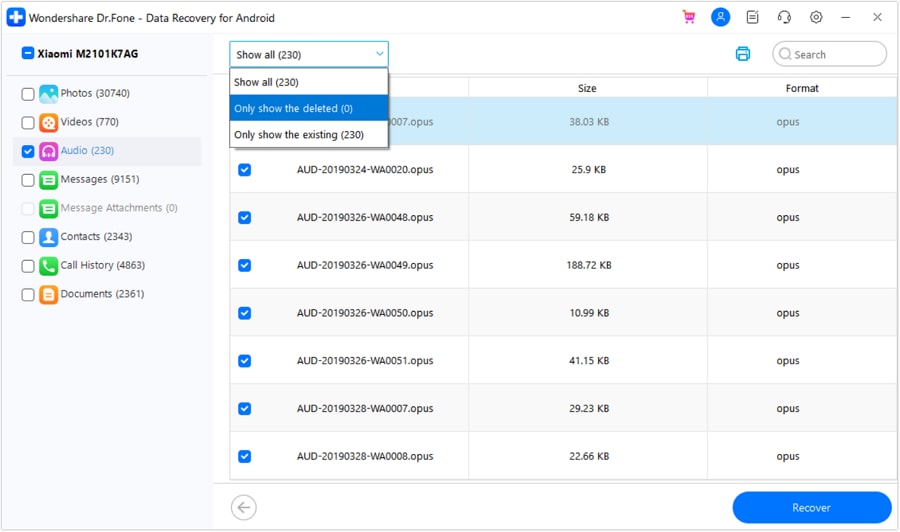
Next, you will be able to preview the data generated in the results window once the scan is completed. Carefully go through the thumbnails and lists to locate your exact files. Once selected, click the “Recover” button in the lower right corner to save the chosen data securely back onto your device or computer hard drive.




Conclusion
Data loss isn’t the end of the world in 2026—thanks to powerful recovery mechanisms and tools like the GT Recovery undelete restore app and desktop suites like Dr.Fone - Data Recovery (Android). While the GT data recovery APK remains an ideal, on-device solution for recovering recently deleted files provided you are operating a rooted Android, Dr.Fone undeniably offers a much safer, more flexible, and comprehensive solution for all Android and iOS users, avoiding the complex requirement of root access entirely.
FAQ
-
1. Is the GT Recovery undelete restore app entirely free?
Yes, the core recovery features of the GT Recovery application are generally free to use. However, you must root your Android device for the deep-scanning capabilities to work effectively. -
2. Can I use the GT data recovery apk on an unrooted phone?
No, while you can install the APK on an unrooted device, it will immediately prompt you for superuser rights upon launching. Without a root environment, it cannot bypass the OS restrictions to scan for deleted sectors. -
3. What file types does the GT Recovery app support?
GT Recovery supports a broad spectrum of data types, including photos, SMS messages, contacts, WhatsApp chats, call logs, documents, video files, and system passwords. It also seamlessly reads FAT, EXT3, and EXT4 file systems. -
4. What is the best alternative to GT Recovery in 2026?
The best alternative for users who prefer not to void their warranties by rooting is desktop software like Dr.Fone - Data Recovery (Android). It scans devices externally, maintaining safety while yielding industry-leading recovery rates.
 Add Wondershare Dr.Fone as a preferred source on Google