Recover photos, messages, WhatsApp, and more — no backup
needed.
Recover photos, messages, WhatsApp, and more — no backup
needed.

 100% Security Verified | No Subscription Required | No Malware

 :
: 
 ChatGPT
 Perplexity
 Gemini
 Claude
 Grok
Grok

How do I retrieve accidentally deleted calendar events on my iPhone? I lost some important events after jailbreaking my iPhone X.
Calendar events are a fundamental tool for any iPhone user aiming to stay organized. Using the built-in Calendar (iCal) app, you can seamlessly create reminders for crucial meetings, track appointments, and plan your comprehensive day-to-day schedule. However, unexpected situations frequently arise where users might accidentally delete specific events or lose their entire Calendar database due to software glitches, iOS updates, or jailbreaking attempts in 2026.
If you actively maintain an iCloud backup, retrieving these missing schedules is generally a straightforward process. But if you have forgotten to enable cloud syncing or local iTunes backups, attempting to recover deleted calendar events can seem incredibly daunting. Fortunately, permanently losing your schedule is highly unlikely. Whether you possess a recent backup or not, there are highly effective strategies available. In this comprehensive guide, we will explore the most reliable methods to help you recover lost calendar data on an iPhone.
In this article
Part 1. Recover Deleted Calendar Event Without Backup
If you prefer not to use iCloud or iTunes backups, or simply forgot to sync your iPhone data recently, you will need a robust third-party solution to recover deleted calendar entries. While there are various options on the market, the most efficient and reliable method in 2026 is utilizing specialized data recovery software like Dr.Fone - Data Recovery (iOS). This industry-leading tool is specifically engineered to deeply scan your iOS device and extract missing files directly from the internal storage.
Beyond simply restoring schedules, this versatile software supports a vast array of file formats. This means if you have accidentally lost other crucial data alongside your calendar—such as photos, videos, contacts, or messages—you can retrieve them effortlessly in the same session. A major advantage of Dr.Fone is its selective recovery feature; you are never forced to restore everything blindly. Instead, you can preview the recovered items, select only the specific events you actually need, and restore them directly to your iPhone or computer without overwriting your current data.
 Recovers data after deletion, crashes, or device damage.
- Supports photos, messages, contacts, WhatsApp, and more.
- Supports all major iPhone, iPad, and iPod models.
- Preview and recover only what you need.
Here is a detailed guide on how to recover deleted calendar events using this powerful iOS recovery toolkit:
-
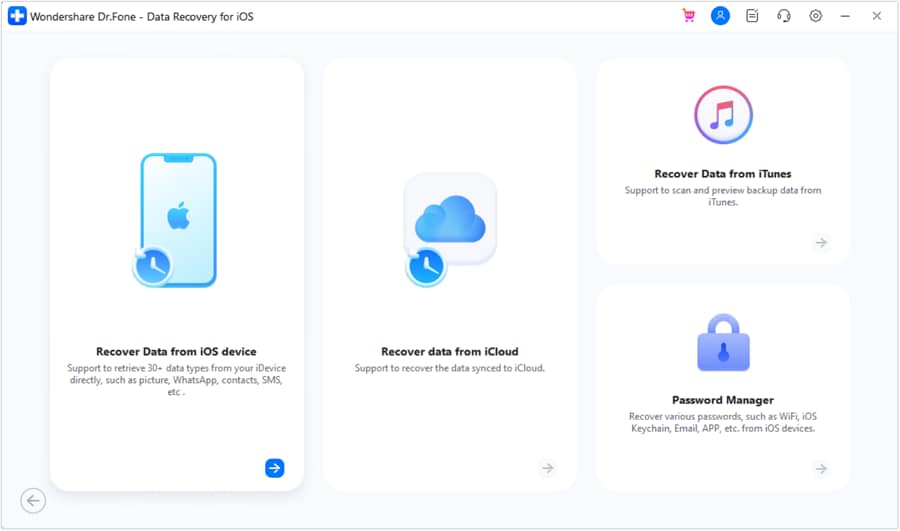
Step 1 Launch the Recovery Tool and Connect Your iPhone
Begin by installing and launching the software on your Windows or Mac computer. From the main interface, navigate to the "Data Recovery" module. Connect your iPhone to the computer using a certified lightning or USB-C cable, ensuring you trust the computer if prompted on your device.
-
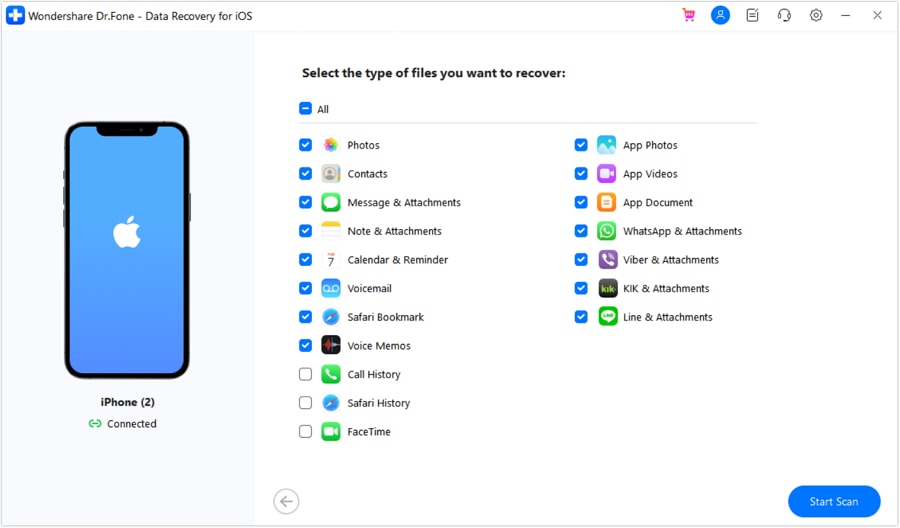
Step 2 Scan Your iPhone for Calendar Events
Wait a few moments for the software to detect and recognize your iPhone. Once connected successfully, a screen will display various data types available for recovery. To save time and focus solely on your schedules, uncheck all options except for "Calendar & Reminder". Click on the "Start Scan" button. The tool will conduct a thorough scan of your internal storage, which may take several minutes depending on the volume of data stored.
-
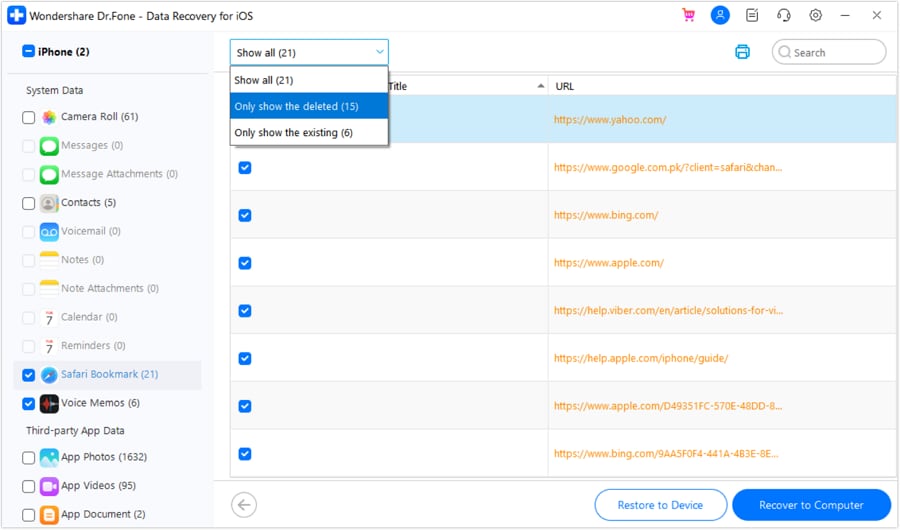
Step 3 Preview and Restore the Deleted Calendar
Upon completion of the deep scan, the interface will present a categorized list of all recoverable calendar entries and reminders. You can preview the details of each schedule. Select the specific events you wish to retrieve, then click "Recover to Computer" to safely store them on your local drive. If you prefer placing them straight back onto your handset, simply choose the "Restore to Device" option.
Following these steps allows you to securely retrieve missing events without risking the integrity of your current iOS data.




Part 2. Recover Deleted Calendar Events With Backup
If you proactively activated iCloud or iTunes synchronization prior to losing your schedules, retrieving your calendar events becomes a matter of restoring a previous backup. Because your device regularly saved snapshots of your data, you will not necessarily need a specialized recovery tool to fetch these entries. However, this official method carries a highly significant drawback: you lose the ability to perform a selective restoration.
Whether you choose to restore from an iCloud cloud backup or a local iTunes archive, the procedure will forcibly overwrite all existing data currently on your iPhone with the older files contained within that backup. Consequently, there is a substantial risk that any recent photos, new contacts, or newly created calendar events added after the backup's timestamp will be permanently erased. Please proceed with caution when using these traditional approaches to recover calendar data.
1. Recover From iCloud Backup
Restoring via iCloud web is a convenient approach if your calendar events were continuously synced to Apple's cloud servers.
-
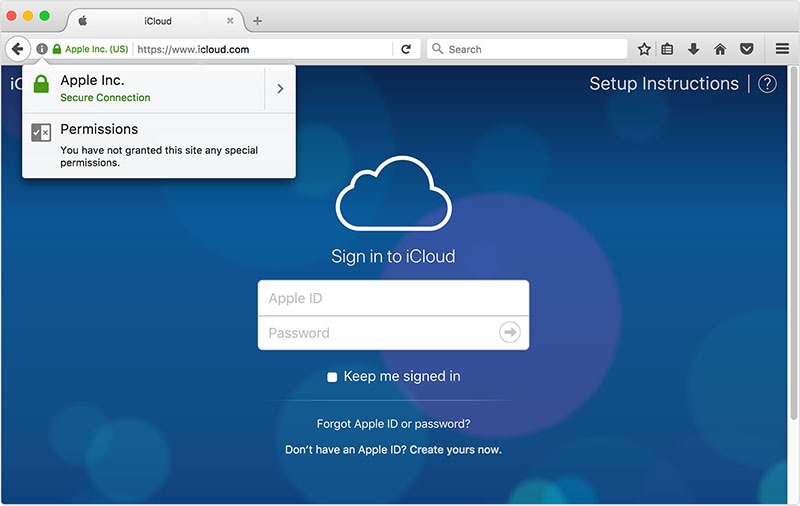
Step 1 Access the iCloud Portal
Open a web browser on your computer and navigate to iCloud.com. Sign in securely using your Apple ID and password credentials to access your centralized cloud dashboard.
-
Step 2 Navigate to Account Settings
Once you are on the iCloud homepage, locate and click on the "Account Settings" or "Settings" option to view your storage details and advanced data management options.

-
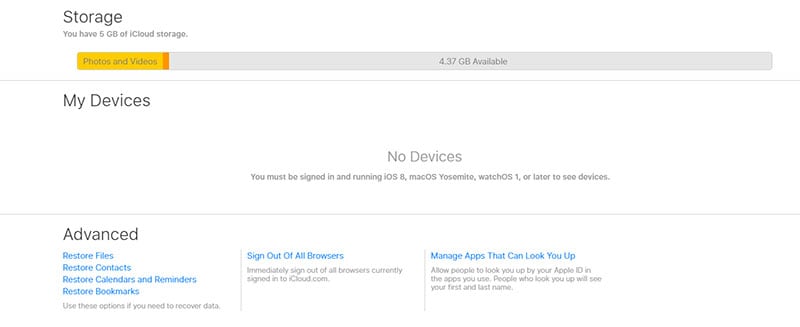
Step 3 Locate Advanced Recovery Options
Scroll down to the bottom of the page until you find the "Advanced" section. From the available options, click on "Restore Calendars and Reminders". This will generate a list of available calendar archives based on different backup dates.
-
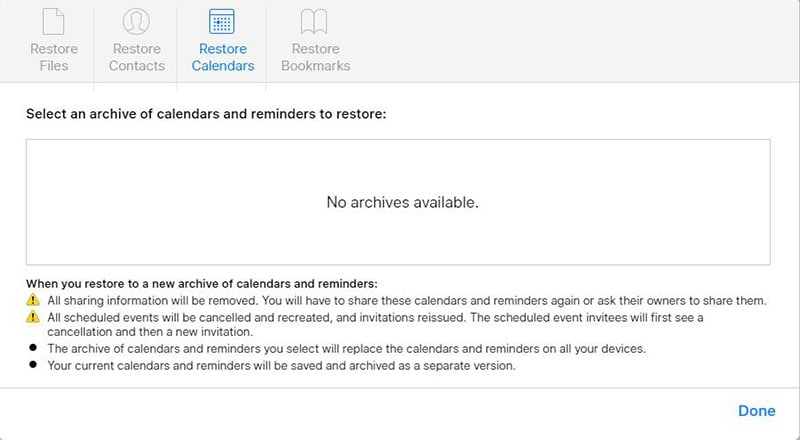
Step 4 Execute the Calendar Restoration
Identify the backup date created right before your schedules went missing. Click the "Restore" button immediately next to that specific archive. Confirm the action by clicking "Restore" once more when prompted. This will automatically replace your device's existing calendar events with the historical data fetched from the iCloud backup.
2. Recover From iTunes Backup
If you prefer maintaining offline backups, you might have utilized iTunes (or Finder on newer macOS versions) to safeguard your files. Recovering through this method requires access to the exact computer where the backup was originally stored.
-
Step 1 Connect and Launch iTunes
Connect your iPhone directly to your PC or Mac using a USB cable. Open the iTunes application (or Finder) and wait for the software to successfully detect your connected device.
-
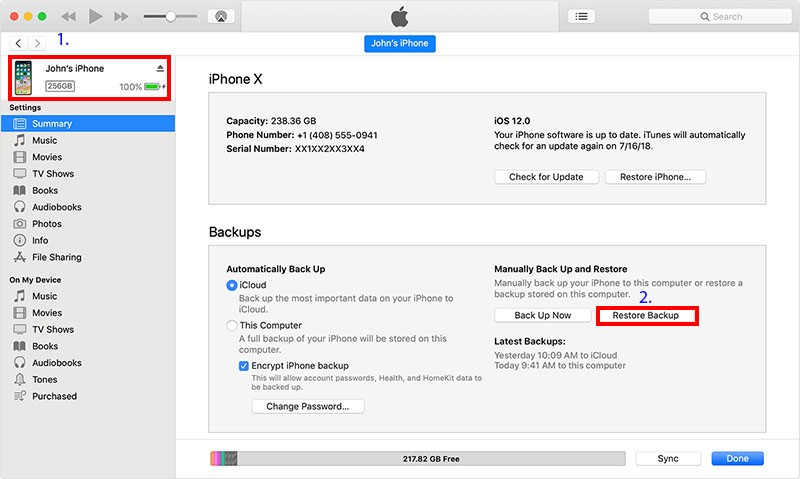
Step 2 Access the Device Summary
Once your iPhone is fully recognized, click on the small "iPhone icon" located near the top-left menu bar. This will redirect you to the main control panel for your device.
-
Step 3 Initiate the Backup Restoration
Navigate to the "Summary" tab on the left-hand side. Under the "Backups" section, locate and click the "Restore Backup" button. Select the most relevant backup file from the dropdown menu and proceed to retrieve your deleted calendar events.

Conclusion
Accidentally losing an important schedule or meeting reminder can be highly stressful, but as outlined above, you have multiple robust strategies to effectively recover deleted calendar events on your iPhone. If you maintain regular iCloud or iTunes syncs, restoring an older backup is a free and viable option, albeit at the significant risk of overwriting your current data. For a safer, more precise approach, utilizing professional desktop tools ensures you can selectively retrieve missing schedules directly from your device's memory without sacrificing any newly created files. By acting quickly and choosing the right method for your specific situation, you can regain control of your personal and professional itinerary seamlessly in 2026.
FAQ
-
1. Can I recover a deleted calendar event without a computer?
Yes, if you have actively synced your schedules with iCloud. You can potentially retrieve them by accessing iCloud.com via a mobile browser, or by fully erasing your iPhone and selecting "Restore from iCloud Backup" during the initial setup process. However, for selective recovery without data loss, a desktop software solution remains the most reliable option. -
2. Where do deleted iPhone calendar events go?
Unlike photos or notes, the native iOS Calendar app does not feature a "Recently Deleted" folder. When an event is deleted, its database index is removed, making the entry invisible. The underlying data remains in the internal storage temporarily until it is overwritten by new device activity. -
3. How long do I have to recover deleted calendar data?
The recovery timeframe depends entirely on device usage. Because deleted data is marked as available space, any new file creation, app installation, or software update could overwrite it. Therefore, it is strongly recommended to attempt recovery as swiftly as possible to maximize your success rate. -
4. What is the best way to selectively recover deleted calendar events?
For selective recovery without the risk of overwriting existing data, utilizing a professional tool like Dr.Fone is highly recommended because it recovers anything without the need of backup. It bypasses the all-or-nothing limitation of iTunes and iCloud, allowing you to preview and extract only the schedules you truly need.
 Add Wondershare Dr.Fone as a preferred source on Google