Recover photos, messages, WhatsApp, and more — no backup
needed.
Recover photos, messages, WhatsApp, and more — no backup
needed.

 100% Security Verified | No Subscription Required | No Malware

 :
: 
 ChatGPT
 Perplexity
 Gemini
 Claude
 Grok
Grok

Accidents happen to the best of us, and Dropping your iPhone in water can be an incredibly stressful experience. Watching your precious device plunge into a pool, sink, or toilet naturally triggers immediate panic about losing irreplaceable data and whether your expensive phone will ever power on again.
However, you do not need to assume the worst just yet. By taking swift, calculated steps, you can significantly increase the chances of saving your hardware from permanent liquid damage.
In this comprehensive guide, we will break down 12 actionable methods to help rescue your device when your iPhone fell in water. If you remain calm, act quickly, and follow these specific protocols, you might successfully revive your handset and preserve the cherished memories stored on its hard drive.
In this article
- Part 1. Is My iPhone Waterproof?
- Part 2. What Will Happen If You Dropped iPhone in the Toilet?
- Part 3. What to do if iPhone Fell in Water?
- Fix 1: Retrieve Your iPhone Quickly
- Fix 2: Power It Off
- Fix 3: Remove Your iPhone's Case
- Fix 4: Wipe Your iPhone Dry
- Fix 5: Eject the SIM Tray
- Fix 6: Let It Air Dry
- Fix 7: Use a Cooling Fan
- Fix 8: Put Your Wet iPhone in Rice
- Fix 9: Use Silica Gel Packs
- Fix 10: Eject Water from the Speakers
- Fix 11: Dismantle Your Device
- Fix 12: Visit an Apple Store
- Part 4. Bonus Tip: iPhone Data Recovery after Water Damage
Part 1. Is My iPhone Waterproof?
It is a common misconception that modern smartphones are entirely waterproof. In reality, iPhones are simply water-resistant. This distinction means they can survive accidental spills, splashes, or being submerged at highly specific depths for a very limited duration. The adhesive seals that provide this resistance also degrade naturally over time.
Here is a detailed breakdown of the official IP ratings and water resistance thresholds for various iPhone generations:
iPhones with IP67 Rating
Devices carrying an IP67 rating are engineered to survive being submerged in up to 1 meter (about 3.3 feet) of fresh water for a maximum of 30 minutes. These older models include:
- iPhone 7 and 7 Plus
- iPhone 8 and 8 Plus
iPhones with IP68 Rating
The IP68 rating represents a higher tier of liquid resistance, allowing devices to withstand deeper submersion (ranging from 2 to 6 meters) for up to 30 minutes. These robust models include:
- iPhone X, XS, XS Max, and XR (Rated for 4 meters)
- iPhone 11, 11 Pro, and 11 Pro Max (Rated for 4 meters)
- iPhone 12 series: 12 Mini, 12, 12 Pro, 12 Pro Max (Rated for 6 meters)
- iPhone 13 series: 13 Mini, 13, 13 Pro, 13 Pro Max (Rated for 6 meters)
- iPhone 14 series: 14, 14 Plus, 14 Pro, 14 Pro Max (Rated for 6 meters)
- iPhone 15 series: 15, 15 Plus, 15 Pro, 15 Pro Max (Rated for 6 meters)
- iPhone 16 series: 16, 16 Plus, 16 Pro, 16 Pro Max (Rated for 6 meters)
Part 2. What Will Happen If You Dropped iPhone in the Toilet?
The moment an electronic device hits liquid, a ticking clock begins. If your iPhone fell in toilet or a deep sink, several severe internal reactions can trigger almost instantly. Understanding these risks highlights why prompt action is mandatory:
- Electrical Short Circuits: Tap water, toilet water, and pool water are packed with minerals that conduct electricity perfectly. If moisture connects two internal contact points that should remain isolated, it will trigger an immediate short circuit, potentially burning out the logic board.
- Internal Corrosion: Even if the phone survives the initial drop, lingering moisture mixed with oxygen will begin corroding the fragile copper and metal components inside. This slow-moving rust acts like a disease, causing components to degrade and eventually fail completely days or weeks later.
- Severe Data Loss: When the logic board or flash storage modules are damaged by short circuits or extensive corrosion, the operating system cannot boot. This directly results in being completely locked out of your photo library, messages, and business files.
- Physical Hardware Damage: Often, dropping a phone into a toilet involves a physical impact against hard porcelain. The combination of a cracked exterior screen and immediate water ingress drastically reduces the device's survival chances.
Because of these compounding threats, acting immediately when your iPhone 14/13 fell in water is the only reliable way to successfully restore water damaged iphone or recover phone data.
Part 3. What to do if iPhone Fell in Water?
If you recently dropped iPhone 14 in toilet, your mind is likely racing with the frantic question: "My iPhone fell in water, what do I do?"
Breathe deeply and resist the urge to violently shake the device or plug it in. Below is a structured, step-by-step emergency protocol outlining exactly what to do if your iPhone fell in water.
Fix 1: Retrieve Your iPhone Quickly
The very first action to take when your iPhone 15 fell in water is to fish it out immediately. Every single second it spends submerged allows more liquid pressure to push past the aging waterproof seals. The faster it leaves the water, the less severe the internal flooding will be.
Fix 2: Power It Off Immediately
The moment your device is in your hand, turn off the power. A live electrical current running through a wet circuit board is the leading cause of permanent hardware death. Powering it down stops electricity flow, minimizing the risk of shorts. Crucially, NEVER attempt to plug a wet iPhone into a wall charger or computer!
Fix 3: Remove Your iPhone's Case
Strip the device of any external accessories. Protective cases trap water tightly against the phone's chassis, speakers, and charging ports. Removing the case allows the device to breathe and prevents stagnant water from slowly seeping into the charging port.
Fix 4: Wipe Your iPhone Dry
Now that the power is off and the case is removed, you need to eliminate surface moisture.

Use a lint-free microfiber cloth or a highly absorbent paper towel to gently dry the exterior. Pay close attention to the crevices around the volume rockers, the power button, the camera lenses, and particularly the lightning or USB-C port.
Fix 5: Eject the SIM Tray
If your iPhone 11 fell in water, it relies on a physical SIM card tray located on the side frame. Ejecting this tray serves a dual purpose: it saves your SIM card from rusting, and it creates a vital ventilation hole for trapped internal moisture to escape. Hold the phone so the SIM slot points downward, allowing gravity to pull water droplets out.

Fix 6: Let It Air Dry Naturally
Patience is arguably the most critical component of liquid damage recovery. Place the bare, powered-down iPhone in a dry, well-ventilated space with low ambient humidity. Do not attempt to boot it up, and definitely do not insert any charging cables. Let it rest peacefully for at least 24 to 48 hours.
Fix 7: Use a Cooling Fan
To safely accelerate evaporation if your iPhone 12 fell in water, utilize moving air. Position a standard desk fan to blow a gentle, cool breeze across the device, specifically aiming the airflow parallel to the charging port. Never use a hot hair dryer, as extreme heat will melt the internal adhesive and warp the battery.
Fix 8: Avoid the Rice Myth (Put Your Wet iPhone in Rice)
If you are searching "How to dry an iPhone that fell in water?", you will inevitably encounter the infamous uncooked rice hack.

While placing a phone in a bag of rice was a popular internet remedy for years, Apple has officially updated its support guidelines warning users against it. Rice is incredibly dusty, and small starch particles can easily become jammed inside the delicate charging port or speaker grills, combining with water to create an impossible-to-remove paste. Skip the rice entirely.
Fix 9: Use Silica Gel Packs Instead
If your iPhone 14 Pro Max fell in water, the scientifically superior alternative to rice is utilizing silica gel desiccants. These small packets (frequently found in new shoe boxes or medication bottles) are explicitly designed to pull moisture from the air safely and cleanly.
- Gather several packets of silica gel and place them into an airtight tupperware container.
- Submerge your wiped-down iPhone among the packets.
- Seal the lid tightly and leave it undisturbed for 48 hours to extract ambient moisture without leaving harmful debris behind.
Fix 10: Eject Water from the Speakers
There are lucky situations where your iPhone fell in water but still works perfectly fine after drying. Even if the display is functional, water may still be clogging the microscopic holes in the speaker mesh, leading to muffled audio. You can download specialized apps or run specific YouTube videos that play low-frequency bass tones. The intense sound wave vibrations physically push lingering water droplets out of the speaker cavities.
Fix 11: Dismantle Your Device (For Advanced Users)
If you dropped iPhone 11 in water and it was submerged for an extended period, surface drying may not be enough. The absolute best way to stop corrosion is to physically open the phone. However, this requires specialized pentalobe screwdrivers and extreme technical precision. Unless you have experience repairing mobile electronics, it is highly recommended to let a professional technician open the chassis, disconnect the battery, and manually clean the logic board with isopropyl alcohol.
Fix 12: Visit an Authorized Apple Store
When DIY methods fail, professional intervention is necessary. Take your water-logged device to the nearest Apple Store or an authorized service provider. While Apple's standard warranty does not cover liquid damage, they possess the diagnostic tools to tell you exactly which components have failed and if the device can be salvaged.
Part 4. Bonus Tip: iPhone Data Recovery after Water Damage
When you have dropped iPhone 12 in toilet, hoping the hardware survives is the immediate reaction. However, the far more significant, long-term anxiety surrounds the precious data trapped inside: irreplaceable family photos, crucial business contacts, and sensitive notes.
If your device refuses to turn on properly, but you desperately need iPhone water damage data recovery, there is a specialized, industry-leading solution tailored for this exact crisis: Dr.Fone - Data Recovery (iOS).
This powerful desktop software provides a streamlined avenue to get back your important data securely. Whether you are dealing with a phone stuck on the Apple logo, facing a black screen of death, or mourning because your iPhone 14 Pro Max fell in water, Dr.Fone's extraction algorithms are engineered to bypass standard OS blocks and salvage your files directly.
 Recovers data after deletion, crashes, or device damage.
- Supports photos, messages, contacts, WhatsApp, and more.
- Supports all major iPhone, iPad, and iPod models.
- Preview and recover only what you need.
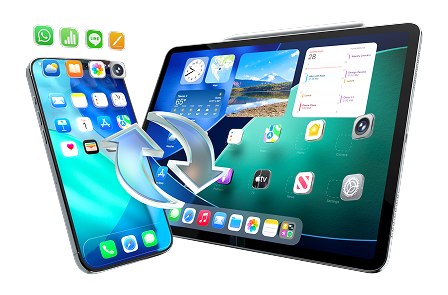
How to Recover Data from Water-Damaged Devices Using Dr.Fone?
If your physical hardware is crippled after your iPhone 14 fell in toilet, follow these precise steps to safely export and recover phone data to your computer:
-
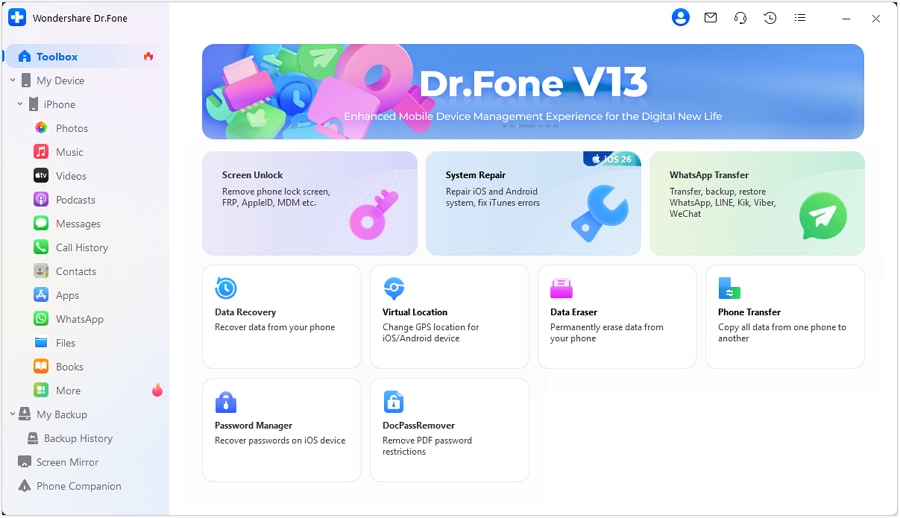
Step 1 Launch Dr.Fone Software
Download and install Dr.Fone on your secure PC or Mac. Open the application and select the "Data Recovery" module directly from the clean, user-friendly home interface.
-
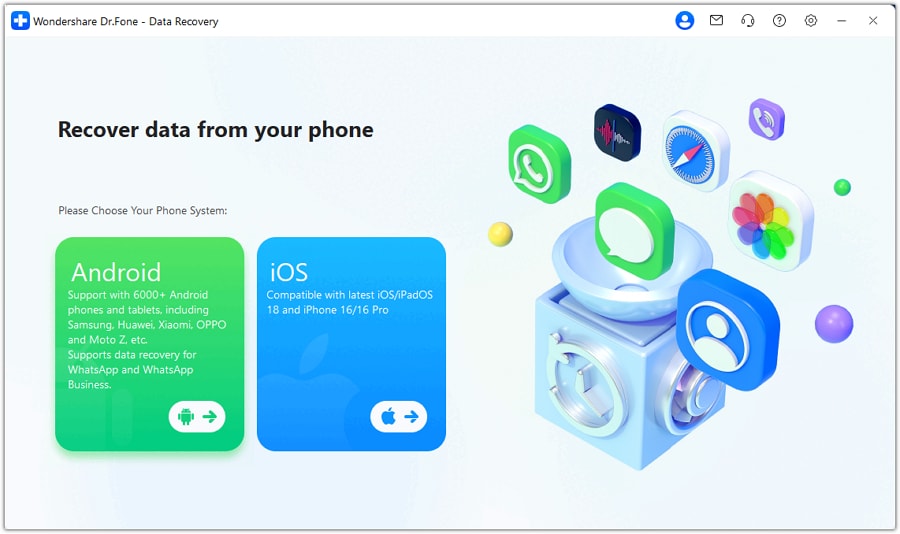
Step 2 Choose the Operating System
The software will prompt you to select the operating system ecosystem of your broken device. Click on "iOS" to proceed with Apple data extraction.
-
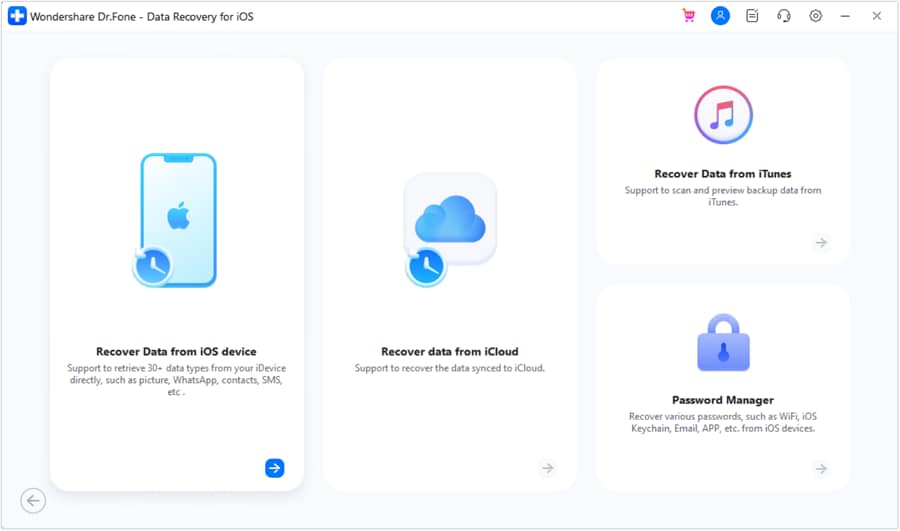
Step 3 Define Recovery Source
Dr.Fone offers excellent versatility, providing three core recovery avenues (Device, iCloud, or iTunes). For direct hardware extraction, select "Recover Data From iOS Device".
-
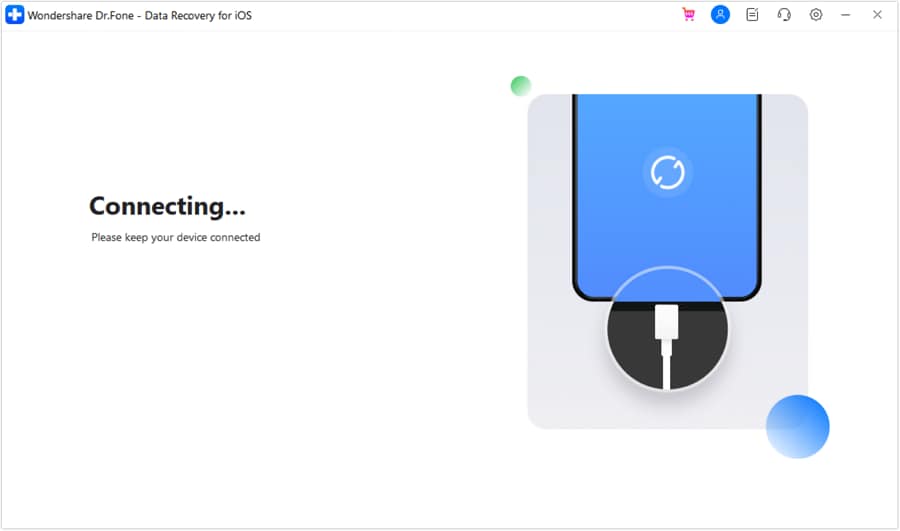
Step 4 Connect the Wet iPhone
Using an original or MFi-certified lightning/USB-C cable, carefully connect your water-damaged device to the computer. Allow a few moments for the software engine to recognize the hardware connection.
-
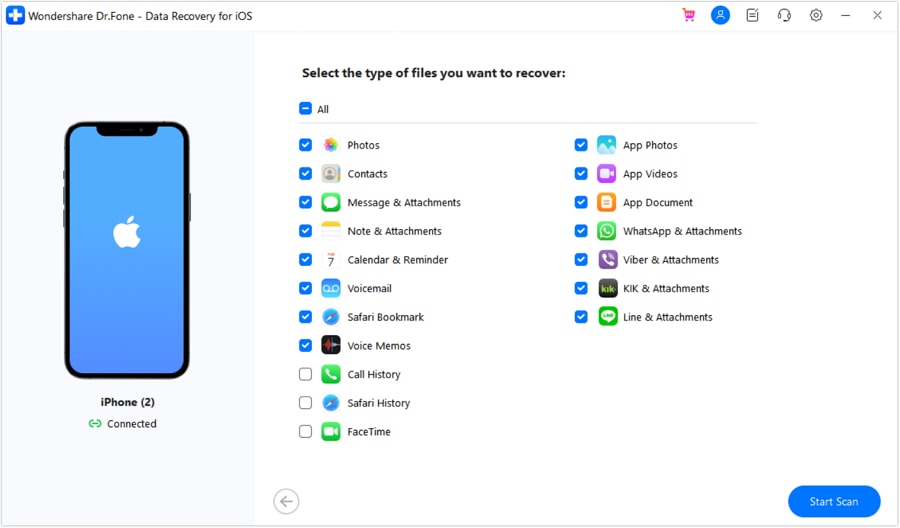
Step 5 Select File Categories
Once the device syncs, you will see an extensive list of supported data types (Photos, Contacts, Messages, WhatsApp chats). Check the boxes for the specific data types you desperately need to recover to speed up the process.
-
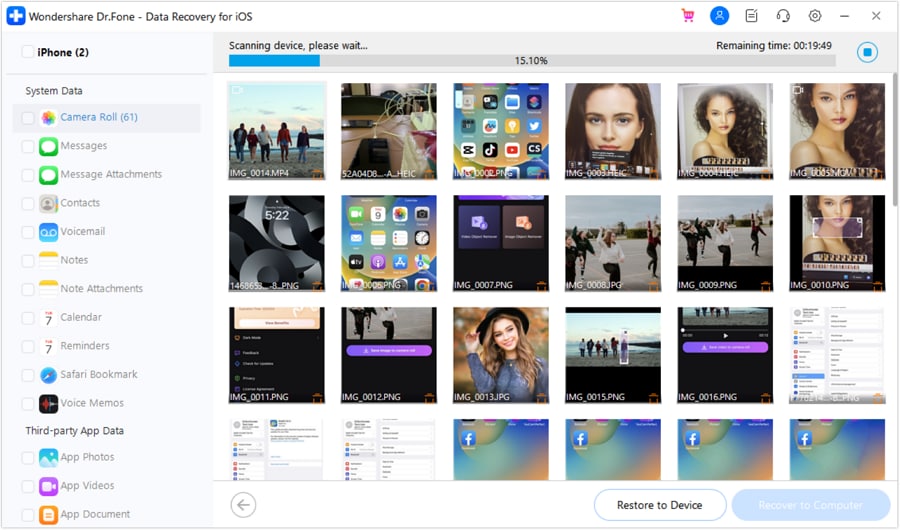
Step 6 Initiate the Deep Scan
Click start, and Dr.Fone will systematically dive into your iPhone's core storage. It will scan thoroughly and present you with a high-definition preview of all recoverable files found in the wreckage.
-
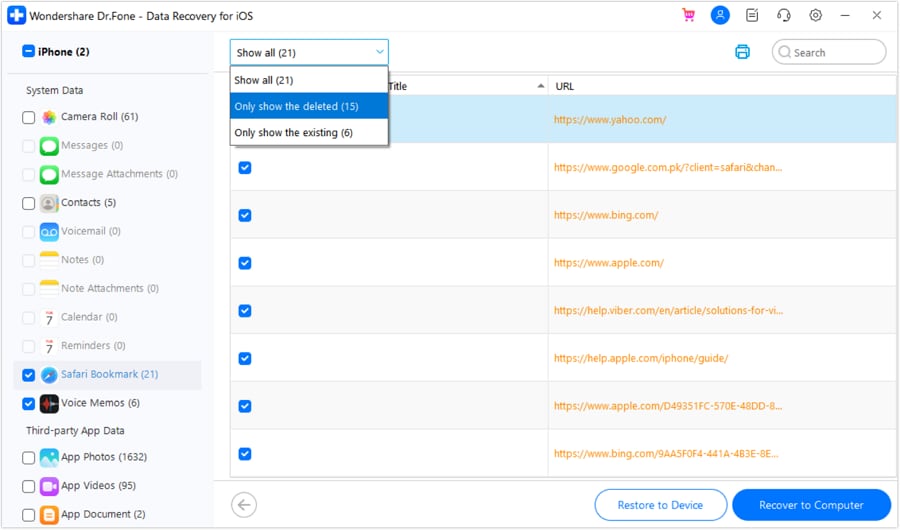
Step 7 Preview and Restore
Take your time to browse the generated preview thumbnails. Select exactly what you want to keep, then hit the "Restore to Computer" button to transfer the fragile data to your local hard drive securely.
-
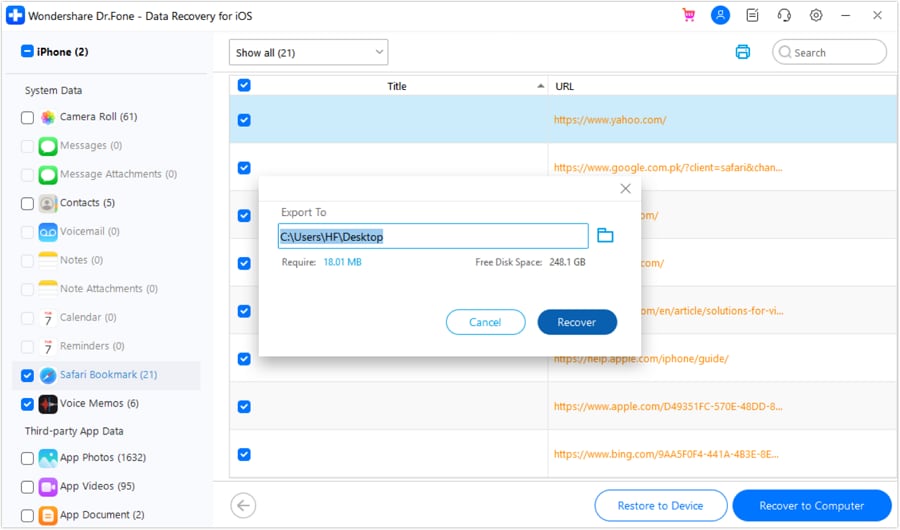
Step 8 Define Export Location
Finally, designate a safe output folder on your PC or Mac. Dr.Fone will finalize the transfer, guaranteeing your valuable files are successfully extracted and protected against further device deterioration.




Conclusion
It is surprisingly common for smartphone users to accidentally subject their essential devices to liquid exposure, whether by dropping them in a lake, a toilet, or spilling a glass of water on a desk. The initial shock is overwhelming, but as this guide has demonstrated, there is no need to panic blindly.
By strictly following these 12 practical, safe fixes—such as powering down immediately, avoiding rice, and using silica gel—you can drastically improve the odds of resuscitating your water-logged hardware. If worst comes to worst and the physical phone cannot be saved, you retain a powerful safety net to extract your memories using Dr.Fone - Data Recovery (iOS).
Now, if your iPhone fell in water, you are armed with the precise knowledge of exactly what you must do, what you should avoid, and how to reliably secure your precious personal data!
FAQ
-
1. Can a completely water damaged iPhone be fixed?
While there is no guarantee, an iPhone severely damaged by liquid can sometimes be repaired by skilled technicians. Success depends heavily on how quickly the phone was powered off, the type of liquid involved (saltwater is highly corrosive), and whether the logic board suffered a short circuit. If the main board is fried, repairing it is often more expensive than replacing the device. -
2. How long should I wait before trying to charge my wet iPhone?
You should wait an absolute minimum of 24 to 48 hours before even attempting to plug in a charging cable. Using a charger while moisture remains in the lightning port will cause an electrical short, permanently frying the internal charging IC chips. Always err on the side of caution and ensure it is completely dry. -
3. Does standard Apple warranty or AppleCare+ cover water damage?
Apple’s standard one-year limited warranty explicitly does not cover liquid damage. However, if you purchased AppleCare+, liquid damage is categorized as "accidental damage." You can have the device replaced or repaired for a relatively low deductible fee, rather than paying the full retail cost for a new phone. -
4. Can I recover phone data if the screen remains completely black?
Yes, in many cases, a black screen only indicates that the display panel is dead, not that the motherboard has failed. If the phone still vibrates, makes sounds, or is recognized by your computer, you can use specialized desktop tools like Dr.Fone Data Recovery to bypass the broken screen and successfully extract your files to a computer.
 Add Wondershare Dr.Fone as a preferred source on Google