Recover photos, messages, WhatsApp, and more — no backup
needed.
Recover photos, messages, WhatsApp, and more — no backup
needed.

 100% Security Verified | No Subscription Required | No Malware

 :
: 
 ChatGPT
 Perplexity
 Gemini
 Claude
 Grok
Grok

My iPhone went into recovery mode after an attempt to upgrade to iOS 18. To get it out of recovery mode, I had to restore it to factory settings. However, all the data I have were lost. Is there a way to get my iPhone data back?
iPhone User
Generally speaking, when you accidentally delete data from your iOS device, it isn't gone forever immediately. Instead, the files become invisible in the interface, and the storage space is marked as available to be overwritten by any new data. Because of this, with the right iPhone recovery software, users are still able to get their precious data back easily.
However, resetting a device is a completely different scenario. Once an iPhone is restored to factory settings, the data and system configurations are entirely overwritten, making direct recovery from the internal memory impossible. Anyone claiming to seamlessly recover iPhone data after a factory reset by scanning the empty device is likely a fraud. Despite this, there is still hope: you can still effectively retrieve your data from an existing iTunes or iCloud backup using specialized tools that extract specific files without wiping your phone again.
In this article
How Can I Recover iPhone Data Lost after Factory Setting Restore?
Using Dr.Fone - Data Recovery (iOS) is highly recommended as a professional solution that helps users perform iPhone data recovery after factory reset securely. This powerful software enables you to bypass the standard limitations of Apple's ecosystem, allowing for targeted file extraction through an iTunes or iCloud backup. Unlike official restoration methods that force you to overwrite the current device data entirely just to check what's inside a backup, Dr.Fone guarantees complete flexibility for all data loss scenarios.
Designed for all generations of iPhones, iPads, and iPods (up to the 2026 models), Dr.Fone features an incredibly intuitive and clear interface that guides users through the recovery process step by step. Whether you need to selectively restore critical business contacts, family photos, important text messages, or other essential files, this toolkit lets you extract exactly what you need.
 Recovers data after deletion, crashes, or device damage.
- Supports photos, messages, contacts, WhatsApp, and more.
- Supports all major iPhone, iPad, and iPod models.
- Preview and recover only what you need.
Part 1: Recover iPhone Data after Restoring via iTunes Backup
If you have routinely synced your device with your computer before the system reset, extracting files is straightforward. Follow these simple steps to selectively recover your lost iPhone data using Dr.Fone after restoring via an iTunes backup:
-
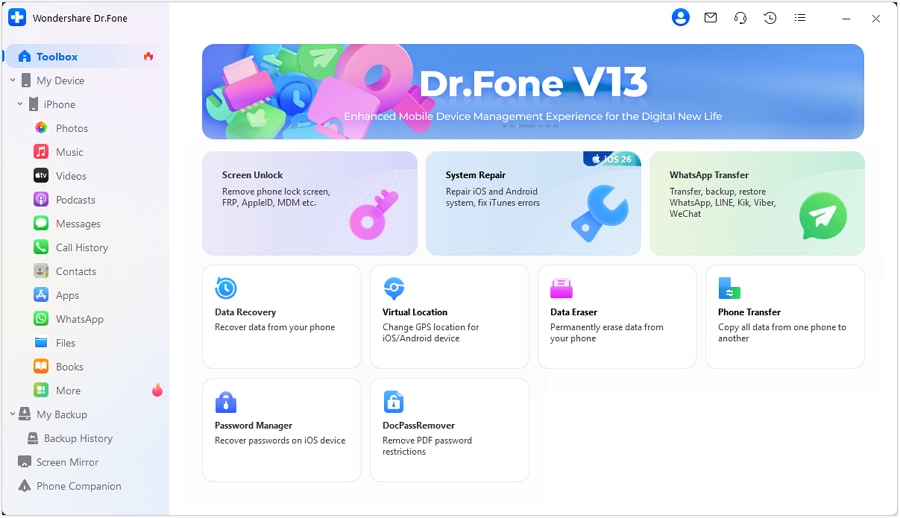
Step 1 Launch Dr.Fone and Access Data Recovery
Begin by downloading and installing Dr.Fone on your Windows or Mac computer. Launch the main program interface and select the "Data Recovery" module from the list of available tools.
-
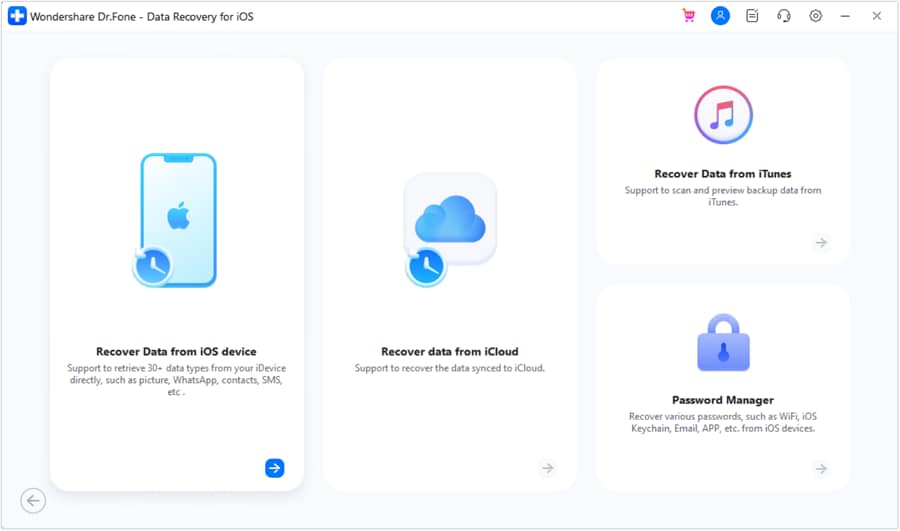
Step 2 Choose the iTunes Recovery Mode
Ensure your iPhone is connected properly (if you plan to restore files directly to the device later), and then navigate to the left sidebar on the next screen to choose "Recover from iTunes Backup File".
-
Step 3 Scan the Preferred Backup File
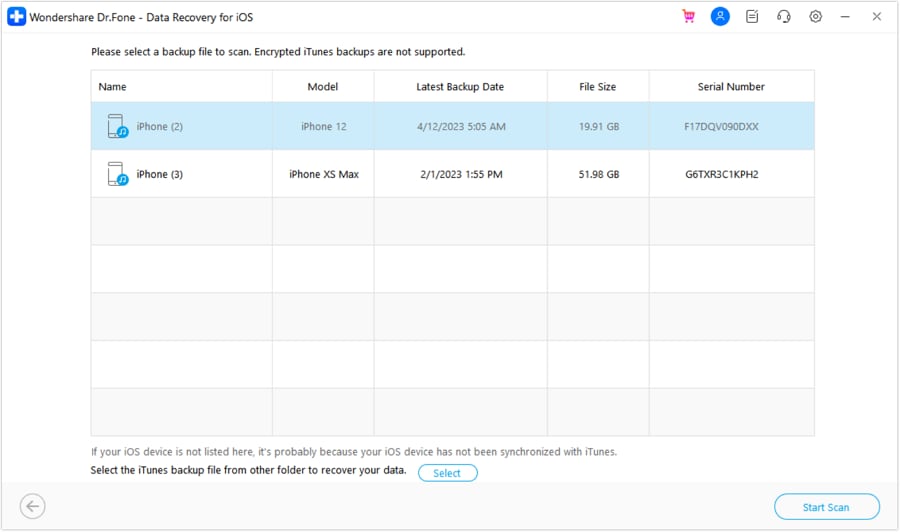
The software will automatically detect all iTunes backup files stored locally. Select the relevant backup file from the generated list, and click "Start Scan" to let Dr.Fone extract the archived contents.
-
Step 4 Preview and Recover Selected Files
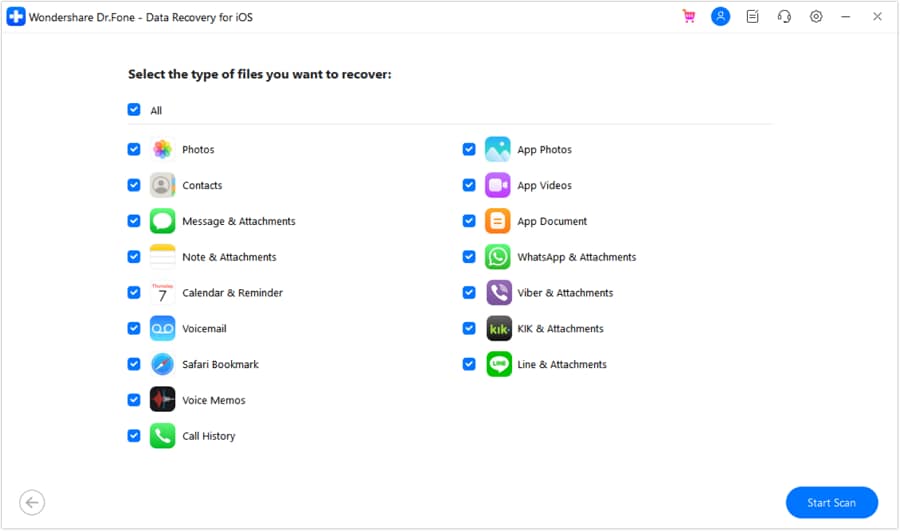
When the extraction scan is completed, the software will categorize everything into folders like Photos, Messages, and Contacts. You can now deeply preview the details and selectively recover any item you want from the scan result directly to your computer with a single click.




 safe & secure
Part 2: Recover iPhone Data after Restoring via iCloud Backup
Many users prefer cloud storage to maintain their device backups. Fortunately, you don't need to completely overwrite your device just to access these cloud files. Follow these simple steps to securely recover your lost iPhone data using Dr.Fone after restoring from an iCloud backup:
-
Step 1 Select iCloud Backup Recovery Mode
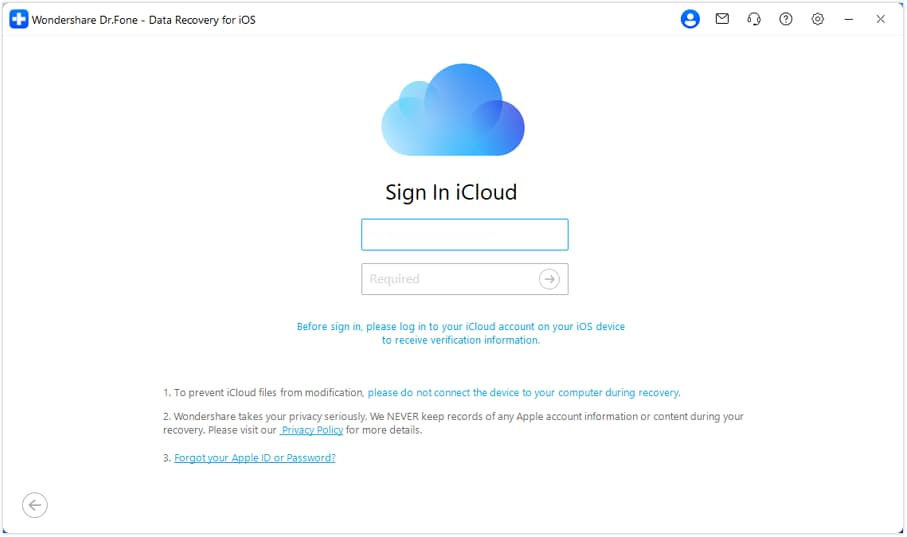
Run the Dr.Fone program, click on the “Data Recovery” module from the dashboard, and select “Recover from iCloud Backup File” from the left-hand menu.
-
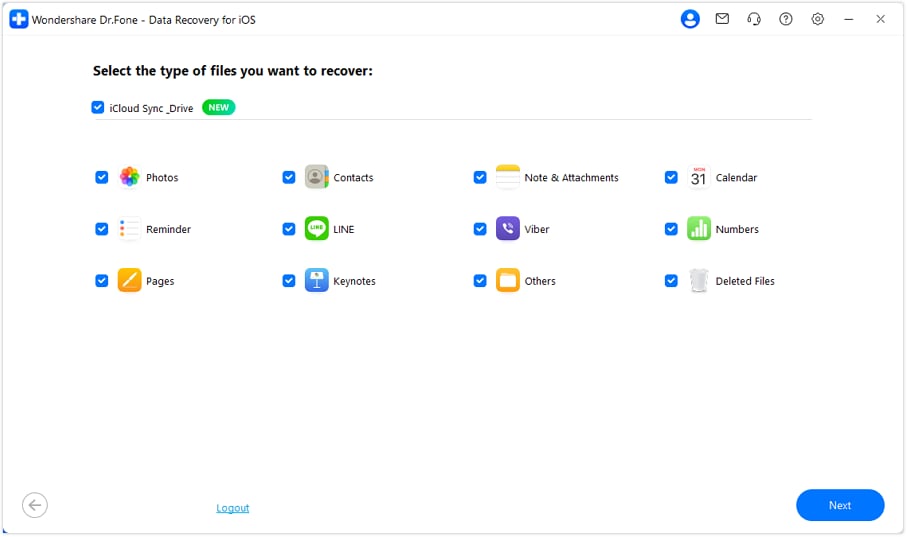
Step 2 Log in and Download Your Backup
Securely log in to your iCloud account using your Apple ID and password. Once authenticated, choose the specific backup file you wish to retrieve from the list and click "Download" to extract it.
-
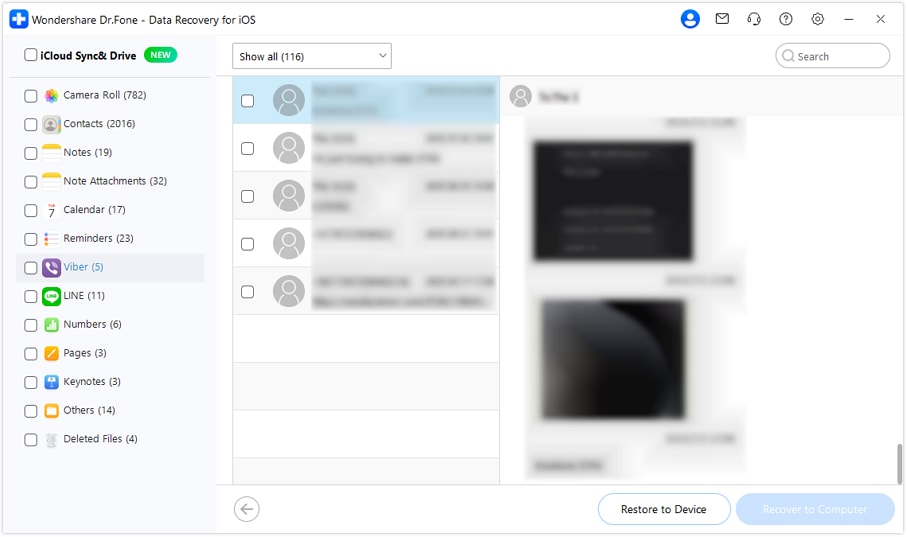
Step 3 Preview and Restore Selected Data
After the download finishes, check the categorized backup content. You can preview photos, read messages, and then tick only the items you want to recover directly to your computer.
You can also check out these targeted tutorials according to the specific file types you need to recover:
- Recover text messages from iPhone>>
- Recover lost photos from iPhone>>
- Recover lost contacts from iPhone>>
Conclusion
In summary, while a forced factory reset completely erases local data from your iOS device, achieving successful iPhone data recovery after factory reset is entirely possible as long as you have synced your data to iTunes or iCloud previously. Since direct hardware recovery from the wiped device memory is fundamentally restricted by system encryption and overwriting, leveraging flexible software like Dr.Fone allows you to safely access those cloud or local backups. Understanding how to recover iPhone data after factory reset using these non-destructive extraction methods ensures you protect your valuable information without constantly resetting your device just to check a backup file.
 safe & secure
FAQ
-
1. Can I recover data from a factory-reset iPhone without any backup?
Unfortunately, no. A factory reset securely overwrites the encryption keys and storage blocks on an iPhone. Unlike standard deletion, this process permanently scrambles the data, meaning direct recovery without a prior iCloud or iTunes backup is completely impossible. -
2. Does restoring an iCloud backup overwrite my current device data?
Yes, if you use Apple's official method through the iOS setup screen, restoring from iCloud will wipe your current data and replace it entirely with the backup contents. However, using third-party extraction tools allows you to view and download specific files to your computer without erasing your iPhone. -
3. Where are iTunes backup files stored on my computer?
On a Windows PC, iTunes backups are generally stored in the \Users\(username)\AppData\Roaming\Apple Computer\MobileSync\Backup directory. On a Mac, you can find them in the ~/Library/Application Support/MobileSync/Backup folder. Extraction software can automatically locate these folders. -
4. Why can't Apple retrieve my data after a factory reset?
Apple designs iOS with strict user privacy and hardware encryption standards. When a reset occurs, the master encryption keys are destroyed. Apple does not retain a backdoor to decrypt or reverse this process, which ensures that a wiped phone cannot be compromised by anyone, including Apple themselves.
 Add Wondershare Dr.Fone as a preferred source on Google