Recover photos, messages, WhatsApp, and more — no backup
needed.
Recover photos, messages, WhatsApp, and more — no backup
needed.

 100% Security Verified | No Subscription Required | No Malware

 :
: 
 ChatGPT
 Perplexity
 Gemini
 Claude
 Grok
Grok
Misplacing or having your Samsung smartphone stolen in 2026 can be a remarkably stressful ordeal. Today, our mobile devices serve as digital vaults that house massive amounts of sensitive and irreplaceable information, ranging from precious family photos to critical professional contacts and confidential messages. When a device goes missing, the immediate hardware replacement cost is often overshadowed by the urgent need to recover data from a lost Samsung phone.
Thankfully, extracting your valuable files and memories is highly achievable, provided you have established robust cloud backup routines. If you proactively enabled digital syncing mechanisms before the incident, you are in a highly advantageous position. This updated guide will explain the most effective procedures to retrieve essential assets from your missing Samsung device remotely. We will dive deep into solutions leveraging both Samsung's built-in tracking ecosystems and Google's ubiquitous cloud synchronization. These step-by-step methods cater to multiple crisis scenarios, empowering you to choose the exact path that fits your current predicament.
In this article
Part 1. Is Data Recovery from a Lost Samsung Phone Actually Possible?
The short answer is yes, recovering data from a missing or stolen Samsung mobile device is definitively possible in 2026, though it hinges on a strict prerequisite: you must have activated an automatic cloud backup mechanism prior to the moment the phone vanished. Modern syncing services, primarily those integrated by Samsung and Google, work silently in the background to mirror your local files onto highly secure, remote cloud servers. If such a backup profile exists, you can effortlessly access your dashboard and port that data over to a replacement smartphone or download it directly to a computer.
Conversely, if you entirely bypassed cloud backup setups and maintain no physical backups on external hard drives, attempting remote data recovery becomes technologically impossible. Because you cannot physically tether a cable to the device to run data extraction software, files confined strictly to the internal memory remain trapped on the hardware.

Part 2. What Kinds of Data Can Be Recovered from a Lost Device?
The specific categories of information you can successfully retrieve are dictated entirely by the parameters you set within your cloud backup tools. Various platforms handle distinct types of data. Consequently, what you can recover aligns with the services active on the device at the time of loss. For instance, addressing lost pictures on samsung phone requires that a media-specific cloud app was quietly archiving your gallery.
1. Through Samsung Cloud
Typically handles the heavy lifting for system-level configurations. You can recover call logs, SMS text messages, contact lists, calendar events, clock alarms, and specific proprietary app data seamlessly.
2. Through Google Photos & Account Sync
Google Photos specifically targets multimedia, acting as a vault for your images and videos. Meanwhile, general Google Account sync securely archives third-party app data, Wi-Fi passwords, and universal system settings.
Bear in mind that files kept exclusively on an unencrypted MicroSD card or locked deeply within local storage folders that fall outside the backup umbrella cannot be remotely revived. Regularly reviewing your sync intervals ensures all critical segments remain safe.
Part 3. How to Remotely Recover Data from Your Lost Samsung Phone
Having established the groundwork regarding cloud dependency, we can dive into actionable, step-by-step techniques to fetch your information. These proven approaches will walk you through the process of connecting to your digital safety nets using an alternative web browser.
Method 1: Use Samsung's Find My Mobile Service
Samsung’s proprietary "Find My Mobile" feature is an incredible asset not merely for pinpointing GPS locations or locking screens, but also for triggering a remote data sync. This functionality serves as an invaluable emergency lifeline. To execute this, the missing handset must be powered up, maintain an active Wi-Fi or cellular connection, and have previously granted permissions for "Remote unlock" alongside the tracking protocols.
Follow these detailed steps to successfully recover data from a lost Samsung phone using Samsung's ecosystem:
-
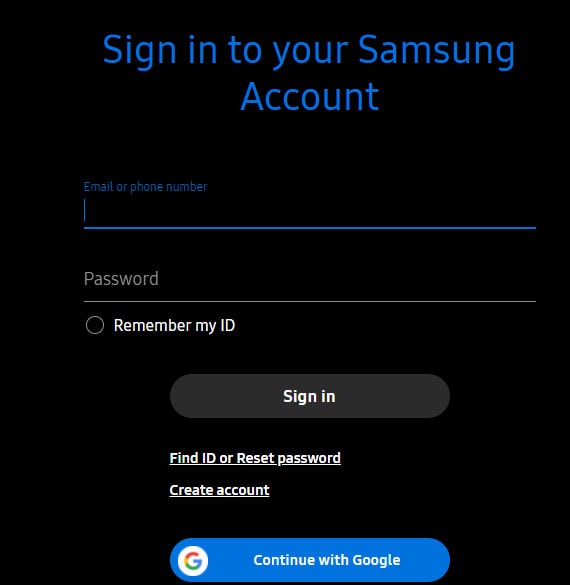
Step 1 Access the Official Web Portal
On a secure computer or secondary mobile device, navigate to the Find My Mobile website and initiate a login session. You must supply the precise Samsung account credentials that were linked to the absent phone.
-
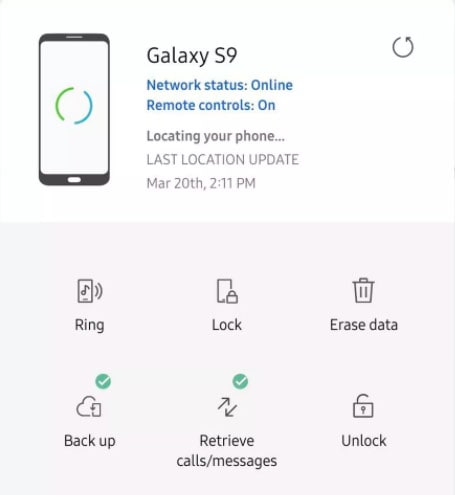
Step 2 Locate the Remote Backup Command
Upon a successful login, the interface will generate a geographical map displaying your smartphone's most recent ping. Look towards the right-hand panel, which houses an array of remote management commands. Identify and click on the "Backup" functionality.
-
Step 3 Select the Desired Data Categories
A comprehensive prompt will populate the screen, categorizing all transferable data types supported by Samsung Cloud (including voice recordings, messages, contacts, and clock settings). Toggle the checkboxes for every element you urgently need to preserve. You might be prompted to fulfill a two-factor authentication (2FA) requirement for security purposes.
-
Step 4 Execute Backup and Wait
Once you are satisfied with your selections, press the primary "Backup" button at the bottom of the interface. The remote syncing protocol will commence. Allow ample time for completion, as transfer speeds depend entirely on the lost phone’s network stability.
-
Step 5 Restore the Files to a New Device
With the fresh backup secured in the cloud, booting up a replacement Samsung device becomes a breeze. Simply sign into the exact same account, navigate through `Settings > Accounts and backup > Restore data`, and pull your newly saved files directly into the fresh handset.
- Allows you to trigger an emergency backup long after the physical hardware is lost.
- Leverages a highly secure, native framework verified directly by Samsung.
- Capable of archiving intricate system settings, Wi-Fi parameters, and deep call histories.
- Absolutely requires the missing smartphone to be powered on and actively connected to the internet.
- The Find My Mobile toggle must have been proactively switched on within the device’s security settings beforehand.
Method 2: Retrieve Photos and Videos Using Google Photos
If your foremost priority involves rescuing your captured memories, tapping into the Google Photos ecosystem is your most reliable strategy. Provided you activated the "Backup & sync" toggle prior to the incident, this universal cloud vault silently uploads high-quality copies of your media. For countless users facing the anxiety of lost photos on samsung phone, this method has proven to be an absolute lifesaver.
Whether you need to know how to retrieve photos from a lost phone regarding a Samsung model, or even if you are searching for insights on how to retrieve photos from lost huawei phone, the Google Photos protocol remains identical across all Android environments.
-
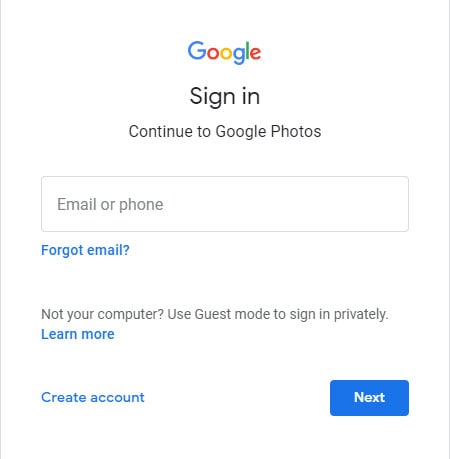
Step 1 Log In to the Google Photos Web Dashboard
Launch a secure web browser from any desktop or laptop computer and head directly to https://photos.google.com/. Proceed to sign in employing the same primary Google credentials linked to the lost hardware.
-
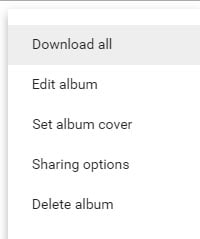
Step 2 Mass Select and Download Your Media Assets
Following a successful login, the dashboard will populate your entire synced media library chronologically. You can cherry-pick specific images or highlight vast blocks of time. To batch select efficiently, click the first photo, hold down the `Shift` key on your keyboard, and click the final photo in your desired range. Once appropriately highlighted, click on the vertical three-dot menu located in the top-right corner of the interface and hit "Download". The system will neatly compress your memories into a ZIP file and transfer them directly onto your computer's local hard drive.
Part 4. What If You Find Your Lost Samsung Phone (But Data is Wiped)?
Occasionally, incredible luck strikes, and you miraculously manage to track down your lost device. However, this relief is sometimes shattered if the person who found the phone aggressively executed a factory reset to bypass passcodes or prepare it for resale. While this act wipes the visible operating system clean, all hope is not lost. Even if you neglected to establish a cloud backup beforehand, a factory reset does not immediately destroy binary data—it simply marks the space as available for future overwriting. In this precise, localized scenario, deploying professional-grade data recovery software becomes imperative.
For these intense hardware recovery missions, we strongly endorse Dr.Fone - Data Recovery (Android). Built with highly advanced scanning algorithms, this desktop utility deeply probes the unallocated sectors of Android internal memory to resurrect files that standard interfaces deem permanently destroyed. It can thoroughly pull deleted text logs, contact cards, multimedia files, WhatsApp chat histories, and PDF documents straight from the silicone.
Dr.Fone boasts deep compatibility with over 6,000 distinct Android iterations. Whether you recovered a modern flagship Galaxy S-series or an aging mid-range model, this solution equips you with industry-leading extraction technology tailored to reclaim lost assets efficiently.
 Scan Android phones and tablets directly.
- Preview and recover only what you want.
- Supports WhatsApp, photos, videos, contacts, and more.
- Works with 6000+ Android devices.
By connecting your found (but wiped) device to a computer, you can leverage Dr.Fone's powerful scanning capabilities. Here is the operational roadmap for extracting deleted elements from a factory-reset Android device:
-
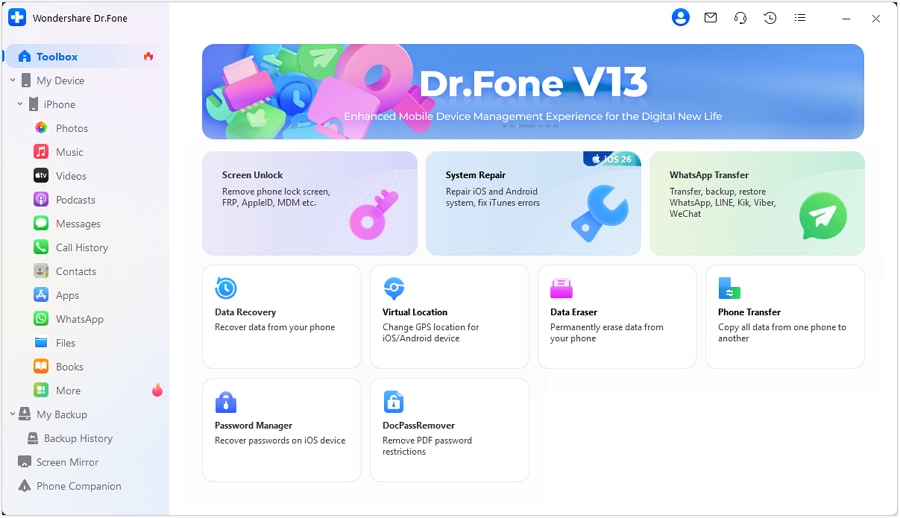
Step 1 Install and Launch the Dr.Fone Suite
Begin by downloading and securely installing the Dr.Fone software package onto your primary Windows PC or Mac. Boot up the main application and actively click on the "Data Recovery" module clearly visible on the primary dashboard interface.
-
Step 2 Tether Your Recovered Phone via USB
Use a certified USB data cable to physically connect your wiped Samsung handset to the computer. For the software to communicate with the phone's deepest storage layers, you are required to toggle USB Debugging within the Android developer settings. Dr.Fone supplies exceptionally clear on-screen graphics to help you activate this seamlessly.
-
Step 3 Filter the Desired File Types
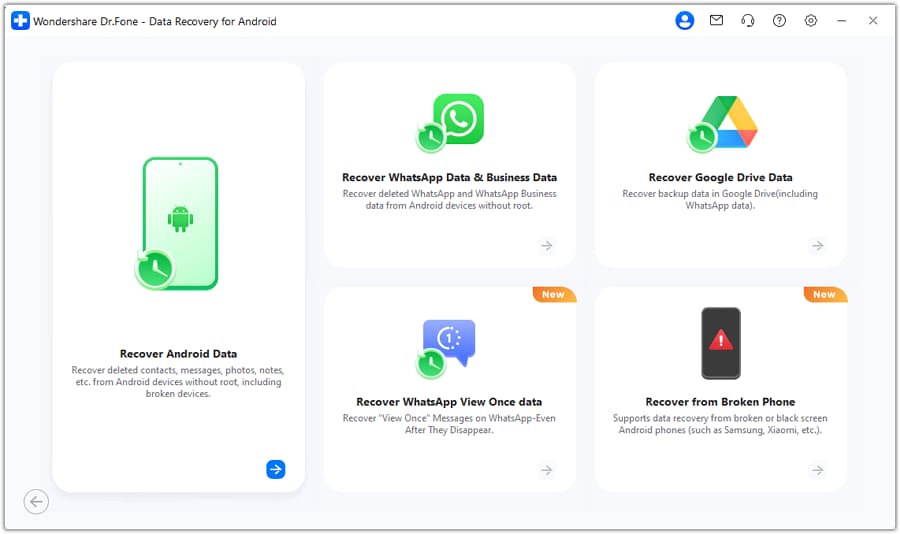
Upon a successful physical connection, the program window will dynamically generate a comprehensive checklist of all recoverable file variants. To dramatically increase processing efficiency, uncheck categories you have zero interest in, focusing purely on what you crucially require (such as media galleries or chat logs).
-
Step 4 Authorize and Initiate Deep Analysis
Proceed by clicking the "Start Scan" trigger. The software engine will methodically comb through your phone's storage arrays hunting for fractured file remnants. Depending on the storage capacity and processing power of the handset, this deep analysis may take several minutes. Patience during this phase is paramount.
-
Step 5 Preview Data and Recover to PC
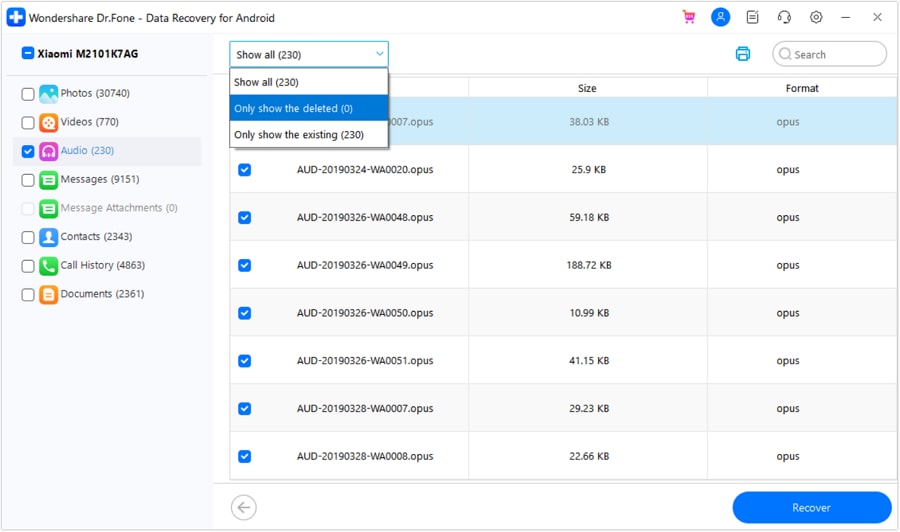
Once the intensive scan finalizes, the interface shifts into a detailed preview pane. All located files are neatly compartmentalized. Browse through the thumbnails to verify file integrity, actively select the specific data points you wish to keep, and hit "Recover to Computer" to transfer these digital survivors to the safety of your hard drive.
This localized recovery framework delivers an incredible fighting chance for individuals attempting to reclaim precious documents that unfortunately missed the cloud backup cycle.




Conclusion
While discovering your smartphone has been lost or pilfered is undeniably distressing, accepting that your private data is gone forever does not have to be the ultimate outcome. Successful retrieval hinges on diligent foresight. By actively employing services like Samsung Cloud and Google Photos, you weave a formidable digital safety net ensuring seamless remote data recovery in emergencies. Navigating Find My Mobile for one final emergency sync, alongside leaning heavily on Google Photos for media extraction, represent top-tier strategies for regaining digital autonomy. Furthermore, in circumstances where the device is retrieved albeit maliciously wiped, integrating advanced scanning mechanisms via tools like Dr.Fone - Data Recovery grants unparalleled peace of mind. Prioritize updating your backup configurations today to shield your future digital footprint effectively.
FAQ
-
1. Can I recover data if my lost Samsung phone is currently powered off?
No, remote capabilities such as initiating an emergency backup command through Samsung Find My Mobile are fundamentally severed when the hardware is shut down. The phone must physically maintain power and a steady internet connection to process incoming remote directives. Nevertheless, any information fully synchronized to your Google or Samsung cloud drives moments before the device turned off remains safely accessible via web browsers. -
2. How can I remotely trigger a wipe on my lost Samsung to shield confidential files?
You can seamlessly execute this through Samsung's Find My Mobile portal. Simply sign into the dashboard, authenticate your lost phone's signature, and hit the "Erase data" command. This action initiates an immediate factory reset sequence, purging internal memory to prevent identity theft. Be incredibly cautious—this procedure is irreversible, meaning it should only be leveraged if recovering the physical device is deemed impossible. -
3. Does initiating a factory reset permanently eradicate internal storage forever?
Executing a factory reset destroys the software pathways bridging the operating system to the saved data, giving the illusion of an empty device. Crucially, the foundational binary data is not vaporized instantly. It lingers dynamically in the unallocated space until fresh installations aggressively overwrite it. That specific vulnerability window is exactly what allows professional data extraction software like Dr.Fone - Data Recovery (Android) to piece together missing files on devices that have not been actively used post-reset. -
4. Moving forward, what is the safest preventative measure against permanent data loss?
The ultimate preventative measure requires you to heavily invest in automated cloud integration. Within your smartphone's settings menu, guarantee both your primary Samsung Profile and central Google Account are configured to sync continuously without manual prompts. Verify that Google Photos has "Backup & sync" activated over Wi-Fi, and confirm Samsung Cloud is routinely archiving contacts and textual conversations. Cultivating this frictionless background safety measure is the definitive insurance policy for digital assets in 2026.
 Add Wondershare Dr.Fone as a preferred source on Google