Recover photos, messages, WhatsApp, and more — no backup
needed.
Recover photos, messages, WhatsApp, and more — no backup
needed.

 100% Security Verified | No Subscription Required | No Malware

 :
: 
 ChatGPT
 Perplexity
 Gemini
 Claude
 Grok
Grok

My Samsung Galaxy dropped on the floor and the screen is completely shattered and black. How can I recover messages from broken Samsung devices before sending it in for a factory repair?
A common concern among Samsung users
Data loss can be a real nightmare for all modern Android users. When disaster unexpectedly strikes, it entails not only the sudden emotional loss of valuable digital memories and critical SMS text messages but also the heavy expenditure of time and money in the tedious recovery process. While there are a bunch of sneaky culprits working behind daily data loss—such as accidental user deletion, unexpected malicious virus attacks, or systemic formatting errors—severe physical hardware damage remains the most critical threat of all.
Instances like heavily shattered displays, catastrophic water damage, and extreme physical impact can instantly lead to a broken phone ecosystem. If you don’t back up your internal device data regularly before these unfortunate hardware accidents happen, you strongly risk losing your business contacts, gallery photos, and crucial text messages forever. So, here in this comprehensive 2026 technical article, we have thoroughly compiled a meticulously verified list of highly efficient methods that offer a smooth, deeply practical solution on how to retrieve data from broken phones. As an added technical bonus, we will share highly valuable preventive tips and tricks to thoroughly ensure a successful data recovery on any Android platform.
In this article
Part 1: How To Access Samsung Phone With a Broken Screen
As a dedicated Samsung Galaxy user, you might have unfortunately experienced various frustrating physical situations with your expensive smartphones, such as completely broken AMOLED screens, system locked interface devices, or extensive liquid water damage. If your Samsung phone is heavily physically damaged but inherently still somewhat responsive to minor touch inputs or OS system commands, the absolute simplest, most direct method to recover primary data from your Samsung device is by securely utilizing your desktop File Explorer.
When you securely connect your damaged mobile phone to a previously trusted desktop computer, you will gain immediate, direct access to its internal file storage architecture. From there, you can smoothly and securely transfer sub-folders, rich media files, and downloaded document files from your phone directly to the computer's hard drive to safely access and back up your surviving data.
Carefully follow these detailed procedural steps for Samsung broken screen data recovery via a direct MTP USB transfer:
-
Step 1 Connect the Device to the PC
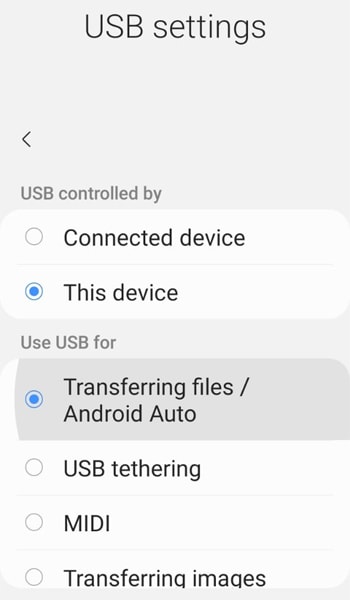
Firmly connect the broken Samsung device to your primary PC using a reliable original USB cable, then gently unlock the device interface if physically possible and manually allow the computer to openly access its internal memory storage. You will explicitly need to select “Transferring files” from the notification drop-down lists in the Android USB connection settings.
-
Step 2 Navigate to Internal Storage
Once the secure connection is successfully established and instantly recognized by Windows OS, locate the standard "This PC" directory index in your File Explorer. Intuitively navigate precisely through [your Samsung device name] > "Internal shared storage" to thoroughly view your root user folders.
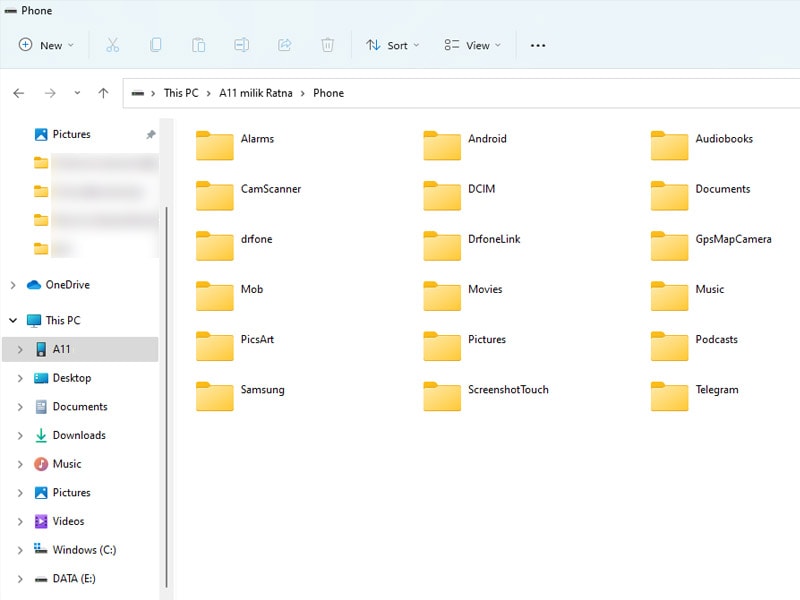
-
Step 3 Copy and Save Your Data
Manually select the vital multimedia files, WhatsApp attachments, or PDF documents from your phone directory that you urgently need to safely store on your computer desktop. You can simply drag-and-drop the globally selected items or employ the traditional right-click copy-and-paste command method to rapidly relocate them to a secure desktop folder.
Now your easily accessible core phone data is securely stored on your computer's local hard drive. Once you have your expensive phone screen professionally fixed at a certified repair center, you can seamlessly plug it in and transfer it right back to your freshly repaired device.




Part 2: How to Retrieve Data from Broken Screen Android
If you genuinely wish to rigidly ensure the absolute safety of your SMS data before formally seeking professional hardware assistance, comprehensively understanding how to forcibly retrieve your restricted data using advanced PC utilities is incredibly important. The simple USB drag-and-drop method will systematically fail if your shattered touch panel is utterly dead.
The specialized technical methods for recovering complex data from an Android smartphone with a completely broken screen may wildly differ directly depending on your particular device's current chipset state. For a bricked phone with a noticeably more severe hardware condition—such as a blacked-out AMOLED display or zero touch input detection—you can confidently and seamlessly rely on Wondershare Dr.Fone to instantly resolve this agonizing problem. Dr.Fone offers significantly more advanced extraction solutions to rapidly recover essential database files from your effectively dead phone.
You can directly utilize Dr.Fone - Data Recovery (Android) for optimal data parsing.
 Scan Android phones and tablets directly.
- Preview and recover only what you want.
- Supports WhatsApp, photos, videos, contacts, and more.
- Works with 6000+ Android devices.
Moreover, its remarkably intuitive and flawlessly user-friendly steps will also rapidly diagnose and permanently fix the extraction problem without any underlying technical hassle. Now, closely follow the robust step-by-step forensic guide below for flawless broken Android data recovery:
-
Step 1 Launch Data Recovery Tool
Methodically begin the Android SMS data recovery process by seamlessly opening Wondershare Dr.Fone software on your main computer station. Smoothly navigate directly to the primary Toolbox tab > Data Recovery module.
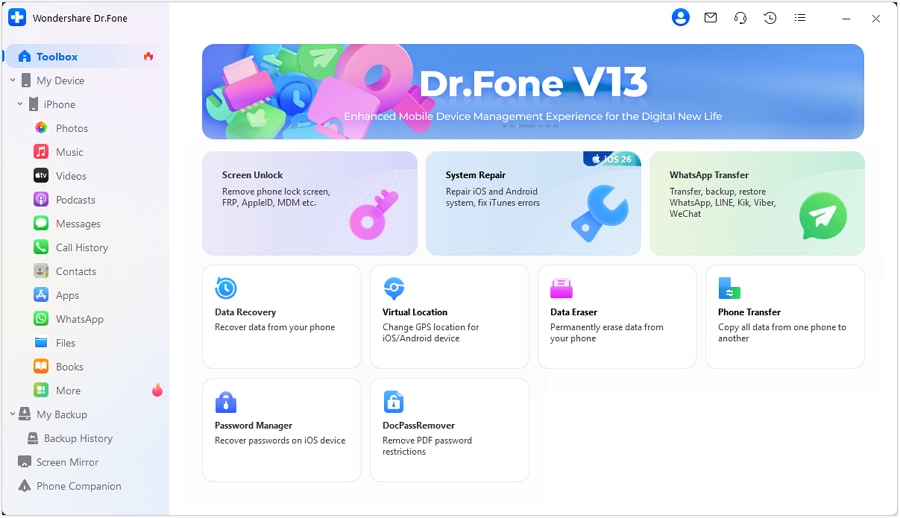
-
Step 2 Select Android For Deep Recovery
In the dynamically newly opened navigation window, intentionally choose "Android" as your targeted operating device type since you are directly recovering SQLite data from a Samsung Android device ecosystem. Once a specialized new screen successfully appears, strictly select "Recover from broken phone" from the clearly available advanced software options.
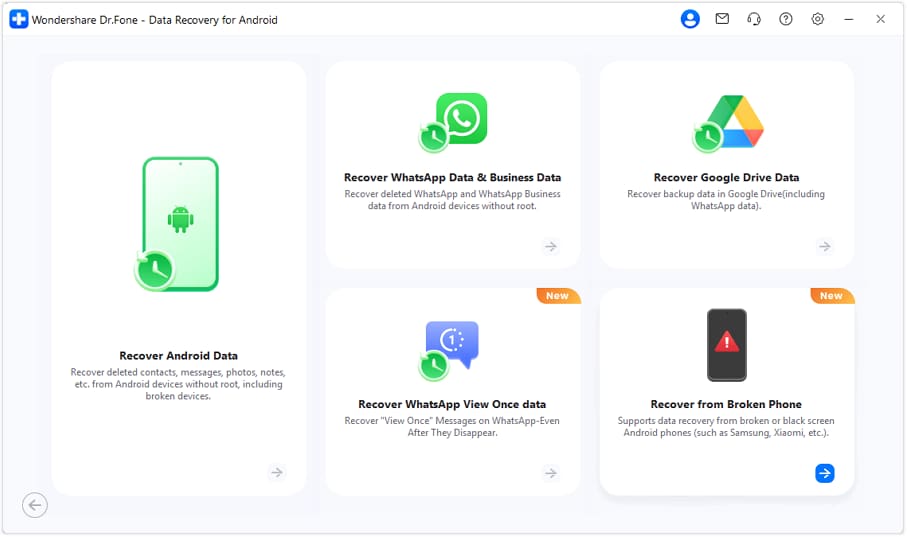
-
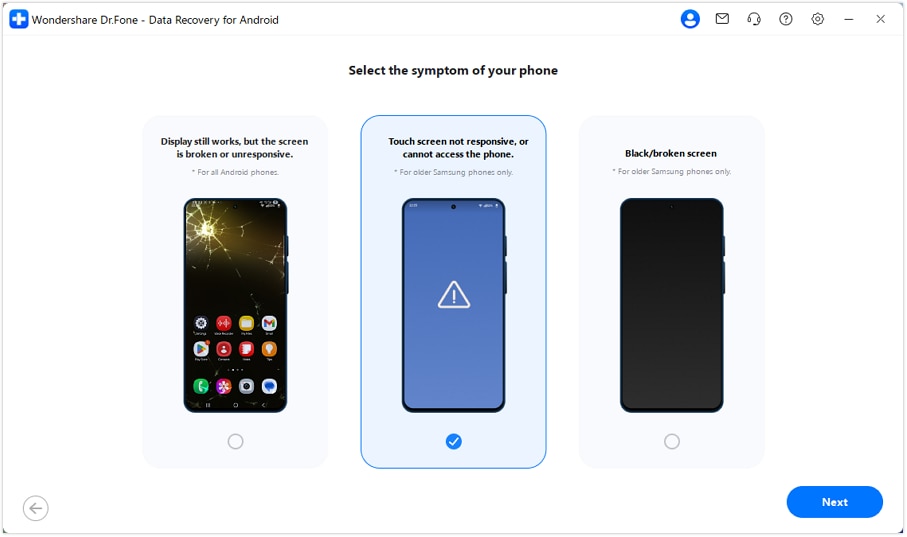
Step 3 Choose Your Specific Android Problem
During this incredibly crucial step, Dr.Fone actively provides the mandatory option to explicitly select the particular hardware issue you are helplessly encountering with your Android handset device. If your phone logic board is unresponsive and clearly has a blacked-out or shattered front screen, firmly select “black/broken screen.” Then, bravely proceed by boldly clicking the blue "Next" button.
-
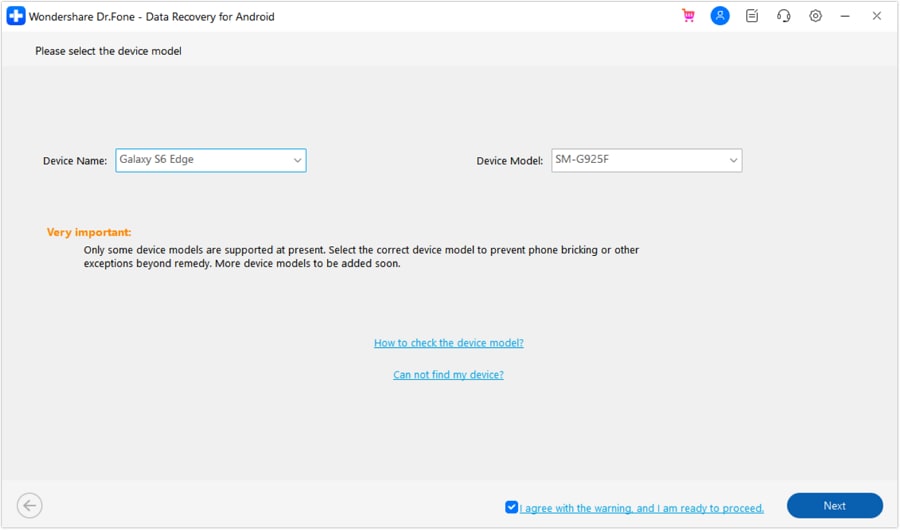
Step 4 Enter Correct Device Details and Continue
Now, you'll clearly see a brand-new interface screen where you strictly need to accurately pick your exact original Device Name and the corresponding Device Model that perfectly match your broken smartphone's factory build. Definitively don't forget to explicitly check the "I agree with the warning" liability option securely at the bottom-right of the prompt screen and carefully click "Next" to proceed further.
-
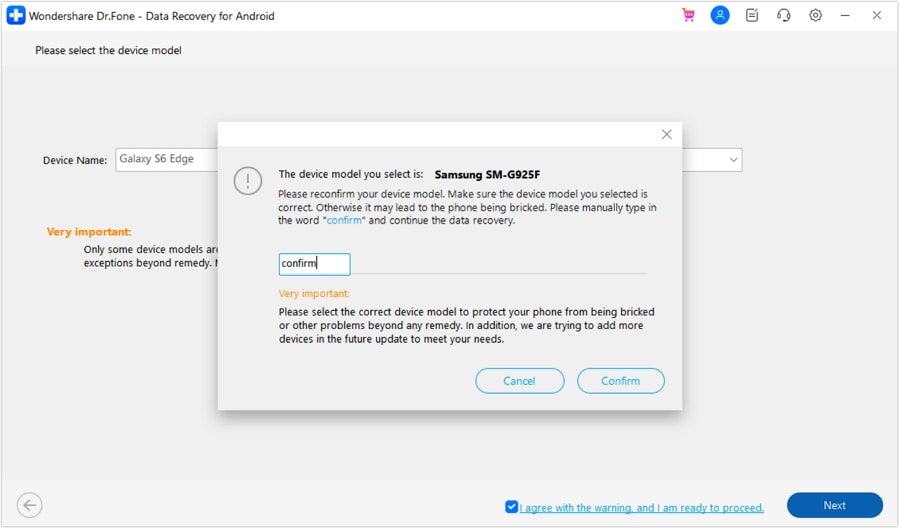
Step 5 Confirm Secure Data Recovery for Your Device
Next, the Dr.Fone extraction protocol will securely ask you to actively verify the impending data recovery process to inherently prevent severe firmware package mismatches. Closely follow the strictly provided on-screen instructions and manually type “confirm” in the blank field. Then, firmly click "Confirm" to legitimately proceed.
-
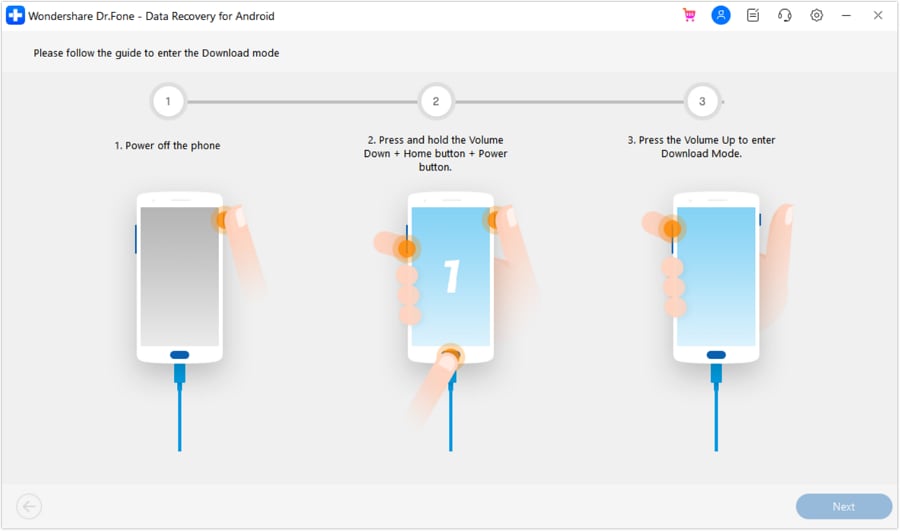
Step 6 Activate Low-Level Download Mode on Your Android
On the subsequent utility screen, extremely closely follow the visibly provided graphical instructions to physically put your bricked device directly into Samsung Download Mode. Once you've flawlessly and successfully activated this hidden Download Mode, rapidly click "Next" to allow the program to proceed with the core data decryption recovery process.
-
Step 7 Preview and Export Recovered Messages
After undeniably successfully enabling Download Mode and passing the scan phase, you'll inherently have the unparalleled option to visually preview the recovered data tables or systematically organize it rapidly into different extension categories. Select the specific "Messages" category or any database data type you urgently want to successfully recover, and intelligently decide whether you specifically want to technically restore it to your device pipeline or permanently save it as an HTML archive heavily onto your computer drive.
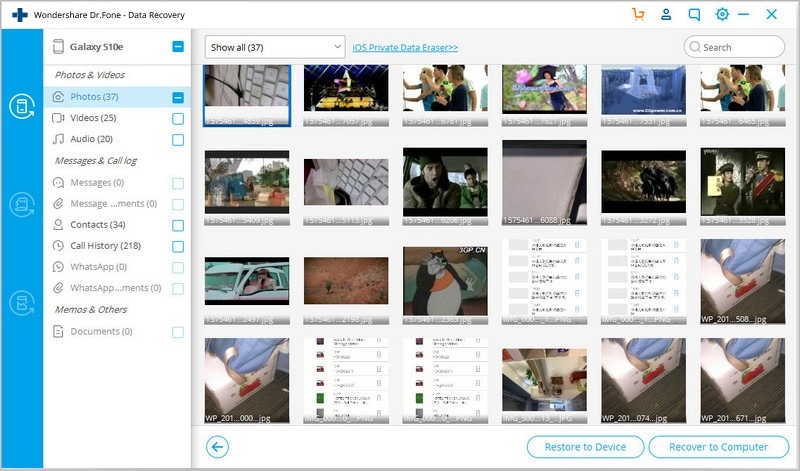
Now you are flawlessly done!
Part 3: Tips for Successful Recovery on Android
Strictly remember that while these expert digital tips can immensely significantly increase the overall likelihood of a flawlessly successful broken Android data recovery, there's absolutely no definitive guarantee of a 100% forensic recovery, especially if the internal binary data has been completely overwritten or the fragile NAND storage medium is heavily physically damaged. Therefore, it's undeniably crucial to routinely take aggressive preventive structural measures like observing these robust tips actively provided below:

- Act radically quickly: Acting immensely fast is completely crucial when you heavily accidentally delete or systematically lose database data on your modern Android device. Data is definitively not immediately securely erased from the internal device's solid-state storage when superficially deleted. Instead, the exact block space it previously occupied simply becomes readily available for saving new incoming data. If you carelessly continue using your device or actively save heavy new multimedia files, there's a substantially vastly higher algorithmic chance that the entirely new data bits will permanently overwrite the deeply deleted hidden data. If so, it would be remarkably more difficult or mathematically impossible to fully digitally recover.
- Backup consistently and regularly: Consistently and regularly natively backing up your Samsung Android device is easily one of the most incredibly powerful preventive security measures heavily guarding against catastrophic daily data loss. Constantly creating scheduled incremental backups and actively storing them securely on varied external devices like a main desktop computer, an encrypted physical external hard drive, or an authorized remote cloud service can firmly ensure you inevitably have a flawless recent duplicate copy of your important SMS data. If you ever unfortunately encounter devastating data loss, you can swiftly restore your broken Android device perfectly to the exact state of the latest last backup. It can massively securely minimize the heavy impact of the unexpected loss.
- Check thoroughly for automatic cloud backups: Highly modern flagship Android devices routinely seamlessly offer advanced built-in syncing features for silent automatic data backups heavily integrated into trusted cloud services like secure Google Drive architecture. Periodically proactively check if your specific smartphone device has such an invaluable background feature enabled in system settings. Should you have successfully previously enabled automated background cloud backups, you could miraculously restore your currently lost database data seamlessly from the remote cloud, dramatically entirely reducing the urgent technical need for executing heavily complex local data recovery PC procedures.
- Always use established reputable recovery software: Professional-grade desktop Data recovery software unconditionally plays a fundamentally crucial foundational role in the entire extraction recovery process. Using actively supported reputable and universally highly well-known specialized secure recovery tools is completely essential to drastically reliably maximize your realistic chances of a fully successful data file retrieval. Trusted premium utility software like robust Wondershare Dr.Fone is aggressively constantly often thoroughly updated to safely effectively support extremely various complicated Android devices and proprietary encrypted file systems, thereby ultimately making them distinctly vastly more technically effective at perfectly securely recovering hidden lost internal database data.
- Keep the device constantly fully charged: Deep forensic Data recovery software algorithms and processes can heavily natively be severely extremely computationally time-consuming, particularly especially if you're actively heavily using deep complex desktop recovery software strictly on a fast computer strictly to meticulously sector-scan your complete Android device structure. Relentlessly continuously keep your fragile Android device completely adequately charged deeply or solidly physically connected safely to an uninterruptible power source merely to stringently strictly ensure the entire extraction process permanently logically completes utterly successfully. If your damaged device's battery unexpectedly tragically runs completely empty out directly during the middle of ongoing recovery, it could abruptly destructively interrupt the parsing process completely and absolutely potentially disastrously lead inevitably to irrecoverable data table corruption or total absolute file loss.
Conclusion
Data loss is a significant concern for Android users, causing the potential loss of valuable data and incurring time and money in the recovery process. Various factors can lead to data loss, such as accidental deletion, virus attacks, and formatting errors, and among these factors, physical damage poses the most critical threat.
Understanding how to retrieve data from an Android phone with a broken screen is essential to mitigate this risk.
Dr.Fone Data Recovery tool offers a reliable solution for retrieving data from Android devices, even with a broken screen. Regardless of your issue, Dr.Fone aims to provide user-friendly assistance, allowing users to quickly diagnose and regain access to their data and phone without hassle.
💥 Recover & Control Your Broken Android from PC — No Root Required
Got a cracked screen but can still see the display? Dr.Fone - Data Recovery (Android) lets you extract data and even control your phone directly from your PC. Access your messages, photos, and apps with your mouse and keyboard — even when the touch screen doesn’t respond. Supports all major brands including Samsung, Xiaomi, OPPO, and Vivo.
No Root | No USB Debugging | No Tech Skills Needed
 100% Secure | No Malware | Ads Free
FAQ
-
1. Can I transfer data from Samsung to Samsung if my old phone is broken?
Yes, you can absolutely and securely transfer data from one older Samsung phone directly to another, even if your old phone's screen is entirely shattered or broken. Samsung inherently provides several reliable ecosystem methods to seamlessly transfer data between their Galaxy devices, some of which clearly don't logically require your old phone screen to be perfectly functional.• You can dynamically use Samsung Smart Switch via a direct PC connection.• You can safely restore synchronized data directly from Samsung Cloud or your linked Google Account.• In case of severe system hardware damage or completely non-functional old phones, you can confidently use deep data recovery services like Wondershare Dr.Fone. -
2. Can we recover data from a completely dead phone?
Recovering data from an extensively dead phone is undoubtedly highly challenging but critically not impossible. If you have diligently backed up your sensitive data beforehand, then your core data is definitively most likely safe in the cloud architecture. You can easily and quickly restore it over Wi-Fi by intelligently using native cloud synchronization services. If no cloud backup exists, utilizing professional software like Dr.Fone data recovery or physically extracting the internal SD cards (for saving external memory files) remains your best viable technological option. -
3. Can I recover messages from broken Samsung without USB debugging?
Yes, you can retrieve your text messages even if you hadn't previously enabled USB Debugging before the phone screen shattered. Specialized data extraction software like Dr.Fone can safely bypass this standard requirement by forcing the damaged Samsung device securely into Download Mode. This allows the computer to directly read the root file system and safely extract your SMS databases directly without ever needing touch screen verification or prompt approvals. -
4. Where are text messages officially stored on a Samsung Android device?
On essentially all modern Samsung Galaxy Android smartphones, standard SMS and MMS text messages are securely stored deeply in a hidden system SQLite database natively located in the internal device memory. The exact file path is typically/data/data/com.android.providers.telephony/databases/mmssms.db. Because this database file definitively resides deep within the protected internal root storage partition, you cannot access or blindly copy it via a standard USB MTP file transfer connection; you must definitively use a dedicated data extraction utility to correctly parse and export the message text contents directly to your PC.
 Add Wondershare Dr.Fone as a preferred source on Google