Effortlessly manage data through preview, delete, export, etc.

 100% Security Verified | No Subscription Required | No Malware

 :
: 
 ChatGPT
 Perplexity
 Gemini
 Claude
 Grok
Grok
As an iPhone user, understanding and monitoring your device's battery health is essential for ensuring consistent, reliable performance. Over time, every charge and discharge cycle contributes to the chemical aging of the lithium-ion battery, which can lead to reduced performance, shorter battery life, and unexpected shutdowns. One of the most accurate indicators of this wear is the battery cycle count.
By learning how to test your iPhone battery and interpret its charge cycle count, you can proactively manage its health and extend its lifespan. This guide provides detailed, step-by-step instructions for checking these critical metrics using both built-in iOS tools and specialized software, helping you keep your device running smoothly for longer.
In this article
Part 1. How To Check iPhone Charge Cycles Using Built-In Analytics
Curious about your iPhone charge cycle count? Your device logs this information, and you can access it without any third-party apps. This method involves diving into your iPhone's analytics data. While it requires a few steps, it's the most direct way to test the iPhone battery's usage history straight from the source. Follow this guide to uncover this valuable data.
Steps To Find Your iPhone Charge Cycle Count
To check your iPhone's battery health, follow these steps to locate its charge cycle count within the system logs. A charge cycle is registered each time you've used 100% of your battery's capacity, though not necessarily all in one go.
-
Step 1 Open Privacy & Security Settings
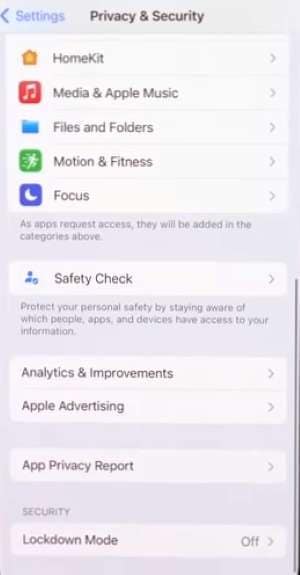
Begin by navigating to the Settings app on your iPhone. Scroll down and tap on Privacy & Security.
-
Step 2 Access Analytics & Improvements
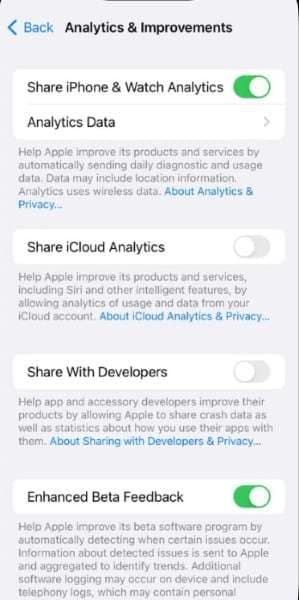
In the Privacy & Security menu, find and select Analytics & Improvements.
 Note: You must have the Share iPhone Analytics option enabled for at least 24-48 hours. If it's off, your device won't generate the necessary log file.
 -
Step 3 Open the Analytics Data Log
Tap on Analytics Data. You will see a long list of files. Scroll through this list to find the most recent file starting with "Analytics-" followed by the current date.
-
Step 4 Copy the Log Content
Tap to open the log file. It will contain a large block of code. Tap and hold anywhere on the text, then select all of it and copy it to your clipboard. Paste this entire block of text into a new note in the Notes app.
-
Step 5 Find the Cycle Count
In the Notes app, tap the three-dots menu icon and select Find in Note. In the search bar, type
last_value_CycleCount. The number directly below this entry is your iPhone's total battery cycle count.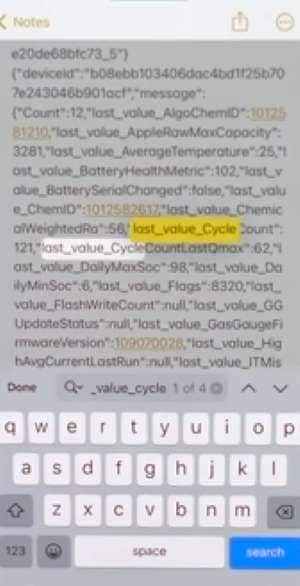
How to Interpret Your iPhone Charge Cycle Count
Knowing your iPhone charge cycle count is only half the battle; you also need to understand what it means in relation to your battery's overall health. Apple designs its phone battery to retain up to 80% of its original capacity after 500 complete charge cycles. You can cross-reference your cycle count with the battery health percentage shown in your settings.
-
Step 1 Navigate to Battery Health
Open the Settings app on your iPhone, scroll down and tap on Battery, then select Battery Health & Charging.
-
Step 2 Review Maximum Capacity
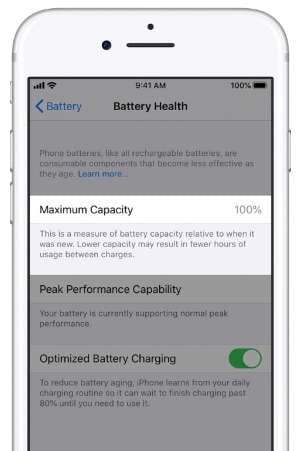
On the Battery Health page, check the percentage next to Maximum Capacity. This figure measures your battery's capacity relative to when it was new. A lower percentage indicates that your device may hold less charge.
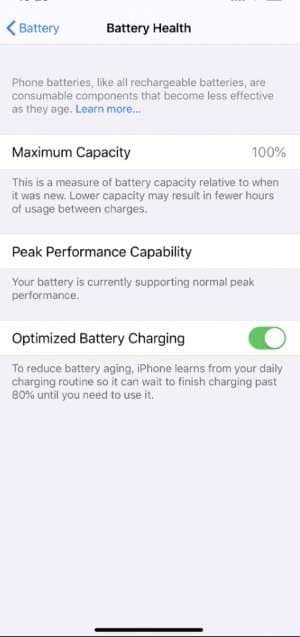 Note: If your cycle count is approaching 500 and the maximum capacity has dropped significantly below 80%, it might be time to consider a battery replacement from Apple or an authorized service provider.
Part 2. Dr.Fone: Your All-in-One iPhone Health Monitor
If the manual process of digging through analytics logs seems too complex, consider using a dedicated tool like Wondershare Dr.Fone. This comprehensive software simplifies the process of monitoring your iPhone's health. While it cannot directly check the charging speed of an iPhone, it provides a clear and detailed verification report, including the iPhone charge cycle count and overall battery condition, all within a user-friendly interface.
Dr.Fone stands out by presenting vital device information in an easy-to-understand format. With just a few clicks, you can get a complete overview of your iPhone's status, making it perfect for users who aren't tech-savvy. To test your iPhone battery health using Dr.Fone, follow these simple steps:
-
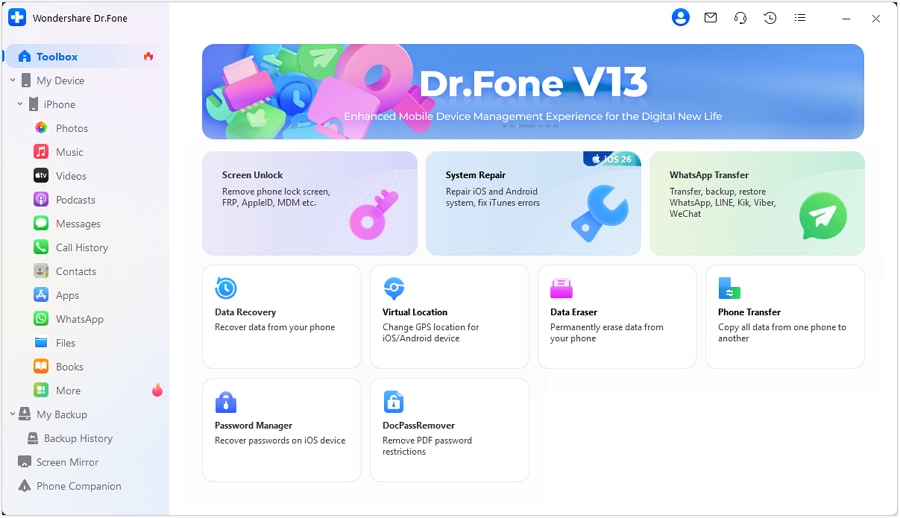
Step 1 Download and Install Dr.Fone
Visit the official website to download and install Dr.Fone onto your Windows or Mac computer.
-
Step 2 Connect Your iPhone
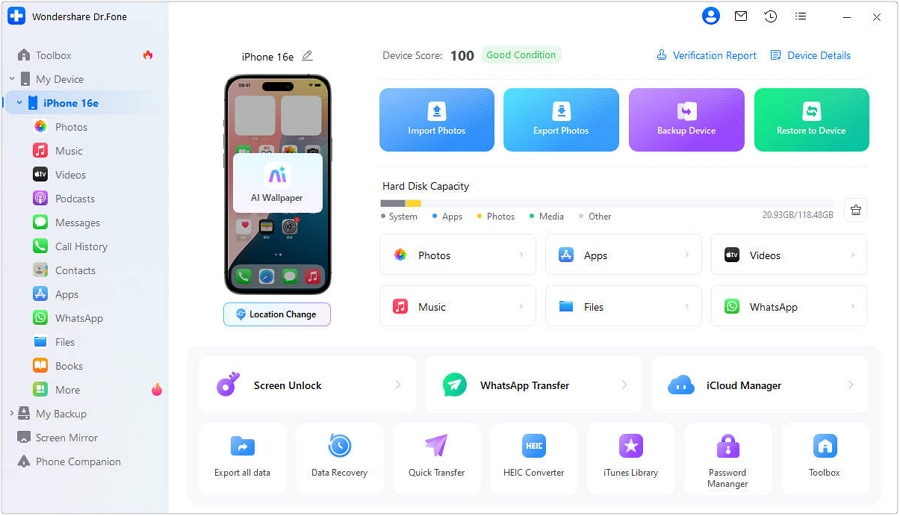
Launch the Dr.Fone application. From the left-side menu, click on My Device. You can then choose to connect your iPhone to the computer using a USB cable or a Wi-Fi connection. Follow the on-screen instructions to establish the connection.
-
Step 3 View Device Details
Once your iPhone is successfully connected, Dr.Fone will display a dashboard with your device's details. This includes the model, iOS version, warranty status, and key battery metrics like battery life and charge times (cycle count).
-
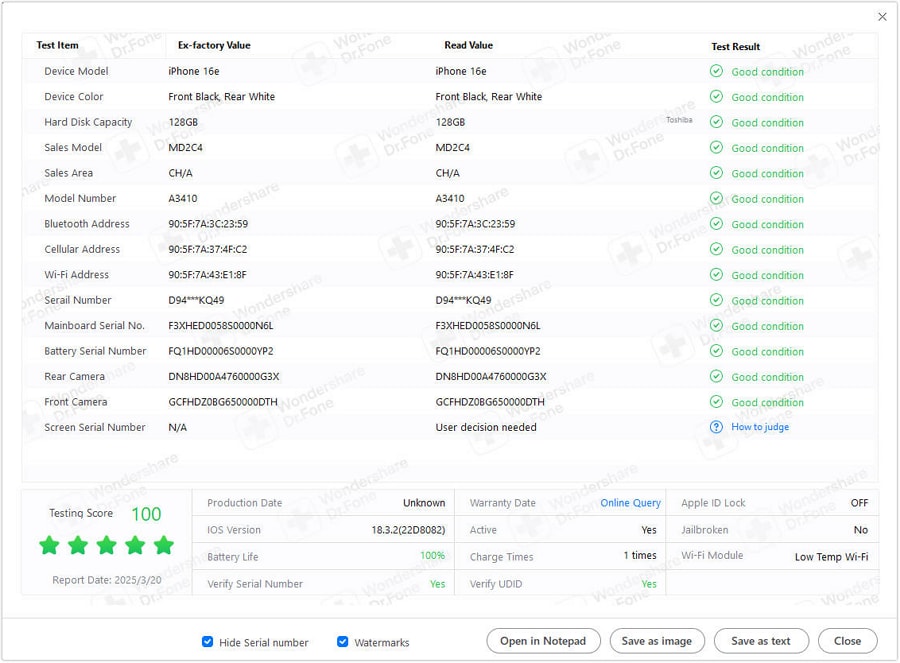
Step 4 Generate a Verification Report
For a more comprehensive analysis, click on Verification Report on the right side of the screen. This will generate a detailed report on the health and authenticity of your iPhone's components, including the battery.
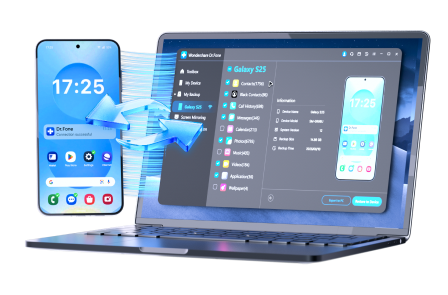
 Effortlessly manage data through preview, delete, export, etc.
- Transfer all data between devices.
- Robust backup solutions for reliable data protection.
- Mirror screens to PC for meetings, teaching, and control.
Part 3. Actionable Tips to Preserve and Extend Your iPhone's Battery Life
Now that you know how to check charge cycles on an iPhone and test iPhone battery health, it's crucial to adopt habits that maintain it. A dying battery can be a major inconvenience. By implementing the following strategies, you can preserve your battery's health and ensure your iPhone lasts as long as possible through the day.
Activate Low Power Mode
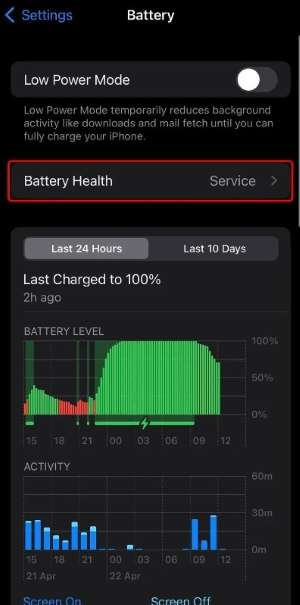
Low Power Mode is one of the most effective tools for conserving energy. It automatically reduces screen brightness, minimizes system animations, and limits background activities like app refresh and mail fetching. Your iPhone will prompt you to enable it at 20% and 10% battery, but you can also toggle it on manually anytime by going to Settings > Battery and activating Low Power Mode. It deactivates automatically once your phone is sufficiently charged.
Avoid Extreme Temperatures
Lithium-ion batteries are sensitive to extreme temperatures. Exposing your iPhone to temperatures above 35° C (95° F) can permanently damage its capacity. Avoid leaving it in direct sunlight or a hot car. Similarly, very cold environments can temporarily reduce battery life. The ideal ambient temperature range for your iPhone is between 0° and 35° C (32° to 95° F).
Manage Background App Activity
Some apps drain battery by constantly refreshing in the background. You can identify these culprits by going to Settings > Battery and reviewing the app usage list. To conserve power, limit this feature by navigating to Settings > General > Background App Refresh. Here, you can turn it off entirely or select which apps are allowed to refresh.
Address Software Glitches with Dr.Fone - System Repair (iOS)
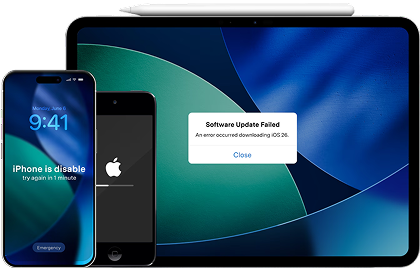
If you've tried all the optimization tips and still experience unusual battery drain, the problem might be a software issue within iOS itself. Glitches or corrupted system files can cause the processor to work overtime, depleting the battery. Dr.Fone - System Repair (iOS) is designed to diagnose and fix these underlying system problems without causing data loss, potentially resolving persistent battery drain issues.
- Fix iOS issues, no data loss.
- One-click repair for all iOS problems.
- Solve recovery mode, Apple logo, black screen, etc.
- Upgrade or downgrade iOS without iTunes
Conclusion
Regularly checking your iPhone's battery health is a crucial step toward ensuring its longevity and day-to-day reliability. By understanding how to check charge cycles on your iPhone, you gain valuable insight into its physical wear. Whether you use the built-in analytics method for a direct look or a tool like Dr.Fone for a streamlined experience, this knowledge empowers you to make informed decisions.
Combining these diagnostic checks with proactive habits like using Low Power Mode, managing app settings, and avoiding extreme temperatures will significantly extend your battery's lifespan. By taking these steps, you can ensure your iPhone stays powered up and performs optimally when you need it most.
Frequently Asked Questions
-
1. What is considered a high charge cycle count for an iPhone?
An iPhone battery is engineered to retain up to 80% of its original capacity after 500 full charge cycles. Therefore, a count approaching or exceeding 500 is generally considered high. At this point, you might notice a significant decrease in how long your battery lasts on a single charge. -
2. Is it bad to charge my iPhone to 100% all the time?
While it's not immediately harmful, constantly keeping your battery at 100% can accelerate its chemical aging. To mitigate this, iPhones have an 'Optimized Battery Charging' feature (in Settings > Battery > Battery Health & Charging) that learns your routine and waits to finish charging past 80% until you need it. It is generally best to keep your battery between 20% and 80% for optimal health. -
3. Why does my iPhone charge slowly after reaching 80%?
This is an intentional feature called 'trickle charging,' which is part of Optimized Battery Charging. To protect the battery's health and extend its lifespan, the charging speed is significantly reduced for the final 20%. This minimizes heat and stress on the battery, which are major factors in degradation over time. -
4. Does a low Maximum Capacity percentage mean I need a new battery?
Not necessarily immediately, but it is a strong indicator. If your Maximum Capacity is below 80%, your battery is considered significantly degraded by Apple. You will likely experience shorter battery life and may see performance throttling to prevent unexpected shutdowns. If this impacts your daily usage, a battery replacement is the best solution.
 Add Wondershare Dr.Fone as a preferred source on Google