Move contacts, messages, photos, videos, app data, and more between iOS and Android.

 100% Security Verified | No Subscription Required | No Malware

 :
: 
 ChatGPT
 Perplexity
 Gemini
 Claude
 Grok
Grok

I recently switched devices and keep wondering, how do i transfer photos from android to iphone without losing quality? What's the best and fastest way to do this?
User on Community Forums
Transferring photos between two entirely different operating systems can seem daunting. Fortunately, you can transfer photos from Android to iPhone using several effective tools like the native Move to iOS app, Google Drive, various Wi-Fi transfer apps, or robust one-click software. The ideal choice ultimately comes down to whether you prioritize blazing-fast speeds, wireless convenience, or 100% full-quality preservation.
If you are actively looking for the best way to send pics from Android to iPhone, this comprehensive guide will walk you through all the major techniques available in 2026. Whether you are fully switching to a brand new iOS device, trying to transfer photos from Android to iPad, or just sharing some quick vacation memories with a friend, we have a solution that fits your exact scenario.
In this article
- Quick Comparison: Which Method is Right for You?
- Part 1. Fastest One-Click Method (Highly Recommended)
- Part 2. Using the Official Move to iOS App
- Part 3. How to Transfer via Bluetooth Alternatives
- Part 4. Transferring Wirelessly Using Google Drive
- Part 5. Sending Photos via Email
- Part 6. Top 3 Third-Party Transfer Apps
Quick Comparison: Which Method is Right for You?
Before diving into the detailed steps, it helps to evaluate your specific needs. Here is a quick comparison table that summarizes the 8 distinct ways you can tackle this issue.

• Fastest method: Use a dedicated one-click transfer desktop tool.
• No PC available: Utilize sharing apps or Google Drive.
• Brand new device setup: Choose Move to iOS.
• Only a handful of photos: Quickly send them via email or instant messaging.
| Method | Ease of Use & Speed | Main Limitations | Best Used For |
|---|---|---|---|
| Dr.Fone - Phone Transfer | Very Easy, Ultra Fast | Requires a Windows or Mac computer. | Transferring massive media libraries securely when fully switching devices. |
| Move to iOS App | Easy, but speed varies | Works ONLY on a brand-new or newly reset iPhone. | Users configuring a brand-new iPhone without computer access. |
| Google Drive | Easy, depends on Wi-Fi | Limited by 15GB free cloud tier; requires manual steps. | Backing up and pulling photos over the air for users heavily invested in Google. |
| Bluetooth Alternatives | Easy, somewhat slow | Devices must remain in extremely close proximity. | Quickly exchanging a few files without an active internet router. |
| Extremely Easy, Fast | Strict 25MB attachment constraints. | Delivering a couple of compressed, low-res photos quickly. | |
| Third-Party Apps | Fast (via Wi-Fi Direct) | Both devices need the same app installed; potential ads. | Versatile wireless sharing when away from a desktop. |
Part 1. Fastest One-Click Method (Highly Recommended)
When users ask how to transfer photos from android to iphone efficiently, avoiding quality degradation and long wait times is the primary concern. Desktop solutions generally provide the most stable and fastest environment.
Moving vast photo albums can be exceptionally tedious if done manually. If you are unsure of the best method, robust utilities like Wondershare Dr.Fone present an elegant solution, enabling you to transfer files cross-platform seamlessly.
Method 1.1: Complete Transfer via Dr.Fone - Phone Transfer
 Move data between iOS to Android and vice versa.
- Transfer contacts, SMS, photos, videos, music, and more types.
- Available with all phones with Android and iOS versions.
- Simple, click-through process.
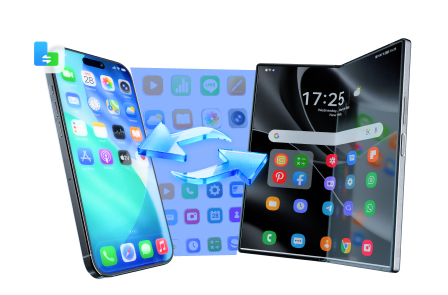
By relying on Dr.Fone - Phone Transfer, migrating all your digital content takes merely a single click. This guarantees that whether you have 100 or 10,000 pictures, the transition will be executed securely and rapidly without data loss.
-
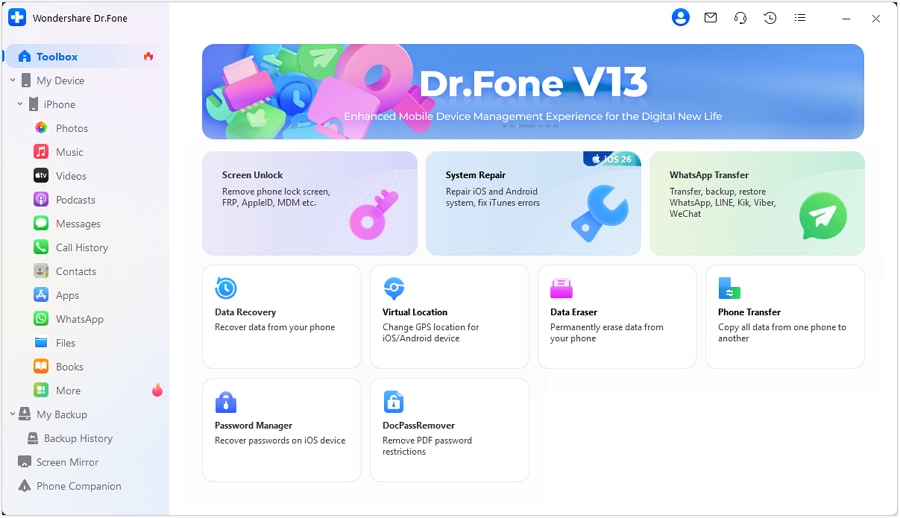
Step 1 Launch Phone Transfer
Download and install the Dr.Fone software toolkit on your computer. Open it and select the "Phone Transfer" module from the primary home screen.
-
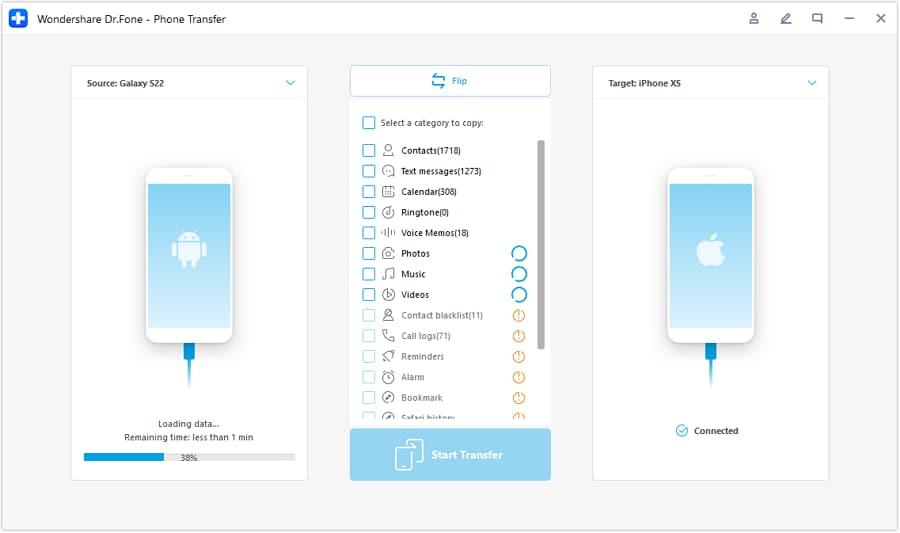
Step 2 Connect Devices and Position
Use robust USB cables to link both your Android and iPhone to the system. Ensure the application sets the Android as the 'Source' and the iPhone as the 'Target'. If they are inverted, hit the 'Flip' button.
-
Step 3 Execute the Transfer
Check the box labeled "Photos" (alongside any other data types you want). Press 'Start Transfer' and simply let the software securely copy your images.




Method 1.2: Selectively Move Photos via Phone Manager Feature
- Effortlessly manage data through preview, delete, export, etc.
- Transfer all data between devices.
- Robust backup solutions for reliable data protection.
- Mirror screens to PC for meetings, teaching, and control.
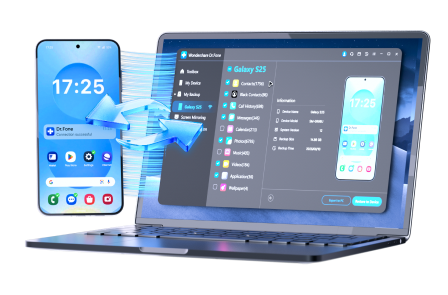
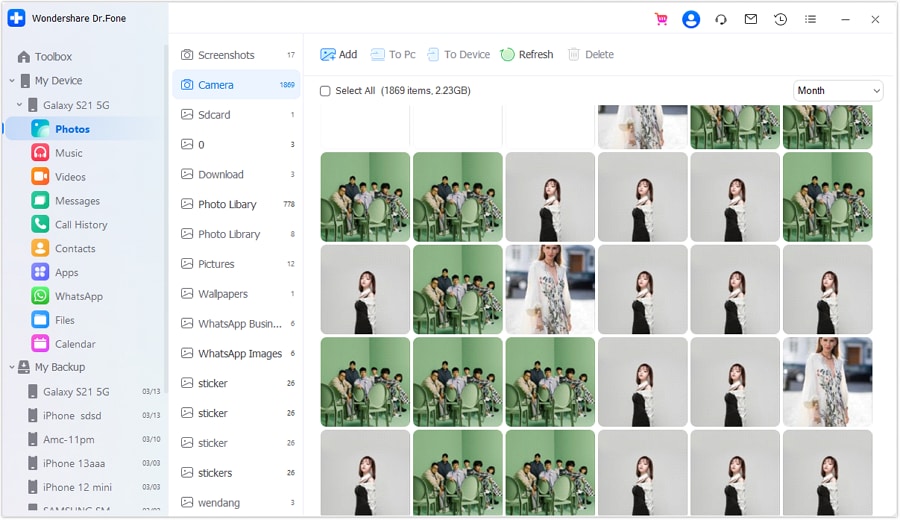
If you prefer strict control over what gets copied, using the phone management feature from Wondershare Dr.Fone is brilliant. Instead of a blanket transfer, you gain the ability to selectively export individual folders or specifically curated photos in mere minutes.
Once you connect your devices, navigate to the Photos tab on the Android section. Select the exact images you want, click "Export to Device", and select your connected iPhone. The process is fully secure, safeguarding your sensitive media files.
Part 2. Using the Official Move to iOS App
For those configuring an iPhone fresh out of the box, Apple’s official "Move to iOS" app offers a straightforward, wireless route. Available right from the Google Play Store, this app bridges the system gap effortlessly, although it does take longer than wired solutions.
-
Step 1 Enter the Setup Screen on iPhone
Power on your new iPhone. Progress through the initial setup screens until you arrive at the 'Apps & Data' section. Select the 'Move Data from Android' option.


-
Step 2 Install Move to iOS on Android
On your Android phone, head to the Google Play Store, download, and launch the 'Move to iOS' application. Accept the terms and necessary permissions.
-
Step 3 Retrieve the Verification Code
Tap 'Continue' on both devices concurrently. A specialized 6-digit or 12-digit code will display on the iPhone.

-
Step 4 Enter Code and Select Media
Input this exact code on your Android device to establish a temporary peer-to-peer Wi-Fi connection.

-
Step 5 Begin the Transfer
You'll be prompted to select data categories. Ensure 'Camera Roll' is checked to move your pictures. The process will finalize based on the volume of media being moved.
Part 3. How to Transfer via Bluetooth Alternatives
A prevalent query online is how to transfer photos from android to iphone via bluetooth. Natively, Apple's iOS ecosystem aggressively restricts direct Bluetooth file transfers from Android OS due to strict security protocols. However, you can achieve identical "wireless proximity" results by using Wi-Fi Direct or Bluetooth-assisted apps.
By simulating a Bluetooth-like connection through modern file-manager sharing, the protocol relies on localized networks which is drastically faster than legacy Bluetooth.
- Step 1: Turn on both Bluetooth and Wi-Fi on both devices to enable visibility.
- Step 2: Ensure both phones are placed directly adjacent to one another.
- Step 3: Navigate to the File Manager or Gallery app on your Android and open the DCIM (Camera) folder.
- Step 4: Select the images you wish to transport.
- Step 5: Tap the 'Share' icon. Since native Bluetooth will fail toward an iPhone, you must select an installed Wi-Fi Direct utility (like Send Anywhere) to bridge the gap.
- Step 6: Accept the incoming prompt on your iPhone to finalize the download.

Dr.Fone Unlock Online - Free IMEI Check
Is Your Old Phone Ready to Sell?
Quickly check your iPhone or Android device status for free: Verify Blacklist, iCloud, Carrier Lock, and Warranty Status in Seconds. Ad-free, globally accessible.
Part 4. Transferring Wirelessly Using Google Drive
Using cloud ecosystems is arguably the most universal way to shift files without wires. Google Drive grants 15GB of free storage connected to any Gmail address, easily solving the issue for everyday photo libraries.
-
Step 1 Upload via Android
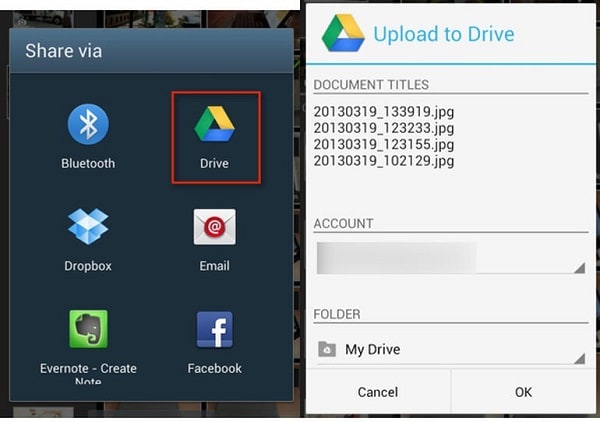
Open your Android Gallery, select the pictures in question, tap the Share button, and select "Share via Drive". Wait for the upload to synchronize to the cloud.
-
Step 2 Install Drive on iOS
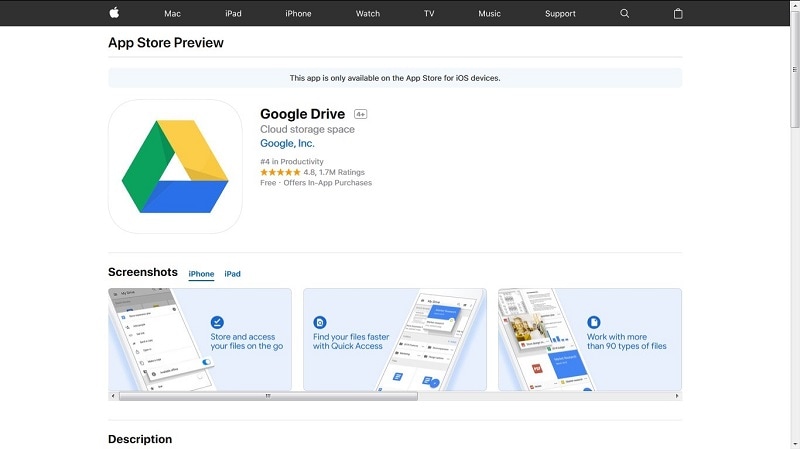
On your iPhone, visit the App Store, install the official Google Drive application, and sign in with identical credentials.
-
Step 3 Save to Camera Roll
Locate the uploaded images within the app, tap the supplementary menu dots, and select 'Save Image'. The files will populate in your Apple Photos app.
Part 5. Sending Photos via Email
For individuals only needing to pass along a couple of memorable snaps, the classic email method remains unbeaten for sheer simplicity. Be cautious, as standard email providers strictly enforce file attachment limits (normally around 25MB), so heavy 4K videos or RAW images will be rejected.
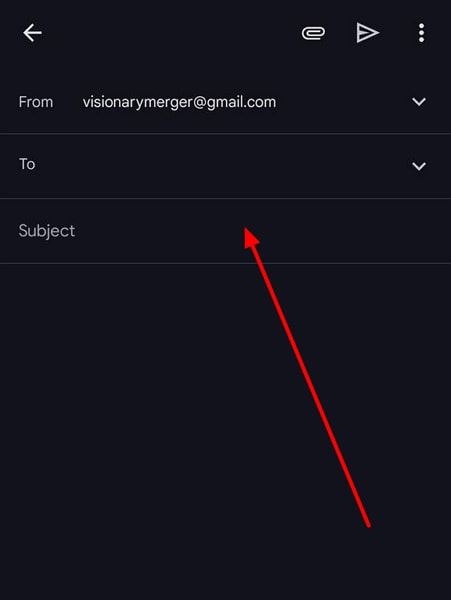
- Step 1: Launch your preferred email client on Android (like Gmail). Tap 'Compose'. Input your own address in the recipient field.
- Step 2: Tap the paperclip attachment icon, browse your device storage, and attach your chosen images before hitting send.
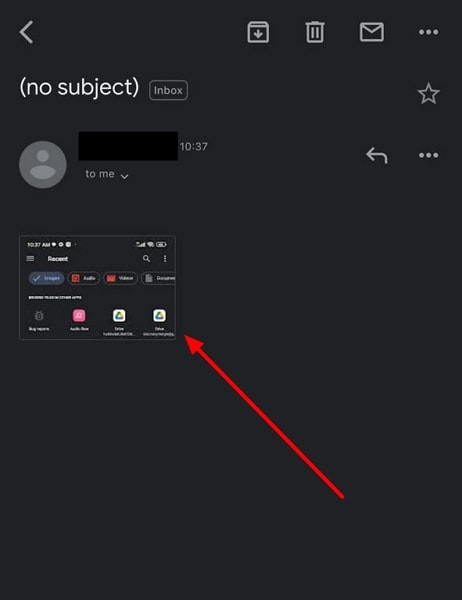
- Step 3: Access the same email inbox from your iPhone, open the received draft, and download the media directly to the device.

📱 iPhone Frozen? Fix It in 3 Steps – No Data Loss!
Struggling with a frozen iPhone screen? 🤔 Our guide covers 6 common causes, step-by-step fixes, and safe data recovery. 98.6% success rate! ✨
Part 6. Top 3 Third-Party Transfer Apps
Several dedicated apps specialize in bridging the OS gap without relying on a computer. Here are three leading tools favored for reliability in 2026.
1. PhotoSync
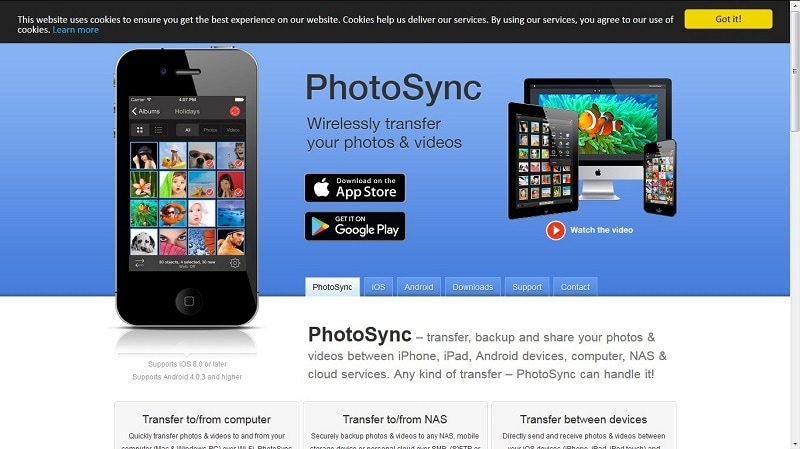
PhotoSync is a robust photo-sharing architecture available for free on iOS and Android. It effortlessly utilizes localized Wi-Fi bandwidth to transport high-resolution albums. It is continuously updated to maintain flawless EXIF data retention and RAW file compatibility, making it a photographer's favorite.
2. Photo Transfer App
The highly acclaimed Photo Transfer app removes the complexities of cables. By granting access to your internal directories via a generated web browser link, you can dynamically view, download, and store your media library locally across various platforms rapidly.

3. Shareit
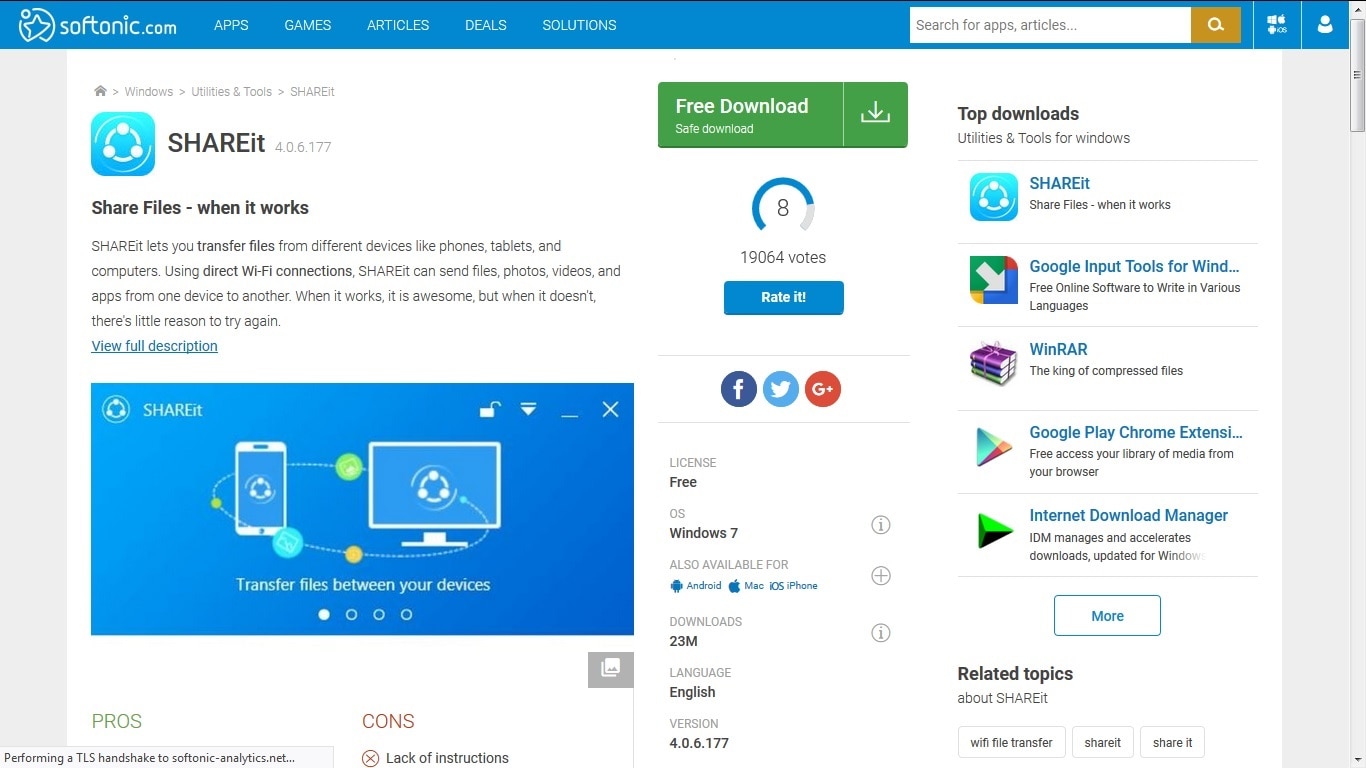
Shareit excels in multi-format utility. Capable of far more than just photos, it generates blazing-fast cross-platform connections to swap everything from videos to zipped documents securely. Just remember that massive multi-folder transfers can slightly drag down operational speeds.
Conclusion
Knowing exactly how to transfer photos from Android to iPhone is no longer a painstaking chore. Your optimal selection depends purely on your situation constraints:
- For speed and bulk transfers without quality loss: We highly advise using a desktop module like Dr.Fone Phone Transfer.
- For initial phone configurations: The Move to iOS app provides a native bridge.
- For wireless, selective pulls: Rely heavily on apps like Shareit or Google Drive.
Take charge of your data responsibly, and ensure your irreplaceable memories make the cross-platform leap safely!
FAQ
-
1. Can I transfer photos from Android to iPhone with Bluetooth?
No, iPhones intentionally block standard Bluetooth file transfers originated by an Android OS. However, you can achieve wireless sharing by substituting Bluetooth with Wi-Fi Direct applications or localized network apps. -
2. What is the best way to send pics from Android to iPhone?
The absolute best method is deploying a desktop transfer utility like Dr.Fone, ensuring high speed, no size limitations, and preserved original photo quality. For fewer pictures, a cloud tool like Google Drive suffices perfectly. -
3. Is there an app to transfer photos from Android to iPhone?
Yes, multiple applications exist to solve this. Apple's 'Move to iOS' is brilliant for brand-new devices, while 'PhotoSync' and 'Shareit' offer exceptional cross-platform usability for existing setups. -
4. How do I easily transfer photos from a Samsung device to an iPhone?
The procedure is identical to any standard Android. Use the Move to iOS app during device startup, synchronize your folders via Google Drive, or connect both phones to a PC and use one-click transfer software for a flawless shift.
 Add Wondershare Dr.Fone as a preferred source on Google