Had iPhone Error 6 While Restoring iPhone? Here Is The Real Fix!

Oct 23, 2026 • Filed to: Phone Repair Solutions • Proven solutions
 TL;DR:
iTunes error 6 is a communication or firmware failure during an iPhone restore that can be resolved by isolating connection conflicts, deleting corrupted update files, or using a dedicated repair tool to prevent data wiping.
● Users requiring a no-data-loss solution can run Dr.Fone - System Repair (iOS) in Standard Repair mode, which supports all iPhone models on Windows and Mac to bypass standard iTunes wipe procedures.
● Hardware and network prerequisites for manual fixes include using a certified Lightning cable directly connected without USB hubs, and temporarily disabling over-aggressive security software that blocks Apple server verification.
● If AMRestoreErrorDomain error 6 or error 6f02 persists, you must manually delete the existing .ipsw file from your computer to force a fresh firmware download, or attempt the process on an alternate machine to isolate environmental conflicts.
Ask AI for a summary
 ChatGPT
 Perplexity
 Gemini
 Claude
 Grok
Grok
iTunes error 6 usually appears when iTunes or Finder cannot complete an iPhone restore or update because of a communication failure, firmware conflict, security restriction, or system-level interruption. If you are seeing iTunes error 6, the good news is that the issue can often be fixed without replacing your device—and in many cases, without losing data.
This guide explains what iPhone error 6 means, why it happens during restore or update, and which step-by-step fixes are most effective. We also cover related search intents such as AMRestoreErrorDomain error 6, error 6f02, bug type 226 iPhone, and similar restore-related iPhone errors.
- Part 1: What Is iTunes Error 6 on iPhone?
- Part 2: How to Fix iTunes Error 6 Without Data Loss
- Part 3: Check Security Software, USB Connections, and Device Trust
- Part 4: Verify Network Settings Before Restoring or Updating
- Part 5: Delete the IPSW File to Remove Firmware Conflicts
- Part 6: Try Another Computer to Isolate the Cause
Part 1: What Is iTunes Error 6 on iPhone?
iTunes error 6 is a restore or update error that usually appears when iTunes cannot complete communication with your iPhone, validate firmware properly, or finish the restore sequence. In simple terms, it means the restore process has been interrupted by a system, connection, software, or security-related problem.
Users may see this error while restoring an iPhone, updating iOS, or working with a device that previously had firmware issues. In some cases, the error can also appear as AMRestoreErrorDomain error 6 or alongside low-level restore logs that point to a failed firmware handshake.
The most common causes include:
- a corrupted or incomplete iOS firmware file,
- USB communication issues between the iPhone and computer,
- security software blocking restore-related processes,
- network instability during update verification,
- system conflicts inside iTunes, Finder, Windows, or macOS.

If you only need the fastest fix path, start with a no-data-loss repair tool first, then move on to connection, network, and IPSW checks if needed. This gives you a better chance of resolving iPhone error 6 without unnecessary risk.
Part 2: How to Fix iTunes Error 6 Without Data Loss
If your priority is to fix iTunes error 6 without wiping personal files, the safest option is to use a dedicated iOS system repair tool before attempting a full restore. This is especially useful when the error is caused by iOS corruption, update failure, restore interruption, or repeated startup issues.
Dr.Fone - System Repair (iOS) is designed to repair iPhone system problems without erasing data in standard repair mode. It can also address related iTunes and iPhone restore issues, making it a practical option when iTunes alone keeps failing with error 6.

Dr.Fone - System Repair (iOS)
Fix iPhone system error without data loss.
- Only fix your iOS to normal, no data loss at all.
- Fix various iOS system issues stuck in recovery mode, white Apple logo, black screen, looping on start, etc.
- Fixes other iPhone error and iTunes errors, such as iTunes error 4013, error 14, iTunes error 27,iTunes error 9 and more.
- Works for all models of iPhone, iPad and iPod touch.
- Fully compatible with the latest iOS version.



Steps to fix iPhone error 6 with Dr.Fone:
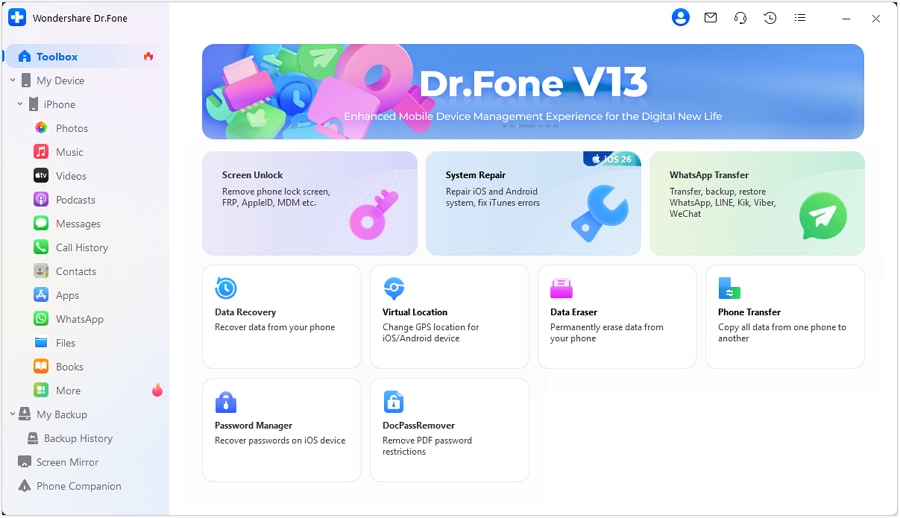
1. Download and install Dr.Fone on your Windows PC or Mac, then launch the program and open the iOS repair feature when you need to fix iTunes error 6.
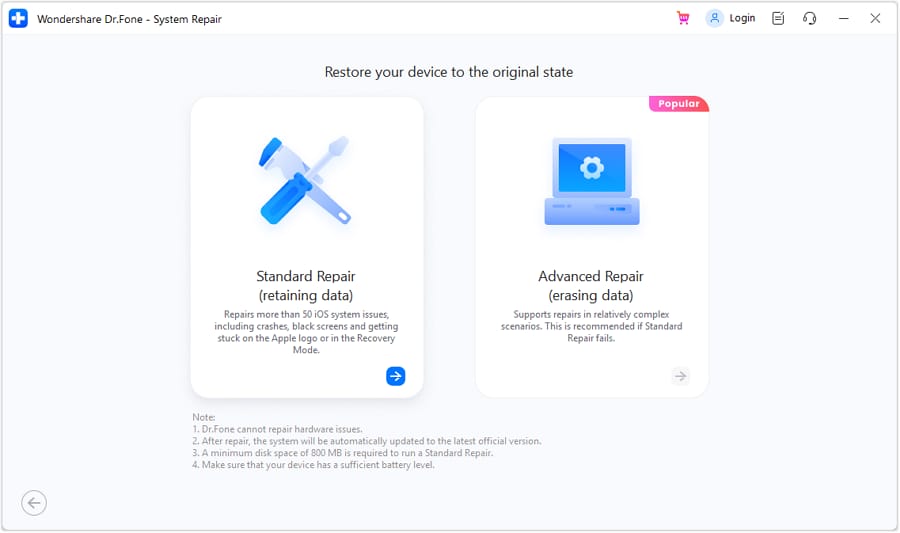
2. Connect your iPhone to the computer with a stable USB cable and choose Standard Repair. This option is intended to repair iOS system issues while preserving your data.
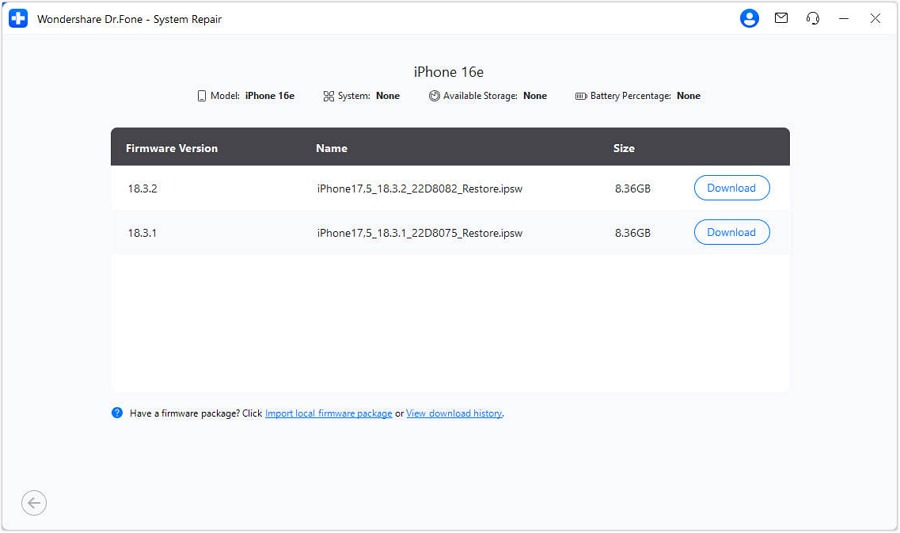
3. Review the detected device information, including model and iOS version, then click Download to get the appropriate firmware package.
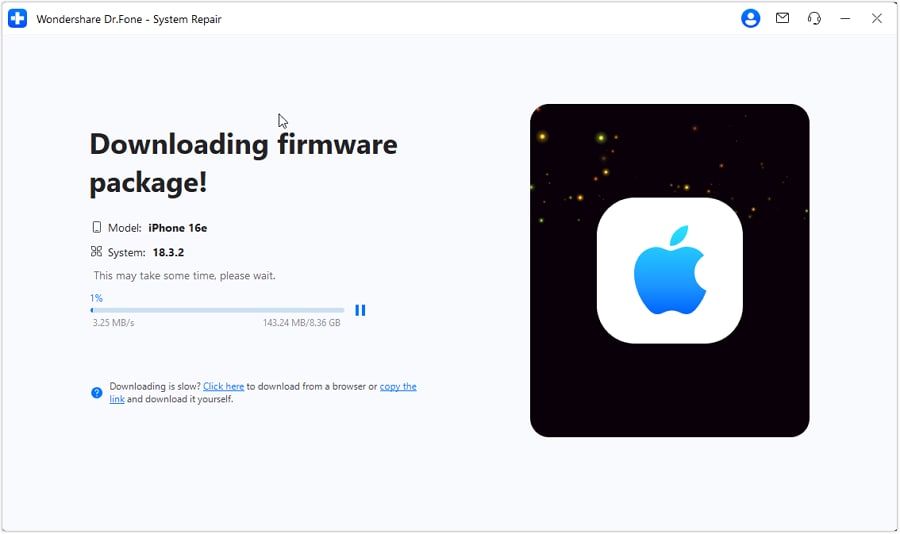
4. Wait while the firmware is downloaded and verified.
5. Once the package is ready, the tool will automatically begin repairing the device and fixing the underlying iOS issue that may be causing error 6.
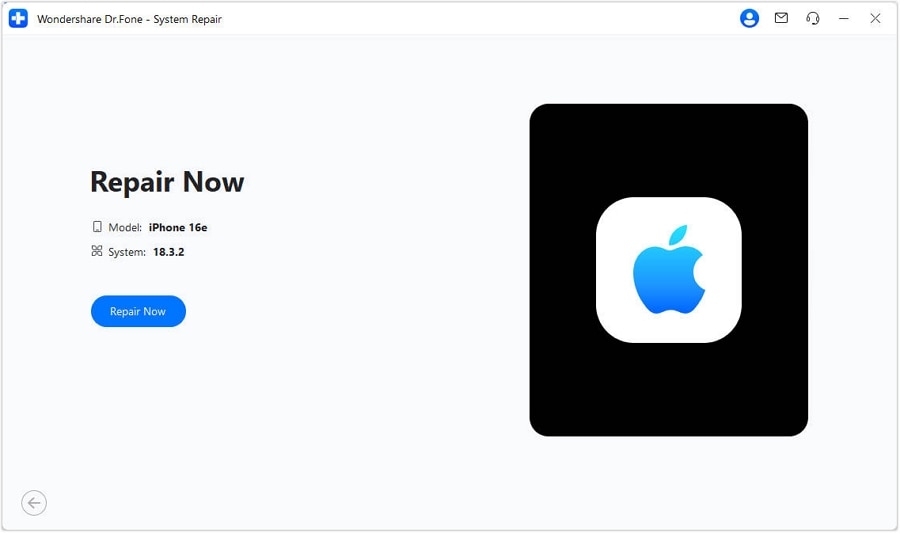
6. When the process is complete, your iPhone will restart normally. Reconnect it if needed and confirm whether the restore or update problem has been resolved.
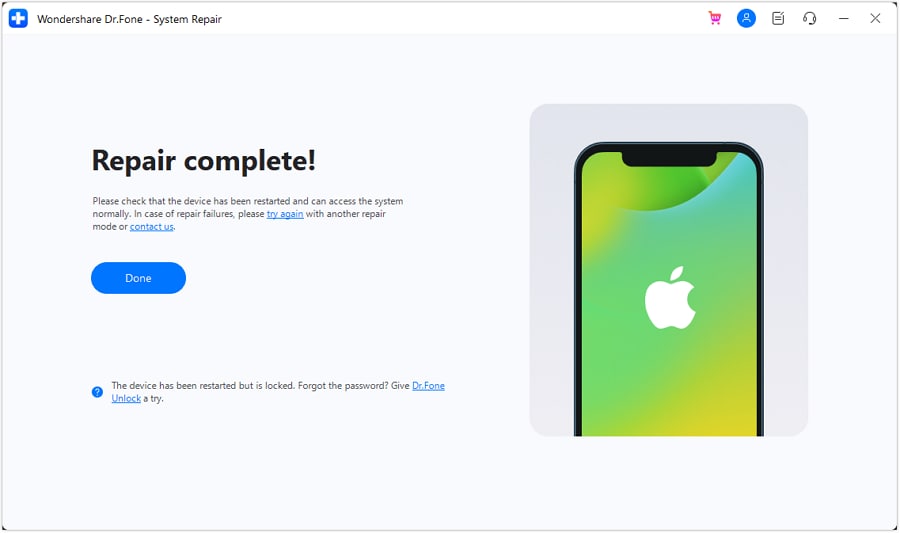
This is the best path for users who want to fix iTunes error 6 first and avoid jumping straight into a full device restore.
 safe & secure
Part 3: Check Security Software, USB Connections, and Device Trust
Sometimes iTunes error 6 is not caused by the iPhone itself, but by interference on the computer side. Security tools, unstable USB connections, untrusted device prompts, or damaged cables can interrupt the restore sequence and cause iTunes to fail.
Before trying another restore, check the following:
- Use an original or certified Lightning/USB cable.
- Connect the iPhone directly to the computer instead of using a USB hub or adapter chain.
- Unlock the device and tap Trust This Computer if prompted.
- Temporarily disable over-aggressive security software that may block iTunes processes, network verification, or USB communication.
- Update iTunes to the latest available version if you are on Windows.
If you are using antivirus or endpoint protection software, try pausing it briefly during the restore attempt. The goal is not simply to install more security tools, but to make sure existing software is not interrupting the restore workflow.
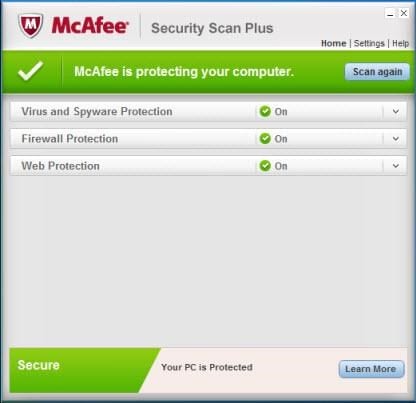
This step is especially useful when the error appears inconsistently or only on one computer. In those cases, the issue is often environmental rather than device-specific.
Part 4: Verify Network Settings Before Restoring or Updating
If iTunes needs to verify firmware, contact Apple servers, or complete update-related checks, unstable or restricted network settings can lead to iPhone error 6. Even when the device connection is fine, a network interruption on the computer can break the process.
Before restoring or updating again, confirm that:
- your internet connection is stable and not frequently disconnecting,
- firewall or proxy rules are not blocking Apple-related services,
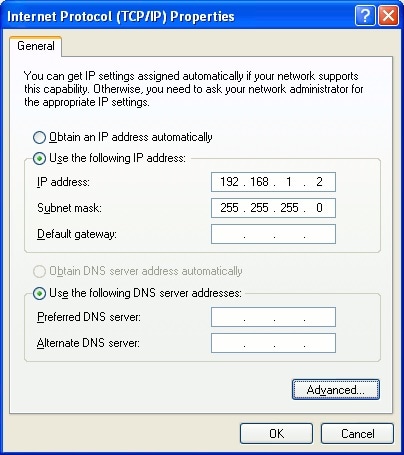
- TCP/IP settings on the computer have not been manually altered incorrectly,
- DNS, IP address, subnet mask, and gateway settings are valid for your environment.
In many cases, switching from a restricted office or public network to a stable home network can make a restore succeed. This is one of the simplest checks to perform when AMRestoreErrorDomain error 6 keeps appearing without an obvious cable or device problem.
Part 5: Delete the IPSW File to Remove Firmware Conflicts
An old or damaged IPSW file can conflict with a new restore attempt and trigger iTunes error 6. IPSW files are iOS firmware packages that iTunes downloads and uses during update or restore. If the saved file is incomplete, corrupted, or mismatched, the restore process may fail before it can finish properly.
To rule this out, delete the existing IPSW file on your computer and let iTunes download a fresh copy from Apple’s servers.
In many cases, the file is stored in the iTunes or Finder software update folder. You can also search your system manually for files ending in .ipsw and remove the version associated with the affected device.
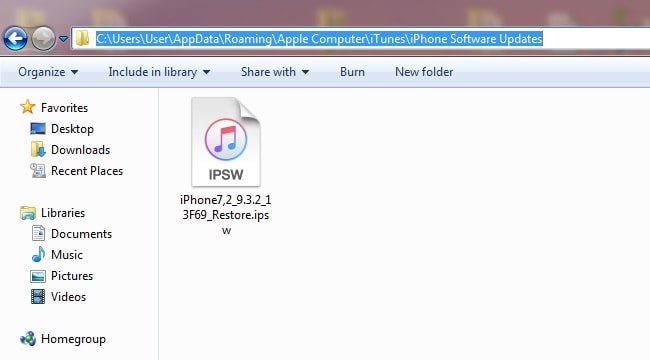
This fix is particularly helpful when the error started after a failed restore, a canceled update, or repeated attempts using the same downloaded firmware package.
Part 6: Try Another Computer to Isolate the Cause
If you have already checked the cable, security software, network settings, and firmware file, but iTunes error 6 still appears, the next step is to test the iPhone on another computer. This helps you determine whether the problem is coming from the device or from the original computer environment.
Connect the iPhone to another Windows PC or Mac, open iTunes or Finder, and attempt the restore again using a reliable cable. If the restore works on the second machine, the original system likely has a software, driver, network, or USB-related conflict.
This is also a useful diagnostic step for users who encounter related searches such as error 6f02, bug type 226 iPhone, or other restore anomalies that do not clearly point to one single cause.
When possible, use a computer with updated iTunes/Finder, a stable internet connection, and minimal security restrictions for the cleanest test environment.
If you want to fix iTunes error 6 in the safest and most efficient way, start with a no-data-loss repair method, then move through cable, security, network, IPSW, and alternate-computer checks in order. This sequence gives you the highest chance of resolving the issue while minimizing disruption to your device and data.
For users who prefer a simpler solution than repeated manual restore attempts, Dr.Fone - System Repair (iOS) provides a practical way to repair iPhone system issues and related iTunes errors without the usual restore risks.
safe & secureFAQs
 Q1. What does AMRestoreErrorDomain error 6 mean on iPhone?Q2. What is error 6f02 on iPhone restore?Q3. What does bug type 226 mean on iPhone?Q4. Can iPhone error 2015 or error 17 be related to iTunes error 6?


iPhone Errors
- Errors 0 ... 100
- 1. iPhone Error 6
- 2. iPhone/iTunes Error 9
- 3. iPhone Error 10
- 4. iPhone/iTunes Error 21
- 5. iPhone Error 35
- 6. iTunes Error 40 on iPhone/iPad
- 7. iPhone Error 47
- 8. iPhone Error 69
- 9. iPhone Error 75
- 10. iPhone Error 78
- Errors 1xxx
- 1. iPhone Error 1009
- 2. iPhone Error 1015
- 3. iPhone/iTunes Error 1100
- 4. iPhone Error 1110
- 5. iPhone Error 1667
- Errors 2xxx
- Errors 3xxx
- 1. iTunes Error 3004
- 2. iTunes Error 3014
- 3. iTunes/iPhone Error 3194
- 4. iPhone Error 3503
- 5. iPhone/iTunes Error 3600
- Errors 4xxx
- Other iPhone Errors
- 1. iPhone Error 7005
- 2. iPhone/iTunes Error 9006
- 3. iPhone Error 0xe8000015
- 4. iPhone Cellular Update Failed Error
- 5. iPhone Activation Error
- 6. iPhone SSL Error
- Other iPhone Issues
- ● Manage/transfer/recover data
- ● Unlock screen/activate/FRP lock
- ● Fix most iOS and Android issues
- Free Download Free Download Free Download

 > How-to > Phone Repair Solutions > Had iPhone Error 6 While Restoring iPhone? Here Is The Real Fix!
Alice MJ
staff Editor
Generally rated4.5(105participated)