
Looking Into Solutions to Fix Unknown Update Error Occurred (78)

Oct 10, 2026 • Filed to: Phone Repair Solutions • Proven solutions
 TL;DR:
iTunes Error 78 indicates that an iOS update or restore was interrupted midway, which can typically be resolved by securing your hardware connection, freeing up device storage, or manually installing a downloaded IPSW firmware file.
● Resolve immediate communication blockers by using an Apple-certified cable connected directly to the computer instead of a USB hub, temporarily pausing third-party antivirus software, and deleting any corrupted iOS update packages from your iPhone storage settings before retrying.
● To force a clean firmware installation when standard updates consistently fail, hold Shift on Windows or Option on Mac while clicking Restore iPhone in iTunes to manually select an IPSW file, ensuring the firmware matches your exact iPhone model to prevent immediate installation failure.
● If the restore process repeatedly fails at the same stage across different computers, networks, and alternative software like 3uTools, the error points to a deeper device-side fault that requires a targeted repair workflow rather than standard retries.
Ask AI for a summary
 ChatGPT
 Perplexity
 Gemini
 Claude
 Grok
Grok
If you’re trying to update or restore an iPhone in iTunes (or Finder on Mac) and see “The iPhone could not be updated. An unknown error occurred (78)”, you’re not alone. Error 78 iPhone usually means the update/restore process was interrupted (connection, software, download, or device communication), so iTunes can’t finish the job.
In practice, this issue can show up as iTunes error 78, iPhone restore error 78, or even logs like MobileSoftwareUpdateErrorDomain error 78 (for example, “update finish took too long…”). The good news: in most cases, you can fix iPhone could not be updated error 78 by completing a few quick checks first, then applying a proven solution step-by-step.
This guide explains what error 78 iPhone means, why it happens, and the fastest fixes—from basic connection checks to an IPSW update/restore and an all-in-one repair option—so you can finish the iOS update successfully.
- Part 1: What iPhone (iTunes) Error 78 Means + Why It Happens
- 1. What “iPhone Could Not Be Updated (78)” Actually Means
- 2. Top Reasons Behind “Unknown Error (78)” in iTunes
- Part 2: 6 Proven Fixes for an Unknown Update/Restore Error Occurred (78)
- Solution 1: Restart Your iPhone and Computer
- Solution 2: Update Your iPhone (Then Retry iTunes)
- Solution 3: Update Your Computer + iTunes/Apple Components
- Solution 4: Use a Different Computer (and Network)
- Solution 5: Manually Configure an IPSW File (Advanced)
- Solution 6: Fix with an All-in-One iTunes Repair Tool
Part 1: Things to Consider About the iPhone (iTunes) Error 78
Direct answer: Error 78 iPhone is a computer-based update/restore failure where iTunes can’t complete the final stages of installing iOS or verifying the device connection. It often points to communication problems (USB/cable/port), outdated software, unstable internet, insufficient storage, or a stuck/corrupted update package.
Below, you’ll quickly understand what the error message means and the most common causes—so you can pick the right fix instead of guessing.
1. Looking into the "iPhone Could Not Be Updated Error 78" Problem
The issue can occur while updating or restoring an iPhone through iTunes. When the update process gets interrupted, iTunes may display: “The iPhone ‘iPhone’ could not be updated. An unknown error occurred (78).” In plain language, unknown error (78) means iTunes started the update/restore workflow but couldn’t finish applying the iOS package successfully.
You may notice this more often during large iOS updates, when your connection drops briefly, when the computer’s software is outdated, or when the iPhone stops responding properly mid-process. Some users also see similar failures in third-party tools (for example, error 78 3uTools), which usually points to the same core problem: the restore/update can’t complete reliably.

2. Potential Reasons Behind "iPhone Could Not Be Updated Error 78"
Direct answer: There isn’t a single cause. iTunes error 78 is typically triggered by an interruption at a critical stage of the update/restore. To fix it fast, you need to narrow the cause based on your setup (cable, port, computer, network, iPhone storage, and software versions).
Here are the most common reasons behind "iPhone could not be updated Error 78":
- The internet connection on your iPhone or computer is unstable (Wi‑Fi drops, VPN/proxy interference, or network restrictions), causing the iOS download/verification to fail.
- Your iPhone doesn’t have enough free storage for the iOS update to unpack and finish installing (this is a surprisingly common blocker).
- The iPhone, Windows/macOS, iTunes (or Apple components on Windows) is outdated, creating compatibility or driver communication issues.
- USB connection problems (loose cable, non-certified cable, faulty port, USB hub/keyboard passthrough) interrupt device communication mid-update.
- Security software (antivirus/firewall) blocks Apple services or interrupts iTunes communication.
- In some cases, persistent iPhone restore error 78 may indicate deeper device-side issues that require a repair workflow instead of a normal update.
Part 2: Top Solutions For Fixing an Unknown Update Error Occurred 78
Direct answer: Start with connection + storage + software checks (they fix a large share of cases), then move to update/restore workflows like IPSW. If the process repeatedly fails at a similar stage, you’ll likely need a targeted repair method.
With a clear understanding of Error iPhone 78, let’s walk through the most reliable solutions. Before you jump into advanced methods, complete the quick checklist below—these small steps often solve the issue immediately and save time.
Things to Check First
Think of this as your “fast triage” list. If any item below is unstable, iTunes may fail with unknown error (78) even if everything else looks fine.
1. Check Internet Connection
iOS updates require stable connectivity to download and verify files. If the connection drops, the update can stall and trigger iPhone Error 78. Try switching Wi‑Fi networks, disabling VPN/proxy temporarily, and avoiding unstable hotspots. If you’re updating via computer, make sure the computer’s network is stable too.

2. Check USB Connection
A weak USB connection is one of the top causes of iTunes error 78. Use an Apple‑certified cable when possible, plug directly into the computer (avoid hubs), and try another USB port. If the cable feels loose or the connector is damaged, replace it before retrying the update/restore.
3. Check iPhone Storage
Even if the iOS update downloads, it still needs space to unpack and complete installation. Low storage can cause iPhone could not be updated error 78. Free up space by removing unused apps, offloading large videos, and clearing Safari cache. You can also learn how to free up some space safely before the update.
4. Check Computer's Security Software
Antivirus/firewall tools can mistakenly block Apple processes during verification or download. If you keep hitting iPhone Error 78, temporarily pause third‑party security software and retry. If it works, add iTunes/Apple services to the allowlist afterward.
Solution 1: Restart Your iPhone and Computer
Restarting clears temporary glitches and resets device communication—simple, but often effective for unknown error (78). Do a normal restart first, then retry the update in iTunes/Finder.
For iPhone
Open “Settings” > “General” and tap “Shut Down.” After the iPhone powers off completely, turn it back on and unlock it before reconnecting to the computer. Keeping the device unlocked helps prevent trust/permission interruptions during the update.

For Computer
On Windows, open Start > Power > Restart. After rebooting, open iTunes again and retry the update/restore with a stable cable and internet connection.

Solution 2: Update Your iPhone
If your iPhone is far behind on iOS versions, updating directly from Settings (when possible) can reduce iTunes-side failures. After updating on-device, retry the iTunes update/restore if needed.
1. How to Update an Apple iPhone
You must look into the following steps to understand the basic operation of updating an Apple iPhone from the settings:
Step 1: Open “Settings” and go to “General.” This is where most system-level update options live.

Step 2: Tap “Software Update” and let the iPhone check for available updates. Keep Wi‑Fi stable during this step.

Step 3: Tap “Download and Install.” If the download seems stuck, verify storage and internet first.

2. Remove and Download the Update
If a previously downloaded update is corrupted or incomplete, deleting it and re-downloading can prevent repeat failures and reduce the chance of Error 78 iPhone.
Step 1: Open “Settings” > “General.”

Step 2: Tap “iPhone Storage” and locate the iOS update entry.
Step 3: Delete the update, restart the iPhone, then download it again from “Software Update.” This clean retry often helps when the error is caused by a broken update package.

Solution 3: Update Your Computer
Updating your computer reduces driver and compatibility issues that lead to iTunes error 78. On Windows, keep both Windows Update and Apple components up to date before retrying.
Step 1: Use the Search icon and open “Windows Update Settings.”

Step 2: Click “Check for updates,” then “Download & install.” Restart the PC after updates complete.

Solution 4: Use a Different Computer
If the same unknown error (78) keeps repeating, test with another computer and (ideally) another network. This helps you confirm whether the issue is tied to the original PC environment (USB ports, drivers, security software, network restrictions).
Solution 5: Manually Configure IPSW File
Best for: recurring iPhone restore error 78 or updates that fail consistently in iTunes. An IPSW method forces iTunes/Finder to use a specific firmware package—helpful when the normal download/verification pipeline is failing.
To avoid mismatches, always choose the correct device model and a compatible iOS version. Using the wrong IPSW can fail immediately or cause repeated restore errors.
Step 1: Go to the website to download the IPSW file. Select your exact iPhone model and the needed iOS version, then download it fully before continuing.

Step 2: Open iTunes and connect your iPhone to the computer using a stable USB cable.
Step 3: Go to “Summary,” then hold “Shift” (Windows) or “Option” (Mac) while clicking “Restore iPhone.” This lets you choose the IPSW file manually instead of relying on iTunes’ automatic download.

Step 4: Browse and select the downloaded IPSW file to start installing iOS. Keep the cable connected and avoid using heavy network tools (VPN/proxy) during the process.

Solution 6: Fix With All-in-One iTunes Repair Tool
If you want a guided workflow to address iTunes-side issues that cause Error 78 iPhone, Dr.Fone – System Repair (iOS) can be considered to help repair iTunes-related errors and reduce update/restore failures. It’s designed as a simpler alternative when manual fixes don’t stick.
Here are the highlights of this iTunes solution:
- No data loss is associated with the process, making it a good option for protecting your data.
- While it provides complete compatibility for all iTunes versions, this is the perfect option to look out for in case of variable iTunes versions.
- The process is all one click away, which is swift and directive.
 safe & secure
To understand the workflow, follow the steps below. If the standard process doesn’t resolve the issue, use the advanced option as instructed to improve the success rate.
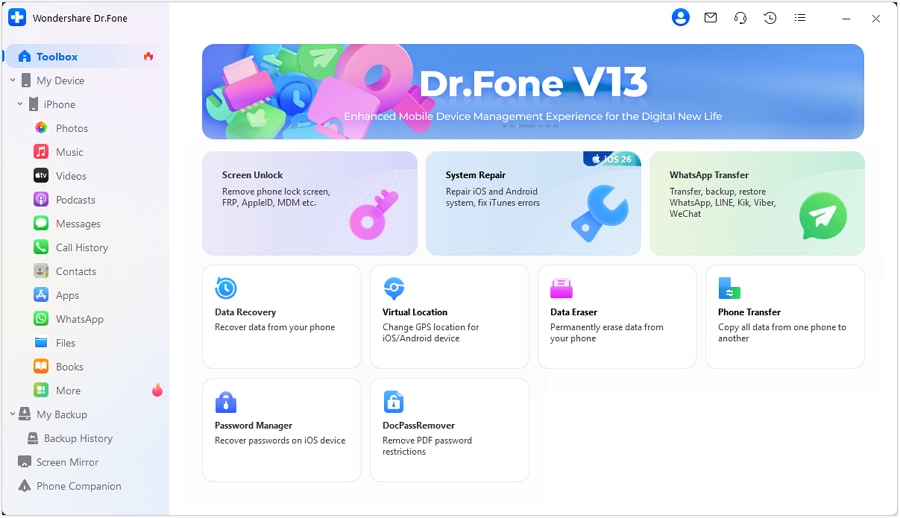
Step 1: Open iTunes Repair Tool
Download and install the latest version of Dr.Fone on your computer. Launch it and select “System Repair,” then choose your device type to continue.
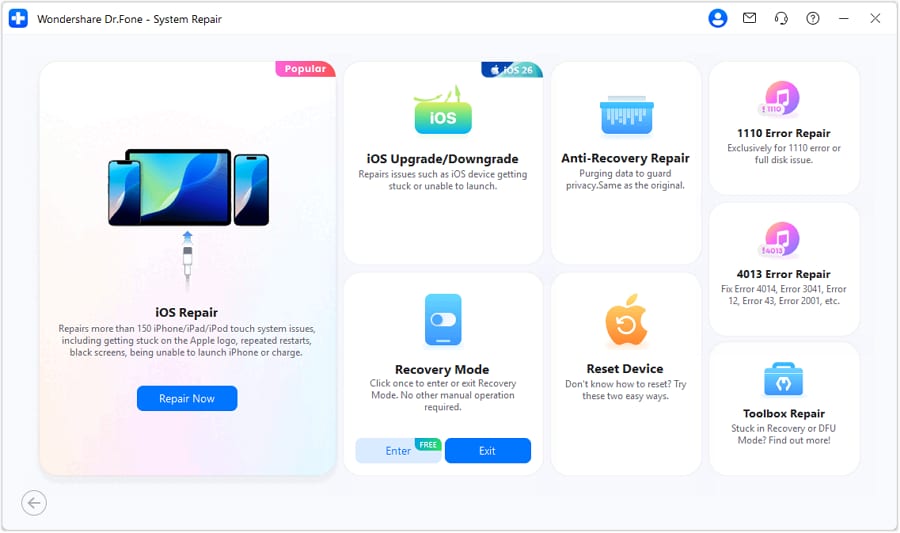
Step 2: Select the Mode of Repair
Choose “iTunes Repair,” then select “Repair iTunes Errors” to start the repair workflow for the underlying iTunes issue.
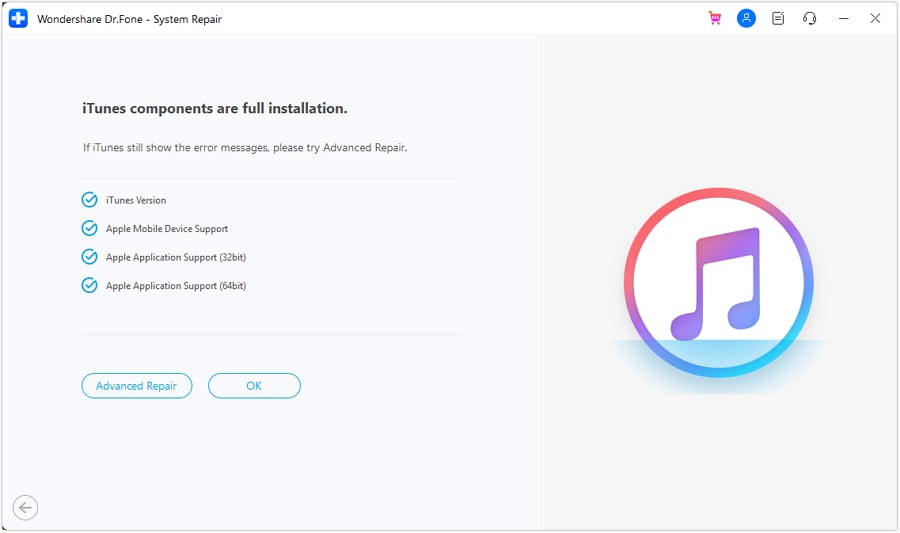
Step 3: Let the Repair Conclude
Let the tool complete the process. If you still see unknown error (78) after repair, retry the update/restore once more with a stable cable and network.
Conclusion
Bottom line: iPhone Error 78 (or iTunes error 78) usually happens when the update/restore process can’t finish reliably. Start by stabilizing the basics—network, USB connection, storage, and software versions—then move to stronger methods like an IPSW restore if needed. If the error persists across multiple computers/cables, it may require a deeper repair workflow rather than repeated retries.
safe & secureFAQs
 Q1. What does “The iPhone could not be updated. An unknown error occurred (78)” mean?
Q2. How do I fix iPhone restore error 78 / iTunes error 78 quickly?
Q3. What if I see error 78 in 3uTools (unable to restore iDevice (-78))?
Q4. Can I fix iPhone error 78 without losing data?
Q1. What does “The iPhone could not be updated. An unknown error occurred (78)” mean?
Q2. How do I fix iPhone restore error 78 / iTunes error 78 quickly?
Q3. What if I see error 78 in 3uTools (unable to restore iDevice (-78))?
Q4. Can I fix iPhone error 78 without losing data?


iPhone Errors
- Errors 0 ... 100
- 1. iPhone Error 6
- 2. iPhone/iTunes Error 9
- 3. iPhone Error 10
- 4. iPhone/iTunes Error 21
- 5. iPhone Error 35
- 6. iTunes Error 40 on iPhone/iPad
- 7. iPhone Error 47
- 8. iPhone Error 69
- 9. iPhone Error 75
- 10. iPhone Error 78
- Errors 1xxx
- 1. iPhone Error 1009
- 2. iPhone Error 1015
- 3. iPhone/iTunes Error 1100
- 4. iPhone Error 1110
- 5. iPhone Error 1667
- Errors 2xxx
- Errors 3xxx
- 1. iTunes Error 3004
- 2. iTunes Error 3014
- 3. iTunes/iPhone Error 3194
- 4. iPhone Error 3503
- 5. iPhone/iTunes Error 3600
- Errors 4xxx
- Other iPhone Errors
- 1. iPhone Error 7005
- 2. iPhone/iTunes Error 9006
- 3. iPhone Error 0xe8000015
- 4. iPhone Cellular Update Failed Error
- 5. iPhone Activation Error
- 6. iPhone SSL Error
- Other iPhone Issues
- ● Manage/transfer/recover data
- ● Unlock screen/activate/FRP lock
- ● Fix most iOS and Android issues
- Free Download Free Download Free Download

 > How-to > Phone Repair Solutions > Looking Into Solutions to Fix Unknown Update Error Occurred (78)
James Davis
staff Editor
Generally rated4.5(105participated)