Resolve common problems and system crashes on both iPhone and Android devices.

 100% Security Verified | No Subscription Required | No Malware

 :
: 
 ChatGPT
 Perplexity
 Gemini
 Claude
 Grok
Grok
Seeing your iPhone endlessly display the Apple logo or a spinning circle can be a stressful experience. When your iPhone is stuck on the loading screen, it becomes completely unresponsive, cutting you off from your contacts, photos, and apps. This frustrating issue can happen after an iOS update, a restore, or seemingly out of nowhere.
Fortunately, this is a common problem with several well-established solutions. You don't need to be a tech expert to get your device back in working order. In this comprehensive guide, we'll walk you through the causes of the iPhone loading screen loop and provide seven proven methods to fix it, from simple resets to advanced system repairs.
In this article
Part 1. What Does It Mean When Your iPhone Is Stuck on the Loading Screen?
The iPhone loading screen, characterized by the Apple logo or a spinning wheel on a black background, is a normal part of the startup process. It appears whenever you turn on or restart your device, indicating that the iOS operating system is loading. You'll typically see this screen after a software update, a factory reset, or when powering on a device that has run out of battery.
Under normal circumstances, this screen is temporary, lasting only a minute or two before you're taken to your lock screen. However, when your iPhone gets stuck on the loading screen, it means the operating system has encountered a critical error that it cannot bypass to complete the boot sequence. Your phone is essentially trapped in a startup loop, unable to proceed.

Part 2. Common Reasons for an iPhone Getting Stuck on the Loading Screen
Several factors can trigger this issue. Understanding the potential cause can help you choose the right solution. Here are the most common culprits:
- Software Update Issues: An iOS update can be interrupted due to a poor Wi-Fi connection, insufficient storage space, or low battery. This can lead to corrupted software files, preventing the iPhone from booting correctly.
- Data Transfer Errors: Problems during data transfer from an old iPhone or a computer backup can corrupt system files, leading to the loading screen loop.
- Jailbreaking Complications: Attempting to jailbreak your iPhone modifies the core operating system. If not done perfectly, it can introduce instability and cause severe software conflicts, resulting in your device getting stuck.
- Hardware Damage: Although less common, physical damage from a drop or water exposure can affect internal components like the logic board. Malfunctioning hardware can prevent the software from loading properly.
- Outdated iOS Version: Running a severely outdated version of iOS can sometimes cause conflicts that manifest during a reboot, trapping the device in a loading loop as it fails to initialize older system components.
Part 3. Top 7 Ways to Fix an iPhone Stuck on the Loading Screen
Here are the most effective methods to resolve the loading screen issue, starting with the simplest and moving to more advanced solutions. We recommend trying them in order.
Method 1: Force Restart Your iPhone
A force restart is the simplest and often most effective first step. It doesn't erase any data but forcibly terminates all running processes, which can resolve temporary software glitches. The method varies depending on your iPhone model.
For iPhone 8, X, XS, XR, 11, 12, 13, 14, 15 & SE (2nd gen or later):
- Quickly press and release the Volume Up button.
- Quickly press and release the Volume Down button.
- Press and hold the Side button until the Apple logo appears on the screen, then release.

For iPhone 7 and iPhone 7 Plus:
If you have an iPhone 7 stuck on loading screen, follow this specific instruction:
- Press and hold both the Side (or Top) button and the Volume Down button simultaneously.
- Keep holding them until you see the Apple logo, then let go.

For iPhone 6s, SE (1st gen) & Earlier:
- Press and hold both the Home button and the Sleep/Wake (or Top) button at the same time.
- Continue to hold until the Apple logo appears, then release both buttons.
Method 2: Charge Your Battery
An extremely low battery can sometimes cause boot-up issues. If the force restart didn't work, your iPhone might not have enough power to complete the startup sequence. Connect your iPhone to a wall charger using an official Apple cable and let it charge for at least 30 minutes before attempting to turn it on or force restart it again.
Method 3: Repair the iOS System Without Data Loss (Recommended)
If a force restart and charging don't solve the problem, it's likely a deeper issue within the iOS system itself. In this case, a professional system repair tool can fix the corruption without erasing your data. Dr.Fone - System Repair (iOS) is designed to resolve over 150 iOS system issues, including the iPhone stuck on loading screen, black screen, or recovery mode loop.
 Fix iOS issues, no data loss.
- One-click repair for all iOS problems.
- Solve recovery mode, Apple logo, black screen, etc.
- Upgrade or downgrade iOS without iTunes
-
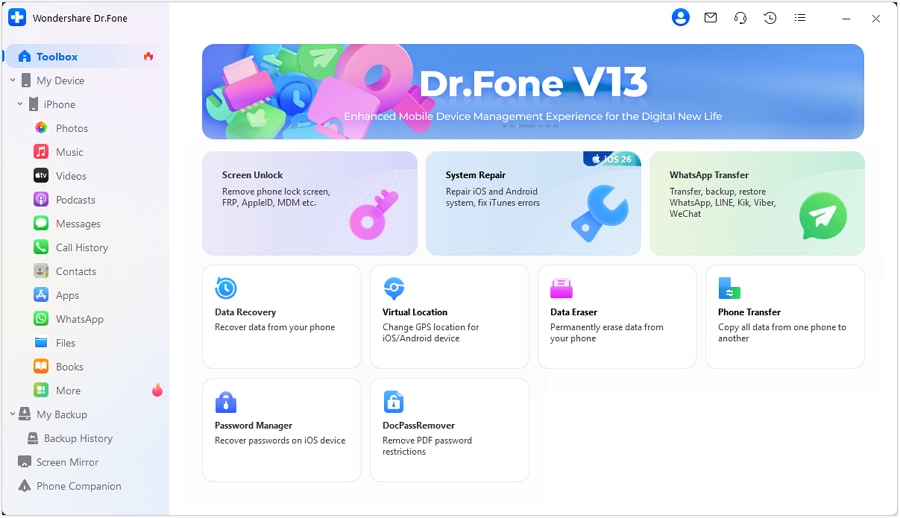
Step 1 Launch Dr.Fone and Select System Repair
Download and install Wondershare Dr.Fone on your computer. Launch the application, click on "Toolbox" from the left pane, and then select the System Repair module.
-
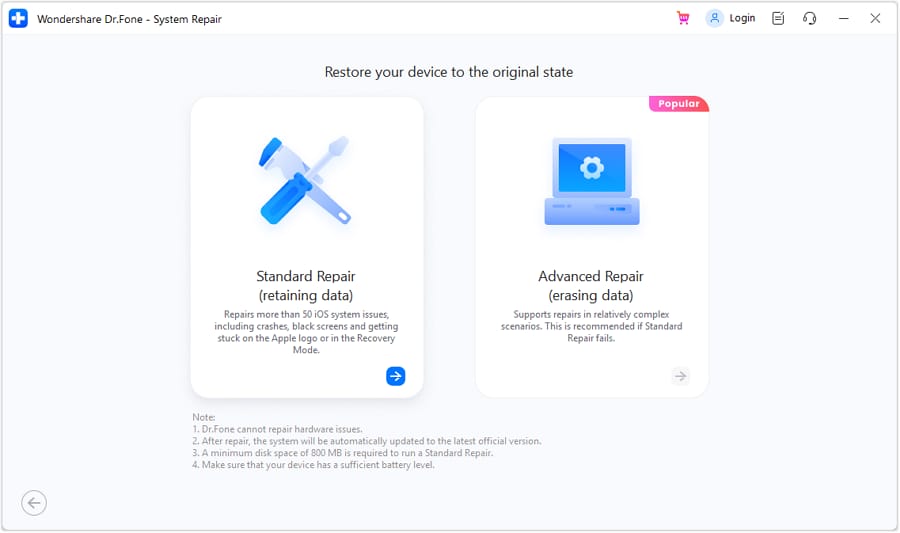
Step 2 Choose iOS and Standard Repair
Connect your iPhone to the computer. In the next window, select iOS. Then, choose iOS Repair from the available options.
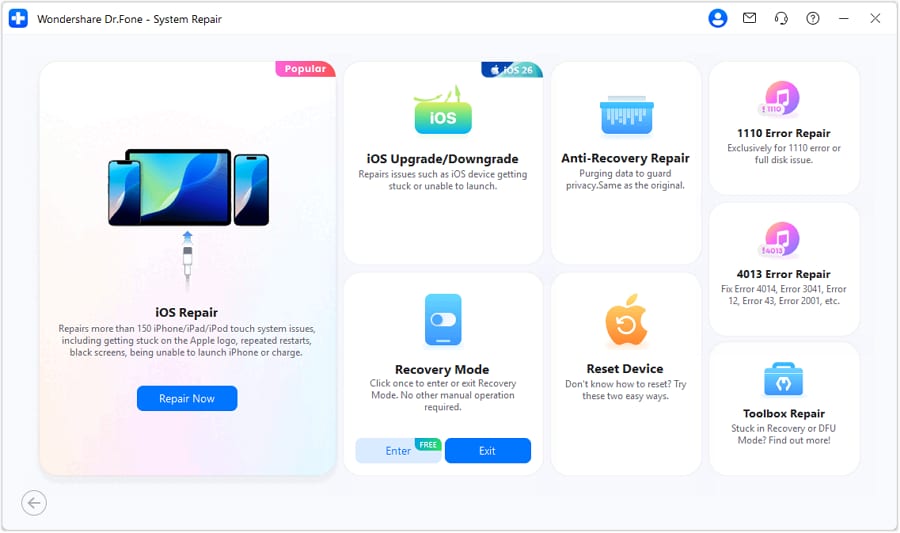
Select Standard Repair. This mode is designed to fix most common system issues without affecting your device's data.
-
Step 3 Enter Recovery Mode and Download Firmware
Follow the on-screen instructions to put your iPhone into Recovery Mode. Once the device is in Recovery Mode, Dr.Fone will automatically detect your iPhone model and display the available iOS firmware versions. Select the appropriate version and click Download.
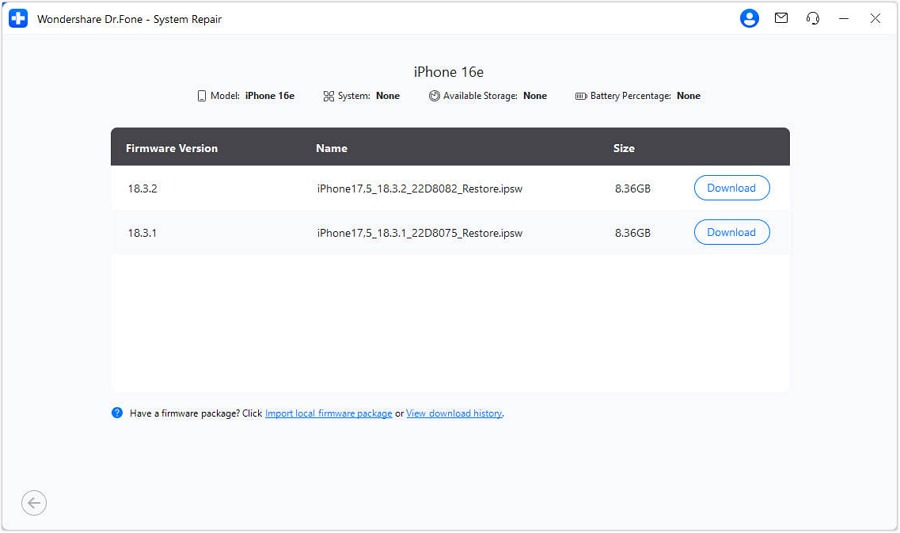
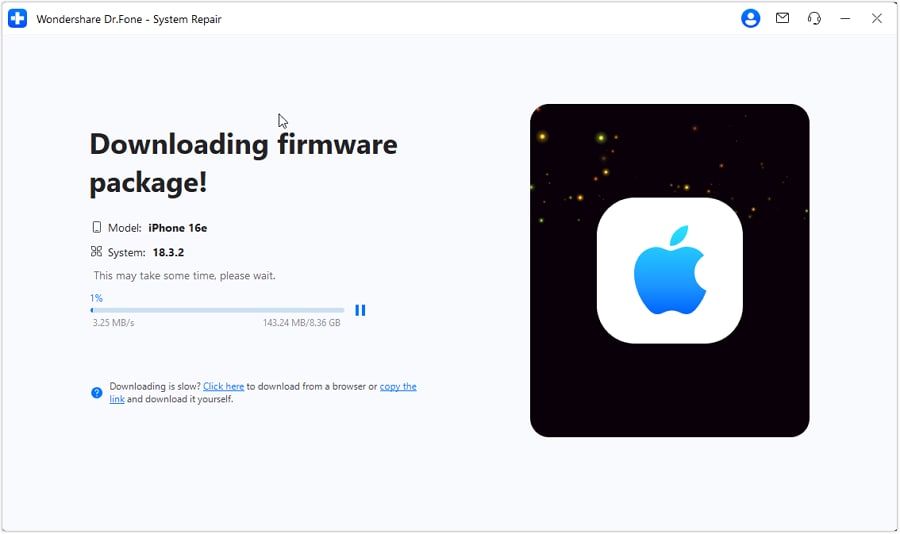
Wait for the firmware package to download completely. This may take some time depending on your internet connection.
-
Step 4 Start the Repair Process
After the firmware is downloaded and verified, click the Repair Now button to begin the system repair process. Dr.Fone will now fix your iOS system.
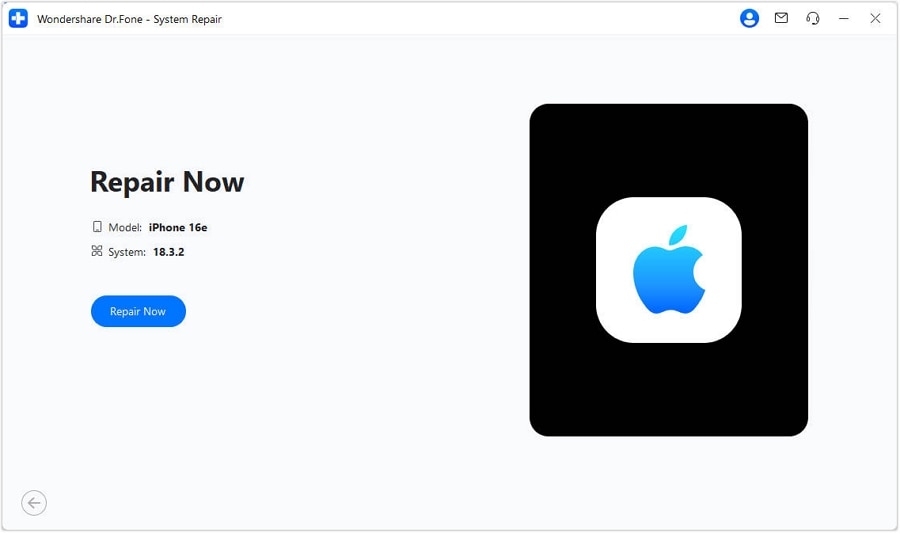
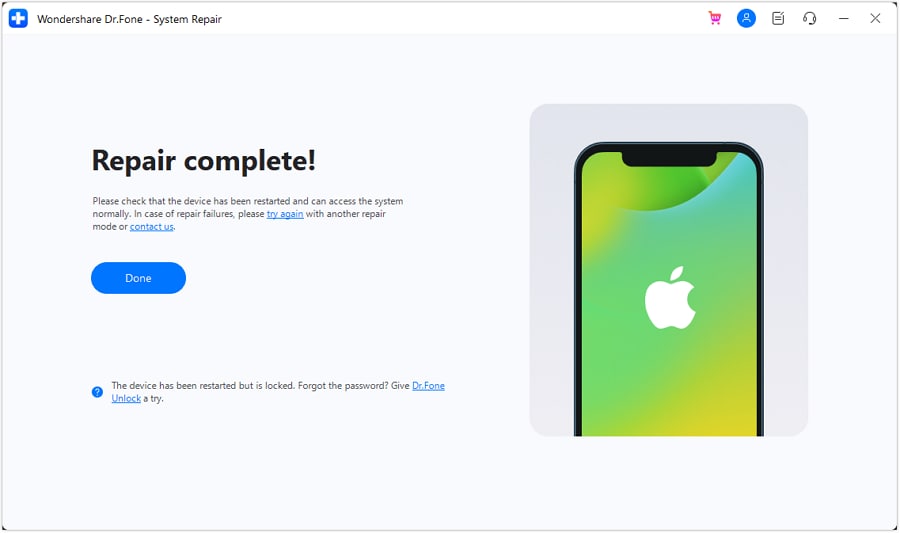
Keep your iPhone connected throughout the process. Once it's complete, the program will notify you. Click Done, and your iPhone should restart and boot up normally, past the loading screen.
Method 4: Use iTunes/Finder Recovery Mode
If you prefer to use Apple's official method, you can put your iPhone into Recovery Mode and restore it using iTunes (on Windows or older macOS) or Finder (on macOS Catalina and newer). Warning: This method will erase all data on your iPhone. Only proceed if you have a recent backup.
-
Step 1 Connect Your iPhone to a Computer
Open iTunes or Finder and connect your iPhone to the computer using a USB cable.
-
Step 2 Enter Recovery Mode
You need to manually put your iPhone into Recovery Mode. The steps are similar to a force restart, but you must continue holding the final button even after the Apple logo appears. Release the button only when you see the Recovery Mode screen (a computer icon and a cable).

-
Step 3 Update or Restore
iTunes or Finder will detect your iPhone in Recovery Mode and show a pop-up window. You will be given two options: Update or Restore. First, try clicking Update, as this will attempt to reinstall iOS without erasing your data. If that fails, you will need to repeat the steps and choose Restore, which will wipe your device completely and install a fresh version of iOS.

Method 5: Restore via DFU Mode
Device Firmware Update (DFU) mode is the deepest type of restore you can perform on an iPhone. It allows your device to communicate with iTunes or Finder without loading the operating system or bootloader. This is a last-resort option for severe software issues. Warning: DFU mode restore will erase all data on your device.
-
Step 1 Connect and Open iTunes/Finder
Connect your iPhone to your computer and open iTunes or Finder.
-
Step 2 Enter DFU Mode
The button sequence for entering DFU mode is complex and must be timed precisely. It's similar to a force restart, but the screen will remain black when successfully in DFU mode. You can search online for the specific DFU mode sequence for your iPhone model.
-
Step 3 Restore Your iPhone
If you've entered DFU mode correctly, iTunes or Finder will display a message saying, "iTunes has detected an iPhone in recovery mode." Your iPhone screen will be black. Follow the on-screen prompts to restore your device.
Part 4. How to Prevent Your iPhone From Getting Stuck Again
Once your device is fixed, you can take several proactive steps to minimize the chances of your iPhone getting stuck on the loading circle in the future:
- Maintain Sufficient Storage: Always keep at least a few gigabytes of free space on your iPhone. A full device can cause performance issues and complications during iOS updates.
- Keep iOS Updated: Regularly install official iOS updates from Apple. These updates contain crucial security patches and bug fixes that enhance system stability.
- Avoid Jailbreaking: While jailbreaking was legalized under the Digital Millennium Copyright Act, it can destabilize your phone's operating system and lead to errors like the loading screen loop.
- Use Stable Connections for Updates: When updating your iOS, ensure you are connected to a stable and reliable Wi-Fi network and have sufficient battery power (ideally over 50% or plugged in).
- Handle With Care: Protect your iPhone from physical drops and water damage. Hardware failure is a less common but possible cause of software-related boot issues.




Conclusion
Having your iPhone stuck on the loading screen is undoubtedly frustrating, but it's rarely a permanent problem. By following the methods outlined in this guide, you can effectively troubleshoot and resolve the issue. Start with the simplest fixes like a force restart and charging. If the problem persists, a dedicated tool like Dr.Fone - System Repair (iOS) offers a safe and reliable way to fix the system without losing your valuable data. For more severe cases, Recovery and DFU modes provide a clean slate, though they require a prior backup to restore your information. Regular maintenance and careful handling can help you avoid this issue in the future, ensuring your iPhone remains a reliable device.
FAQ
-
1. Will I lose my data if I fix my iPhone stuck on the loading screen?
It depends on the method you choose. A force restart will not affect your data. Using the Standard Repair mode of Dr.Fone - System Repair is also designed to fix the issue without data loss. However, using iTunes/Finder to restore your iPhone in Recovery Mode or DFU Mode will erase all of your data. -
2. Why is a force restart the most recommended first step?
A force restart is recommended first because it is the quickest, easiest, and least invasive solution. It can often resolve minor software glitches that are preventing the iPhone from booting up properly, and it carries no risk of data loss. It's an effective troubleshooting step before moving to more complex solutions. -
3. How long should the repair process take?
The time varies by method. A force restart takes less than a minute. Using a tool like Dr.Fone - System Repair typically takes 15-30 minutes, most of which is the automated firmware download and installation. An iTunes restore can take a similar amount of time, plus the additional time required to restore your data from a backup afterward. -
4. Can a hardware problem cause my iPhone to be stuck on the loading screen?
Yes, while less common, hardware issues can cause this problem. A faulty battery, a damaged logic board, or other internal component failures can prevent the iPhone from completing its startup sequence. If none of the software-based solutions work, it's advisable to have your device inspected by a certified technician at an Apple Store or an authorized service provider.
 Add Wondershare Dr.Fone as a preferred source on Google